

If Dhanteras has started to feel like a test of whether you bought gold, silver, or something new, return to the sacred event behind the festival. You can keep a cherished family custom without mistaking the purchase for the purpose.
The Dhanvantari-centered meaning of Dhanteras places health, right living, and reverence before acquisition. That distinction gives you a practical way to celebrate sincerely, whether you make a purchase or not.
Dhanvantari’s emergence is the sacred center
The defining sacred image is the emergence of Lord Dhanvantari during Samudra Manthan, the churning of the cosmic ocean. In the familiar Puranic telling, the devas and asuras participate in this immense undertaking together. Dhanvantari appears bearing amrita, the nectar associated with freedom from death.
Dhanvantari is revered as the divine physician and is closely associated with Ayurveda. His appearance therefore changes the meaning of prosperity. Wealth is not merely what a household can store, display, or exchange. It includes the health that lets you fulfil your duties, the knowledge that protects life, and the disciplined habits that preserve well-being.
This does not make material wealth impure. Hindu household life does not require a false choice between spirituality and responsible prosperity. The story gives wealth an order: possessions should support life and dharma, while life should not be reduced to the pursuit of possessions.
If you are explaining Dhanteras to a child, begin there. Say that the day remembers Dhanvantari and asks us to recognize health and healing as forms of wealth. Introduce shopping customs only after that foundation is clear. The sequence matters because children usually remember the visible action more easily than its sacred meaning.
Buying gold is a custom, not a test of devotion
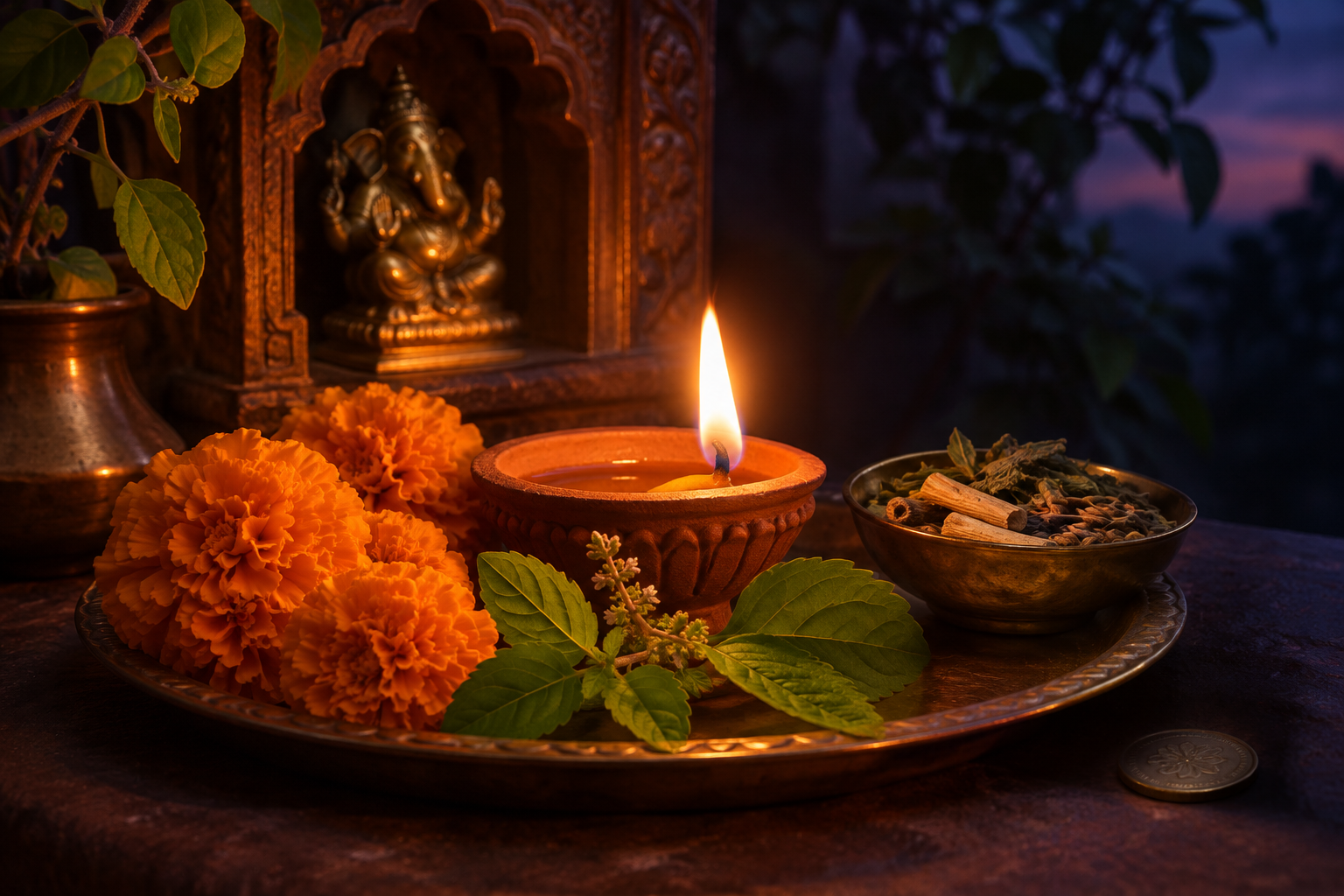
Buying precious metal, utensils, or a useful household object is a familiar Dhanteras practice in many homes. Such a purchase can represent auspiciousness, preparedness, or the responsible establishment of a household. The problem begins only when the object becomes the entire festival.
You do not need to prove your shraddha through the price of a purchase. Nor does a family with a smaller budget observe an inferior Dhanteras. A lamp lit with attention, a sincere invocation of Dhanvantari, and an act that protects another person’s well-being carry a meaning that no receipt can measure.
Before buying anything in the festival’s name, ask four direct questions:
- Is this connected to a genuine family practice or a real household need?
- Can we pay for it without debt, anxiety, or neglecting a more important obligation?
- Will the object serve the household after the festival, or are we purchasing only because advertising has created urgency?
- Have we reserved time for worship, gratitude, and care, or has shopping displaced the observance?
If the answers are sound, make the purchase without guilt and use it well. If they are not, refrain without embarrassment. Taking on avoidable financial strain to imitate an auspicious custom reverses the order that the Dhanvantari narrative teaches.
Samudra Manthan gives prosperity a deeper measure

Samudra Manthan is not a story of effortless gain. Churning is sustained work. It requires opposing beings to participate in a task larger than either side. Dhanvantari’s appearance within that setting places healing knowledge among the great treasures of cosmic order.
You can read that image at three practical levels. First, a healthy body is not an ornament; it is an instrument through which you serve family, society, and dharma. Second, medical and healing knowledge deserves gratitude because it safeguards the conditions in which every other human pursuit occurs. Third, prosperity should be judged by what it sustains, not merely by what it accumulates.
That reading also guards against a common mistake. Honoring Dhanvantari does not mean promising miraculous cures or replacing treatment with ritual. Puja can cultivate gratitude, steadiness, and spiritual orientation, but it is not a substitute for qualified medical care. If you have a health concern, seek the appropriate professional help while maintaining the spiritual practices that support you.
A useful Dhanteras question is therefore not only, “What should we buy?” Ask, “What in this household protects life, and what have we neglected?” The answer may be a needed medical appointment, an expired first-aid item that requires safe replacement, an overdue conversation about an elder’s care, or a commitment to make nourishing food and adequate rest less optional. These are contemporary acts inspired by the festival’s meaning, not compulsory scriptural rites.
A simple Dhanvantari-centered observance
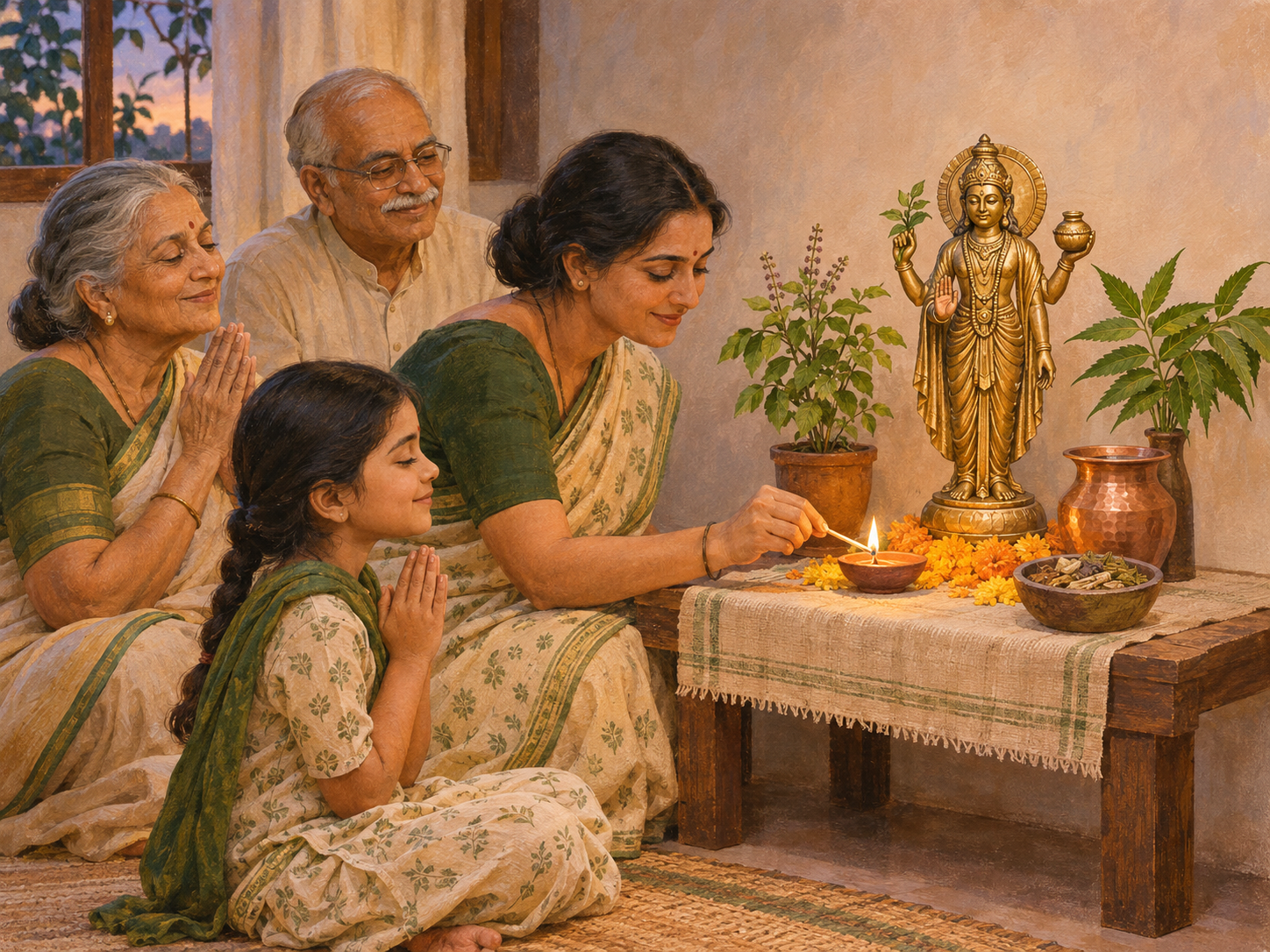
Exact Dhanteras practices vary by region, family, and sampradaya. Follow your inherited paddhati or the guidance of a trusted temple or acharya where you have one. If you need a simple observance at home, keep it modest and place Dhanvantari’s meaning at the center.
- Set the sacred time before planning the shopping. Consult the panchang used by your family or local temple rather than assuming that one clock time applies everywhere.
- Prepare a clean place for worship. Arrange an image of Dhanvantari if your household uses one, light a lamp safely, and make the simple offerings customary in your home.
- Invoke Dhanvantari with attention. Recite the prayer taught in your tradition. If you do not know a formal prayer, offer a sincere namaskara and contemplate Dhanvantari as the divine presence of healing and life-protecting knowledge.
- Give thanks for those who protect health. Remember physicians, nurses, caregivers, traditional healers, family members, and others whose service has supported life. Gratitude is especially meaningful when it becomes respectful conduct toward those doing difficult care work.
- Make one concrete commitment. Choose a manageable action that supports health in your household. Keep it specific enough to complete, such as arranging an overdue checkup, reviewing medicines with a pharmacist, learning where emergency information is kept, or helping an elder reach care.
- Turn abundance outward. Offer food, practical assistance, or support for someone’s health needs within your means. Do it as seva, not as a performance for public approval.
- Purchase only if it remains meaningful. If buying an object belongs to your custom, select something affordable and useful. Let the object remind the household to preserve resources and employ them in service of life.
This form of observance does not claim to replace a lineage-specific puja. It gives you a responsible framework when commercial messages have become louder than the festival’s sacred memory.
Key takeaways
- Dhanteras recalls Lord Dhanvantari’s emergence during Samudra Manthan and therefore places healing and the protection of life at the heart of prosperity.
- Buying gold, silver, utensils, or another useful object may be a meaningful family custom, but it is not a measure of devotion.
- A purchase that creates debt or displaces worship contradicts the order of values the festival can teach.
- Prayer, gratitude for caregivers, responsible attention to health, and seva offer concrete ways to honor Dhanvantari.
- For exact rites and timing, follow your family’s tradition, sampradaya, trusted acharya, or local temple.
Before you enter the marketplace this Dhanteras, reserve the first portion of the observance for Dhanvantari. Name the health and care that already sustain your household, then choose one action that will protect them. If you buy something afterward, let it serve that deeper wealth rather than replace it.
References

Leave a Reply
You must be logged in to post a comment.