
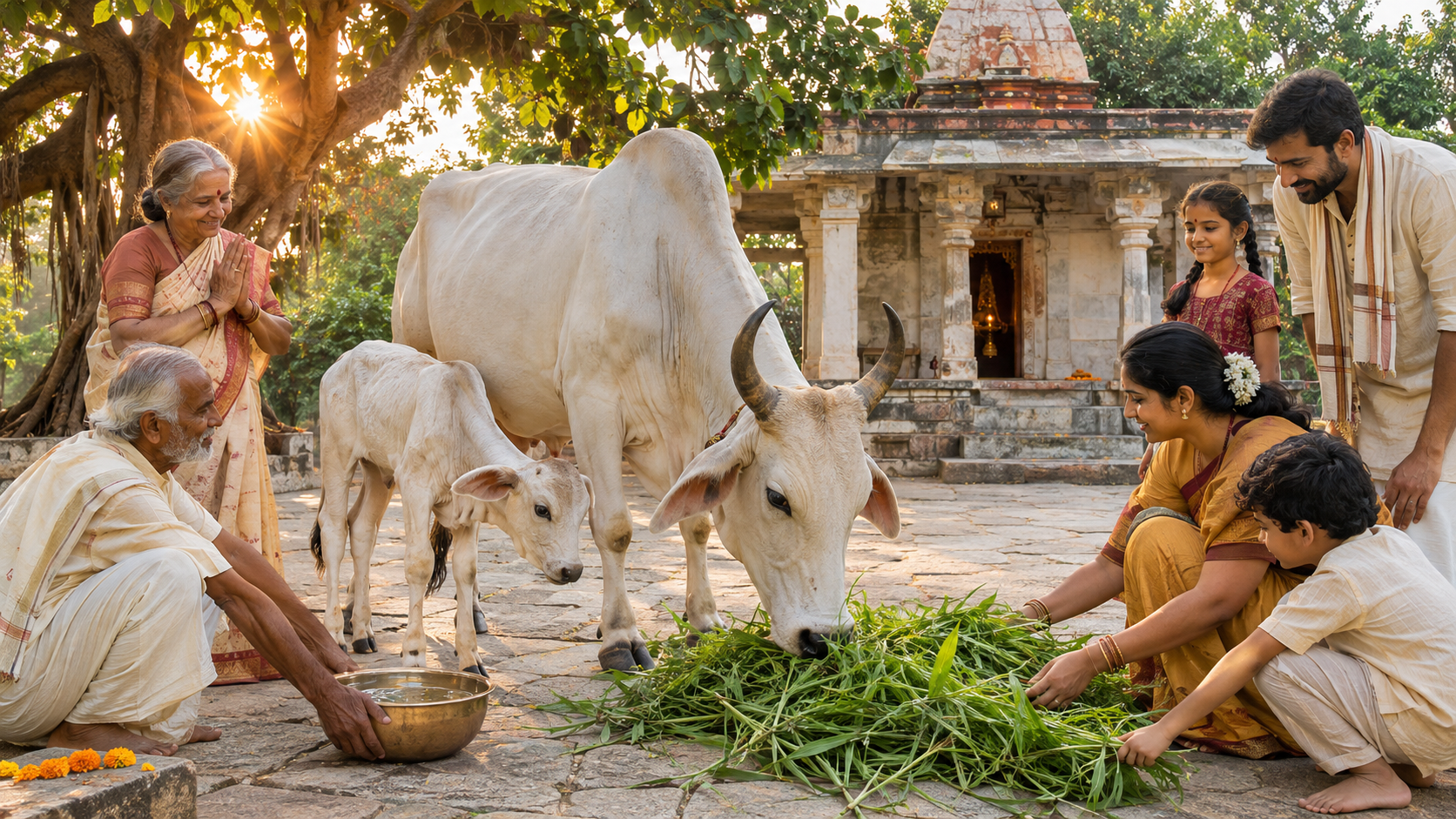
If you grew up folding your hands before a cow but were never told why, the practice can look like a rule without a reason. The key is the word Mata. It turns reverence for the cow from an abstract belief into a relationship with obligations.
In Hindu devotional life, Gau Mata brings together gratitude, sacred presence, ahimsa and seva. Understanding those ideas together helps you explain the tradition without reducing it either to a miracle claim or to the material usefulness of cattle.
Mata names a relationship, not merely a sacred animal
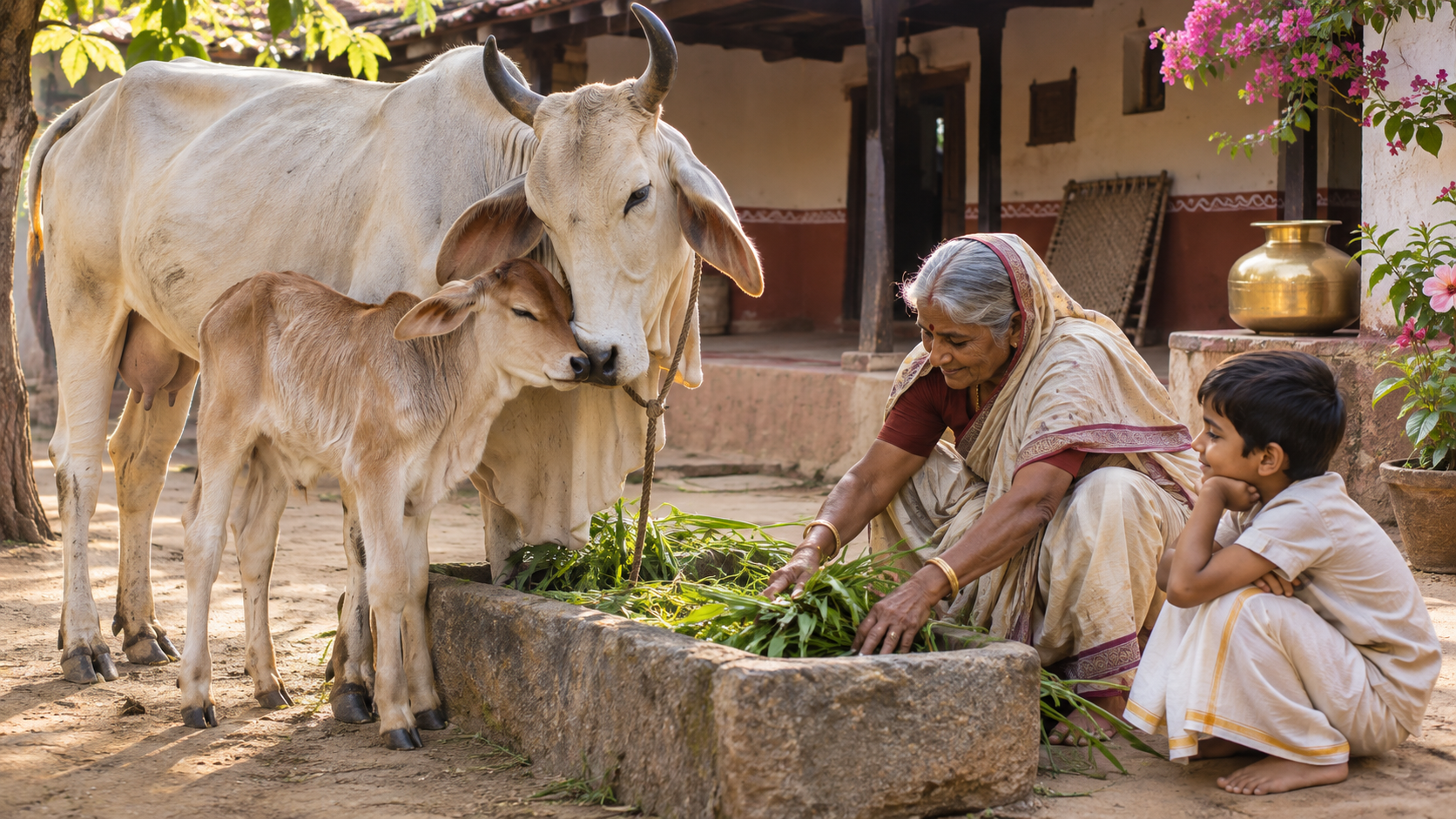
Calling the cow Mata does more than assign her an honored rank. A mother nourishes before asking for repayment. The language of motherhood therefore teaches that nourishment creates a duty of gratitude, restraint and protection.
The everyday relationship matters. A cow can nourish a household and sustain an agrarian community. Hindu reverence receives that material dependence through a sacred lens: what supports life should not be treated as a disposable object once its immediate usefulness declines.
If you need to explain Gau Mata to a child or to someone outside the tradition, use this order:
- Begin with the relationship: the title Mata expresses gratitude for nourishment.
- Then name the theology: the divine can be honored through beings in whom sacred presence is recognized.
- Finish with the duty: reverence must lead to gentle treatment, protection and responsible care.
This sequence is clearer than beginning with a large cosmological number. It shows why the belief changes conduct rather than leaving it as an isolated assertion.
Thirty-three koti devatas expresses sacred wholeness
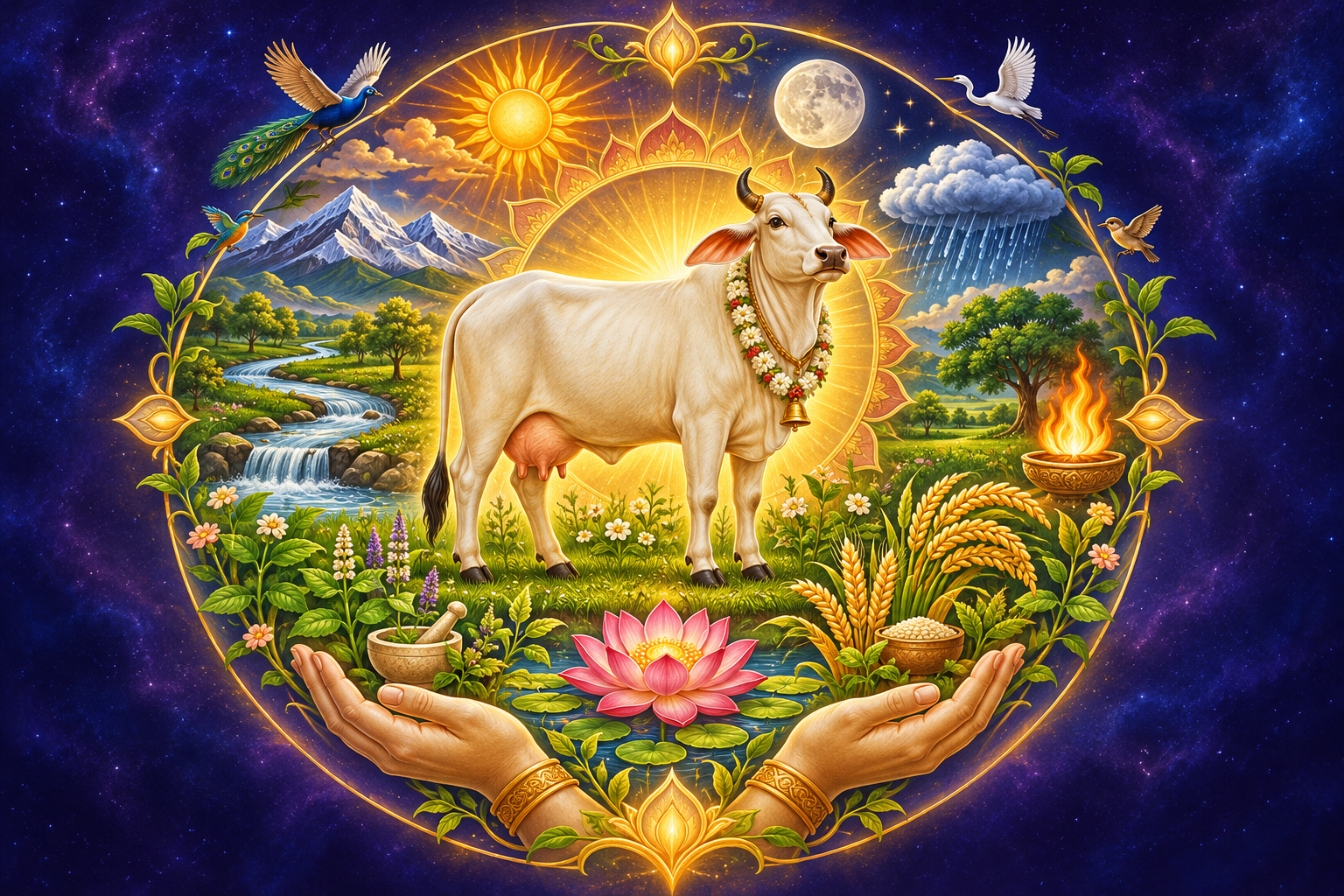
Within Gau Mata devotional tradition, thirty-three koti devatas are said to dwell in the cow. The religious force of this statement lies in sacred presence: honoring Gau Mata becomes a way of honoring the divine order as a whole.
The number should not swallow the teaching. Treating the cow’s body as an anatomy puzzle misses the devotional point. The claim asks you to approach a living being with the attentiveness you would bring to a sacred place. Carelessness toward her is therefore not merely poor animal management; it contradicts the relationship the honorific Mata establishes.
The same devotional language associates a cow standing peacefully and breathing at ease with the removal of Vastu dosha. Her happy lowing is described as an occasion for the devatas to shower flowers. Such images present the contented presence of Gau Mata as auspicious for the place around her.
Read these as claims of devotional praise, not as substitutes for material judgment. A Vastu belief does not certify faulty wiring, unsanitary housing or an unsafe structure. Repair those problems directly. The spiritual lesson is that a place where a dependent animal can live without distress reflects order, care and blessing.
When you encounter similar sacred claims, ask three questions: Does the claim teach reverence? Does it encourage responsible conduct? Is someone turning it into a guaranteed worldly result? The first two belong naturally to devotional practice. The third requires evidence appropriate to the promised result.
Gau seva is the practical test of reverence
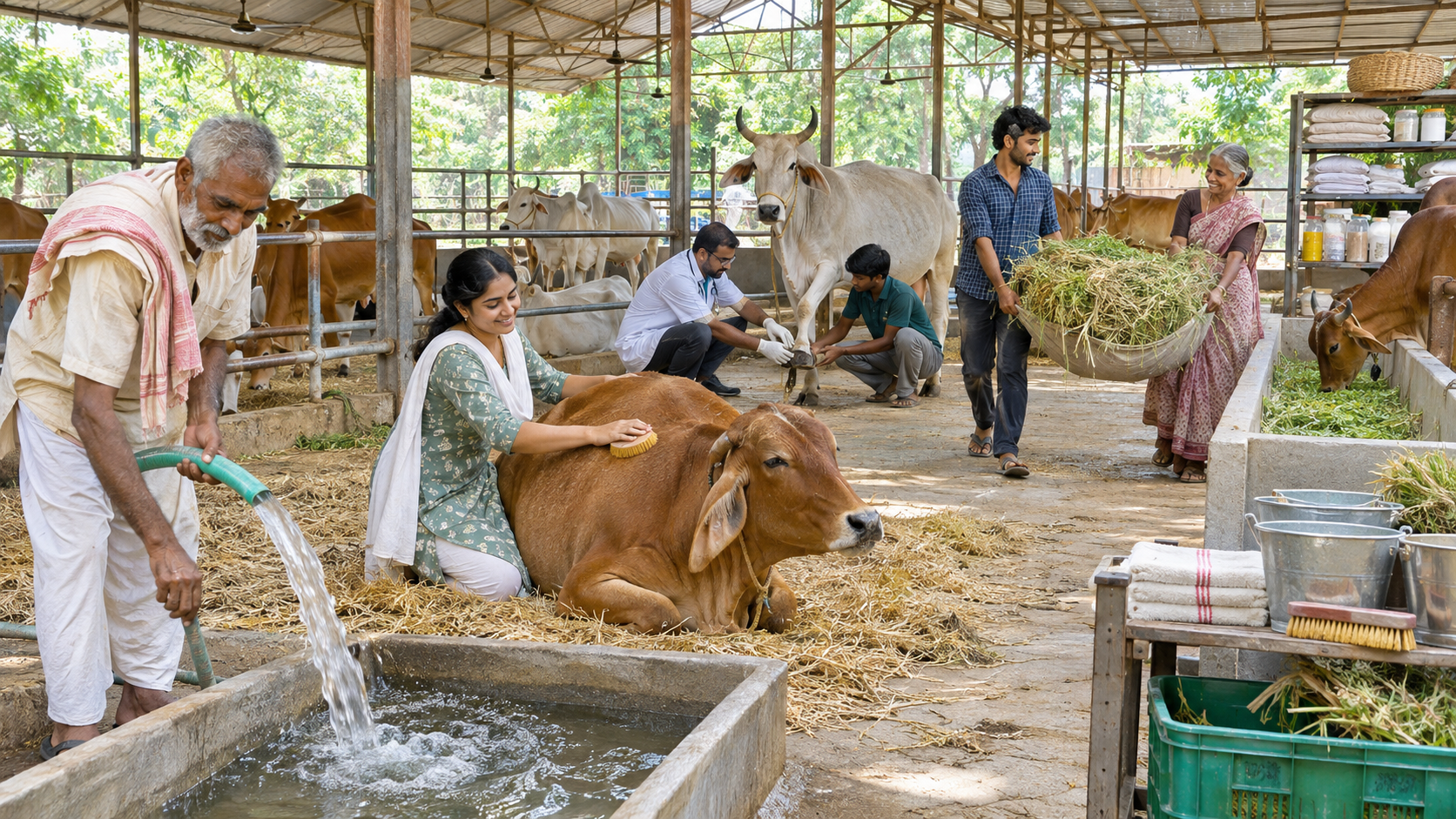
A cow cannot meaningfully be addressed as mother and then ignored when she is thirsty, injured, aged or no longer productive. Gau seva is where devotional language becomes visible conduct.
- Offer what is suitable, not merely what is available. Provide clean water or appropriate feed with the caretaker’s guidance. Do not leave food inside plastic packaging or give random leftovers to an unfamiliar animal.
- Look beyond the most visible cows. When supporting a gaushala, ask how it cares for calves, aged cattle, injured animals and cows that are not producing milk.
- Check how a donation will be used. Fodder, clean shelter and medical care are more meaningful measures than ceremonial visibility alone. Choose an institution that can explain its daily care clearly.
- Do not create distress in the name of devotion. Avoid chasing, crowding, restraining or touching an unfamiliar cow for a photograph or ritual moment. Follow the person responsible for the animal.
- Teach the obligation with the gesture. When children offer pranam, explain that respect includes gentleness, clean surroundings and care for an animal that cannot ask them for help in words.
A one-time offering may be sincere, but continuing care expresses the maternal relationship more fully. At a festival, temple or community event, ask what happens after the public ritual ends. Who supplies water tomorrow? Who notices illness? Who pays for care when the animal is no longer economically useful? Those questions do not diminish worship. They protect its meaning.
Avoid four reductions that obscure the tradition
- Do not reduce Gau Mata to economics. Milk and agricultural life help explain gratitude, but utility alone cannot explain sacredness. If worth depends only on output, protection disappears when output declines.
- Do not reduce the tradition to a miracle debate. Arguing only about Vastu dosha or divine flower showers overlooks the ethical formation carried by devotional language.
- Do not demand one identical explanation from every Hindu. Hindu practice is diverse. One family may emphasize divine presence, another gratitude, and another gau seva. These emphases can coexist without erasing their differences.
- Do not let symbolic respect excuse material neglect. A garland, pranam or sacred slogan cannot compensate for hunger, untreated injury or poor shelter.
It also helps to separate devotion, animal welfare and public policy when discussing cows in society. Devotion can motivate care. Welfare can be examined through the animal’s actual condition. Policy must be judged through its own evidence and consequences. Using one category as a shortcut for another produces heat without clarity.
Key takeaways
- Gau Mata means that the cow is approached through a relationship of nourishment, gratitude and duty.
- The presence of thirty-three koti devatas expresses sacred wholeness rather than inviting an anatomy exercise.
- Claims about auspiciousness belong to devotional praise and should not replace practical judgment about buildings, health or safety.
- Gau seva should include suitable food, clean water, shelter, medical attention and care for animals that are not economically productive.
- The strongest explanation of cow reverence connects theology with conduct: sacred regard should make a person more responsible, not merely more argumentative.
The next time you offer pranam to Gau Mata, pair the gesture with one concrete act of care. Give appropriately, support a transparent gaushala, or teach a child why Mata creates responsibility. That is how reverence moves from a word into dharmic practice.
References

Leave a Reply
You must be logged in to post a comment.