
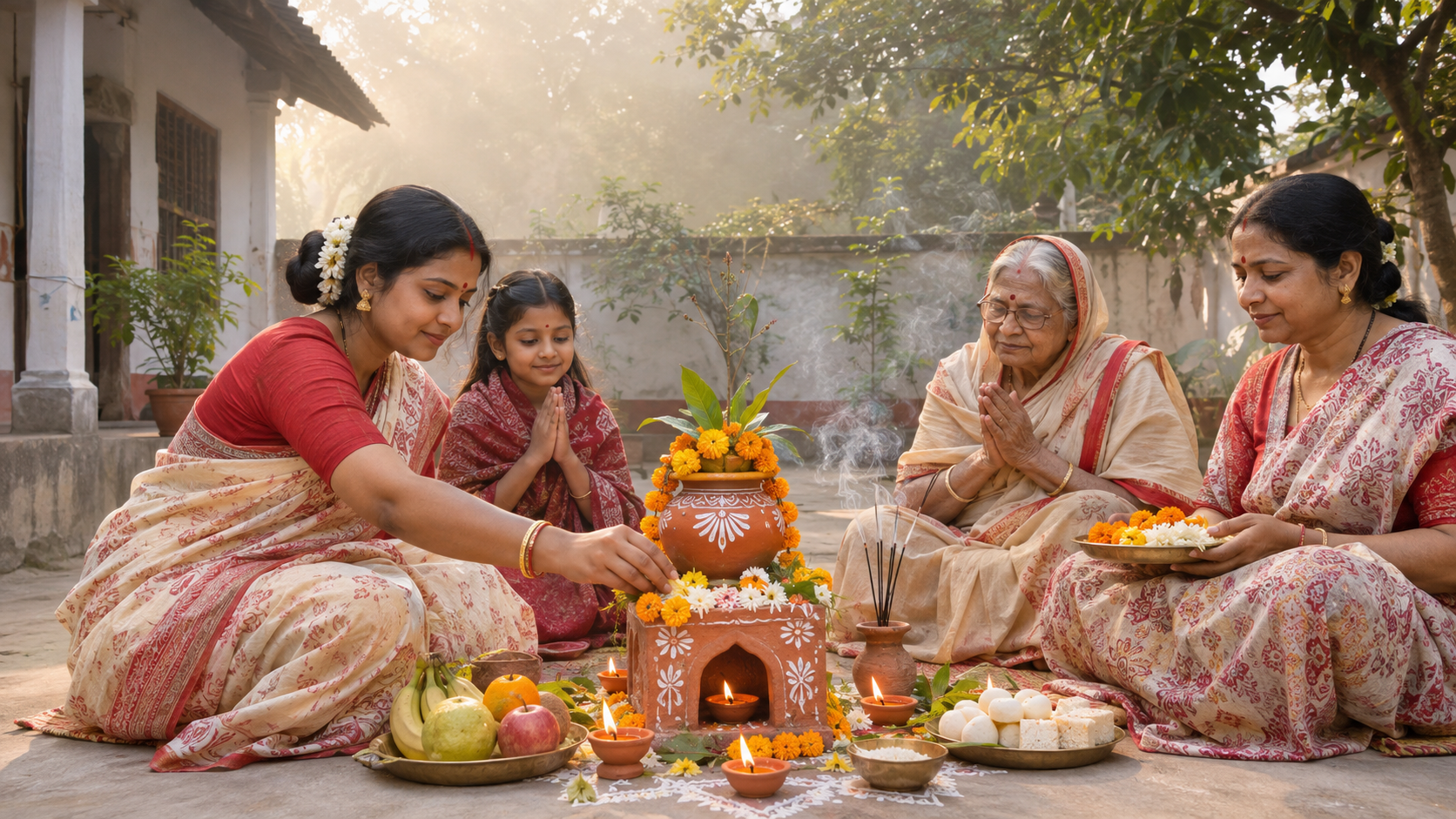
If you are arranging Itu Puja for your family in 2026, do not enter it as a weekly event beginning on 18 November. The five dates for Bengal are 18, 22 and 29 November, followed by 6 and 13 December. The first two are only four days apart; the remaining dates follow at one-week intervals.
Those dates settle the basic calendar question, but they do not provide a universal ritual script. Your useful next step is to reserve all five dates and confirm the procedure followed by your family, purohit or local tradition before buying materials or making promises about timing.
Save the complete five-date sequence
The irregular opening gap is the part most likely to create an error. A calendar recurrence beginning on 18 November would produce 25 November as the next weekly date, but 25 November is not in the listed sequence. Enter 18 November separately. You can then create a weekly series of four occurrences beginning on 22 November.
| Order | Itu Puja date in 2026 | Calendar safeguard |
|---|---|---|
| 1 | 18 November | Create this as a separate event. |
| 2 | 22 November | Begin the four-date weekly series here. |
| 3 | 29 November | Keep it in the same November sequence. |
| 4 | 6 December | Check that the recurrence continues across the change of month. |
| 5 | 13 December | Mark it as the last date in the available 2026 list, then confirm whether your tradition has a distinct concluding procedure. |
If several relatives are involved, use a shared calendar rather than relying on forwarded messages. Add the name of the person who will confirm the household procedure, but leave the ritual time blank until that person has verified it. A date and an exact time are not the same piece of information.
Confirm the household procedure before preparing
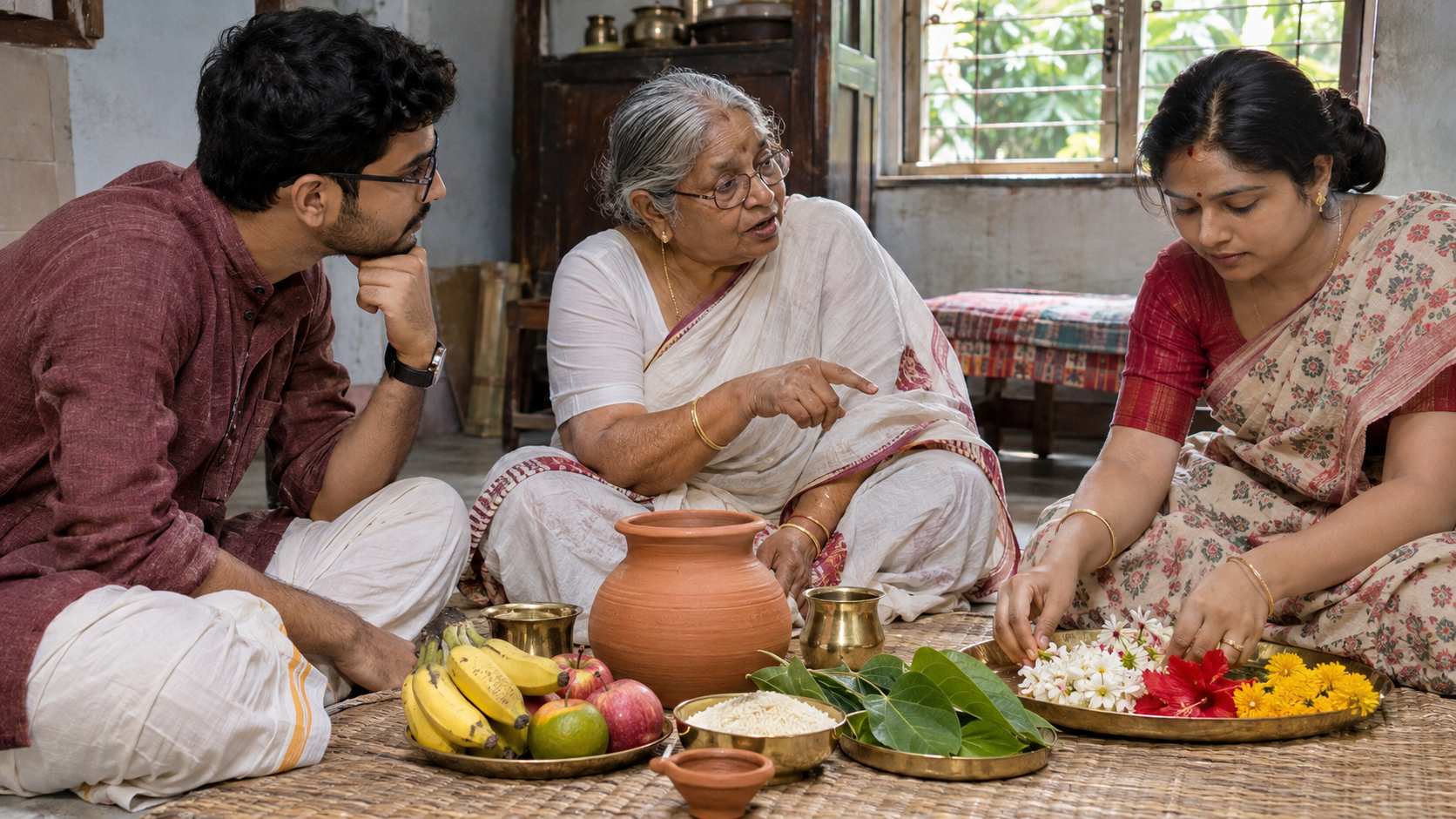
Itu Vrata belongs to a living tradition, and living traditions are often transmitted through families and local communities. A supply list copied from elsewhere may contain familiar items and still fail to represent the practice you have inherited. Choose one knowledgeable point of reference, such as a family elder, family purohit or temple connected with your community, and settle the procedure with that person.
Ask these questions before 18 November:
- Does our household observe every one of the five listed dates?
- What time does our family follow on each date, and does that timing change during the sequence?
- Which materials are required, and which additions are merely optional or customary in another household?
- Who normally leads the worship, and what prayers, recitations or inherited instructions are followed?
- Is anything done differently on the last listed date, and whom should we ask if a date cannot be observed as planned?
Write the answers in one shared note. That prevents a common form of confusion: one relative remembers the family custom, another finds an online checklist, and a third assumes the two can be combined without discussion. More instructions do not automatically make a vrata more authentic. Coherence matters more than accumulation.
Keep the traditional intention in view
Married women traditionally undertake Itu Puja for the health and welfare of the family, while unmarried girls traditionally observe it with the hope of a good husband. These intentions explain the household and relational character of the vrata. They should not be turned into guarantees of a particular worldly result.
If you are learning the observance for the first time, ask how your family expresses its intention rather than silently replacing the inherited understanding with a generic wish list. If your household uses language different from the traditional formulation, clarify that respectfully before the observance begins. The aim is to understand what you are undertaking, not to police another devotee’s circumstances or life path.
The prayer for family well-being also belongs alongside ordinary responsibility. Puja may carry devotion, discipline and hope, but it is not a substitute for medical assessment or treatment when someone is unwell. Keeping that distinction clear protects both the integrity of the vrata and the person who needs care.
Key takeaways for Itu Puja 2026
- The five listed dates in Bengal are 18, 22 and 29 November and 6 and 13 December 2026.
- Do not create a weekly recurrence beginning on 18 November; the next listed date is 22 November, not 25 November.
- Enter 18 November separately, then create four weekly entries beginning on 22 November.
- Confirm ritual timing, materials, prayers and any concluding procedure through the tradition your household actually follows.
- The traditional intentions concern family health and welfare for married women and the hope of a good husband for unmarried girls.
Turn the dates into a workable family plan
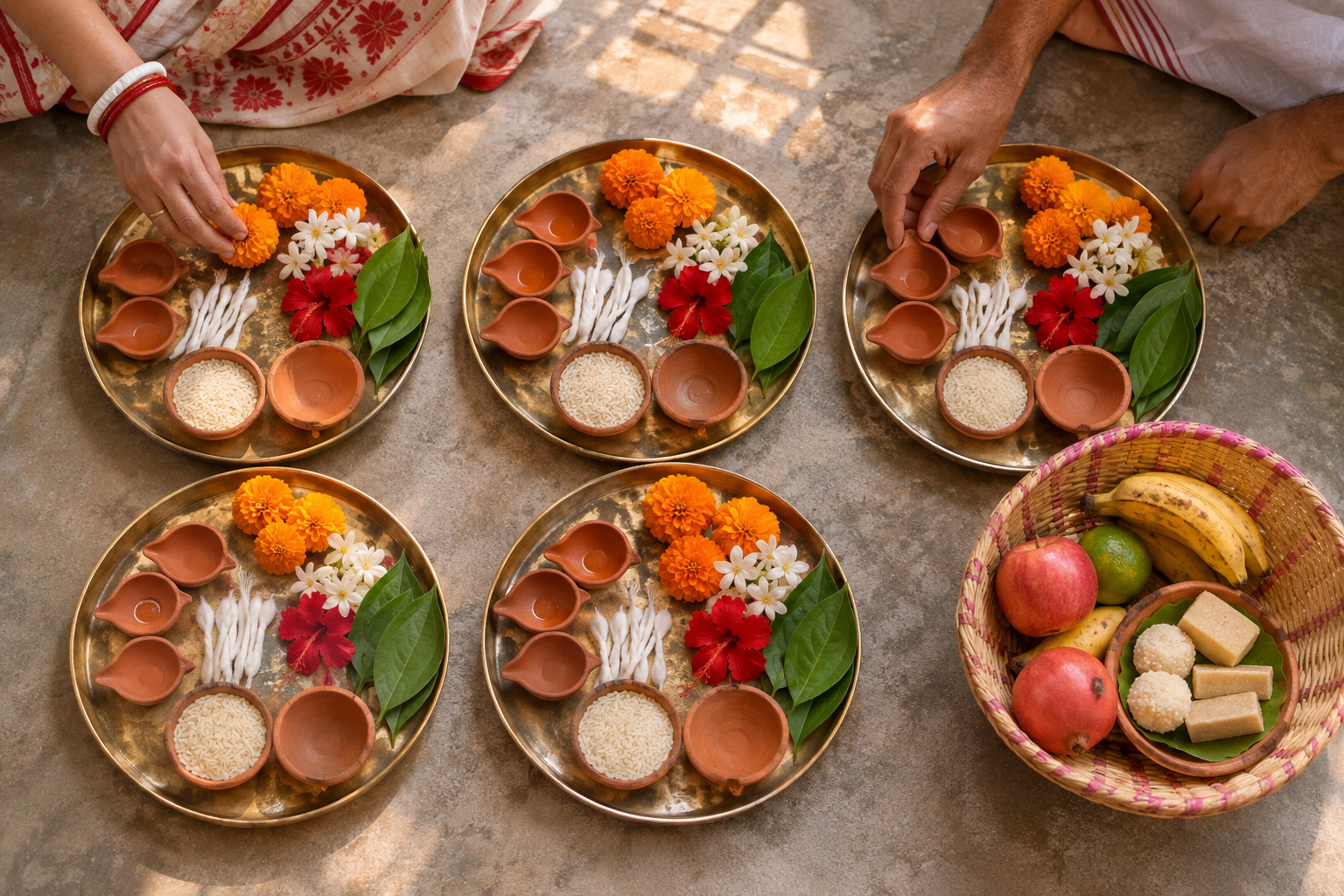
You do not need an elaborate planning system. You need a calendar that cannot silently generate the wrong date and a clear line to the person who knows your household practice.
- Create a separate calendar entry for 18 November.
- Create a weekly series beginning on 22 November and ending after four occurrences: 22 November, 29 November, 6 December and 13 December.
- Assign one person to confirm the customary timing, materials and procedure.
- Add reminders early enough for the participating household members to adjust work, school and family responsibilities.
- Before treating 13 December as a ritual conclusion, verify what your own tradition requires. It is the final date in the available list, but that fact alone does not define the concluding rite.
Start with the two actions that prevent most avoidable confusion: save 18 November separately, and contact the elder, purohit or community authority who can explain your inherited procedure. Once the dates and the tradition agree, the family can prepare without having to improvise at the last moment.
References

Leave a Reply
You must be logged in to post a comment.