
If your family begins Deepavali with an oil bath, new clothes and the memory of Narakasura’s fall, you may have wondered why another Hindu family tells a different festival story. You don’t have to choose between them. The difference shows how a shared Hindu festival can preserve several sacred memories without losing its civilizational unity.
For a South Indian household, the practical question is not whether its tradition matches a single national script. It is whether the family still understands what its own sequence means. Narakasura’s protective boon, his defeat and his final wish explain why the celebration begins with release from darkness and moves quickly into cleansing, light, food and public joy.
One Deepavali can hold more than one sacred memory
The broad regional distinction is easy to recognise: North Indian celebrations commonly foreground Rama’s return to Ayodhya, while South Indian observance gives special weight to Narakasura’s defeat. This does not divide Deepavali into an authentic version and a secondary version. It shows how different communities enter the same festival through different events in the Dharmic imagination.
The shared grammar matters more than forced uniformity. Darkness gives way to light. Disorder yields to dharma. Homes and bodies are prepared for an auspicious beginning. Families renew their bonds through worship, food, gifts and hospitality. A regional narrative supplies a particular doorway into those meanings.
When you explain this to a child or to someone outside the tradition, avoid saying that South Indians celebrate the wrong Diwali story or that every South Indian community follows exactly the same one. Say instead that Deepavali has several regional centres of memory. In many southern homes, the first morning is closely associated with liberation from Narakasura’s oppression; in other Hindu communities, Rama’s homecoming or another sacred event may take the foreground.
That distinction also prevents a common mistake: combining every regional custom into one supposedly complete ceremony. A family does not need to borrow unrelated practices to make its Deepavali legitimate. It needs to know the story, inherited sequence and ethical meaning of the practices it already has.
Narakasura’s boon makes the manner of his defeat significant
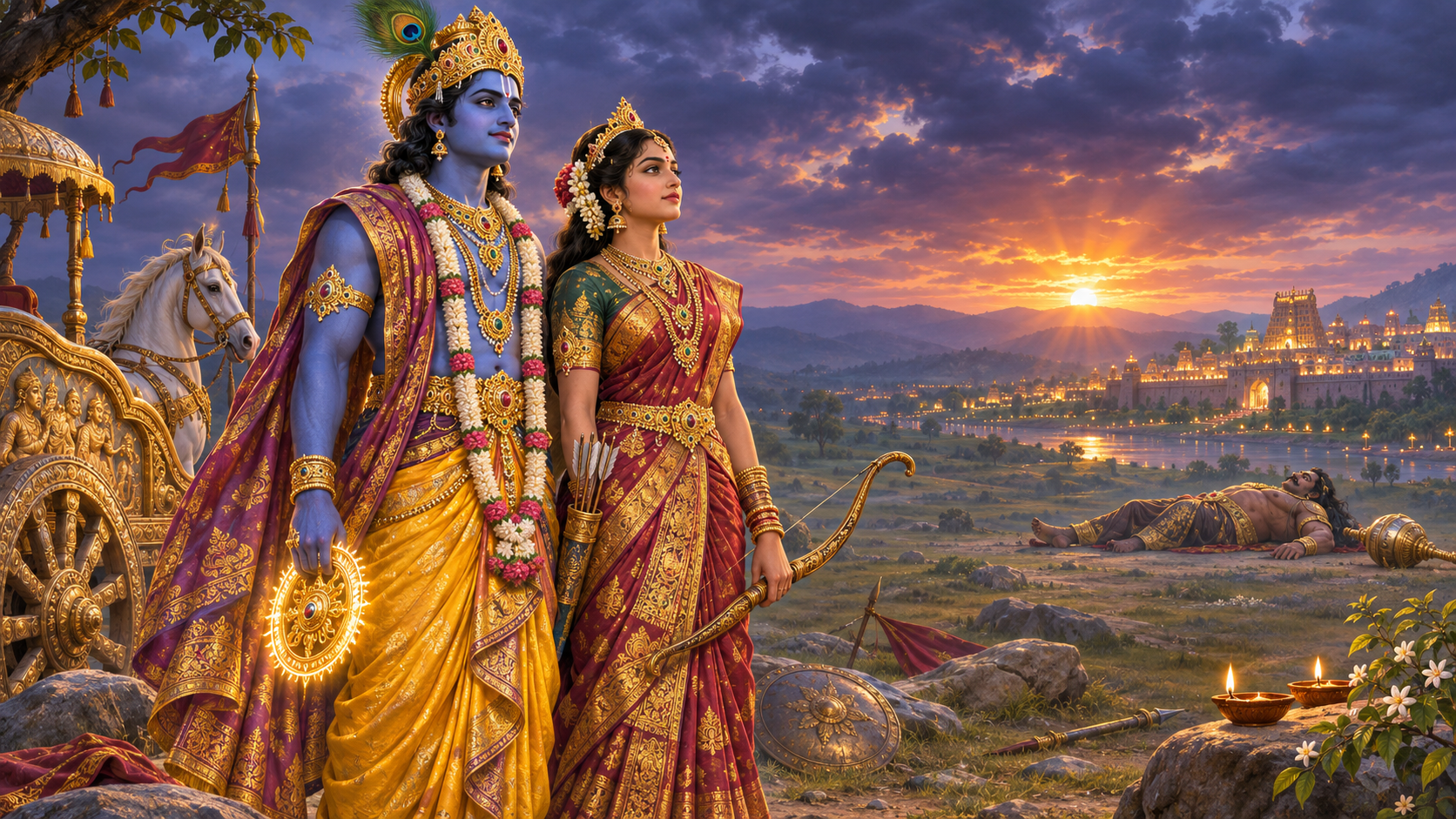
Narakasura is remembered as a ruler whose power became oppressive. His story is not simply about a strong enemy meeting someone stronger. It is about power severed from dharma and the restoration of order when that power can no longer be tolerated.
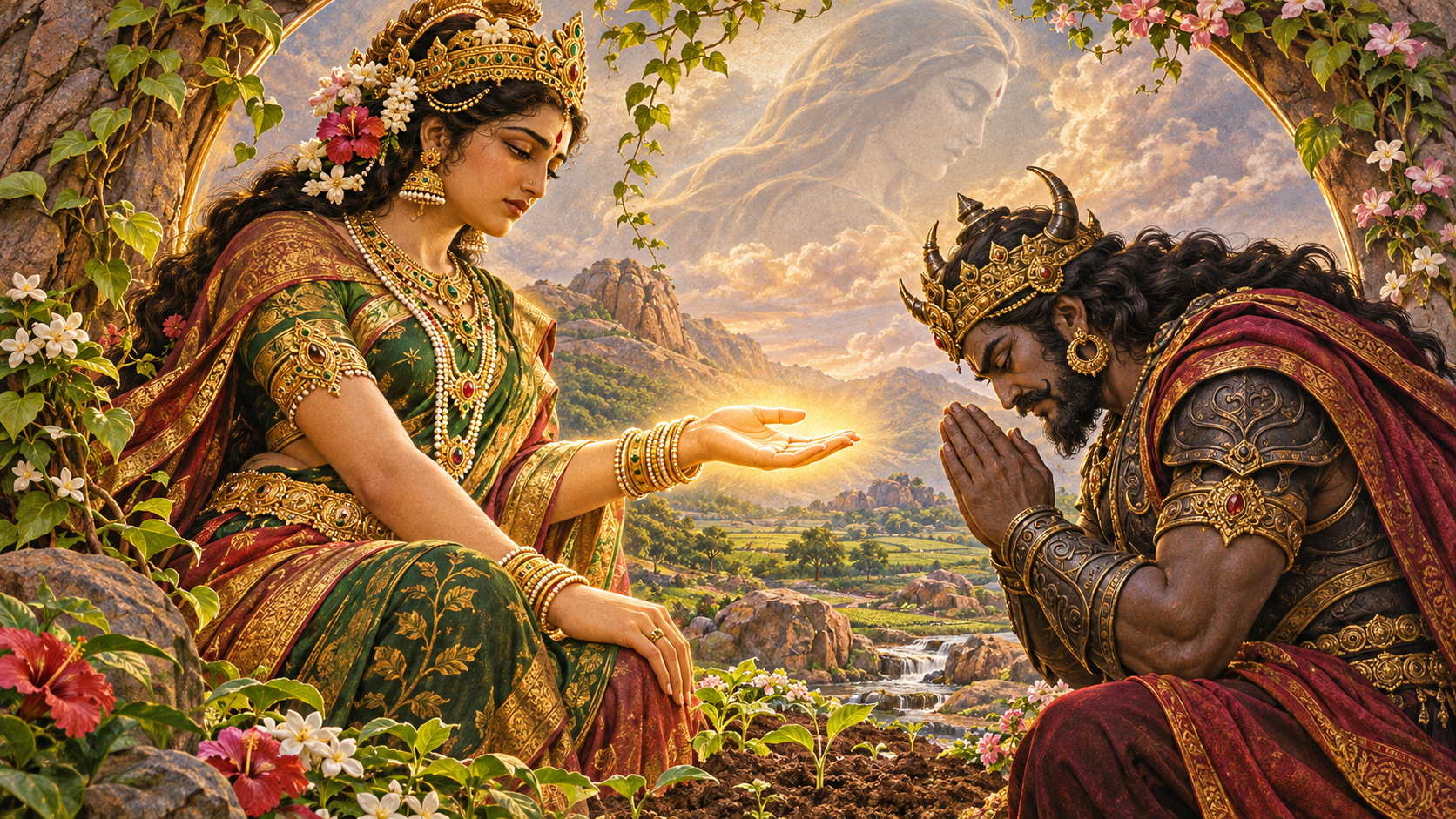
A widely told version links Narakasura’s protection to his mother, Bhudevi. Satyabhama, understood in that telling as a manifestation of Bhudevi, therefore becomes decisive in fulfilling the condition under which he could be defeated. Other tellings place Krishna more directly at the centre of the action. These versions should be identified honestly rather than spliced into an artificial account in which every detail is treated as universally fixed.
If your family’s telling gives Satyabhama the decisive role, preserve it. It carries an important theological point: a boon does not place adharma permanently beyond consequence. The very condition that appears to make oppressive power invulnerable can become the means by which dharma is restored. If your tradition centres Krishna’s victory, preserve that emphasis without pretending that the Satyabhama-centred telling does not exist.
The best way to handle the difference is to distinguish the stable core from the variable detail. The stable core is Narakasura’s oppressive rule, the divine defeat of that oppression and the community’s joyful release. The precise distribution of action between Krishna and Satyabhama belongs to the version received by a particular community.
The final wish turns victory into a festival of release
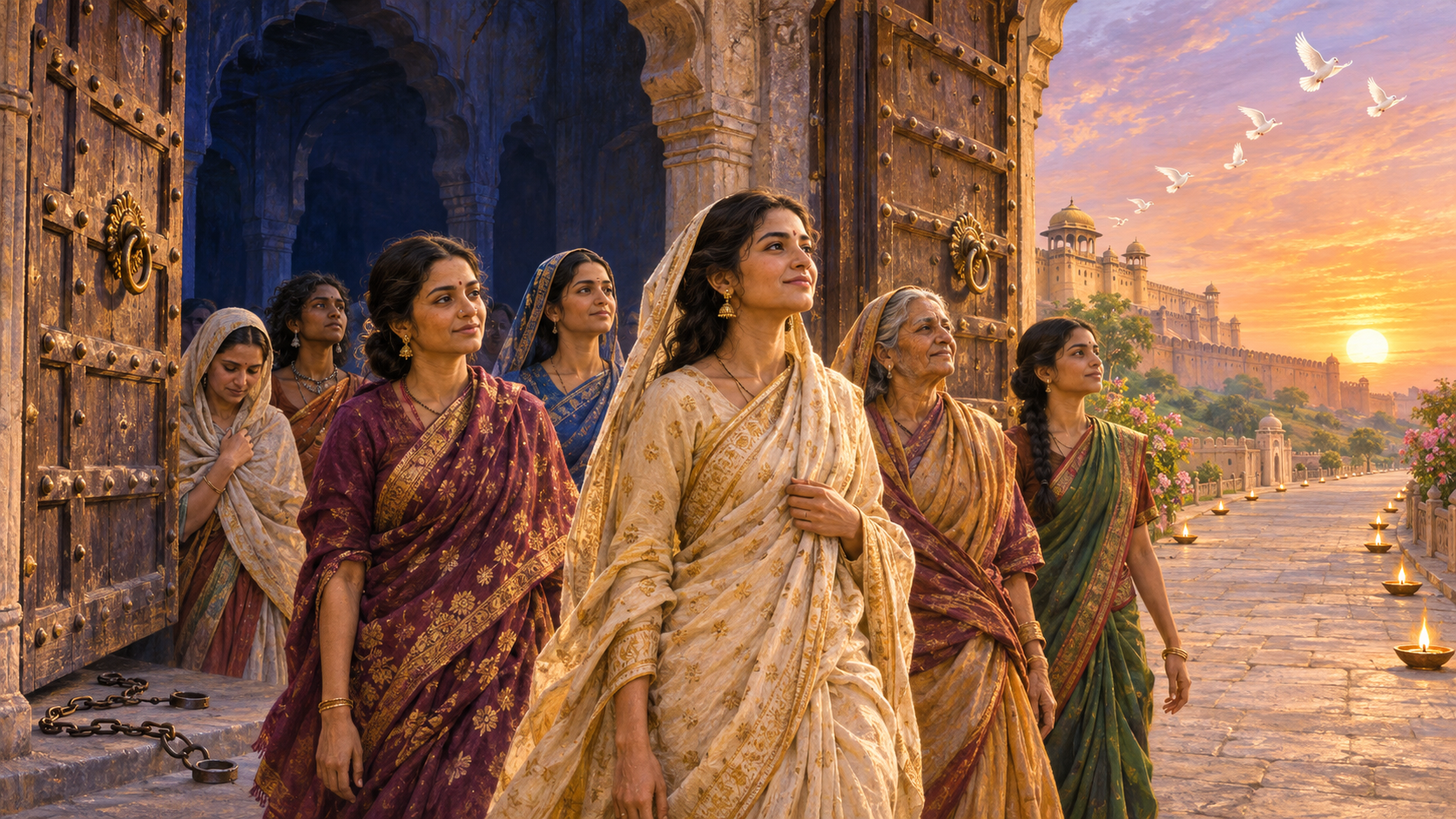
Narakasura’s final wish changes the emotional centre of the observance. His defeat is not followed by a day devoted to hatred or humiliation. The day of his fall becomes a day to be marked with light, happiness and celebration. The community rejoices because oppression has ended, not because suffering itself is entertaining.
This is the point most worth recovering when the story is told to children. A shallow retelling ends with the destruction of a demon. A Dharmic retelling asks what has been restored. People can live without fear. Auspicious activity can resume. Darkness no longer dictates the terms of life. Even the defeated figure’s last request is drawn into a celebration that benefits others.
You can express that meaning in plain language: Narakasura used power without dharma, his oppression was ended, and his final wish made the day one of shared joy. That explanation is short enough to give before the morning rituals, but substantial enough to stop the observance from becoming a collection of unexplained habits.
There is also a legitimate spiritual reading, provided it is presented as interpretation rather than as a replacement for the narrative. Narakasura can represent the habits that make inner life dark: arrogance, domination, resentment and the belief that power excuses conduct. On this reading, the festival asks you to identify one such tendency and stop feeding it. The outer celebration then accompanies an inward act of correction.
Let the morning customs tell the story in order
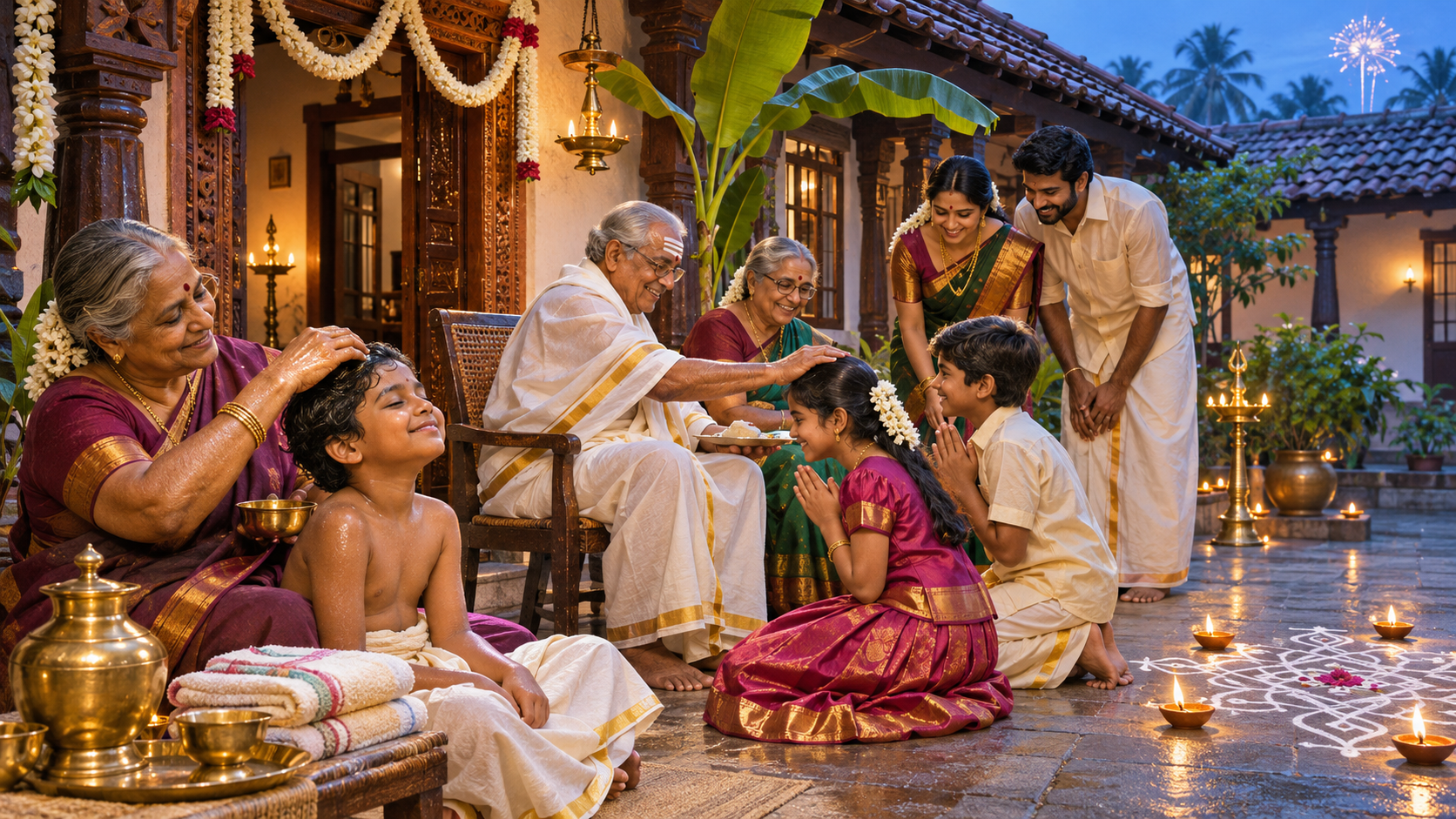
In many South Indian homes, the early-morning sequence carries much of Deepavali’s narrative weight. The customs should not be treated as isolated obligations. Arranged thoughtfully, they move the household from the memory of oppression to purification, auspiciousness and shared joy.
- Confirm your own household sequence. Ask which day the family calls Deepavali, which version of Narakasura’s defeat it received and which local calendar or temple tradition it follows. Regional labels and timing can differ, so a generic festival graphic should not overrule a living family practice.
- Prepare for Abhyanga Snana intentionally. Where an oil bath belongs to the tradition, set out the oil, towels and clean clothes beforehand. Explain that cleansing marks a passage out of darkness; otherwise the ritual can feel like an unusually early bath with no connection to the story.
- Tell the Narakasura story before distractions take over. Keep the first telling to three movements: power became oppressive, dharma ended the oppression, and the final wish turned that release into communal celebration. Family members can then add the Krishna- or Satyabhama-centred details preserved in their lineage.
- Connect lamps, clothes, sweets and greetings to restoration. Newness is not merely consumption. Light announces that darkness no longer rules; clean clothing marks an auspicious beginning; shared food turns private relief into communal joy.
- Treat fireworks as optional, not as the measure of devotion. If they belong to your family’s observance, follow local rules and account for fire risk, smoke, hearing sensitivity, infants, elders and animals. The theological meaning of Deepavali does not depend on creating distress for someone nearby.
A useful family explanation might be: Today we remember the end of Narakasura’s oppression. We cleanse and dress for an auspicious beginning, bring light into the home and share happiness because order has been restored. If your received account names Krishna, Satyabhama or both, add that detail in the way your elders taught it.
Key takeaways
- South Indian Deepavali commonly gives Narakasura’s defeat a central place, while other Hindu communities may foreground Rama’s return to Ayodhya or another sacred memory.
- The Krishna- and Satyabhama-centred tellings are variations within the tradition, not a reason to dismiss the observance as confused.
- Narakasura’s final wish matters because it turns the aftermath of defeat into public joy rather than vindictive celebration.
- Abhyanga Snana, clean clothes, lamps, food and greetings become easier to preserve when their order is connected to release, purification and auspicious renewal.
- Your family’s inherited practice should be documented with its language, locality and community context instead of being flattened into a supposedly universal script.
Preserve the tradition before the sequence is forgotten
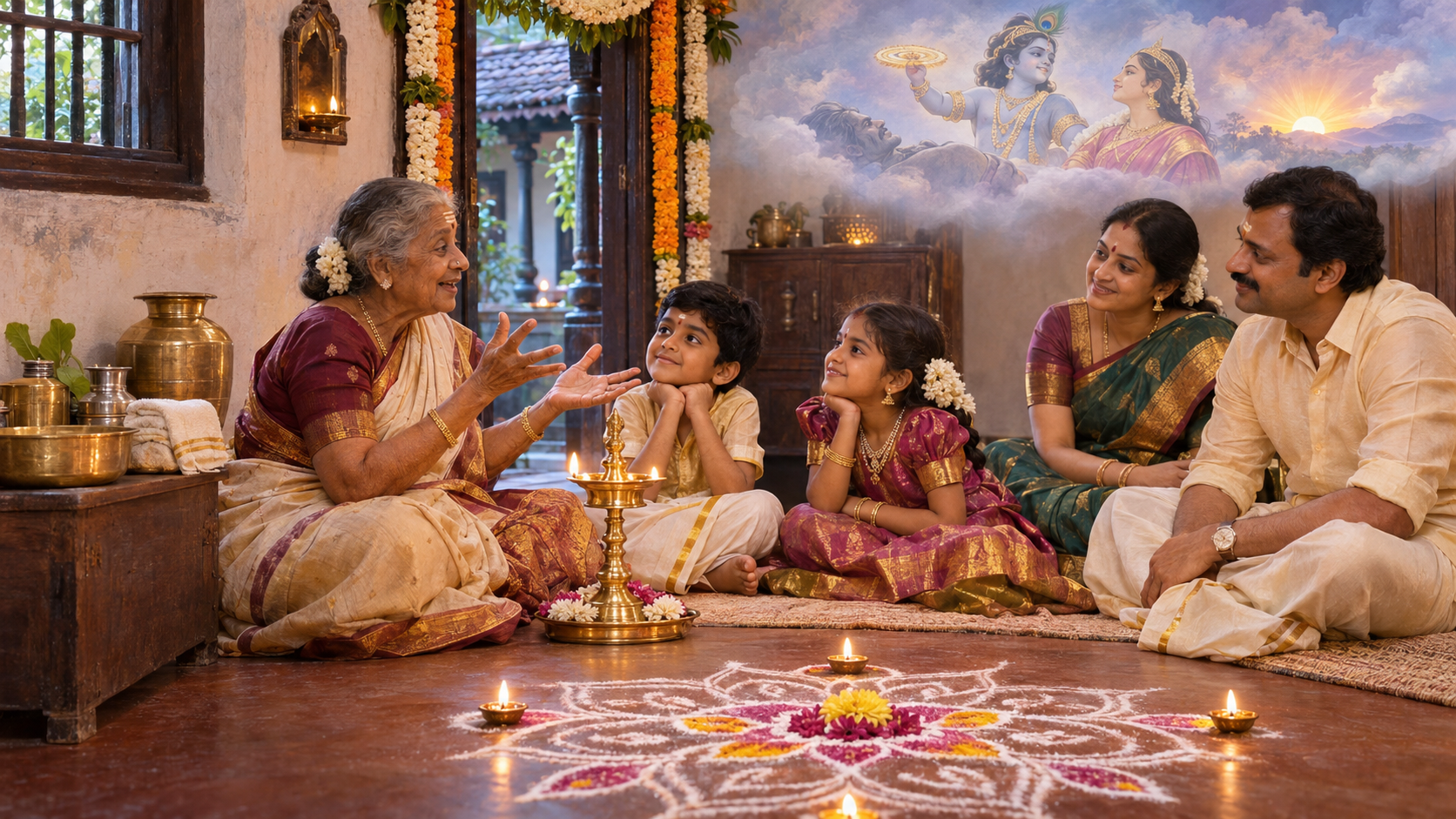
If your household remembers the customs but no longer agrees on their meaning, make a one-page family record this year. Ask the oldest reliable relatives five concrete questions: What is the festival called in our language? When does the household observance begin? Who prepares or applies the oil? Which version of Narakasura’s defeat did you hear? Which act or food traditionally comes first?
Record the locality, language, community and the relative from whom each detail came. Keep disagreements visible. A note that one branch remembers Satyabhama as decisive while another names Krishna is more faithful than silently choosing whichever version appears most often online. Variation with provenance is tradition; an unlabelled mixture is confusion.
This Deepavali, tell the story before the first sweet or firework. When younger family members understand why their morning begins as it does, the custom remains a vehicle of memory rather than becoming a performance repeated until nobody knows what it carries.
References

Leave a Reply
You must be logged in to post a comment.