
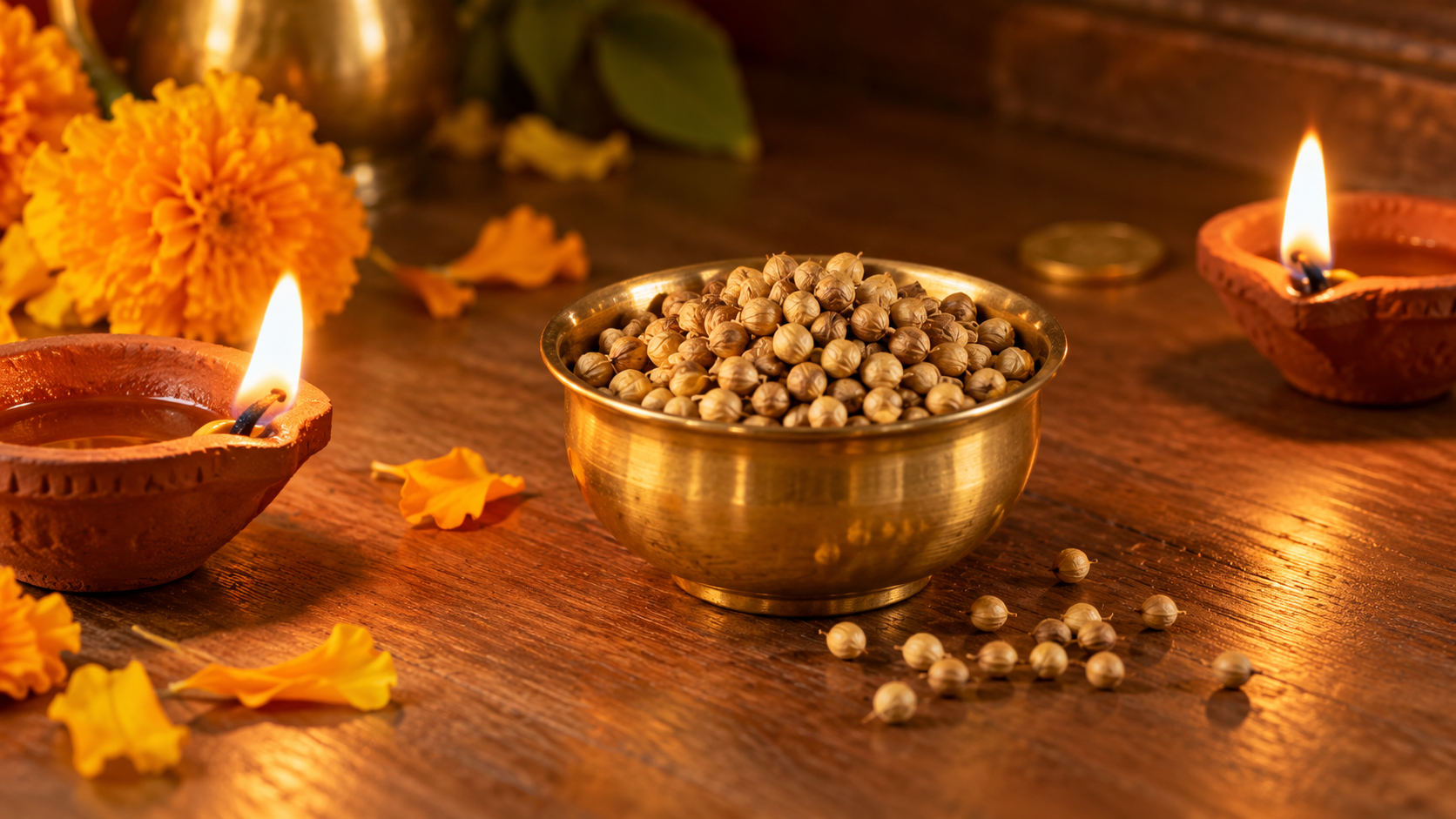
If someone in your family has asked you to buy dhaniya for Dhanteras, the important detail is easy to miss: the custom concerns whole coriander seeds, not coriander powder. The purchase is small, but its meaning is larger than the price or quantity of the spice.
The seed represents wealth that can grow, nourish, and continue. Buying it on Dhanteras gives an ordinary household ingredient a ritual purpose: it turns prosperity from a display of expensive objects into a reminder that abundance must be preserved and put to good use.
Why whole coriander seeds carry the symbolism
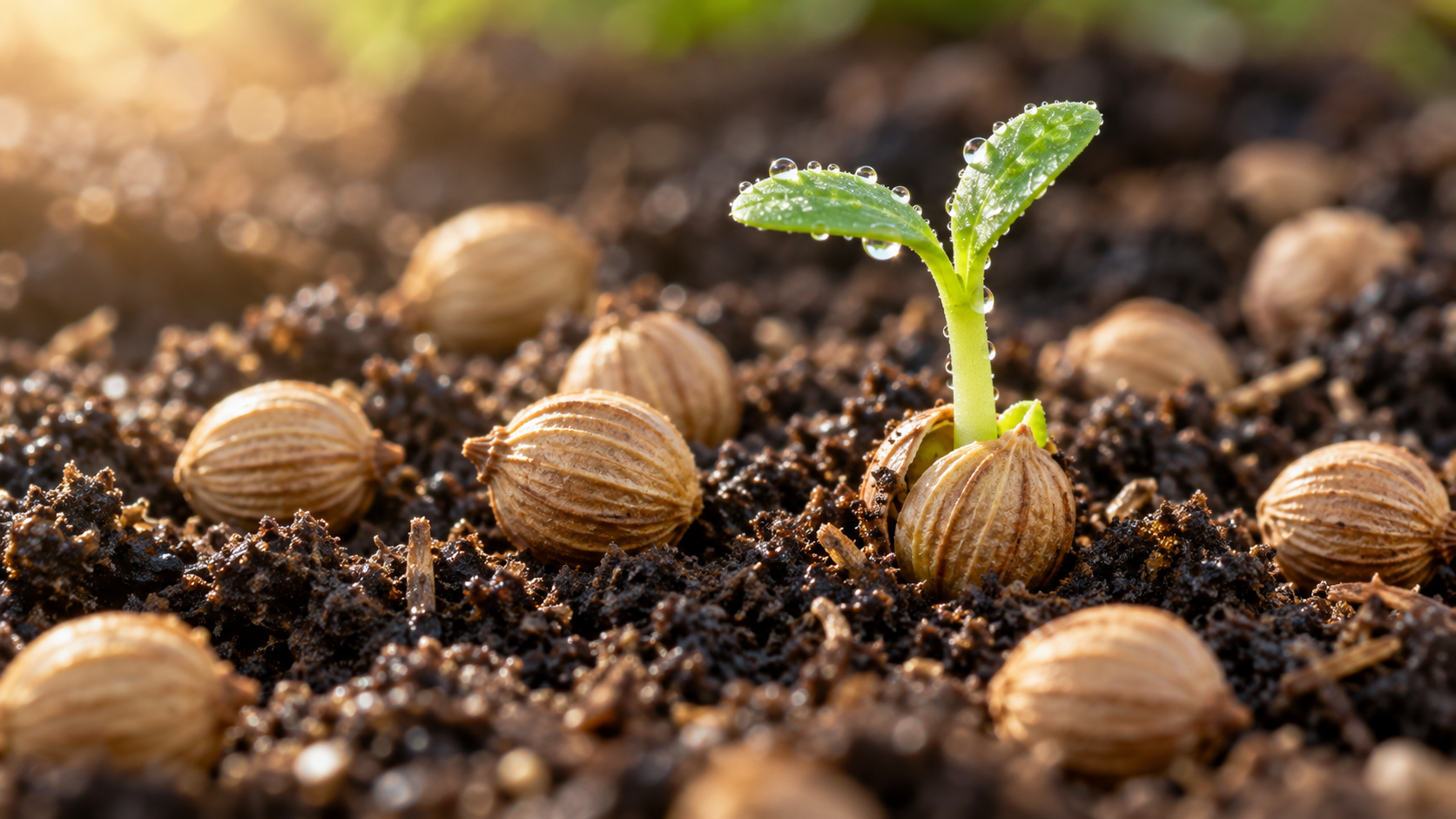
A whole seed contains visible potential. It can be stored, planted, multiplied, or used to nourish the household. That makes it a natural symbol of prosperity that does not end with a single transaction.
This is why substituting coriander powder misses the central image. The powder is perfectly suitable for cooking; it is not ritually inferior or impure. It simply represents a finished ingredient rather than a seed holding future growth. When you are observing this particular custom, buy sabut dhaniya: clean, dry, whole coriander seeds of ordinary food-grade quality.
The symbolism also corrects a common misunderstanding about Dhanteras. Prosperity is not merely the possession of something costly. A modest seed connects wealth with fertility, food, continuity, and responsible household life. It asks you to see abundance as something that should sustain life and generate further good.
How the custom fits the meaning of Dhanteras
Dhanteras begins the five-day Deepavali observance and is associated with Goddess Lakshmi, the giver of prosperity, and Lord Dhanvantari, the divine healer. The day therefore brings wealth and well-being into the same field of attention. The coriander seed suits that union: it belongs to the kitchen, supports nourishment, and evokes growth.
This matters because wealth without well-being is incomplete, while health without the material means to sustain a household can become precarious. The dhaniya custom does not reduce either deity to a commodity. It places a familiar form of nourishment beside the aspiration for abundance.
Many people now encounter Dhanteras mainly through advertisements urging them to buy jewellery, utensils, vehicles, or appliances. The coriander tradition offers a useful counterweight. You do not need an extravagant purchase to mark an auspicious beginning. A meaningful observance can begin with something inexpensive, useful, and capable of representing renewal.
A simple way to observe the tradition at home
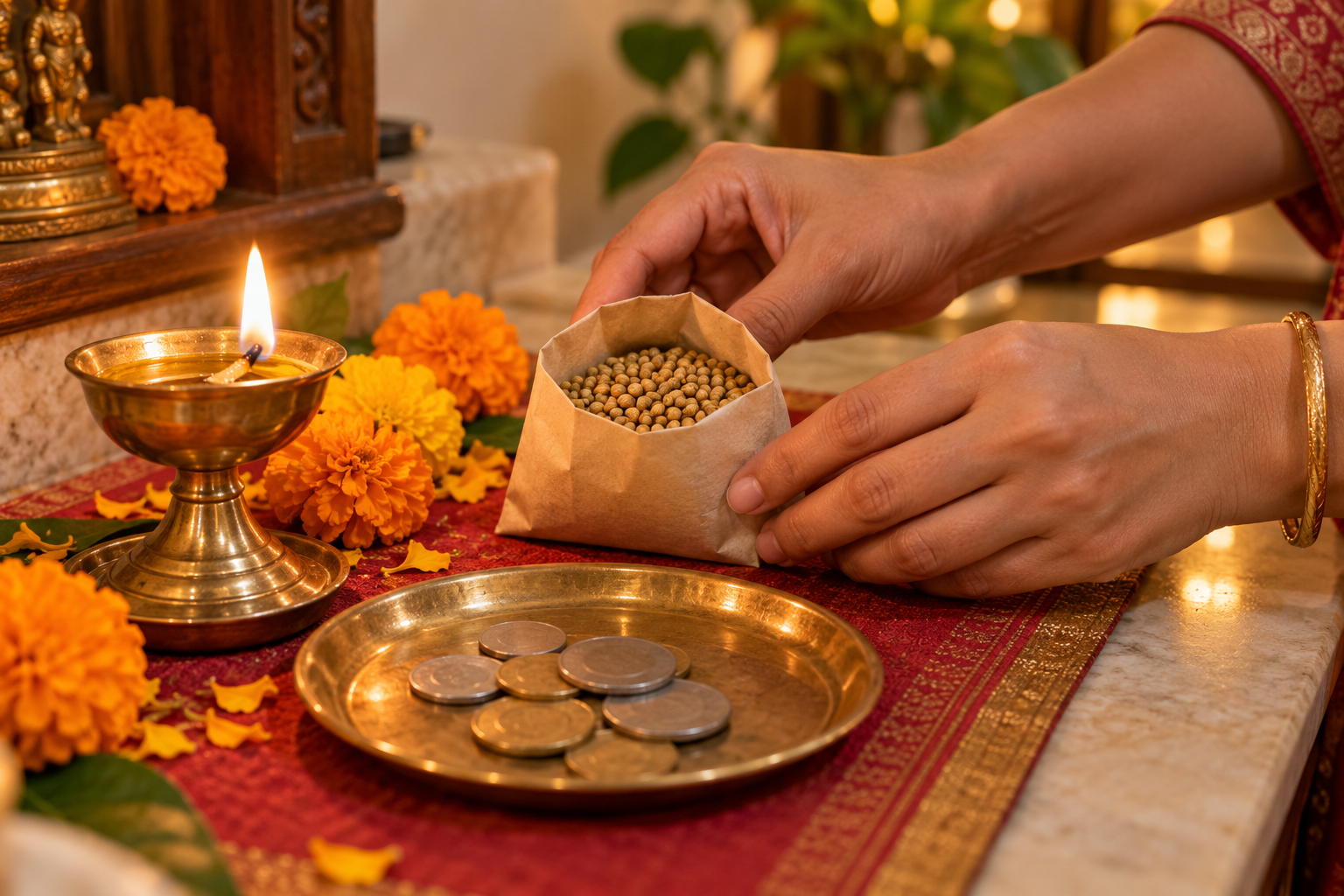
There is no reason to turn a gentle household custom into an anxious test of ritual correctness. If your family has an established method, follow that parampara. Family practice should take precedence over a generic checklist. If you are beginning the custom yourself, keep the observance simple and intelligible.
- Buy whole, food-grade coriander seeds on Dhanteras. Check that they are clean and dry; an elaborate package is unnecessary.
- Keep the seeds respectfully with the items your household uses for Dhanteras worship. If your family follows a particular placement or offering procedure, retain it.
- During worship, remember what the seed represents: prosperity that nourishes, renews, and multiplies through right use.
- After the observance, do not discard the seeds as decorative waste. Preserve or use them respectfully in the manner followed by your household.
The intention is not to purchase as much dhaniya as possible. Quantity does not strengthen the symbol. Nor should the purchase displace essential household spending. A sacred sign of prosperity becomes distorted if it creates financial pressure, competition, or fear.
You also do not need to invent elaborate rules where your tradition supplies none. If an elder or family priest has given you a specific procedure, follow it. If not, cleanliness, reverence, remembrance, and the refusal to waste are sound principles for a simple home observance.
What the ritual can change beyond the festival
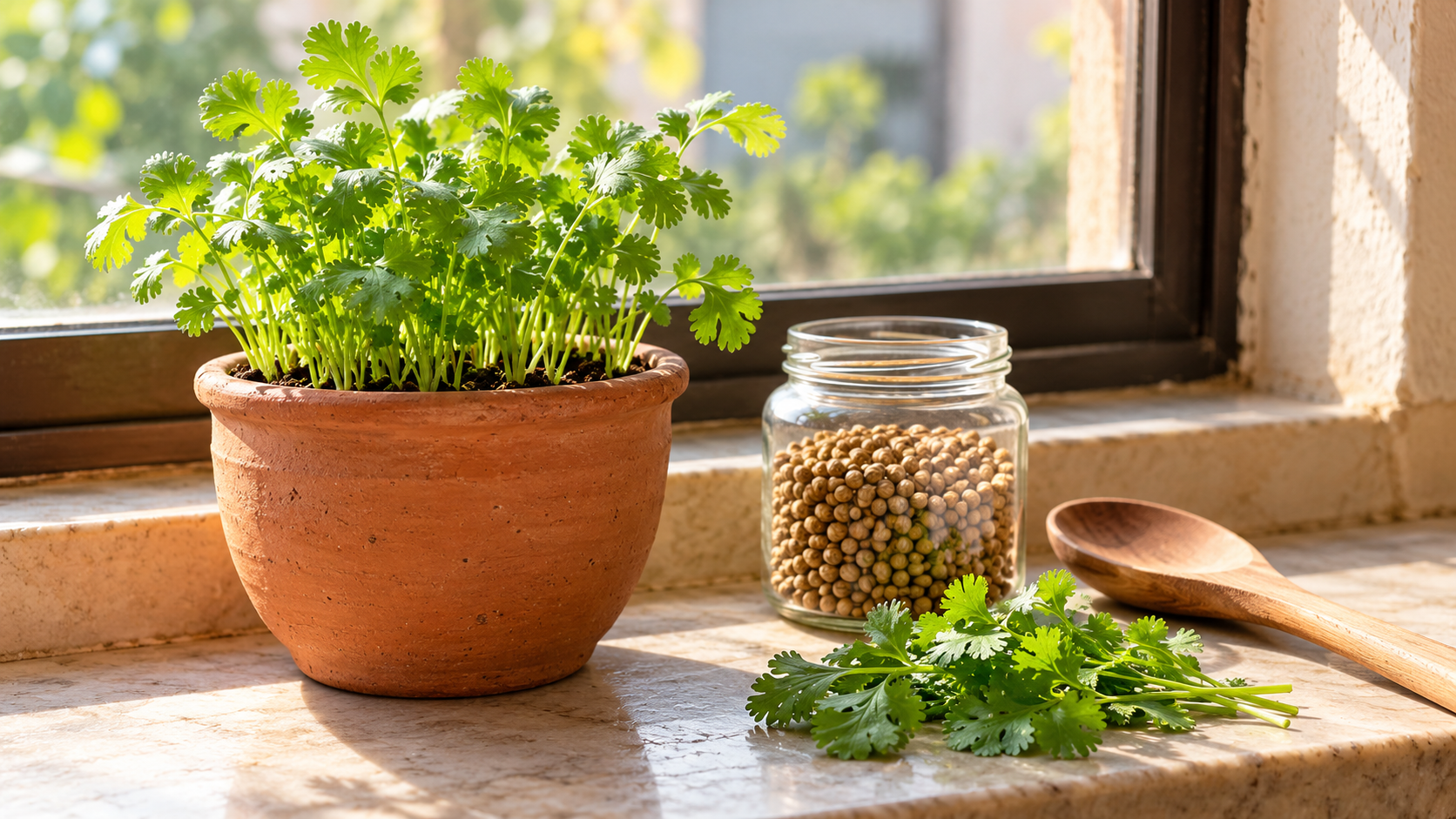
The dhaniya purchase is most useful when it changes how you think about prosperity after Dhanteras. A seed does not become a harvest through possession alone. It needs suitable conditions, care, and time. Household wealth works in a similar way: it must be protected, directed, and connected to a worthy purpose.
You can carry that meaning into one practical decision. Reduce avoidable waste in the kitchen. Set aside something for future needs. Share food where appropriate. Repair an item before replacing it. Choose one action that treats Lakshmi not as sudden acquisition, but as abundance received with discipline and gratitude.
The association with Dhanvantari adds another question: does your idea of prosperity support the well-being of the people in your home? The ritual itself is not a medical remedy, and coriander should not be treated as a substitute for healthcare. Its place here is symbolic. It reminds you that material security and the conditions that sustain life should not be separated.
Key takeaways
- Buy whole coriander seeds rather than coriander powder when observing this Dhanteras custom.
- The seed represents potential, nourishment, continuity, and prosperity capable of further growth.
- The custom belongs within a day honoring both Lakshmi and Dhanvantari, joining abundance with well-being.
- You do not need an expensive or oversized purchase; reverence matters more than price or quantity.
- Follow your family tradition where one exists, and do not waste the seeds after worship.
- Let the symbol lead to one concrete act of careful stewardship in your household.
When you bring home whole dhaniya this Dhanteras, pause before treating it as one more item on the shopping list. Give the seed a clear intention, conduct the observance according to your family tradition, and let its meaning guide one responsible choice after the lamps and festivities have passed.
References

Leave a Reply
You must be logged in to post a comment.