
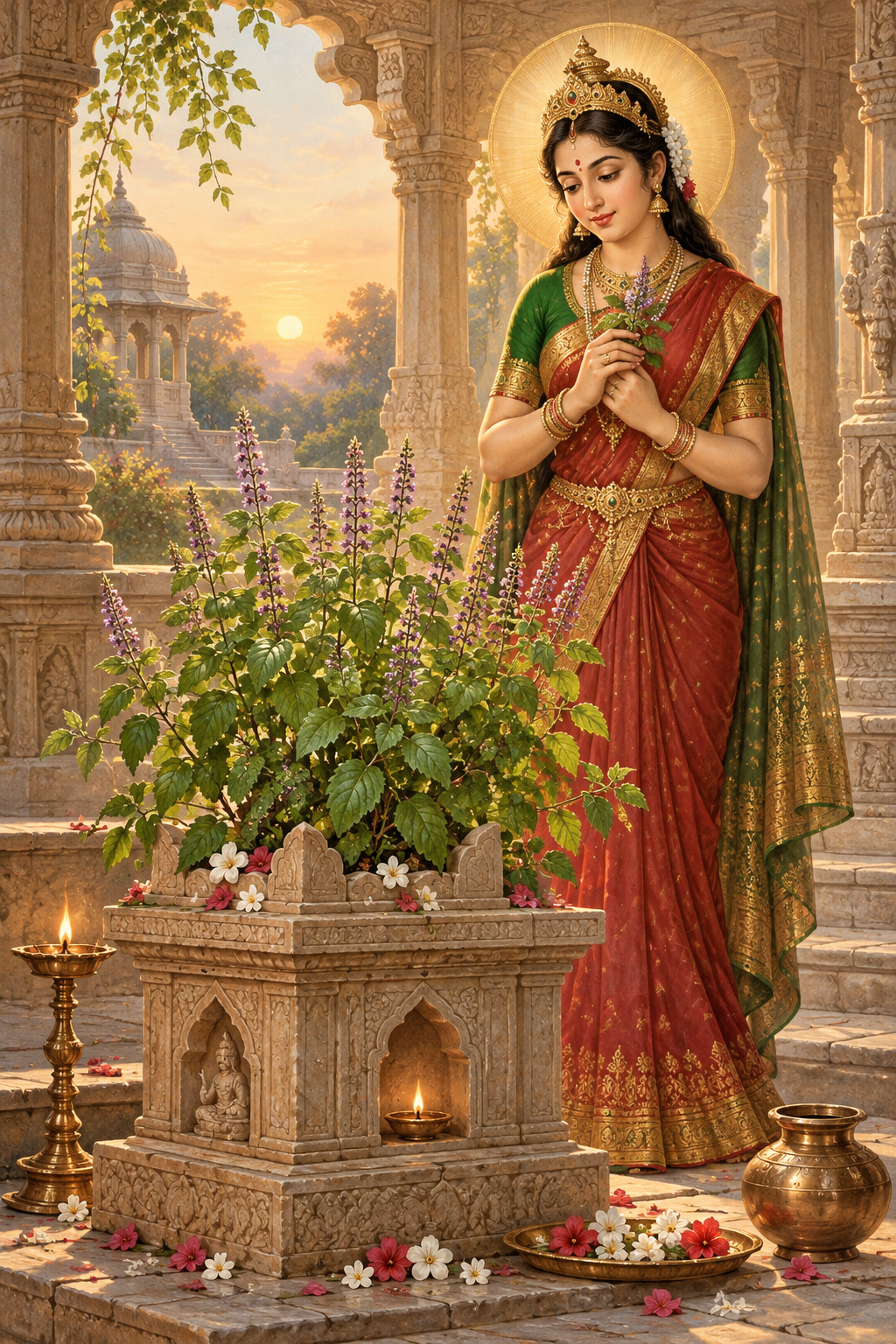
If you are trying to identify Tulsi Devi in a temple image, calendar print, museum display, or home shrine, do not begin by counting arms or looking for one supposedly definitive object. Her iconography does not rest on a single universal checklist.
Begin with a more useful question: is Tulsi Devi being presented through the sacred plant, through an anthropomorphic goddess, or through a devotional setting that brings the two together? Once you make that distinction, you can read the image without mistaking local convention for universal scripture.
Recognise two forms of one sacred presence
Tulsi Devi occupies an unusual place in Hindu worship because she is revered both as a sacred plant and as a goddess. The plant form is therefore not merely a botanical emblem placed beside the “real” deity. It is itself a form through which devotees recognise and worship her.
- The living plant form: When Tulsi is the focal presence in a courtyard, household shrine, temple precinct, or ritual arrangement, read the plant as the principal sacred form rather than as background decoration.
- The anthropomorphic form: When Tulsi Devi appears as a humanlike goddess, her personhood is made visually explicit. The artist can express divine character through posture, clothing, ornaments, gesture, and surrounding figures.
- A combined presentation: When plant and goddess appear together, the composition helps the viewer connect the visible, cultivated plant with the divine person worshipped through it.
This distinction matters when you are cataloguing an image. Calling every plant representation a “symbol of Tulsi Devi” can understate its devotional status. Calling every human figure a universally prescribed murti can make the opposite mistake. Describe the form actually present before interpreting what it means.
Why a rigid attribute checklist will mislead you
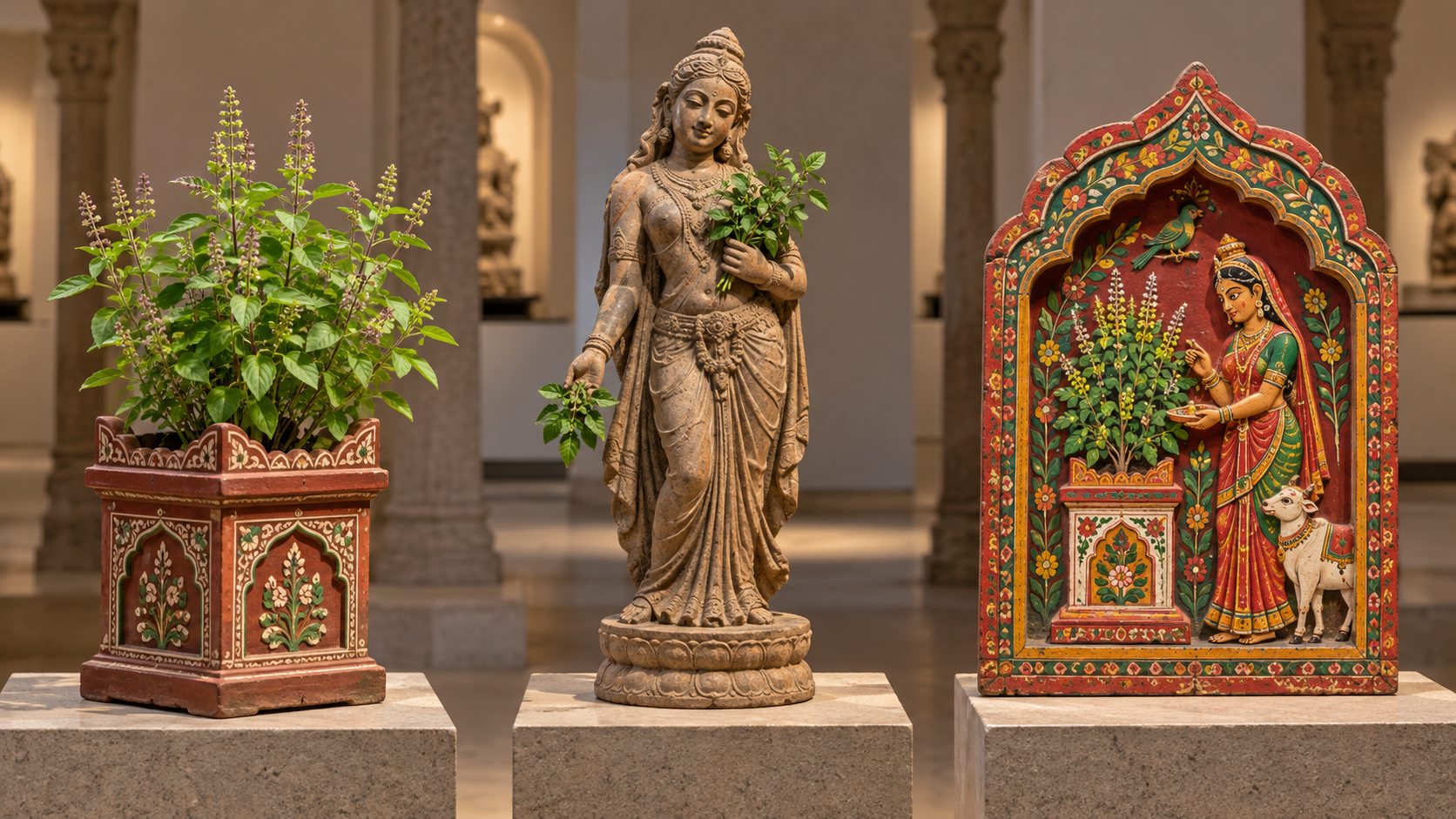
Many major devis have forms described in considerable detail in the Shilpa Shastras. Tulsi Devi’s anthropomorphic form is only sparsely specified in comparison. Her visual identity draws more broadly from Puranic narratives and Vaishnava traditions.
That does not make every depiction equally authoritative. It changes where you should look for authority. An inscription, a temple’s established practice, a sampradaya’s teaching, or a narrative scene can identify her more securely than an isolated colour, ornament, or hand-held object.
Use three levels of confidence when examining a depiction:
- Strong identification: The figure is named, the sacred plant is central, or the surrounding ritual and narrative context clearly identifies Tulsi Devi.
- Contextual identification: The figure appears in a recognisably Vaishnava setting, but the work needs a caption, oral tradition, or temple explanation to settle the identity.
- Speculative identification: The claim depends only on a colour, pose, ornament, number of hands, or object whose meaning has not been established for that particular tradition.
A visual detail may still be meaningful at the second or third level. The discipline is to call it a local convention or artistic interpretation until you can trace it more firmly. Different-looking images are not automatically contradictory, and a frequently repeated modern design is not automatically an ancient prescription.
Read an unfamiliar depiction in five steps
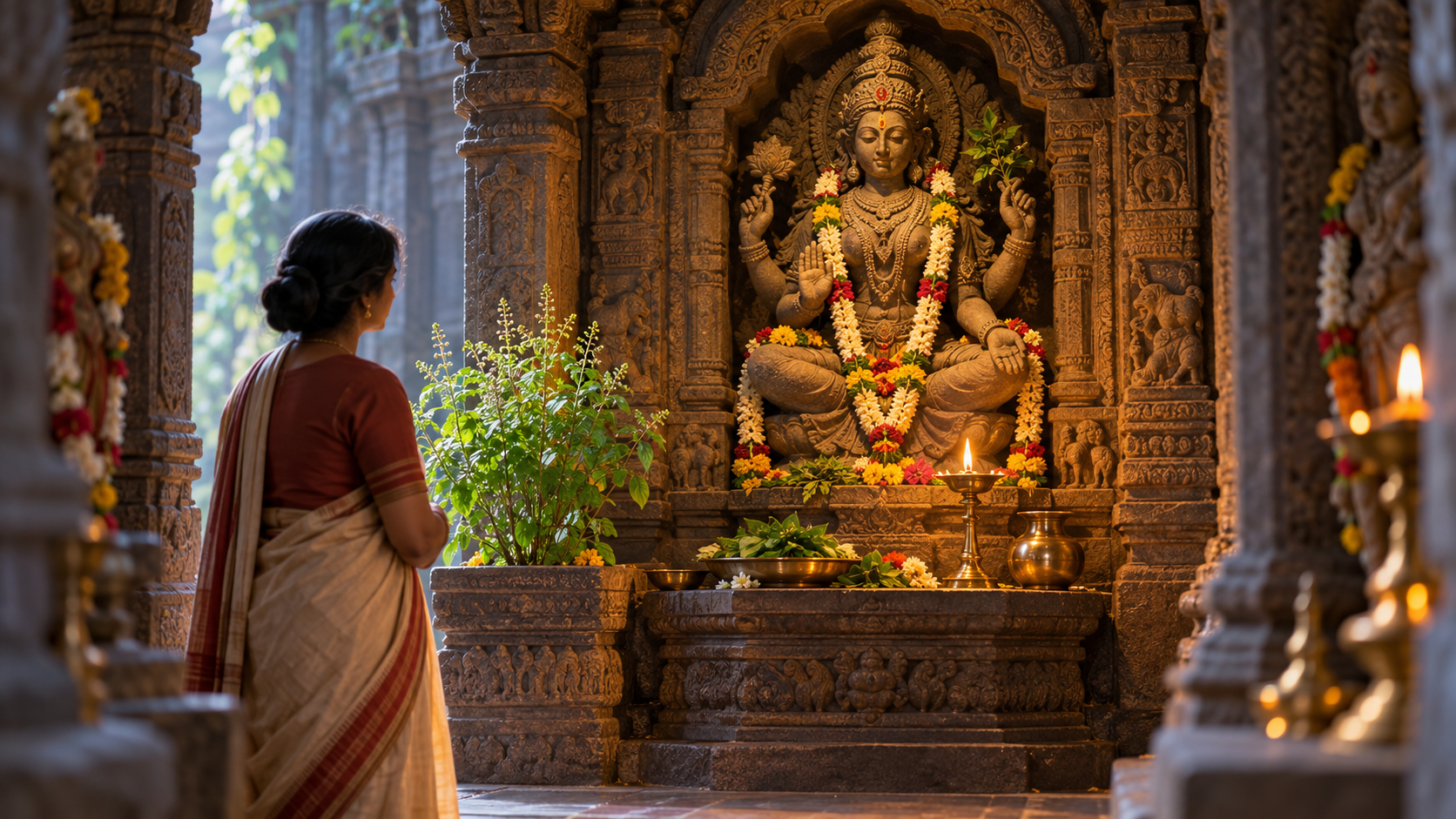
You can use the following method whether you are a devotee, teacher, writer, curator, or student. It keeps observation separate from assumption.
- Name the primary form. Record whether you are looking at a living plant, a sculpted plant, a humanlike goddess, or a composition containing more than one of these.
- Locate the setting. Note whether the depiction belongs to household worship, a temple, a narrative scene, a festival image, a manuscript illustration, or modern devotional art. Context can carry more identifying weight than an accessory.
- Inventory only what is visible. Record posture, gestures, objects, ornaments, surrounding figures, inscriptions, and plant imagery without assigning meanings prematurely.
- Separate identity from interpretation. Ask which feature establishes that the subject is Tulsi Devi and which features merely express an artist’s understanding of her. A caption can establish identity while colour and ornament remain interpretive choices.
- Verify the relevant tradition. If the image is used in worship, ask the temple, family, or sampradaya that preserves it. If it is an artwork, seek its title, provenance, and accompanying explanation. Do not force one community’s visual vocabulary onto another.
This method also helps when a search result presents several sharply different images under the same name. Instead of choosing the most elaborate one as the most “authentic,” check which image has a clear devotional or institutional context.
What the plant form asks you to notice
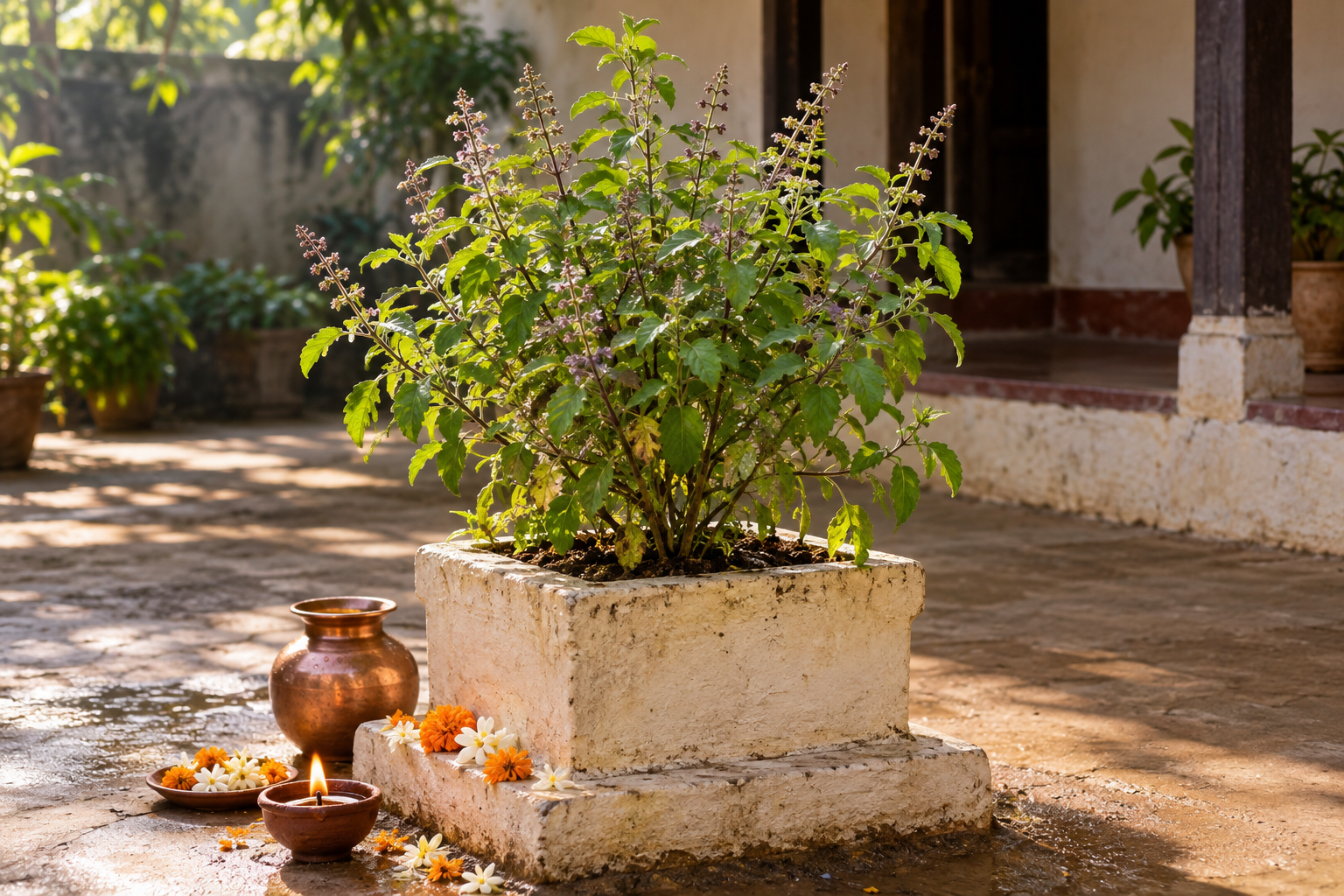
The plant form changes the usual relationship between sacred image and daily life. Tulsi Devi can be encountered through a living presence that must be tended, approached, and incorporated into the rhythms of the household. Care is not separate from reverence in this form; it becomes one of the ways reverence is expressed.
For that reason, a photograph of a Tulsi plant used in worship should not be interpreted in the same way as a botanical specimen photograph. The species may look similar, but the framing, placement, ritual use, and devotional intention change what the viewer is being asked to see.
When teaching children or introducing the subject to someone unfamiliar with Hindu practice, avoid saying that the plant “stands for” a goddess and stopping there. A clearer explanation is that Tulsi Devi is worshipped through the sacred plant and may also be represented in a humanlike divine form. That wording preserves the relationship without collapsing one form into the other.
How to choose or commission a responsible image
If you are selecting a Tulsi Devi image for worship, teaching, publication, or public display, decide its purpose before judging its appearance. The right standard is not the same in every setting.
- For household worship: Follow the practice of your family, guru, or sampradaya. Continuity of worship matters more than assembling features from unrelated images found online.
- For a temple setting: Consult the responsible religious authority before commissioning the form. Do not ask an artist to turn a general internet description into a claim of scriptural precision.
- For teaching: Showing the sacred plant and an anthropomorphic representation together can make the two modes immediately clear. Caption each one and explain that visual conventions can vary.
- For publication or exhibition: Identify provenance wherever possible. Distinguish a traditional worship image from a contemporary artist’s interpretation, even when both are devotional.
- For original art: Make the plant-goddess relationship legible, but describe newly chosen colours, gestures, and objects as artistic decisions unless you can document their traditional basis.
One practical rule prevents many errors: never use “canonical” as a synonym for “familiar.” Repetition can make a modern design widely recognisable without proving that every one of its details comes from a Shilpa Shastra or another prescriptive text.
Key takeaways
- Tulsi Devi may be encountered through the sacred plant as well as through an anthropomorphic goddess form.
- The plant should not be reduced to decorative symbolism when it is itself the focus of worship.
- Her humanlike iconography is less exhaustively codified than that of many major devis.
- Puranic narrative, Vaishnava tradition, local practice, inscriptions, and provenance can identify a depiction more reliably than an isolated visual attribute.
- Record what you see first; label a detail “universal” only when you can establish that it is more than a local or artistic convention.
The next time you encounter an image of Tulsi Devi, begin with form and context rather than a borrowed checklist. If the depiction will guide worship or public understanding, verify it with the tradition that will actually use it and label interpretation honestly.
References

Leave a Reply
You must be logged in to post a comment.