
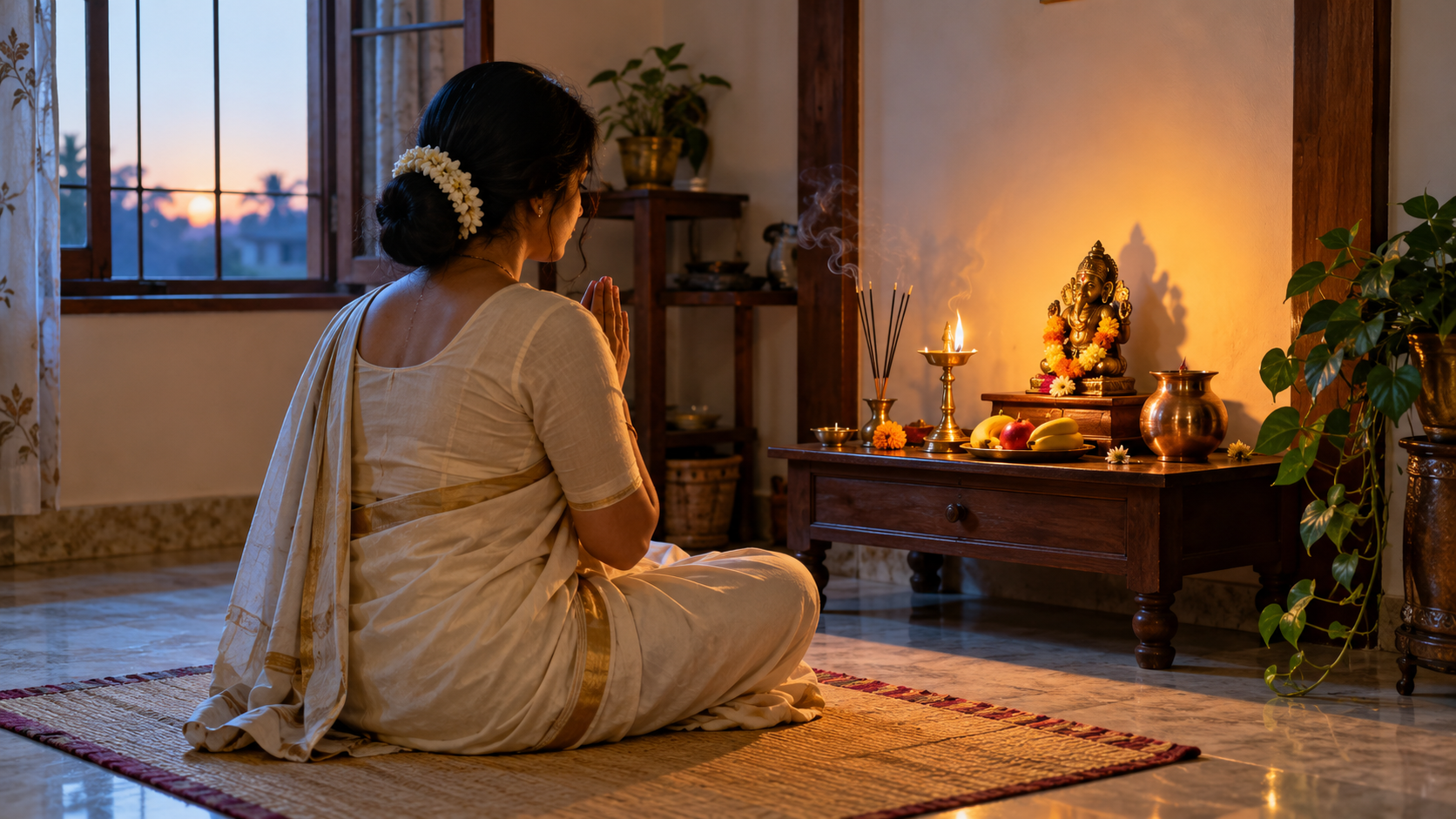
You want to worship properly at home, but the instructions do not seem to agree. A family elder gives one sequence, a temple follows another, and an online video adds steps you have never seen. The answer is not to combine everything into one enormous ritual. It is to identify which tradition governs your observance, preserve its essential structure, and simplify only what is genuinely optional.
This approach works whether you are establishing a daily puja, beginning a Sundarakanda parayana, or deciding which tilak to wear. It replaces ritual anxiety with a repeatable discipline: know your authority, prepare before you begin, keep a stable order, and do not make promises you cannot sustain.
Separate inherited procedure from personal convenience
There is no contradiction in finding different Hindu procedures for the same broad act of worship. A Shaiva household, a Vaishnava sampradaya, a Shakta temple and a regional family tradition may preserve different mantras, offerings, tilak forms and rules of sequence. The mistake is assuming that every difference must be resolved into a single pan-Hindu formula.
Before choosing a procedure, sort the instructions in front of you into three layers:
- Authoritative requirements: instructions received from your guru, sampradaya, family tradition or the temple responsible for the observance. If an initiated mantra or formal discipline was given with conditions, a general household template should not override them.
- The stable devotional core: the deity or sacred text, the opening remembrance, the main act of worship and the closing. These should remain recognisable even when the scale of the puja changes.
- Expandable elements: additional flowers, lamps, recitations, decorations or elaborate offerings. These can often be adjusted when time, space or materials are limited, provided your tradition has not made them part of a vow.
This distinction matters because simplification and improvisation are not the same thing. Simplification keeps the identity and order of an observance while reducing its scale. Improvisation changes mantras, symbols or ritual conditions without understanding what they belong to.
Purificatory practices such as Achamanam illustrate the point. If Achamanam belongs to the procedure you have been taught, perform it as taught. Copying a fragment from another tradition merely because it appears more elaborate does not make your worship more complete. Bhava does not erase discipline, and discipline does not replace bhava; Hindu worship asks you to cultivate both.
Use a dependable sequence for ordinary home puja
When you have not received a more specific procedure, the following framework gives a household puja a clear beginning, centre and end. It is deliberately adaptable. Use only the offerings appropriate to your deity and custom, and preserve any family rules already entrusted to you.
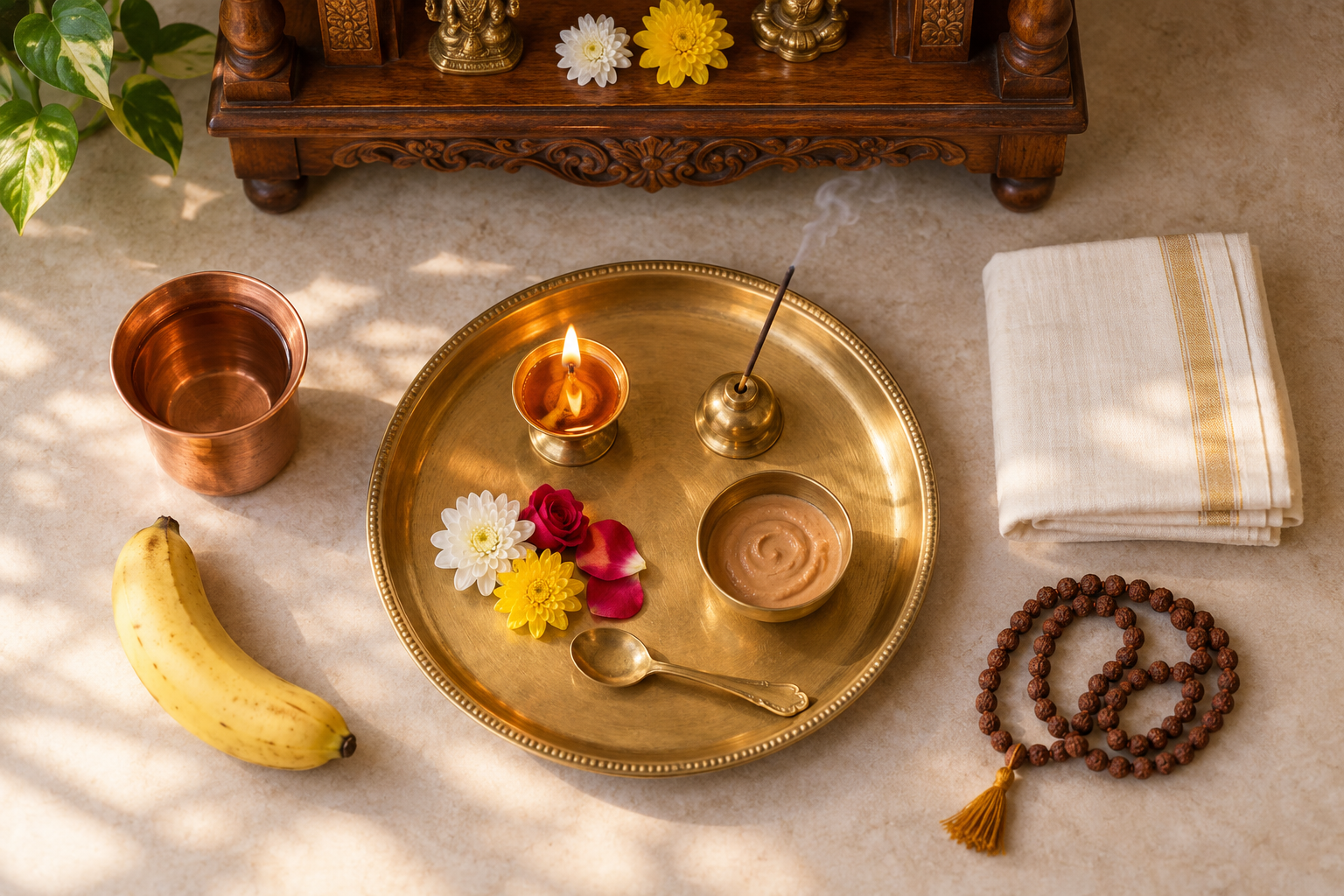
- Prepare yourself and the place. Wash, wear clean clothing appropriate to your household, clean the worship surface and remove yesterday’s perishable offerings. Gather everything before sitting down. Repeatedly leaving the altar to search for matches, flowers or a text breaks attention and encourages careless handling of the lamp.
- Arrange the sacred focus. Place the murti or image respectfully and set out the items you will actually use. Keep a lamp on a stable, heat-resistant surface, away from curtains and other combustible material. If open flame is unsafe or prohibited where you live, omit it rather than creating a hazard.
- Settle your attention. Sit or stand according to your custom, make namaskara, and remember why you are worshipping. A formal sankalpa has its own wording and method; use it when you know the method. Otherwise, state a plain devotional intention without pretending that an improvised sentence is a formal ritual formula.
- Follow the opening you have inherited. This may include remembrance of guru, Ganapati or the presiding deity, depending on the tradition. Do not add every opening invocation you encounter. A consistent, understood beginning is more useful than an expanding collection of unrelated preliminaries.
- Make the appropriate offerings. Offer the water, flowers, fragrance, light or food used in your practice, in its recognised order. If an item is unavailable, do not automatically replace it with something that merely looks similar. Omit a nonessential item or ask a knowledgeable teacher what substitution, if any, is accepted.
- Perform the central devotional act. Chant the mantra you are authorised or accustomed to use, recite a stotra, read the chosen sacred passage, or remain in attentive remembrance. This is the centre of the puja. Do not rush it because too much time was spent arranging optional decoration.
- Close deliberately. Perform aarti if it belongs to your method, offer pranama, conclude the recitation properly and receive or distribute prasada. Put books and implements away respectfully, remove food before it spoils, and never leave a burning lamp unattended.
The practical test is repeatability. If your routine is so elaborate that you regularly abandon it, reduce the expandable elements while keeping the same deity, opening, central practice and closing. Abhyasa grows through steadiness. Constantly redesigning the ritual prevents that steadiness from taking root.
It also helps to prepare a small ritual card in your own words. Record the sequence, the books and materials required, and the exact place at which each recitation begins and ends. The card is not a new scripture or a replacement for oral instruction. It is a memory aid that keeps you from consulting several conflicting screens while worship is already under way.
Plan Sundarakanda parayana before opening the book
Sundara Kanda is the fifth book of the Ramayana, composed in Sanskrit by Valmiki and centred on Hanuman’s adventures. Its focus makes it a natural choice for devotees drawn to Hanuman’s courage, intelligence, humility and unwavering service to Sri Rama.
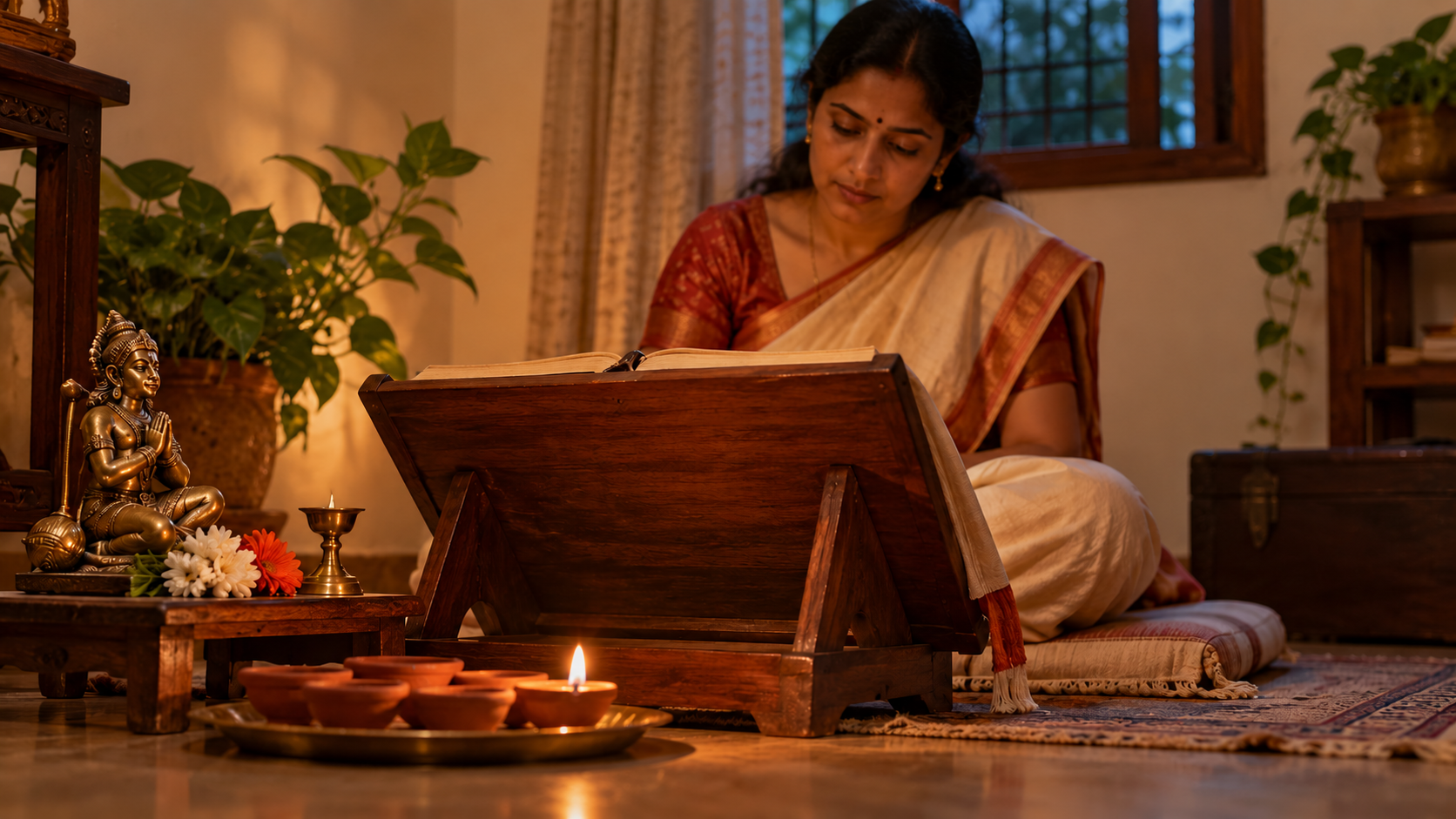
A parayana is not simply reading until you feel ready to stop. It is an intentional passage through a sacred text. Sundarakanda parayana is practised according to schedules spread over different numbers of days, so the first practical decision is not whether the longest schedule sounds most impressive. It is which recognised schedule you can actually complete with care.
- Select the edition first. Use a complete edition that you can read confidently. Keep the same edition throughout the observance so that headings, divisions and stopping points do not shift midway.
- Choose the governing method. If your guru, family or temple has prescribed a particular parayana schedule, use that schedule. If this is a self-undertaken devotional reading, choose a sustainable division rather than borrowing the strict conditions of a formal vow you do not understand.
- Mark every session in advance. Write down the exact opening and closing passage for each sitting. Do not rely on calculating the next stopping point while reading. A clearly marked plan lets you attend to the text instead of the calendar.
- Fix the opening and closing practice. Decide which invocation, Hanuman or Rama remembrance, prayer and concluding namaskara belong to each session. Keep these stable instead of adding new material on different days.
- Prepare pronunciation and meaning. Review unfamiliar names and passages before the formal sitting. If you are reading Sanskrit, a translation can help you understand the movement and meaning of the narrative. If a prescribed observance specifically requires Sanskrit recitation, do not silently replace that requirement without consulting the person who prescribed it.
- Protect the final session from overload. Divide the text so that the closing day is not burdened with all the material postponed earlier. Your plan should leave room for an unhurried conclusion rather than turning completion into a race.
If you miss a session in an informal, self-chosen reading, resume carefully and revise the remaining plan. If you made a formal sankalpa or accepted a rule-bound observance, do not invent a remedy or quietly change its conditions. Ask the guru, priest or knowledgeable elder from whom the procedure came.
Keep the devotional purpose clear as well. You may begin with a prayer concerning a real difficulty, but parayana should not be treated as a mechanical bargain in which a quantity of recitation compels a desired result. Hanuman’s portion of the Ramayana directs attention toward dharma, service, courage and fidelity. Let the manner of your reading reflect those qualities.
Let your tilak express a tradition rather than a trend
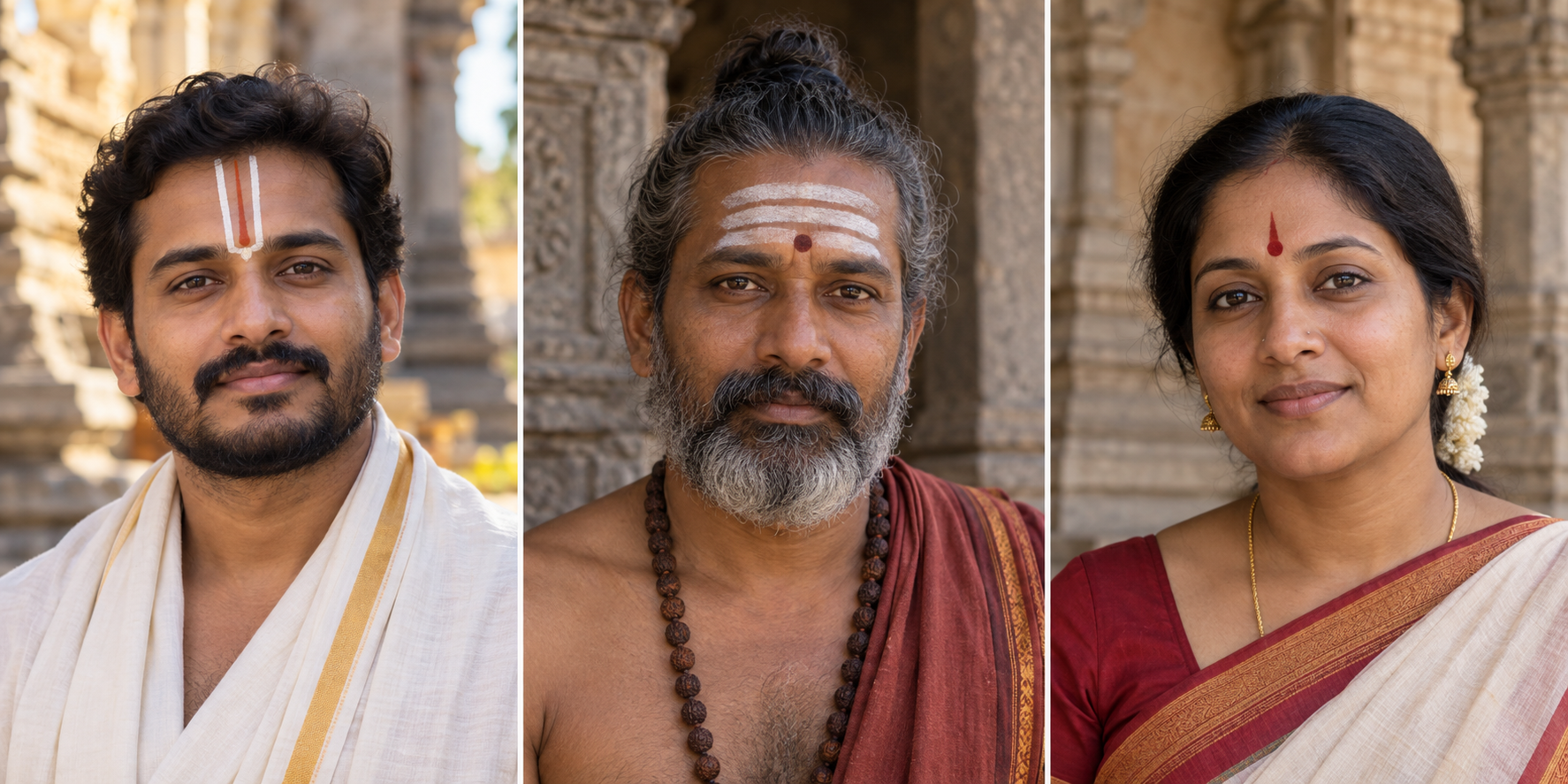
Tilak is a small act with visible meaning, which is why casual mixing creates more confusion than simplification. Its usual point of application is the central region of the forehead, slightly above the eyebrows. The precise form, direction, colour and substance are not universal.
The appropriate tilak may differ when worship is directed to Shiva, Krishna, Devi or Ganapati. Sampradaya and family convention further shape the mark. That means you should identify the tradition first and the cosmetic appearance second.
- Ask which tradition the mark belongs to. A recognised sectarian tilak is not a generic design. Learn its form from someone who actually practises that tradition.
- Ask which observance you are performing. A family may use one mark in daily worship and another substance received as prasada at a particular temple. Do not assume that every sacred substance is interchangeable.
- Ask what material is prescribed. Use a clean, recognised substance obtained from a trustworthy source. If an unfamiliar preparation irritates your skin, remove it and stop using it; ritual seriousness does not require ignoring a physical reaction.
- Apply the form you were taught. Clean and dry the forehead, use the designated material, and make the mark deliberately. Repeatedly altering a lineage mark to match photographs from unrelated traditions empties it of the very identity it is meant to carry.
If you have not inherited a tilak practice, ask at the temple or sampradaya with which you actually worship. Bring a precise question: which substance, which form, on which occasions, and whether any mantra accompanies it? That will produce a usable answer. Asking only for the universally correct tilak assumes a universality that Hindu practice does not claim.
The same rule resolves most ritual conflicts. Do not decide by counting how many websites repeat an instruction. Identify the living context of each instruction. Give priority to the method governing your observance, and avoid stitching together parts of separate procedures merely because each part is individually Hindu.
Key takeaways
- Begin by identifying the guru, sampradaya, family custom or temple practice that governs the observance.
- Preserve a stable opening, central devotional act and closing; adjust optional scale before changing ritual identity.
- Prepare the altar, materials, text and stopping points before worship begins.
- Choose a Sundarakanda parayana schedule that you can complete carefully, and mark every reading session in advance.
- Treat formal vows differently from informal devotional habits; seek guidance before changing a sankalpa-bound procedure.
- Choose tilak by tradition, deity and occasion, not by visual preference alone.
- When instructions conflict, trace each one to its ritual context instead of combining them automatically.
Before your next puja, write a short card containing the authority you are following, your opening, your central practice, your closing and the materials required. If you are beginning Sundarakanda, add the precise reading endpoints. If you wear tilak, record the form and substance you were taught. Then keep that structure steady until a trusted teacher gives you a reason to correct it.
You do not need to make worship larger every time you learn something new. Let knowledge make it clearer, more disciplined and more attentive. That is how procedure stops feeling like a test and begins serving its proper purpose: sustaining devotion.
References
- Hindu Pad — Sundarakanda Parayana Procedures | Sundarakanda Parayanam Vidhanam
- Hindu Pad — Kaunsi Puja me Kaunsi Tilak

Leave a Reply
You must be logged in to post a comment.