

If you are trying to decide whether Anjanadri Hill Temple was unlawfully taken over, whether a court direction was defied, or whether ordinary administration was restored, the honest answer is that the available facts do not yet settle those questions. They do show a substantial change in who exercises day-to-day control.
For a devotee, the useful response is not to choose the loudest version of events. It is to identify what physically changed, demand the documents establishing lawful authority, and insist that worship, offerings, staff, and sacred spaces remain protected while the dispute is resolved.
What officials actually changed at Anjanadri
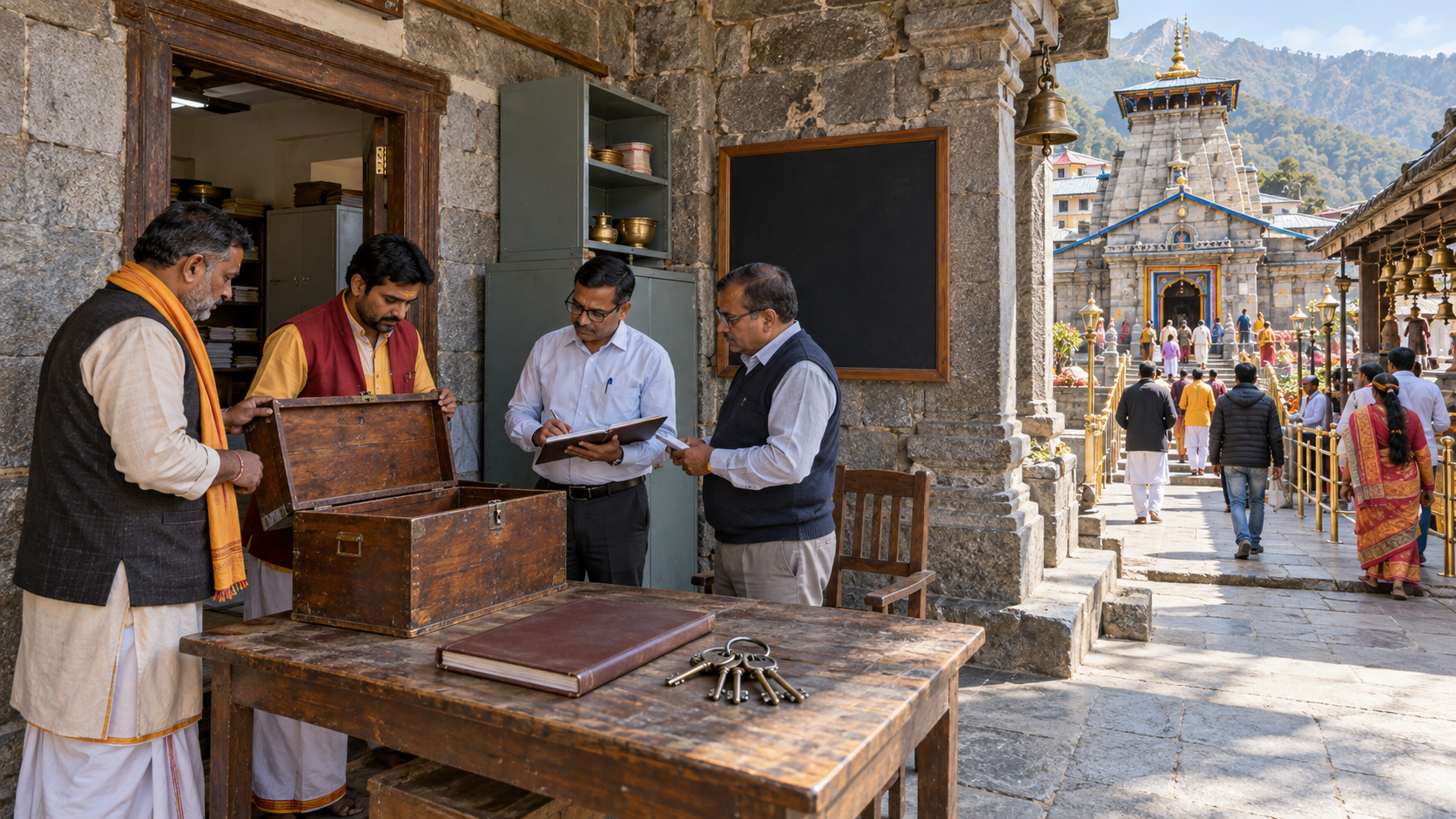
A Koppal district team led by Assistant Commissioner Maheboob Jilani reportedly opened locks installed by Mahant Vidyadas Baba and assumed control of the administrative office, storeroom, water storage room, Veda Pathashala, and laddu counter. Deputy Superintendent of Police Jayappa Nyamagouda and Tahsildar Vinayak Godabale were present. Items in the sanctum were also reportedly returned to their previous positions.
The personnel change was equally consequential. More than 30 people appointed by the Mahant for cooking, cleaning, and other temple work were told not to return. Officials also removed two signboards bearing his photograph and a poster from the outer wall of the sanctum.
A separate confrontation concerned the large donation box. Vidyadas Baba objected to its relocation, and the exchange reportedly continued for more than 30 minutes. After earlier CCTV footage was shown, he accepted placement of the box near the main entrance to the sanctum. That episode matters because the physical location of a hundi is tied to access, observation, custody, and donor confidence, even though its location alone does not establish who owns or may spend the offerings.
These actions amount to a material shift in operational control. They do not, by themselves, prove permanent legal control over the temple, lawful title to its property, or entitlement to its revenue. You should resist compressing a dispute over rooms, personnel, records, and custody into a conclusive slogan about ownership.
The decisive issue is the chain of legal authority

Vidyadas Baba maintains that an earlier Karnataka High Court order quashed previous administrative action and directed that his trust be allowed to manage Anjanadri’s overall administration. That is a specific legal claim, but it remains the Mahant’s stated interpretation of the order unless the operative text is produced and read in context.
A court can quash a particular administrative decision without permanently preventing every later intervention. It can also impose binding conditions that officials may not bypass by issuing a new order. Which possibility applies here depends on the exact wording, parties, scope, and operative directions of the Karnataka High Court order. A headline, a video clip, or a summary from either side cannot answer that legal question.
Anyone claiming to explain the dispute conclusively should be able to produce this documentary chain:
- The complete Karnataka High Court order, including its case number, date, parties, and operative portion.
- The government, endowment, revenue, or district instrument said to authorize the Assistant Commissioner to act.
- The written order defining which premises, records, funds, and functions officials were permitted to take into custody.
- A signed inventory of keys, documents, cash, offerings, equipment, ritual objects, and provisions transferred or repositioned.
- The written instruction affecting the Mahant’s appointees, including the basis for removing them and the arrangements made to continue their essential duties.
Until those records are available, two categorical claims are premature: that the district administration necessarily violated the High Court’s directions, and that the Mahant’s trust necessarily possesses unconditional and permanent authority over every administrative function. Demanding proof is not false neutrality. The public authority exercising coercive power and the private trust asserting protected management rights both carry obligations to substantiate their positions.
Temple autonomy and public accountability must reinforce each other
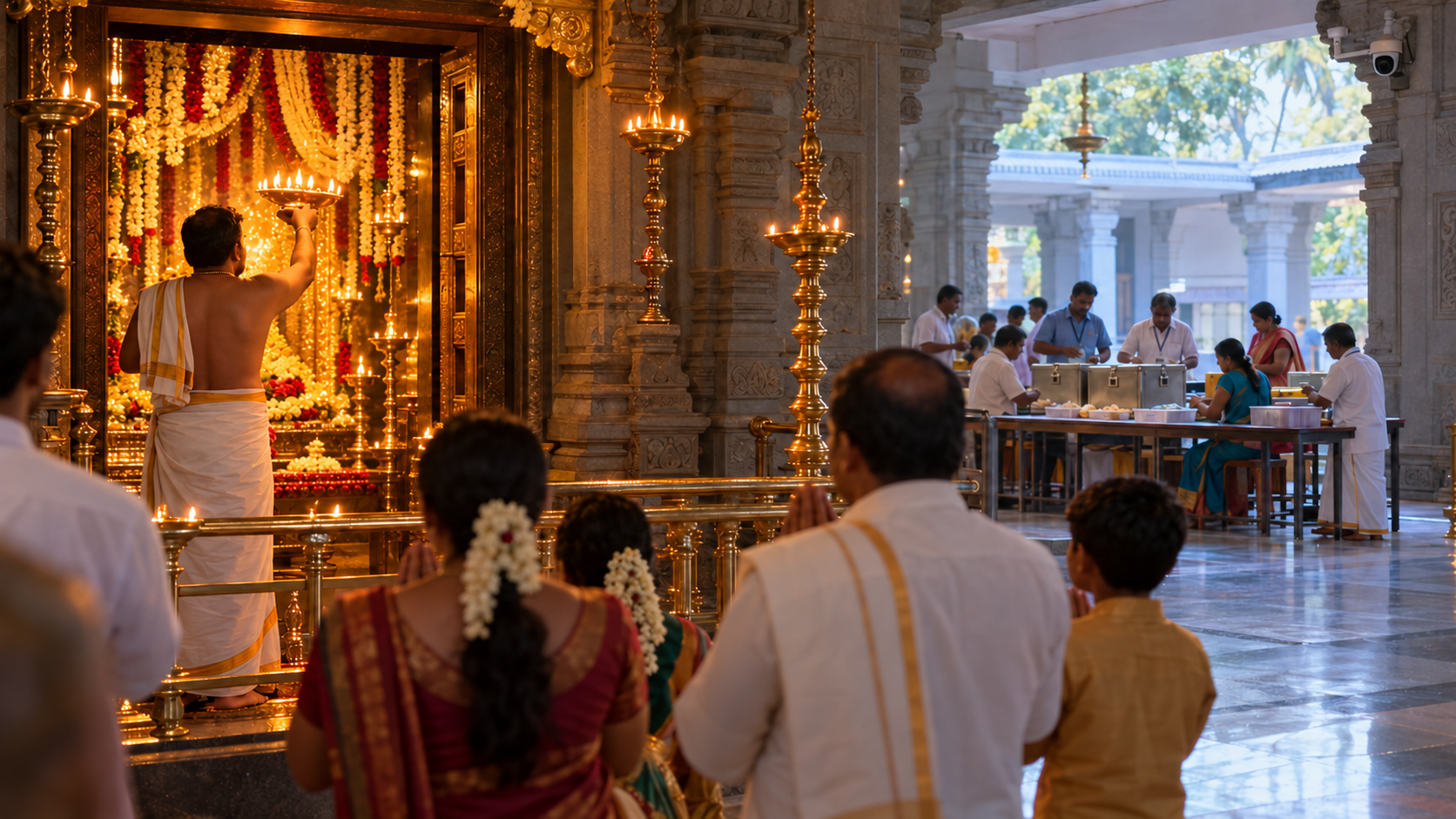
A pro-temple position should not require devotees to choose between uncontrolled bureaucracy and administration hidden behind religious status. Government intervention must be lawful, limited, reviewable, and sensitive to sampradaya. A temple trust seeking autonomy should be transparent about donations, appointments, property, and the use of resources. These principles strengthen each other because documentary accountability makes arbitrary interference harder to justify.
At Anjanadri, devotees should expect both sides to address six practical safeguards:
- Continuity of worship: Daily puja, darshan, offerings, and established observances should continue under qualified religious functionaries. An administrative transition must not become an excuse for officials to redesign ritual practice.
- Sanctum protocol: Any entry, movement of objects, or restoration of items in the sanctum should be recorded and conducted with the participation of the appropriate ritual authorities.
- Donation custody: The location and seal of the hundi, the people authorized to open it, count sheets, preserved CCTV footage, bank deposits, and expenditure records should form one traceable chain.
- Staff continuity: Removing more than 30 workers creates an immediate operational question. The public should know who is now responsible for cooking, cleaning, water, laddus, crowd management, and other daily services, as well as how any unpaid wages or entrusted property will be handled.
- Institutional services: Access to the Veda Pathashala, storeroom, water facilities, and administrative records should not be interrupted merely because control is contested.
- Review and grievance process: The Mahant, temple workers, ritual stakeholders, and devotees should have a named office and a written process through which they can challenge an administrative decision without disrupting worship.
How to test the allegation of unequal treatment
The wider question of whether governments intervene more aggressively in Hindu temples than in churches or mosques is legitimate. This incident alone, however, cannot prove the comparison. A serious equal-treatment case must compare similarly situated institutions: the law invoked, the alleged administrative failure, the scope and duration of intervention, the control of donations, the removal of personnel, and the route of judicial review.
The religion or name of an individual official is not evidence of legal authority or bias. Focus on the order the official signed, the power cited, the procedure followed, and the effect on the temple. Personalizing the dispute gives the administration an opportunity to avoid the documentary questions that matter most. A strong Hindu institutional case is built from comparable records, not inference from identity.
Key takeaways for devotees
- Koppal officials made substantial operational changes at Anjanadri, including opening locked facilities, changing personnel, and asserting custody over administrative spaces.
- Vidyadas Baba says a Karnataka High Court order protects his trust’s management role, but the exact operative directions must be examined before anyone declares the latest action lawful or unlawful.
- The most important evidence consists of the court order, the instrument authorizing district action, inventories, staffing instructions, and donation-custody records.
- Temple autonomy should protect ritual tradition and prevent arbitrary state control, while still requiring transparent accounts and responsible governance from a trust.
- Devotees can defend Anjanadri most effectively by preserving evidence, documenting disruptions, requesting records, and avoiding allegations that outrun the available proof.
What you can do without worsening the dispute
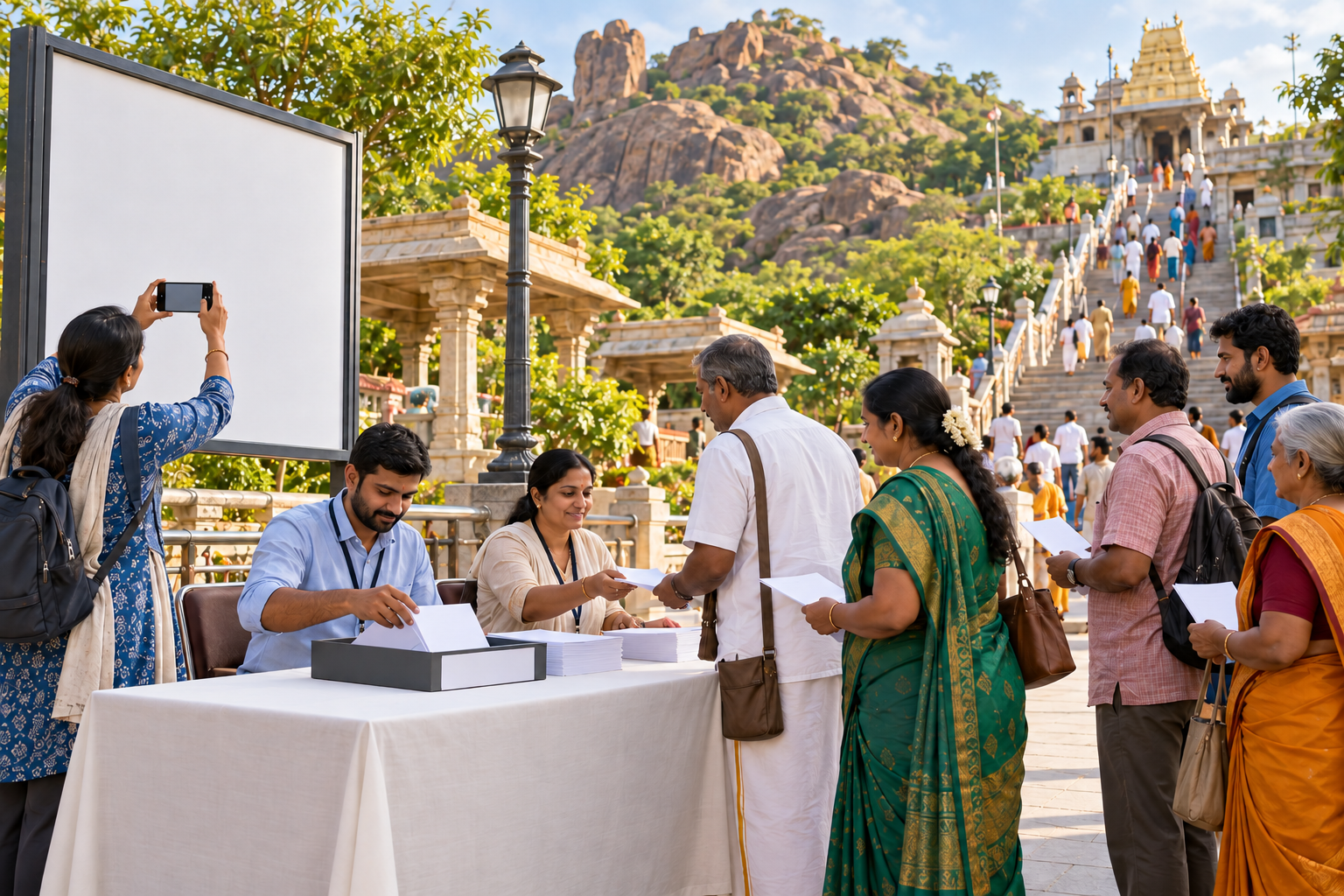
You do not need to wait passively for politicians, officials, or rival claimants to define the issue. You can ask precise questions that make evasion more difficult.
- Request the controlling documents. In a written representation or an information request where applicable, ask for the complete High Court order, the current administrative authorization, the premises inventory, the staff-removal instruction, and the rules governing offerings. Ask for records by name rather than requesting a vague explanation of what happened.
- Document effects on worship and access. If you encounter a disruption, record the date, time, affected seva or facility, office contacted, and response received. Take photographs only where permitted. A factual log is more useful than a stream of unsourced social-media claims.
- Follow the donation trail. Ask who currently holds the hundi keys, who witnesses opening and counting, where funds are deposited, and when audited accounts will be published. Do not allege theft or diversion unless an identifiable discrepancy supports the allegation.
- Question elected representatives consistently. Ask whether they will publish the court order, disclose the legal instrument behind the intervention, protect established ritual authority, and support independent scrutiny of temple finances. Apply the same test regardless of party.
- Keep any protest lawful and temple-safe. Do not obstruct darshan, interfere with locks or seals, enter restricted areas, or confront workers performing essential duties. Such actions can create legal exposure, endanger devotees, and allow the central governance questions to be displaced by a public-order controversy.
A workable interim arrangement should be written, narrowly bounded, and expressly subject to the Karnataka High Court’s directions. It should include a joint inventory, a clear donation-custody protocol, uninterrupted temple services, recognized ritual leadership, and a fixed review point. If district control lacks lawful authority, it should end promptly. If some intervention is legally authorized, officials should still be accountable for its scope, duration, and consequences.
Temple protection is strongest when dharmic authority and administrative integrity stand together. Your next step is simple: demand the actual orders, defend continuity of worship, and judge every claimant by what can be documented rather than by what can be shouted.
References

Leave a Reply
You must be logged in to post a comment.