
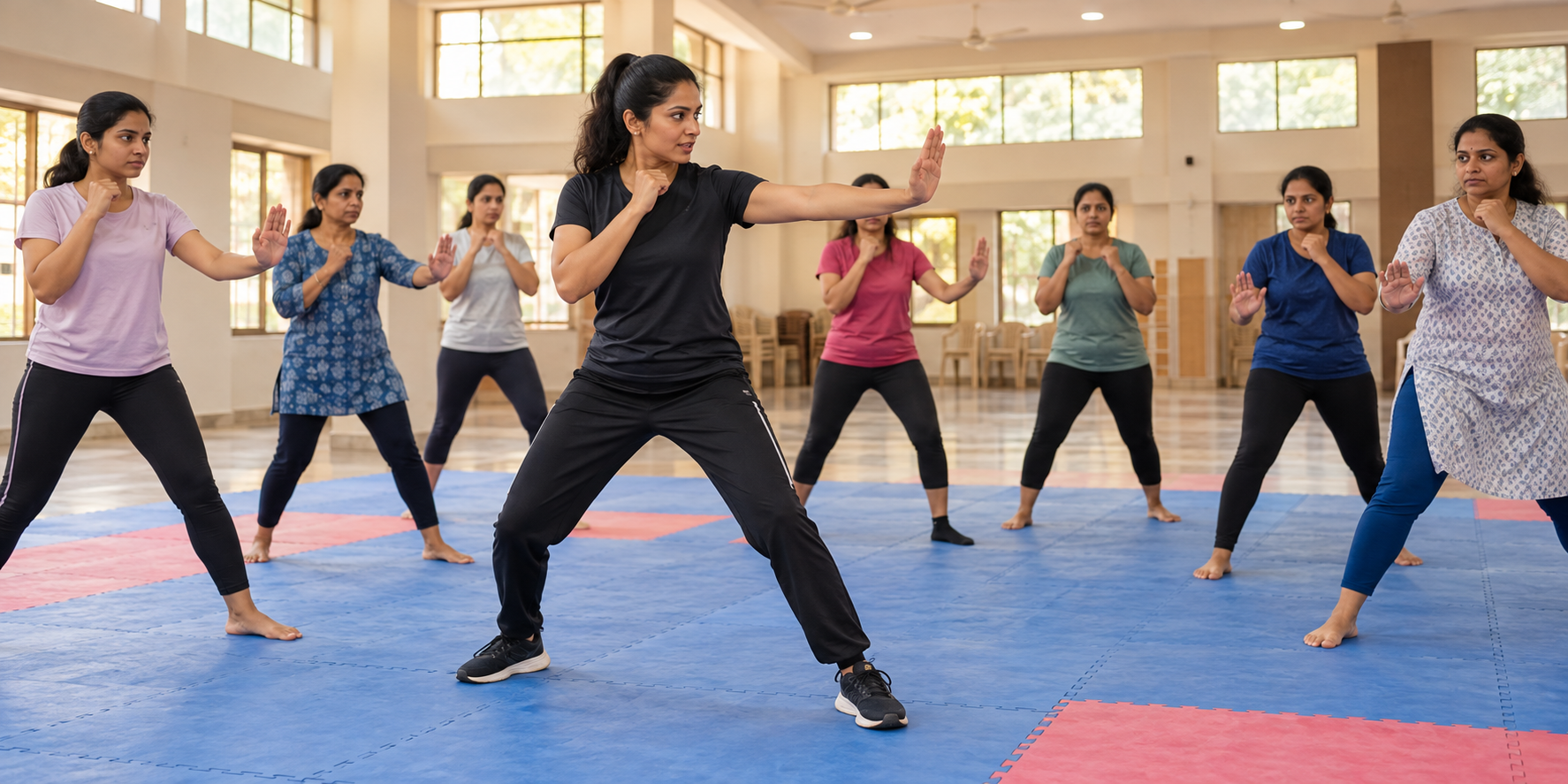
If you watched a self-defence demonstration and left wondering what to do next, you are asking the right question. A demonstration can reveal useful options, but readiness begins when you practise sound decisions and safe movements under qualified supervision.
That distinction matters in Wagholi, Pune, where more than 200 women attended Gayatri Pariwar’s Nari Jagran Shibir and representatives of Hindu Janajagruti Samiti presented practical self-defence demonstrations. The gathering brought women’s safety into community education. Its real value can grow if participants, families and organisers now turn that first exposure into careful follow-through.
What a public demonstration can do – and what it cannot
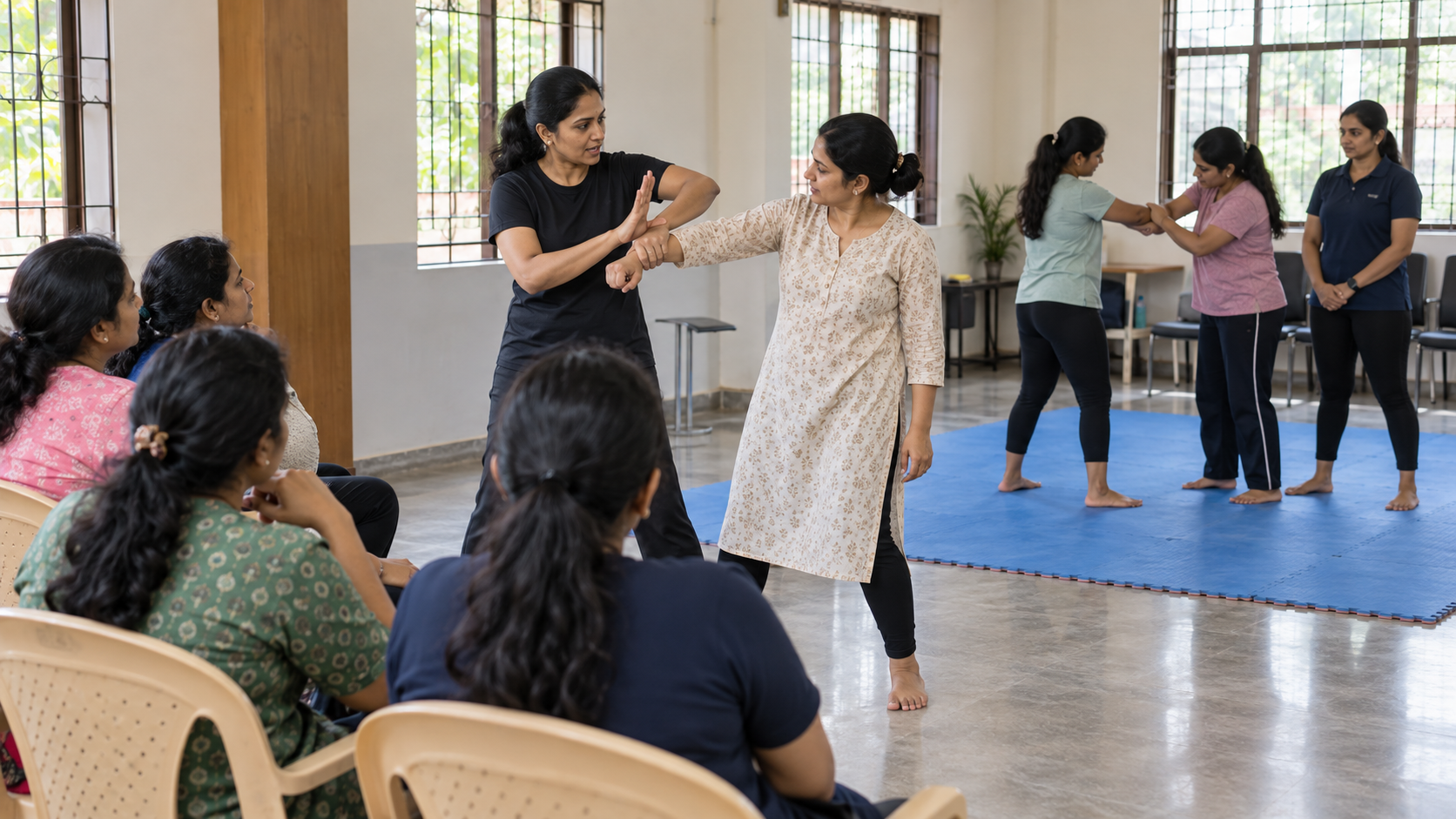
A practical demonstration makes self-defence less abstract. You can see how an instructor thinks about space, movement and response instead of hearing only a general appeal to be alert. It can also help a participant decide whether she wants structured training.
It does not, by itself, establish competence. Watching a movement is different from performing it with balance and control. Performing it in a cooperative class is different again from making a sound decision under fear, confusion or physical pressure. Attendance at a demonstration should therefore be treated as orientation, not certification.
The distinction is especially important when an event reaches a large audience. The attendance figure shows that the subject reached many women; it does not tell us how much individual practice each participant received. That is not a criticism of the shibir. It is a reason to define the next step honestly: the demonstration opens the door, while supervised repetition develops usable ability.
If you attended, turn what you saw into safer habits
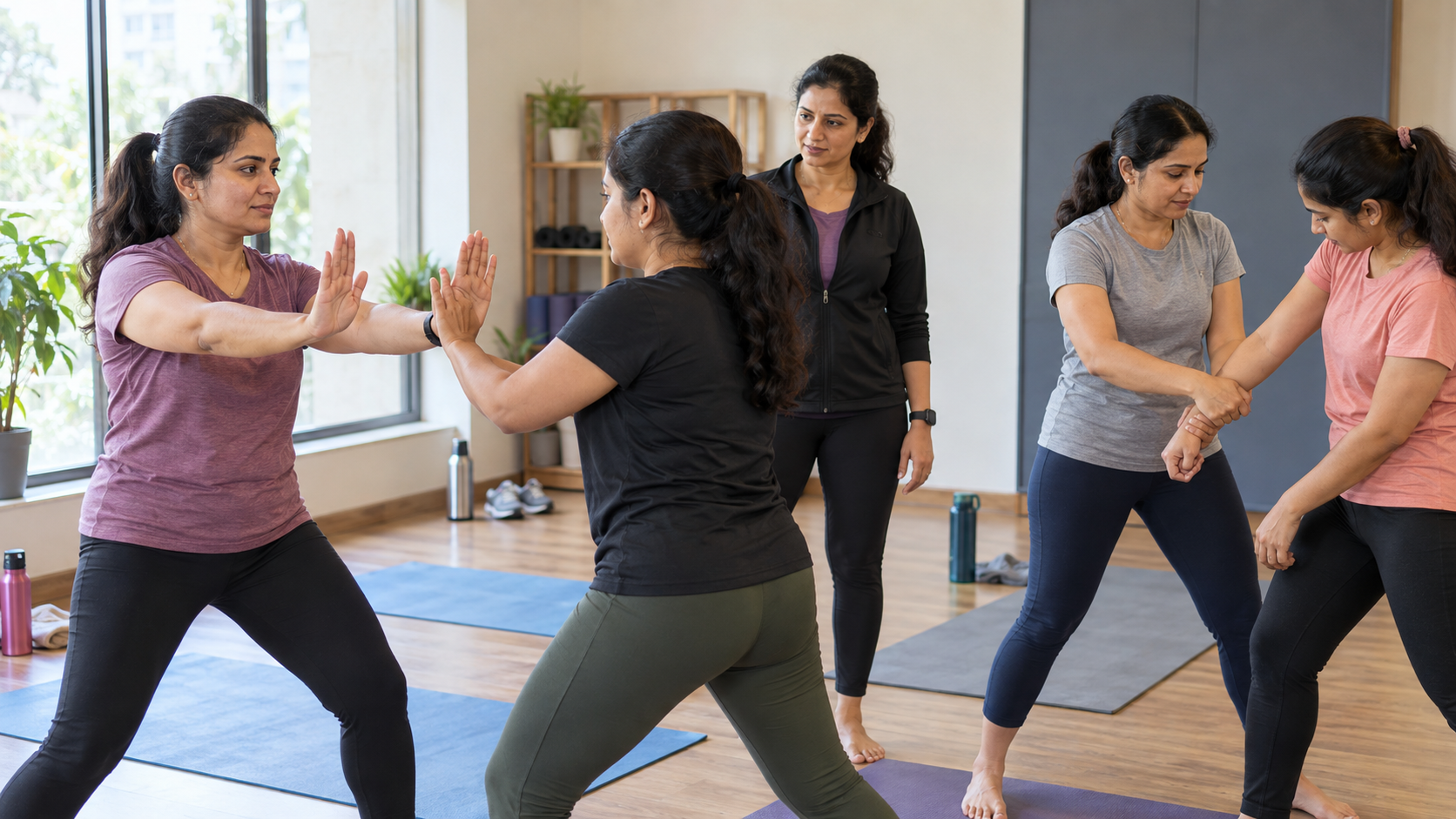
Do not try to reconstruct a forceful technique from memory and test it at home. A small error in direction, distance or pressure can injure you or your practice partner. Use the demonstration as a prompt to seek guided training.
- Write down principles before details fade. Note what you remember about awareness, distance, voice, escape and seeking help. If you are uncertain about a movement, mark it as a question rather than filling the gap from imagination.
- Ask whether a supervised follow-up is planned. Find out who will teach it, whether participants will practise, how group size will be managed and whether assistants will be present. A class should explain its safety rules before physical contact begins.
- Train for escape, not for winning a contest. In a controlled class, practise noticing exits, using a clear voice, creating an opportunity to disengage and moving towards a safer or more populated place. No technique works in every situation, and no responsible instructor should promise that one does.
- Adapt the practice to your body and circumstances. Tell the instructor about injuries, restricted mobility or other relevant limitations. Stop if a movement causes pain. If you have a medical condition that may make strenuous activity unsafe, seek appropriate clinical guidance before participating fully.
- Add a simple communication plan. Decide whom you would contact, how you would reach them and where you could go if you felt unsafe. Keep essential contact methods accessible. If danger is immediate, prioritise reaching safety and contacting local emergency assistance when you can do so safely.
These steps do not guarantee that harm can always be prevented. They give you more deliberate options and reduce the temptation to depend on an untested move remembered from a stage demonstration.
What organisers should build around the next shibir
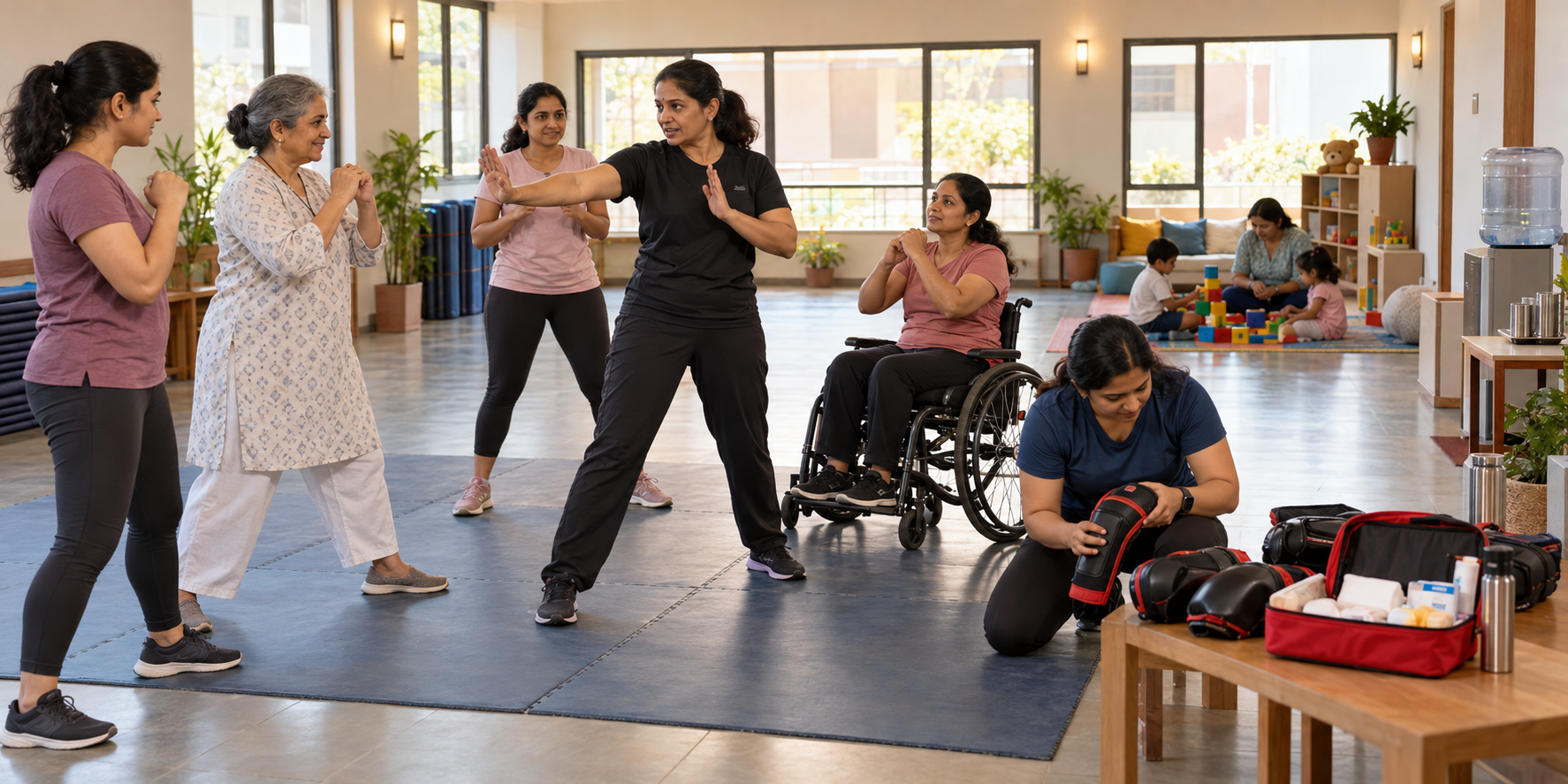
Before announcing another session, decide whether it is a demonstration, a participatory workshop or part of a continuing course. Each can be worthwhile, but they are not interchangeable. Describe the format plainly so that women know whether they will observe, practise or return for repeated instruction.
- Screen the instructor. Ask about relevant training, teaching experience, safety procedures and experience adapting instruction for participants with different ages and physical abilities.
- Control the practice environment. Provide adequate space, a suitable surface, a clear stop signal, access to first aid and enough supervision for the activity being taught. High-risk movements should never be improvised in a crowded group.
- Make consent operational. No participant should be grabbed without warning, pressured to demonstrate publicly or shamed for opting out. Explain contact before it occurs and provide a non-contact way to take part.
- Plan for varied needs. Consider language, clothing, mobility, privacy and the ability to see or hear the instructor. Where minors participate, use appropriate safeguarding and consent procedures.
- Protect participant dignity. Do not photograph or record women practising without explicit permission. Publicity is not more important than privacy.
- Announce continuity while attention is present. If follow-up training will be offered, give participants a concrete registration route and date rather than a vague promise that another session may happen.
Evaluation should be equally honest. Organisers can record attendance, safe participation, follow-up registrations and completion of repeated sessions. A confidence survey may show how participants felt, but confidence alone does not prove that someone can respond reliably in a real emergency.
Women’s safety cannot become women’s burden alone

Self-defence education expands a woman’s choices; it does not transfer responsibility for violence onto her. A person who could not resist, escape or recall a technique is not at fault for another person’s wrongdoing. Families and community organisations should never use the existence of training to dismiss a report of harm or ask why a woman failed to fight back.
Nari jagran should therefore awaken shared responsibility as well as individual agency. Communities can support safer transport arrangements, well-managed venues, trustworthy channels for reporting concerns and people who know how to summon help. Relatives can make continued training easier by helping with travel, scheduling or care responsibilities instead of treating one event as a finished solution.
A Dharmic understanding of strength also leaves room for restraint and discernment. Courage does not always mean standing and fighting. It can mean leaving early, calling others, refusing an unsafe demand or preserving life rather than proving physical bravery. Self-defence should serve dignity and protection, not vigilantism or needless confrontation.
Key takeaways and the next step
- The Wagholi shibir brought practical self-defence demonstrations before an audience of more than 200 women.
- A demonstration is a valuable introduction, but it is not evidence of individual mastery.
- Participants should seek supervised, repeated and body-appropriate practice instead of recreating forceful techniques from memory.
- Organisers should define the format, screen instructors, protect consent, manage physical risk and provide a concrete path to follow-up training.
- Self-defence gives women additional options; it never makes a woman responsible for the violence directed at her.
If you attended the Pune session, ask the organisers for the next supervised practice opportunity. If you help organise such gatherings, set the follow-up date before the initial interest disperses. The most meaningful result will not be applause for a demonstration, but a safe and sustained path from awareness to preparedness.
References

Leave a Reply
You must be logged in to post a comment.