
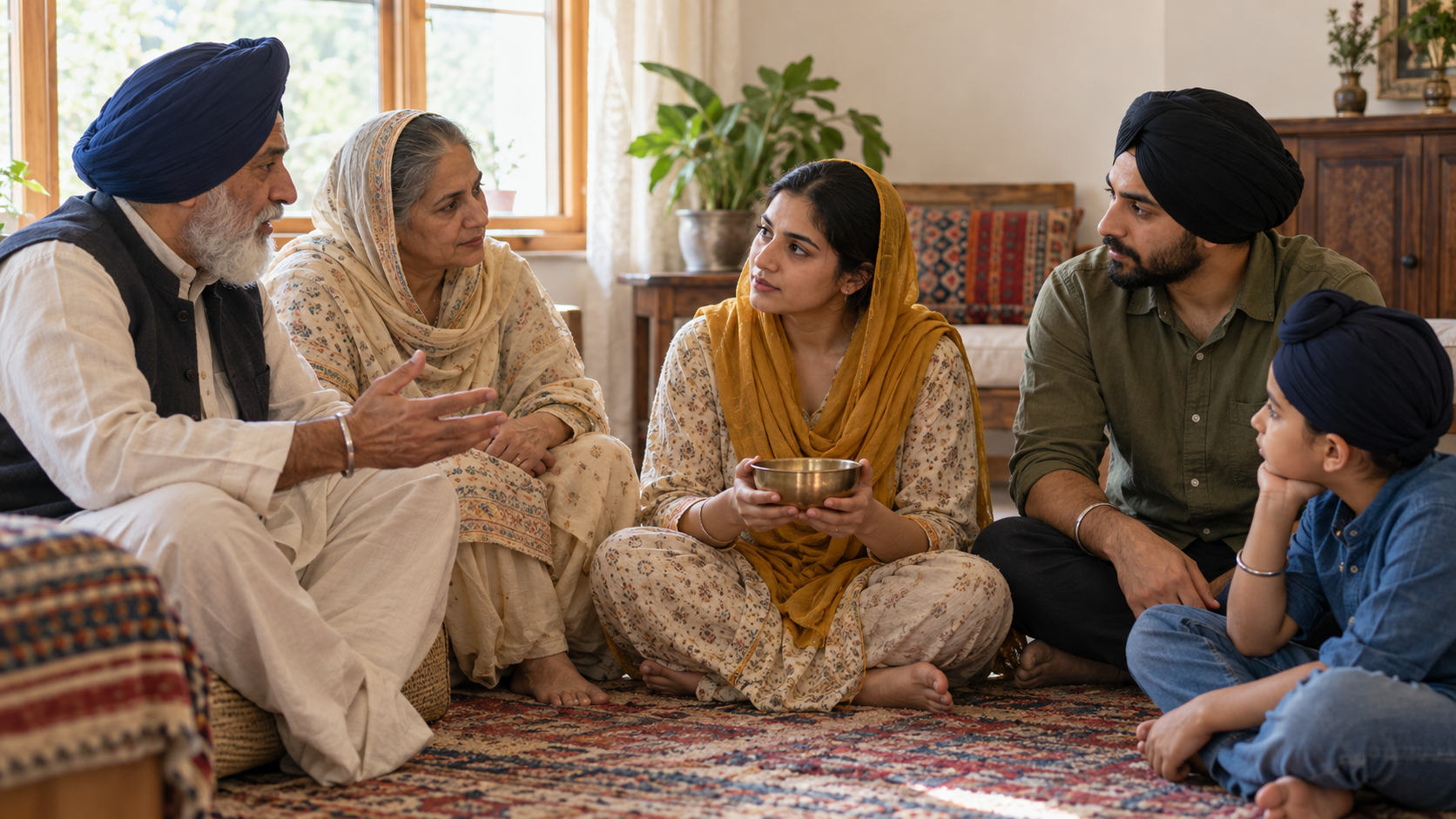
Your family says a practice is part of Sikhi. Someone else dismisses it as mere Punjabi culture. If you are deciding what to observe, what to question, or what to teach your children, those labels are too blunt to help.
The useful distinction is not religion versus culture, or inner belief versus outward form. It is authority, purpose, and result. You need to know where a practice comes from, what it is meant to cultivate, and whether it draws you toward the Guru’s way or merely protects social habit.
Do not force a choice between inner truth and outward form
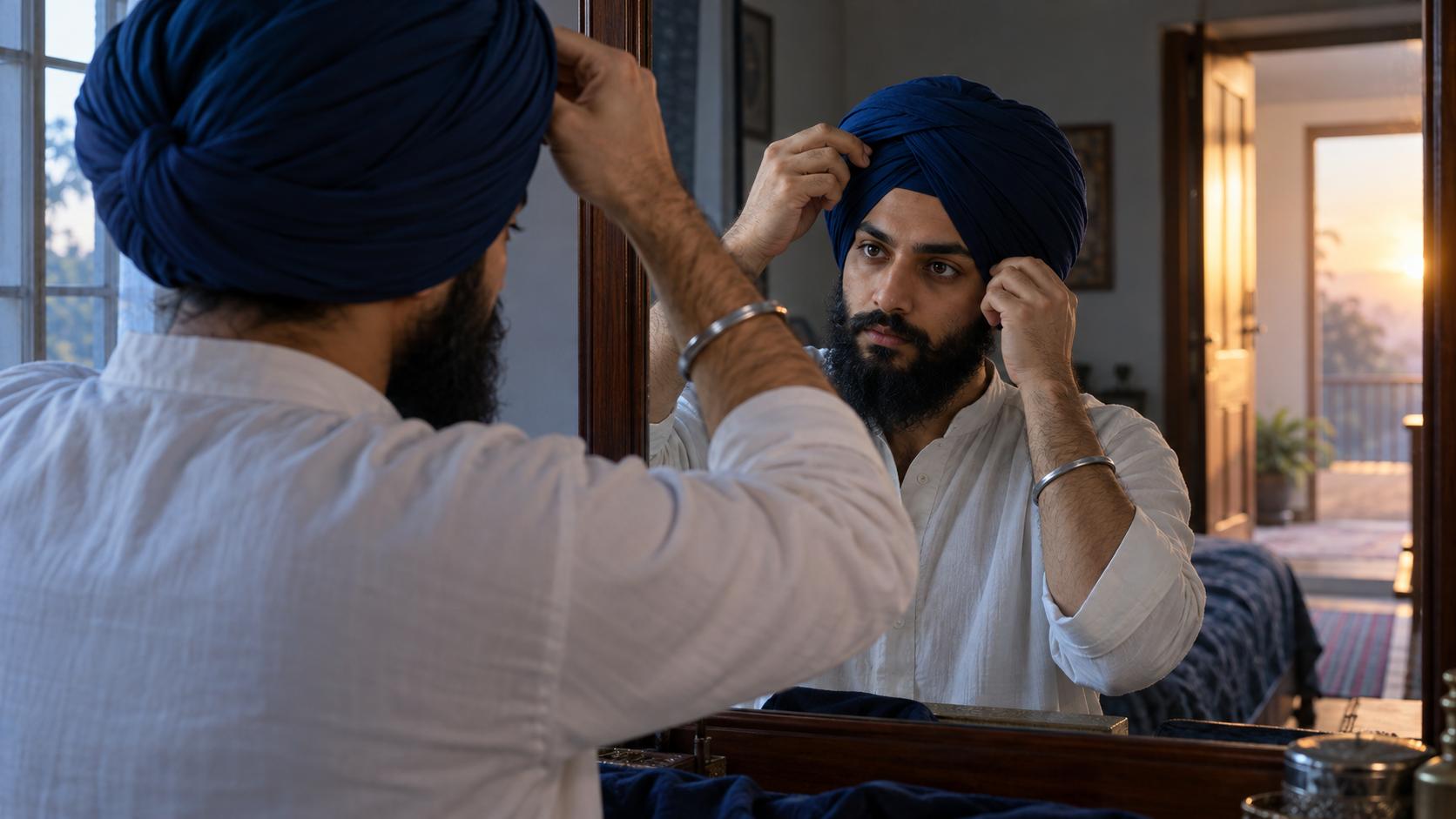
Sikhi is not an abstract philosophy that happens to have cultural decorations around it. It joins shabad, remembrance, conduct, sangat, seva, and disciplined form. A bodily practice can train attention, humility, courage, and belonging. Repetition can preserve wisdom before a young person fully understands it.
But repetition can also continue after its purpose has been forgotten. A family habit may be enforced as divine law simply because no one remembers when it began. Conversely, a person may use the language of spiritual essence to avoid any discipline that is inconvenient. Neither mistake serves Sikhi.
The needed correction is to place core philosophy before inherited custom without treating all visible practice as empty ritual. Core philosophy supplies the standard; sound practice gives that standard a durable form.
When a disagreement arises, sort the practice into the right level before debating it. The following is a practical classification, not a new doctrinal hierarchy:
- Foundational orientation: Ik Onkar, living in awareness of hukam, truthful conduct, and the struggle against haumai, the ego-centred way of seeing.
- Authority of the Guru: Gurbani in Guru Granth Sahib is not merely inspirational material from which anyone may select a convenient line. The Guru gives Sikh life its spiritual direction and vocabulary.
- Panthic discipline: Shared rehat orders communal life and, for the initiated Khalsa, includes definite commitments that cannot be reduced to regional taste.
- Gurdwara etiquette: Practices governing reverence, cleanliness, conduct, and participation in the Guru’s presence help a diverse sangat gather with a common discipline.
- Family or regional custom: Food, clothing, celebration styles, social expectations, and household routines may carry affection and identity without becoming universal Sikh obligations.
- Personal preference: An individual’s favoured method, aesthetic, or interpretation should be named honestly rather than presented as a rule for the Panth.
Before asking whether something is good or bad, ask which level it occupies. Many conflicts become manageable as soon as a family preference stops masquerading as rehat, or a genuine discipline stops being dismissed as folklore.
Use the Sikh core to test what a practice produces
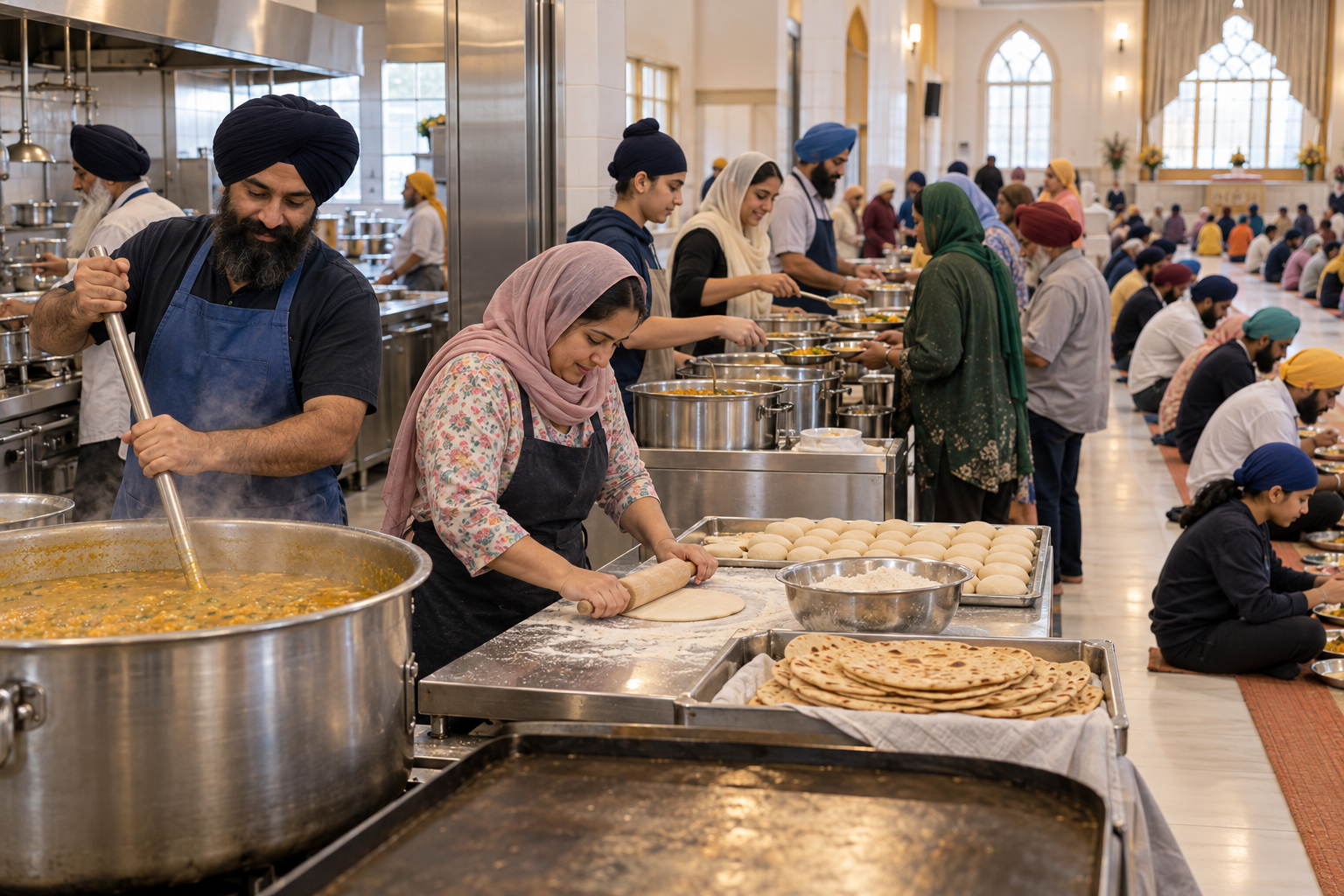
A Sikh practice should help form a gurmukh: a person increasingly oriented toward the Guru rather than ruled by haumai. That does not mean every practice must produce an immediate feeling of devotion. Discipline often works slowly. It does mean the practice should be intelligible within the moral and spiritual direction of Sikhi.
- Ik Onkar: Recognition of one Divine Reality should weaken claims that birth, caste, wealth, or family prestige makes one person spiritually superior to another. A custom that preserves social hierarchy deserves scrutiny, however old it may be.
- Naam: Remembrance of the Divine should reorder attention, speech, and desire. Ask whether a routine creates space for remembrance or merely performs religiosity for an audience.
- Kirat karni: Honest work matters. A religious display cannot compensate for deceitful earning, exploitation, or avoidance of responsibility.
- Vand chhakna: Sharing what one earns turns faith outward. When celebration consumes resources chiefly to advertise status, ask what could be shared without denying the family a joyful occasion.
- Seva: Service should reduce self-importance. If the most visible tasks bring honour while necessary, unglamorous work is left to people of lower status, the language of seva is being used without its discipline.
- Sangat and pangat: Gathering before the Guru and eating together in langar train equality in practice. That equality should shape committee decisions, hospitality, marriage attitudes, and ordinary social relations as well.
- Courage and sarbat da bhala: Sikh concern extends beyond private purity toward justice and the well-being of all. A custom that teaches silence before humiliation or injustice cannot be defended merely as respectability.
Apply these tests to conduct, not just symbolism. Does the practice make truthful living more likely? Does it enlarge service? Does it challenge ego and social rank? Does it bring you into responsible relationship with the Guru and the sangat? Those questions are more revealing than whether the practice looks traditional or modern. Age alone proves neither truth nor error.
Separate Panthic discipline from family and regional custom
The hardest mistakes occur in both directions. One mistake turns every inherited Punjabi habit into Sikh doctrine. The other calls every visible Sikh discipline a cultural accessory. You need enough precision to refuse both.
Consider gurdwara conduct. Removing shoes, covering the head, bowing before Guru Granth Sahib, sitting in the sangat, and sharing langar are embodied practices of reverence and community. They are not all the same kind of obligation, but they are not arbitrary decorations either. When you enter a gurdwara, follow its legitimate house discipline with humility. If the meaning is unfamiliar, ask about it after observing respectfully rather than making unfamiliarity your reason for refusal.
The Five Ks likewise belong to Khalsa discipline, not to a costume assembled for ethnic occasions. Kesh, kangha, kara, kachhera, and kirpan carry an established place in initiated Sikh life. A person should learn their discipline and meaning from sound Sikh guidance rather than reducing them to symbols whose only purpose is public identity. Nor should an Amritdhari commitment be reclassified as a family option because someone outside that discipline finds it difficult to understand.
Other matters belong more clearly to the social setting. The Anand Karaj is a Sikh rite; choices about the scale, cuisine, decoration, and display surrounding a wedding are not thereby parts of the rite. A household may cherish a regional dish or a particular sequence of hospitality without claiming that Sikhs elsewhere are deficient for doing things differently.
Caste exclusion offers an even sharper test. Its persistence among people who identify as Sikh does not transform it into Gurmat. Social prevalence and religious legitimacy are different facts. When an inherited arrangement contradicts spiritual equality, the answer is not to preserve the contradiction for the sake of appearances.
Sikhi is also not reducible to Punjabi ethnicity, although Sikh history and living culture are deeply connected to Punjab. A cultural bond can be honoured without turning every Punjabi convention into doctrine. Equally, universal Sikh principles should not become an excuse to detach Sikhi from its language, history, institutions, and Panthic memory.
For a wider Dharmic readership, another discipline is necessary: do not force Sikh categories into a generic Hindu template. Civilizational kinship and historical interaction do not cancel Sikh self-definition. Sikh practices should first be understood through the Guru, Gurbani, Gurmat, and Panthic tradition. Respectful comparison begins after that work, not before it.
Resolve a disputed practice without shaming the person
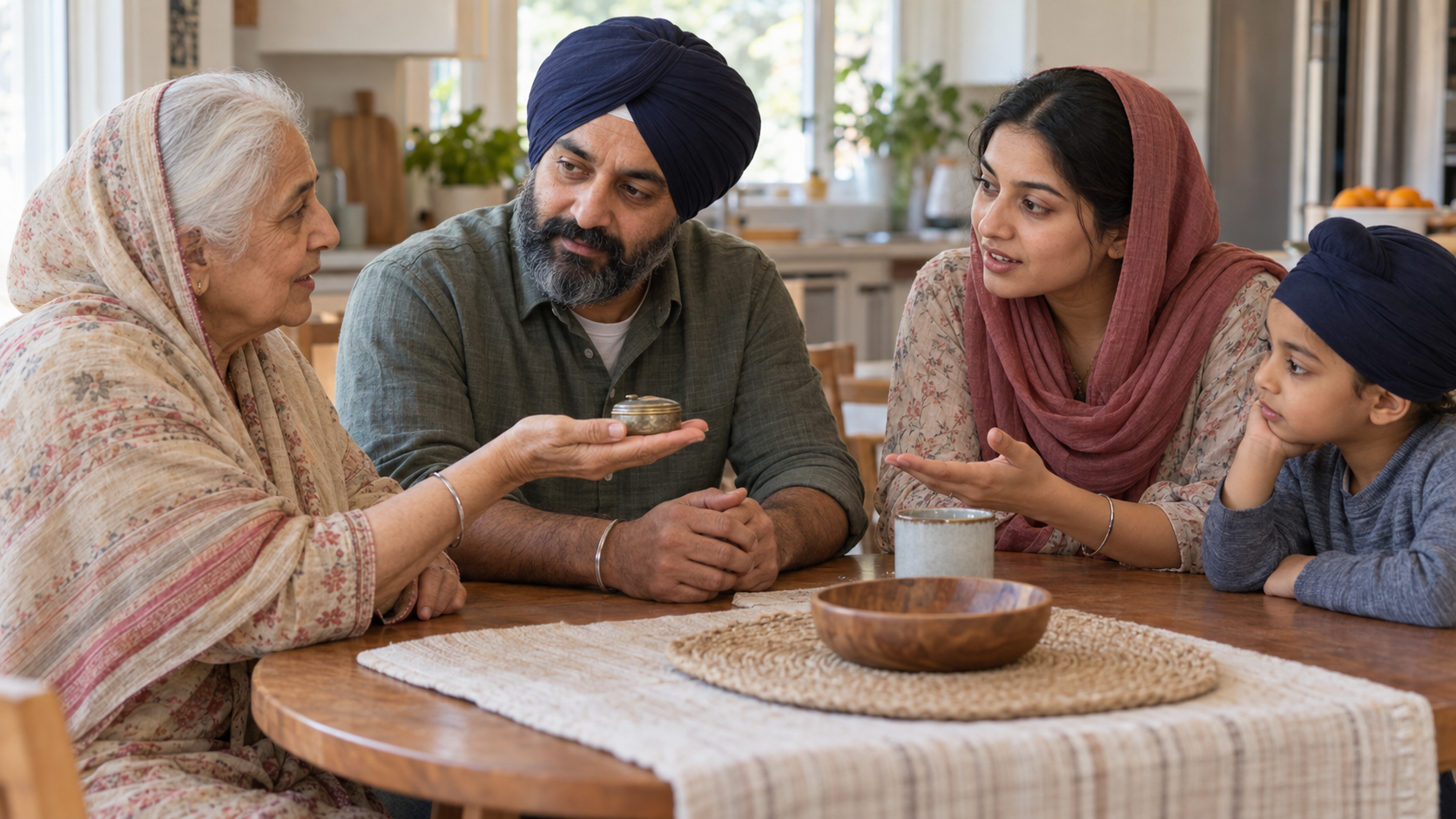
You can investigate a disputed practice without beginning a family quarrel. The key is to replace a vague contest over authenticity with a sequence of precise questions.
- Describe the practice neutrally. State what people actually do, without first calling it superstition, sacred duty, backwardness, or modern corruption.
- Identify the claim being made. Is it presented as a universal Sikh requirement, Khalsa rehat, a recommendation, gurdwara etiquette, a family convention, or a personal preference?
- Ask where its authority comes from. Distinguish Gurbani, Panthic rehat, a gurdwara’s practical policy, a particular jathebandi’s discipline, and an elder’s memory. These may all deserve attention, but they do not carry identical authority.
- Name its purpose. Does it cultivate remembrance, humility, equality, service, courage, cleanliness, communal order, or continuity? If no one can state the purpose, that is a reason to investigate further, not automatic proof that the practice is worthless.
- Examine its fruit. Notice whether it reduces haumai or feeds it, includes the sangat or creates status, and supports truthful conduct or distracts from it.
- Check who carries the burden. A rule enforced mainly on women, poorer relatives, newcomers, another caste, or those without social power requires particularly careful examination. Selective enforcement often reveals that social control, rather than spiritual discipline, is doing the real work.
- Choose a proportionate response. Learn and observe genuine rehat. Follow legitimate gurdwara etiquette as a respectful participant. Join harmless family customs voluntarily where they sustain relationship. Question practices that are falsely universalized or that contradict equality, truth, and seva.
If the issue concerns Amritdhari discipline, do not settle it through a family vote or a short online quotation. Consult the Sikh Rehat Maryada, read Gurbani in context, and seek guidance from people grounded in Sikh learning and practice. Some Sikh groups observe particular matters differently; when that is the case, name the specific tradition instead of presenting its position as uncontested Panthic consensus.
The tone of your question matters. Try: I want to respect this practice. Can you help me understand its Gurmat purpose and whether it is rehat or our family custom? That is firmer and more useful than either silent resentment or a demand that an elder prove everything immediately.
You can also say: I will follow the gurdwara’s maryada, but I would like us to be precise about whether this household rule applies to every Sikh. Precision allows respect without surrendering judgement.
Key takeaways
- Sikh philosophy and disciplined practice are partners. The core gives practice its direction, and practice makes the core habitual.
- Gurbani, Panthic rehat, gurdwara etiquette, family custom, and personal preference should not be treated as interchangeable sources of authority.
- A visible practice is not empty merely because its meaning is unfamiliar. Learn whether it belongs to rehat before dismissing it.
- A common or ancient custom is not automatically Gurmat. Test it against truthful living, equality, remembrance, sharing, seva, courage, and the well-being of all.
- Punjabi cultural inheritance can be cherished without being made compulsory for every Sikh.
- When disagreement arises, classify the practice, identify its purpose, examine its fruit, and respond in proportion to its actual authority.
The next time someone invokes tradition, pause before either obeying resentfully or rejecting reflexively. Ask what level of authority is being claimed, what the practice is meant to cultivate, and what it produces in real conduct. Keep the customs that carry Gurmat well. Learn before judging what belongs to rehat. Where a habit protects hierarchy or ego instead of truth and seva, change it without turning elders into enemies.
That is how inherited practice remains a living vessel for Sikhi rather than becoming a substitute for it.
References

Leave a Reply
You must be logged in to post a comment.