
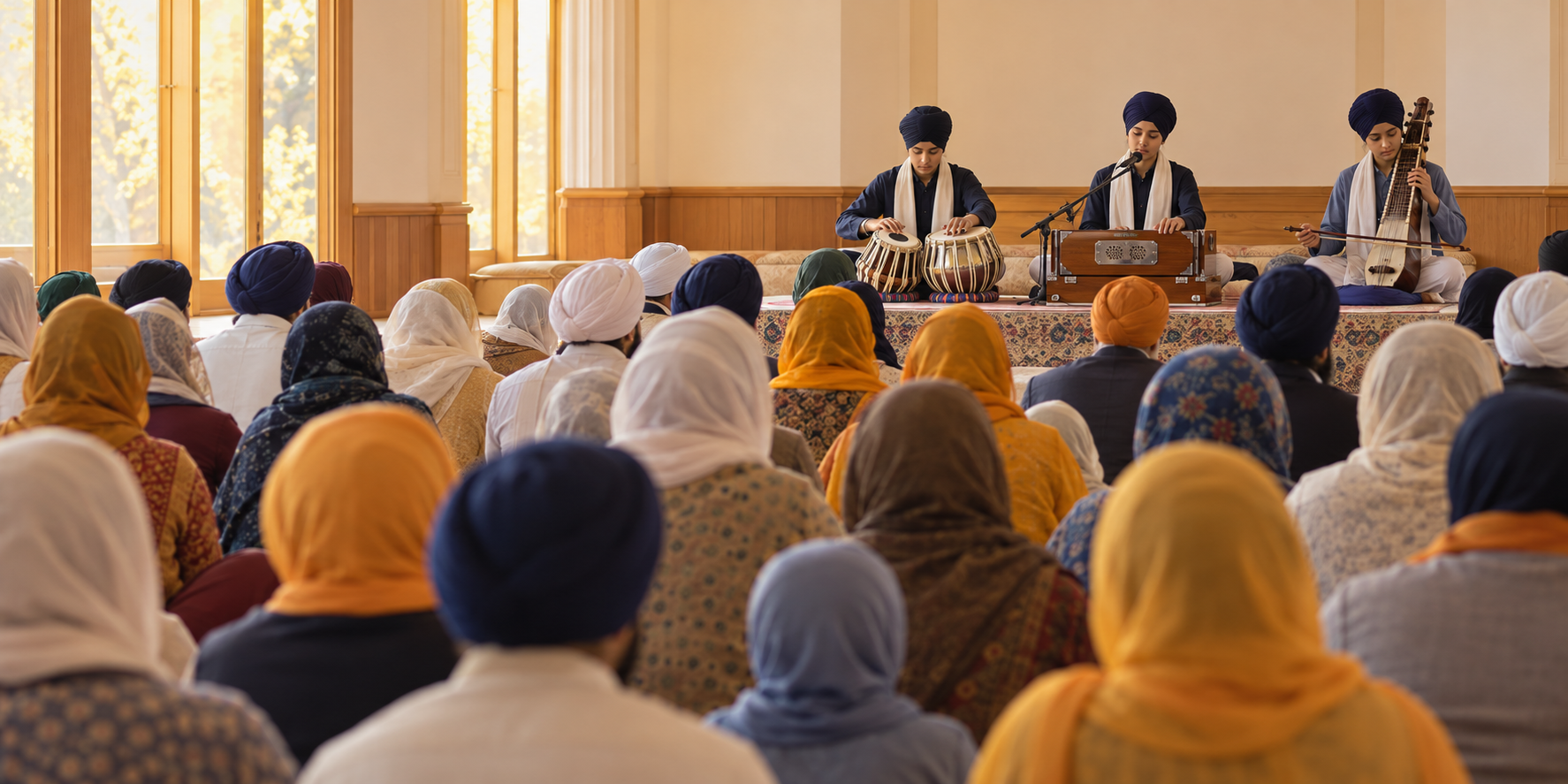
You have seen a 31-raags celebration announced and want to attend, but you are unsure what you are expected to understand. Do you need training in Indian classical music? Should you follow every melodic detail, read a translation, or simply sit with the shabad?
You do not need specialist knowledge to listen well. You need a little context, a disciplined kind of attention, and a willingness to treat the occasion as an encounter with Gurbani rather than a display of vocal skill. That approach will help you hear more, behave appropriately, and support the young people carrying this inheritance forward.
The point is not to collect 31 musical specimens
In the Guru Granth Sahib, raag is not incidental decoration added after the words. Gurbani compositions are arranged under raag headings, making musical form part of the scripture’s architecture. A raag supplies a melodic framework within which a shabad can be sung, remembered, and contemplated.
A celebration encompassing the 31 raags through the voices of a new generation therefore offers more than musical variety. It lets the sangat encounter a broad part of the Gurmat Sangeet inheritance in one shared setting. For younger performers, it also turns preservation into practice: a tradition remains alive when someone learns its discipline, sings it before the community, and passes it onward.
Do not make recognition your test of success. If you cannot identify a raag by ear, you have not failed. Start with the relationship between shabad and musical movement. Ask what the singing helps you notice in the words: gravity, yearning, repose, resolve, humility, or another quality that becomes clearer through attentive listening. A raag cannot be reduced to a single emotion, but it can shape the space in which the meaning is received.
It is also unhelpful to treat the programme as a contest between performers or raags. The unity lies in Gurbani; the musical frameworks disclose different ways of dwelling with it. Listen for distinctiveness without turning difference into a ranking.
A practical listening method for newcomers
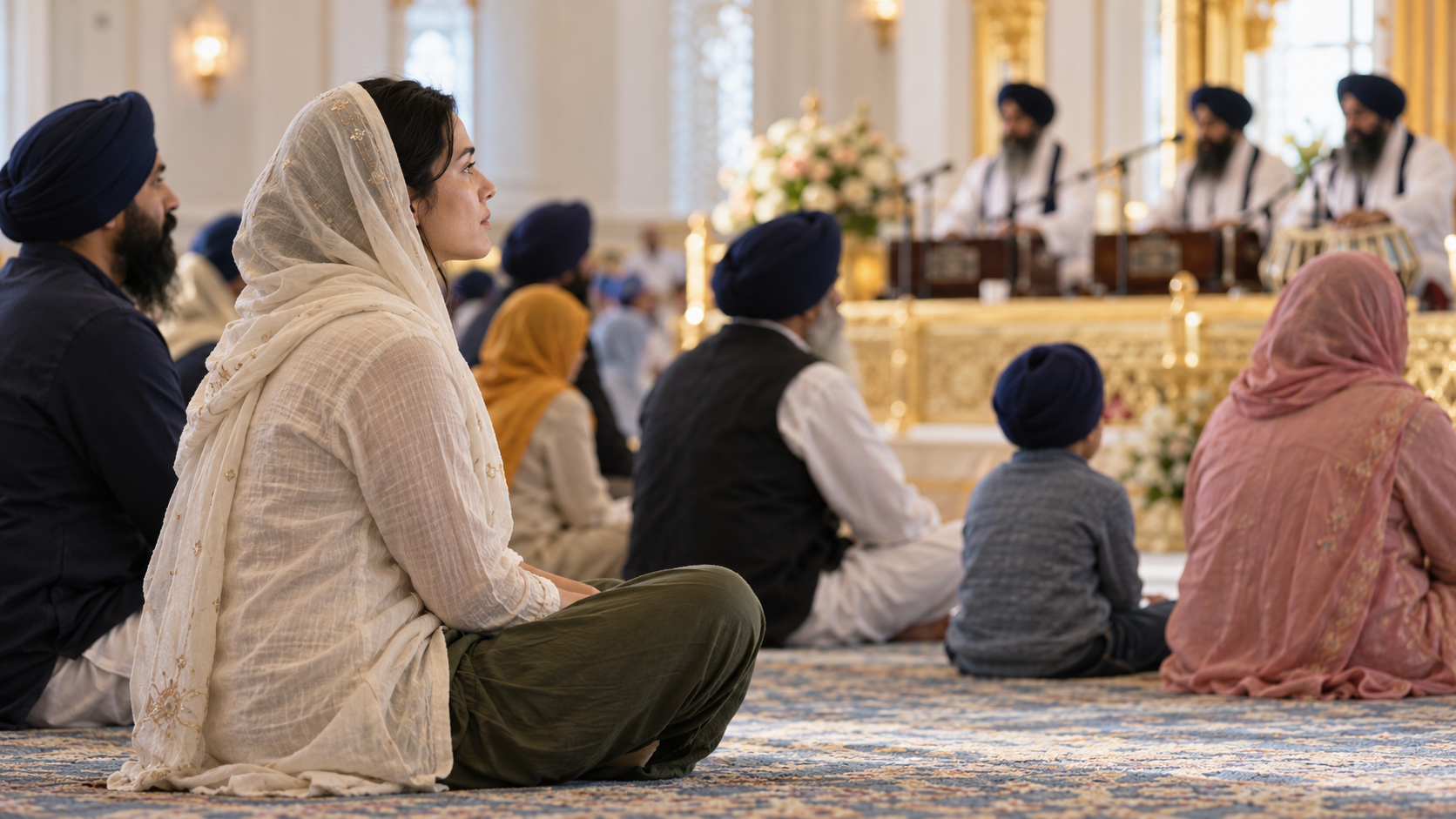
A long or unfamiliar programme becomes easier to follow when you give yourself one task at a time. Use this five-part method rather than trying to analyse melody, rhythm, language, instruments, and performance technique simultaneously.
- Read the programme before the singing begins. Identify the name of the raag, the opening words of the shabad, and any translation supplied by the organisers. If there is no programme, write down what is announced instead of reaching for your phone throughout the performance.
- Begin with the words. Read the translation once, then put it aside. Select one phrase or central idea to carry into the singing. Constantly moving between a screen and the performers can fragment your attention.
- Find the returning line. Notice the phrase to which the singer and accompanying voices return. Let that recurrence anchor you when the melodic development is unfamiliar.
- Listen for movement rather than labels. Notice whether phrases ascend, settle, circle around a tonal centre, pause, or resolve. You do not need the technical vocabulary to hear these relationships.
- Record one observation after the shabad. Write a sentence about how the musical treatment altered your reception of the words. Do this after listening, not during every passage.
If several raags are presented consecutively, reset your attention between them. Release your judgement of the previous rendition, read the next heading, and listen afresh. Otherwise the mind starts comparing voices while the bani recedes.
Silence is part of this method. Resist the urge to fill every pause with conversation, photography, or instant commentary. The quiet after a shabad gives its words somewhere to remain.
Support young performers without making them the spectacle
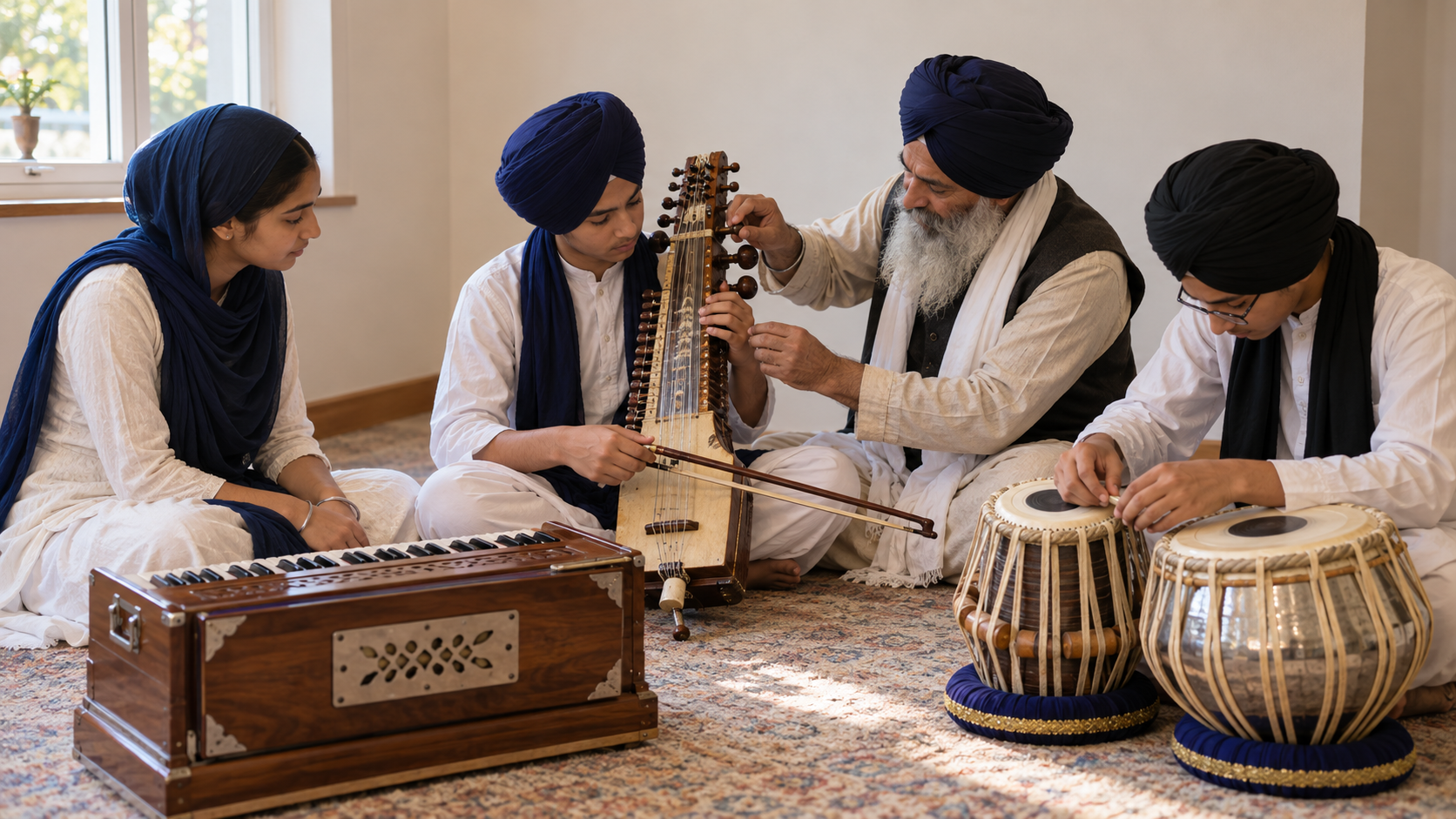
The involvement of the next generation is not a decorative feature. It is the mechanism of continuity. Yet adults can weaken that purpose when they praise only confidence, volume, speed, or virtuosity. Those qualities are visible, but they are not the whole discipline.
Parents, teachers, organisers, and members of the sangat can offer more useful support:
- Ask about the shabad as well as the performance. A good first question is, “What did you understand differently after learning it in this raag?”
- Praise preparation specifically. Recognise careful pronunciation, sustained attention, responsiveness to fellow musicians, and composure after a mistake. Specific feedback teaches more than “That was amazing.”
- Avoid public comparisons. Comparing one child with another turns seva and learning into status. If technical correction is needed, let the teacher give it privately and precisely.
- Give context without delivering a lecture. A brief introduction naming the raag, shabad, and central theme can help an unfamiliar audience listen. Lengthy explanations between every rendition can break the programme’s contemplative movement.
- Document with consent and purpose. Recordings can support study and transmission, but the wishes of performers, families, teachers, and the venue should govern whether material is captured or shared.
- Build a path after the event. Invite participants to continue with regular instruction, sangat-based singing, and deeper study. One prestigious appearance cannot substitute for sustained learning.
Young performers should be allowed to be learners. A missed entry or moment of nervousness does not diminish the value of the undertaking. The appropriate standard is disciplined growth in service of the bani, not the polished image expected from commercial entertainment.
Key takeaways for attending respectfully
- You do not need classical training; begin with one line of Gurbani and hear how the raag carries it.
- If the celebration is held in a gurdwara, follow the gurdwara’s guidance on head covering, footwear, seating, and photography. A stage venue may have different arrangements, so check before arriving.
- Keep your phone silent and do not let recording replace listening.
- Do not reduce the programme to vocal competition or a checklist of 31 items.
- Encourage young participants by asking about meaning, preparation, and continued study rather than ranking performances.
- Leave with one shabad or raag to revisit; retention matters more than trying to remember the entire programme.
If you are bringing children who will be listening rather than performing, prepare them with one manageable expectation: identify the returning line in each shabad. Give them a printed programme if one is available, and sit where a quiet exit will not disturb others. This lets them participate without demanding adult-length concentration from the outset.
Carry one raag beyond the celebration
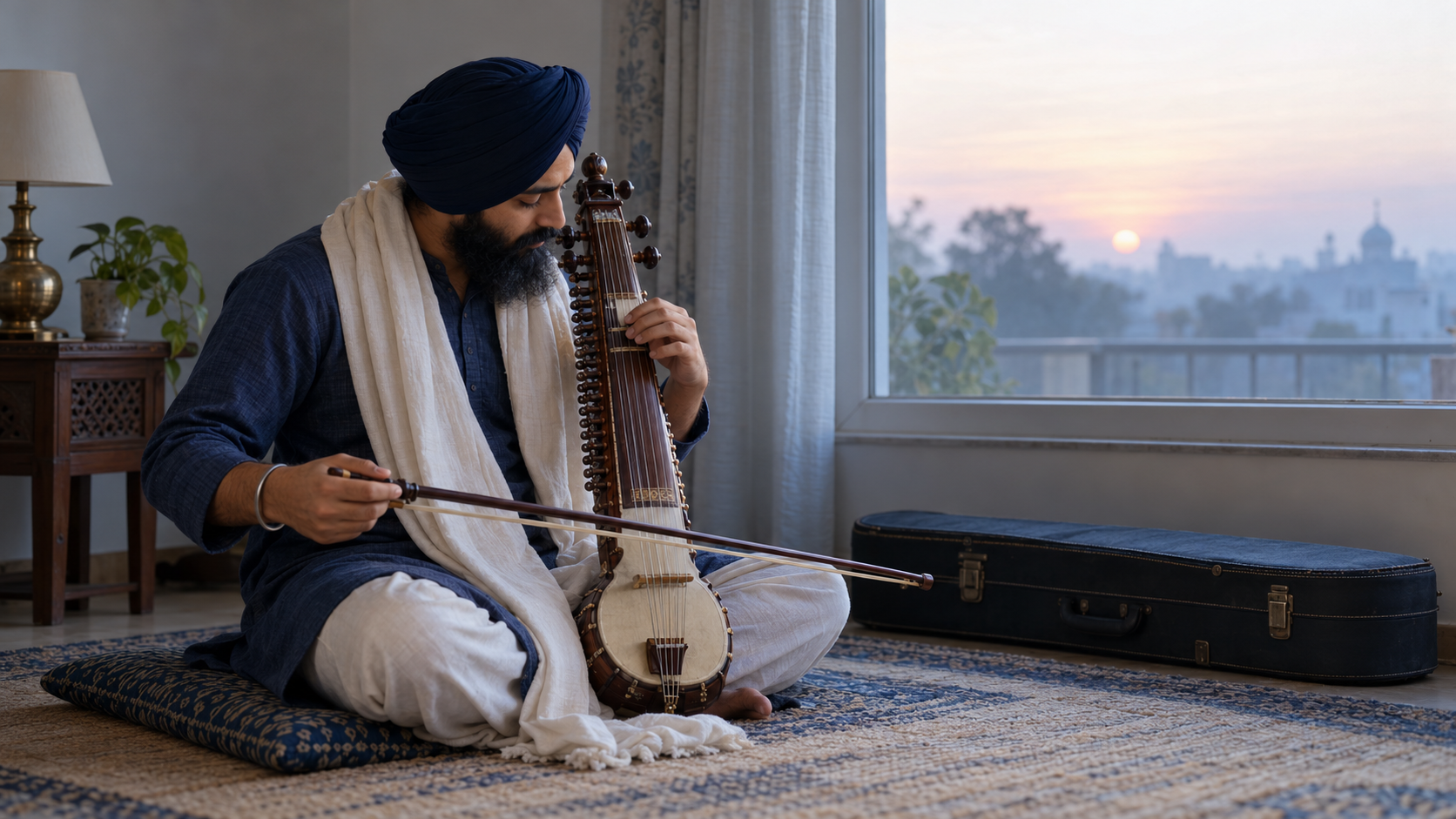
The most useful response begins after the final shabad. Within a day, choose one rendition that stayed with you. Read the shabad’s meaning again, listen to it without multitasking, and note what you now hear in the relationship between word and melody.
If you belong to a gurdwara or community organisation, turn that individual practice into continuity. Ask whether learners can receive regular instruction, whether future programmes can identify raags clearly, and whether knowledgeable teachers can offer short listening sessions for the sangat. A single grand celebration creates attention; repeated learning creates inheritance.
Your next step can remain small. Learn the name of one raag, understand one shabad more carefully, and return to it until recognition grows from familiarity. That is how a programme of 31 raags stops being an impressive number and becomes a living doorway into Gurbani.
References

Leave a Reply
You must be logged in to post a comment.