
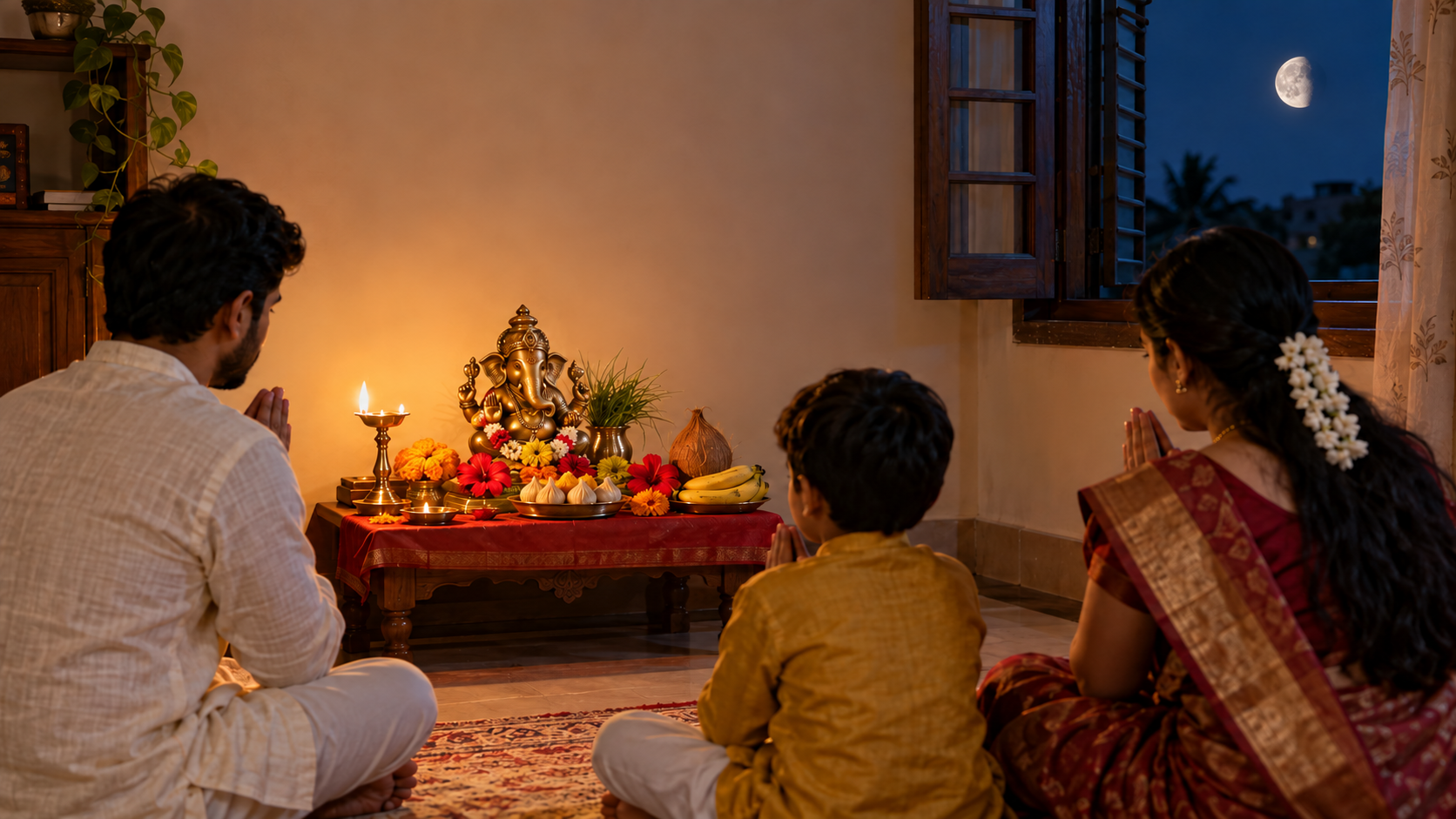
If you are deciding which November evening to reserve for Sankashti Chaturthi, mark Friday, November 27, 2026. That is the calendar anchor; your local panchanga should supply the precise tithi and moonrise details for your city.
You do not need an elaborate programme to observe the vrata sincerely. You do need a clear intention, a form of fasting or restraint appropriate to your health and tradition, and enough protected time to offer unhurried worship to Ganesha.
Put Friday, November 27, on your calendar
The November 2026 Sankashti Chaturthi falls on Friday, November 27. Reserve that date now, especially if work, school, travel, or family duties could crowd the evening.
You may also see the occasion called Ganesha Sankashtahara Chaturthi or Sankat Vinayak Chavithi. These regional names refer to the same recurring Ganesha vrata, so a temple notice using a different name is not necessarily advertising a different observance.
Sankashti is observed on Krishna Paksha Chaturthi, the fourth tithi of the waning fortnight in each Hindu month. In Gujarati calendar reckoning, the November 2026 observance falls in Kartik. Month labels can differ across regional Hindu calendars, so compare the tithi and civil date before assuming that two calendar entries conflict.
Use a local panchanga for the actual timing
A civil date tells you which square to mark on a calendar. It does not, by itself, tell you when a tithi begins or ends. A tithi can start or finish between two midnights, and moonrise changes with location. That is why a clock time copied from another city may be unsuitable even when the date is correct.
Before finalising your observance, check a panchanga configured for the city where you will actually be present. If you live outside Bharat, do not leave the location set to an Indian city by default.
- Confirm that the listing is for Friday, November 27, 2026, in your location.
- Check the beginning and ending of Krishna Paksha Chaturthi.
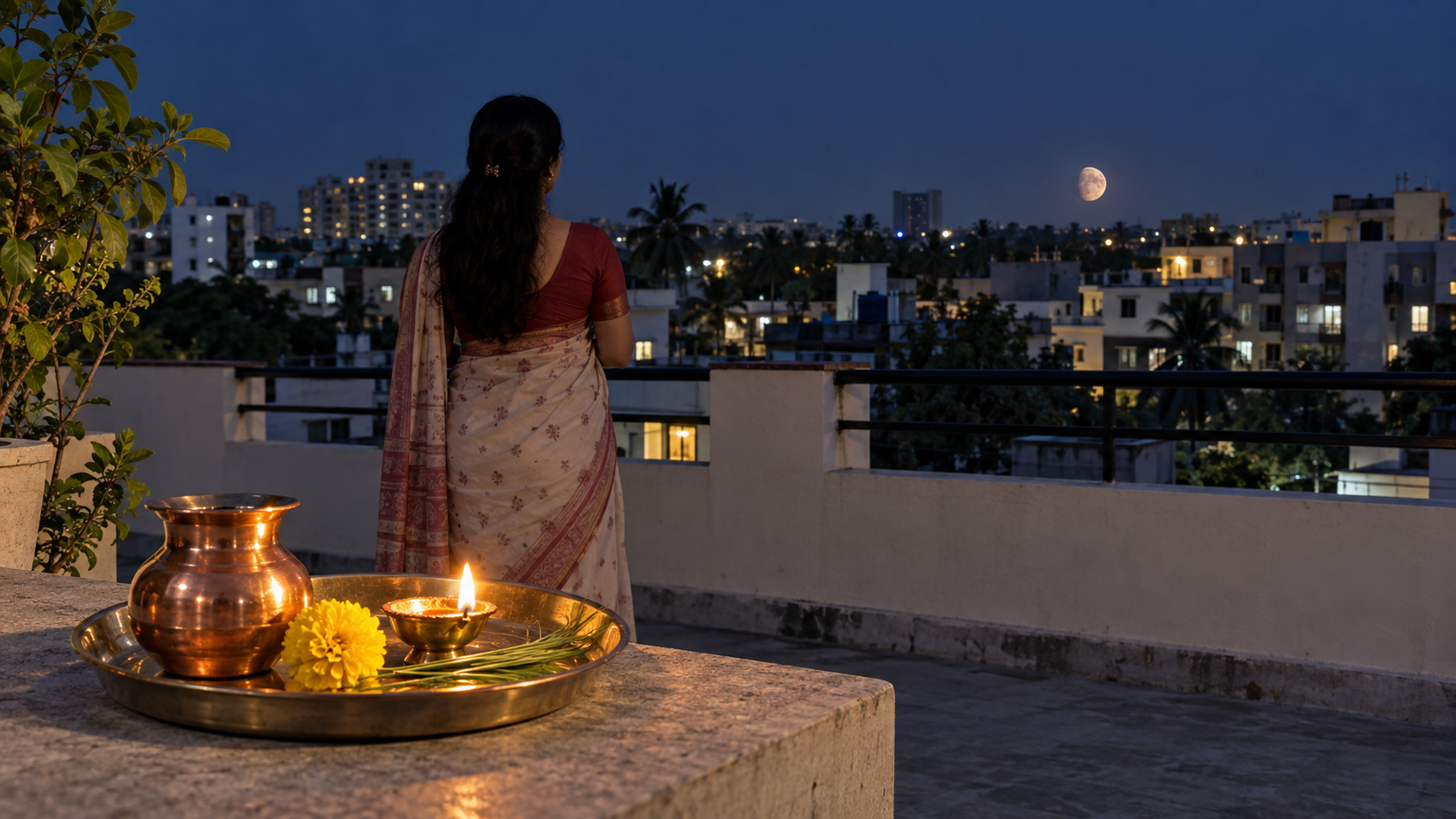
- Note the local moonrise if your family practice uses it to conclude the fast.
- Check whether your temple has announced a puja time or community observance.
- If temple instructions and a generic calendar disagree, ask which local panchanga or observance rule the temple is following.
This check matters most when you are travelling, living in the diaspora, or coordinating worship across time zones. The date is easy to share; the local timing is not interchangeable.
Choose a vrata you can keep with steadiness
A vrata is more than a menu restriction. It joins intention, restraint, worship, and conduct. Decide its form before the day begins rather than changing the rules whenever the observance becomes inconvenient.
If your family, sampradaya, guru, or temple has an established Sankashti procedure, follow that practice. It should take precedence over a generic checklist. Clarify in advance what you will eat or avoid, when the vrata begins, how it is concluded, and which prayers or katha belong to your tradition.
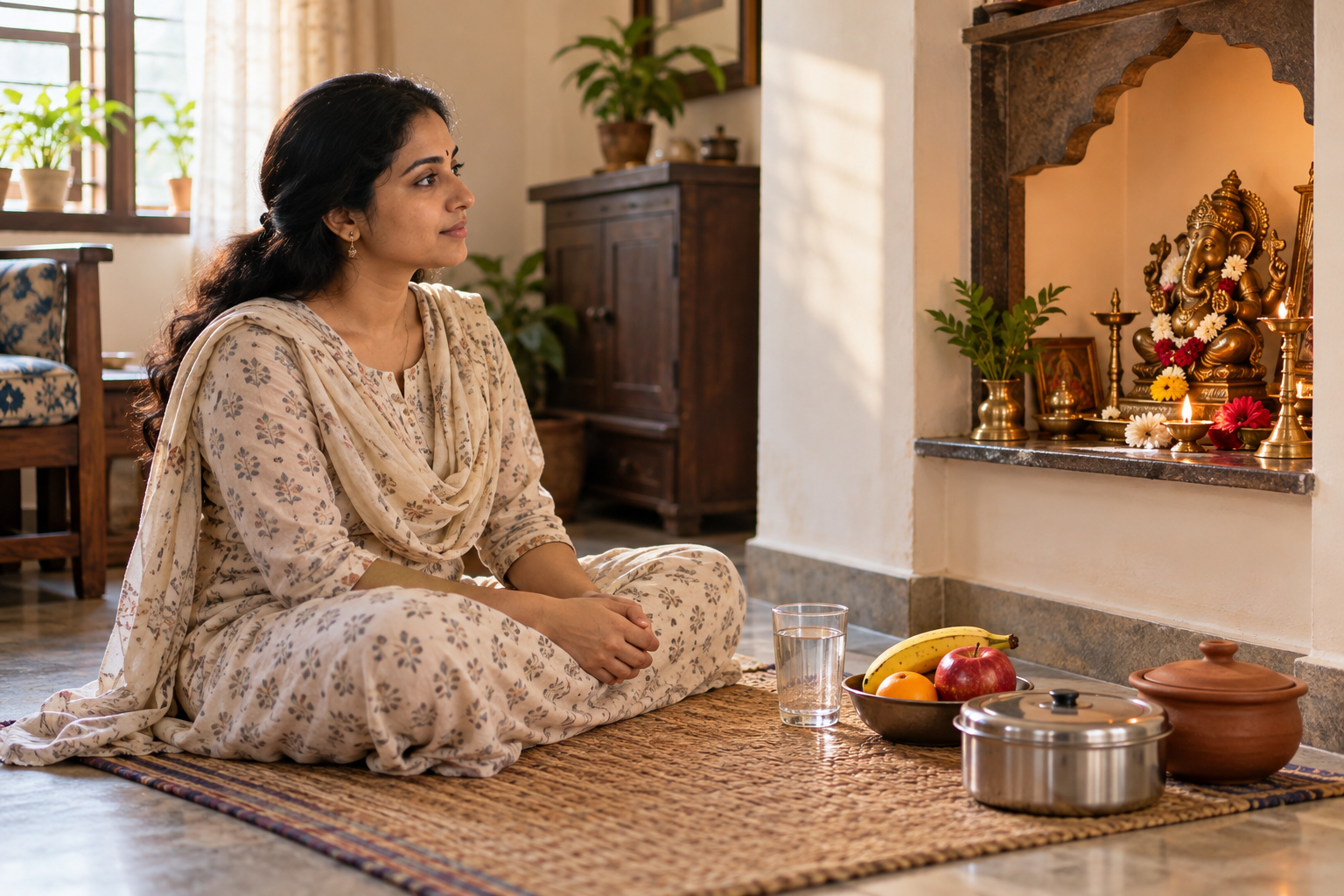
Do not turn fasting into a test of physical severity. If fasting would endanger your health, conflict with medication, or go against clinical advice, do not improvise a restrictive fast. Ask an appropriate healthcare professional about what is safe, and seek guidance from a trusted dharmic teacher about a suitable form of restraint or devotional observance. The spiritual purpose is not served by preventable harm.
If you have no inherited procedure, choose a modest practice you can complete attentively. A short, coherent observance is better than collecting unfamiliar rites from unrelated traditions and rushing through them.
A simple plan for observing Sankashti at home
The following plan is a practical framework, not a replacement for lineage-specific rules. Keep the customary elements your household already follows.
- Confirm the local schedule. On the day before the vrata, record the Chaturthi interval, local moonrise where relevant, and any temple programme you intend to join.
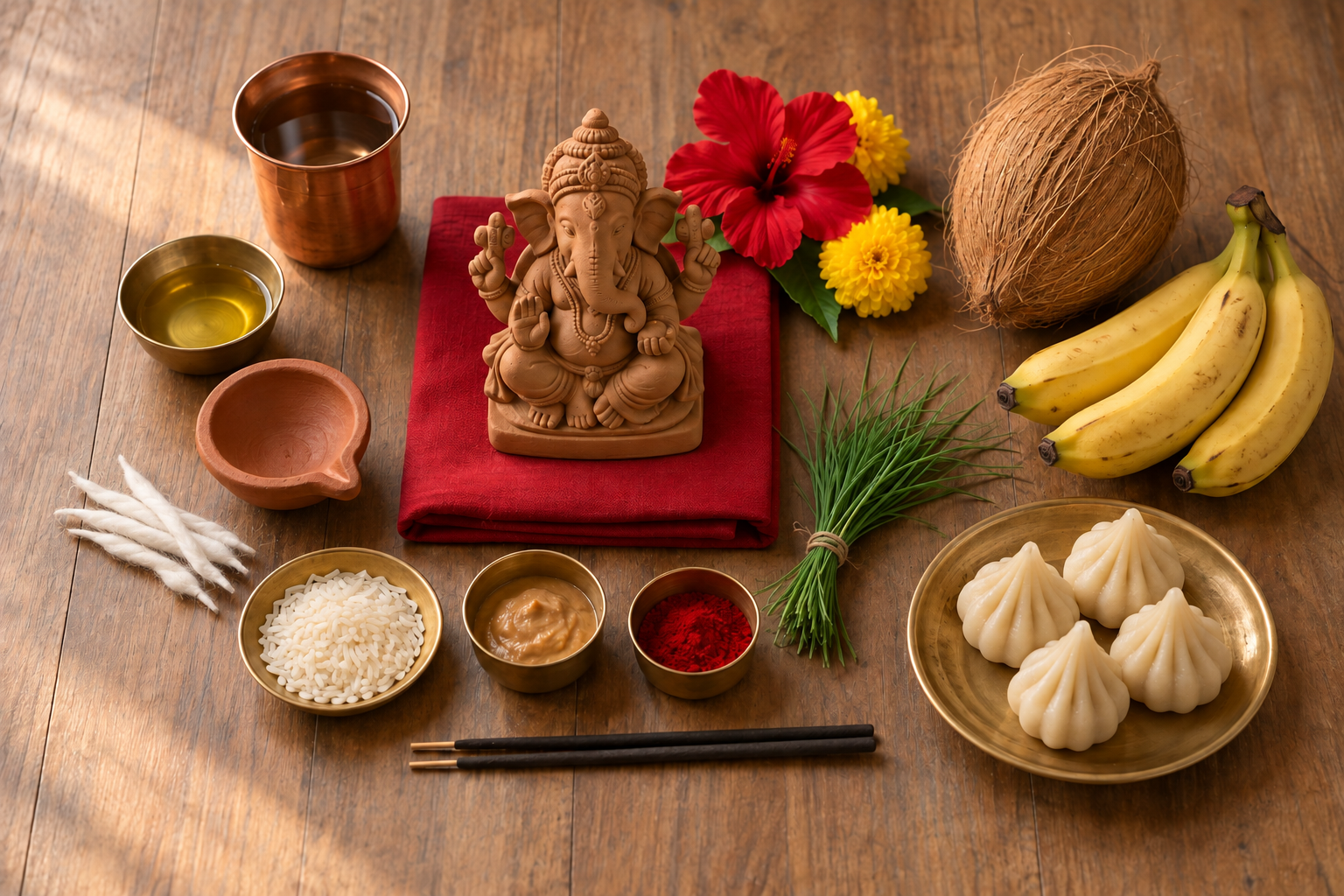
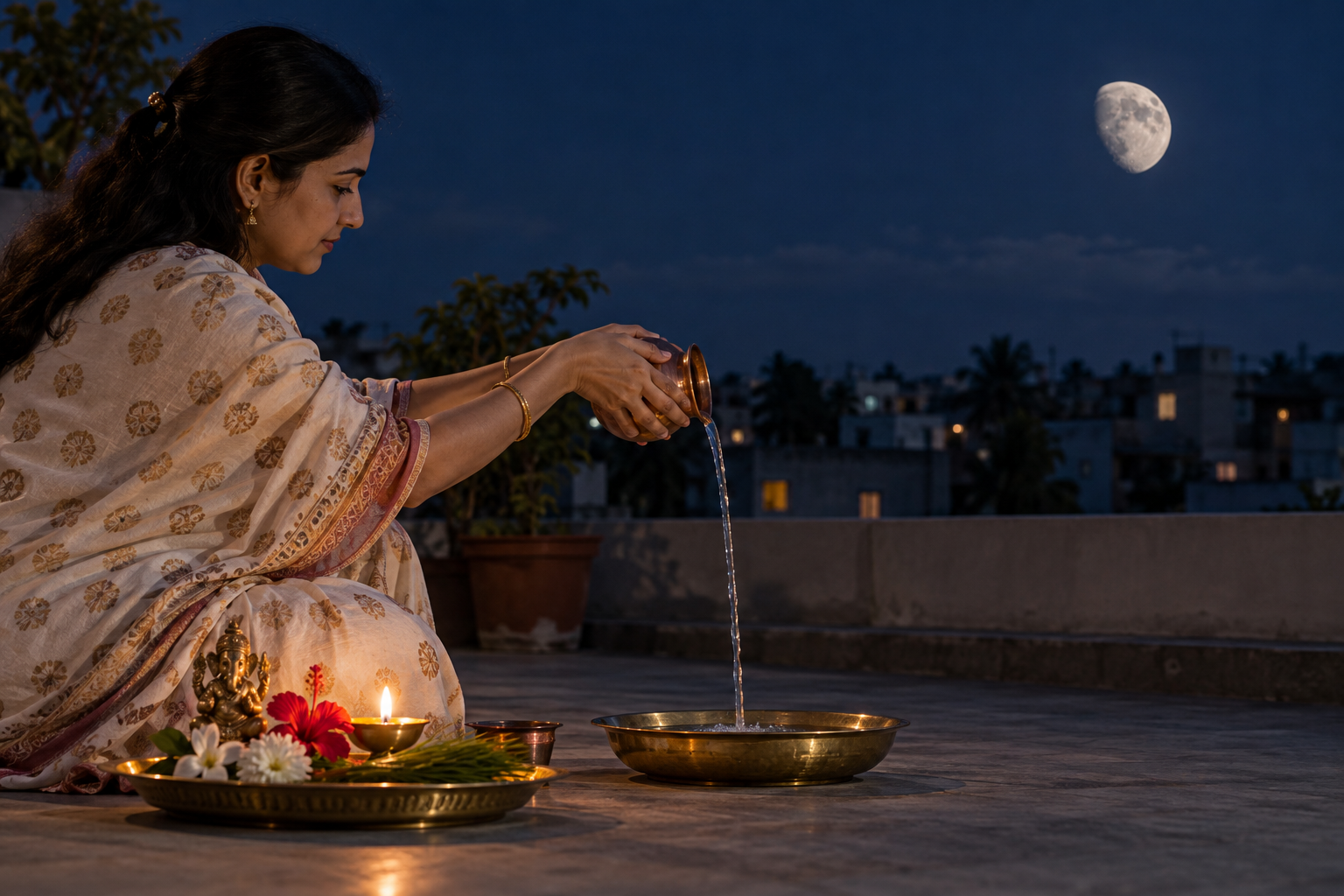
- Prepare the worship space. Clean the area and place your Ganesha murti or image there. Gather only the lamp, water, flowers, fruit, naivedya, prayer text, and other items already appropriate to your custom. Do not let shopping become the centre of the observance.
- State your intention. At the beginning of your vrata, make a simple sankalpa to observe Sankashti in devotion to Ganesha. Be clear about the discipline you have chosen so that the day is governed by intention rather than impulse.
- Carry the vrata into your conduct. Keep the dietary restraint permitted by your health and tradition, but also watch speech, impatience, distraction, and avoidable conflict. The hours before puja are part of the observance, not merely a wait for food.
- Offer the evening worship without haste. Sit before Ganesha, light the lamp safely, make the offerings customary in your home, and recite the Ganesha prayers or mantra you already know. Include aarti or a traditional katha if that belongs to your practice.
- Conclude according to local time and custom. If your vrata is tied to moonrise or another prescribed point, use the time for your location. Complete the prayers and offerings before breaking the fast in the manner your tradition permits.
If family members are participating at different levels, agree on the shared portion: the puja time, prayers, aarti, and meal after the observance. One person may keep a stricter fast while another participates through worship and an appropriate restraint. Clear expectations prevent the household logistics from overtaking the devotional purpose.
Key takeaways
- November 2026 Sankashti Chaturthi is on Friday, November 27.
- The recurring vrata belongs to Krishna Paksha Chaturthi and is dedicated to Ganesha.
- It falls in Kartik under Gujarati calendar reckoning.
- Use a panchanga set to your actual location for the tithi interval and moonrise.
- Follow your established family or temple procedure where one exists.
- Choose a form of fasting or restraint that does not place your health at risk.
Add two reminders now: one several days beforehand to confirm your local timing and temple schedule, and another on November 27 to protect the puja period from routine commitments. Once the date, timing, and scope of the vrata are settled, you can give the day to Ganesha instead of spending it negotiating logistics.
References

Leave a Reply
You must be logged in to post a comment.