

If you are deciding whether to travel to Puttaparthi for Sathya Sai Baba Jayanti in 2026, begin with the facts that are fixed and keep everything else provisional until the relevant organiser confirms it. The firm anchor is 23 November 2026, when devotees will observe Sathya Sai Baba’s birth anniversary in Puttaparthi, Andhra Pradesh.
A good pilgrimage plan has two parts. The outer plan protects you from avoidable confusion about travel, accommodation and entry arrangements. The inner plan keeps the journey from becoming little more than attendance at a large event.
Key takeaways
- Sathya Sai Baba Jayanti falls on 23 November 2026 in Puttaparthi.
- The date marks exactly 100 years since Sathya Sai Baba’s birth on 23 November 1926.
- The 2026 observance is also described as the sixteenth Jayanti after his Mahasamadhi; that devotional count is distinct from the 100-year interval since his birth.
- The date does not establish programme times, entry conditions, accommodation arrangements or transport details. Confirm each of those separately before paying for a non-refundable booking.
- You can prepare meaningfully even if you cannot travel: choose a prayer, a verified teaching, a concrete act of seva and one discipline to carry beyond the day.
Read the anniversary correctly
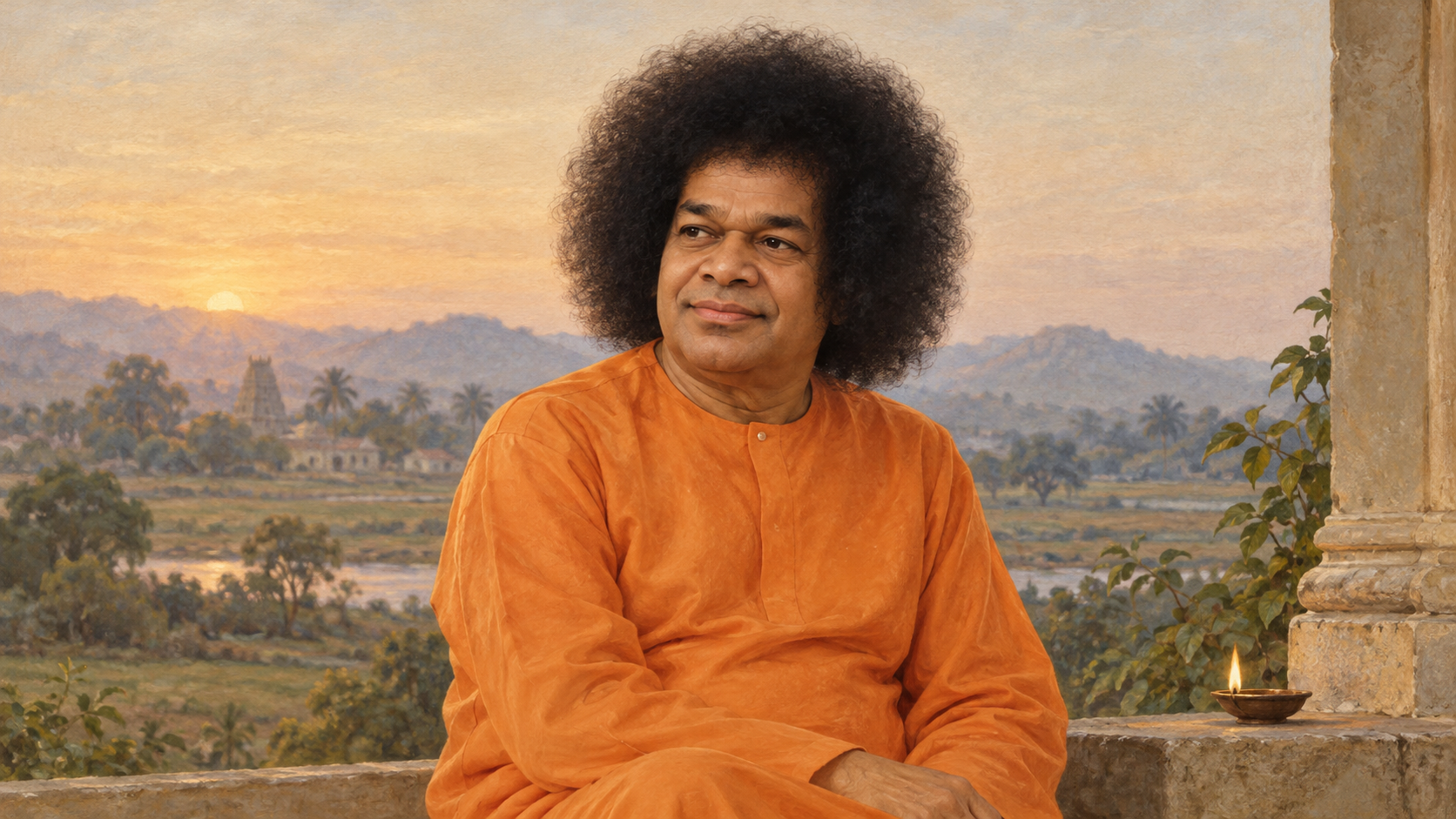
Sathya Sai Baba was born on 23 November 1926, and his 2026 Jayanti will be observed on 23 November. Those dates are exactly a century apart. If you are preparing an invitation, family message or community announcement, the clearest wording is that 2026 marks 100 years since his birth.
That wording avoids an easy counting mistake. Depending on whether someone counts the birth year itself, labels such as “100th Jayanti” and “101st Jayanti” can be used inconsistently. “One hundred years since his birth” states the arithmetic without ambiguity.
A second count belongs to the devotional history of the observance: 2026 is identified as the sixteenth Jayanti after Sathya Sai Baba’s Mahasamadhi. Do not merge the two counts or treat one as a correction of the other. One measures the interval from birth; the other places this Jayanti within the years following Mahasamadhi.
Why Puttaparthi is more than a venue
Jayanti is celebrated in Puttaparthi with deep devotion. For a pilgrim, this means the place and the remembrance are bound together. You are not merely selecting a convenient city in which to attend a programme; you are entering a setting that devotees associate closely with Sathya Sai Baba’s life and spiritual presence.
The theological language deserves equal care. Sathya Sai Baba presented himself as the reincarnation of Shirdi Sai Baba. Devotees receive that identification as a matter of faith, while others may understand it as a devotional claim. Respectful writing should preserve that distinction. Say that Sathya Sai Baba made the claim, or that devotees accept and revere the connection; do not turn belief into a supposedly neutral proof.
This distinction also helps when you travel with relatives or friends whose convictions differ. You do not have to settle every theological question before going. Agree instead on conduct: listen without mockery, do not pressure another person to make a declaration of belief, and allow devotees to practise without interruption. Reverence does not require argument.
Plan the visit without inventing a schedule
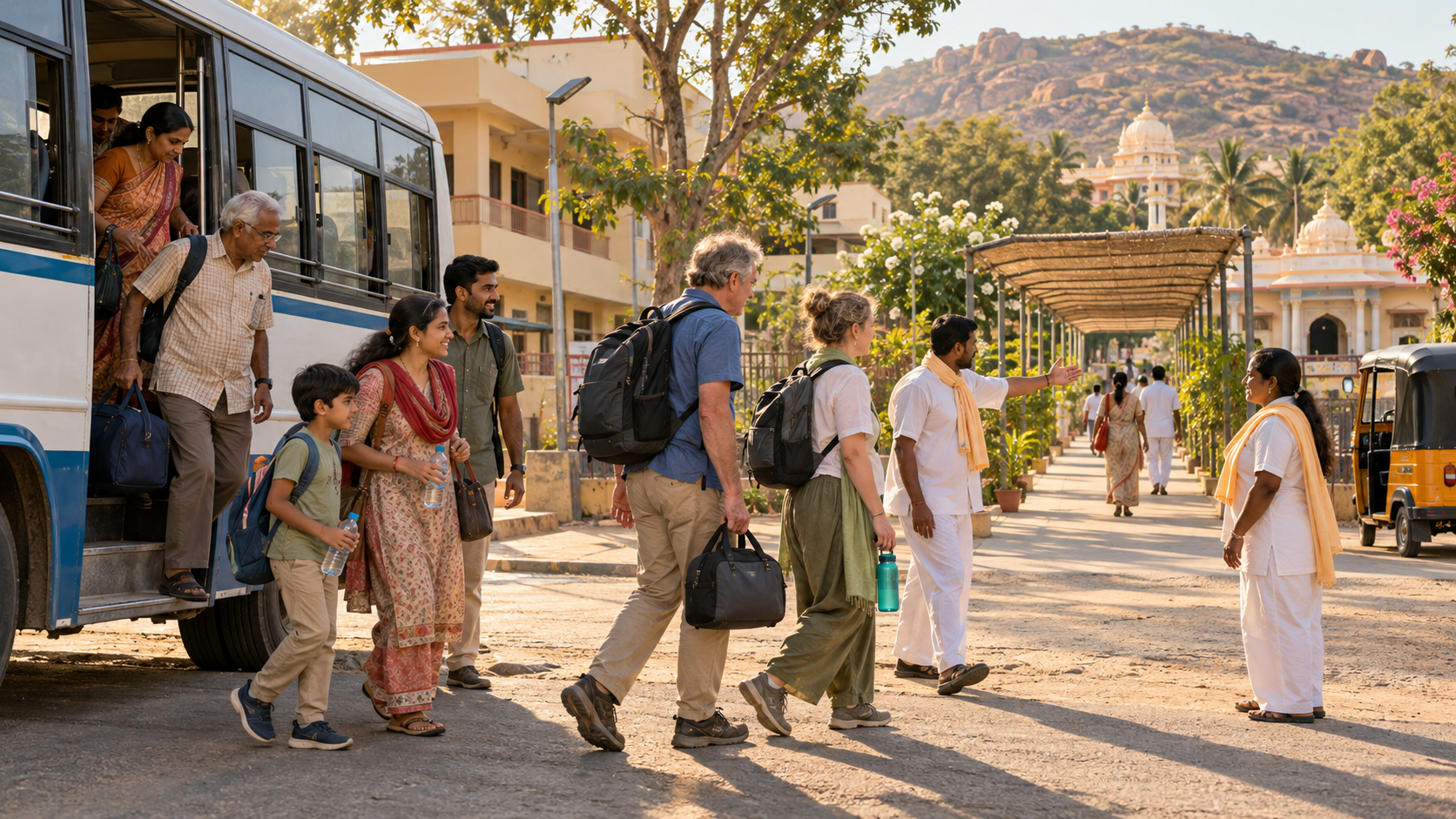
A confirmed festival date does not automatically confirm when a programme begins, whether admission is controlled, where visitors may stay, what they may carry, or how local transport will operate. Treat each of those as a separate question. The safest planning rule is simple: silence is not confirmation.
- Create two lists headed “confirmed” and “to verify.” Put 23 November 2026, Puttaparthi and the purpose of the observance on the first list. Put every logistical detail on the second until you receive current information from the body responsible for it.
- Obtain the programme from the institution actually hosting the celebration. Save the version you used, note when you checked it, and check again shortly before departure in case timings or access instructions change.
- Ask an accommodation provider for the exact check-in and cancellation terms before paying. A property described as being in Puttaparthi may still require transport to the place you intend to visit, so ask about the actual route rather than relying on a promotional description.
- Write down both a primary and a backup plan for arrival and departure. Keep the booking references, addresses and contact details somewhere that does not depend entirely on mobile connectivity.
- If you have mobility, dietary or health needs, confirm the relevant arrangements directly. Do not assume that seating, accessible transport, food or medicine storage will be available merely because the gathering is religious.
- Ask about current rules for bags, footwear, photography, phones and personal offerings. Follow the instructions you receive at the venue even if they differ from what another pilgrim remembers from a previous year.
Build flexibility around the pilgrimage rather than making one unverified timing hold the entire trip together. Flexible bookings may cost more, but they can be the more responsible choice when programme and access details have not yet been confirmed. If you choose a restrictive fare, make that decision consciously instead of treating an assumption as a guarantee.
Prepare an observance, not just an itinerary
Your personal practice need not imitate an official programme. In fact, separating the two is useful: the organiser determines the public schedule, while you decide how the Jayanti will shape your own conduct. A simple preparation can be more serious than an elaborate plan you cannot sustain.
- Write a one-sentence sankalpa before you leave. Name the quality you intend to practise, not the experience you hope to receive. Patience in queues, truthful speech, restraint in criticism or attentive service are concrete choices.
- Select a prayer, bhajan or form of nama-smarana already familiar to you. Familiar practice is easier to return to when travel becomes tiring or plans change.
- Choose one teaching that you have verified in a trustworthy edition or institutional record. Unattributed quotations circulate easily around revered teachers; do not pass one along merely because it sounds spiritual.
- Connect remembrance with seva. Choose an act that meets a real need, respects the recipient and can be completed without turning the recipient into material for a photograph or social-media claim.
- Before sleeping on Jayanti, write down one action that will continue after the celebration. Give it a clear form: whom you will help, what habit you will stop, or when you will make time for prayer and study.
If you cannot travel to Puttaparthi, do not treat the day as spiritually inaccessible. Mark 23 November at home or with your local community. Pray, study a verified teaching, undertake seva within your means and reduce unnecessary distraction. The value of remembrance is tested by the conduct it produces, not by the distance travelled.
Carry devotional discipline into the gathering
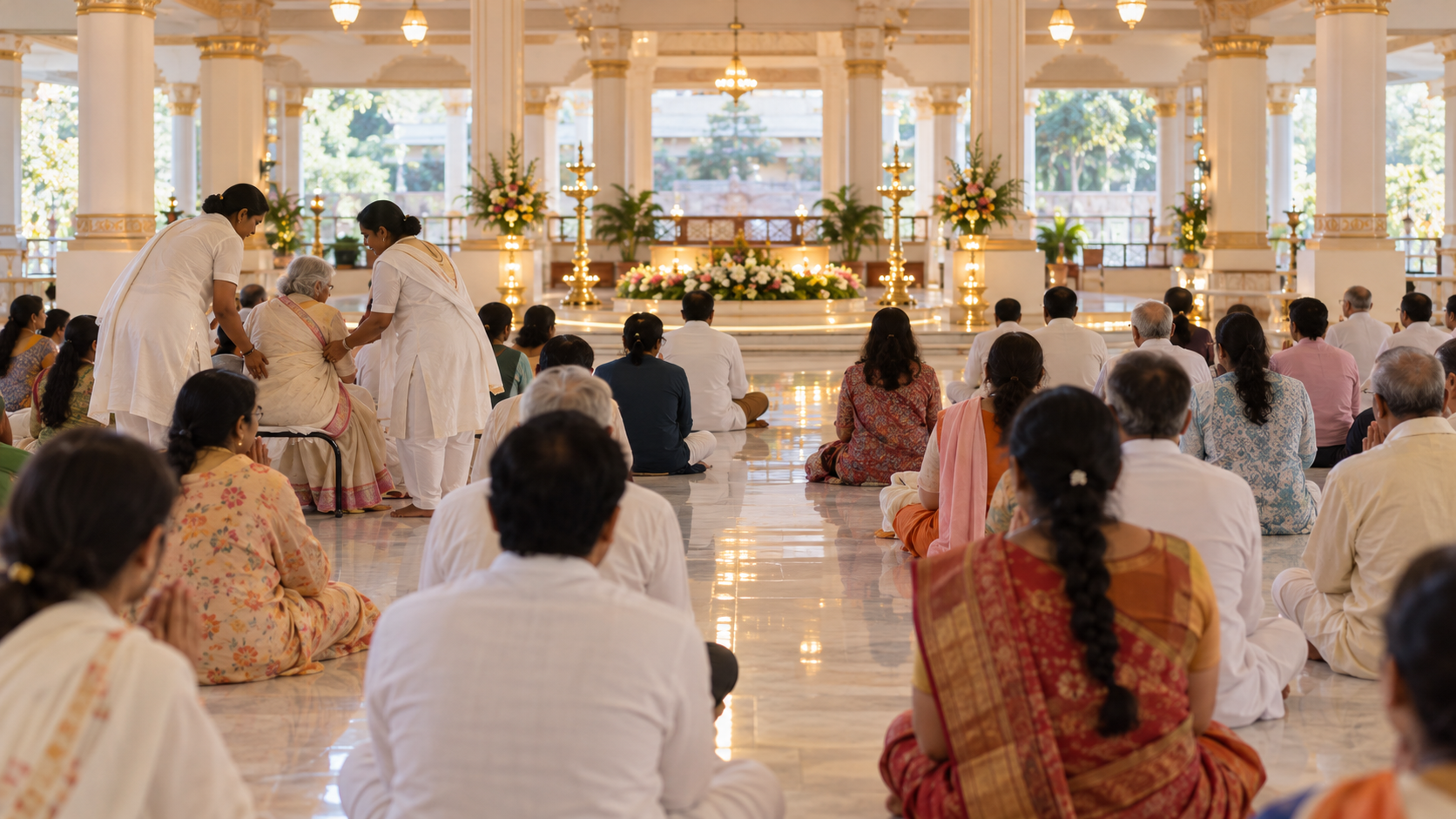
Once you arrive, act as a participant rather than a consumer evaluating an event. Follow local instructions, keep pathways clear, speak quietly where prayer is taking place, and ask permission before photographing people or sacred activity. If an instruction is inconvenient, resolve the problem without treating volunteers, workers or fellow pilgrims as obstacles.
Be equally disciplined online. Do not announce programme times, special access, accommodation, food distribution or transport arrangements unless you have checked them with the responsible body. When you share a schedule, include the date on which you verified it. That small detail helps another pilgrim distinguish current information from an old image being recirculated.
Begin today with two notes: one for what is confirmed and another for what you still need to verify. Then write your sankalpa beneath them. By 23 November, you will have prepared both the journey to Puttaparthi and the conduct you intend to bring home.
References

Leave a Reply
You must be logged in to post a comment.