
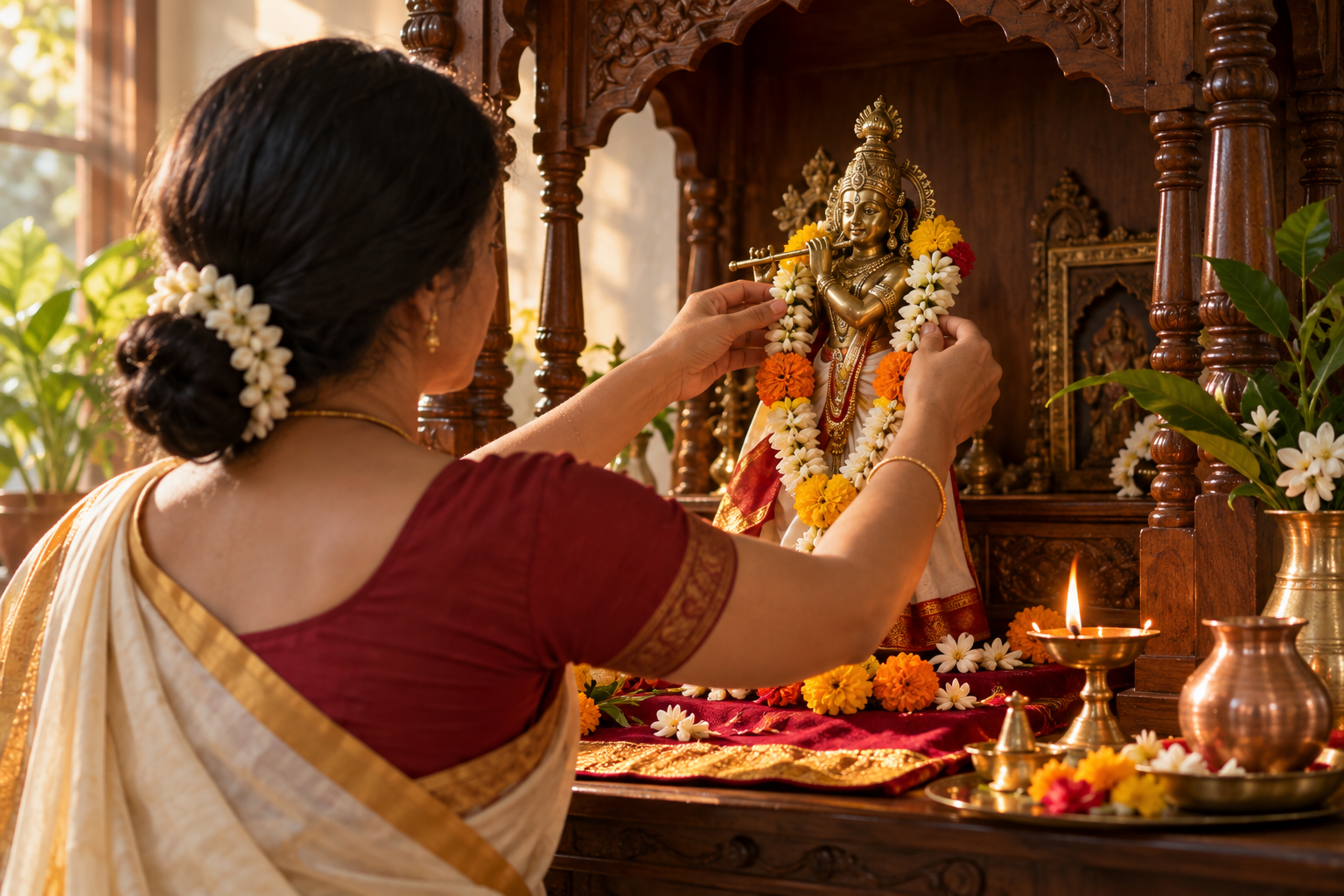
You are preparing a home shrine and wondering how much decoration is appropriate. Should the murti have elaborate clothing and jewellery, or is a flower enough? More importantly, is adornment an act of worship or merely an attractive addition to the room?
The answer lies in the intention and manner of the offering. In Hindu worship, decorating a deity can be a form of seva: attentive service offered to the Divine. Its value comes from reverence, suitability and care, not from expense or display.
Alankara turns looking at the deity into serving the deity
A murti in worship is not treated as an ordinary ornament. The devotee approaches the sacred form as a focus of divine presence, relationship and remembrance. Dressing and adorning that form is therefore called alankara, but its religious meaning is deeper than decoration in the everyday sense.
Think of the difference between arranging an object for visual effect and preparing a place for someone you honour. The outward actions may look similar, but the relationship is different. In alankara, you offer beauty rather than use the deity to decorate your home.
This distinction gives you a practical test. If the arrangement is designed mainly to impress visitors, match the room or produce a striking photograph, the deity has become part of the display. If you are choosing clean and suitable offerings, handling the sacred form gently and giving the task your undivided attention, the same act becomes seva.
The Divine does not become greater through silk, gold or flowers. The devotee becomes more attentive through the act of offering them. Alankara trains you to move from passive admiration to responsibility: selecting, preparing, offering and later removing each item with care.
Beauty gives devotion a disciplined outward form
Devotion can be inward, but Hindu practice often gives inward feeling a physical expression. A clean garment, a well-placed garland or a carefully arranged flower makes reverence visible. The preparation matters because it slows you down. You have to notice whether the shrine is clean, whether the offering is fresh and whether the adornment suits the deity.
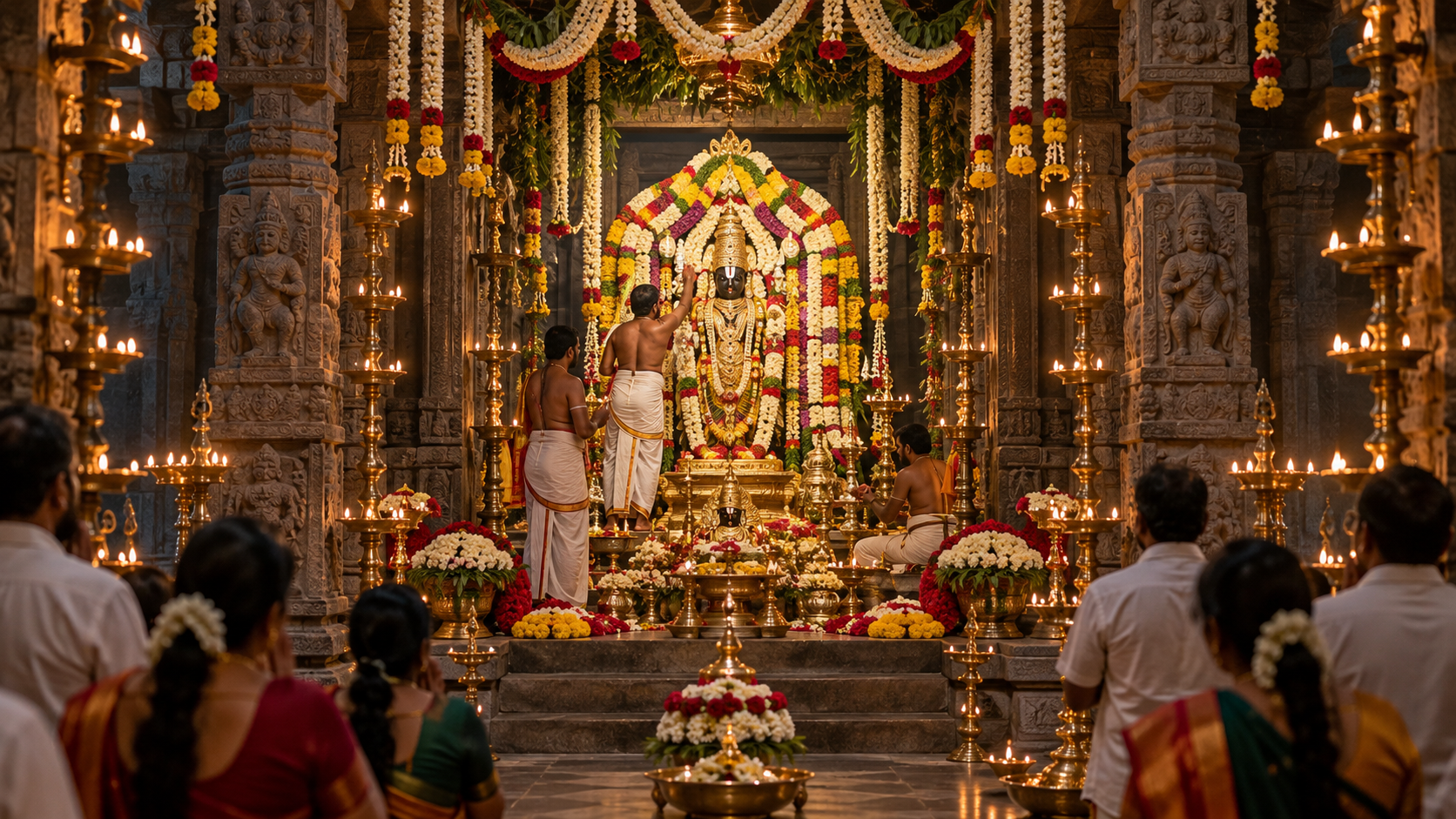
In many temples, fine clothing, necklaces, flowers and garlands express the community’s honour for the deity. Temple alankara can also help worshippers encounter a familiar sacred form with renewed attention. What they have seen many times becomes fresh again through loving presentation.
Beauty should still serve recognition. A good arrangement allows you to see the deity’s face, posture and defining features. Garlands that bury the entire form, clothing that sits awkwardly or ornaments that continually fall can distract from worship. More is not automatically more reverent.
Traditions also differ. A style appropriate in one sampradaya, temple or family may be unfamiliar in another. Treat local custom as guidance rather than as an obstacle to creativity. If your family maintains a particular way of dressing the deity, learn its meaning before replacing it with something chosen only for appearance.
Expense is not a measure of devotion
The sight of richly adorned temple deities can leave a household worshipper with the wrong impression: that a worthy offering must be costly. Temple ornamentation may represent gifts accumulated and maintained by an entire community. It is not a minimum standard that every family must reproduce.
The sound rule is to offer according to your means. A simple, clean cloth and a fresh flower can carry the right intention. Buying ornaments that strain the household budget does not make the act more devotional. Nor should anyone feel embarrassed because another shrine appears more elaborate.
Before buying an adornment, ask three questions:
- Would I still make this offering if nobody else were going to see it?
- Can I afford it without neglecting a household responsibility or creating financial strain?
- Can I keep it clean, safe and suitable for regular use?
If the answer to any of these is no, simplify. The aim is not austerity for its own sake. It is freedom from competition. Alankara loses its spiritual centre when worshippers begin comparing the price, quantity or spectacle of their offerings.
How to decorate a home murti with care
A restrained routine is usually better than an ambitious arrangement you cannot maintain. You can adapt the following sequence to your family tradition and the physical material of the murti.
- Learn the custom before handling the murti. If the sacred form belongs to a temple, community shrine or another household, do not dress or move it without permission. At home, begin with the practice taught by your family, guru or sampradaya where one is available.
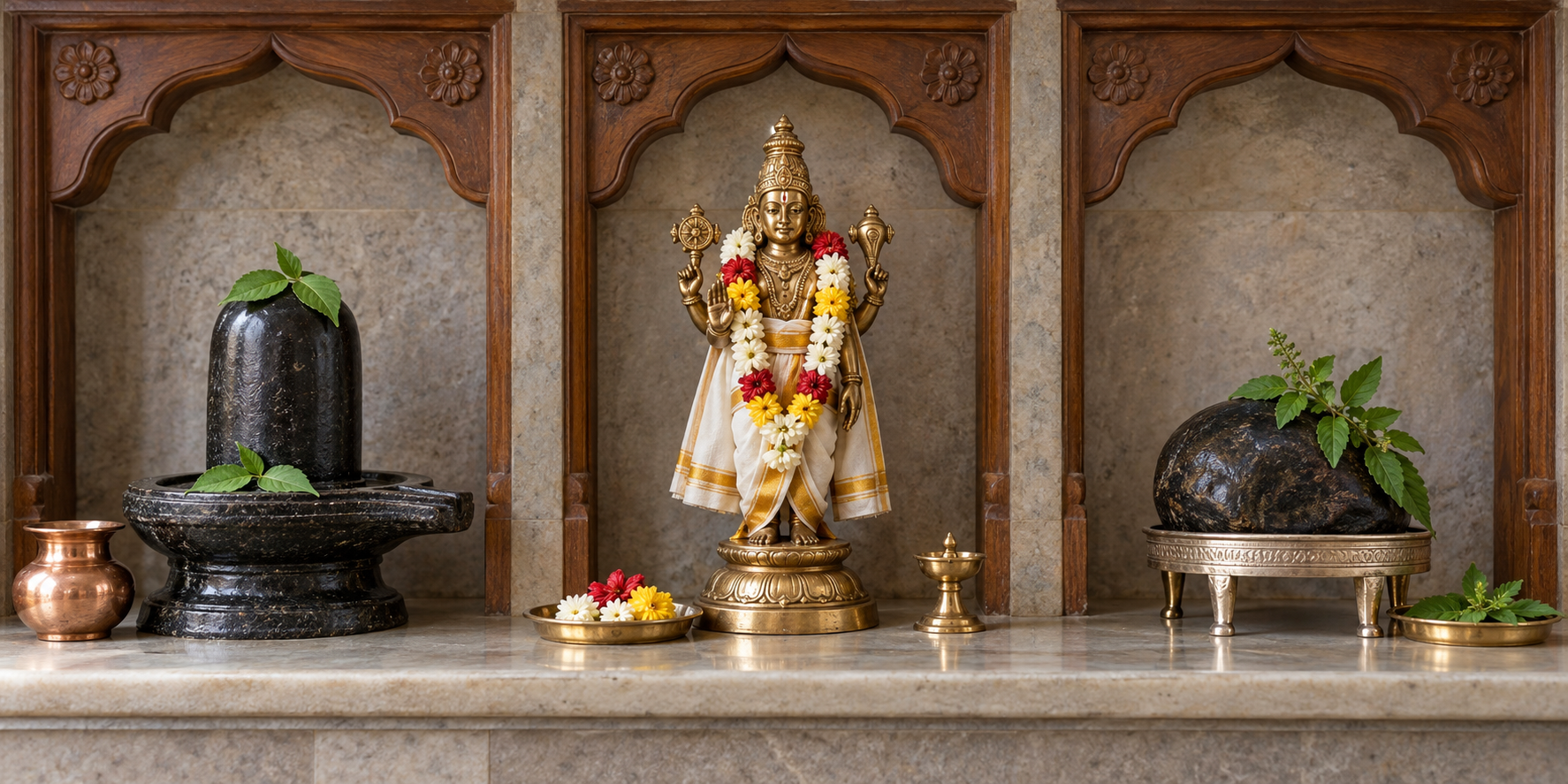
- Check what the sacred image is made from. Stone, metal, wood, clay, painted surfaces and printed images do not tolerate the same treatment. Do not apply water, oil, paste, adhesive or cleaning chemicals unless you know they are safe for that material. Abhishekam is a ritual practice, not a general cleaning method for every murti.
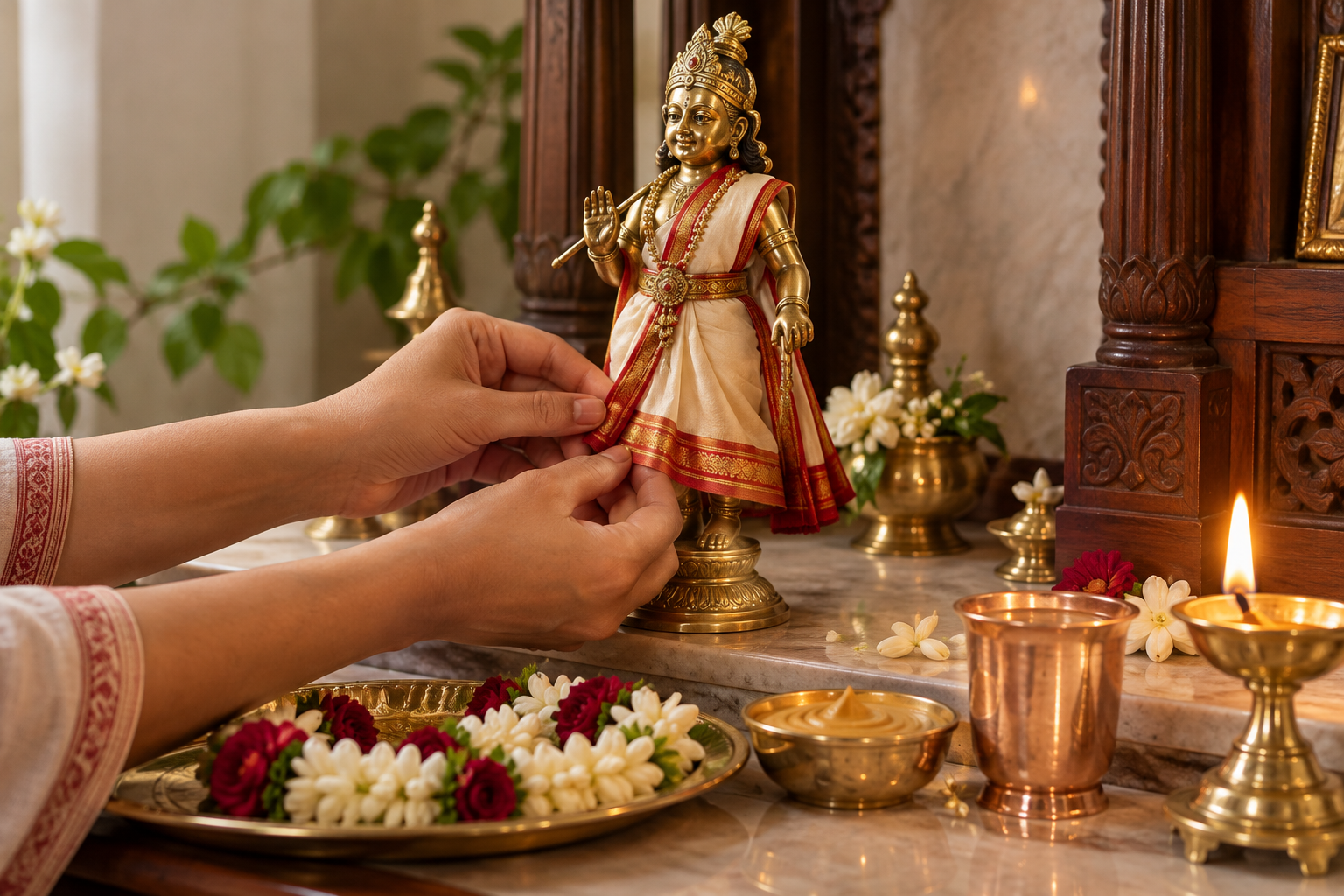
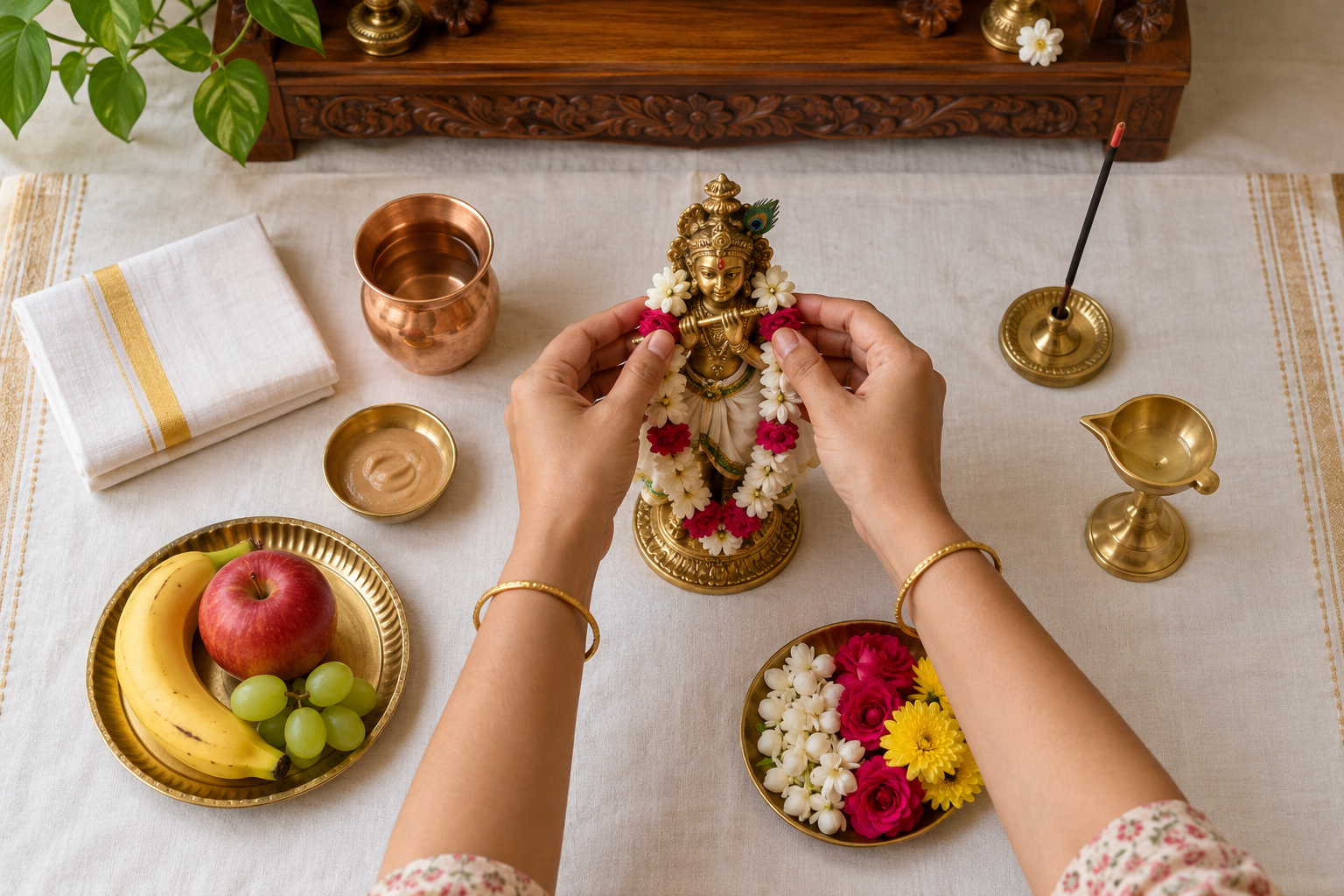
- Prepare before you begin. Wash your hands, clear the shrine area and place the clothing, ornaments and flowers within reach. This prevents hurried searching while the murti is partly dressed and reduces unnecessary handling.
- Use adornments that fit without force. A garment should sit comfortably. A garland should not pull on a delicate part of the image. Avoid tight wire, sharp pins and permanent adhesive. If an ornament does not fit, set it aside rather than bending or forcing the sacred form.
- Keep the deity recognisable. Arrange clothing and flowers so the face and important features remain visible. The decoration should direct attention toward the deity, not make the devotee struggle to find the deity beneath it.
- Complete the worship in your established way. Decoration may accompany puja, prayer or aarti where these form part of your practice. Do not add rites merely because you have seen them elsewhere; learn their procedure and meaning first.
- Care for what you have offered. Remove wilted flowers and replace soiled or damp cloth. Store reusable garments and ornaments cleanly. Keep lamps and incense far enough from fabric, thread and dry garlands to prevent fire.
If daily changes are unrealistic, choose a simpler rhythm. A clean and respectfully maintained shrine is preferable to elaborate decoration left neglected. Regular care is itself part of the offering.
Photographs and printed images can also be honoured with flowers or a garland, but avoid moisture, paste and heavy objects that can damage the paper or frame. You do not need to imitate the dressing of a three-dimensional murti when the form in your shrine calls for a different kind of care.
Key takeaways
- Decorating a deity is religiously meaningful when it is offered as seva rather than arranged for personal display.
- Alankara gives devotion an outward discipline through preparation, cleanliness, attention and continuing care.
- Cost does not determine spiritual value. Offer within your means and resist comparison with temple wealth or another household.
- Follow the customs of your family or sampradaya, especially when they prescribe a particular way of dressing the deity.
- Protect the sacred form: use material-safe methods, avoid force and keep flames away from clothing and garlands.
- A simple arrangement that you can maintain is better than elaborate decoration that becomes burdensome or neglected.
For your next puja, begin with one deliberate offering rather than a large collection of ornaments. Choose a clean cloth, a suitable garland or a single fresh flower. Prepare it carefully, offer it without comparison, and let the attention you give become the real alankara.
References

Leave a Reply
You must be logged in to post a comment.