
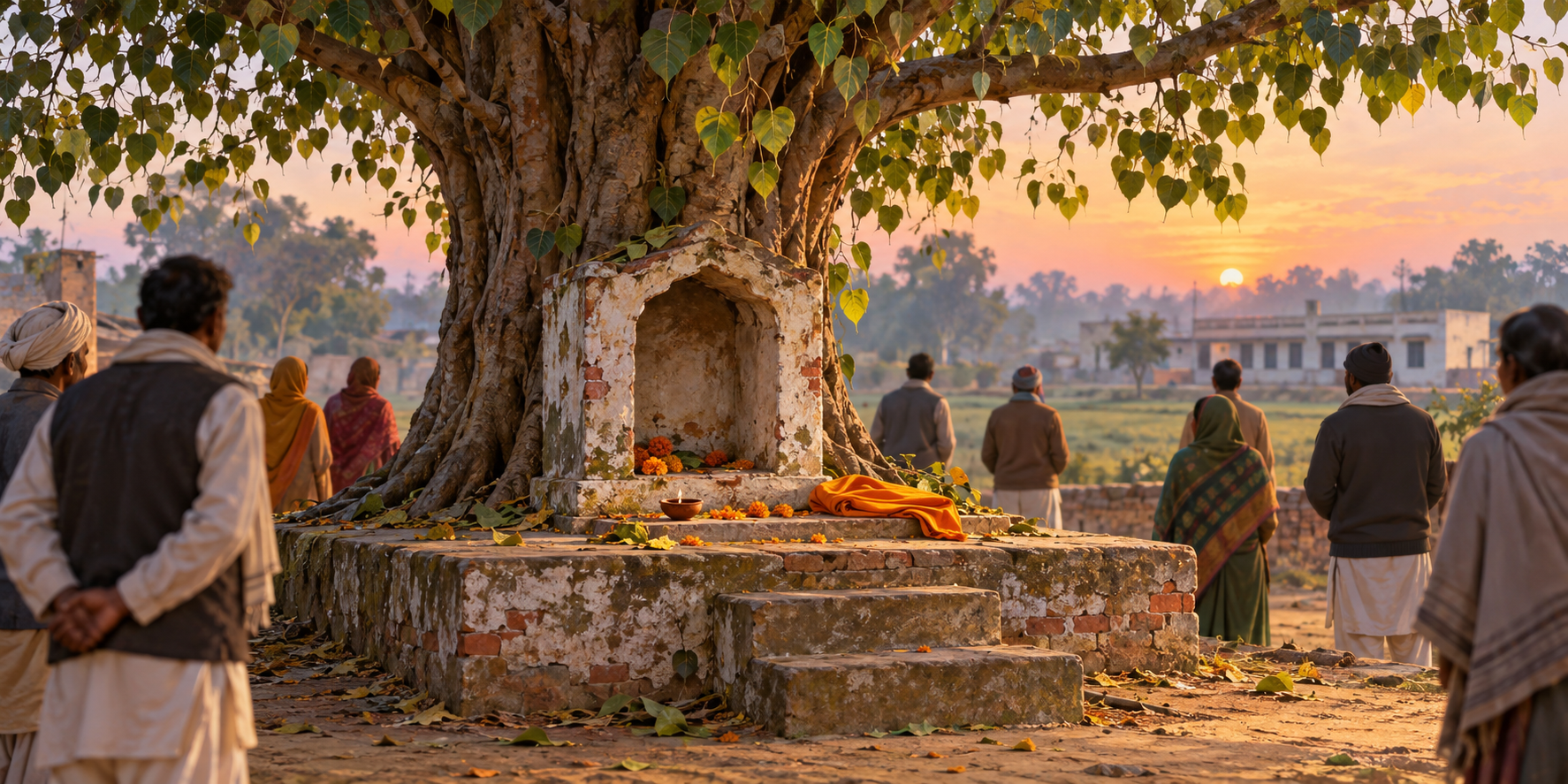
If you are trying to understand the anger in Ramdaspur, you need more than a charged social-media caption. You need to know what residents claim happened, why the location matters to them, which questions remain unanswered, and what a just response would require.
The careful answer is this: villagers say a Hanuman murti worshipped at the site for nearly five decades was removed, allegedly by two women. Residents have sought its restoration and administrative intervention. Their religious injury should be taken seriously, but allegations must not be turned into verdicts before the circumstances are established.
Key takeaways
- Ramdaspur residents describe the murti as a long-standing focus of worship, not an object recently placed to manufacture a dispute.
- The allegation that two women removed it is not the same as an official finding about who acted, why they acted, or whether anyone else directed the removal.
- Nearly 50 years of devotional use establishes substantial religious and cultural significance. It does not, by itself, settle every question about land ownership or formal legal status.
- The immediate priorities are to secure the murti, record its condition, inspect the site, hear every affected party, and disclose the administrative position in writing.
- Devotees strengthen the demand for restoration when they preserve evidence, reject rumours and threats, and ask officials questions that require specific answers.
What is known, and what still has to be established
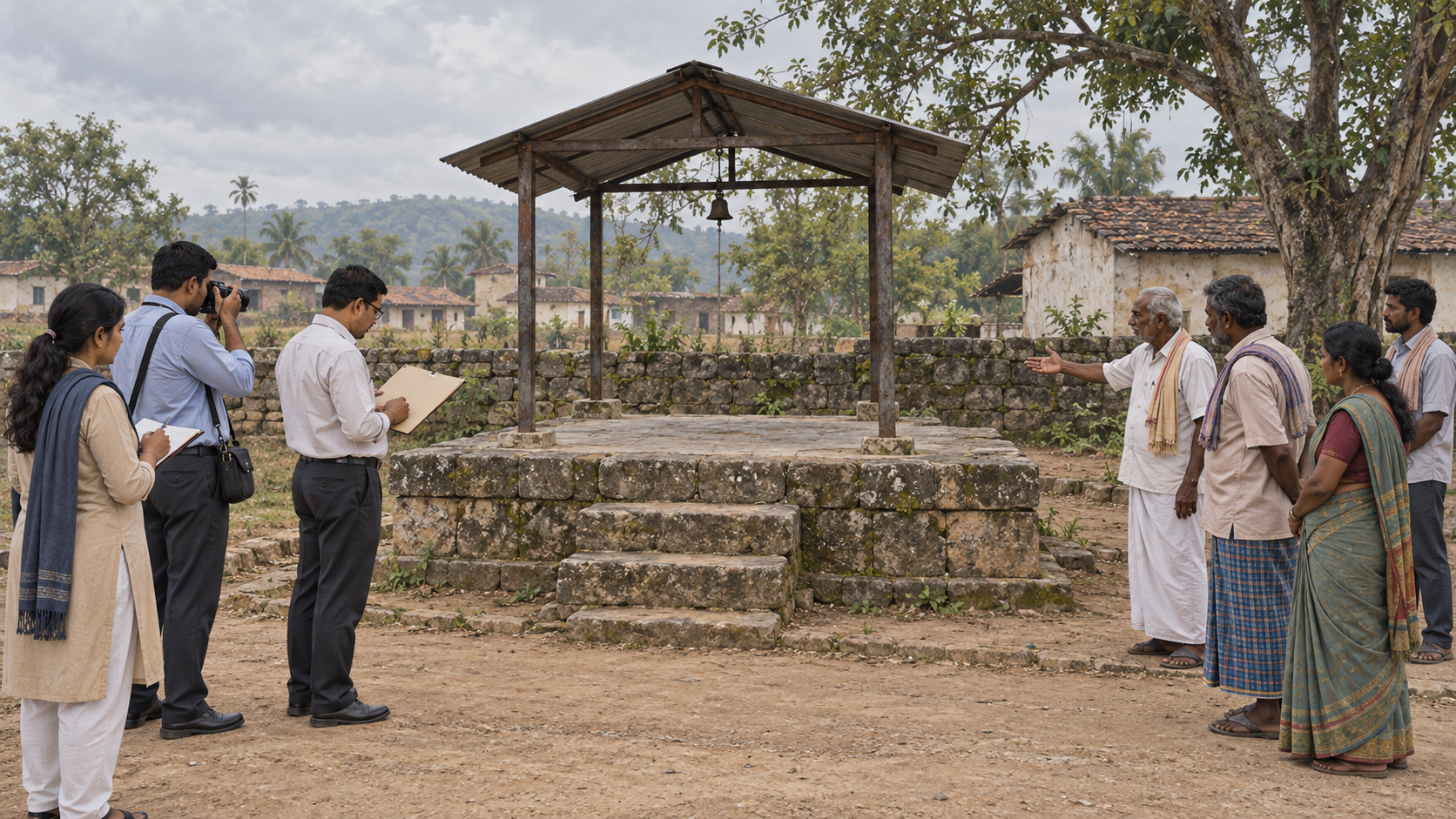
The careful formulation is narrow. Residents of Ramdaspur, in the Holagarh area of Prayagraj district, say generations worshipped the Hanuman murti and regarded its location as a future temple site. They say it remained there for approximately 50 years. After it was allegedly removed by two women, villagers gathered, held religious observances, and demanded that it be returned.
Several consequential facts remain open. The information presently available does not establish the reason for the removal, whether anyone authorised or directed it, the precise land or property position, the murti’s present condition, or the administration’s formal findings. It also does not justify assigning a motive to the two women or treating them as legally culpable.
That distinction is not evasive. It protects the truth of the community’s case. When speaking publicly, use formulations such as “residents say,” “the removal is alleged,” and “the administration should establish.” Do not attach criminal labels, communal motives, or invented quotations to named people. A claim becomes easier to dismiss when advocacy outruns the evidence.
The same discipline applies to the site. It can accurately be called a long-standing place of Hanuman devotion. Residents reportedly hoped to build a formal temple there, but an aspiration for a temple is not identical to an already completed temple or an undisputed title. Officials should clarify the formal status instead of using uncertainty over paperwork to erase the religious history of the location.
Why nearly 50 years of worship changes the issue
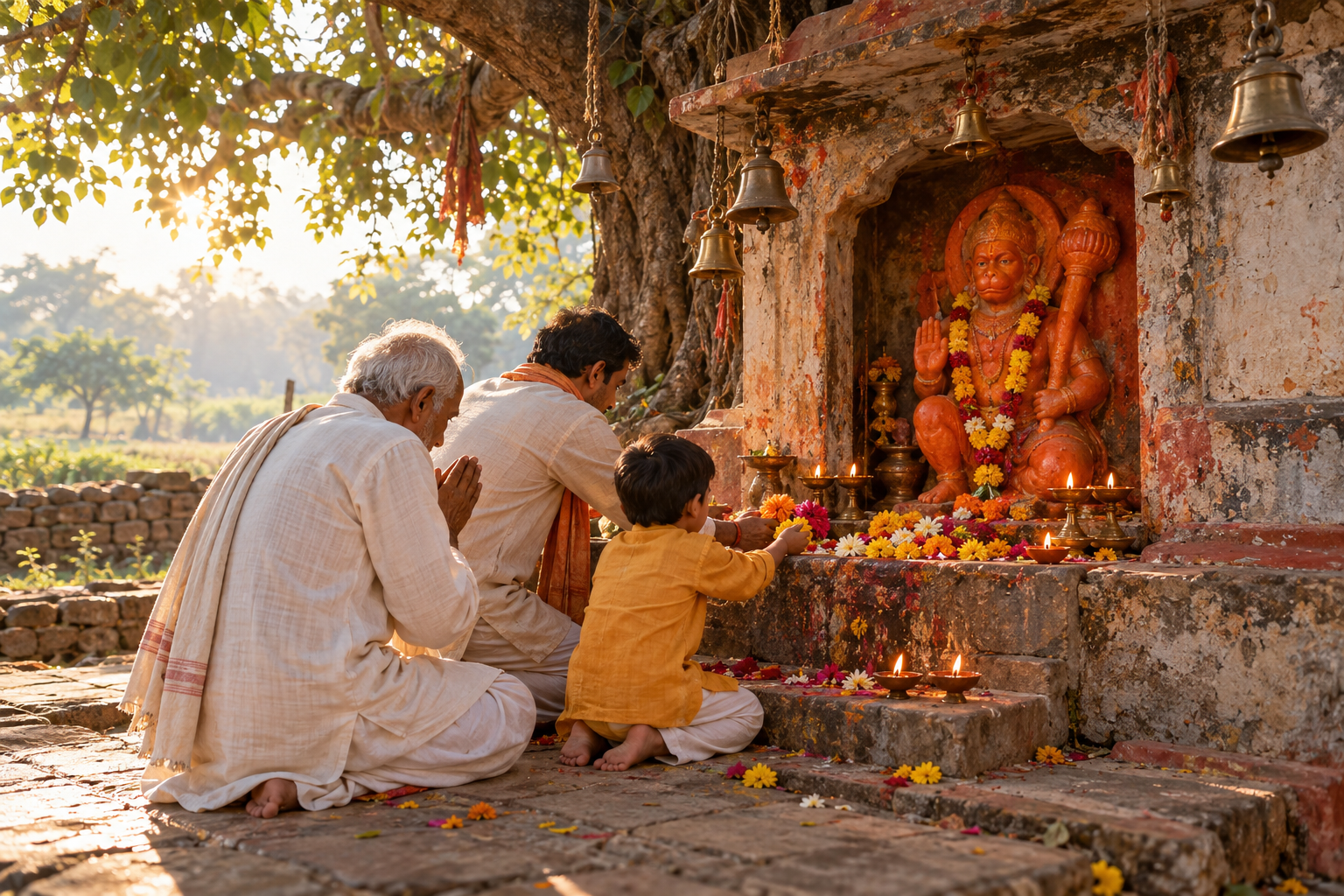
A murti is not interchangeable decoration in Hindu life. Devotees approach the divine through darshan, puja, offerings, vows, remembrance, and repeated presence. Even where the available facts do not establish whether a formal consecration was performed, sustained worship gives a murti and its setting a relationship to the community that cannot be measured by the material alone.
Time matters because a devotional place gathers layers of memory. Elders remember earlier worship; younger people inherit the practice; families associate prayers and observances with a particular location. The sacred geography of a village is often made through this continuity long before it acquires a large structure, managing trust, or polished institutional identity.
This is why the removal cannot be reduced to moving an object from one patch of land to another. A sudden break in worship can be experienced as a break in the village’s spiritual continuity. Administrators need to recognise that harm when deciding how to protect the murti, provide access, and evaluate restoration.
Religious significance and legal ownership are nevertheless different questions. Evidence of long worship is highly relevant to understanding the community’s interest and the sensitivity of the dispute, but it should not be casually presented as conclusive proof of title. If ownership, possession, construction, or access is contested, devotees should obtain qualified local legal advice before attempting construction or a forceful reinstallation. An unauthorised physical confrontation could endanger people and weaken an otherwise compelling demand for a lawful remedy.
What a fair administrative resolution should include
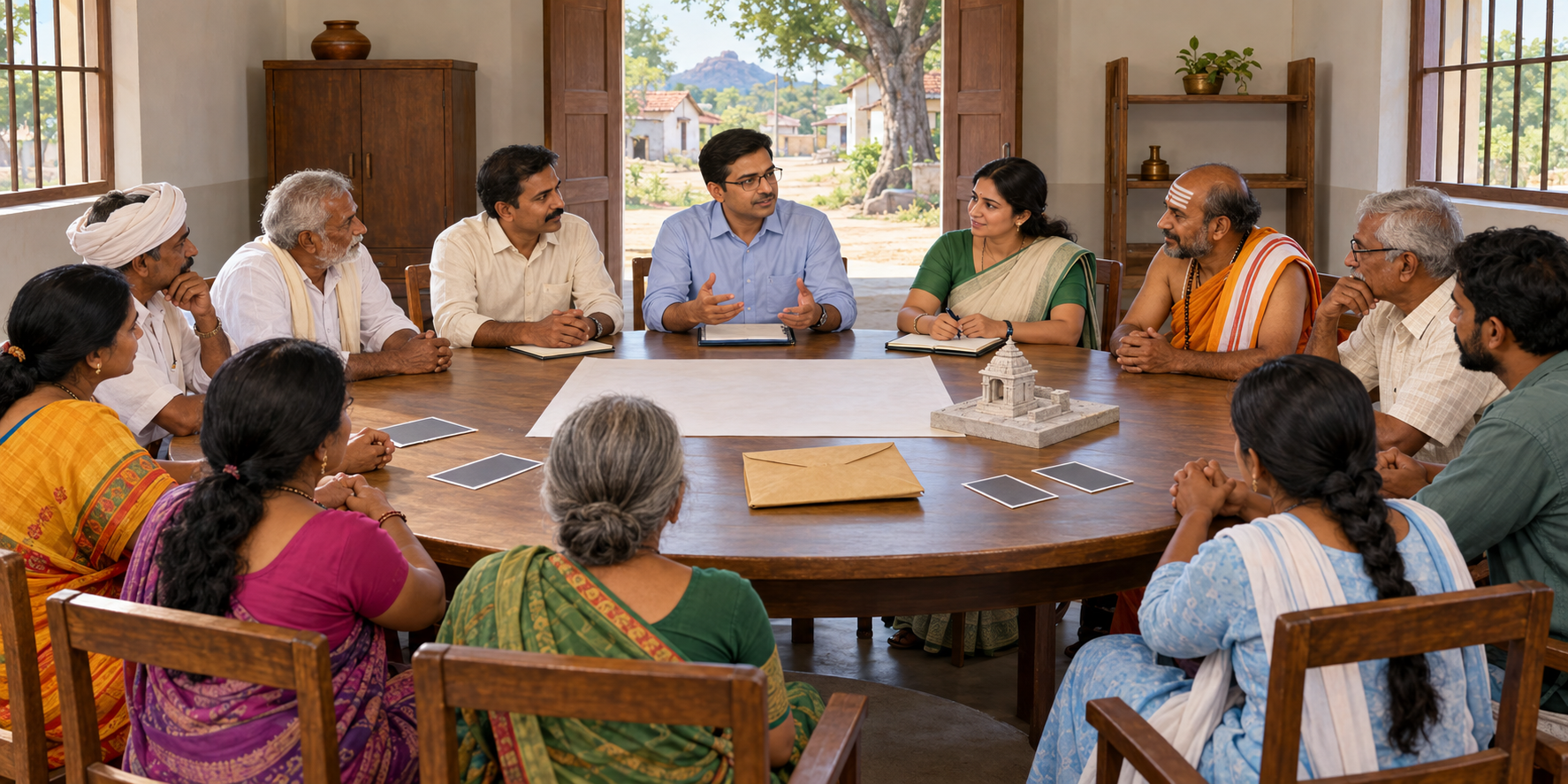
The villagers’ demand is not limited to an explanation. They have called for restoration of the murti and a transparent inquiry. A credible response should therefore deal with both the sacred object and the disputed act.
- Secure the murti. Its location and condition should be documented in the presence of appropriate representatives. If it is already in safe custody, officials should state where it is held, who is responsible for it, and what arrangements exist for respectful access.
- Inspect the original location. The administration should record the condition of the site and examine relevant local, land, or revenue records instead of making assumptions from the absence or presence of a finished temple building.
- Create a factual chronology. Officials should establish when the murti was placed there, how worship developed, when and how it was removed, who was present, and whether any instruction or complaint preceded the action.
- Hear every directly affected party. Devotees, village elders, people familiar with the site’s history, landholders where relevant, and the women alleged to have removed the murti should be allowed to give their accounts without intimidation.
- Provide an interim worship arrangement. If an immediate return is temporarily impossible, the murti should not disappear into inaccessible storage. A dignified, protected arrangement should preserve worship while the dispute is examined.
- Issue a reasoned decision. The final response should distinguish verified facts from allegations, address the demand for restoration, explain any genuine legal or safety obstacle, and identify the process for challenging or reviewing the decision.
Restoration to the original place deserves serious consideration if no lawful or physical obstacle prevents it. If officials conclude that an obstacle exists, they should identify it precisely. “Administrative reasons” is not an adequate explanation for the permanent disappearance of a murti around which village worship has developed for decades.
A workable settlement may require more than returning the murti. Clear arrangements may also be needed for access, maintenance, worship, security, and any future temple proposal. Putting those arrangements in writing reduces the chance that the same conflict will return under a different pretext.
How devotees can act without weakening their case
Build a record that another person can verify
If you are helping the affected community, begin with a single chronology rather than a stream of forwarded messages. Mark each entry as documented, personally witnessed, or recalled by a named witness. Keep originals of photographs and videos instead of relying only on compressed social-media copies.
- Record the approximate period when the murti was placed at the site and identify elders or regular devotees who can explain how they know.
- Collect dated photographs, videos, festival records, worship materials, maintenance receipts, or other items that show sustained religious use, if they exist.
- Write down the last confirmed time the murti was seen at the original location and the first confirmed time its removal was noticed.
- Record the murti’s present condition without touching, moving, repairing, or reinstalling it unless the responsible authority and affected parties have agreed on the procedure.
- Preserve copies of petitions, acknowledgements, official replies, and the names or designations of offices contacted.
Memory has value, especially in a village tradition, but memory and documentary evidence perform different jobs. Preserve both and label them honestly. A consistent record helps officials investigate and prevents small discrepancies from being used to discredit the central grievance.
Make demands that require concrete answers
A written representation should be focused enough for an official to answer point by point. Ask where the murti is, who has custody of it, what condition it is in, whether an order authorised its removal, when the site will be inspected, how devotees will be heard, what interim worship access will be provided, and when a written decision can be expected.
Use a small, named delegation that includes people who can speak to the religious history of the site. Seek an acknowledgement or reference number for every submission. If several groups file representations, they should use the same core facts and requests; contradictory petitions create avoidable confusion.
Keep devotion separate from accusation
Peaceful prayer and collective representation can make the depth of attachment visible. Threats, doxxing, humiliating images, and unverified claims about motive do the opposite. They expose individuals to harm, shift attention away from the murti, and allow a legitimate religious grievance to be portrayed merely as a public-order problem.
This restraint does not mean accepting indefinite delay. It means pressing for measurable steps: safe custody, documented inspection, a hearing, interim access, and a written outcome. If the administration remains silent or a property dispute emerges, take the record to qualified local counsel rather than attempting an irreversible action at the site.
Your next move should be modest and concrete: preserve the evidence, submit a unified representation, obtain acknowledgement, and request a written timetable for the inquiry and decision. Ramdaspur’s demand will be strongest when bhakti is joined to discipline: protect the sacred presence, refuse rumours, and insist that every official choice be placed on the record.
References

Leave a Reply
You must be logged in to post a comment.