
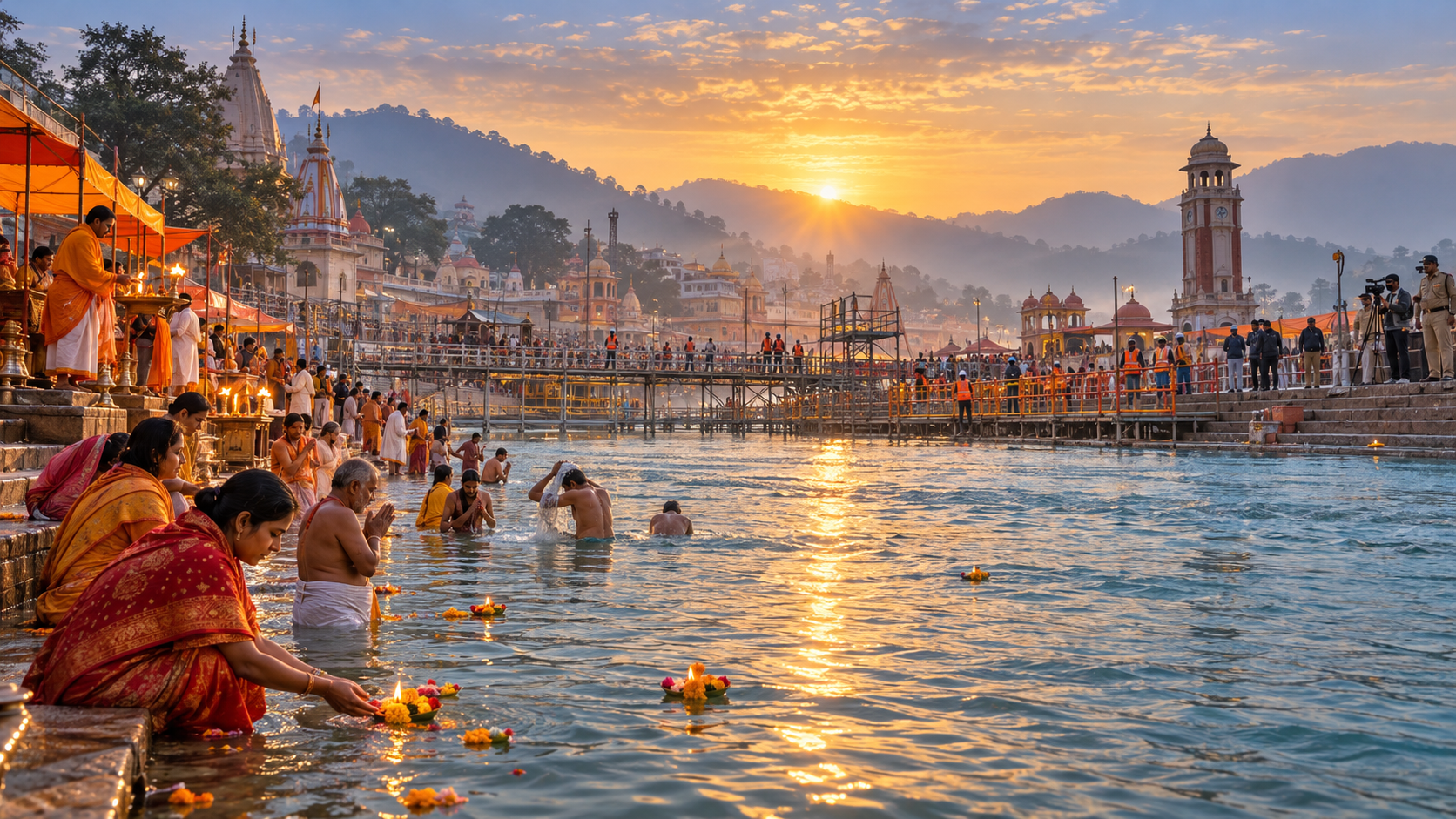
If you are trying to understand Uttarakhand’s Hindutva turn before the Haridwar Kumbh, do not stop at the slogans. The useful question is whether political power is serving a sacred institution or borrowing its authority for an election campaign.
You do not have to choose between supporting Sanatan Dharma and demanding evidence from a government that speaks in its name. In fact, the dignity of the Kumbh requires both. The Dhami government’s Hindutva agenda is being presented as gaining momentum ahead of both the 2027 Haridwar Kumbh and Assembly elections. That convergence deserves attention, but it does not by itself prove either principled cultural renewal or cynical political capture. Conduct, implementation and lasting results will decide which description fits.
Key takeaways
- The Kumbh is a civilizational and religious inheritance. A government administers public responsibilities around it but does not own its sacred meaning.
- A Hindutva agenda should be judged by what it protects, enables and leaves behind, not merely by how often it invokes Sanatan Dharma.
- The proximity of the Kumbh and an election raises the value of every announcement to politicians. It also raises the citizen’s duty to distinguish a commitment from a campaign message.
- For every major promise, look for an identifiable authority, funding basis, implementation responsibility, visible progress and a result that survives the event.
- Pro-Hindu scrutiny is not hostility to Hindu interests. It is how voters prevent sacred language from becoming a substitute for rajadharma.
The Kumbh must remain larger than the political calendar
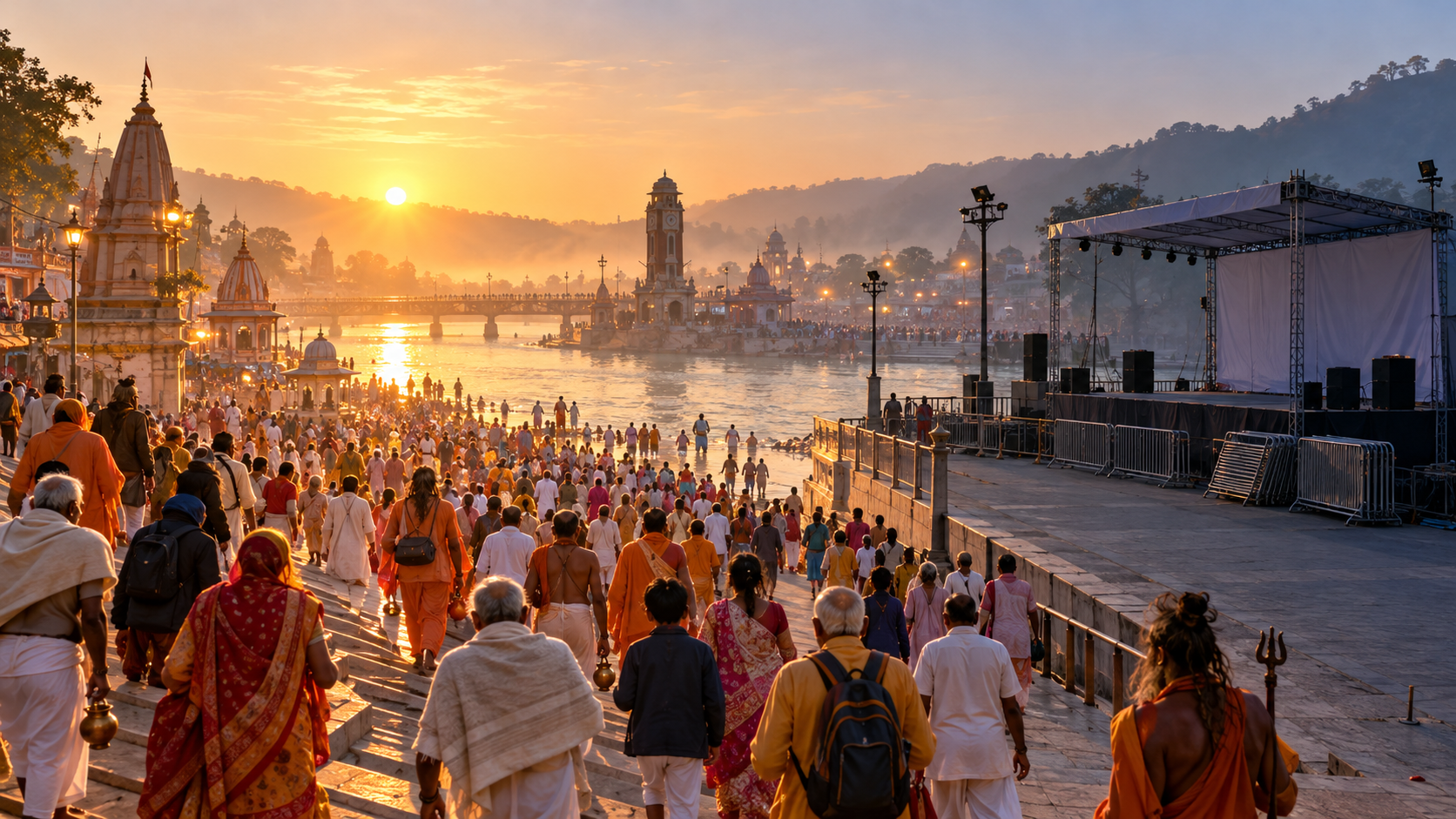
The Haridwar Kumbh operates on several levels at once. It is a sacred gathering shaped by living traditions, teachers, renunciants and pilgrims. It is also an enormous administrative responsibility involving movement, sanitation, public safety, access and communication. In an election season, it inevitably becomes a stage on which governments describe their record and their civilizational commitments.
Confusion begins when these levels are collapsed. Criticism of an administrative failure can then be portrayed as an attack on the Kumbh. Conversely, contempt for Hindutva politics can turn into casual dismissal of the legitimate Hindu desire for public recognition. Neither response serves the pilgrim.
Keep three distinctions clear whenever you encounter a Kumbh-related announcement:
- Religious authority: Does the decision respect the autonomy, practices and internal diversity of the traditions that give the Kumbh its meaning?
- Administrative responsibility: What practical problem will be solved, which institution is responsible, and how will the public know that the work was completed?
- Political communication: Is a party asking for support because of a measurable result, or is devotional language being used to make scrutiny feel improper?
This framework prevents two common errors. The first is to treat every religious symbol used by a Hindu-oriented government as proof of substantive revival. The second is to assume that visible Hindu affirmation is inherently illegitimate because politicians may benefit from it. Symbols can matter, especially where Hindu traditions have been treated as cultural decoration or administrative inconvenience. But symbolism and service remain different achievements, and you should require evidence for each.
What a credible Hindutva agenda should deliver
Hindutva is used to describe several different things: civilizational self-respect, the political defence of Hindu interests, cultural policy and electoral branding. An argument can therefore sound decisive while quietly moving between meanings. Instead of debating the label in the abstract, test the decisions made under it.
A credible programme centred on Sanatan Dharma should meet the following standards:
- Sacred integrity: Administrative convenience should not casually displace ritual requirements or reduce living traditions to a government-managed spectacle. Restrictions that are genuinely necessary should be explained clearly and discussed with the people affected.
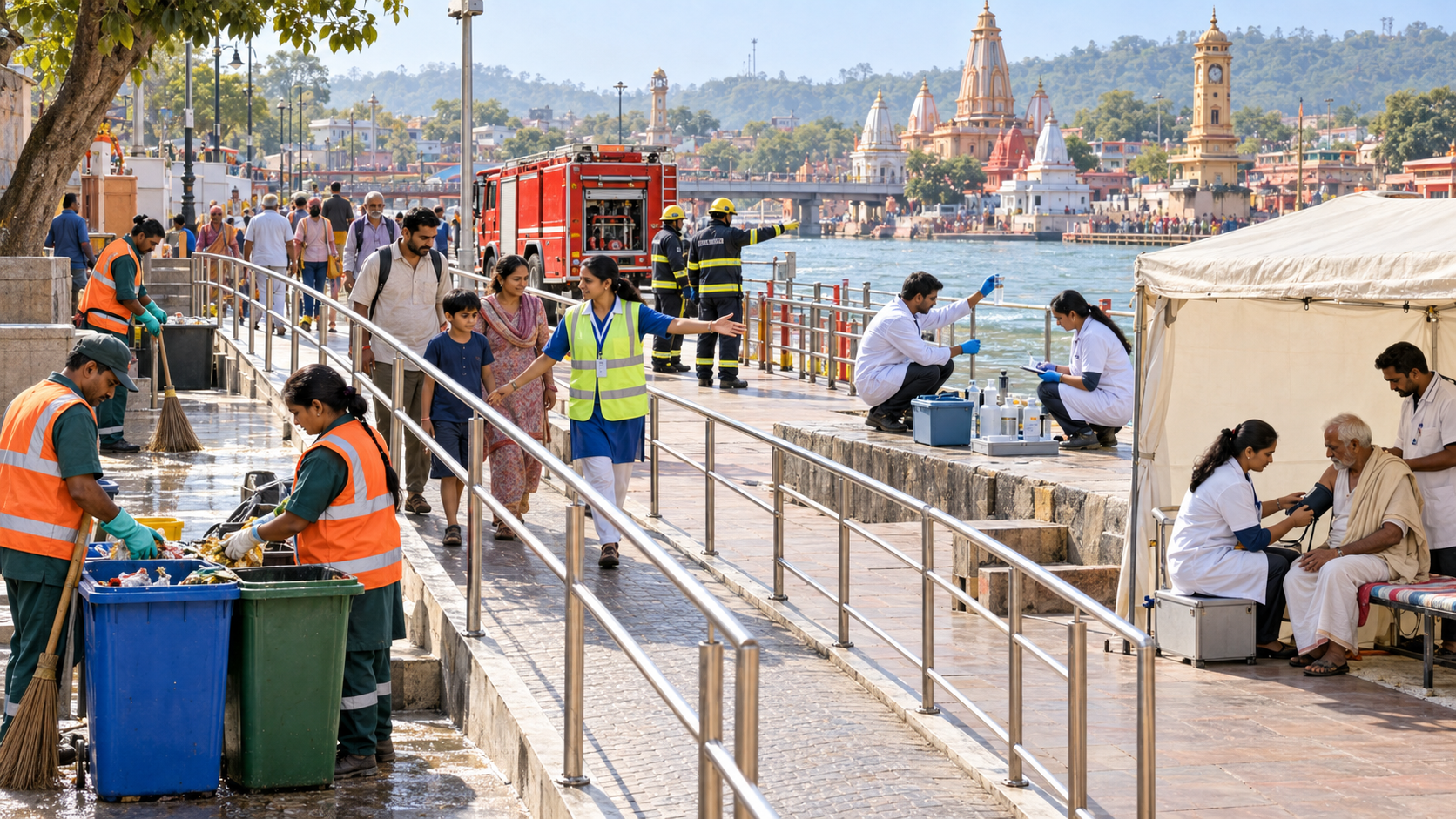
- Pilgrim dignity: Devotees should encounter usable information, orderly access, clean facilities, safe movement and a functioning way to report problems. Ceremonial grandeur cannot compensate for avoidable indignity on the ground.
- Institutional accountability: A serious commitment identifies the responsible department or agency, the work to be performed and the evidence by which delivery can be checked. A speech announces an intention; it does not complete the work.
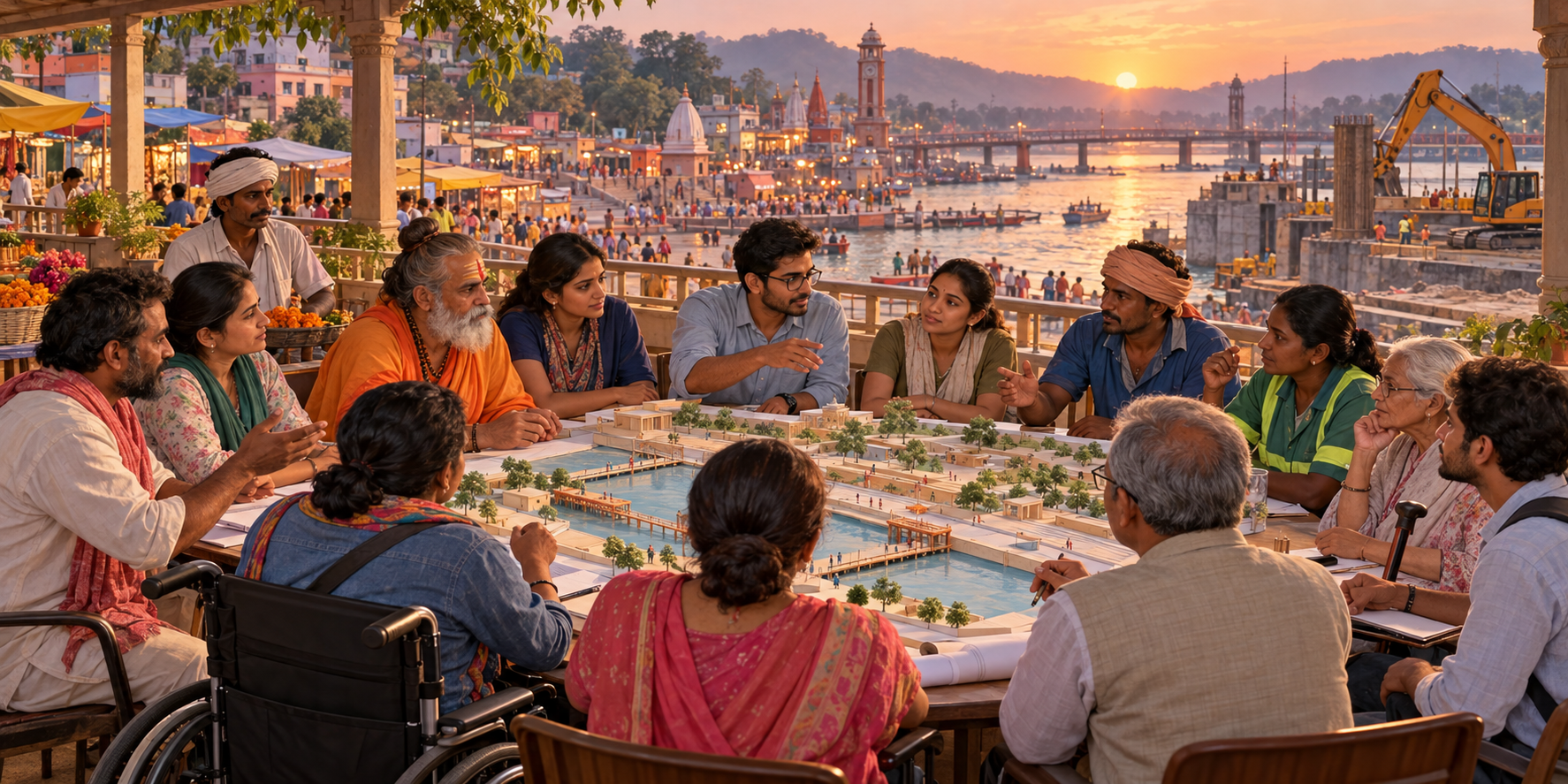
- Religious representation: Consultation should reach beyond the most politically convenient faces. Ask which sampradayas, akharas, temple bodies, priests, renunciants, local residents and other affected participants were heard, and whether objections received substantive answers.
- Durability: Distinguish an event-specific arrangement from an enduring improvement. Temporary systems may be necessary for a gathering, but a civilizational programme should also strengthen knowledge, institutions, sacred places or public capacity after the crowds leave.
- Truthful political credit: Governments may legitimately explain what they have done. They should still separate completed work from proposed work, public administration from party activity, and religious reverence from requests for votes.
This is where rajadharma gives the discussion more depth than ordinary campaign analysis. Public honour for Sanatan Dharma has value, but dharma binds power to duty. A ruler or government cannot claim the moral prestige of a sacred tradition while treating competence, truthfulness and accountability as secondary concerns.
That standard is not an imported objection to Hindu political assertion. It arises from the basic proposition that authority carries obligations. If the language of Dharma is central, the discipline demanded of those using that language should become stronger, not weaker.
Follow the evidence from announcement to delivery

Because the Kumbh and the Assembly election occupy the same political horizon, announcements can perform two jobs at once: they can begin public work and build a campaign narrative. Timing alone does not tell you which purpose dominates. You need to follow the commitment through its administrative life.
Use this simple audit for any significant Kumbh promise:
- Record the precise commitment. Save the wording, speaker, date and responsible institution. Separate a broad aspiration from a deliverable action.
- Look for formal authority. A press statement and an official sanction do different work. Check whether there is an order, an identified implementing body, a funding provision or another formal basis appropriate to the promise.
- Identify the intended beneficiary. Ask whether the measure primarily serves pilgrims, religious institutions, local residents, administrators or the governing party’s public image. A sound measure may serve several groups, but those benefits should be stated honestly.
- Inspect implementation. Look for observable progress, responsible officials, procurement or staffing where relevant, and a channel through which failures can be reported. Repeated announcements are not repeated progress.
- Ask religious stakeholders what changed. Participation in a ceremony does not necessarily establish meaningful consultation. The useful question is whether concerns influenced the decision and whether unresolved disagreements are acknowledged.
- Check the result after the political moment passes. The final test is not the launch image. It is whether the promised service worked, whether public resources produced the stated result and whether any lasting institution or capacity remains.
Absence of an easily accessible record does not prove that no work exists. It does mean that confident claims of success are premature. The responsible response is to mark the claim as unverified and keep looking, not to fill the gap with partisan trust or partisan suspicion.
This method also helps when political debate becomes emotionally charged. Instead of arguing about motives that cannot be observed directly, return to commitments, authority, delivery and outcomes. Motives matter, but evidence gives citizens firmer ground.
Watch who benefits, who speaks and what remains
The politics surrounding the Kumbh will not be revealed by one slogan or one ceremony. It will emerge through patterns. As preparations develop, pay particular attention to these signals:
- Credit before completion: If political messaging races ahead of verifiable delivery, treat the gap as important information.
- Selective religious visibility: Notice whether consultation is broad or whether only voices already aligned with the government remain visible. Agreement is more meaningful when disagreement is permitted to surface.
- The pilgrim’s actual experience: Judge administration at the points where devotees meet it: information, routes, queues, sanitation, safety, assistance and grievance handling.
- The local burden: Residents, workers, traders and transport providers experience the consequences of event planning long before visiting dignitaries arrive. Their practical knowledge can expose gaps hidden by ceremonial presentations.
- Official and party boundaries: Public work will naturally appear in political debate, but administrative communication and electoral persuasion should remain recognisably distinct. When the boundary blurs, ask who paid, who authorised the message and what public purpose it served.
- Legacy after dispersal: Identify what will still function when the gathering is over. Lasting maintenance capacity, better public systems and strengthened religious institutions demonstrate more than temporary display.
Some supporters will argue that public affirmation of Hindu identity is itself a meaningful correction after long periods of cultural hesitation. That point should not be dismissed. A government can help create a public atmosphere in which Hindu civilisation is treated with confidence rather than embarrassment.
Yet recognition cannot be the only measure. If Sanatan Dharma supplies the imagery while ordinary devotees absorb administrative failures, the relationship has become extractive. The state receives sacred legitimacy; the pilgrim receives the inconvenience. A Dharma-centred politics should reverse that exchange by placing duty before publicity.
The opposite demand – that religion and politics have no contact at all – is equally inadequate here. A gathering of this scale necessarily requires public administration, and administrative choices affect religious practice. The realistic question is not whether government will be involved. It is whether that involvement remains competent, limited by duty, respectful of religious authority and answerable to citizens.
Carry the same standard beyond 2027
The strongest pro-Hindu position is neither automatic applause nor automatic suspicion. It is disciplined support for measures that protect Dharma, joined to disciplined scrutiny of everyone who invokes it.
Between now and the Kumbh, keep a simple public record of major promises. Place each announcement beside its formal authority, implementation evidence, religious response and eventual result. Share claims only with that context attached. When voting, discussing policy or defending the Kumbh, ask what was completed, what endured and whether pilgrims and Sanatan institutions gained real strength.
If the Dhami government’s Hindutva push meets that test, its cultural language will rest on demonstrable rajadharma. If it does not, sacred vocabulary should not protect it from judgment. The Kumbh deserves political attention, but it must never be reduced to political property.
References
- Struggle for Hindu Existence – 2027 Kumbh: Dhami’s Hindutva Push Puts Sanatan Dharma at Centre Stage

Leave a Reply
You must be logged in to post a comment.