
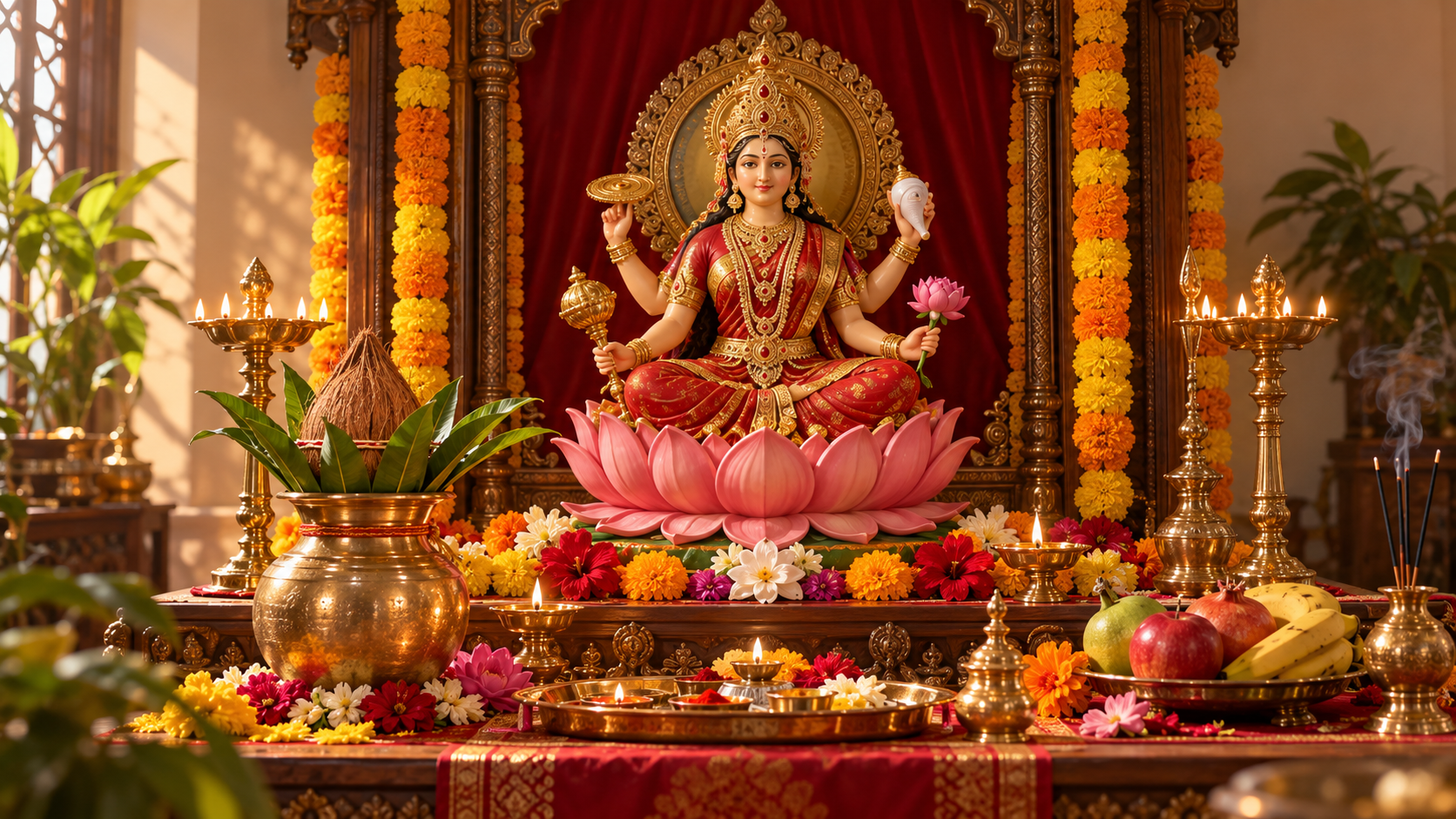
If you are arranging Mahanavami worship in 2026, the difficult part is not deciding how elaborate the altar should be. It is identifying the correct Navami, understanding why Ashtami and Navami appear on the same date, and knowing which timings must be checked locally.
For Sharad Navratri, set aside 19 October 2026. That is the date relevant to the autumn Mahanavami and Siddhidatri worship discussed here. The ninth day of Chaitra Navratri falls earlier, on 27 March 2026, so do not confuse the two entries when consulting a yearly calendar.
Start with the correct Mahanavami date
The two Navami dates to distinguish in 2026 are straightforward:
- Chaitra Navratri Navami: 27 March 2026.
- Sharad Navratri Mahanavami: 19 October 2026.
The October observance needs additional care. Owing to the calendar conditions described as tithi vriddhi and shunya tithi, Durga Ashtami and Mahanavami are observed on the same civil date, 19 October 2026. This does not mean that Ashtami and Navami become the same tithi. It means that both observances fall within one Gregorian date.
A tithi is a lunar-calendar division, not a midnight-to-midnight civil day. Its local beginning and ending can therefore matter to a formal puja, vrata or Paarana. A date printed on a yearly calendar tells you which day to reserve; it does not, by itself, supply a universal clock time for every location.
Before making a detailed schedule, check a panchanga calculated for your city or ask the temple or purohit whose paddhati you follow. Record three things separately: the local Ashtami interval, the local Navami interval, and the advised Paarana time if you are keeping a vrata. This prevents the common mistake of copying a muhurta prepared for another place.
The regional setting matters as well. In Bengal, Assam and other eastern parts of Bharat, 19 October also marks the fourth day of Durga Puja. If your family belongs to one of these traditions, follow its established liturgical order rather than replacing it with a generic nine-day checklist.
Let Siddhidatri shape the purpose of the puja
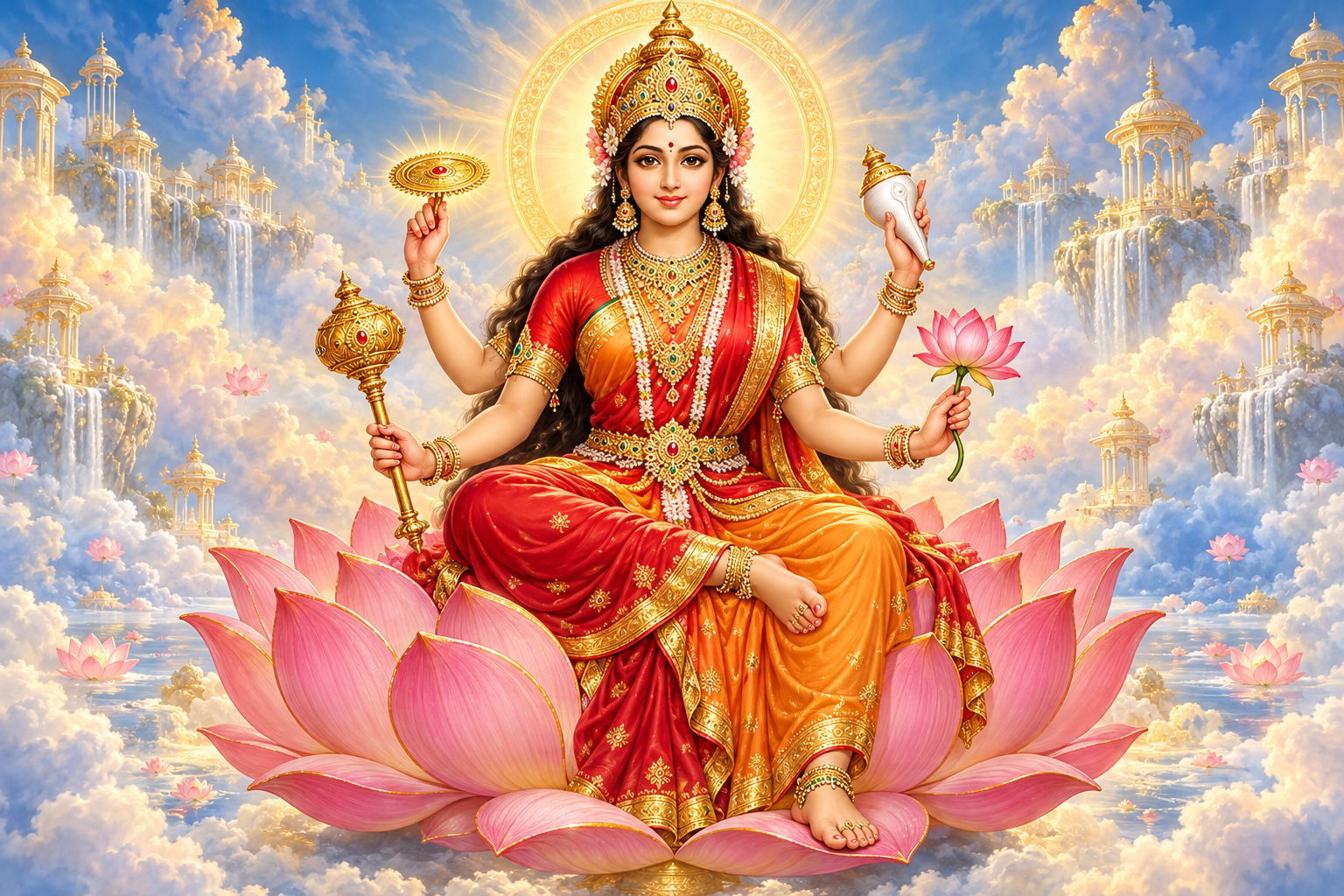
Navami is dedicated to Siddhidatri, the concluding form in the Navadurga sequence. She is associated with wisdom, spiritual illumination and the granting of siddhis. That description can easily be misunderstood if siddhi is reduced to a promise of extraordinary powers.
A grounded household observance should place wisdom before display. Ask not merely, “What power can I obtain?” but, “What must become complete, clear or disciplined in me?” Mahanavami is the culmination of Navratri, so your worship should bring the preceding days toward resolution rather than introduce a new list of desires at the last moment.
You can form a concise sankalpa around three intentions:
- Clear understanding: the ability to see a duty, relationship or difficulty without self-deception.
- Right use of ability: the discipline to place knowledge and skill in the service of dharma.
- Completion without pride: gratitude for what has been achieved and humility about what remains unfinished.
These are practical prompts, not a replacement for a sampradaya’s theology or mantra discipline. If you have received a mantra or method from a guru, family elder or temple tradition, retain it. The most faithful observance is not necessarily the one with the most materials; it is the one performed with attention, continuity and respect for the tradition you actually belong to.
A simple Siddhidatri puja sequence for the home
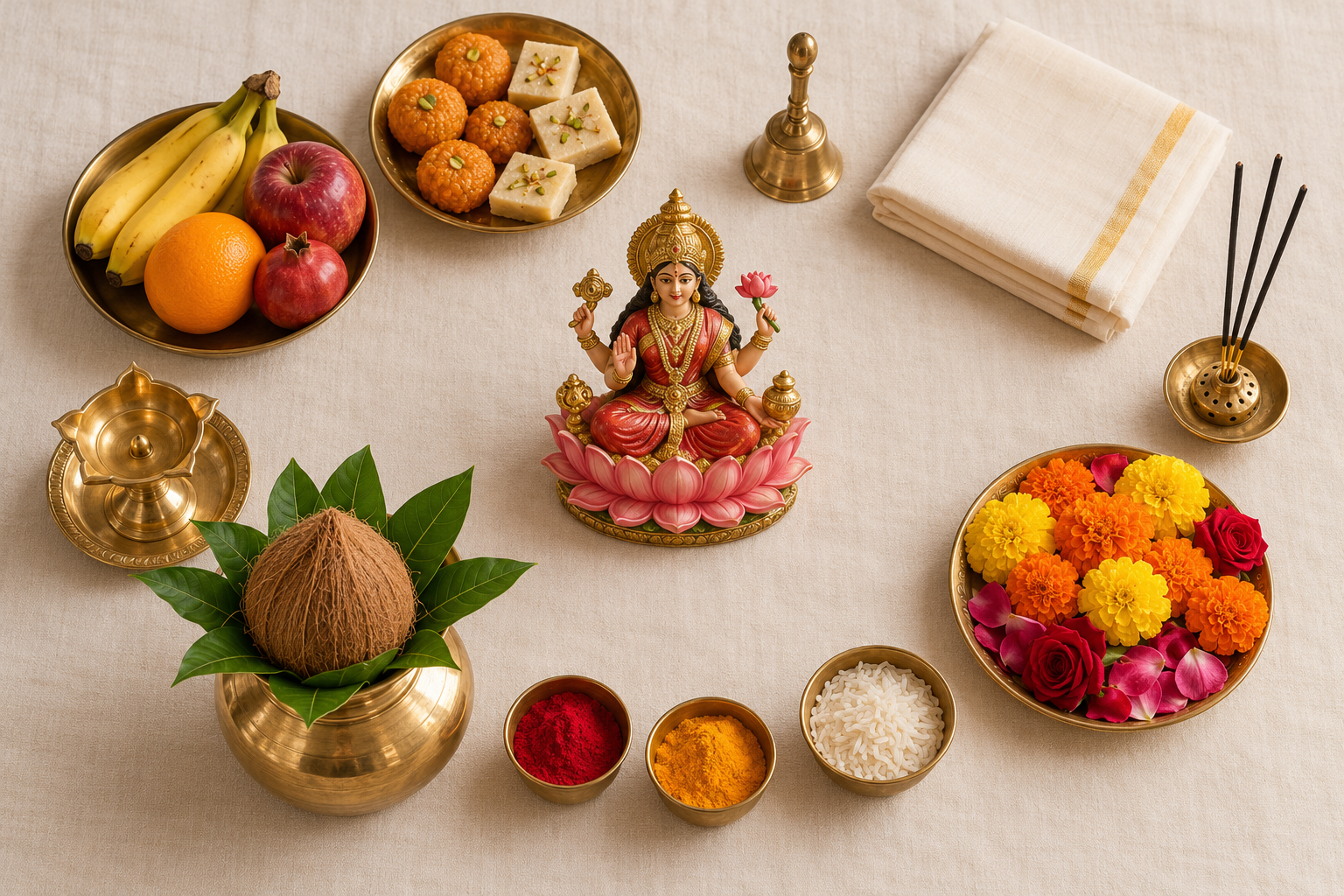
If you do not have an inherited Navami paddhati, use a restrained devotional structure. It will help you worship coherently without pretending that one simplified sequence is binding on every Hindu household.
- Confirm the local observance window. Write the city-specific Navami timing beside the date. If your temple has announced a congregational puja, use its schedule for that event.
- Prepare a clean worship space. Use the Durga or Devi image already honoured in your home. You do not need to purchase a new murti simply because the ninth form is being invoked.
- Arrange familiar offerings. Clean water, flowers, a lamp, incense where customary, and food suitable for naivedya are enough for a simple home observance. Let family custom determine the particulars.
- State the sankalpa. Name the occasion and offer one clear intention. If Ashtami and Navami are both being observed that day, acknowledge the distinction instead of describing the whole date vaguely as “Navratri puja.”
- Invoke Devi as Siddhidatri. Repeat her name, use the mantra taught in your lineage, or recite the Devi prayer normally used in your home. Do not substitute an unfamiliar mantra merely because it appears in an online list.
- Make each offering attentively. Avoid turning the puja into a race through objects. Connect each action to gratitude, discernment and the right use of whatever capacities you possess.
- Keep a period of silence. Sit long enough to identify one insight from Navratri that should become conduct after the festival. Make it concrete: a duty to resume, a harmful habit to restrain, or a relationship in which you must act more truthfully.
- Close according to household custom. Perform aarti if that is your practice, offer pranam, distribute prasada respectfully, and leave the worship space orderly.
If you are observing a food-related vrata, do not infer its breaking time from the civil date alone. Use the locally applicable Paarana guidance. Religious discipline does not require you to interrupt necessary medication or disregard a health condition; obtain appropriate medical advice when fasting affects either.
How to handle Ashtami and Navami on one date

The safest approach is to preserve the identity of each observance while allowing the local tithi calculation to determine its place in the day. Do not assume that “same date” means “same ritual” or that the entire day is an undifferentiated muhurta.
If your family performs formal rites, ask the guiding purohit these questions before the puja begins:
- At what local time does the relevant tithi change?
- Which Ashtami observance must be completed before the Navami worship?
- Does our family or temple paddhati assign a separate sankalpa to Siddhidatri?
- When should Paarana be performed for the vrata we are actually keeping?
If you are conducting only a simple home devotion, follow the tithi order given by your local panchanga and keep the intentions distinct. Acknowledge the Ashtami observance in its proper place, then give the Navami portion an explicit Siddhidatri focus. When exact ritual timing is unavailable, sincere general worship is more honest than claiming a precision you have not verified.
Four avoidable errors cause most of the confusion:
- Treating 19 October as an all-day muhurta. It is the festival date, but a formal rite may depend on a narrower local tithi interval.
- Collapsing Ashtami and Navami into one label. Sharing a civil date does not remove their distinct ritual meanings.
- Copying another region’s schedule. Panchanga timing and regional Durga Puja practice are not interchangeable.
- Making siddhi the object of spiritual ambition. Centre the worship on wisdom, completion and dharmic use of ability rather than on acquiring spectacle or status.
Key takeaways for Mahanavami 2026
- Sharad Navratri Mahanavami and Siddhidatri worship fall on 19 October 2026.
- The ninth day of Chaitra Navratri falls on 27 March 2026; it is a separate seasonal observance.
- Durga Ashtami and Mahanavami share 19 October in the 2026 autumn calendar, but they remain distinct tithis and observances.
- Use a city-specific panchanga or your temple’s instructions for exact puja and Paarana timing.
- Keep Siddhidatri worship centred on wisdom, spiritual clarity and the responsible use of ability.
- A simple, attentive puja grounded in family tradition is preferable to an elaborate sequence assembled without guidance.
Your next step is simple: reserve 19 October, obtain the local tithi schedule, and settle the family or temple ritual order before the day arrives. Then choose one dharmic intention that will continue after the lamp is extinguished. Mahanavami reaches fulfilment when Navratri changes how you act, not merely how much you place on the altar.
References
- Hindu Pad — Durgashtami Puja Muhurat, 19 October 2026, Mahanavami | 9th day Navratri Poojan Timings
- Hindu Pad — Things to do on 9th day of Navratri, 19 October 2026
- Hindu Pad — 9th day of Navratri 2026, 19 October 2026

Leave a Reply
You must be logged in to post a comment.