
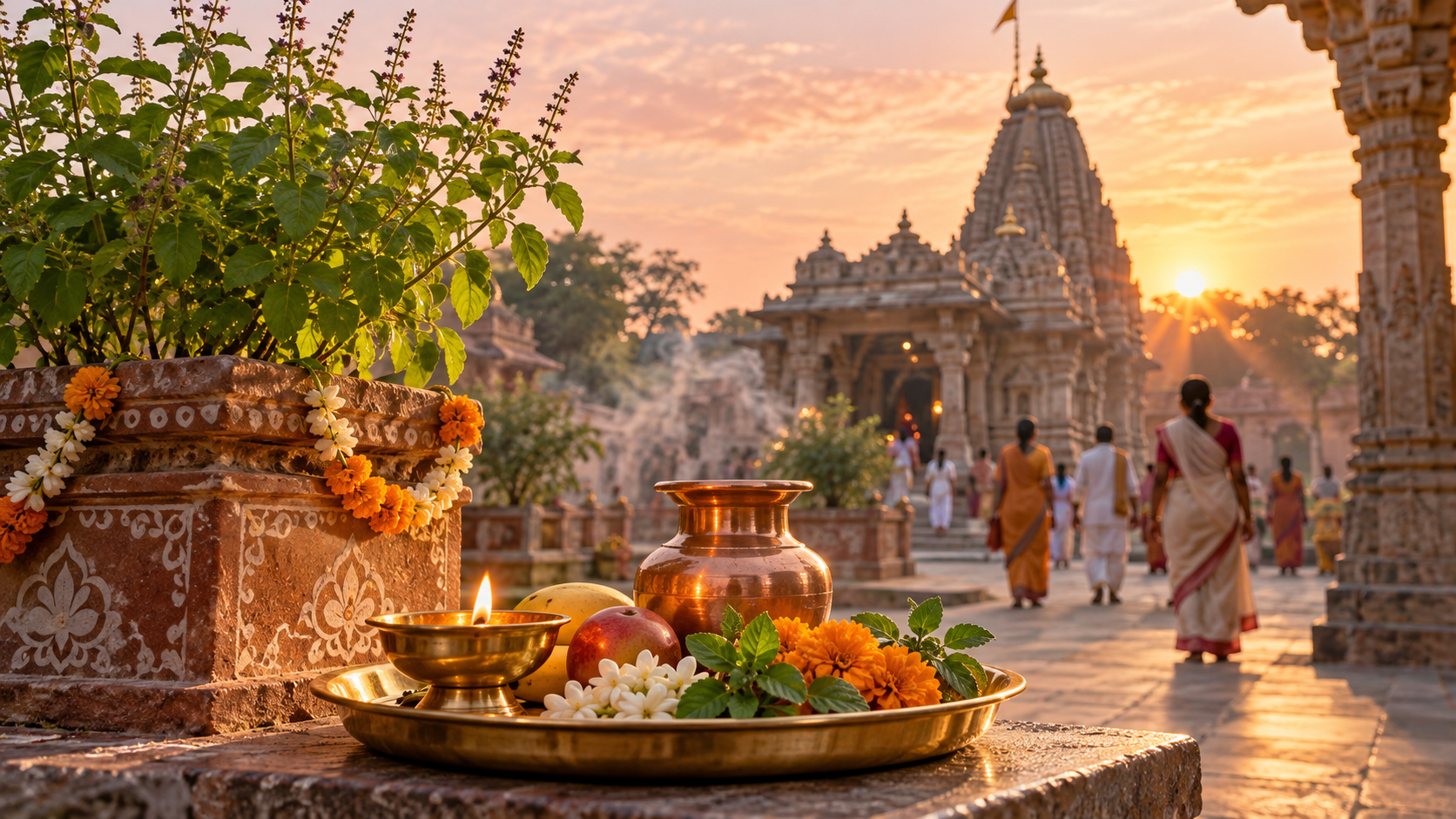
If you are arranging a temple visit, planning a family vrata, or simply trying not to miss Kartik Ekadashi in 2026, mark 20 November on your calendar. That is the stated date for the Smarta observance.
The date is only the first decision. You should also confirm which calendar your family or sampradaya follows, decide what form of fasting is suitable for you, and obtain the local time for concluding the vrata. That preparation keeps a sacred day from becoming a last-minute argument about dates and rules.
The date to mark for Kartik Ekadashi 2026
Kartik Ekadashi falls on 20 November 2026. The date given is for Smarta Kartik Ekadashi, observed during Shukla Paksha, the waxing half of the lunar month of Kartik.
Ekadashi is the eleventh lunar tithi, so its boundaries do not necessarily begin and end at midnight. This matters if you intend to undertake a formal vrata. Sunrise observance, the prevailing tithi, and the appropriate parana period can depend on location and lineage. Use 20 November as the date to reserve, but consult the panchang used by your temple, guru, or household before fixing the exact hours.
This distinction is especially important for Vaishnava practitioners. Smarta and Vaishnava calendars can apply different observance rules when a tithi overlaps sunrise or extends across civil dates. Do not assume that a timetable shared by someone in another city, country, or sampradaya automatically governs your vrata.
Why this Ekadashi is associated with awakening

Kartik Ekadashi is also known as Utthana Ekadashi, Prabodini Ekadashi, and Bodhini Ekadashi. Each name points toward awakening. Hindu tradition holds that Bhagavan Vishnu awakens on this day after four months of Yoga nidra, or cosmic sleep.
That sacred image gives the vrata its inner direction. You are not merely waiting for a divine event outside yourself. You are being asked to notice where your own attention has become dull: neglected worship, careless speech, an abandoned discipline, or a promise repeatedly postponed.
Choose one such area before the day arrives. Make the observance a deliberate return to wakefulness. A small discipline resumed honestly is more meaningful than an elaborate schedule that cannot be sustained after Ekadashi.
Settle your calendar and fasting method in advance
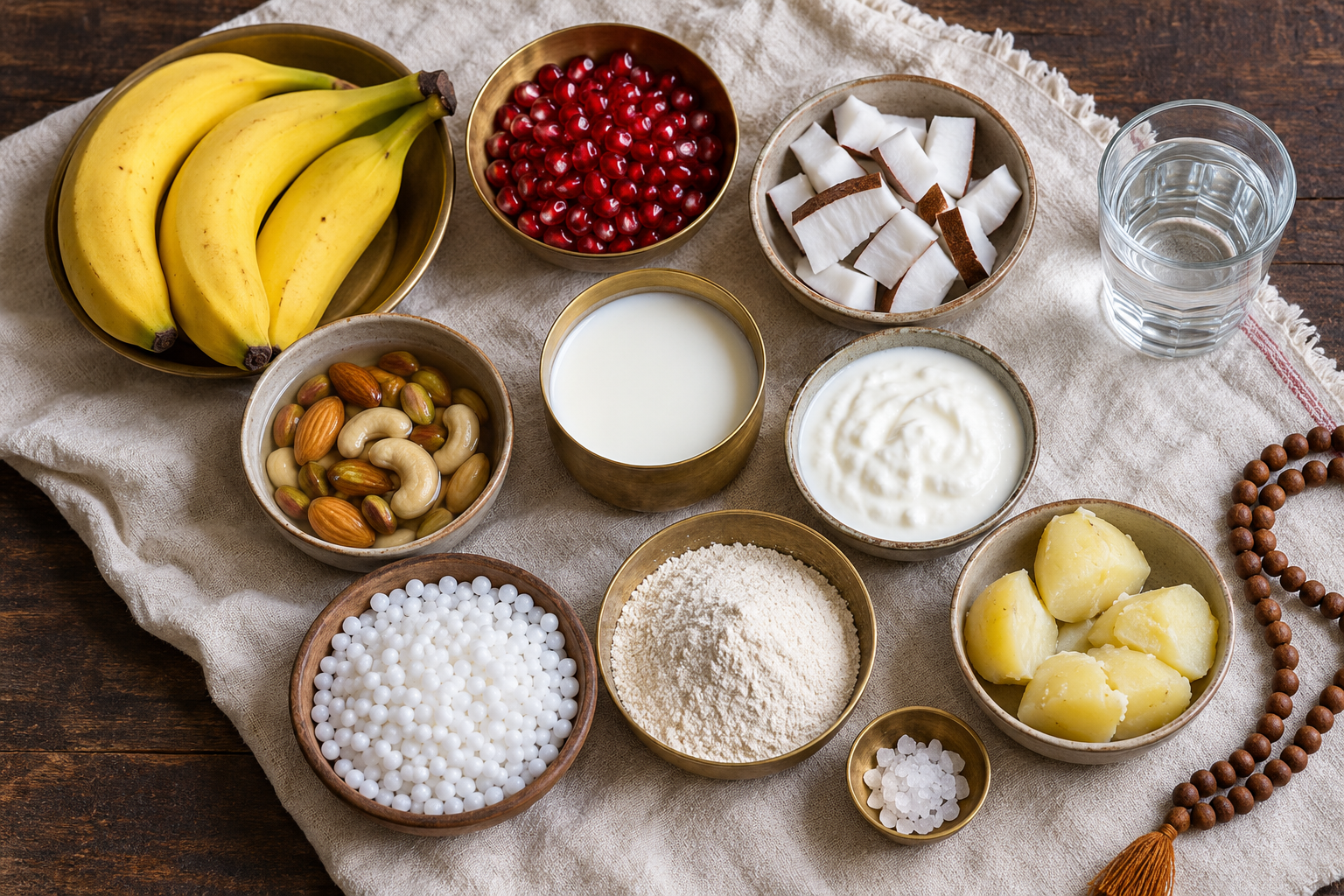
Families often use the word “Ekadashi” as though it referred to one universal procedure. In practice, the details may reflect family custom, regional panchang, temple guidance, and sampradaya. Settle those details before beginning the vrata.
- Identify the calendar you follow. If your household follows a Vaishnava lineage, ask its temple or acharya for the applicable date and parana period rather than relying only on the Smarta date.
- Check a local panchang. Look for the Ekadashi tithi and the prescribed time for parana in your location. A civil date alone is insufficient for a strictly timed observance.
- Choose the form of vrata. Follow the practice taught in your home or tradition. Do not turn differences in permitted foods or fasting intensity into a contest of devotion.
- Plan the conclusion as carefully as the beginning. If you are keeping a formal fast, note the parana window beforehand. Waiting until the next day to search for it invites avoidable uncertainty.
If fasting could aggravate a medical condition, interfere with necessary medication, or create risk during pregnancy, illness, or recovery, do not improvise a severe fast. Seek appropriate medical advice and ask a trusted religious teacher about a suitable devotional adaptation. The purpose of vrata is disciplined worship, not preventable harm.
A simple observance you can actually complete
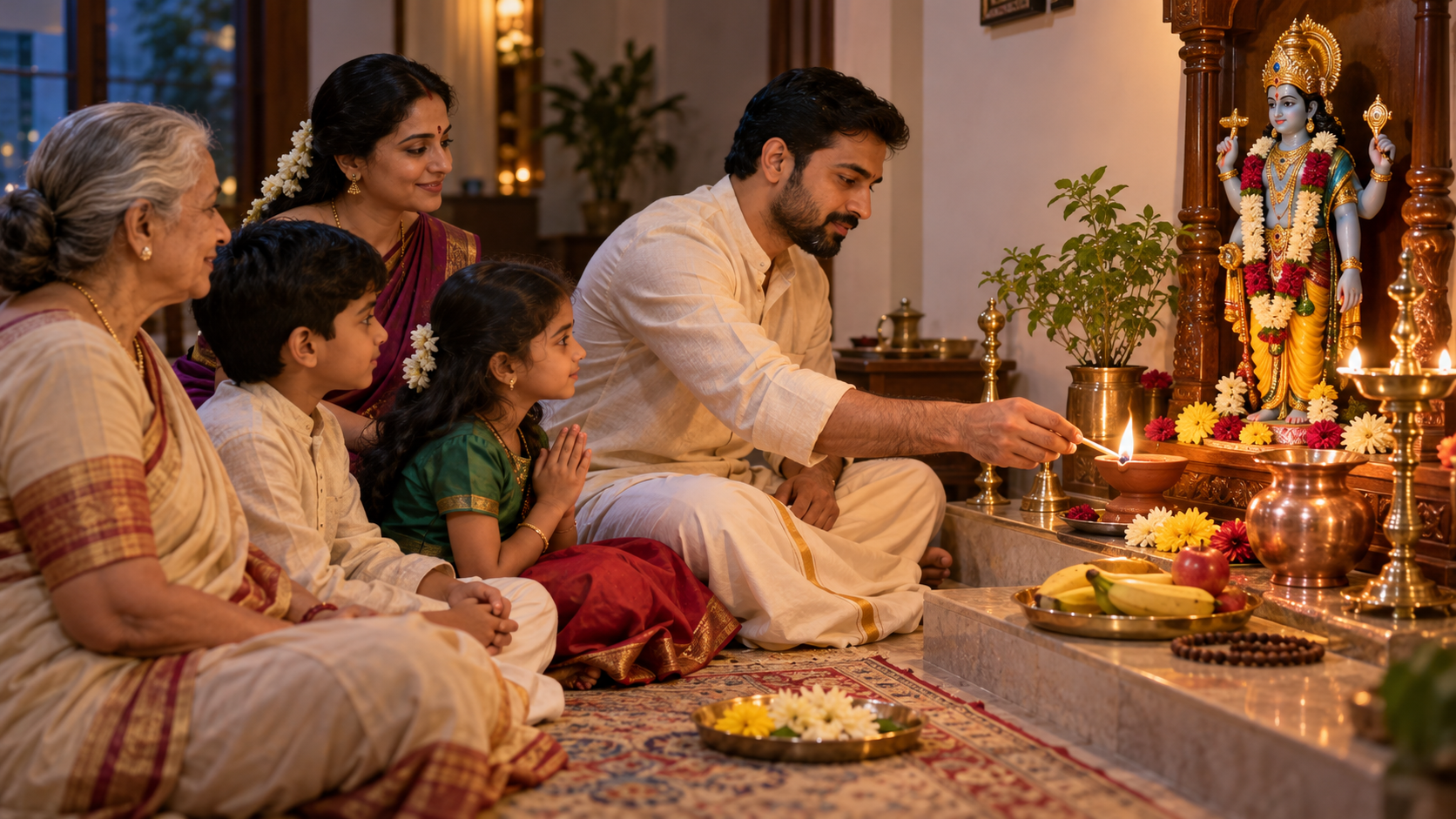
You do not need to assemble a complicated programme for the day. A coherent observance joins bodily restraint, remembrance of Vishnu, ethical care, and a clear intention. Adapt the following outline to the rules of your tradition:
- Prepare the previous day. Confirm the date, local timing, food arrangements, temple schedule, and your intended level of fasting.
- State a clear sankalpa. Name the vrata you are undertaking and the quality you wish to renew, such as steadiness in sadhana, restraint in speech, or attentiveness in prayer.
- Make space for Vishnu worship. Set aside a definite period for puja, nama-japa, quiet remembrance, or participation in temple worship. Put it on your schedule rather than leaving it for whatever time remains.
- Guard conduct as well as diet. A restricted plate accompanied by anger, gossip, or contempt misses the discipline of awakening. Treat speech and attention as part of the vrata.
- Conclude according to your calendar. Observe parana using the locally applicable guidance, and carry one renewed practice into the days that follow.
If this is your first Ekadashi vrata, begin with a form you can keep sincerely and safely. Consistency has greater spiritual value than adopting the strictest version without understanding its rules. If your family already has an established practice, write it down and share it before the day so younger members know both what is done and why.
Key takeaways
- Mark 20 November 2026 for Smarta Kartik Ekadashi.
- The observance occurs in Kartik Shukla Paksha and is also called Utthana, Prabodini, or Bodhini Ekadashi.
- Its central sacred image is the awakening of Bhagavan Vishnu after four months of Yoga nidra.
- Confirm the applicable date and parana time with the panchang followed by your location and sampradaya, particularly if you observe a Vaishnava calendar.
- Choose a safe, tradition-appropriate vrata and connect dietary restraint with worship, careful conduct, and one discipline you will continue afterward.
Put the date in your calendar now, then contact your temple or consult your household panchang before November. Once the timing is settled, choose one neglected spiritual practice to awaken with Vishnu and continue beyond the vrata.
References

Leave a Reply
You must be logged in to post a comment.