
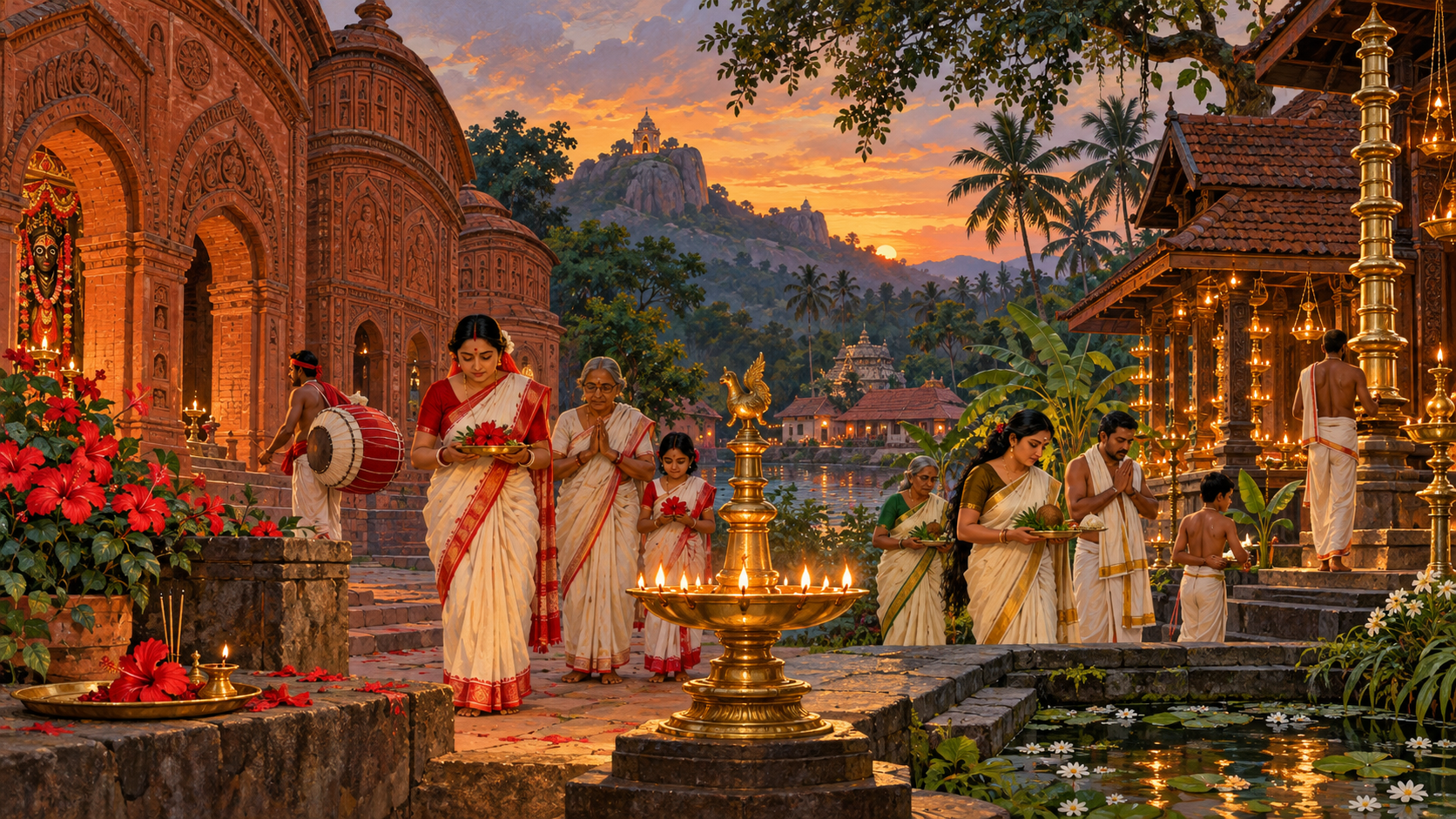
You enter a Devi temple away from your home region and the familiar signs no longer line up. The festival falls under a different local name. The offering is unfamiliar. A shrine revered by the community may not appear on the sacred-geography list you know. You are left wondering whether you are seeing a regional variation, a separate tradition, or something inconsistent with Shakta practice.
The useful answer begins with a distinction: unity of devotion does not require uniformity of ritual. If you learn to separate the deity, the place, the calendar, the offering and the community’s inherited practice, you can recognise both the shared Dharmic foundation and the regional form through which it is lived.
Read a Shakti tradition through its ritual grammar
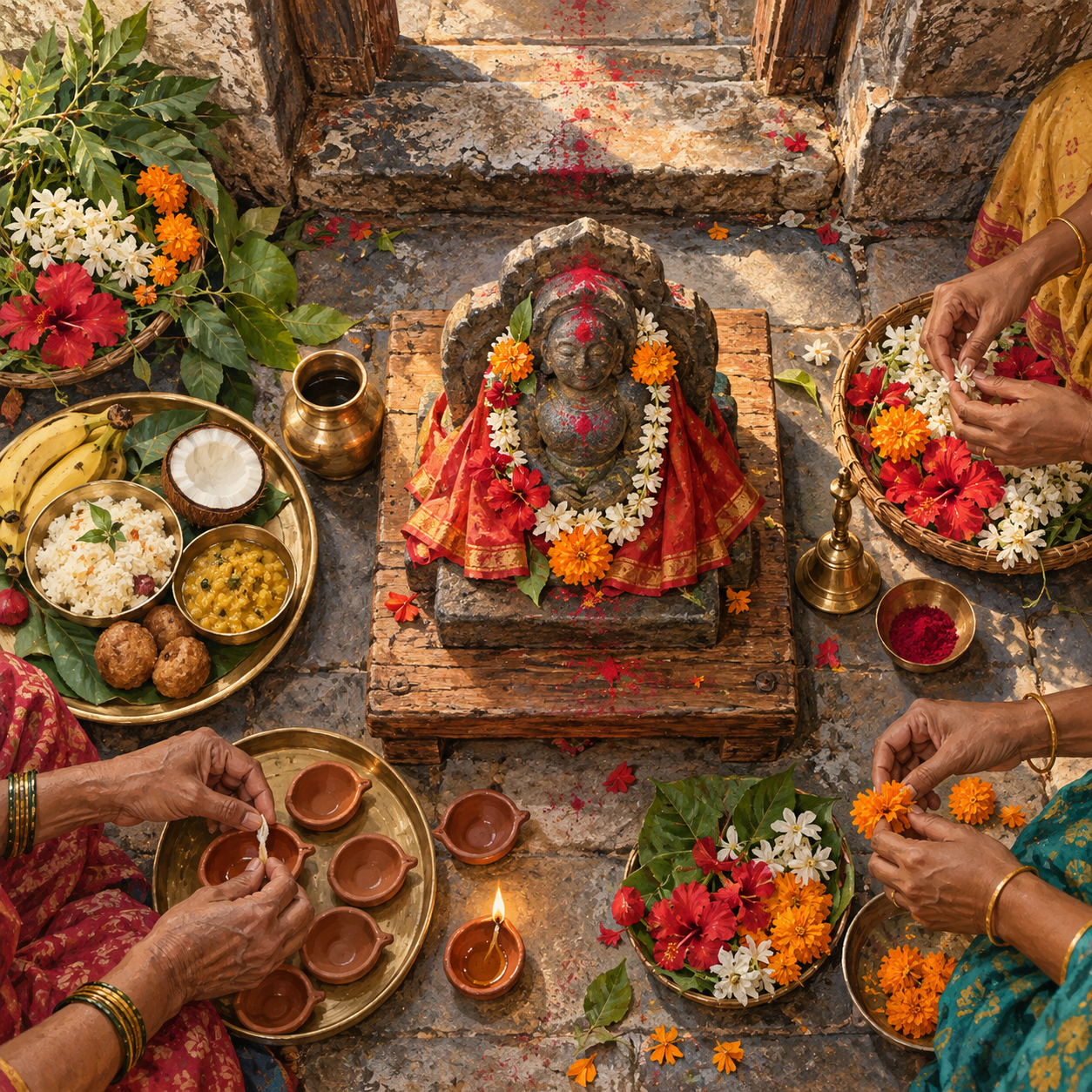
Shakti is divine power encountered as Devi, but that theological centre does not produce one identical ceremony everywhere. A regional tradition has its own ritual grammar: a set of relationships among a particular form of Devi, a sacred place, an observance, an offering and the people responsible for maintaining the practice.
When you encounter an unfamiliar tradition, begin with five questions:
- Which name and form of Devi are being worshipped here? Preserve the local name rather than immediately replacing it with a broad label.
- Which day or festival gives the practice its setting? The same form of Devi may be honoured at other times, but the calendar can explain why a particular offering or rite appears now.
- What is offered, and what makes that offering specific? Note its ingredients, preparation, ritual destination and manner of distribution as prasada.
- What kind of sacred status is being claimed? A Shakti Peeth, a regionally revered Devi temple and a household shrine are not interchangeable categories.
- Who preserves the custom? Temple practice, family observance and a wider regional convention can overlap without being identical.
These questions prevent two common errors. The first is to treat every difference as a contradiction. The second is to call every local custom universal. A practice can be authentically Shakta and deeply rooted while still belonging to a particular place, occasion or community.
Bengal shows how an offering carries regional memory
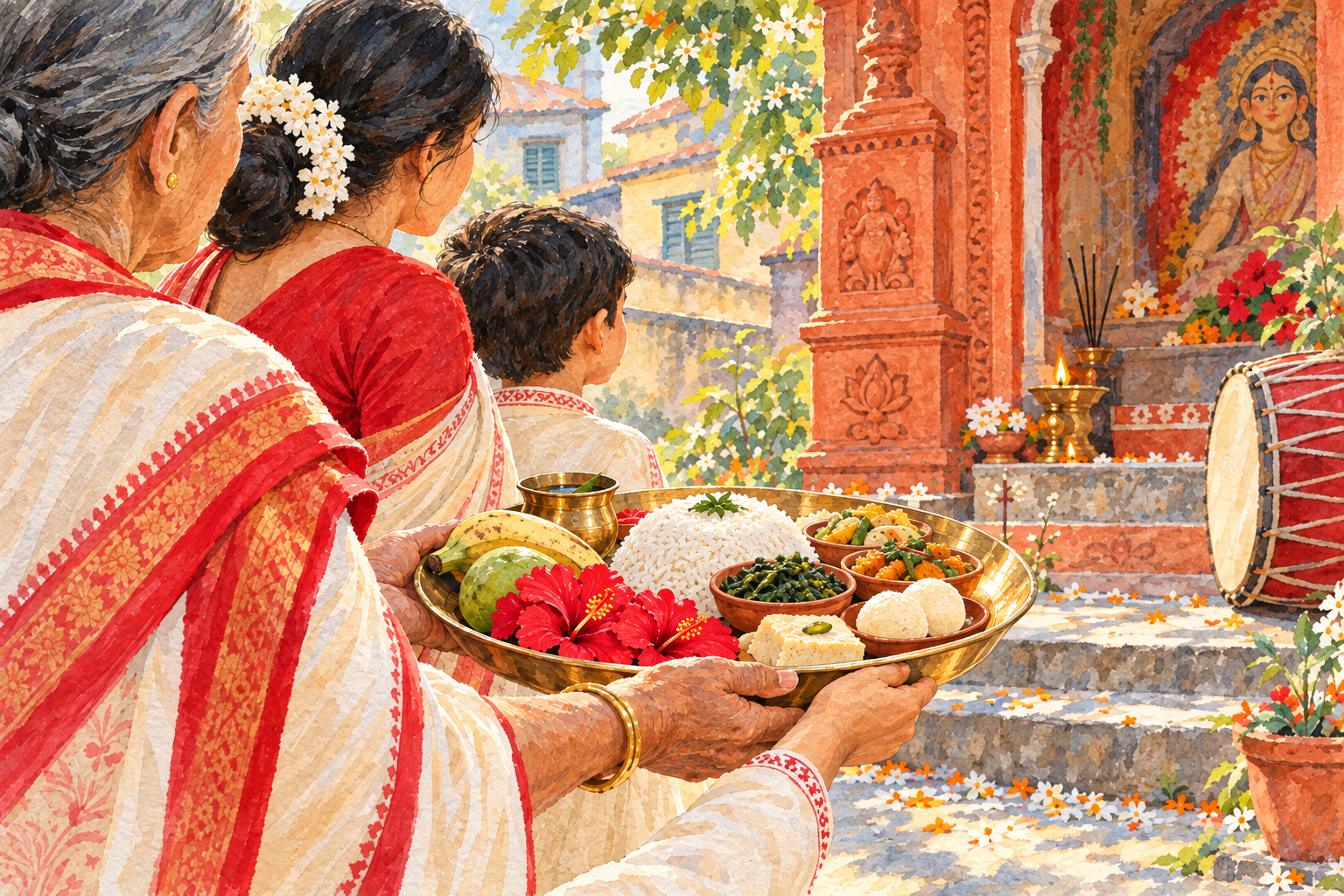
In Bengal, Kadma is a distinctive sweet made only from sugar and water and offered to Goddess Kali during Kali Puja on Kartik Amavasya. Its ingredients are simple, but simplicity is not the same as insignificance. The offering belongs to a relationship among Kali, a particular observance and a regional devotional culture.
This is why replacing a traditional offering with a generic sweet is not always a neutral substitution. The material may serve a similar practical purpose, yet the inherited association can be lost. Prasada is not evaluated only by cost, richness or culinary complexity. Its meaning comes from being offered in the proper devotional setting.
If you attend Kali Puja in Bengal, do not assume that familiarity with Kali worship elsewhere tells you everything you need to know. Ask whether Kadma is part of that temple’s observance, whether devotees bring it or receive it, and whether the temple follows additional rules. At the same time, do not turn one documented Bengali custom into a claim about every Kali shrine or every Bengali household. The correct scope matters.
Kadma also offers a practical lesson for families living away from their ancestral region. If you want to preserve a traditional offering, record more than a recipe. Record the Devi form, the occasion, the sequence of worship and the family or temple context in which the offering belongs. Ingredients alone cannot preserve ritual meaning.
Kerala shows why a pilgrimage list is not a map of devotion
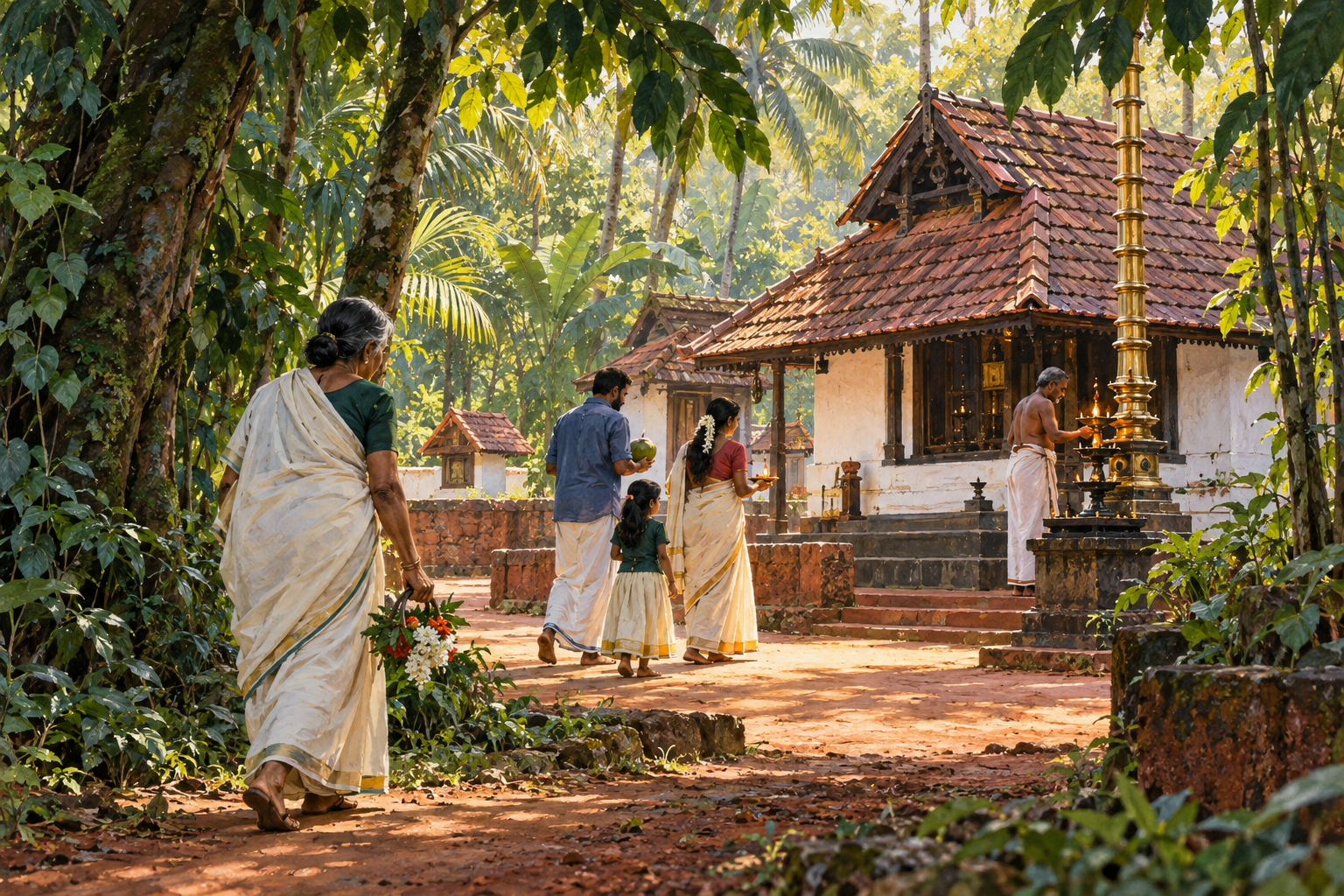
A different problem appears when regional Shakti worship is judged through a famous list of sacred sites. Kerala has strong Shakti worship, yet none of the sites in the widely circulated list of 51 Shakti Peeths is located there. If the list is treated as a census of Devi devotion, Kerala seems anomalous. The anomaly disappears once the category is used correctly.
A Shakti Peeth is a particular designation within sacred geography. It is not a synonym for every powerful, ancient or beloved Devi shrine. Absence from one Peeth enumeration therefore establishes only that a place is absent from that enumeration. It does not establish an absence of Shakti worship, spiritual importance or living tradition.
Even the numerical frame is not singular. Alongside the popular list of 51, traditions enumerate 108 Siddha Peeths and 18 Ashtadasha Shakti Peethas. Quoting a number without naming the list creates false certainty. Two people may appear to disagree about whether a shrine is a Peeth while actually consulting different enumerations.
Use this sequence whenever you encounter a claim about Shakti Peethas:
- Identify the exact enumeration being used. Do not cite only a number.
- Separate Peeth status from the broader question of whether Devi is worshipped in that region.
- Compare sites only within the same enumeration before declaring an inclusion, omission or contradiction.
- Describe the region’s living worship on its own terms instead of treating list membership as a ranking of spiritual vitality.
This distinction is especially important for pilgrims and writers. A pilgrimage list can guide a particular sacred journey, but it cannot by itself tell you how widely Shakti is worshipped or how deeply Devi shapes the religious life of a region.
Approach local Devi practice without flattening it
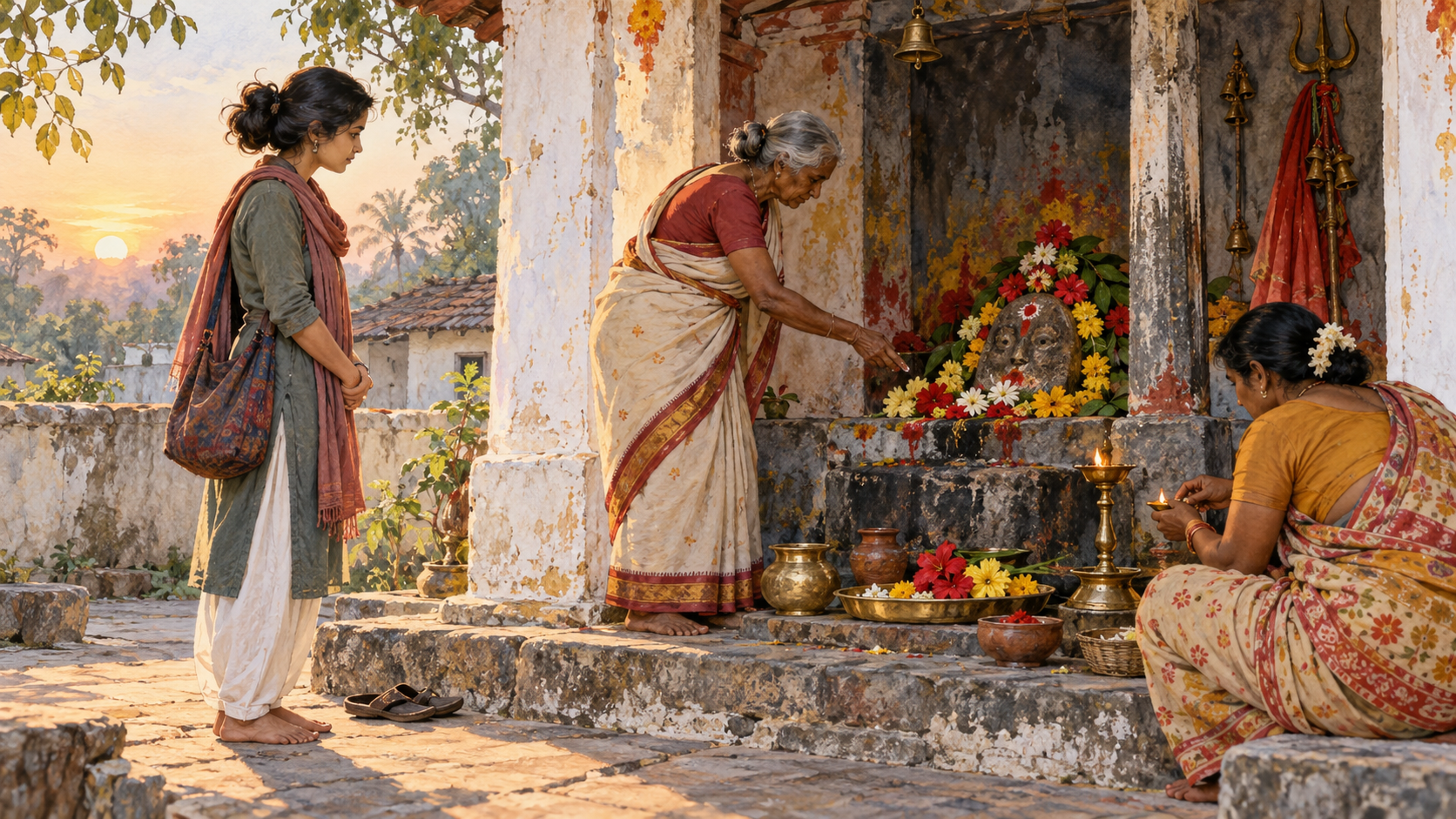
You do not need to master every regional tradition before visiting a temple or joining an observance. You do need a method that lets the local practice speak before you classify it.
- Begin with the local name. Use the name devotees use for Devi at that shrine, and ask how it relates to the broader form you recognise.
- Mark the scope of every claim. Say whether a custom belongs to one temple, one family, a festival, a locality or a wider region. Avoid turning “this temple offers” into “all Hindus offer.”
- Observe before improvising. If you want to make an offering, ask what is accepted, when it is presented and whether it must be obtained or prepared in a particular way.
- Compare functions, not appearances. Ask what an offering, procession or sacred designation does within its own tradition before matching it to something that merely looks similar elsewhere.
- Keep list traditions distinct. If several Peeth enumerations are in circulation, name the one you mean instead of merging them into a supposedly definitive master list.
- Preserve context when teaching children. A name, recipe or photograph is useful, but add the occasion, meaning and local relationship that make the practice more than an isolated object.
The same method improves public writing about Hindu traditions. Precise scope does not weaken a claim; it makes the claim trustworthy. “Kadma is offered to Kali during Kali Puja on Kartik Amavasya in Bengal” conveys more than “sweets are offered to goddesses.” “Kerala is absent from the popular list of 51 Peeths” is more accurate than “Kerala has no important Shakti sites.”
Regional vocabulary should also be retained wherever possible. Translating every Devi into a generic “goddess,” every offering into “food” and every sacred site into a “temple” makes the description easier to skim but harder to understand. Keep the specific term, then explain it. That small discipline allows difference to remain visible without making it alien.
Key takeaways
- Shared reverence for Shakti does not require identical calendars, offerings or sacred geographies.
- A regional offering should be understood through its deity, occasion and ritual setting, not only through its ingredients.
- Kadma connects Kali, Kali Puja, Kartik Amavasya and Bengali devotional practice in one concrete custom.
- Shakti Peeth status is a specific classification, not a measure of all Devi worship in a region.
- Because Peeth enumerations differ, every inclusion or omission claim should name the list being used.
- The most respectful comparison preserves local names and scope before looking for wider Dharmic connections.
On your next temple visit, choose one local element you do not recognise: the Devi’s name, an offering, a festival day or a sacred designation. Ask what it means there before searching for its equivalent elsewhere. That single habit will show you regional diversity as a living expression of Dharma rather than as a collection of deviations from an imagined standard.
References
- Hindu Blog — Kadma – Sweet Offered To Goddess Kali – Story – Importance
- Hindu Blog — Why Kerala Has No Shakti Peeth Despite Its Strong Shakti Worship

Leave a Reply
You must be logged in to post a comment.