

If you reached this page after seeing Monu Meturbala’s viral video, you may be wondering whether you are watching an athletic feat, a religious vow, or a social-media spectacle. It is first and foremost a son’s act of gratitude, carried out through an unusually demanding pilgrimage.
The kilometres matter, but they are not the whole meaning. Monu’s journey also asks something of you as a viewer: distinguish devotion from performance, honour a pilgrim without burdening him, and resist adding claims that the available facts cannot support.
What is known, and what remains unknown

Monu Meturbala is a 19-year-old from Bihar who reportedly promised Lord Shiva that, if his seriously ill mother recovered, he would travel on foot to all 12 Jyotirlingas. After her recovery, he began fulfilling that promise. At the point documented publicly, he had covered around 8,000 kilometres, was running nearly 50 kilometres a day, and had visited five Jyotirlingas.
He is reported to be making the journey without a vehicle or shortcuts. A widely shared video also showed police stopping and speaking with him after noticing the unusual pilgrimage. People gathered along his route to encourage him; some touched his feet and asked for his blessings.
Those facts establish the scale of the undertaking, but not its present status. They do not provide a complete route, the dates of individual stages, Monu’s current location, his health arrangements, or the timing of the remaining seven Jyotirlingas. Since he had reached five of the 12 shrines at the reported point, describing the entire vow as already completed would go beyond what is known.
The distance and daily mileage should likewise be presented as reported figures, not as data from an independently audited tracker. That distinction is not an accusation against Monu. It is simply responsible sharing. If you repost his story, call it an ongoing pilgrimage unless a direct and credible update confirms completion.
Why this vow is more than an endurance challenge
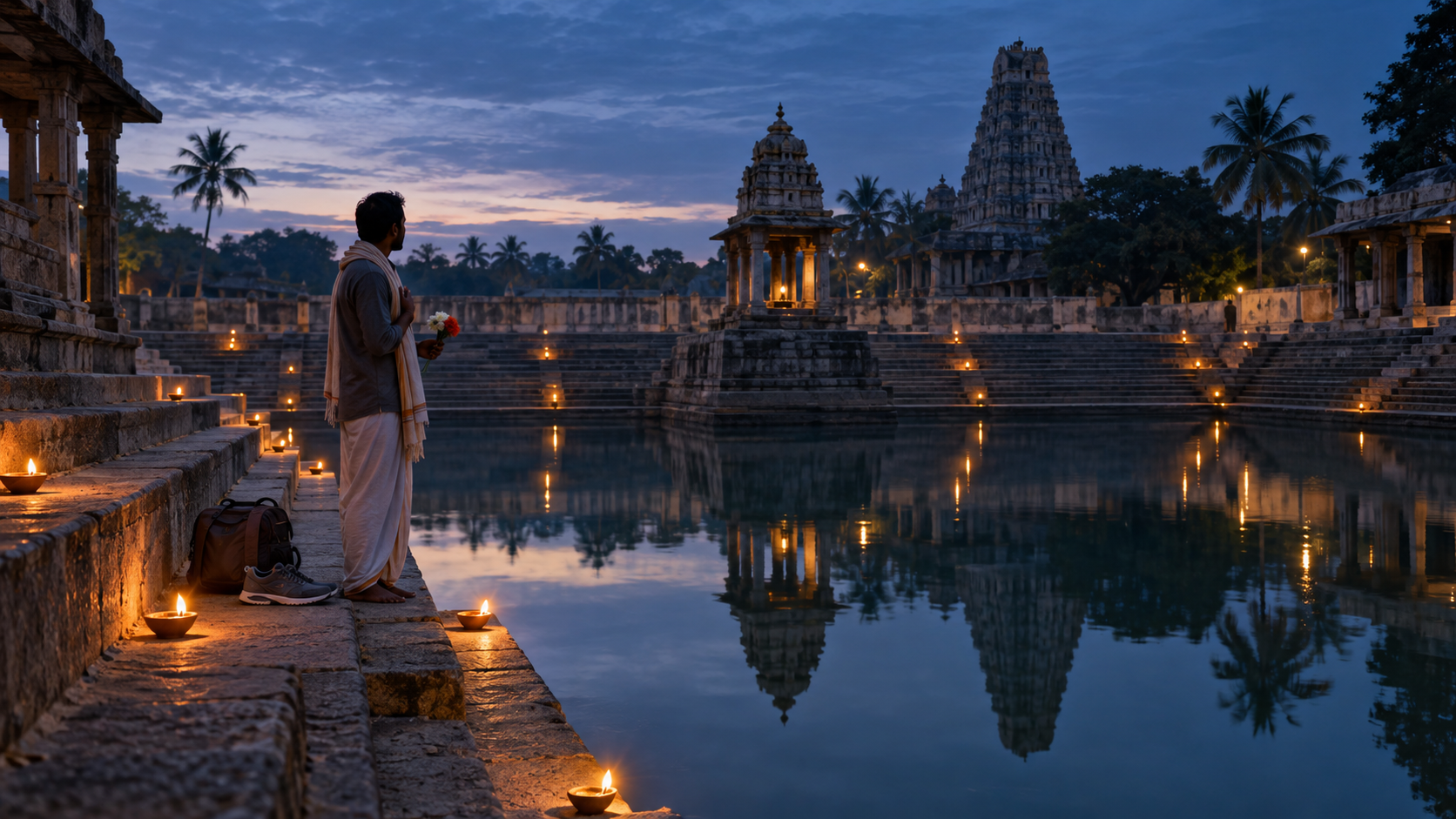
Many Hindus will recognise the form of Monu’s promise as a sankalpa: a deliberately adopted resolve that binds intention to action. A sankalpa is not a passing wish. Its moral seriousness lies in remembering the commitment after the crisis has passed and accepting the discipline required to fulfil it.
That sequence matters here. Monu made his promise while his mother was ill, she recovered, and he then began the pilgrimage. The run is therefore an expression of gratitude after her recovery; it is not evidence that running caused the recovery. No diagnosis, treatment history, or medical explanation for her improvement has been made available. You should not use the story to draw conclusions about anyone’s medical care.
The Jyotirlinga pilgrimage gives his gratitude a sacred geography. Instead of leaving thankfulness as an emotion, the vow turns it into repeated effort: waking, running, enduring discomfort, reaching a Shiva shrine, and continuing towards the next one. In that sense, the road becomes tapas, while the destination keeps the tapas directed towards Shiva rather than towards personal fame.
A mature Dharmic reading does not reduce this to a bargain in which sufficient suffering obliges the Divine to grant a desired outcome. That interpretation would impose a cruel burden on families whose loved ones do not recover. The sounder lesson is about fidelity: a devotee made a promise in a fearful hour and did not forget it when relief came.
Honour the pilgrim without turning him into a spectacle
Public attention can help a pilgrim, but it can also become another obstacle. A person covering long distances needs room, rest, food, water, reliable directions, and safe passage. Crowds seeking photographs, blessings, or prolonged conversations may be motivated by affection while still making the journey harder.
- Ask before touching his feet, photographing him at close range, or recording a conversation. Reverence does not cancel consent.
- Offer practical help quietly. Food, water, a safe resting place, local route information, or contact with trustworthy community members can be more useful than ceremonial attention.
- Keep roads and entrances clear. A gathering that forces a runner into traffic or delays access to a temple is not meaningful support.
- Do not turn a 19-year-old fulfilling a personal vow into a guru. You can respect his discipline without assigning him spiritual authority he has not claimed.
- Protect his mother’s privacy. Her illness is the occasion for the vow, not an invitation to speculate about her diagnosis, treatment, or family circumstances.
- If fundraising links or requests appear in Monu’s name, verify that they come from him or an accountable organiser before sending money. No fundraising arrangement is established by the known facts.
The police encounter deserves the same restraint. The video shows an interaction prompted by his unusual journey, but nothing in the reported incident establishes mistreatment or religious hostility. Do not convert an ordinary welfare or identity check into a persecution story without evidence.
Do not copy the mileage; copy the integrity
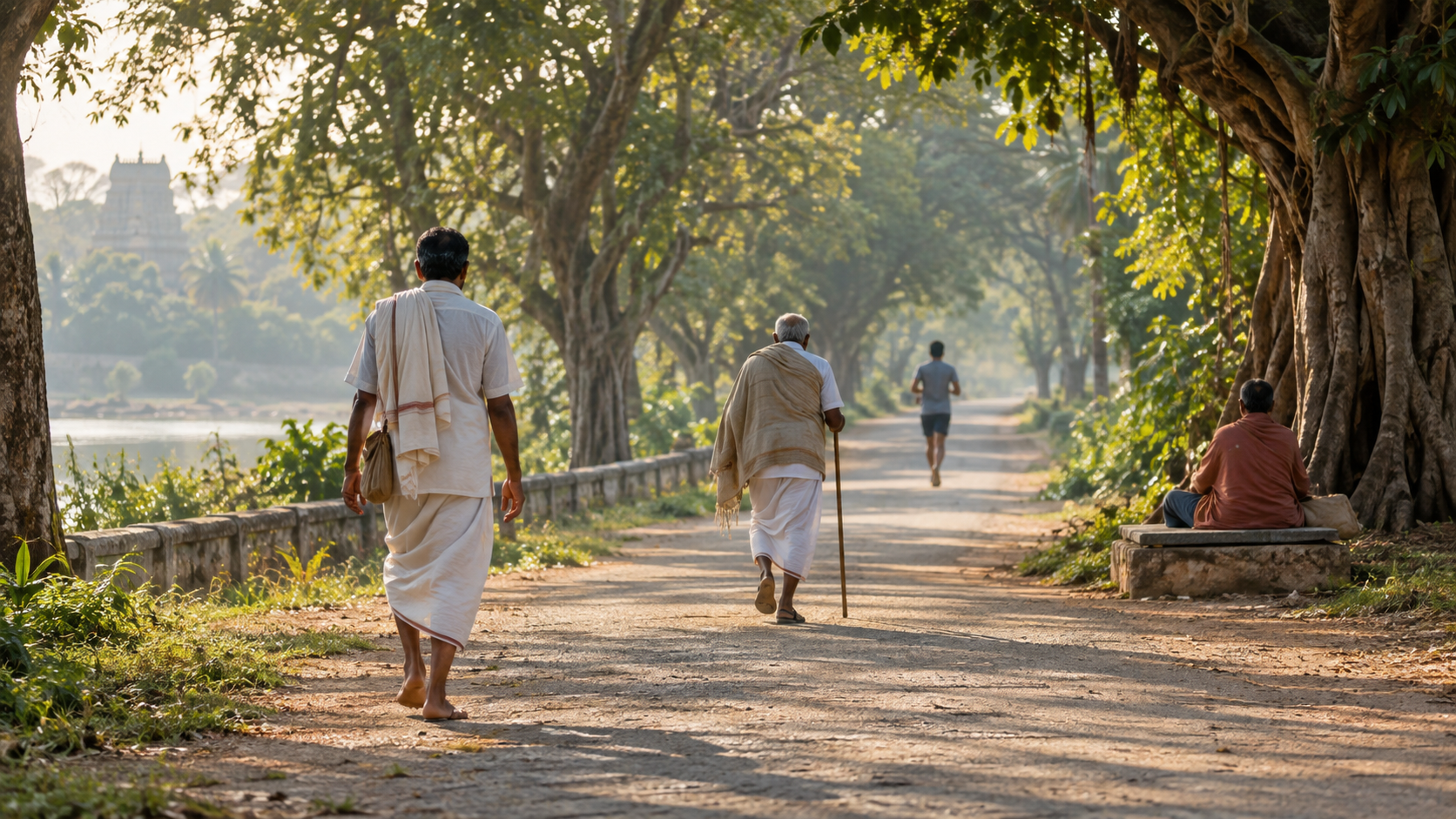
Running nearly 50 kilometres every day is an extreme physical undertaking. It should not become a devotional benchmark. Monu’s reported pace does not tell you what is appropriate for your body, age, health, training history, climate, route, or family obligations.
If his example moves you to make a sankalpa, choose a form you can fulfil without recklessness. You might visit a local Shiva temple regularly, walk manageable stages of a pilgrimage, undertake a daily practice, serve patients or caregivers, or support the upkeep of a temple. The spiritual test is steadiness and truthfulness, not whether your vow attracts an audience.
- Name the purpose. Decide whether your resolve expresses gratitude, repentance, discipline, or seva. A precise purpose is easier to honour than a dramatic but vague promise.
- Define completion. State what you will do, how often, and for how long. An open-ended vow made during emotional distress can become impossible to judge or sustain.
- Measure the burden honestly. Consider your health, dependants, employment, finances, weather, transport, and the safety of the route before committing.
- Build support before beginning. A long-distance journey needs people who know the route and can respond if plans change. For an extreme physical undertaking, consult an appropriately qualified medical professional and experienced route organisers.
- Keep medical care separate from devotional hope. Prayer and pilgrimage can accompany treatment, but they should not replace professional care or be presented as proof of what cured an illness.
- Seek guidance when circumstances change. If continuing would create serious danger, speak with a trusted acharya or other responsible spiritual guide as well as the relevant health professional. Concealing harm does not make a vow purer.
This proportional approach is not lesser bhakti. Dharma includes duties towards the body, family, community, and truth. A vow that needlessly abandons those duties may be more visible, but visibility is not the measure of spiritual worth.
Key takeaways
- Monu Meturbala reportedly began the Jyotirlinga journey after his mother recovered from a serious illness, fulfilling a promise he had made to Lord Shiva.
- At the documented stage, the 19-year-old had covered about 8,000 kilometres, was running nearly 50 kilometres a day, and had visited five of the 12 Jyotirlingas.
- The pilgrimage should be described as ongoing unless a credible direct update confirms that all 12 shrines have been reached.
- The run expresses gratitude for recovery; it does not establish what caused that recovery or justify abandoning medical care.
- You can honour the pilgrimage through accurate sharing, consent, practical assistance, and safe passage rather than crowds, speculation, or exaggerated claims.
- If you are inspired to make your own sankalpa, imitate Monu’s commitment to keeping his word, not an extreme daily distance that may be unsafe for you.
If Monu passes through your community, let your encouragement reduce the burden of his road. If you encounter him only through a screen, share what is known, leave the unknown unstated, and watch for a verified account of the remaining journey. His discipline does not need invented details to make it meaningful.
References

Leave a Reply
You must be logged in to post a comment.