

You may have seen Asha’s death described as a suicide, an alleged murder, a dowry-harassment case, and an instance of love jihad. Those descriptions are not interchangeable. If you want justice for her, the first responsibility is to separate reported events from accusations and unanswered questions.
A pro-Dharma response should be guided by satya and nyaya: truth and justice. That means refusing to forget a dead Hindu woman while also refusing to pronounce a verdict before investigators establish how she died.
What is known, what is alleged, and what remains open

Asha was a 30-year-old Hindu woman from Hosayalanadu village in Karnataka’s Chitradurga district. She was found hanging and was taken to a hospital in Hiriyur, where she was declared dead. She and Imran, a bus driver, had been married for approximately three years and had a two-and-a-half-year-old child.
Her parents allege that Imran harassed her for dowry. They say the family paid approximately ₹1 lakh about one-and-a-half months before her death, but that the demands and harassment continued. They suspect that Asha was killed and that the hanging was arranged to resemble suicide. These are serious accusations from the bereaved family; they are not yet judicial findings.
Imran reportedly took Asha to the hospital and left after learning that she had died. His reported departure demands an explanation, but suspicious conduct by itself does not prove murder. Hiriyur police have registered a case and begun an investigation. No final finding presently establishes whether Asha died by suicide or was killed, and Imran’s response to the accusations has not been established.
| Question | Present status | What could clarify it |
|---|---|---|
| How did Asha die? | She was found hanging; the cause and manner of death remain under investigation. | Autopsy findings, injury documentation, scene examination, and a reconstructed timeline. |
| Was she harassed for dowry? | Her parents allege continuing demands and a recent payment of approximately ₹1 lakh. | Payment records, messages, call records, prior disclosures, and witness statements. |
| Why did Imran reportedly leave? | He is said to have left after learning of Asha’s death. | His statement, hospital records, witness accounts, location data obtained lawfully, and the sequence of his movements. |
| Was the death staged? | Asha’s parents suspect murder presented as suicide. | Forensic evidence must test that allegation; suspicion alone cannot settle it. |
| Was religious deception or coercion involved? | Hindu organizations have raised a possible love jihad angle. | Specific evidence of concealed identity, coercive conversion, threats, organized manipulation, or religiously motivated abuse. |
The language you use matters. Say that Asha was found hanging, not that she necessarily died by suicide. Say that her parents allege murder and dowry harassment, not that Imran has already been proved guilty. Precision does not weaken the demand for justice. It protects that demand from being discredited by claims that outrun the evidence.
Why the payment and reported disappearance require scrutiny

The alleged ₹1 lakh payment is important because it gives investigators a specific event to examine. They should establish how the money was provided, who received it, what was said before and after the payment, and whether Asha told anyone that the demand continued. A bank transfer, cash withdrawal, message, call, or witness may corroborate part of the family’s account. The existence of a payment alone, however, would not establish its purpose without supporting evidence.
Imran’s reported disappearance creates another concrete line of inquiry. Investigators need a minute-by-minute sequence where possible: when Asha was last seen alive, who found her, when she reached the hospital, who accompanied her, when Imran learned of her death, and where he went afterward. Leaving may indicate fear, evasion, or something else; only evidence can distinguish among those possibilities.
The case should therefore turn on converging evidence rather than one dramatic circumstance. The most important categories are:
- Medical and forensic evidence concerning the cause and manner of death.
- Preservation and examination of the place where Asha was found.
- Hospital records and statements from staff or other people who were present.
- Financial records connected to the alleged ₹1 lakh payment and any other demands.
- Messages, call records, voice notes, and prior complaints or disclosures obtained and handled lawfully.
- Statements from Asha’s parents, neighbours, friends, and others who may have observed the marriage.
- Imran’s location, conduct, and explanation before and after Asha’s death.
If you possess relevant messages, receipts, recordings, or photographs, preserve the originals and give copies to the investigating officer or a lawyer representing the family. Do not edit them into social-media clips. Public circulation can expose private information, influence witnesses, and make the origin or completeness of digital evidence harder to establish.
The love jihad allegation must be tested, not merely repeated

Asha reportedly met Imran while travelling to school and married him despite opposition from her family. After her death, representatives of Hindu organizations petitioned the Hiriyur Town Police Station and requested an investigation into the marriage and death. They have raised the possibility of love jihad.
An interfaith marriage, even one opposed by a woman’s family, does not by itself prove deception, coercion, conversion pressure, or organized targeting. Imran’s Muslim identity cannot substitute for evidence. Equally, concern about misuse of intimate relationships should not be dismissed merely because the label used to describe it is politically contested.
The responsible approach is to break the broad allegation into questions that can actually be investigated. Did Imran conceal a material fact about his identity or intentions? Was Asha pressured to change her faith? Was she isolated from her family? Were threats, blackmail, violence, financial demands, or outside participants involved? Did she describe any such conduct in messages or conversations? No public finding presently answers those questions.
The religious angle and the dowry allegation should be examined separately as well as together. Treating love jihad as a ready-made conclusion could eclipse evidence about domestic abuse or financial coercion. Refusing to examine possible religious manipulation could overlook a relevant motive or pattern. Both errors would fail Asha.
Protecting Hindu women does not require collective blame against Muslims, and evidentiary restraint does not require silence about abuse. Dharma asks more of us than choosing between those two failures. It asks us to protect the vulnerable, tell the truth carefully, and demand accountability from the person or persons whom the evidence implicates.
What authorities, families, and community groups should do now
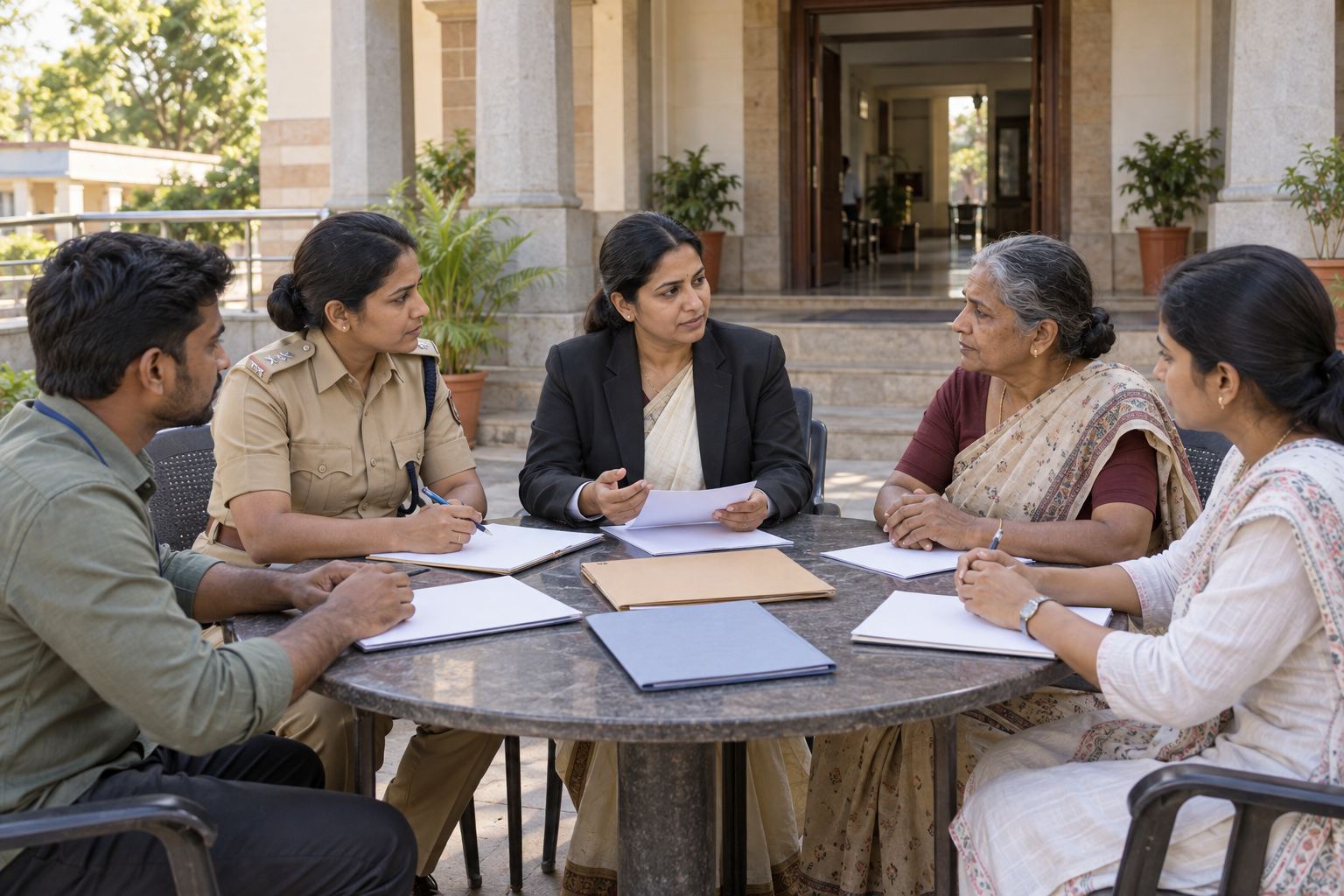
You can judge the seriousness of the investigation by watching for specific work, not louder rhetoric. Police should locate and question Imran, secure medical and forensic material, trace the alleged payment, examine relevant communications, interview witnesses, and test the family’s claim that the scene was made to resemble suicide. Any allegation of religious deception or coercion should receive its own evidence-based inquiry.
The couple’s young child also requires protection. Public discussion should not reveal the child’s name, photograph, location, medical information, or other identifying details. The need for safe and stable care should not become an afterthought while adults argue over the case.
Community organizations can help by pursuing lawful, peaceful accountability: assisting the family in obtaining legal representation, preserving documentation, submitting precise questions to police, and requesting appropriate updates without demanding disclosure that could compromise the inquiry. They should not publish unverified accusations as established fact, target unrelated people, or encourage vigilantism.
There is also a lesson for families worried about a daughter or sister in an abusive relationship, whether the marriage is interfaith or not. A woman who married against family wishes may fear that asking for help will produce an we warned you response. Shame can close the very line of communication she may later need for safety.
- Speak with her privately and ask concrete questions: Are you safe at home? Has anyone threatened you? Is money being demanded? Are you free to contact family and practise your faith?
- Listen without forcing an immediate defence of her marriage or demanding a public accusation. The immediate objective is to understand risk and keep communication open.
- If she reports threats, violence, coercion, or dowry demands, record dates and exact words. Preserve messages, payment records, photographs, and names of witnesses in more than one secure place.
- Do not confront a potentially violent person alone. Help her contact local police, a lawyer, or a domestic-violence support service and make a safety plan suited to her circumstances.
- If danger is immediate, contact emergency services or police. Online campaigning is not a substitute for getting the person and any child to safety.
This approach respects an adult woman’s agency while giving her a practical route out of danger. Family vigilance is most protective when it remains available after disagreement, not only before a marriage.
Key takeaways
- Asha’s death is real, but its cause and manner have not yet been conclusively established.
- Her parents allege dowry harassment, a recent payment of approximately ₹1 lakh, murder, and an attempt to present the death as suicide. These allegations require evidence and have not been proved.
- Imran’s reported departure after Asha’s death is a significant investigative question, not a verdict by itself.
- The love jihad claim should be tested through specific evidence of deception, coercion, conversion pressure, threats, or organized involvement rather than inferred from religious identity.
- The most useful public demands concern forensic findings, the financial trail, communications, the hospital timeline, Imran’s account, and the protection of the couple’s child.
- If someone near you reports abuse, preserve evidence, keep communication open, seek professional help, and prioritize immediate safety over public confrontation.
For now, use exact words: death under investigation, family allegations, reported disappearance, and unanswered questions. Then watch whether each question is answered with medical, financial, digital, and witness evidence. That disciplined attention will serve Asha better than either premature certainty or convenient silence.
References

Leave a Reply
You must be logged in to post a comment.