
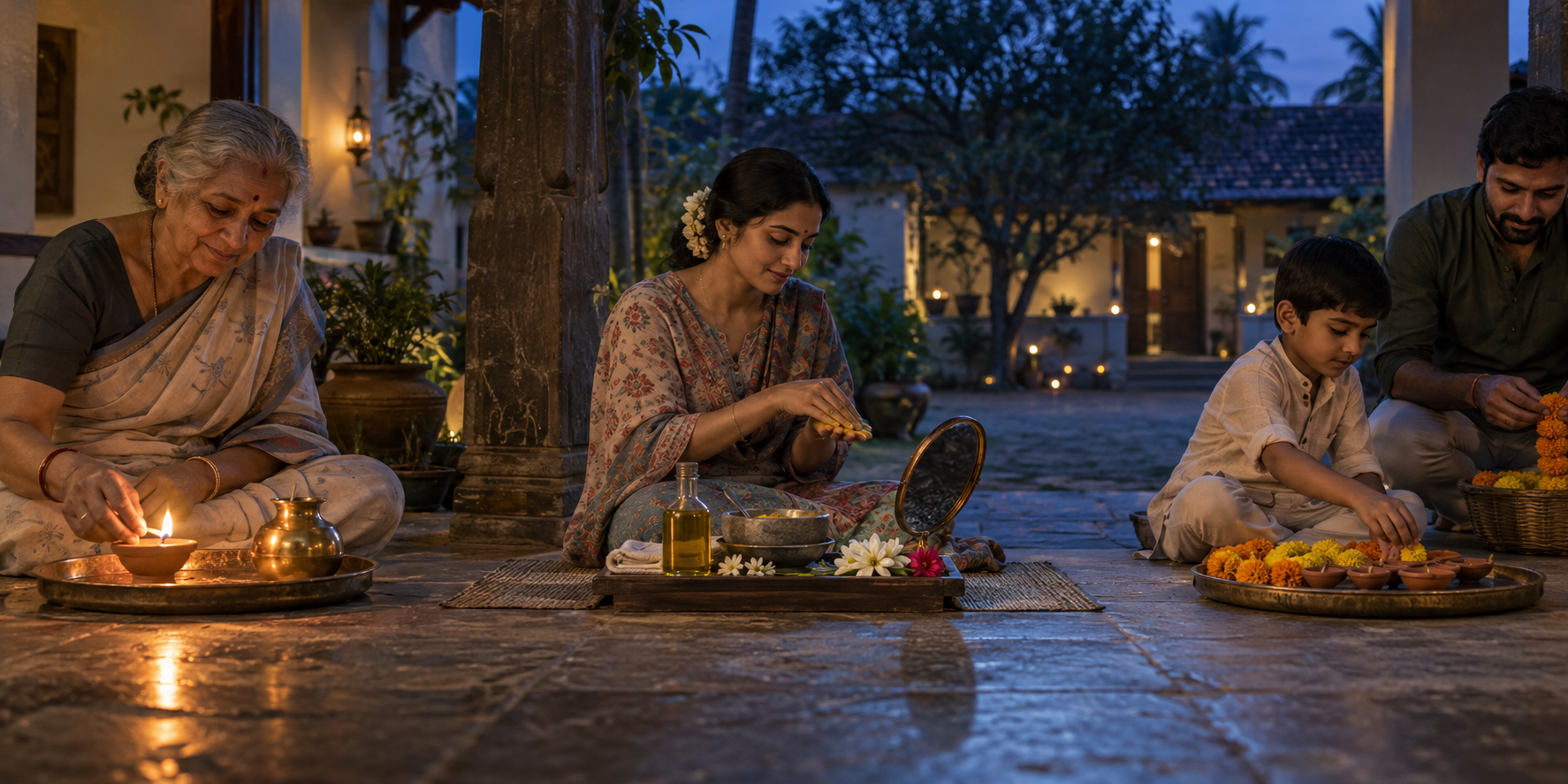
If your family says Roop Chaudash while relatives call the occasion Kali Choudash, Naraka Chaturdashi or Pretha Chaturdashi, don’t flatten those names into one interchangeable festival. Match the name to its region, religious intention and calendar before deciding what your household will observe.
This matters especially in 2026 because the reported sequence places Yama Trayodashi on November 6, Roop Chaudash on November 7 and Pretha Chaturdashi on November 8. Those dates give you a planning map, but your family’s tradition determines which entries belong on its calendar.
Begin with Yama Trayodashi, not a generic “Diwali eve”
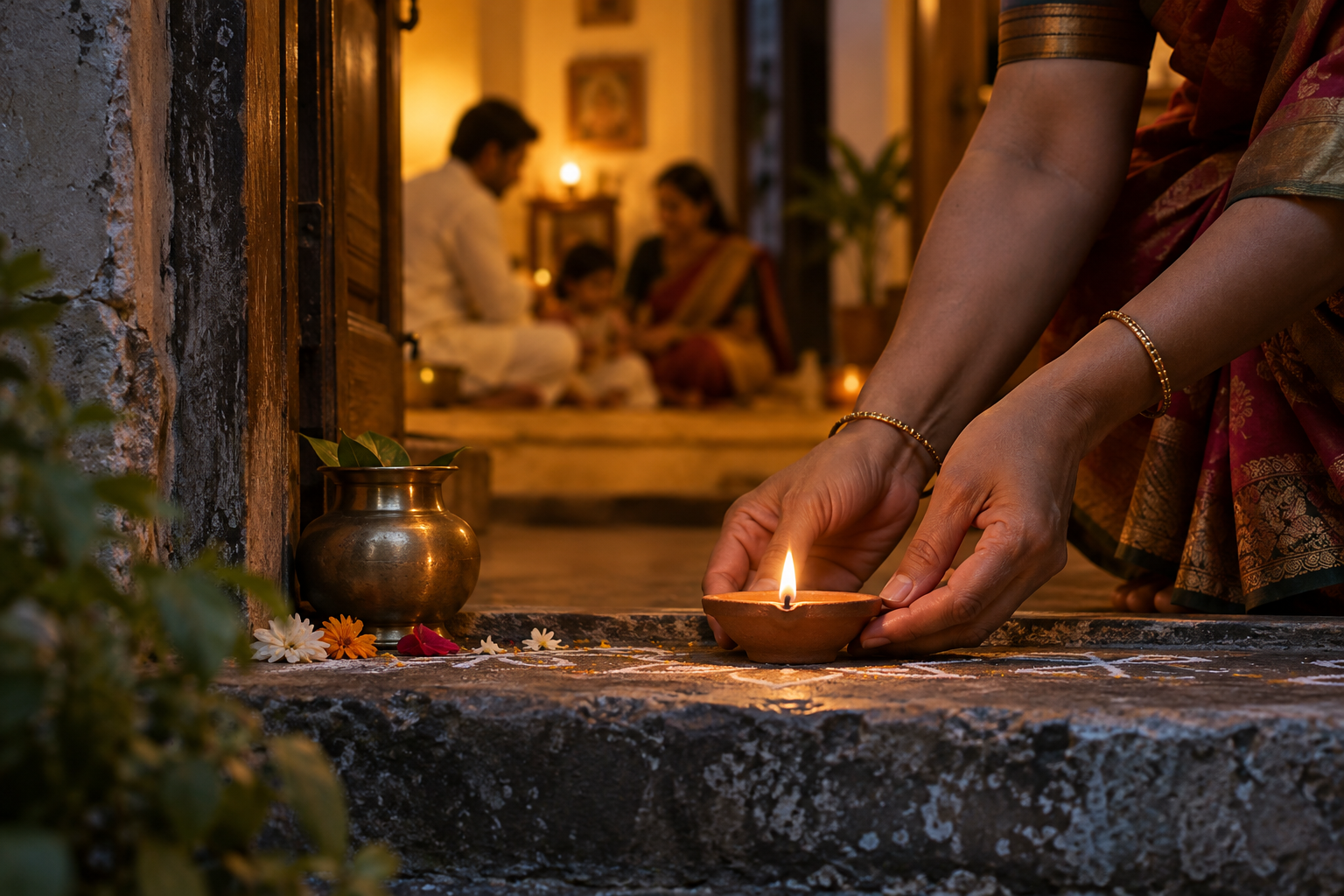
Yama Trayodashi, also called Shamana Trayodasi, is the first day of the five-day Diwali celebration. Its defining observance is Yama Deepadan, the offering of a lamp associated with Lord Yamadharmaraja.
This opening is not an incidental lead-in to the better-known nights of Diwali. The five-day cycle begins with Yama Trayodashi and concludes with Yama Dwitiya; worship of Yamadharmaraja frames both ends. If your home keeps this tradition, put the ritual’s proper name on November 6 rather than writing only “Diwali preparations.” That simple label protects the observance from being lost among cleaning, shopping and decoration.
Keep the planning equally precise. Record the rite as Yama Deepadan, note who in the household knows the inherited procedure, and confirm its timing through the panchang or temple your family ordinarily trusts. The factual core is the lamp offering; details not preserved in your own tradition should not be improvised from an unrelated regional custom.
One festive threshold carries several regional identities

Roop Chaudash or Roop Chaturdashi is the second day of the five-day Diwali cycle in Rajasthan, Madhya Pradesh, Uttar Pradesh and Haryana. It is also observed as Soundarya Siddhi Divas. In Gujarat, the corresponding festive period carries the identities of Kali Choudash and Hanuman Puja, while Naraka Chaturdashi is another established Chaturdashi observance within the early Diwali landscape.
The useful lesson is not that every name is a translation of every other name. A shared place in the Diwali sequence does not erase differences in devotional focus. If you inherit Roop Chaudash, retain that name and its family meaning. If your Gujarati home keeps Kali Choudash or Hanuman Puja, don’t replace it with a more nationally familiar label merely because that label appears on a general calendar.
| Observance | Regional or ritual context | 2026 planning date | What to record |
|---|---|---|---|
| Yama Trayodashi or Shamana Trayodasi | Opening day of the five-day Diwali cycle | November 6 | Yama Deepadan |
| Roop Chaudash or Roop Chaturdashi | Rajasthan, Madhya Pradesh, Uttar Pradesh and Haryana | November 7 | Also known as Soundarya Siddhi Divas |
| Kali Choudash and Hanuman Puja | Gujarat | Confirm with the household’s Gujarati calendar | The inherited form of Kali Choudash or Hanuman worship |
| Pretha Chaturdashi | Krishna Paksha Chaturdashi under differing regional month systems | November 8 | Both the civil date and the regional lunar-month label |
Why Pretha Chaturdashi can carry two month names
Pretha Chaturdashi falls on Krishna Paksha Chaturdashi. A North Indian Hindi calendar places it in Kartik, while Marathi, Gujarati, Telugu and Kannada calendars place it in Ashwin. This is a difference in regional calendar convention, not necessarily a disagreement about the observance itself.
That distinction helps when two family calendars appear to contradict each other. Compare the tithi, civil date and calendar system as three separate fields. Do not reject an entry merely because one calendar says Kartik and another says Ashwin.
The 2026 material assigns November 7 to Roop Chaudash and November 8 to Pretha Chaturdashi. That is a further reason not to use the word “Chaturdashi” alone as your scheduling instruction. Write the complete observance name, then ask your local priest or temple which civil date and ritual time apply to the custom you actually keep.
Build a household plan without mixing traditions
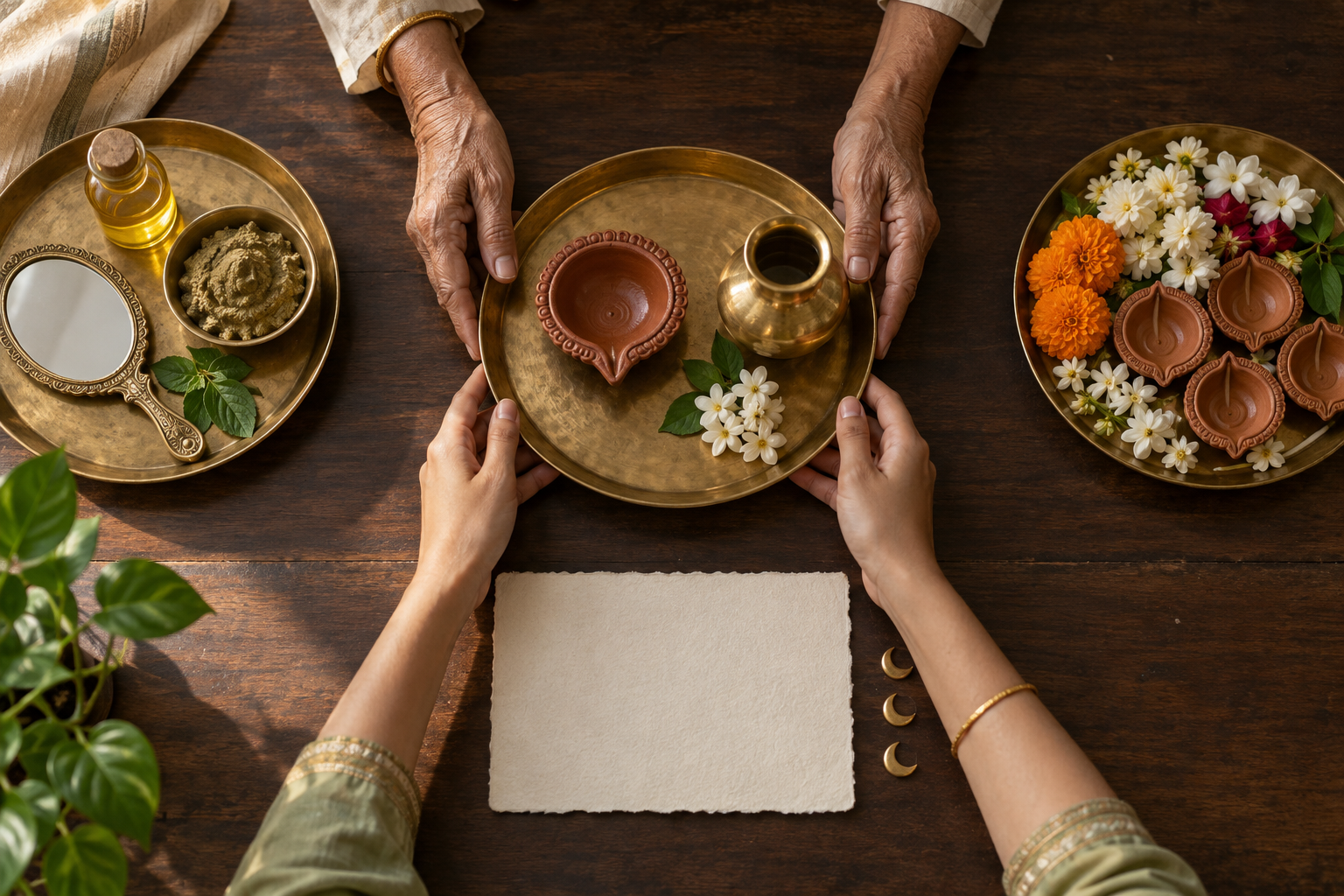
A mixed-region family does not need to declare one vocabulary correct and the others mistaken. It does need enough precision to prevent one rite from silently displacing another.
- Write the inherited name in full. Use Yama Trayodashi, Roop Chaudash, Kali Choudash, Naraka Chaturdashi or Pretha Chaturdashi rather than the vague label “small Diwali.”
- Attach the regional lineage. Record whether the practice comes from a Rajasthani, Madhya Pradesh, Uttar Pradesh, Haryanvi, Gujarati, Marathi, Telugu, Kannada or another household tradition.
- Name the central observance. For Yama Trayodashi, that is Yama Deepadan. For the Gujarati tradition described here, distinguish Kali Choudash from Hanuman Puja rather than assuming that the names communicate the same ritual instructions.
- Separate the lunar entry from the civil date. For Pretha Chaturdashi, keep Krishna Paksha Chaturdashi in one field and the regional month name—Kartik or Ashwin—in another.
- Verify locally before announcing a time. Ask which panchang convention governs your family or temple and whether the named observance is being kept on the proposed date. A generic Diwali graphic is not enough for that decision.
- Preserve more than one custom when appropriate. If two branches of the family keep distinct traditions, list them separately. Combining names for convenience can conceal the devotional purpose of both.
Key takeaways
- The early Diwali sequence begins with Yama Trayodashi; in 2026 it falls on November 6, and Yama Deepadan is its principal rite.
- Roop Chaudash falls on November 7 in 2026 and is the second Diwali day in Rajasthan, Madhya Pradesh, Uttar Pradesh and Haryana.
- Gujarat associates this festive threshold with Kali Choudash and Hanuman Puja; preserve those names rather than treating them as decorative synonyms.
- Pretha Chaturdashi falls on November 8 in 2026. It is placed in Kartik by the North Indian Hindi calendar and in Ashwin by Marathi, Gujarati, Telugu and Kannada calendars.
- A complete observance name, regional calendar and local confirmation are more reliable than the word “Chaturdashi” by itself.
For your 2026 calendar, begin with November 6, 7 and 8, but enter only the observances your household actually keeps. Add the full name, rite and regional calendar beside each date. Then verify the timing locally before sharing the family schedule.
References
- Hindu Pad — Yama Trayodashi | Shamana Trayodasi
- Hindu Pad — Roop Chaudash 2026 | Soundarya Siddhi Divas, Roop Chaturdashi
- Hindu Pad — Pretha Chaturdashi

Leave a Reply
You must be logged in to post a comment.