
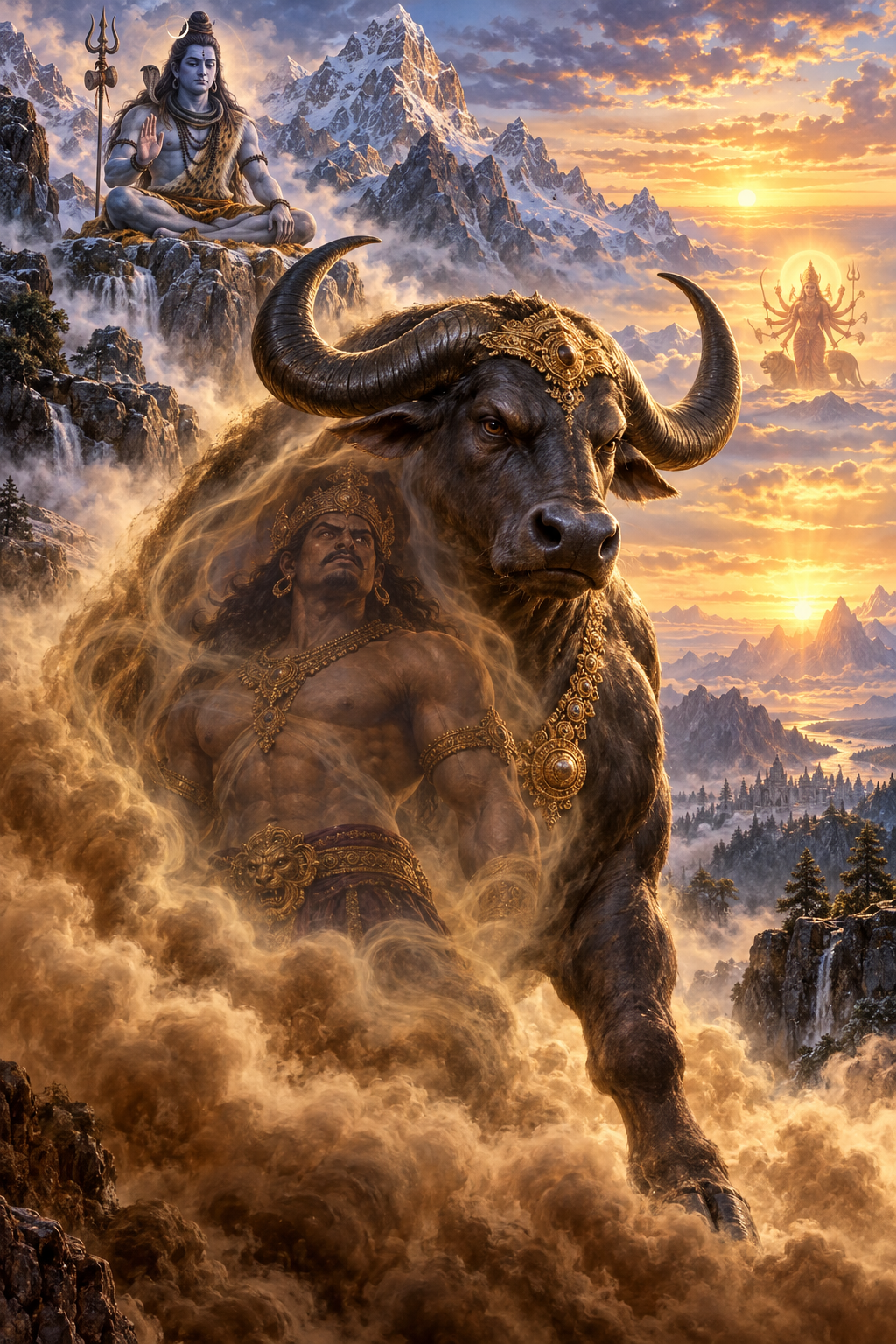
If Shiva enabled Mahishasura’s birth, does that mean the buffalo asura had divine approval? That is the real difficulty behind the question of his origin.
The Kalika Purana’s answer requires you to keep two truths together: Mahishasura enters the narrative through a divine boon, yet he is ultimately vanquished by Goddess Durga. His extraordinary beginning explains his place in the sacred story; it does not excuse everything he later becomes.
What the Kalika Purana adds to Mahishasura’s origin
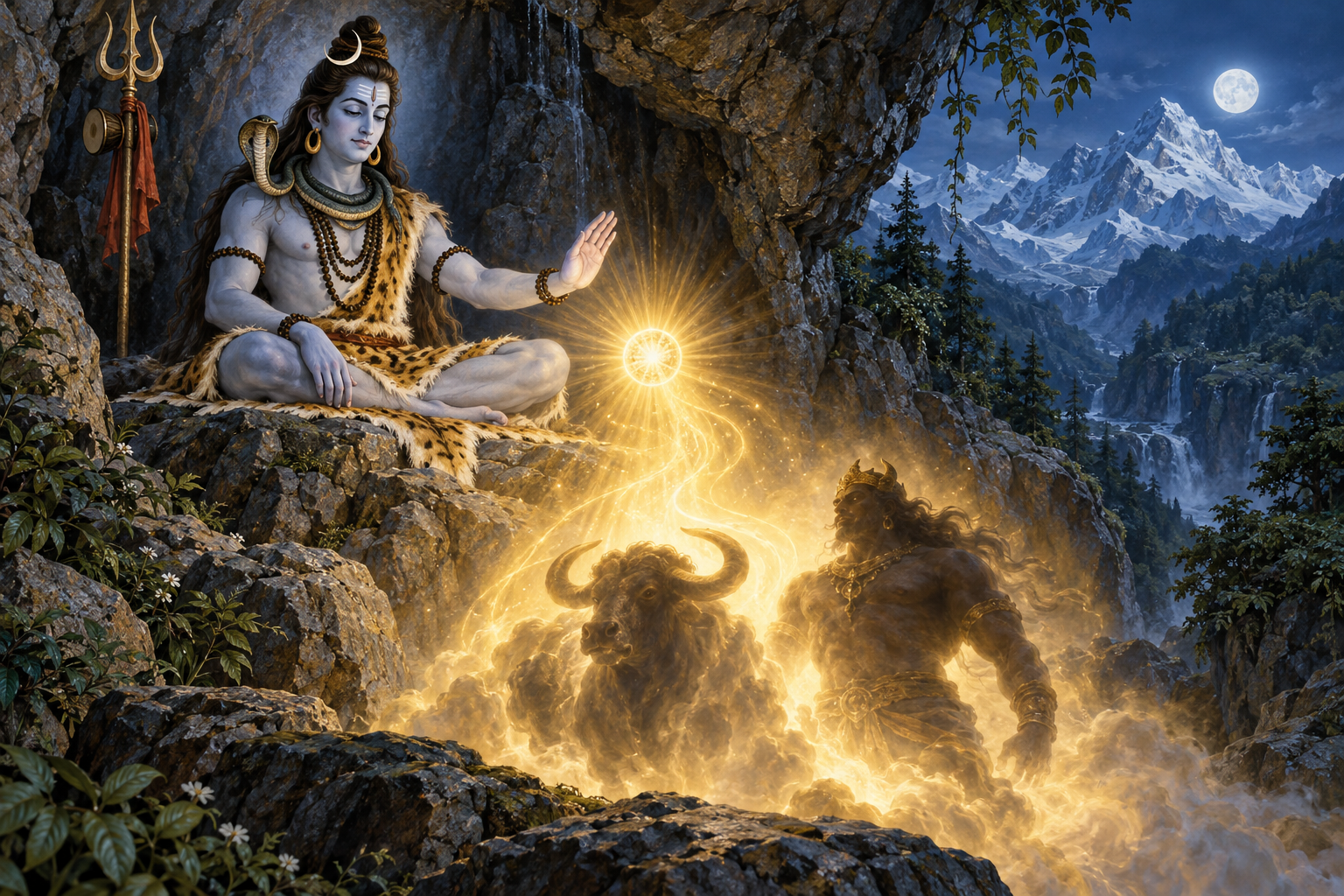
Many retellings begin when Mahishasura is already powerful and Durga is preparing to confront him. The Kalika Purana reaches further back. It connects his origin to Shiva’s boon to Rambha and the continuation of Rambha’s lineage.
That detail changes how you should understand Mahishasura. He is not introduced as an accidental interruption in an otherwise orderly cosmos. His birth has a place within the larger sacred order, even though his later power brings him into conflict with that order.
This is the first distinction to preserve when recounting the episode: a divinely enabled birth is not the same thing as a divinely endorsed life. The boon explains how the lineage becomes possible. Mahishasura’s subsequent conduct determines what that possibility becomes.
Shiva’s boon is a cause, not a moral verdict
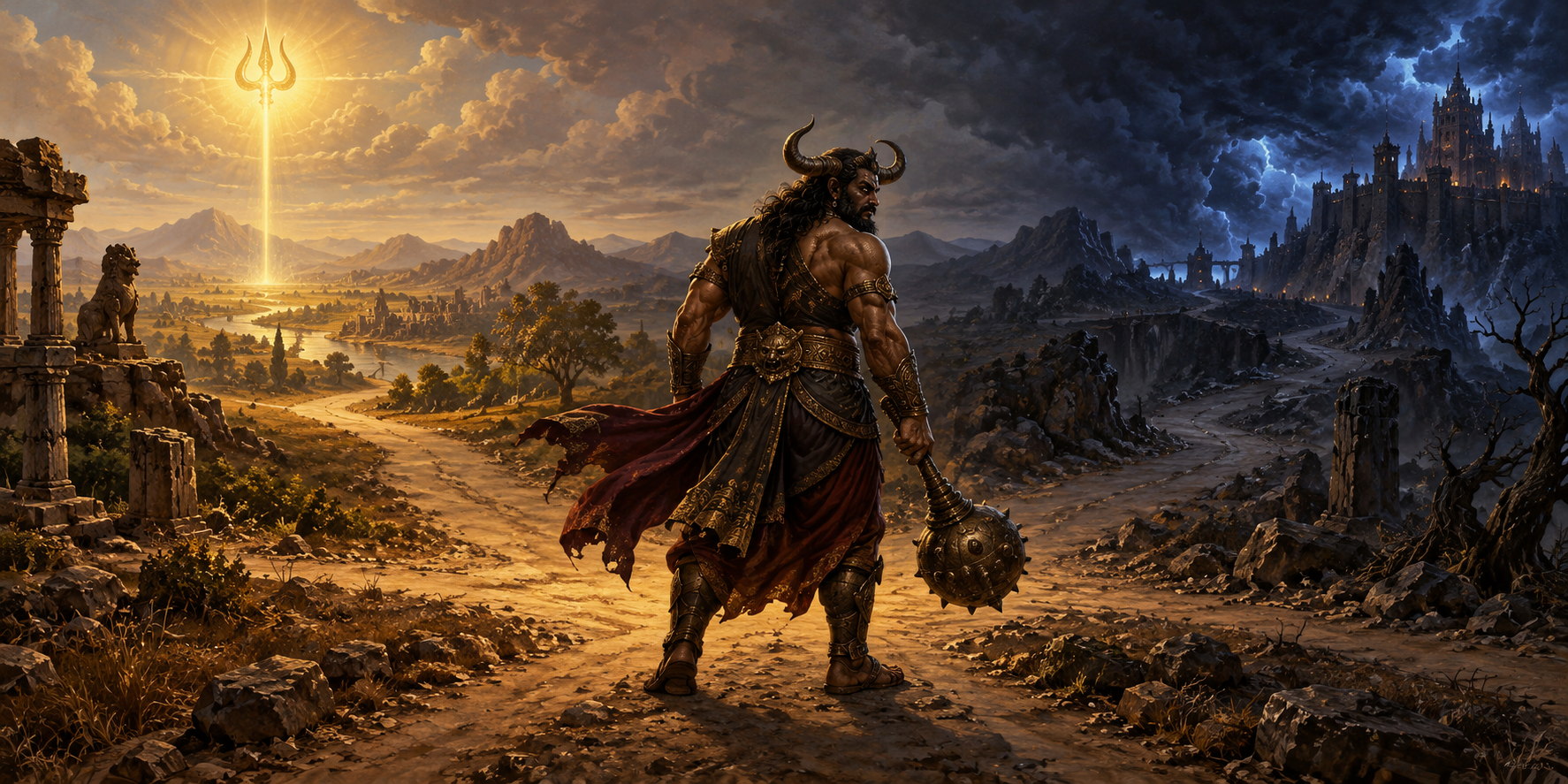
A common misreading treats every boon as a certificate of righteousness. That makes the story harder to understand than it needs to be. Within a Puranic narrative, divine power can establish a possibility without guaranteeing how the recipient or the recipient’s descendants will use it.
Shiva’s role therefore answers a question about origin: why does this remarkable being arise? It does not settle the separate question of whether Mahishasura’s later actions accord with dharma. Durga’s role answers that second question through the restoration of order.
When you encounter a boon in a sacred narrative, ask three separate questions:
- What was enabled? Here, Shiva’s boon enables the continuation of Rambha’s lineage and provides the background to Mahishasura’s birth.
- What did the beneficiary do with that possibility? Origin does not erase agency or consequence.
- How was imbalance answered? Mahishasura’s arc ends in his defeat by Durga, not in immunity derived from Shiva’s involvement.
Keeping those questions apart prevents two opposite errors. You need not deny the sacred dimension of Mahishasura’s origin, and you need not turn that origin into approval of his later opposition to divine order.
Why a sacred beginning does not make Mahishasura righteous
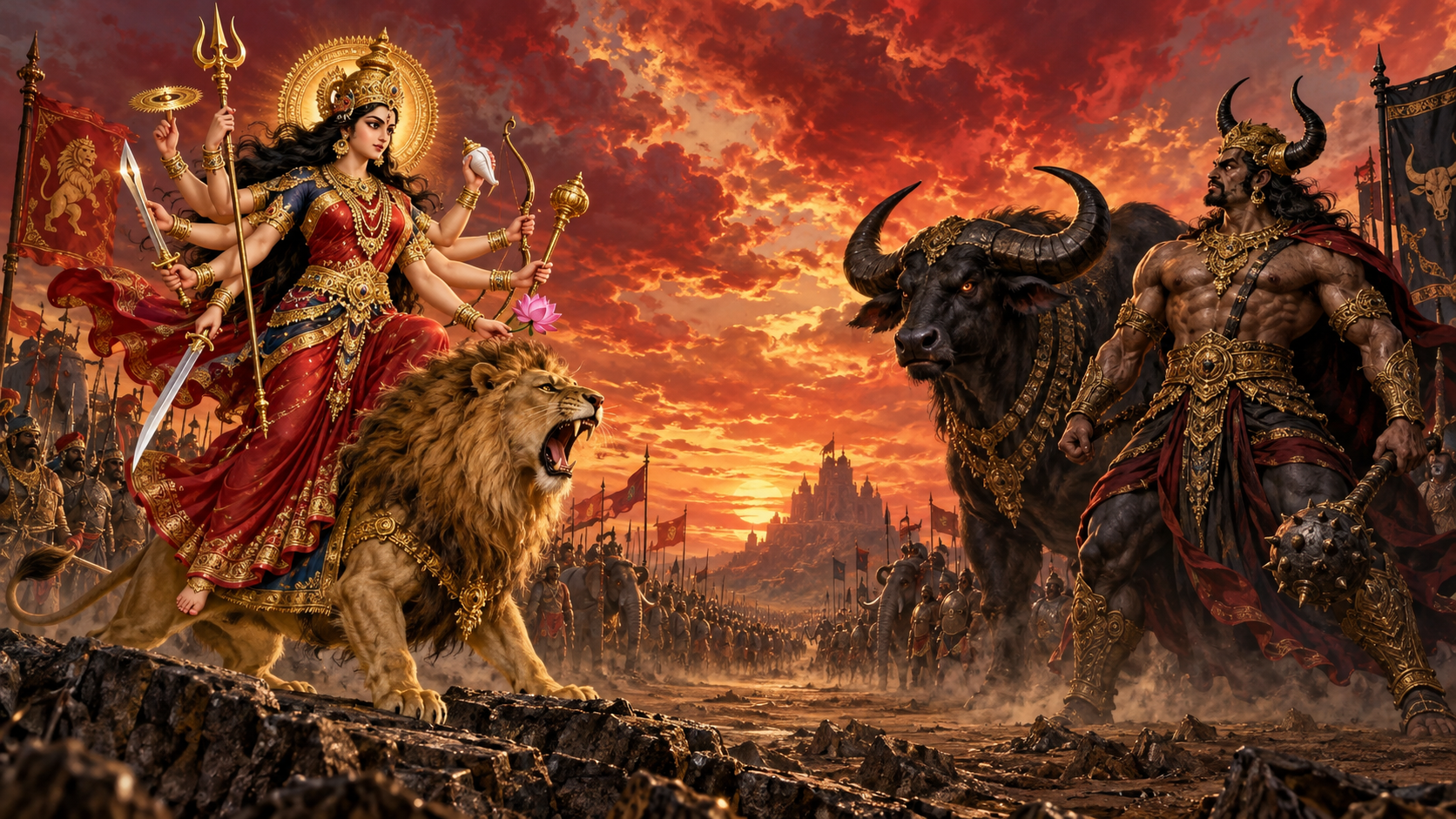
The word “sacred” can describe a birth situated within divine causation. It does not automatically mean virtuous, exemplary, or worthy of imitation. This matters because readers often collapse origin, character, and destiny into a single judgement.
The Kalika Purana’s framing asks for a more disciplined reading. Shiva’s boon, Mahishasura’s emergence, and Durga’s victory belong to the same cosmic arc. The divine is present not only at the destruction of disorder but also in the conditions from which a powerful being emerges.
That does not make dharma arbitrary. It shows that power and righteousness are different things. A sacredly enabled capacity can still be directed toward adharma. When it is, divine origin does not cancel accountability.
This is also why Durga’s victory should not be read as a contradiction of Shiva’s boon. The boon brings forth a lineage; it does not promise that every use of the resulting power will remain beyond correction. Creation of possibility and restoration of balance perform different functions.
How to read and retell this account accurately
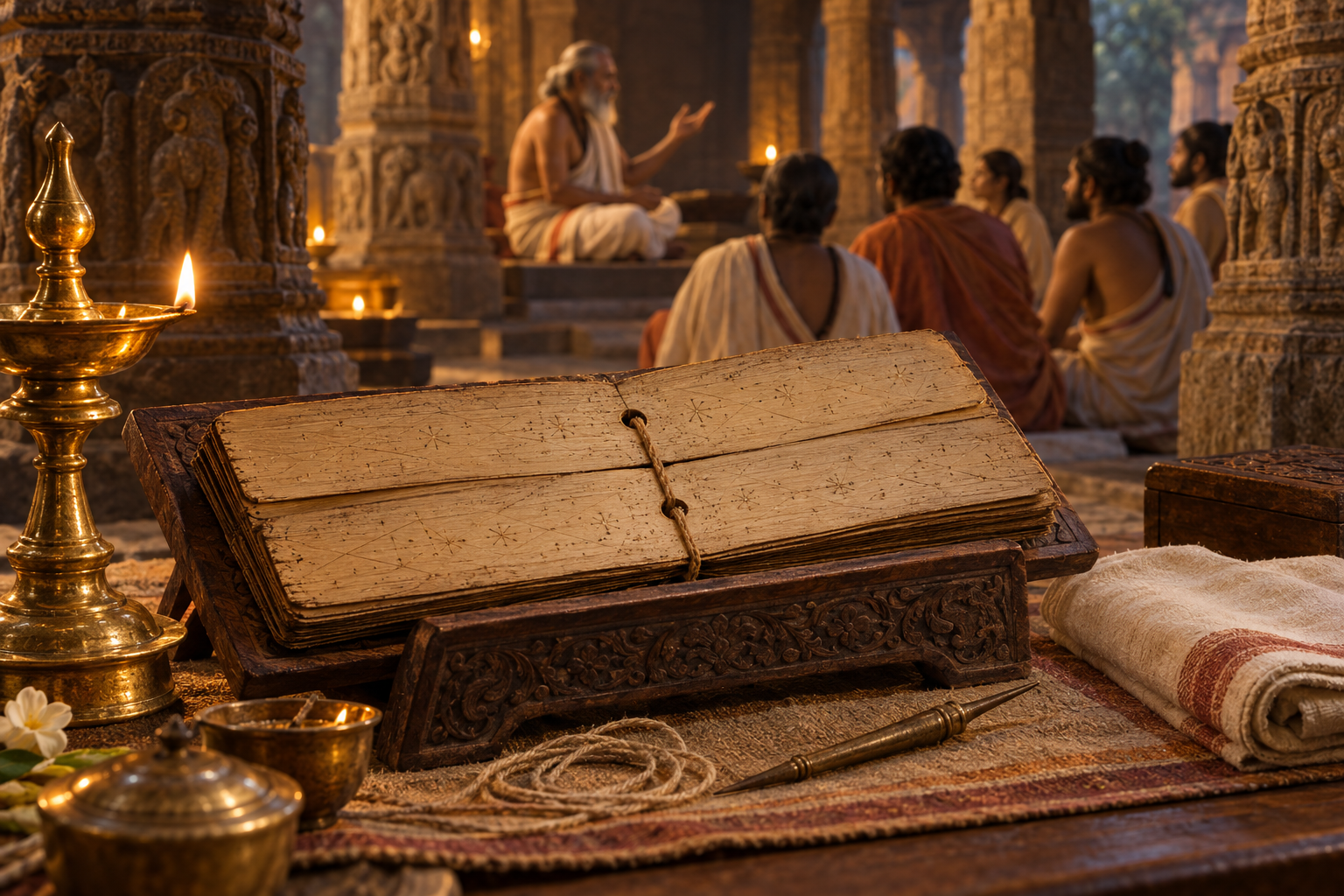
Puranic narratives often circulate in several tellings. Details can migrate from one version into another until a composite retelling is mistaken for the wording of a particular text. If your question is specifically about the Kalika Purana, keep its identifying thread in view: Shiva grants a boon to Rambha, that boon concerns Rambha’s lineage, and Mahishasura’s origin unfolds from that divine intervention.
A careful retelling should follow this order:
- Begin with Rambha and Shiva’s boon rather than with Mahishasura already at war.
- Explain that the boon establishes the conditions of Mahishasura’s origin.
- Separate divine causation from moral approval.
- Connect the birth narrative to Durga’s eventual victory without treating Shiva and Durga as working at cross-purposes.
- Name the Kalika Purana when discussing this version so that details from other traditions are not presented as though every telling were identical.
This sequence gives the listener more than a dramatic battle. It reveals the theological structure of the episode: power can arise through divine permission, become disordered through its use, and finally meet a divine response.
Key takeaways
- In the Kalika Purana’s account, Mahishasura’s origin is tied to Shiva’s boon to Rambha and Rambha’s lineage.
- The boon explains Mahishasura’s extraordinary beginning; it does not declare all his later actions righteous.
- Divine origin, personal conduct, and final destiny are three different parts of the narrative.
- Durga’s victory does not invalidate Shiva’s boon. The two divine acts occupy different places in the same arc.
- When teaching or discussing this version, identify the Kalika Purana and avoid silently importing details from other tellings.
The next time you hear Mahishasura’s story beginning only with his confrontation with Durga, look one step earlier. Remembering Shiva’s boon to Rambha will help you see the episode not merely as the destruction of an asura, but as a complete account of origin, the use of power, consequence, and the restoration of dharma.
References

Leave a Reply
You must be logged in to post a comment.