
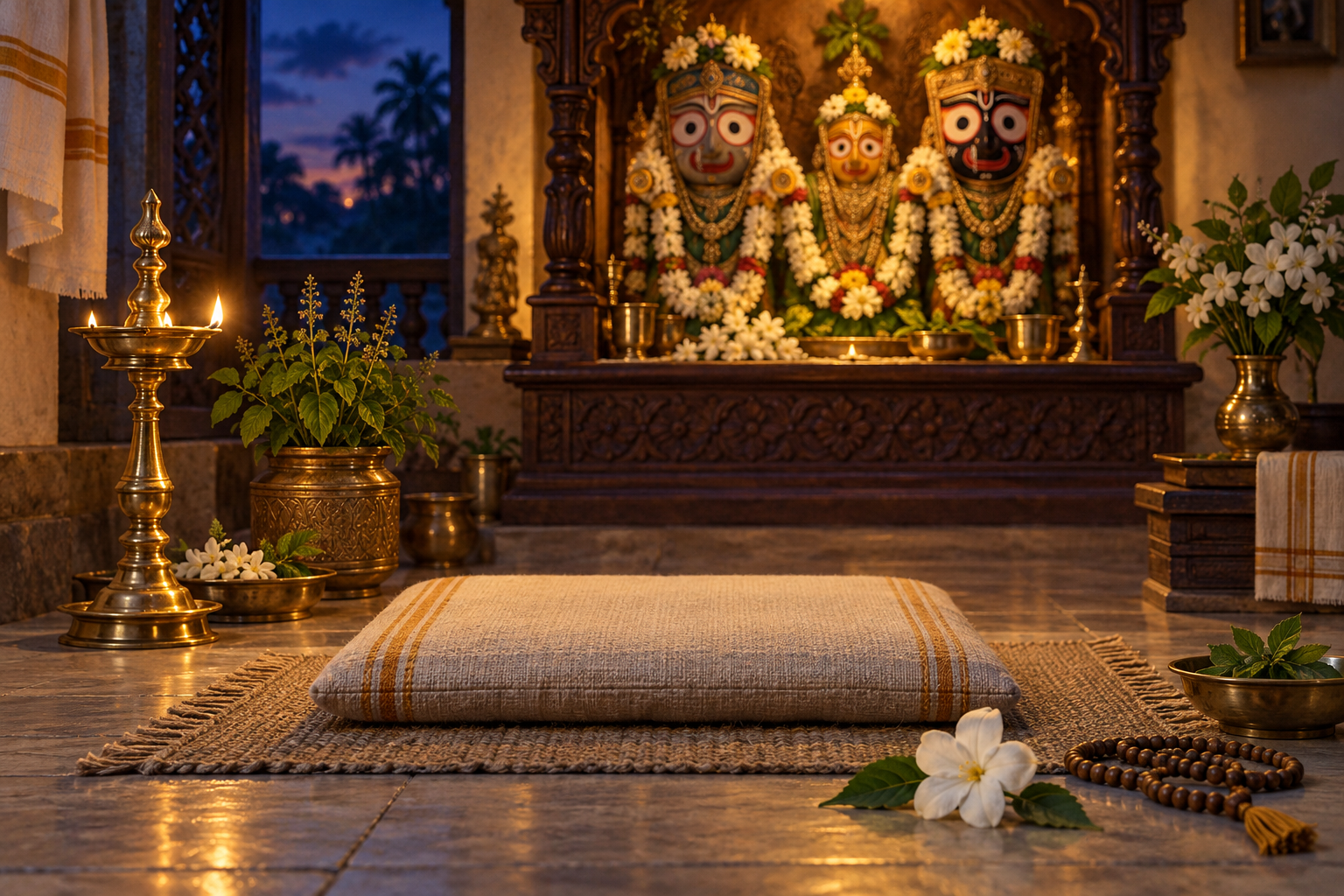
If you have just heard that Jaya Tirtha Charan Dasa has passed and want to know what happened, or how you can offer respects without burdening his family, the essential details are now clear. His final hours were shaped by family care, the holy names, the presence of his deities and blessings from senior Vaishnavas.
Jaya Dasa, also known as Jaya Tirtha Charan Dasa, JTCD and John Marshall, left his body at 7:23 p.m. on 9 October 2026. He was at home with his family after several months of deteriorating health. For those who knew him, this is a moment for grief and remembrance. It is also an occasion to notice the devotional choices that surrounded his departure.
What happened during his final hours
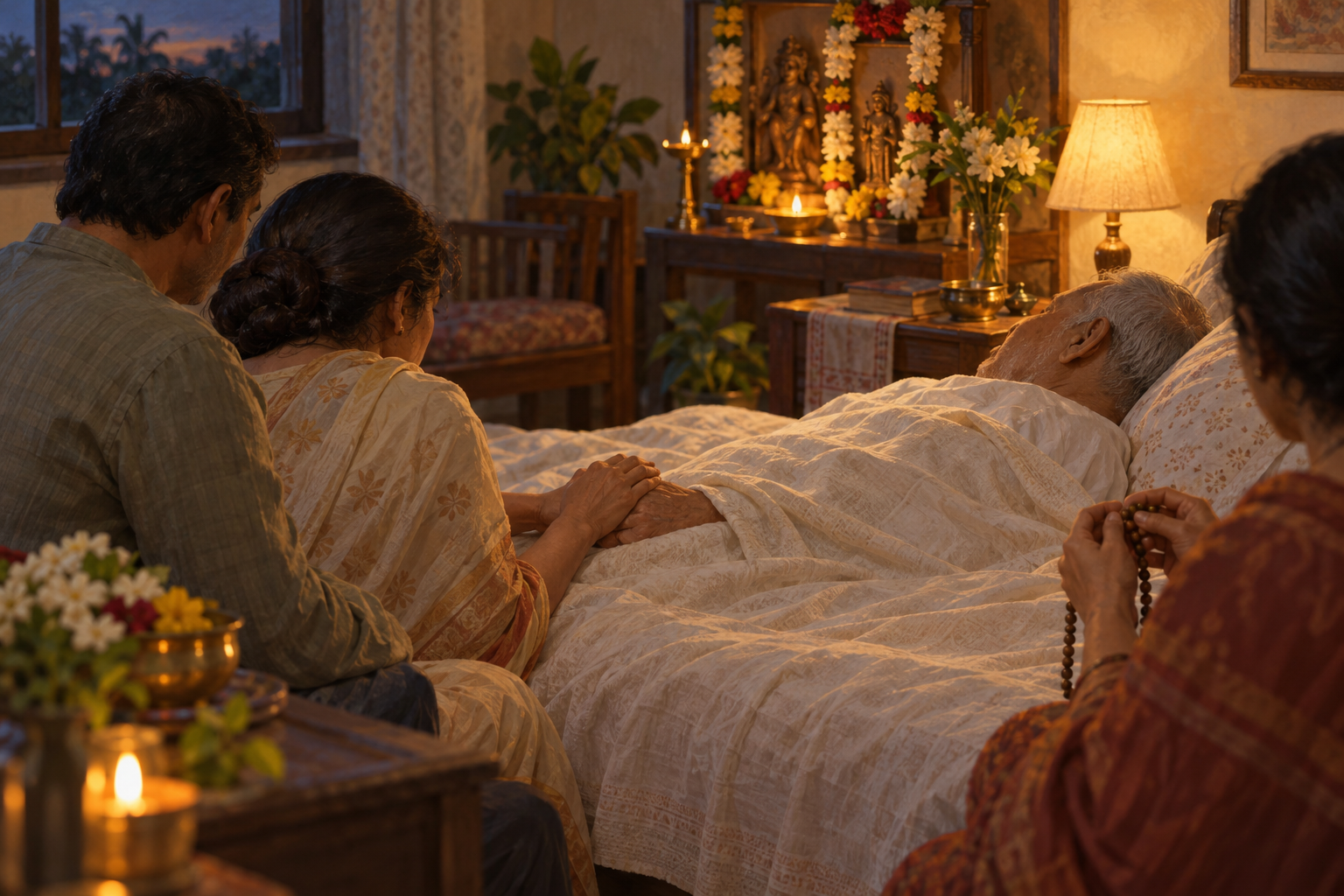
During the last months of his life, Jaya Tirtha Charan Dasa had lost the ability to manage ordinary activities independently. His family chose to care for him at home around the clock, with some assistance from outside services. They kept him comfortable before his Radhika Raman, Krishna Balaram, JBS and Shalagram Sila deities.
Friends and well-wishers visited during his final days. On the evening of 9 October, HH Janananda Maharaj joined by video call and chanted for approximately an hour. At about 6:30 p.m., HH Jayapataka Swami made contact and offered his blessings. Jaya Tirtha Charan Dasa departed less than an hour later, while focusing on the holy names, with his family chanting beside him and Srila Prabhupada’s chanting being heard.
Those at his bedside saw no visible struggle or indication of pain as he took his final breath. That is the family’s observation of an intimate moment, not a medical conclusion. They understood his composure devotionally: he had received the blessing for which he appeared to be waiting and could now leave with his attention fixed on Krishna.
His cremation was scheduled for 10 October. The family also arranged two separate remembrances in accordance with his instructions: a small gathering for close friends and well-wishers on 12 October, followed by a memorial for the wider community on 19 October.
Key takeaways
- Use his full devotional name, Jaya Tirtha Charan Dasa, while recognising that many people knew him as Jaya Dasa, JTCD or John Marshall.
- Respect the difference between the intimate gathering scheduled for 12 October and the wider community memorial scheduled for 19 October.
- Treat the family’s description of his departure as devotional testimony. The sequence of events is factual; its spiritual meaning is expressed through their Vaishnava faith.
- If you cannot attend a remembrance, you can still honour him through sincere chanting, prayer or a genuine memory shared without expecting a response from the family.
Why the setting of his departure matters
In Vaishnava speech, saying that a devotee has “left the body” is not a way of denying death or suppressing sorrow. It expresses the conviction that the person is not reducible to the temporary physical body. Grief remains real, but death is viewed within a longer spiritual journey.
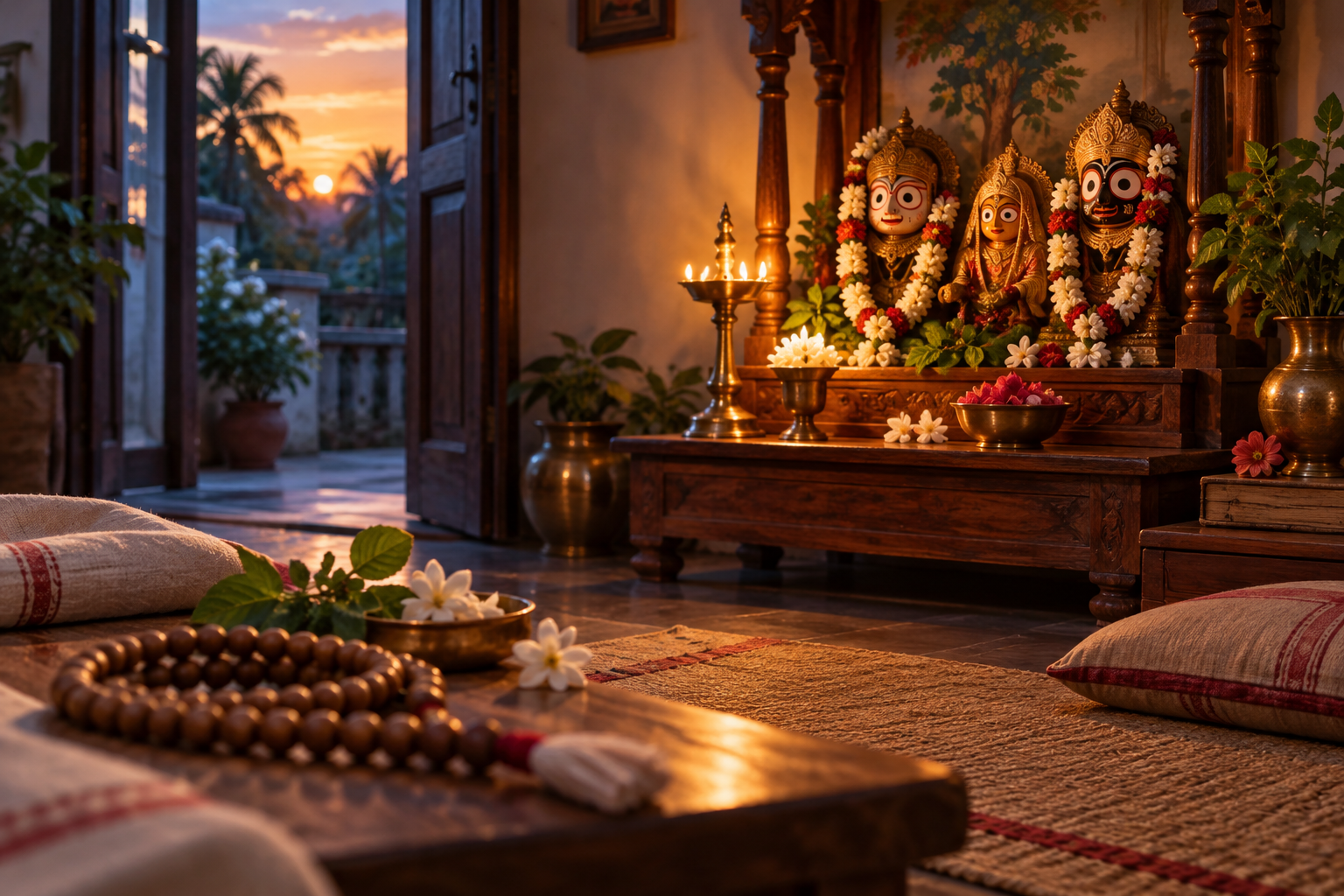
That understanding explains the care given to Jaya Tirtha Charan Dasa’s surroundings. His deities were before him. The holy names were audible. His family was present. Senior Vaishnavas offered chanting and blessings. These were not ornamental details added after the fact; they were the devotional environment in which he and his family had chosen to meet the end of bodily life.
It is still important not to turn a private bedside moment into a spectacle or a formula. No one can measure another person’s inner consciousness from the outside. What can be said is that his family saw sustained attention to Krishna, composure and an absence of visible struggle. Their confidence that he was returning to Godhead is a statement of faith grounded in what they witnessed.
A good tribute does not need to enlarge those facts. The dignity is already present in a devotee being surrounded by the names, forms and relationships that had given direction to his life.
How to offer respects without adding to the family’s burden
The most respectful response begins by following the distinction Jaya Tirtha Charan Dasa himself requested. The 12 October gathering was intended to be small and intimate. The memorial on 19 October was designated for the greater community. If you hope to attend, confirm the time and location through trusted local community channels before travelling; those details were not included in the public notice.
If you contact the family, keep the message easy to receive. State your condolence, identify yourself if necessary and make clear that no reply is expected. A short, specific memory of his service or character is more meaningful than a long generic message. Do not claim a closeness that was not there, and do not press the family for details of his final moments.
If you cannot be present, choose a simple devotional offering you can complete. Chant the maha-mantra attentively, hold a small kirtan with your family, offer a prayer before the deities or write down an authentic memory for those who knew him. Distance does not prevent remembrance, and public display is not the measure of sincerity.
The family also invited koha or donations. Before transferring money, use the banking information in the family’s full notice and verify it through a trusted community contact. Do not rely on a cropped screenshot or a copied account number circulating without context; one missing or altered digit can send funds to the wrong place.
The practical lesson in his family’s care

Jaya Tirtha Charan Dasa’s family did most of the demanding work required to keep him at home, twenty-four hours a day, after his independence had declined. Their service deserves recognition. It should not, however, be turned into a judgement against families who need professional, residential or palliative assistance. Care at home was their response to his circumstances, not a universal test of devotion.
The more transferable lesson is that spiritual wishes should be discussed before a crisis removes the opportunity. Ask the elders and seriously ill people in your family what names or prayers they would want to hear, which deities or sacred images should be near them, whom they would want contacted, and whether they prefer an intimate remembrance or a larger community gathering. Write the answers down and share them with the people likely to provide care.
Those preparations should accompany appropriate medical and practical care, not replace it. A recording of sacred chanting, a clean space for deities and a list of spiritual contacts can often be arranged alongside clinical support. The family then has fewer decisions to improvise at the hardest moment.
Jaya Tirtha Charan Dasa left his own instructions for the gatherings that would follow his death. You can honour that foresight now: respect the family’s boundaries, verify the memorial arrangements, and bring one sincere act of remembrance rather than many words. Then ask the necessary questions within your own family while there is still time to hear the answers.
References

Leave a Reply
You must be logged in to post a comment.