
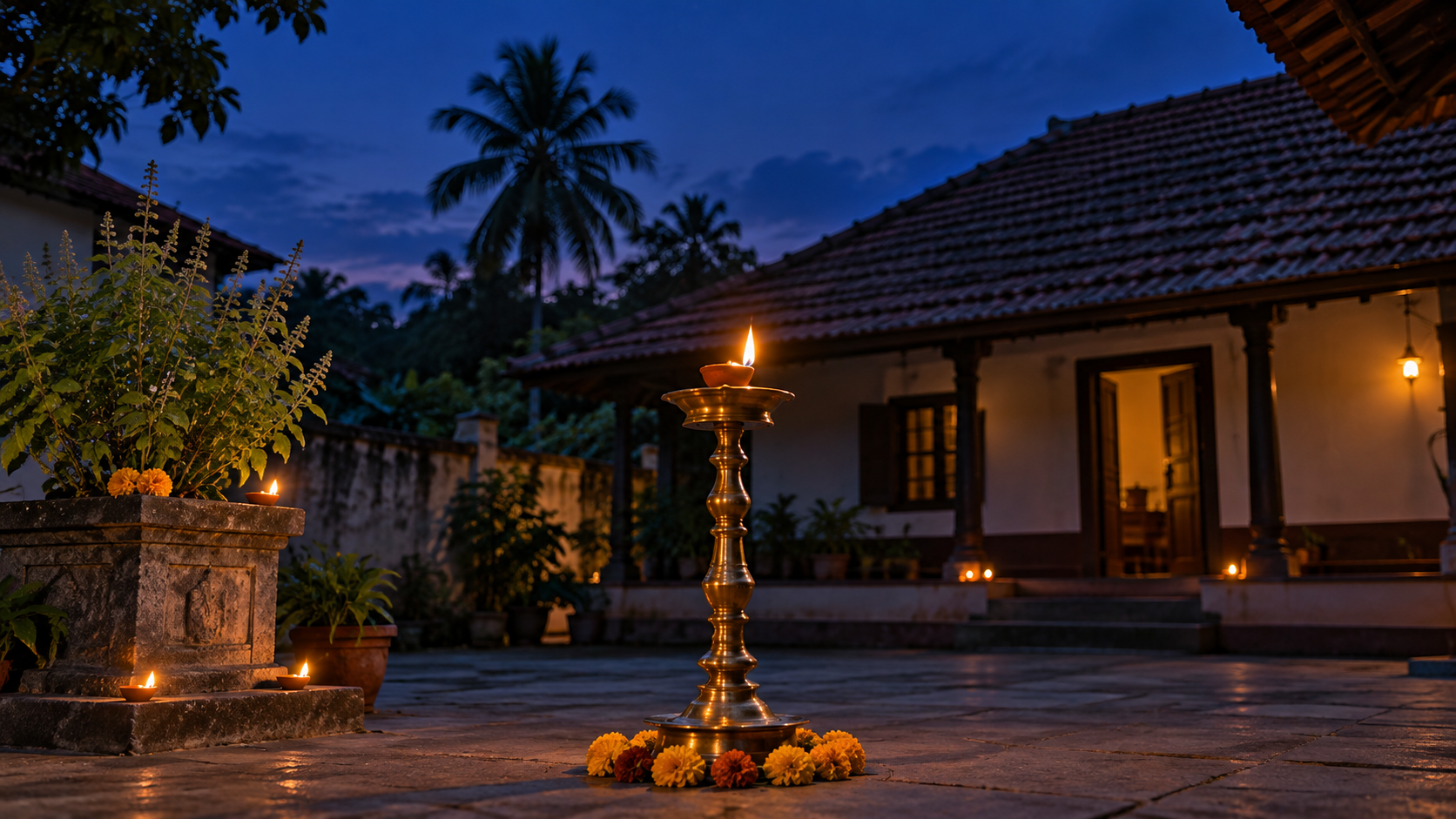
You want to observe Akasha Deepam during Karthika Masam, but the practical questions arrive quickly: Which dates apply to your family? Must the lamp be outside or high above the ground? What should you recite? And what can you do safely in an apartment?
The most dependable approach is to settle the calendar first, preserve the form received through your family or temple, and then choose a daily routine you can sustain. Akasha Deepam is a vrata, or disciplined observance. Consistency and reverence matter more than making the arrangement elaborate.
Set the dates according to the calendar you actually follow
For 2026, Akasha Deepa Vratham begins on November 10 and ends on December 8 under the Telugu, Kannada, Marathi and Gujarati calendars. Treat that as a calendar-specific date range, not as a universal instruction for every Hindu household.
Karthika observances can be reckoned differently across regions. If your family follows another regional calendar, or your temple has issued its own schedule, use that tradition consistently. Do not take the opening date from one calendar and the closing date from another simply because both appear online.
Before beginning, check these three points:
- Which panchanga or regional calendar does your household normally use for festivals and vratas?
- Does your family observe Akasha Deepam throughout the stated period, or does it follow a more specific inherited practice?
- Has the temple, priest, guru or elder who guides your household given a particular lighting time or procedure?
If you have no established family practice, take the 2026 dates appropriate to your calendar to a knowledgeable local temple. Ask one precise question: “What is the simplest accepted Akasha Deepam procedure in this sampradaya?” That will produce a more reliable answer than combining unrelated instructions from several traditions.
Understand what makes this lamp an Akasha Deepam
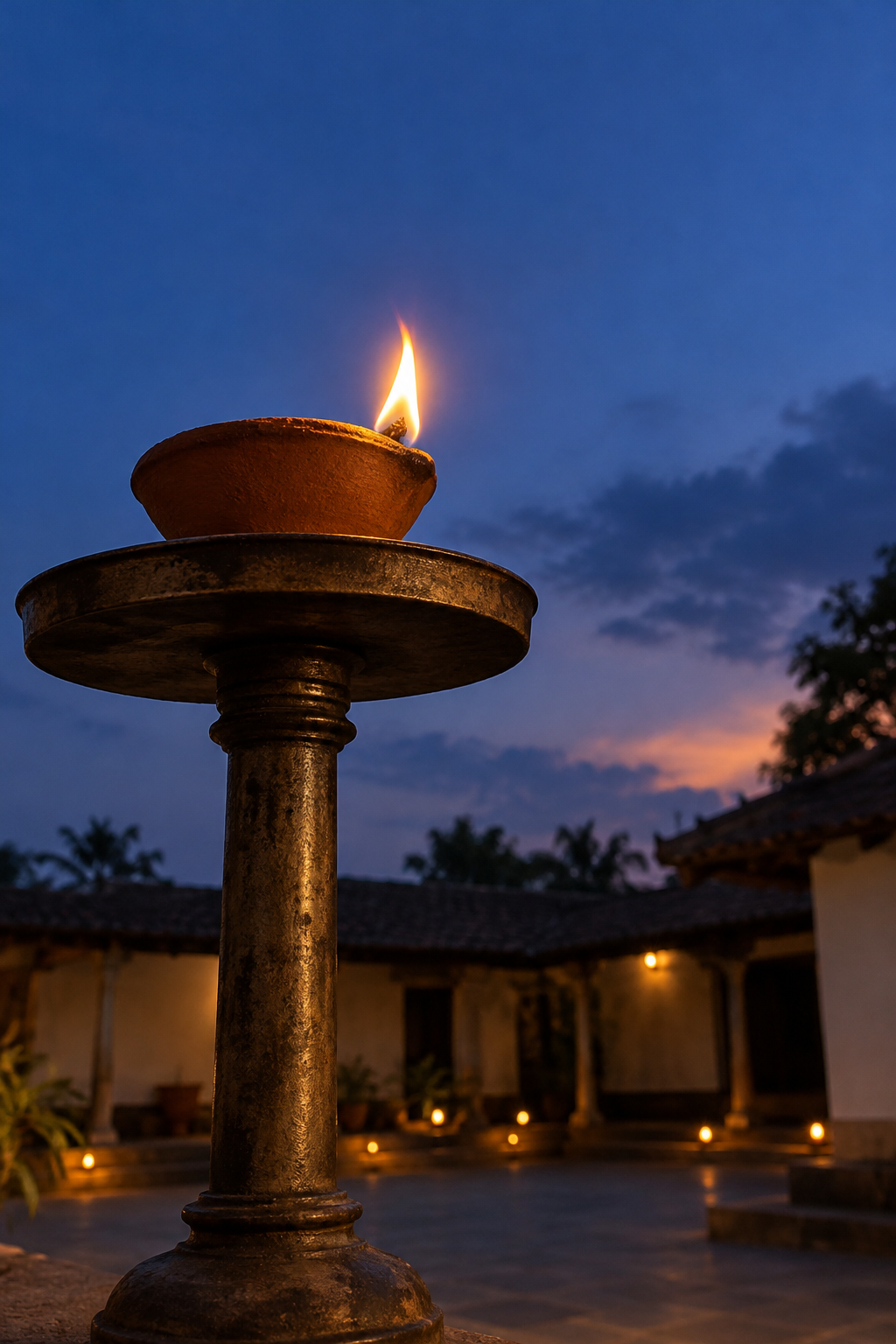
“Akasha” means sky or open space, while “deepam” means lamp. The name points to a lamp offered toward the open sky; household forms commonly express this through an outdoor, visible or elevated placement. The exact support, lamp, fuel, prayer and accompanying worship can differ by region and lineage.
The elevated setting should direct your attention upward, not tempt you into an unsafe display. A modest lamp in a secure place remains more faithful to the spirit of disciplined worship than a dramatic arrangement exposed to wind, cloth, dry leaves or an unstable support.
It also helps to distinguish the core observance from optional additions. The lamp and the repeated act of offering it during the prescribed period form the practical centre. A long puja, an unfamiliar mantra collection or expensive decoration should not be treated as compulsory unless your own tradition requires it.
Use a simple, repeatable home procedure
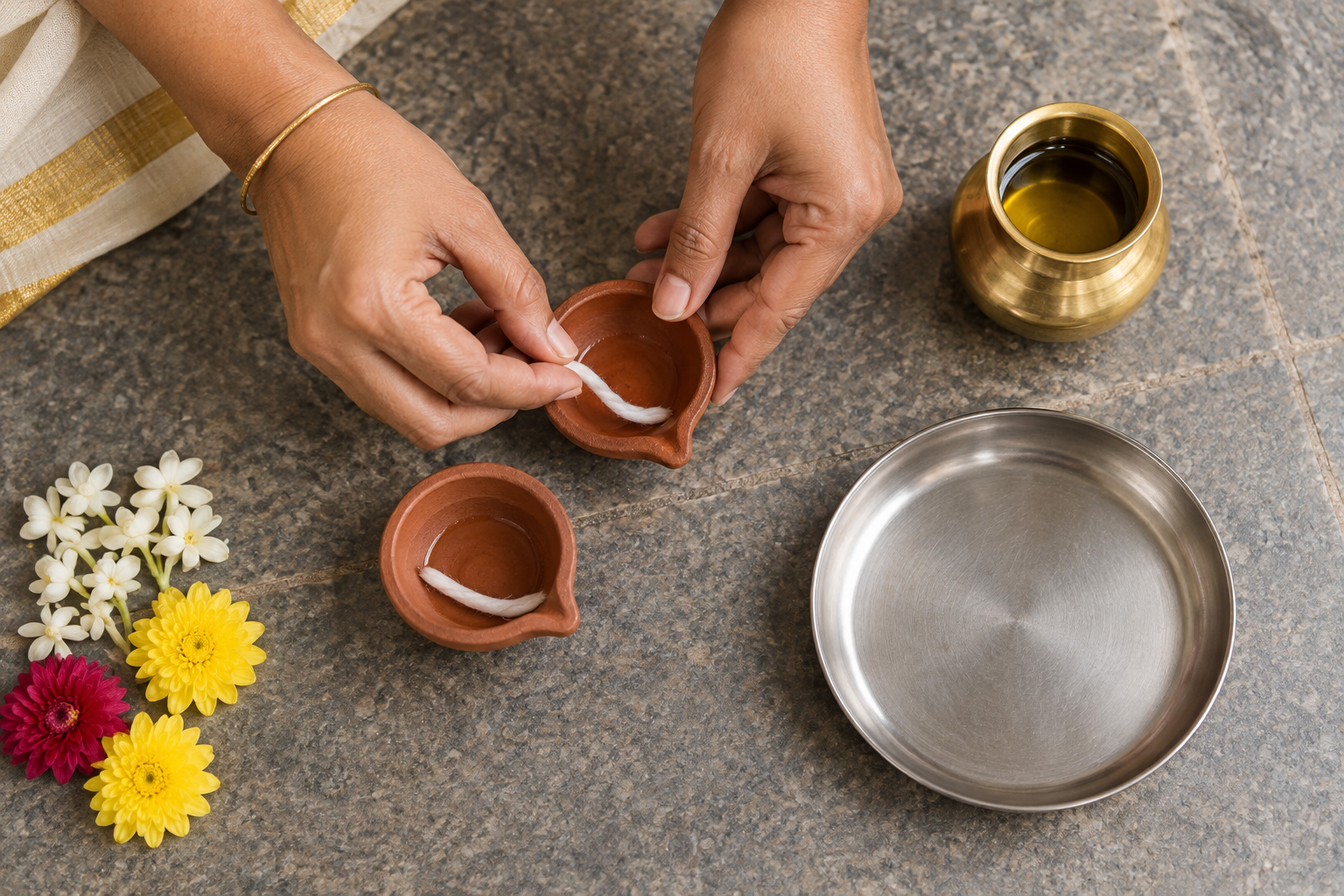
Where no more detailed family instruction has been given, use this conservative framework. It deliberately leaves lineage-specific choices with the people qualified to make them.
- Confirm the period. Mark the opening and closing dates from the panchanga your household follows. If you are using the cited 2026 Telugu, Kannada, Marathi or Gujarati reckoning, mark November 10 through December 8.
- Choose the location before the first day. Use a stable, non-combustible surface in a protected outdoor or semi-outdoor place where an open flame is permitted. An elevated lamp must be firmly secured and reachable without leaning over a railing or climbing while carrying fire.
- Keep the materials within your tradition. Use the type of lamp, wick and fuel customary in your home or temple. If you do not know what is accepted, ask rather than turning a preference from another sampradaya into a supposed universal rule.
- Prepare at a consistent time. Clean the place and ready the lamp before the lighting time observed by your family. Consistency prevents the vrata from becoming a hurried task at the end of each day.
- Make a clear offering. Light the lamp with attention and state your intention in the form your tradition uses. You may accompany it with the familiar prayer, stotra or nama-japa already practised in your home. There is no need to invent a Sanskrit formula if none has been taught to you.
- Remain present. Give the offering a period of undistracted attention rather than lighting the wick and immediately walking away. Let the time be quiet enough for prayer, remembrance and self-discipline.
- Manage the flame safely. Keep the lamp supervised and away from curtains, paper decorations, plants, wooden rails, children and animals. Wind can tilt a flame or carry burning material beyond the lamp, so use an appropriately protected arrangement and follow local fire rules.
- Repeat without unnecessary complication. Restore the place, prepare the lamp and make the offering on each applicable day. A small routine that you can maintain is better than an elaborate opening that cannot be continued.
Decide in advance who will prepare the lamp, who can take responsibility when the usual person is unavailable, and where the supplies will remain. That small amount of planning protects continuity without reducing the observance to a mechanical chore.
Adapt carefully when home conditions or schedules interfere
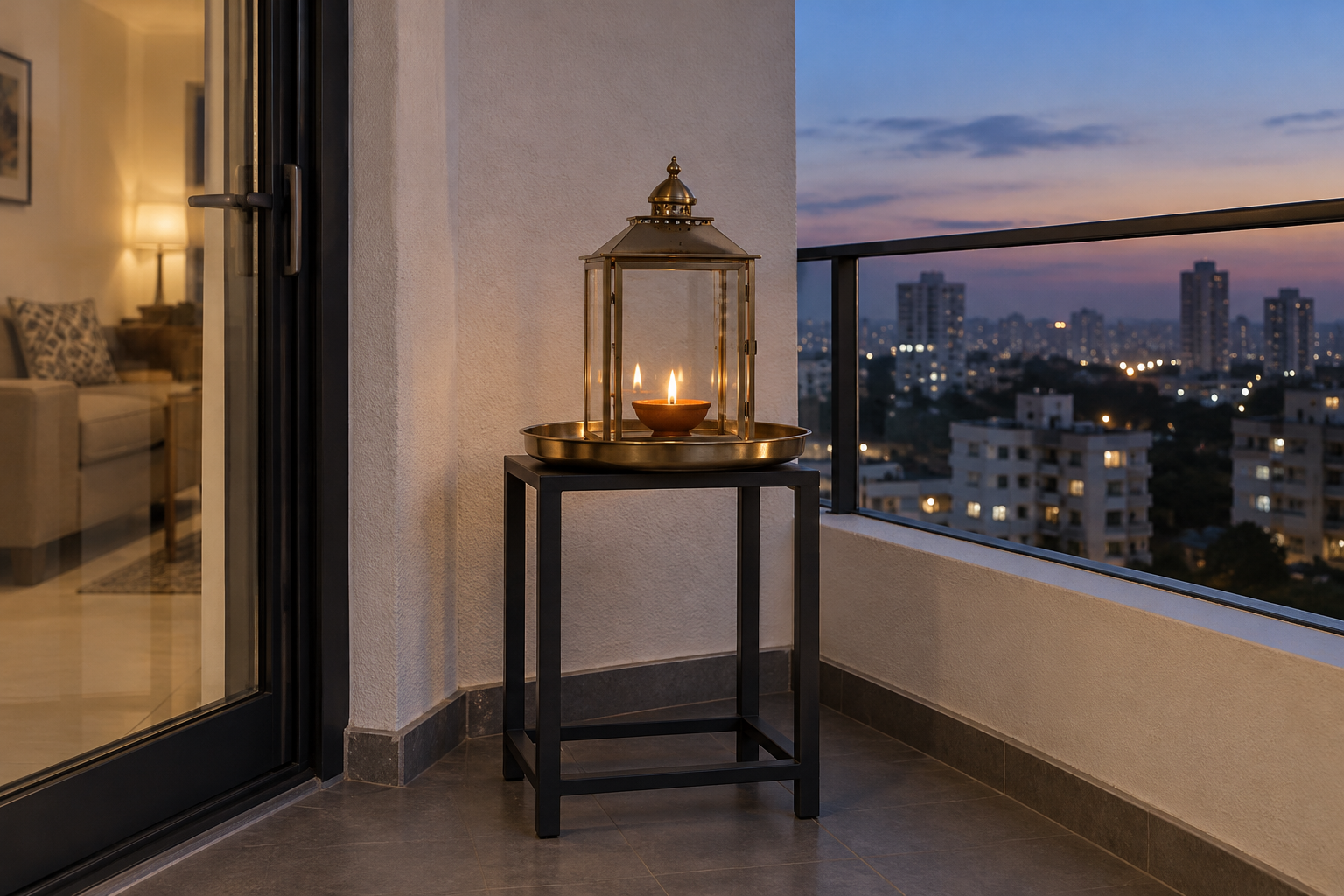
An apartment balcony is not automatically a safe place for an oil lamp. Check building rules, wind exposure, overhead materials and the stability of the ledge or stand. Never balance a lamp on a railing, suspend it from an improvised combustible cord, or leave it burning while you sleep or leave the home.
If an open flame is prohibited, do not secretly violate the rule in the name of observance. Ask your temple how Akasha Deepam is adapted in such homes. A securely placed lamp in an approved worship area may be the safest available form, but whether an indoor or electric alternative fulfils a particular vrata is a religious question for your tradition, not a conclusion to make from convenience alone.
If travel will interrupt the period, seek guidance before departure. You may be able to arrange the observance through another responsible household member or follow a permitted alternative, but those choices depend on how the vrata was undertaken. Planning beforehand is better than improvising after the interruption.
If you miss a day, do not invent a punishment, frightening consequence or costly remedy. Resume the practice at the next opportunity. If you made a formal sankalpa with specific conditions, ask the priest, guru or elder who guided it whether any customary corrective step applies.
You may also find that two sincere households follow different procedures. That does not by itself make either one careless. Compare each practice with its own calendar, region and sampradaya instead of forcing every Akasha Deepam observance into a single template.
Key takeaways
- Under the Telugu, Kannada, Marathi and Gujarati calendars, the cited 2026 observance runs from November 10 through December 8.
- Your household panchanga and inherited sampradaya should settle conflicts about dates, materials, prayers and procedure.
- The defining image is a lamp offered toward the open sky, often through a visible or elevated placement, but elevation must never come at the expense of fire safety.
- A repeatable daily discipline is more appropriate than adding unfamiliar requirements that you cannot sustain.
- If flame restrictions, travel or a missed day affects the vrata, ask for tradition-specific guidance instead of inventing either an exemption or a penalty.
Your next step is simple: mark the correct dates, confirm the customary procedure with one trusted family or temple authority, and prepare a secure place for the lamp before the observance begins. Once those decisions are made, you can give Karthika Masam what the vrata asks of you most directly: steady attention, day after day.
References

Leave a Reply
You must be logged in to post a comment.