
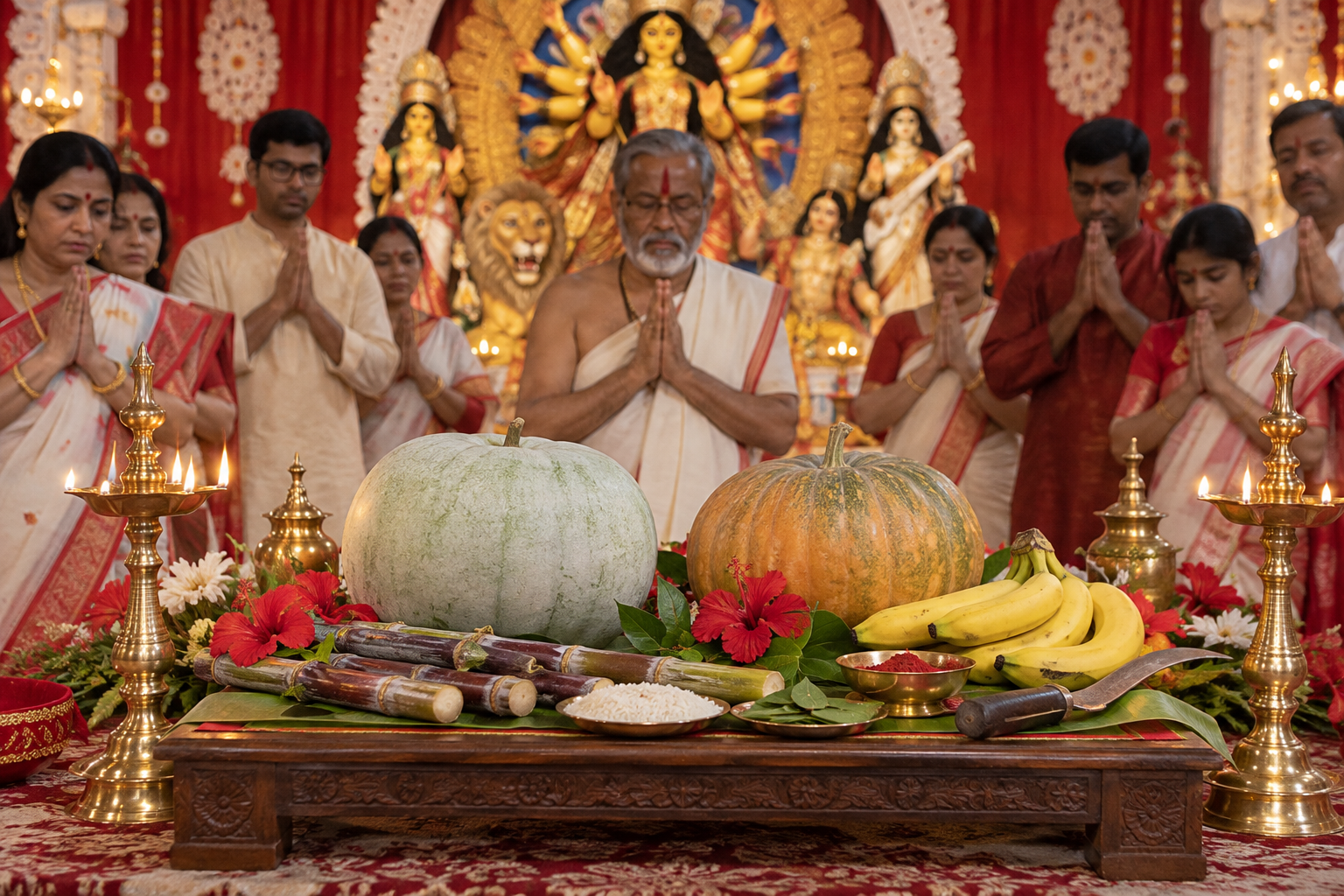
If your family, temple, or puja committee wants to end animal sacrifice, the difficult question is usually not whether a vegetarian offering can be arranged. It is whether the change can be made without treating Durga Puja as an embarrassment, dismissing inherited practice, or breaking the ritual at its most sensitive point.
It can. The soundest reform is precise: retain the sacred occasion, devotional intention, ritual authority, and solemnity of bali while replacing the animal with an accepted vegetarian offering. That gives you a clear ethical boundary without pretending that the older custom never existed.
The reform concerns the offering, not the Goddess
A credible reform begins by acknowledging what is being changed. On the ninth day of Durga Puja, Maha Navami, bali historically held a central place and could involve goats, fish, or buffaloes. Animal sacrifice was therefore not always a marginal custom that can honestly be edited out of the story.
That history does not compel every present-day community to continue the practice. It does mean that reformers should avoid the easy but inaccurate claim that animal bali was never part of Durga worship. A tradition earns trust when it can remember its past and still exercise moral judgement in the present.
The practical distinction is between the purpose of the rite and the material placed within it. Durga remains the object of worship. Maha Navami retains its importance. The community still makes an offering with reverence. What changes is the decision to take an animal’s life. Vegetarian reform is strongest when that boundary is stated plainly.
Preserve the ritual structure so the change does not feel hollow
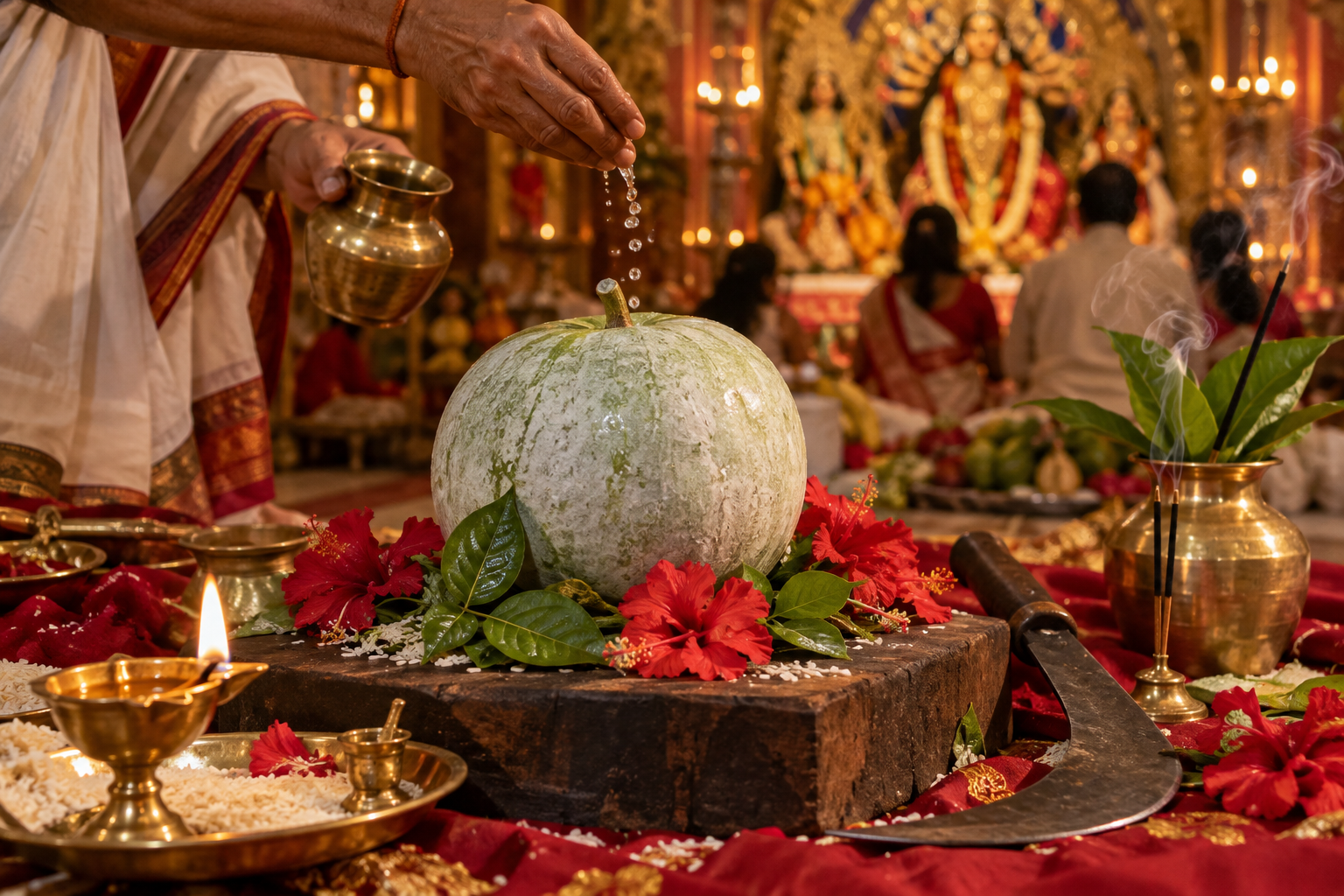
Simply removing the sacrifice can leave a conspicuous gap. People who valued the older rite may then experience the new arrangement as subtraction rather than reform. The answer is not theatrical imitation. It is to identify the functions the bali performed and preserve as many of them as the local tradition permits.
- Keep the occasion: If the bali belonged to Maha Navami, place the vegetarian offering at the corresponding point rather than moving it to an inconspicuous time.
- Keep ritual authority: Ask the officiating priest to determine the appropriate mantra, gesture, sequence, and handling of the offering. A committee vote can establish policy, but it should not improvise liturgy.
- Keep solemnity: Do not present the substitute as a prop or a public-relations device. Prepare and offer it with the same concentration expected elsewhere in the puja.
- Keep a recognisable act of offering: Select a flower, fruit, vegetable, grain, or other plant-based item that the priest and worshipping community regard as ritually suitable.
- Keep the meaning visible: Tell devotees that bali has not been casually forgotten. Its form has been changed so that worship proceeds without animal killing.
This approach avoids two extremes. One extreme retains the name of the rite while emptying it of significance. The other assumes that continuity requires preserving every inherited material practice. Living tradition is neither amnesia nor paralysis. It carries meaning through change.
A practical process for making the change
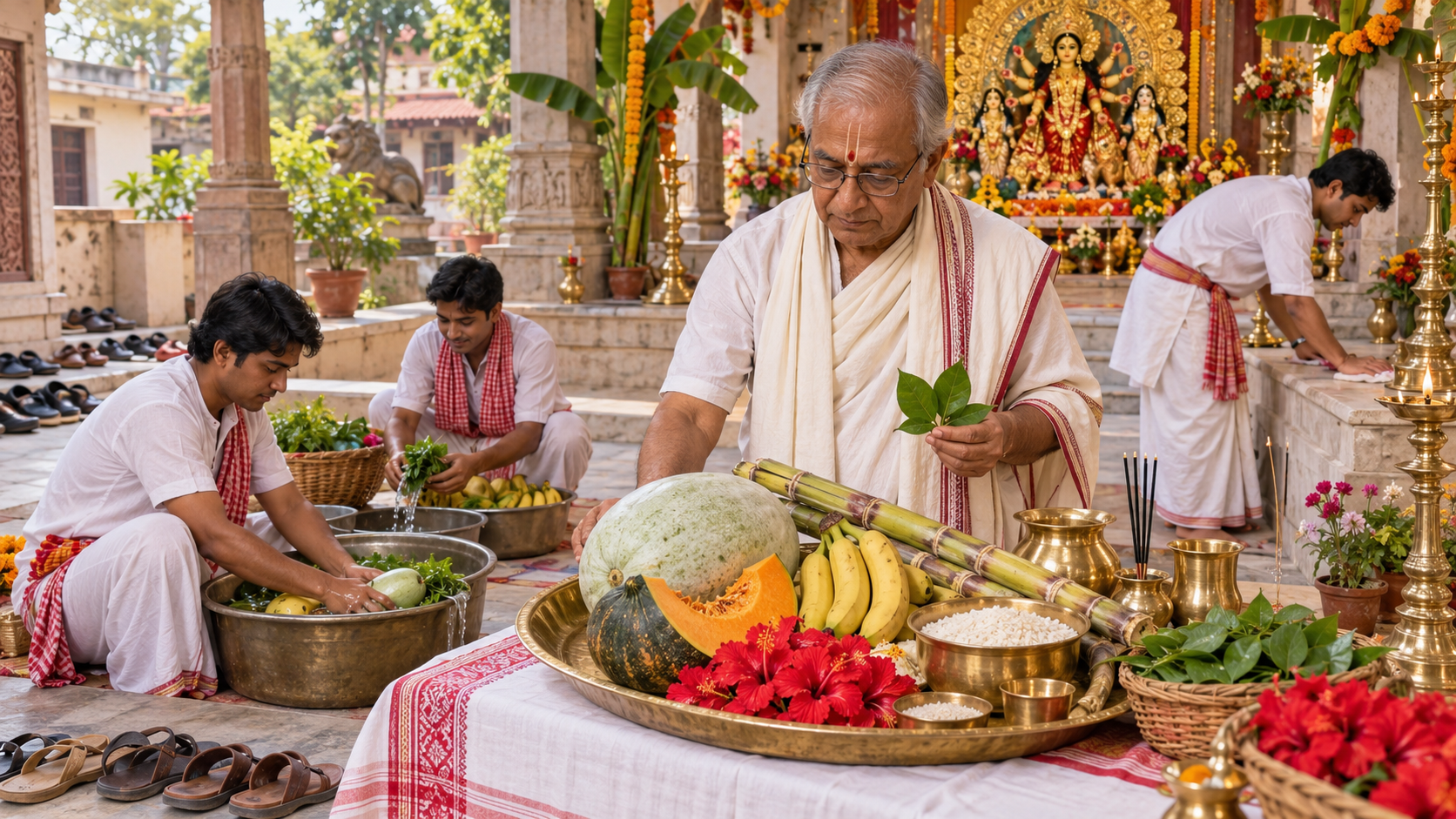
Do the work before the festival begins. A dispute at the altar is the worst possible way to settle a question involving devotion, family memory, priestly responsibility, and the treatment of animals.
- Record the existing rite accurately. Write down when the bali occurs, who performs it, which prayers or gestures accompany it, what is offered, and what happens afterward. If practices differ between family memory and current observance, record both instead of forcing an artificial agreement.
- Identify who can authorise the change. In a household puja, that may involve the family and its priest. In a public puja, it may involve the priest, trustees, organisers, donors, and representatives of the worshipping community. Establish the decision process before debating particular substitutes.
- State the non-negotiable boundary. Use an unambiguous sentence: no animal will be killed or presented for sacrifice in this puja. Clarity prevents a symbolic reform from quietly reverting when leadership changes.
- Select the vegetarian offering with ritual guidance. Do not choose an object merely because it resembles an animal or photographs well. Ask whether it is plant-based, locally obtainable, suitable for the rite, acceptable to the officiant, and capable of being handled respectfully after the offering.
- Place the substitute within the full sequence. Decide who brings it, where it is placed, what is recited, what action is performed, and how the offered material is subsequently distributed or disposed of. A replacement becomes credible when these details are settled.
- Explain the decision before Maha Navami. Give devotees the wording, ritual plan, and reason for the change in advance. Surprise encourages rumour and turns worship into a confrontation.
- Write the decision into the puja record. Preserve the resolution, the chosen form of offering, and the priestly instructions. Future organisers should inherit a settled practice rather than reopen the conflict every year.
A committee can adapt this sample announcement: “At this Durga Puja, the Maha Navami bali will be observed through a vegetarian offering approved for our ritual tradition. The sacred occasion and devotional purpose remain, while no animal will be killed.” Add the name of the authorised body and the practical details that devotees need.
Handle disagreement without insulting either conscience or ancestry
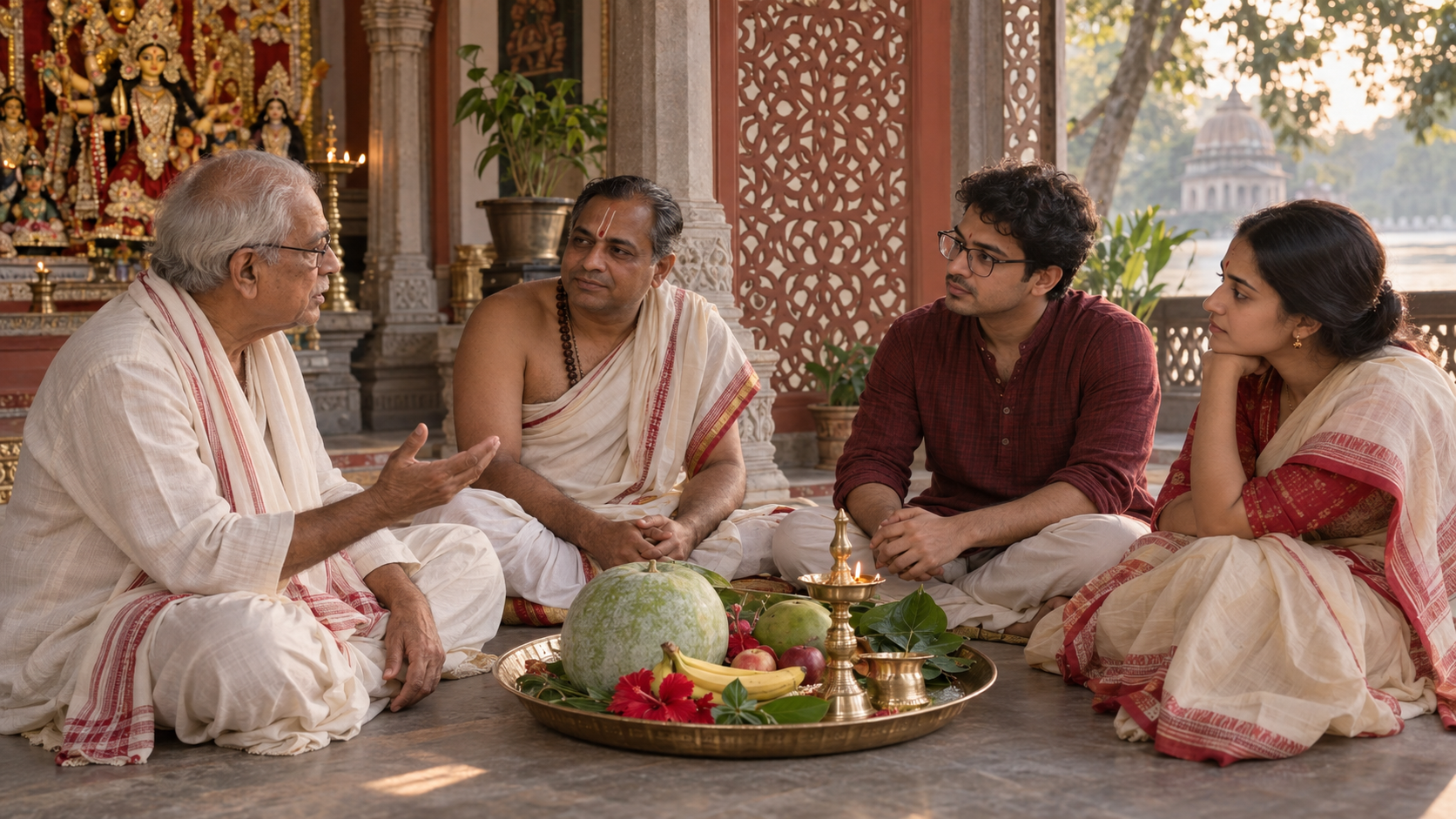
Arguments about sacrifice often become unproductive because three different questions are treated as one.
- The historical question: What did this family, temple, or region actually practise?
- The religious question: Which forms of bali does the community’s ritual authority consider valid?
- The governance question: What will this particular puja permit from now on?
Answer them separately. Historical recognition does not equal present-day endorsement. A theological possibility does not automatically become a compulsory local practice. A committee’s decision for one puja does not establish a universal rule for every Shakta community.
Traditional devotees deserve an honest account of what will remain: Maha Navami, the act of offering, priestly guidance, and reverence for Durga. Devotees seeking reform deserve an equally honest account of what will end: the killing of an animal. Neither group should be asked to accept vague language that conceals the actual decision.
Avoid describing ancestors as cruel or ignorant. They worshipped within the ritual world they inherited. Reform does not require contempt for them. It requires responsibility for the practice you choose to transmit. By the same measure, nobody should accuse present-day devotees of abandoning Dharma merely because they seek a vegetarian expression of bali.
Also avoid claiming that vegetarian reform is the only authentic Hindu position everywhere. Hindu traditions contain different ritual inheritances. Your case will be stronger when it rests on a clear local decision, compassion toward living beings, and a ritually coherent alternative—not on rewriting a diverse tradition into a single slogan.
Key takeaways
- Be truthful that animal bali has formed part of Bengali Durga worship; reform does not need historical denial.
- Define the change narrowly and clearly: preserve worship and offering while ending animal killing.
- Let the priest determine ritual form and the legitimate governing body establish community policy.
- Choose a plant-based offering for ritual suitability, not spectacle, convenience, or visual resemblance alone.
- Communicate the decision before Maha Navami and preserve it in writing for future organisers.
Before the next Durga Puja, put the Maha Navami sequence on one page and mark exactly what remains, what changes, and who has authorised it. Once those three matters are clear, vegetarian reform can become a stable act of worship rather than an annual argument.
References

Leave a Reply
You must be logged in to post a comment.