
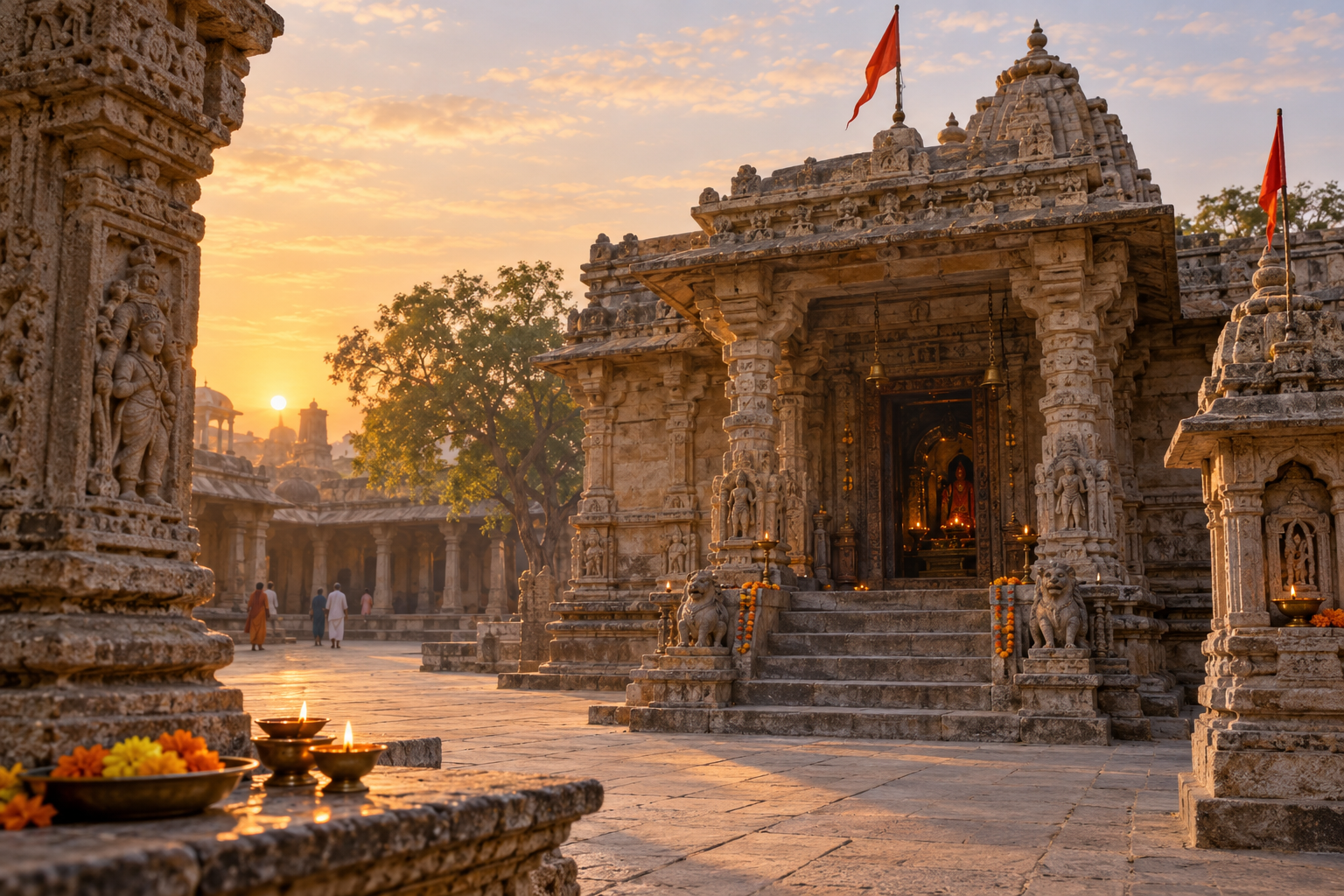
If you are trying to understand whether Patan’s Kalika Temple is simply a local place of worship or a shrine of wider historical importance, begin with the claim that can be stated securely: its history extends back more than a millennium, and its origins are associated with the Solanki age.
You will understand the temple better if you hold its two identities together. It is a living place of devotion to Goddess Kalika, and it is part of the historical memory of Anhilpur Patan. Neither identity should be reduced to the other.
The historical claim worth remembering
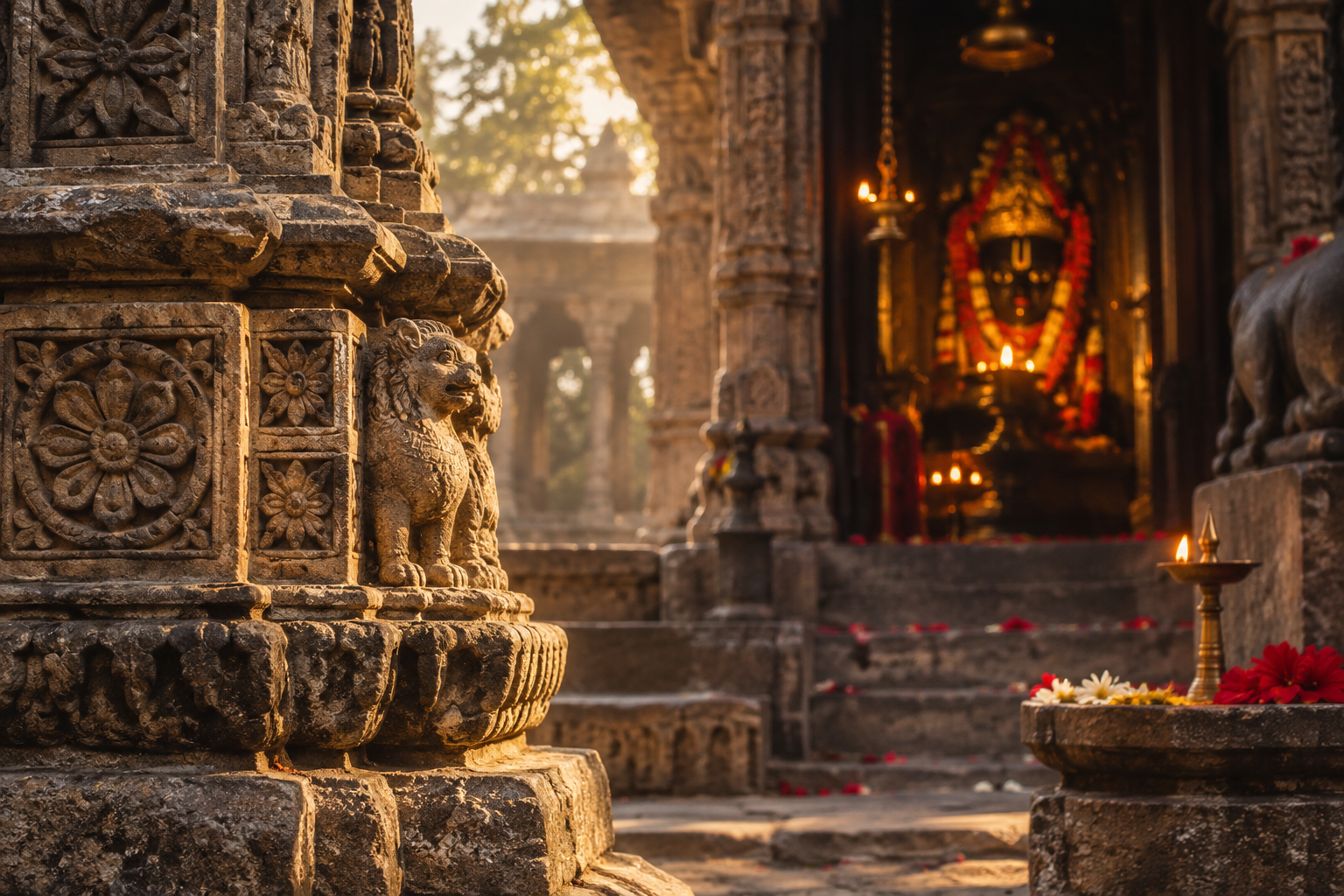
The Kalika Temple has a recorded history of more than 1,000 years. Its beginnings are traced to the reign of Siddharaj Jaisinh, the celebrated Solanki ruler of Patan who reigned from 1094 to 1143.
Those dates matter. They place the temple’s remembered origins across the end of the 11th century and the first half of the 12th, when Anhilpur Patan possessed considerable royal prestige. The shrine therefore belongs to the historical landscape of a major Gurjar-Solanki centre, not merely to the later history of the modern city.
Precision is important here. Saying that the temple’s origins are traced to Siddharaj Jaisinh’s reign does not, by itself, prove that he personally commissioned every part of it. Nor does the antiquity of a sacred site establish that every wall, image or architectural feature now visible is equally old. When discussing the temple, distinguish the age of the sacred tradition from the date of any particular structure unless an inscription or reliable record settles the matter.
Why the Kalika shrine belongs in Patan’s larger story
Patan’s past is often approached through rulers, dynasties and monuments. The Kalika Temple adds another layer: the religious life that gave a historic city continuity beyond the careers of individual kings. A royal reign has a beginning and an end. A shrine can remain meaningful through repeated acts of darshan, worship and remembrance long after the political order around it has changed.
Kalika is Goddess Kali, understood in the Shakta tradition as a manifestation of divine power, or Shakti. Her worship directs attention to the force that confronts fear, disorder and adharma. That theological meaning helps explain why an old Kalika shrine should not be treated only as an archaeological curiosity. For a devotee, its importance lies in the presence of the Devi and the practice of worship; its age deepens that encounter but does not replace it.
This distinction changes what you notice. Do not look only for spectacular masonry or a photographable facade. Pay attention to how devotees approach the sanctum, where offerings are placed, which local names are used for the Devi, and how the shrine is situated within Patan’s sacred geography. These observations tell you how historical inheritance remains active rather than merely preserved.
How to separate history, tradition and assumption
Old temples commonly accumulate several kinds of memory. A dynastic association, a local oral account and the date of the present building may all be meaningful, but they are not automatically the same claim. Use the following method when you encounter a plaque, a retelling or a social-media description of the Kalika Temple:
- Keep the secure chronological anchor. The defensible starting point is the association of the temple’s origins with Siddharaj Jaisinh’s reign, 1094-1143.
- Preserve traditional accounts as traditions. A story can carry devotional and cultural truth without functioning as a dated construction record. Introduce it as a locally remembered account when documentary support is not identified.
- Separate the site from its surviving fabric. A place of worship may be ancient even when parts of its physical structure have been repaired, replaced or enlarged. Do not assign a millennium-old date to a visible feature merely because it stands within a millennium-old sacred site.
- Record exact wording. If you are researching the temple, photograph or transcribe any permitted plaque or inscription exactly. Names, titles and dates are more useful than a paraphrase made from memory.
- Do not turn association into patronage. A shrine traced to a ruler’s period is not necessarily a shrine demonstrably built by that ruler. Look for explicit evidence before making the stronger claim.
This approach does not weaken the temple’s importance. It protects that importance from claims that cannot be defended and leaves room for both disciplined history and living sacred memory.
A respectful way to approach your visit
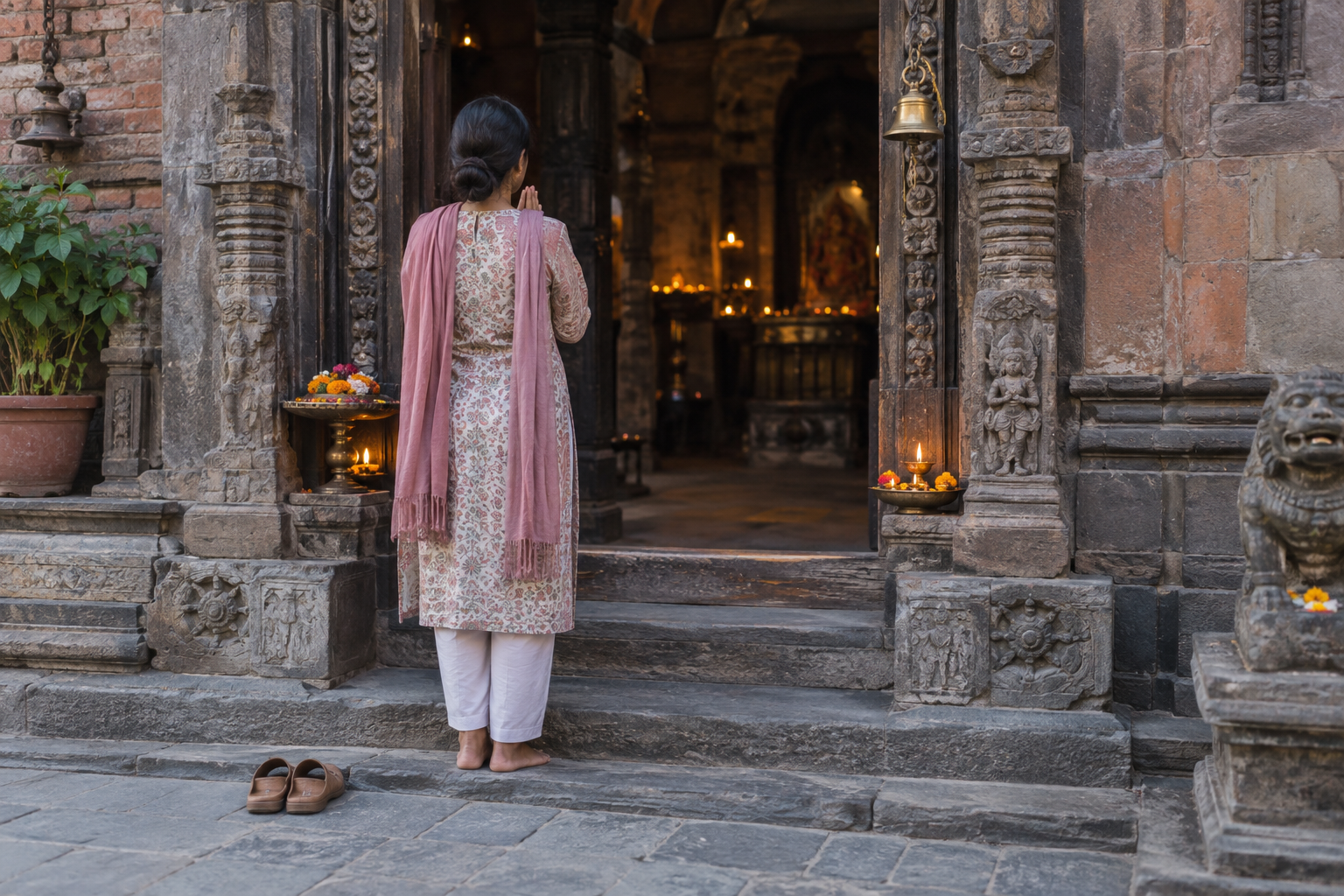
The temple is first a place of worship. If you visit because of its history, enter in a way that does not make devotees part of a spectacle. Practical information such as opening hours, festival arrangements and photography rules can change, so confirm those details locally rather than relying on an undated online description.
- Pause before entering. Observe where footwear is left, how the queue moves and whether any instructions are displayed.
- Ask before taking photographs. Permission at the entrance does not necessarily mean photography is allowed near the sanctum or during worship.
- Follow the local sequence. Let regular devotees and temple attendants show you where to stand, offer and receive prasad. Do not obstruct darshan while examining architectural details.
- Use the temple’s own terminology. Note whether the deity is locally addressed as Kalika, Kali or by another form of name. Do not replace a living local usage with a label chosen for convenience.
- Ask one precise historical question. If an informed attendant is available, ask whether the Siddharaj Jaisinh association rests on an inscription, an established temple tradition or another record. The answer helps you classify the claim without dismissing it.
- Continue into historical Patan. Carry the temple’s Solanki-era association into your reading of the city. It will help you see Patan as a religious and cultural landscape rather than as a disconnected collection of old sites.
Key takeaways
- Patan’s Kalika Temple has a history extending beyond 1,000 years and is regarded as an important shrine of Goddess Kali.
- Its origins are traced to the reign of the Solanki ruler Siddharaj Jaisinh, from 1094 to 1143.
- The dynastic association places the shrine within the high historical prestige of Anhilpur Patan, but it does not by itself prove that the ruler personally built every part of the temple.
- The age of a sacred site and the age of its present architectural fabric are separate questions.
- A worthwhile visit gives priority to darshan and local practice while recording historical claims with exact language.
When you approach the Kalika Temple, carry one firm date range, one careful distinction and an open attention to worship. That is enough to recognise the shrine as both a Solanki-era inheritance and a living seat of Shakti without asking history to prove more than the surviving claim allows.
References

Leave a Reply
You must be logged in to post a comment.