
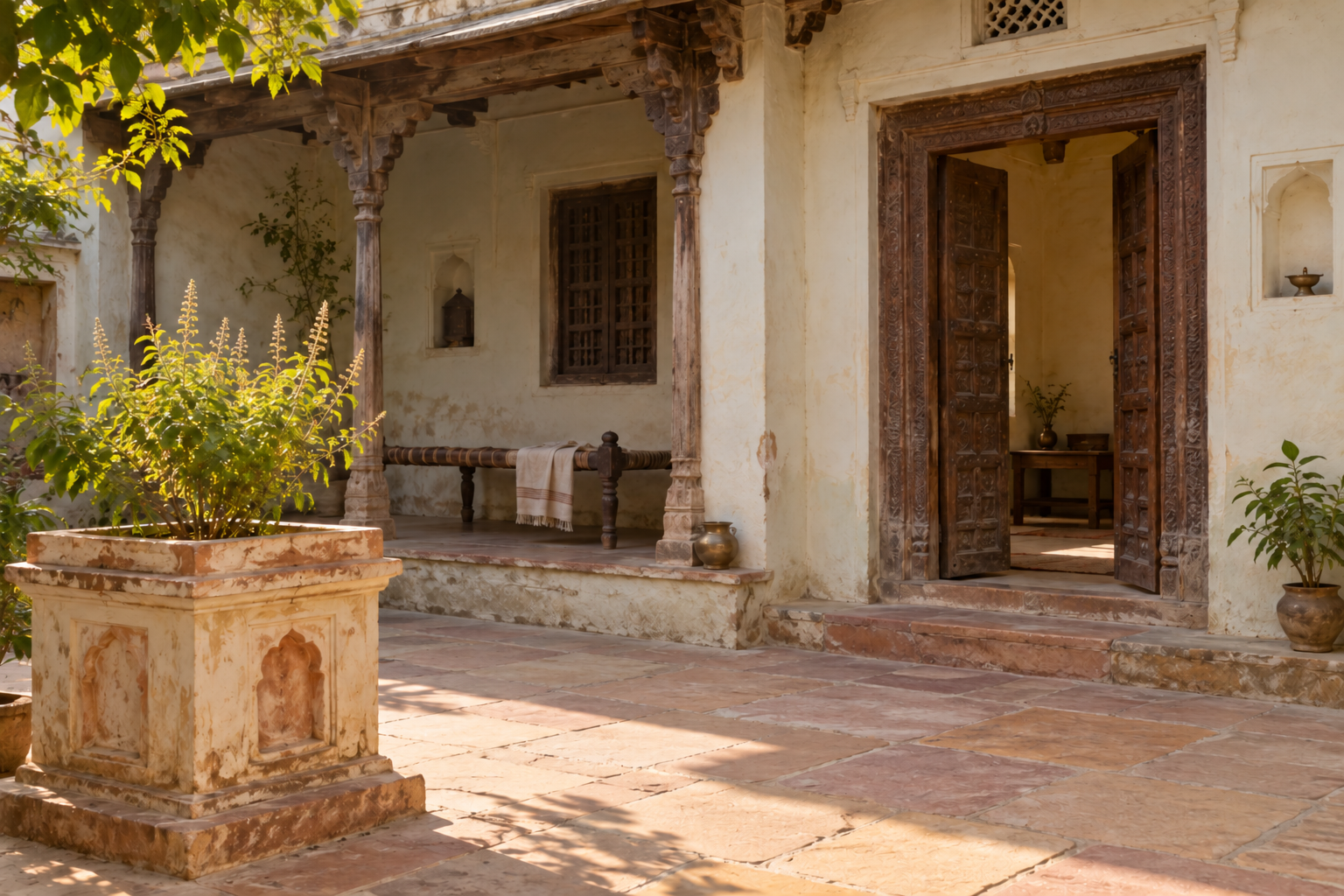
If you are planning to visit Srila Prabhupada’s house in Vrindavan—or can presently encounter it only online—the challenge is the same: you may see a meaningful room yet leave without knowing what you actually noticed.
The answer is neither detached inspection nor uncritical sentiment. Bring devotional attention, but keep observation separate from assumption. That approach will help you receive the house as a place of sacred memory without making claims that its walls and objects cannot prove.
Let the house answer a house-sized question
A historic house can communicate scale, arrangement, proximity and atmosphere. It may help you imagine how daily activity occupied physical space. It cannot, by appearance alone, establish when every object arrived, who used it or whether the present arrangement reproduces an earlier one.
Before looking inside, decide what you are seeking. Your question determines what deserves your attention:
- For a devotional encounter: notice what draws your mind toward remembrance, gratitude or service rather than toward possession and spectacle.
- For historical understanding: distinguish the building, the displayed objects and the explanations attached to them. Each carries a different kind of evidence.
- For personal practice: ask what the domestic setting changes in your understanding of a spiritual teacher’s life. A teaching spoken from a seat, worked on at a desk or carried through an ordinary room still had to be lived in ordinary time.
For many Vaishnavas, Vrindavan is sacred dham, not merely the backdrop to a biography. That makes reverence appropriate. It does not make careful questions irreverent. Respect becomes stronger when you refuse to decorate sacred memory with unsupported stories.
Notice first and interpret second
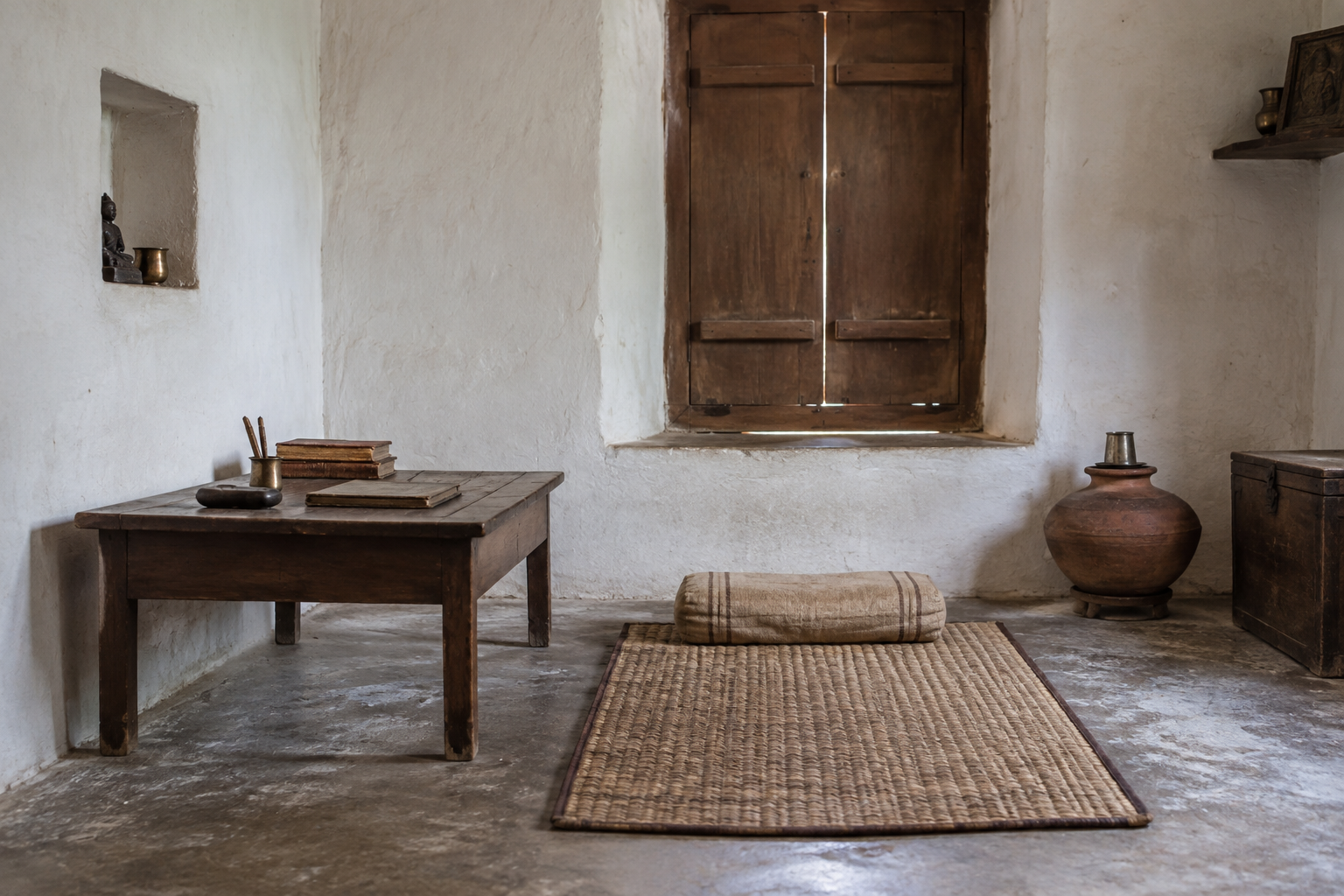
You can begin with a glimpse inside Srila Prabhupada’s Vrindavan house. On the first viewing, resist the urge to pause and identify everything. Take in the room as a whole. On a later viewing, look more deliberately.
- Observe the built space. Look at doors, windows, thresholds, floor level, sightlines and the relation between one visible area and another. These features belong to the experience of the place even when individual objects have been moved.
- Observe the arrangement. Notice where attention is directed and which areas appear open, protected or set apart. Treat that arrangement as the room’s present presentation unless its history is explicitly explained.
- Read every label literally. A label may identify an object, describe an association or make a claim about use. Those are not equivalent statements. Do not enlarge a modest description into a more dramatic one.
- Record uncertainty. If you cannot identify something, write down the question instead of supplying an answer from resemblance or expectation.
A reliable caption begins with what can be seen: “This object is displayed in the room.” A stronger claim—“Srila Prabhupada personally used this object”—requires an explanation from a responsible custodian or other provenance. That small discipline matters especially when sharing photographs, because an uncertain caption can quickly become somebody else’s “fact.”
Hold devotion and historical care together
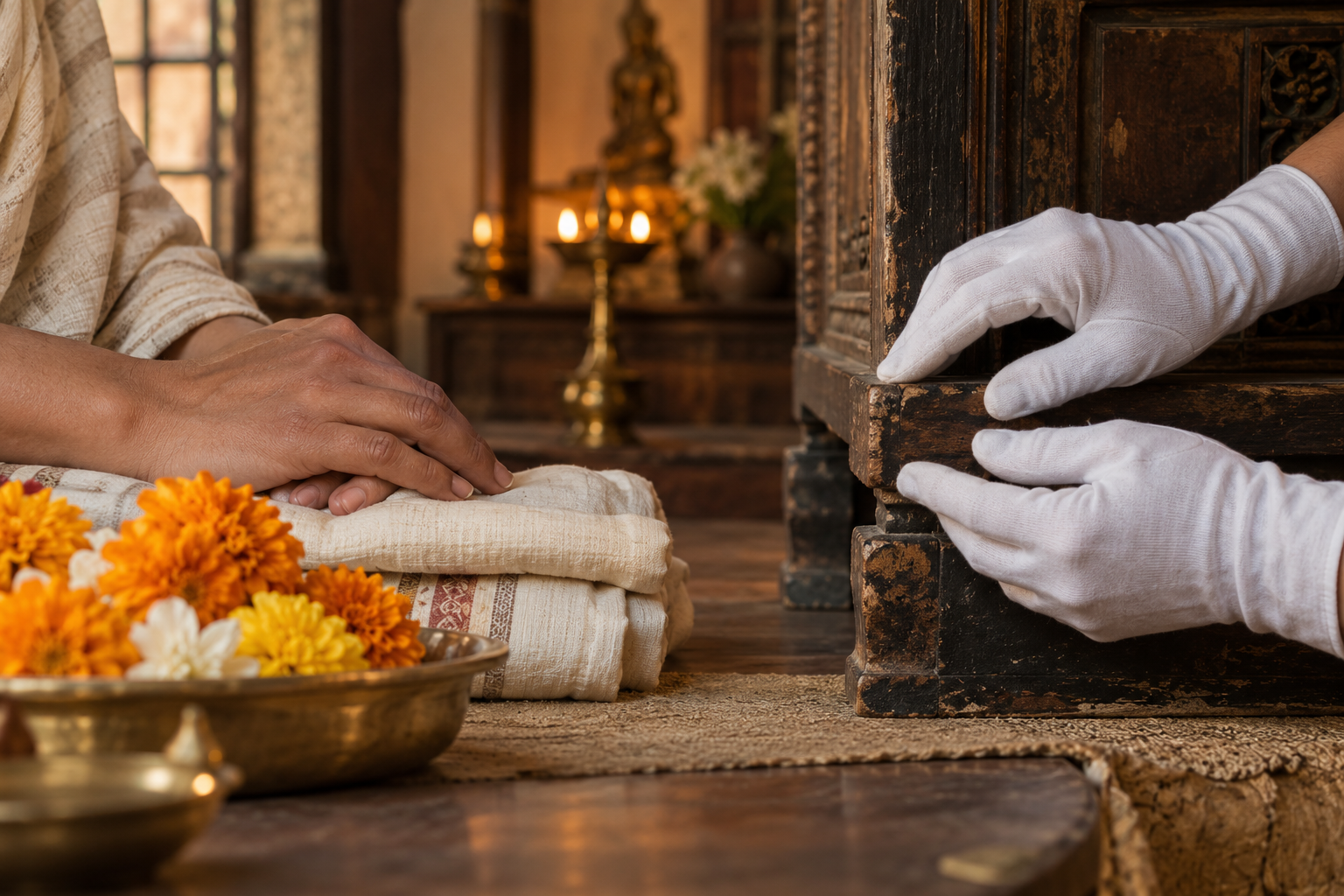
A sacred place does not have to choose between being spiritually meaningful and historically intelligible. You can bow before entering and still ask whether a display is original, reconstructed or commemorative. Those questions address different dimensions of the same encounter.
It helps to keep three statements distinct in your notes:
- Observed: what you directly saw in the room or footage.
- Explained: what a label or custodian identified for you.
- Inferred: what you concluded from context, appearance or prior knowledge.
There is nothing wrong with inference when you name it as inference. The trouble begins when an evocative possibility is repeated as established history. If you later write or speak about the house, preserve those distinctions for your audience.
Do the same with your emotional response. A room may evoke intimacy, austerity, continuity or absence in you. Describe that honestly as your response rather than turning it into a factual claim about the room’s past. Devotional reflection does not become weaker when its boundary is clear.
Prepare for access, etiquette and unanswered questions
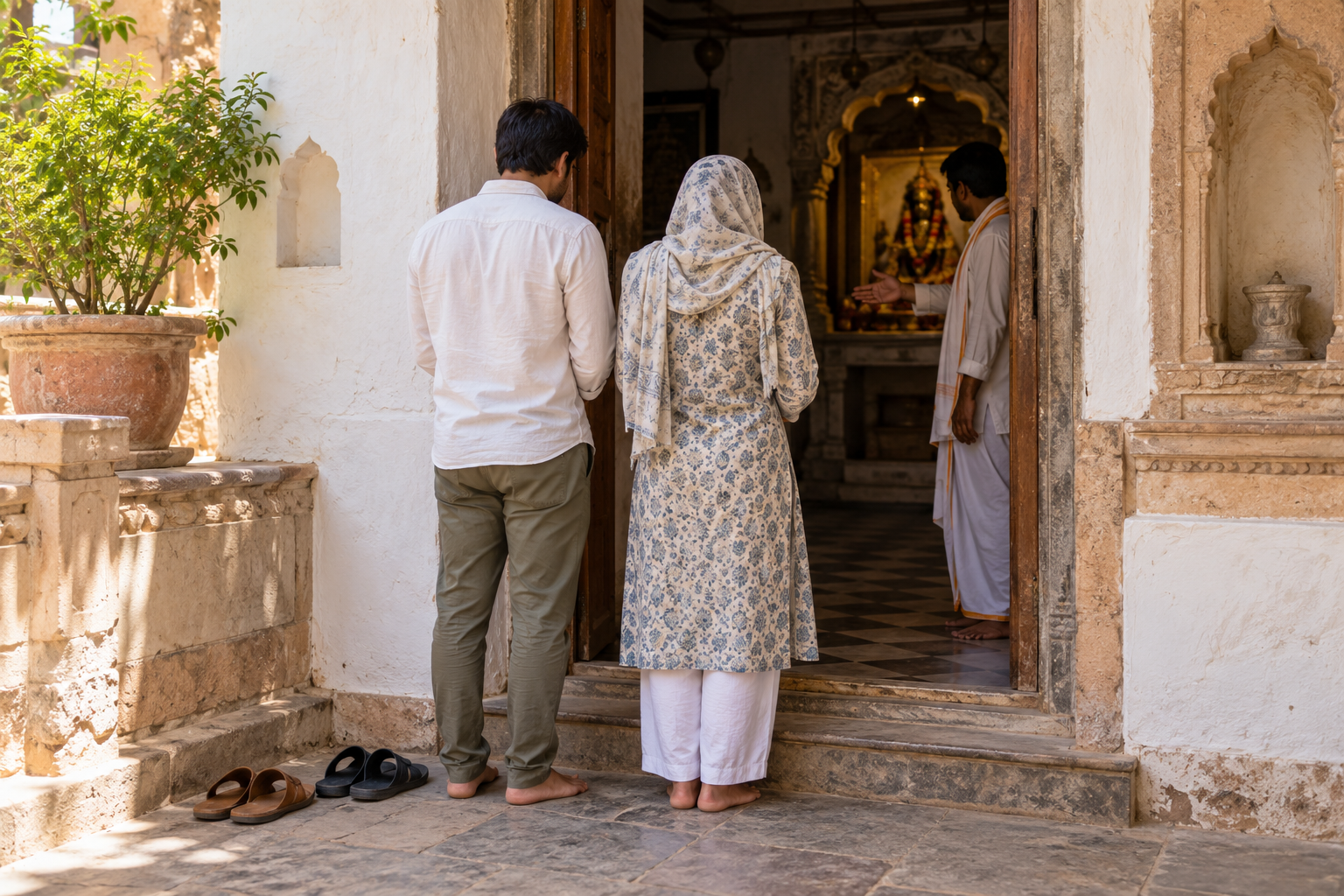
A video can help you prepare, but it should not be treated as a promise of present access. Visiting arrangements, photography rules and movement through a sacred property may change. Confirm the current situation locally before building other plans around entry.
If you do reach the house, use a simple sequence:
- Arrive without a rigid checklist of photographs. Give yourself enough attention to receive the place before reaching for a device.
- Follow the instructions given there. A barrier, closed doorway or request not to photograph is part of the conditions under which the place is being cared for.
- Ask before photographing people, worship or protected areas. Permission to enter does not automatically include permission to document everything.
- Keep your questions concise. Ask which features belong to the house, which objects have a documented relationship to Srila Prabhupada and whether the present arrangement has changed.
- Do not handle an object to satisfy curiosity. Physical contact can be inappropriate even when no sign is immediately visible.
- Leave room for other visitors. Avoid blocking a threshold or extending a private explanation into an impromptu public lecture.
If access is unavailable, do not force the encounter or treat the boundary as an obstacle to defeat. Return to the interior view, note the limits of what it reveals and let the unanswered questions remain open. Restraint is part of respectful pilgrimage.
Carry the encounter beyond the room
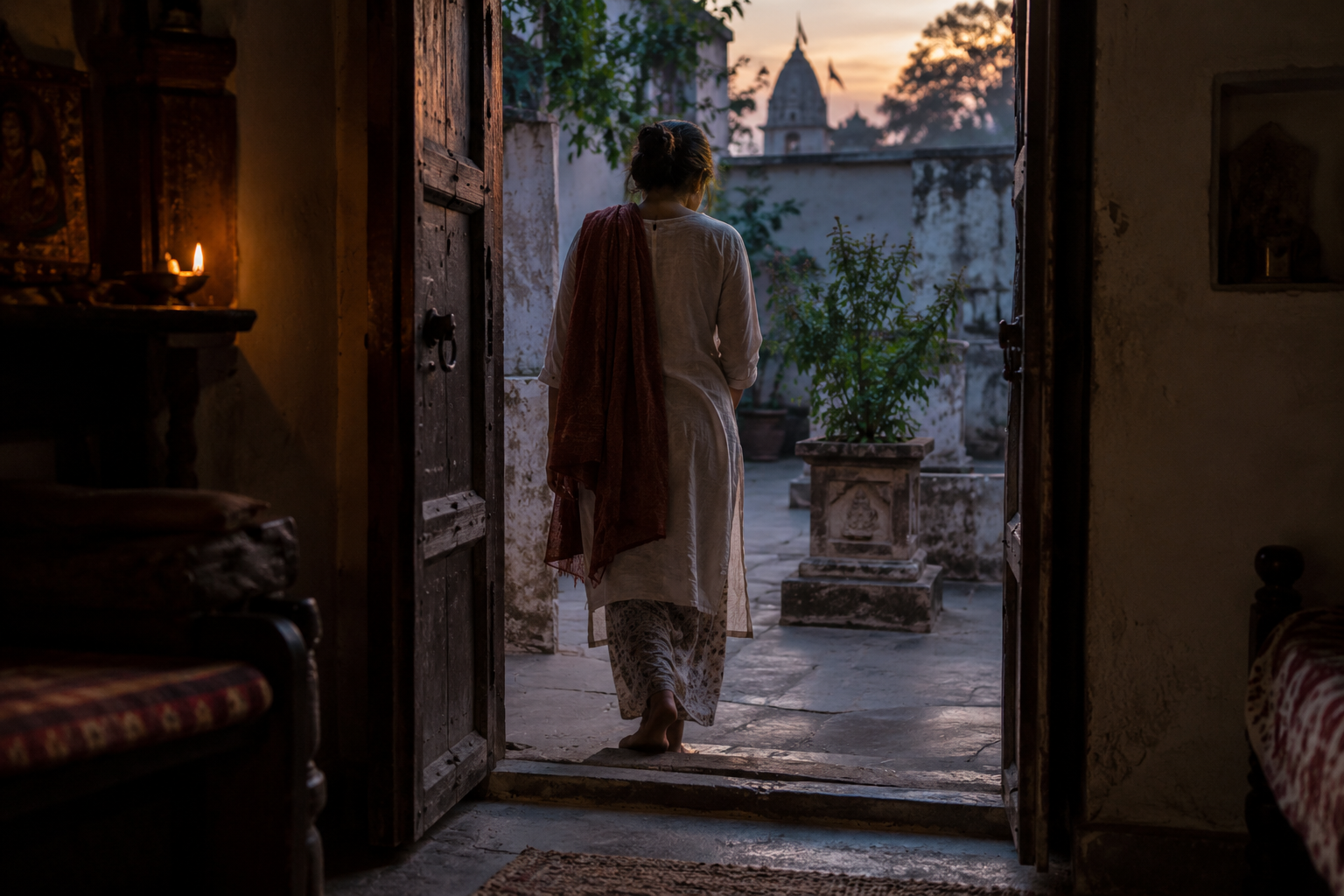
The weakest outcome is to collect an image of a sacred place and allow nothing in your conduct to change. After viewing or visiting, write down one thing you observed, one thing you were told, one thing that remains uncertain and one devotional quality the encounter recalled for you. That final item might be steadiness, service, disciplined attention or care for sacred inheritance.
Then give the reflection a practical form. Recheck an unsupported caption before sharing it. Read more carefully before repeating a story. Make your own place of sadhana less distracted. Support the respectful preservation of Dharmic heritage. The house becomes more than scenery when remembrance alters how you handle truth, attention and service.
Key takeaways
- Approach Srila Prabhupada’s house as a place of sacred memory, not merely as a photographic stop.
- Separate what you observed, what was explained and what you inferred.
- Do not attribute an object to Srila Prabhupada without a label, custodial explanation or other provenance.
- Confirm current access and photography expectations locally.
- Let the encounter produce a concrete act of careful study, truthful communication or devotional practice.
When you next open the interior view or enter the house itself, begin by slowing down. Look carefully, ask modest questions and carry one act of disciplined remembrance back into your own daily space.
References

Leave a Reply
You must be logged in to post a comment.