
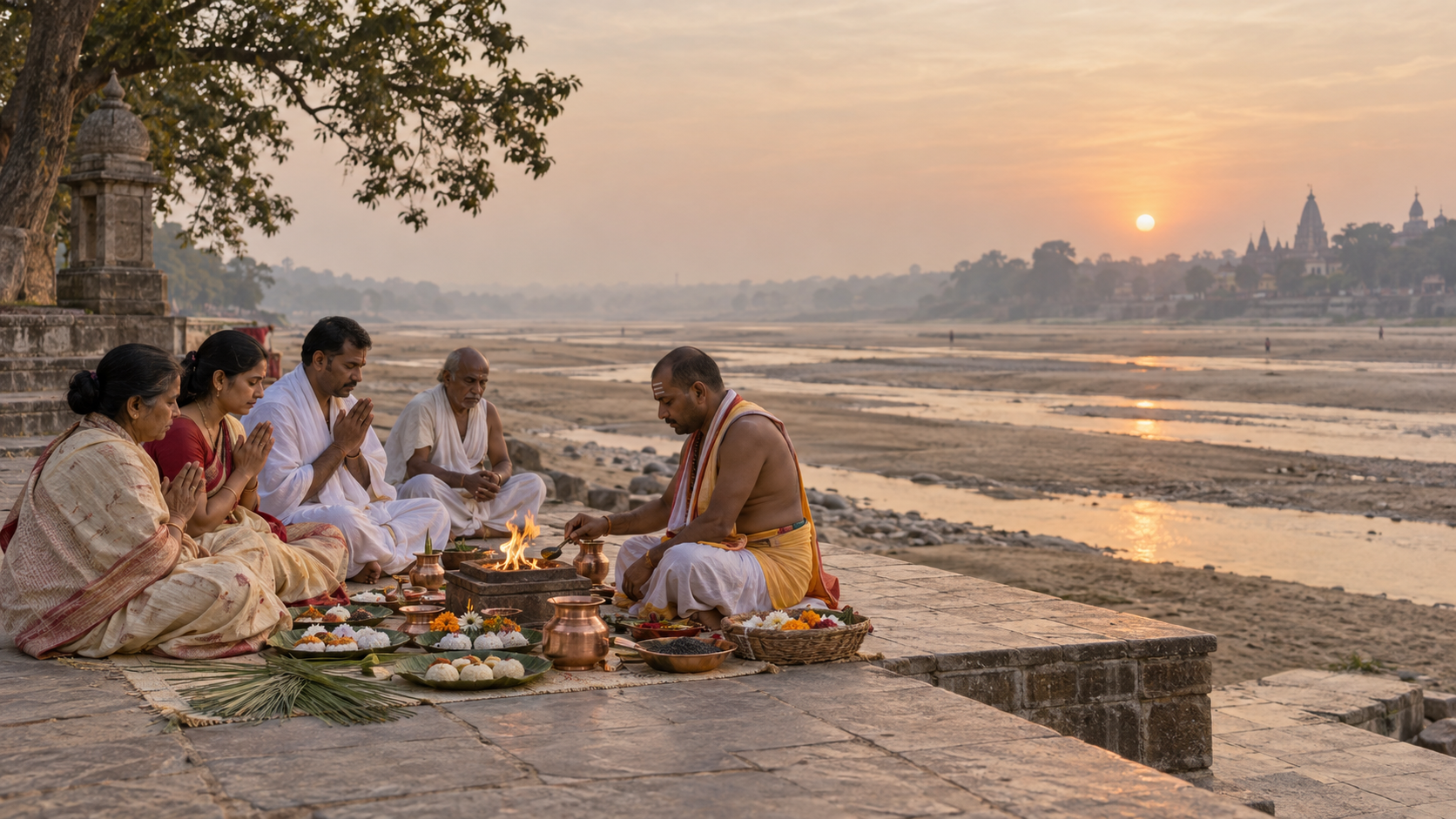
You may have been invited to place a departed parent’s name in a Gaya yajna, or you may be wondering whether such a collective ceremony can fulfil your family’s ancestral duties. The difficult part is rarely your intention. It is knowing what, exactly, will be performed in your ancestor’s name.
Gaya has an honored place in Hindu ancestral observance, and Pindapitryajna belongs to the ancient Vedic world of offerings for the departed. But terms such as yajna, shraddha, tarpana and pindadana are not interchangeable. Before you submit names, make a donation or assume that a rite replaces another obligation, identify the ritual being offered and how it relates to your family’s sampradaya.
First separate the rites that people often combine
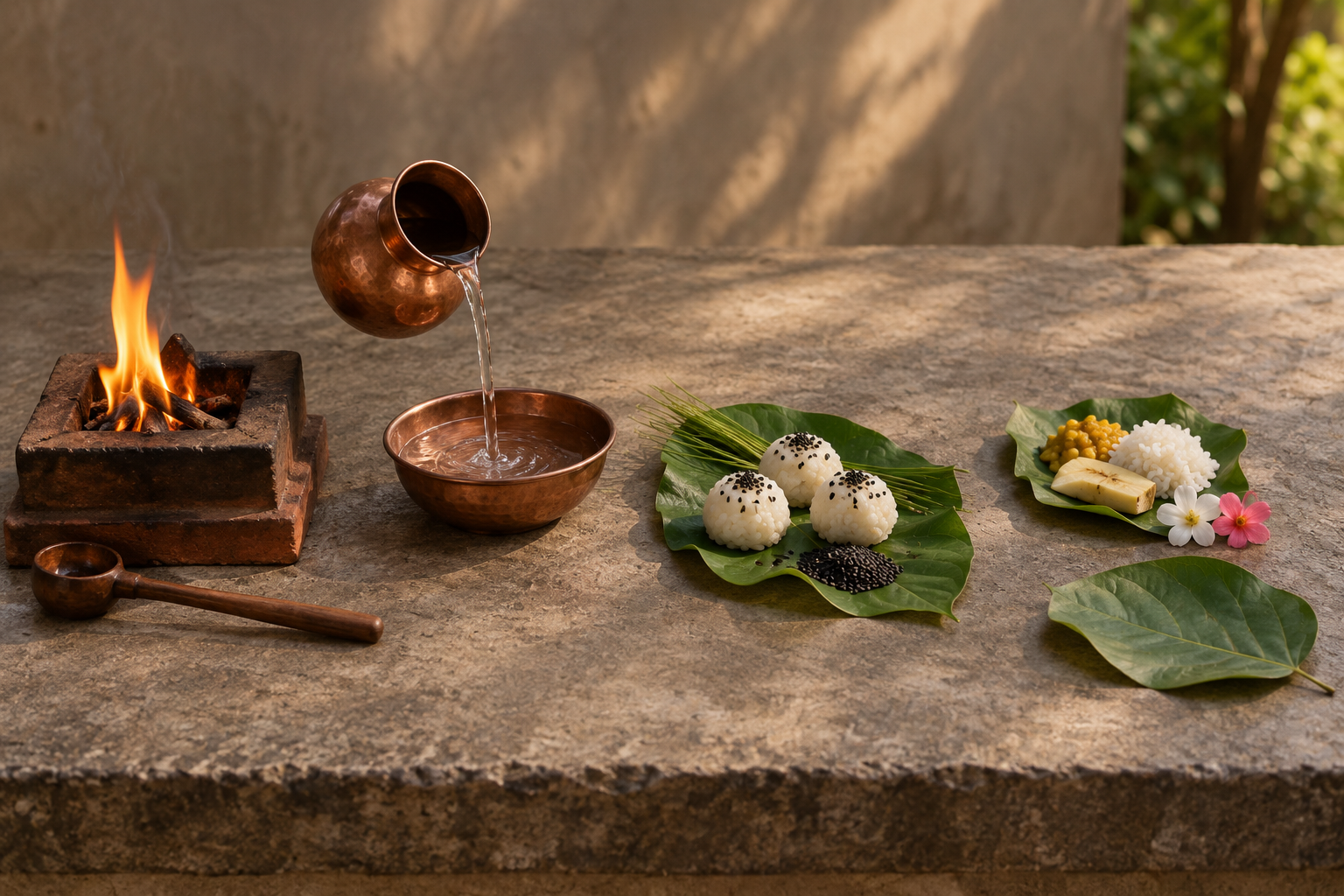
The word ancestral does not identify a single ceremony. Hindu traditions preserve several related acts, each with its own setting and purpose. A programme may combine them, but you should not infer the contents of a ritual from its title alone.
| Term | What it ordinarily identifies | What you still need to ask |
|---|---|---|
| Yajna | An ordered sacred offering made with invocations and prescribed actions, often centred on fire. | Which deities or recipients are invoked, which mantras are used, and who makes the sankalpa? |
| Pitryajna | The broader dharmic responsibility of honoring the Pitrs, the ancestors held in ritual relationship with the family. | Is this a specific ceremony, a recurring family observance or a general name for ancestral duty? |
| Pindapitryajna | An ancient Vedic fire sacrifice concerned with reverence for departed ancestors. | Is the announced ceremony actually following this fire-ritual form, or is the name being used more broadly? |
| Shraddha | A family rite performed with shraddha, or reverent commitment, for deceased kin. Its procedure varies by lineage, region and occasion. | Is it for a recently departed person, an annual observance or ancestors collectively? |
| Tarpana | An offering of water or another prescribed liquid. In the present context, it is directed toward the ancestors. | Who is eligible to offer it, and is it included in the announced ceremony? |
| Pindadana | The offering of pinda, commonly rounded food offerings, for the departed. Ingredients and procedure can vary. | Will pindas actually be prepared and offered, for whom, and at which place? |
| Gaya yajna | A yajna or wider ancestral observance associated with the sacred geography of Gaya. | Does the programme include fire offerings, shraddha, tarpana, pindadana, daan or some combination of them? |
This distinction prevents the most common misunderstanding: a Pindapitryajna conducted at a fire altar is not automatically identical to every pindadana or shraddha performed at Gaya. If an organizer uses all these terms as though they mean the same thing, ask for the sequence of ritual actions in plain language.
Gaya gives the rite sacred place, not a blank cheque
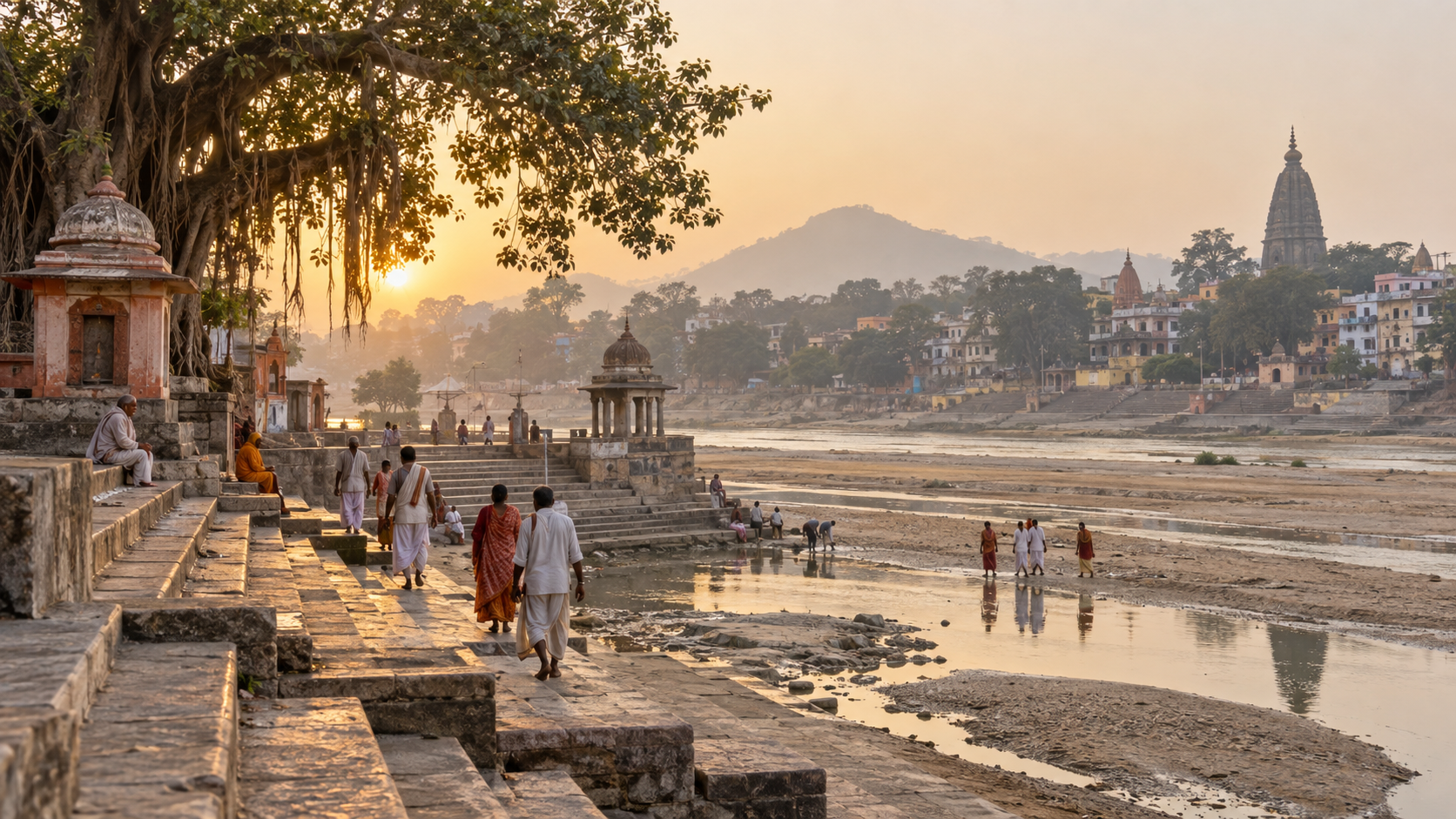
Gaya is among the best-known Hindu tirthas for ancestral rites. Sacred geography matters because a Hindu sankalpa does not treat worship as an abstract intention floating outside the world. It ordinarily anchors an act in a place, a time, a ritual purpose and a relationship between the person making the offering and those for whom it is made.
That significance should make you more attentive, not less. The name Gaya does not by itself tell you what will happen after you fill in a form. Nor does a sacred location turn an undefined payment into a complete ancestral rite. You still need to know whether your ancestor will be named in the sankalpa, whether the observance is individual or collective, and whether your tradition recognises the proposed form.
It is also better to understand the rite as sambandha, a disciplined acknowledgement of relationship, rather than as a supernatural transaction. You are expressing gratitude, accepting inherited responsibility and seeking peace for the departed within a Dharmic framework. Be cautious when anyone guarantees a particular material reward, the automatic removal of every family difficulty or a result proportional to the amount donated. Sacred action is not a price list for controlling destiny.
Daan can accompany ancestral remembrance without becoming identical to it. One 2026 initiative connects a Gaya yajna with Graam Vidya Daan and asks participants to join by October 9. Supporting village education can turn remembrance into benefit for living communities, but you should still ask which portion supports the ritual and which portion supports the charitable work. The joining deadline may be an administrative cutoff rather than the ritual date or a universally prescribed limit.
Ask these questions before entrusting names or money
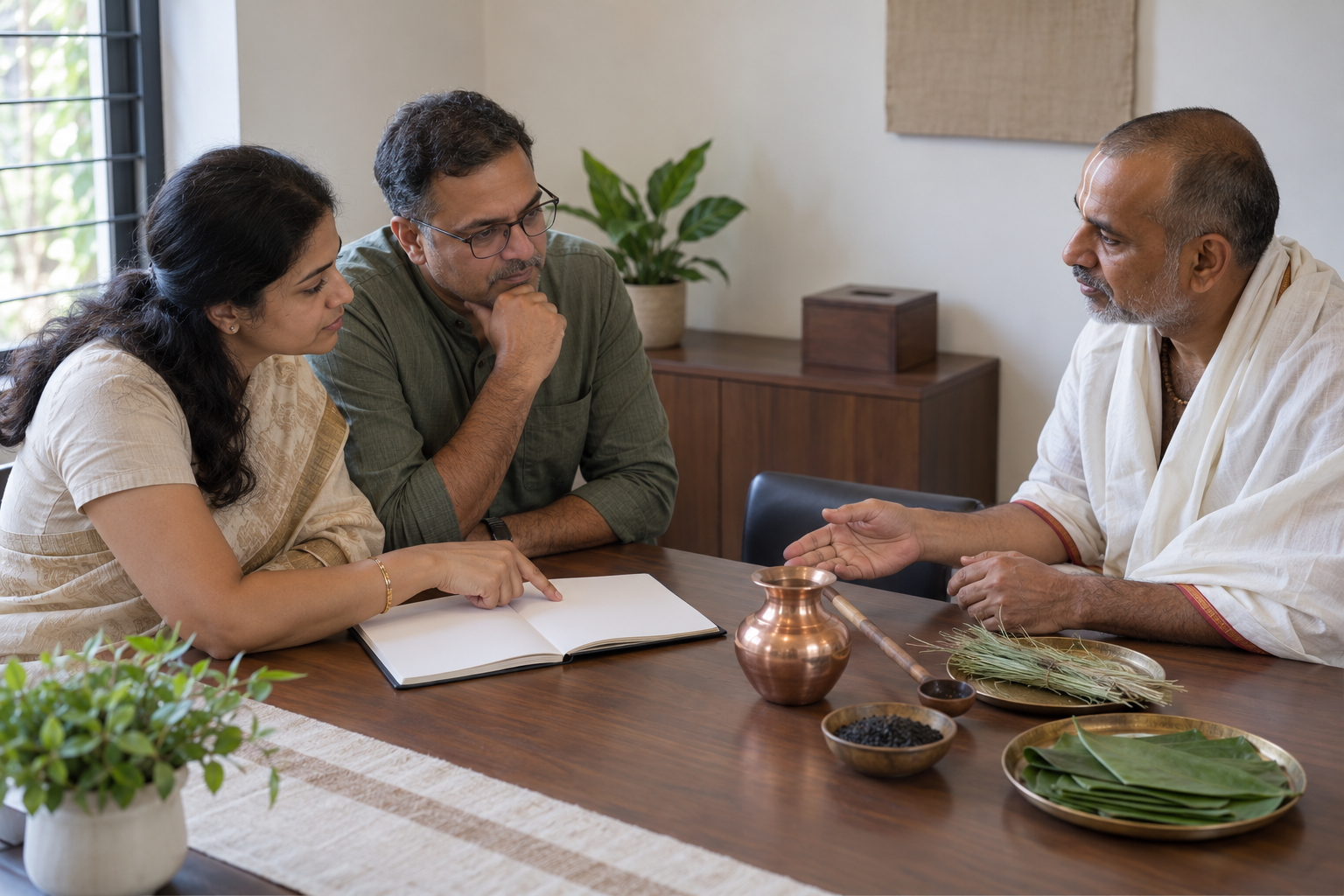
A serious organizer should be able to answer practical questions without treating respectful inquiry as a lack of faith. Send the questions in writing so you can compare the reply with your family’s customary practice.
- What will actually be performed? Ask whether the programme includes homa or yajna, shraddha, tarpana, pindadana, feeding, dakshina, daan or another observance. Request the sequence, not just a ceremonial title.
- Where will each action take place? Confirm whether the officiants will be physically present in Gaya and whether every listed component occurs there. A programme described as connected with Gaya may still include activities conducted elsewhere.
- Which ancestral occasion is this for? Customs commonly distinguish the rites following a recent death from recurring observances for established ancestors. Tell the officiant whether the person died recently, whether funeral rites were completed, and whether you are seeking an annual or general ancestral observance.
- Which details are required? Ask whether the officiant needs the departed person’s name, relationship to you, gotra, maternal or paternal line, date of death or lunar tithi. Supply only what you know. Do not invent a gotra, spelling, date or family connection to complete a form.
- Who makes the sankalpa? In a collective ceremony, determine whether the officiant names each family and ancestor individually, uses a grouped intention, or asks a family representative to participate remotely.
- Whose ritual rules govern participation? Eligibility and procedure can differ by sampradaya, family custom and region. If your family follows a particular tradition, share the proposed procedure with your customary purohita before assuming equivalence.
- What does the deadline mean? Distinguish the deadline for submitting names from the day of the yajna, the relevant lunar observance and the last date for payment. These may be different dates.
- Where does the contribution go? Ask for a clear distinction among ritual materials, the officiant’s dakshina, pilgrim-site costs, administration and charitable daan. Grief and urgency should not be used to pressure you into an unexplained amount.
- What confirmation will you receive? Establish whether the organizer will acknowledge the submitted names, communicate the time of the ceremony and confirm completion. Photographs or video may be helpful for transparency, but they are not themselves proof of the ritual’s spiritual efficacy.
Four answers are essential before you proceed: the actions being performed, the occasion for which they are appropriate, the way your ancestor will be included, and the use of your contribution. If those remain unclear, pause the payment and consult someone who knows your family tradition.
Participate from home without inventing a ceremony
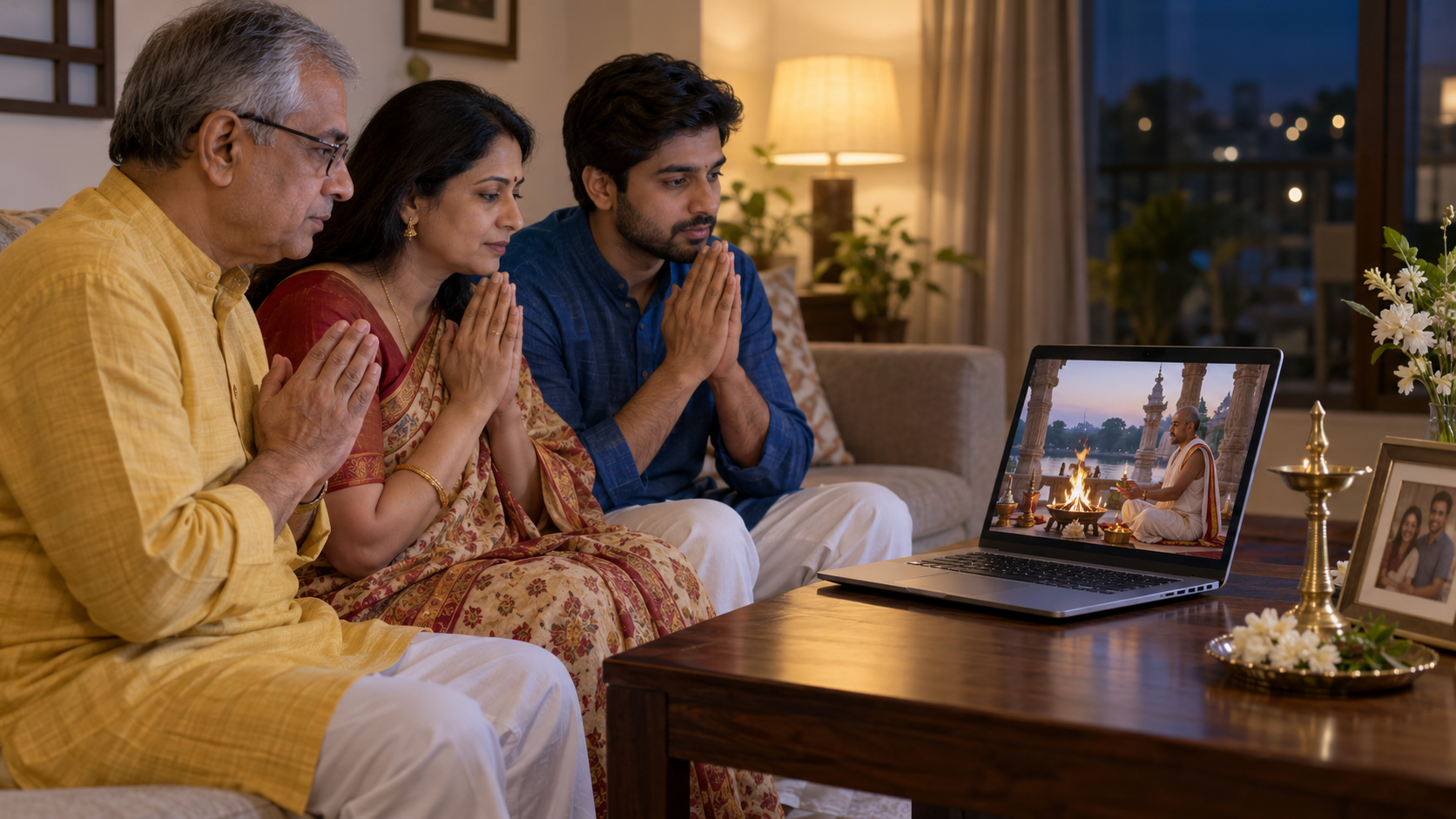
A sound remote-participation plan
You may be unable to travel to Gaya because of distance, health, family obligations or cost. Some collective programmes allow names to be submitted remotely, but remote inclusion is a method chosen by the officiating tradition, not a universal rule. Confirm that it is accepted before relying on it.
- Prepare one accurate family record. Write each departed person’s name, relationship, lineage details you genuinely know and any information specifically requested by the officiant. Mark uncertain details as unknown rather than guessing.
- Confirm receipt before the cutoff. Check that the right names reached the right programme. A payment receipt alone may not show that the ritual list was received.
- Follow the officiant’s instructions for the ceremony time. If participants are asked to bathe, maintain a dietary discipline, recite a familiar prayer or sit in remembrance at a stated time, follow the instructions as given. Do not assemble fragments from unrelated traditions and call the result a Vedic procedure.
- Keep home observance simple when no instructions are supplied. Quiet remembrance, a prayer already established in your family and respectful nama-smarana are more appropriate than improvising mantras whose pronunciation, viniyoga or ritual setting you do not know.
- Make daan deliberately. Decide whether your contribution is dakshina, payment for materials, charitable giving or a combination. If education or community service is supported, record that as a separate intention rather than assuming it automatically substitutes for the ancestral rite.
- Preserve the details afterward. Note the date, place, officiant, ancestor names and type of ceremony. This helps the family maintain continuity and prevents later generations from treating every ancestral observance as an indistinguishable event.
Keep the spiritual claim proportionate
A Gaya yajna can give disciplined form to gratitude, remembrance and family responsibility. It can bring relatives together around duties that modern life often scatters. It can also direct resources toward priests, pilgrims, food giving, education or community service when those purposes are stated honestly.
It does not automatically replace every funeral rite, annual shraddha or inherited family observance. It cannot settle an inheritance dispute, cancel a debt owed to a living relative or repair harm without ethical action. If your family has unresolved duties surrounding a recent death, ask your family purohita which rites are still required rather than using a collective yajna as a universal substitute.
Honoring an ancestor also does not require you to declare every act of that person morally right. A difficult family history can be acknowledged without denial. You may pray for peace, recognize the life through which your own life came, and resolve not to pass harmful patterns onward. In that situation, the rite is an act of truthful responsibility, not a false verdict that no wrong occurred.
Key takeaways
- Pitryajna is a broad ancestral duty; Pindapitryajna, shraddha, tarpana and pindadana identify related but distinct ritual forms.
- Gaya supplies sacred geographical context, but the words Gaya yajna do not specify one universal liturgy.
- Ask what will be performed, where it will occur, how each ancestor will be named and which tradition governs the procedure.
- Never guess a gotra, date, relationship or other lineage detail. Report uncertainty to the officiant.
- Remote participation is valid only within the procedure accepted by the officiating tradition; it should not be assumed from an online form alone.
- Separate ritual expenses, dakshina and charitable daan so that you know what your contribution supports.
- Treat the rite as reverence and responsibility, not as a purchased guarantee of worldly results.
Your next step is modest and concrete. Write the ancestral names exactly as your family knows them, identify anything uncertain, and send the organizer the first four questions above. If the answers are clear and consistent with your family’s practice, participate with an undivided sankalpa. If they are not, pause and consult your customary purohita before proceeding.
References
- Dandavats — LoveContinued | Graam Vidya Daan Testimonial | Join the Gaya Yajna by October 9th
- Hindu Blog — Pindapitryajna: The Sacred Vedic Ritual of Honoring Ancestors

Leave a Reply
You must be logged in to post a comment.