
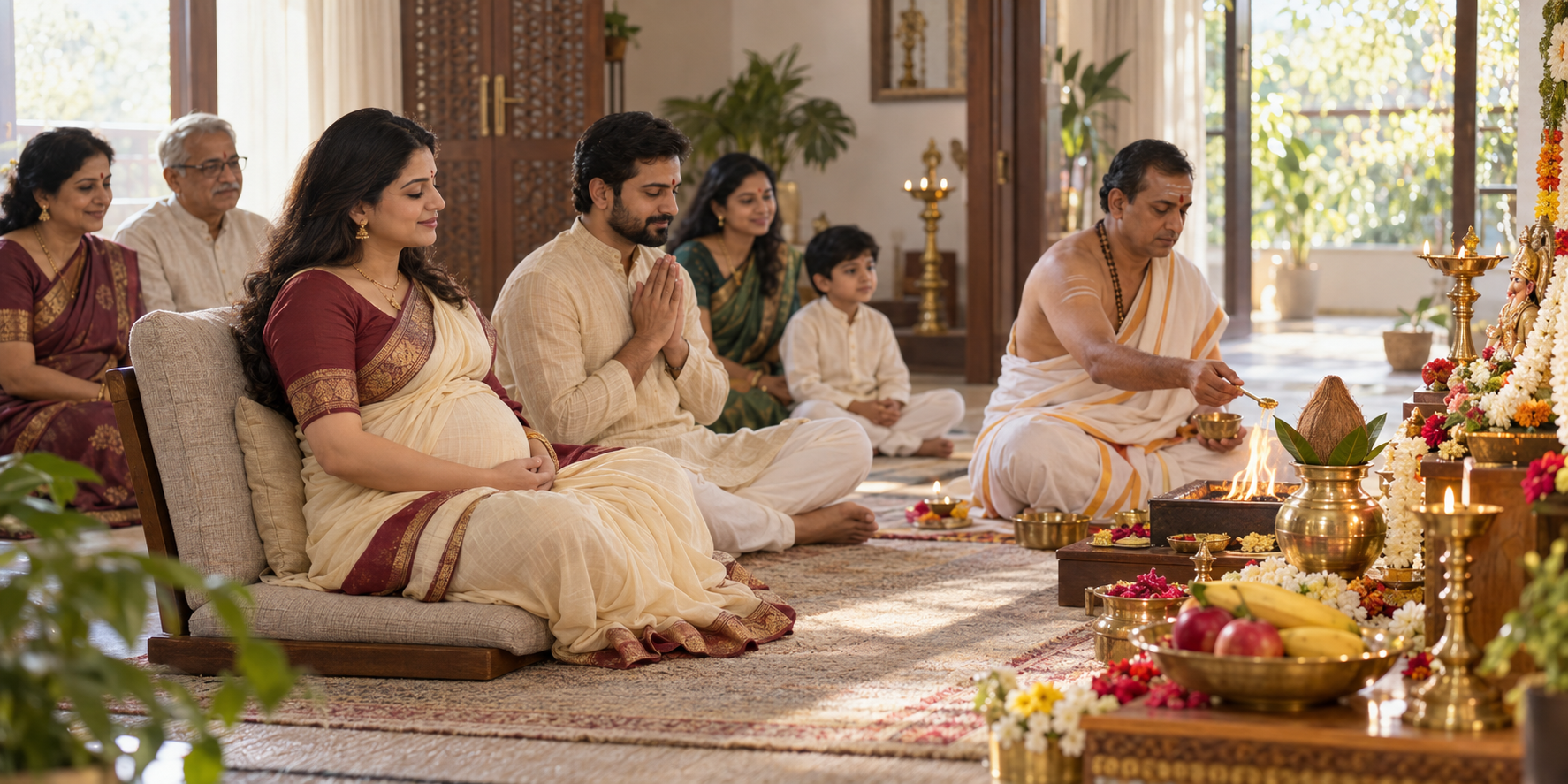
Pregnancy can make a family want to do something sacred and immediate. The difficult part is not finding a puja. It is deciding what you are actually praying for, choosing a practice your sampradaya recognizes, and ensuring that the observance does not become another burden for the expectant mother.
If you are choosing among Garbharakshambika worship, Santana Gopala Yagna, and a more general homa, begin with the purpose of the prayer. You do not need to collect every available rite. You need a clear sankalpa, competent guidance, and a form of worship that can stand alongside responsible prenatal and child health care.
Choose the rite by its sankalpa, not by its size
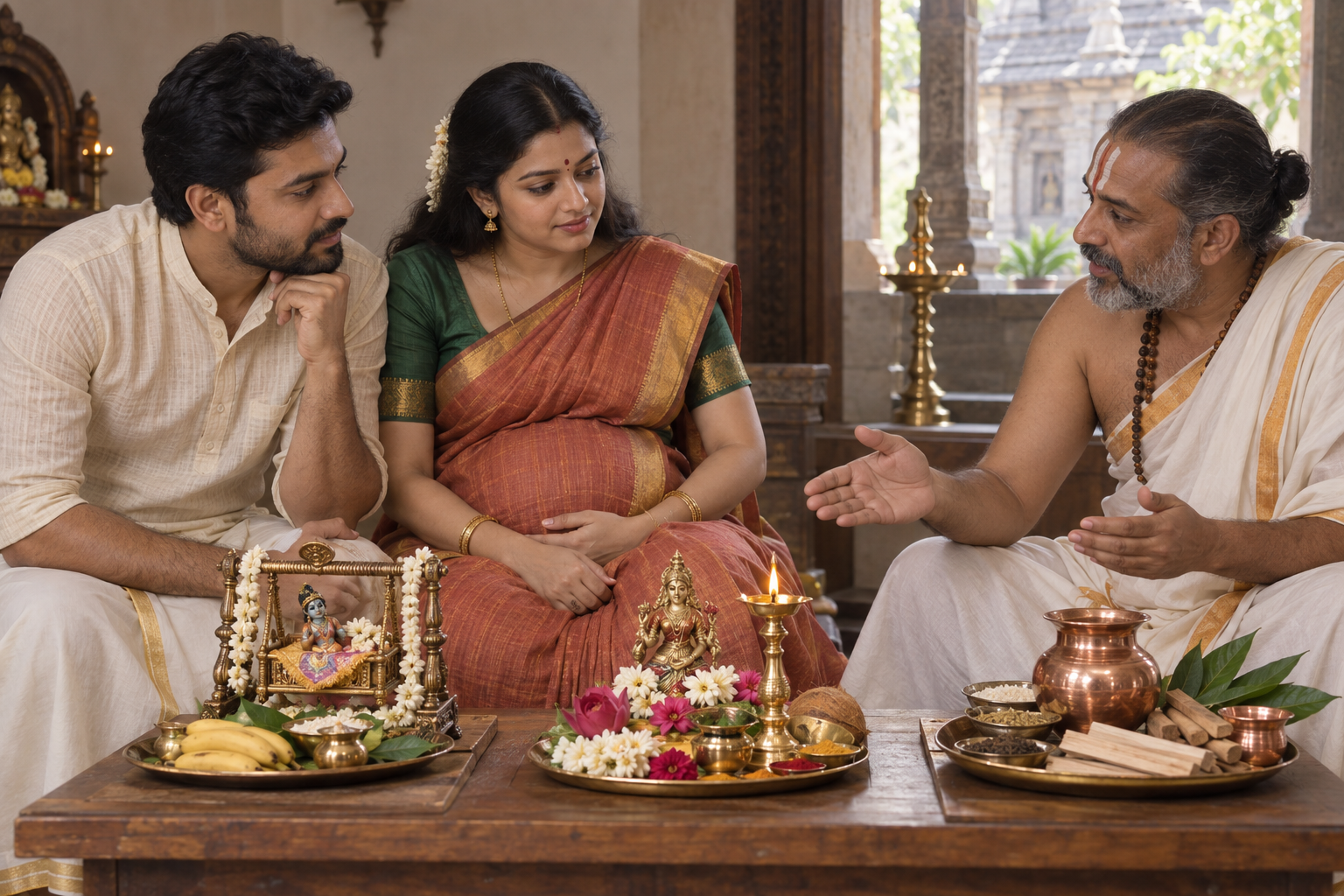
Three terms are often placed together even though they do not mean exactly the same thing. Two identify a devotional focus; the third describes a ritual form. Keeping that distinction clear will make your conversation with a priest far more productive.
- Garbharakshambika worship: This devotion is centered on the Goddess as the protector of the womb. She is traditionally approached for the protection of pregnant women and a safe delivery. Families may also encounter the name Garbharakshambigai.
- Santana Gopala Yagna: This rite invokes Sri Krishna as Santana Gopala. Its devotional purpose concerns children, the well-being of a child, and blessings for a healthy pregnancy. The name itself points to the desired blessing: santana refers to children, while Gopala is a name of Krishna.
- Yajna or homa: These words describe a sacred fire ritual rather than a single pregnancy deity. In this form of worship, participants sit before the fire while mantras are recited and oblations are offered; the rite is directed toward the invocation and sanctification of Vedic gods and goddesses.
If your immediate concern is protection during an existing pregnancy, Garbharakshambika devotion most directly expresses that sankalpa. If you are praying for santana, a healthy pregnancy, or the continuing well-being of a child, Santana Gopala is the more specific form. A homa may be the ritual method recommended for either a particular observance or a broader family prayer, depending on your tradition.
Doing more rites is not automatically more devout. Stacking observances can turn prayer into anxious spiritual arithmetic: one more ceremony, one more vow, one more attempt to eliminate uncertainty. Choose the practice that says what your family genuinely means, then perform it with steadiness.
Arrange the observance around the mother, not the event
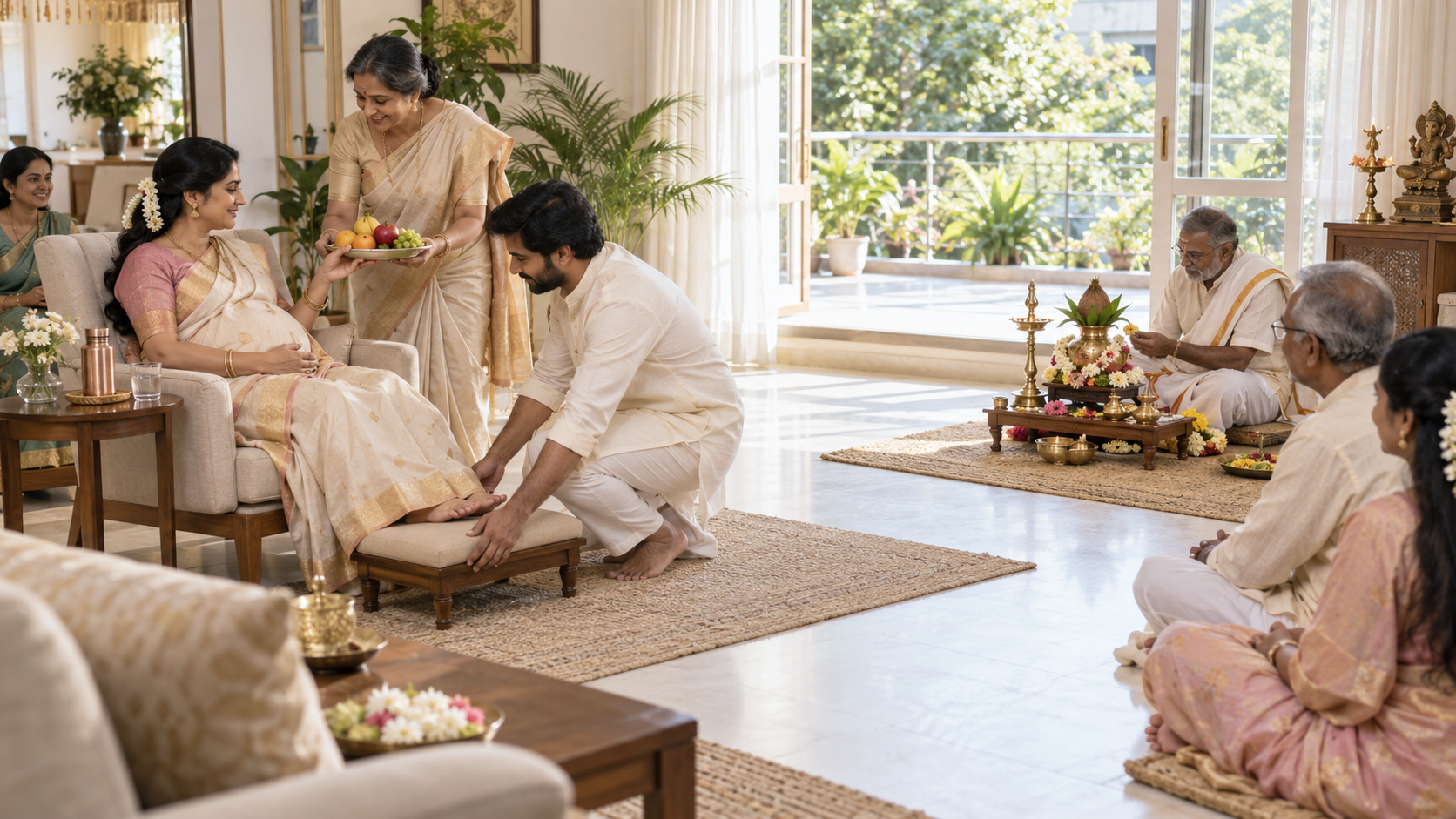
A pregnancy rite should reduce disorder around the expectant mother, not place her at the center of a demanding production. Ritual care includes the conditions under which the ritual is performed. A beautifully prepared homa that leaves her exhausted, hungry, overheated, or distressed has lost sight of the person for whom the family is praying.
- Write the sankalpa in one plain sentence. For example: “We seek the protection and well-being of the mother and child.” Give that sentence to the priest before discussing materials, scale, or cost.
- Identify the tradition you are following. Tell the priest your family sampradaya, regional custom, customary deity, and any guidance already received from elders or a guru. Do not combine instructions from unrelated traditions merely because they share the word “pregnancy.”
- Disclose practical health limits before fixing the format. Mention any medical instruction concerning fasting, smoke, heat, prolonged sitting, travel, or exertion. Ask how the observance can be adapted without pretending that those limits do not exist.
- Ask what will actually happen. Establish whether the plan involves a formal fire rite, temple worship, or a simpler prayer; who will recite the mantras; what the expectant mother is expected to do; and how long she is expected to participate.
- Give her an unrestricted exit. Arrange a comfortable seat, water if medically permitted, access to a washroom, ventilation, and another family member who can handle all logistics. She should be free to stand, rest, leave the fire area, or end her participation without embarrassment.
- Confirm how the rite concludes. Ask the priest what marks completion and whether the family has any follow-up observance. This prevents improvised promises and additional vows from being added in an emotional moment.
If a homa is planned, treat fire and smoke as real physical conditions. Use an appropriate fire vessel and a safe setting, keep combustible items away, maintain ventilation, and have a competent person supervise the fire throughout. Anyone who becomes uncomfortable around the heat or smoke should move away immediately; completing a seating arrangement is not more important than physical safety.
If you are not trained to conduct a formal yajna, arrange guidance from a knowledgeable purohita rather than assembling a rite from disconnected online instructions. Correct pronunciation matters, but so do sequence, intention, offerings, and the conventions of the tradition being followed. Ask the priest to explain the essential actions in language the family understands. Participation becomes more meaningful when people know why they are present.
Keep spiritual protection and medical care in their proper places
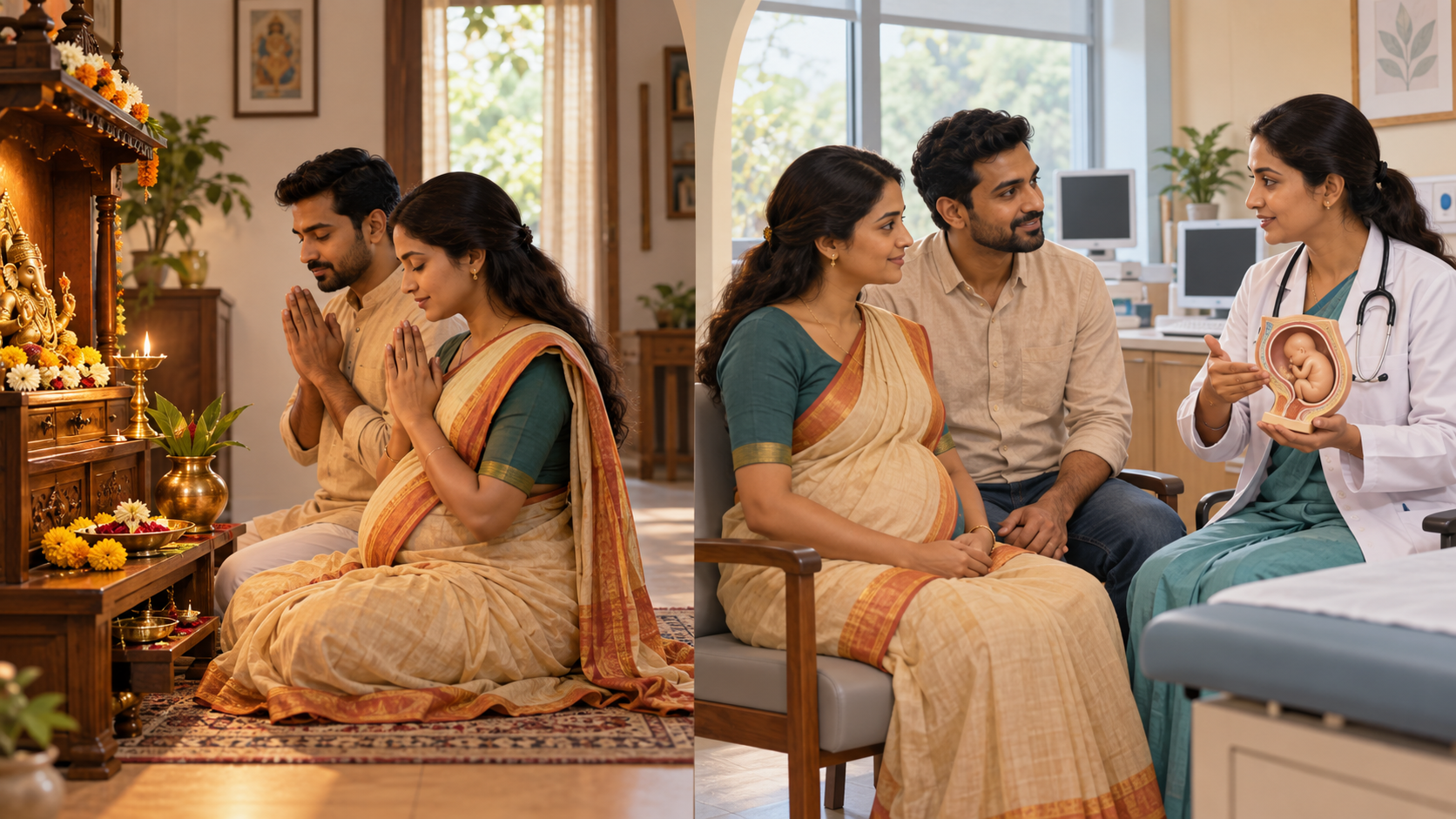
Garbharakshambika and Santana Gopala worship express dependence on divine grace. They can gather a family around prayer, responsibility, and hope. They do not predict an outcome, diagnose a complication, or replace prenatal care. A sacred rite and a medical appointment answer different needs, and neither has to be diminished to keep that boundary clear.
- Do not postpone care for a ritual. A new or worrying symptom, or any change the maternity team has instructed you to report, calls for prompt contact with the appropriate health professional. In an emergency, use local emergency services.
- Do not change medicines, supplements, food, or hydration for an observance without medical guidance. This includes fasting because a relative expects it and consuming any ritual substance whose ingredients or safety are uncertain.
- Follow restrictions already given by the maternity team. If smoke, travel, heat, exertion, or prolonged sitting has been discouraged, tell the priest and request a safer form of participation.
- Do not make the mother responsible for an adverse outcome. Difficulty in pregnancy is not proof that her faith, mantra, posture, offering, or observance was inadequate.
- Continue ordinary care after the ceremony. Keep appointments, follow the care plan, and seek qualified advice when questions arise. The rite should strengthen the family’s sense of duty, not suspend it.
This boundary also protects the integrity of the worship. A prayer offered as prayer does not need to masquerade as a clinical intervention. Its religious meaning lies in sankalpa, devotion, and surrender, not in making a measurable guarantee that the tradition itself cannot responsibly promise.
Four questions to settle before you book the rite
Can we pray at home if we cannot arrange a priest or homa?
You can keep a simple devotional practice at home without presenting it as a formal yajna. Choose Garbharakshambika or Santana Gopala according to your sankalpa, establish a clean and quiet place for prayer, and use only the prayers your family knows or has been taught. If you later want a formal fire rite, ask a qualified priest to arrange it according to the relevant tradition.
Must the pregnant woman fast or remain beside the fire?
Do not assume that she must. Practices differ among families and lineages, so the applicable instruction should come from the priest conducting the observance. Her clinician’s restrictions remain binding. Give the priest those restrictions early enough to change the format, not after preparations have been made.
Can we perform both Garbharakshambika worship and Santana Gopala Yagna?
The two devotions can express related but distinguishable intentions: protection of the pregnancy, and blessings concerning pregnancy and the well-being of children. Whether your family should undertake both is a matter for your tradition and spiritual guide. Do not add a second rite merely from fear that the first is insufficient.
Does the rite guarantee a safe pregnancy or a healthy child?
No responsible family should treat it as a guarantee. The worship seeks divine blessing and places the family’s concern within a sacred relationship. Pregnancy and birth still involve realities that require qualified medical care. If events do not unfold as hoped, respond with care and compassion rather than searching for a ritual fault or someone to blame.
Let protection become a family discipline after birth
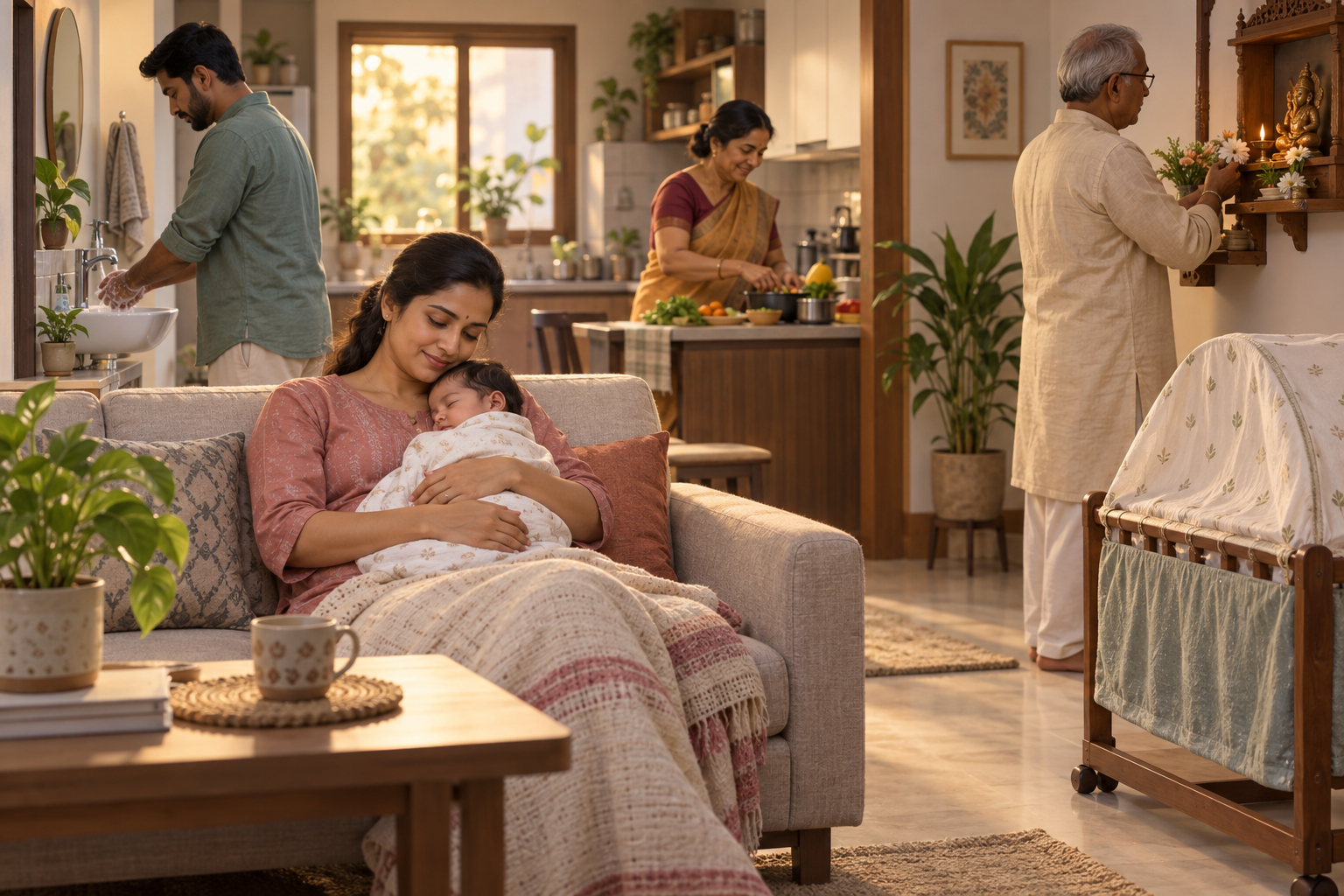
The sankalpa should not end when the fire is extinguished or the temple visit is over. A child is protected through repeated acts of dharma: attentive care, a safe home, appropriate health care, nourishment, rest for caregivers, affectionate presence, and adults who share responsibility instead of leaving it with the mother.
Santana Gopala devotion can remain part of family prayer after birth, but it need not become elaborate. A brief, regular remembrance that the household can sustain is more coherent than a large ceremony followed by neglect. The point is not to keep anxiety alive through constant ritual checking. It is to let devotion shape how the family treats the child and one another.
Your next step is simple: write one sentence stating your sankalpa, list every medical or practical constraint, and send both to the priest or temple before making a booking. That conversation will tell you whether your family needs Garbharakshambika worship, Santana Gopala Yagna, another form recognized by your tradition, or a quiet home prayer for now.
References
- Hindu Pad – Significance of Yagnas, Homams
- Hindu Pad – Story of Garbharakshambika Devi (Garbharakshambigai Mata)
- Hindu Pad – Santana Gopala Yagna: Benefits, Purpose, Significance

Leave a Reply
You must be logged in to post a comment.