
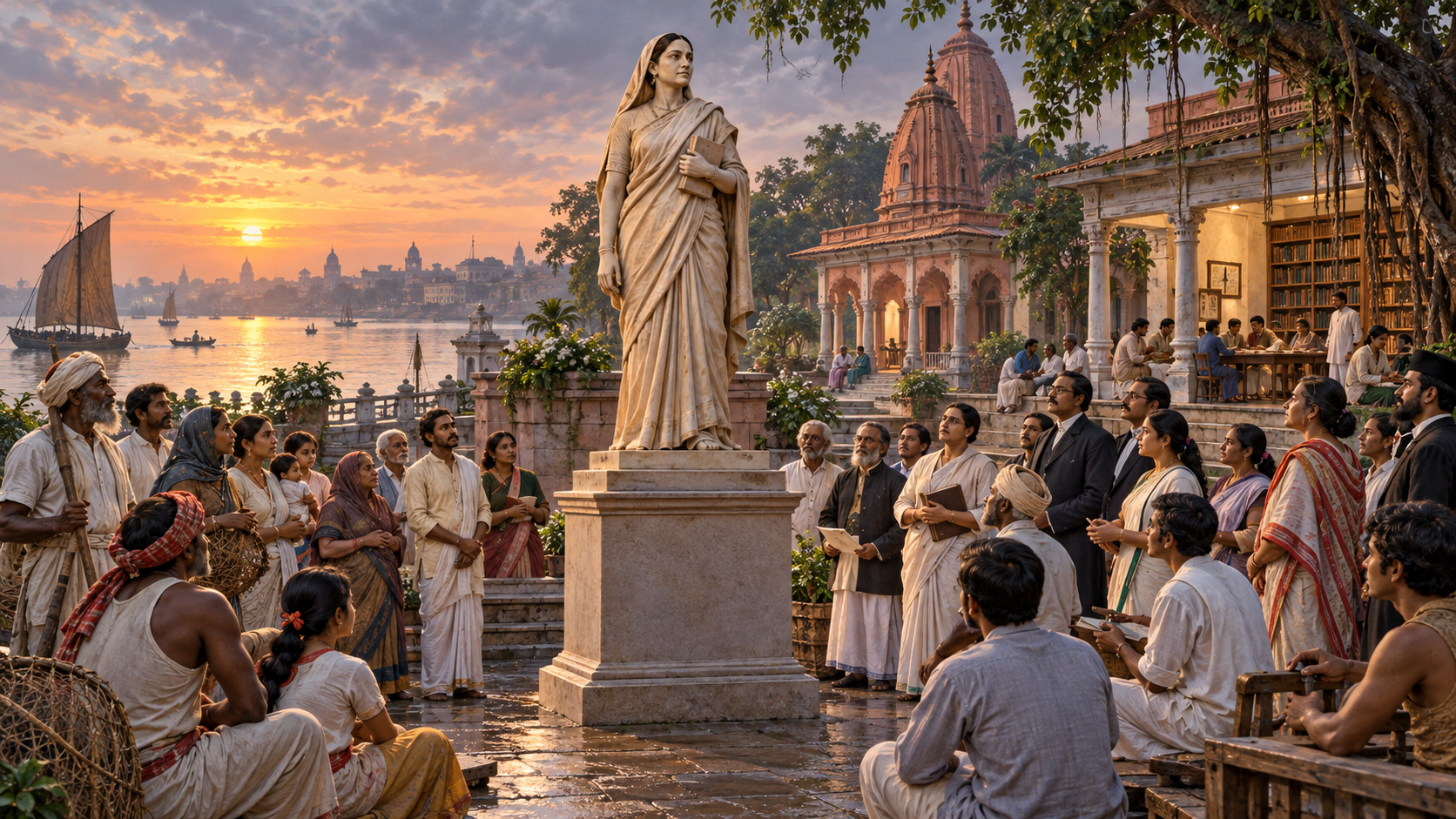
If you have seen Rani Rashmoni’s commemoration discussed alongside appeals for OBC unity in Bengal, the useful question is not whether the effort is cultural or political. It is attempting cultural remembrance, institution-building and social mobilization at the same time. The harder question is how much of that ambition has moved beyond a conference declaration.
That distinction matters before you endorse the demand, repeat claims about statewide representation or contribute money to anything bearing its name. What exists at present is a significant public proposal. A completed Dham, a representative Bengal-wide coalition and an electoral organization are three much larger claims, none of which should be presumed from the announcement alone.
One commemoration is carrying three different ambitions
The Hindu OBC Front held a conference marking Rani Rashmoni’s 233rd birth anniversary, called for a grand Rani Rashmoni Dham in West Bengal and presented the occasion as a means of bringing OBC communities across Bengal together. These elements reinforce one another, but they are not interchangeable.
- Commemoration places Rani Rashmoni in public memory and gives participants a shared cultural reference.
- The call for a Dham asks that periodic remembrance acquire a permanent institutional home.
- OBC mobilization attempts to turn shared remembrance into an organized social constituency.
Readers should keep the verbs precise. The conference marked an anniversary and called for a Dham. A call is not an approval, and an approval would not be a completed institution. Likewise, inviting or assembling members of several communities is not yet proof that Bengal’s OBC communities have been united.
The name Hindu OBC Front signals an attempt to place backward-class organization within an explicitly Hindu civilizational frame. For a Dharmic audience, that is the initiative’s most consequential feature. It challenges the assumption that social dignity and Hindu solidarity must occupy separate political spaces. Whether that synthesis becomes credible, however, depends on whose voices are included and what follows the commemorative stage.
A proposed Dham must be judged as an institution, not a slogan
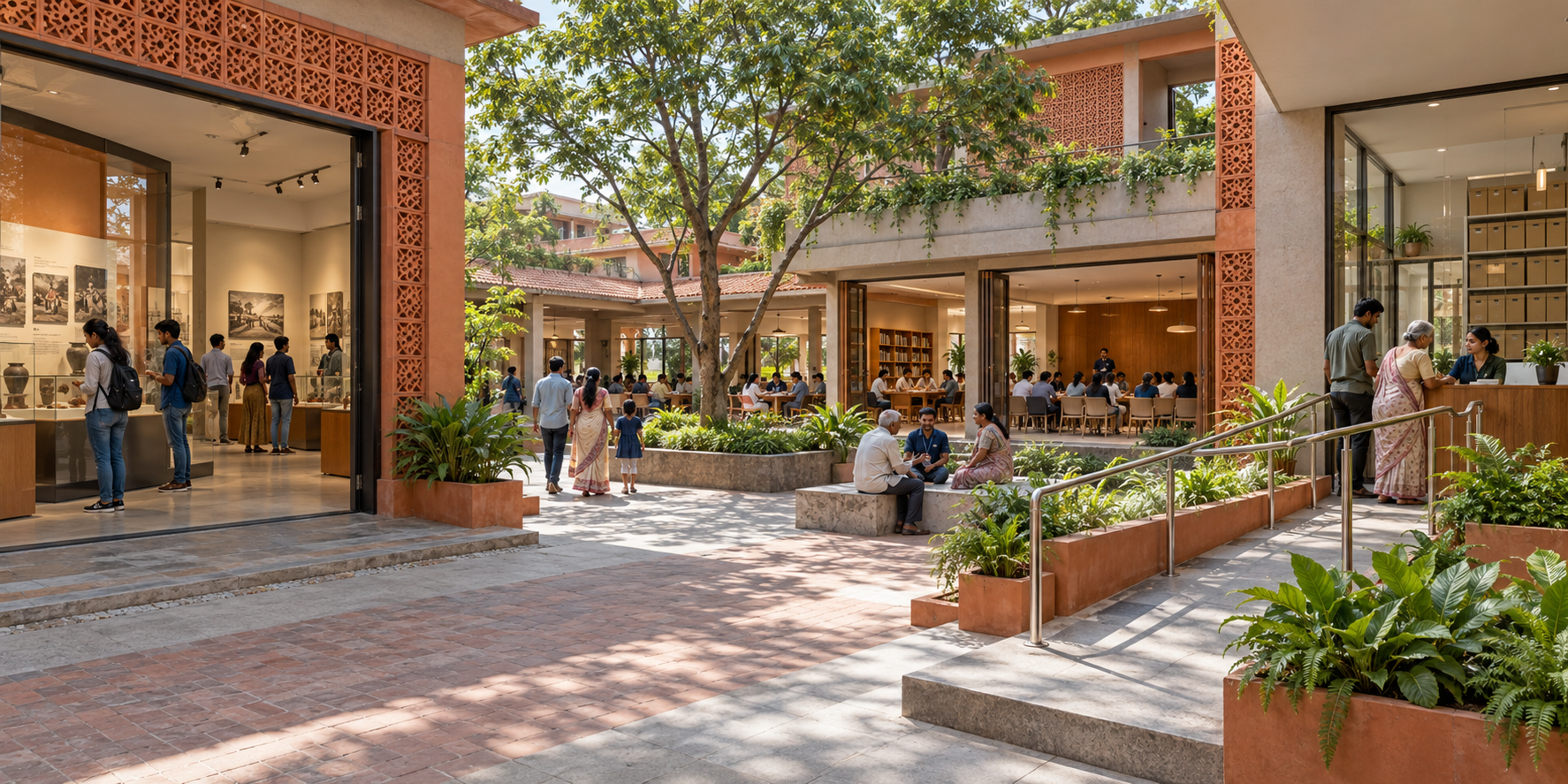
The word Dham carries devotional and civilizational weight, but it does not by itself define the proposed institution. Supporters need to know whether the intended project is a temple, memorial, cultural centre, pilgrimage complex, educational facility or some combination of these. Until organizers publish a plan, readers should not fill in that gap with their preferred version.
A serious proposal normally becomes more concrete through identifiable stages. You can use the following sequence to determine where this demand actually stands:
- Public demand: organizers state the purpose and explain why a permanent institution is needed.
- Defined concept: the proposed functions, intended users and meaning of the term Dham are set out in writing.
- Responsible body: a named legal or organizational entity accepts responsibility for planning, money and decisions.
- Site and permissions: land status, required approvals and the authority responsible for obtaining them are disclosed.
- Budget and governance: projected costs, funding methods, accounts, audits and decision-making rules become public.
- Construction and programming: physical work and a continuing calendar turn the demand into a functioning institution.
The confirmed facts place the initiative at the first stage: a conference has made a public call. That is not a criticism. Every institution begins as an idea. It is simply the correct baseline from which to follow progress.
If fundraising begins, insist on information appropriate to the next stages. Verify the legal name receiving the money, the name on the bank account, the receipt process, the project’s governing body and the status of any claimed site. A poster, speech or social-media appeal is not evidence of land ownership, regulatory permission or financial oversight. Cultural enthusiasm should increase the demand for accountability, not replace it.
Statewide OBC unity requires more than a crowded platform
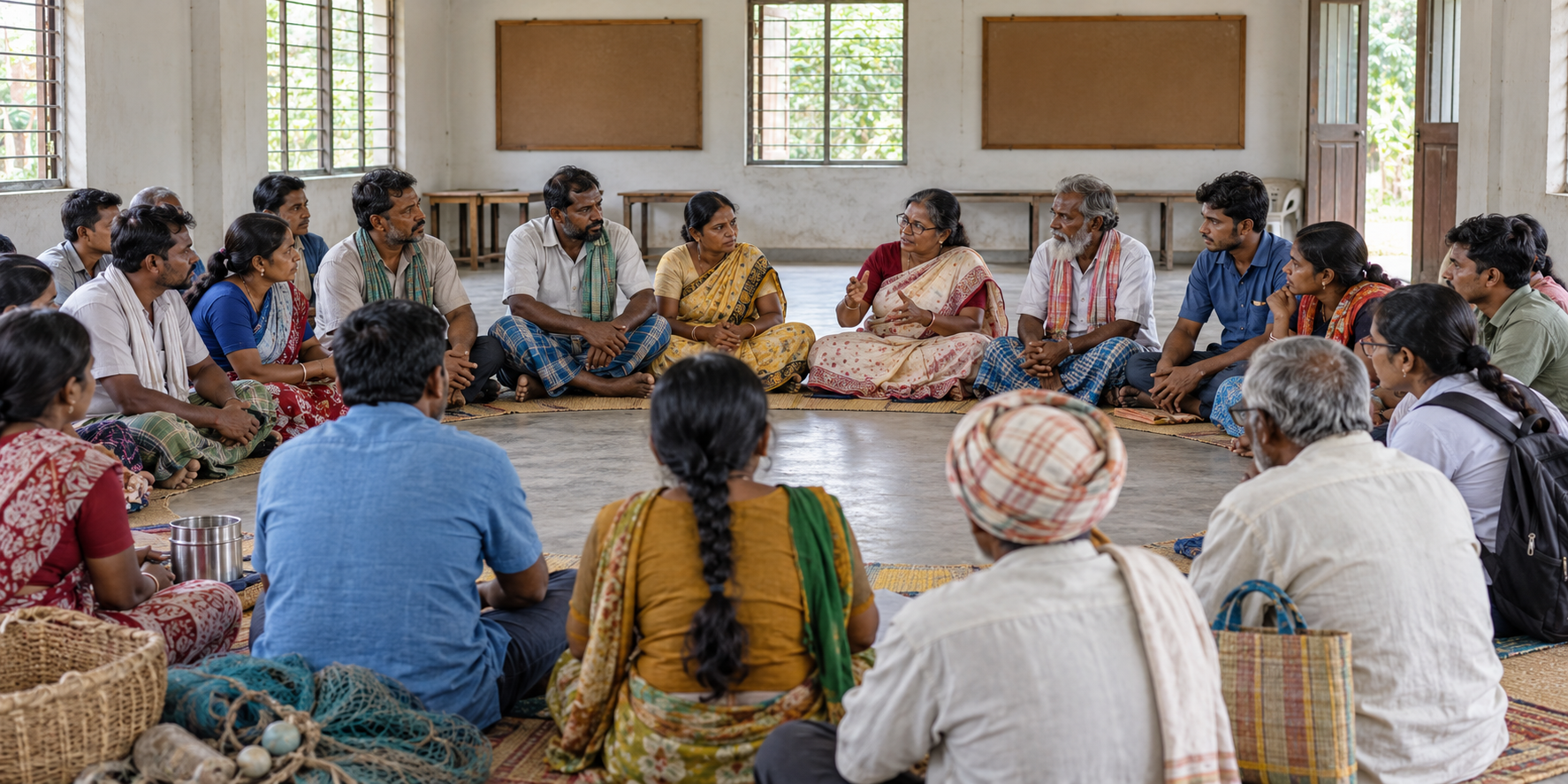
OBC, or Other Backward Classes, is a broad public category rather than a single Bengali community. It contains groups with distinct local histories, occupations, organizations and priorities. A movement can use the category to create common leverage, but it cannot assume that one meeting has dissolved those differences.
This is where claims of unity should be tested rather than merely repeated. Ask for evidence that shows participation, representation and continuing consent:
- Which communities and districts participated, and is a public list available?
- Were representatives nominated by existing bodies, invited as individuals or simply present in the audience?
- Has the coalition adopted a written charter that explains what its members support together?
- Can participating communities retain their particular concerns, or must they accept a single imposed narrative?
- Who is authorized to speak for the coalition after the conference?
- What is the next dated meeting, district programme or institutional milestone?
These questions distinguish visibility from organization. A commemorative gathering can produce visibility in one day. Organization requires rules, recurring work and a way to resolve disagreement. Without those mechanisms, the word unity describes an aspiration. With them, it begins to describe a coalition.
There is also a specifically Dharmic standard worth applying. Hindu unity becomes credible when common civilizational belonging and equal social dignity are affirmed together. OBC communities should not have to erase their histories to enter a wider Hindu public life, while a common platform cannot endure if it treats every local interest as unrelated to the whole. The practical task is to build solidarity without flattening difference.
The mobilization is political, but not necessarily electoral
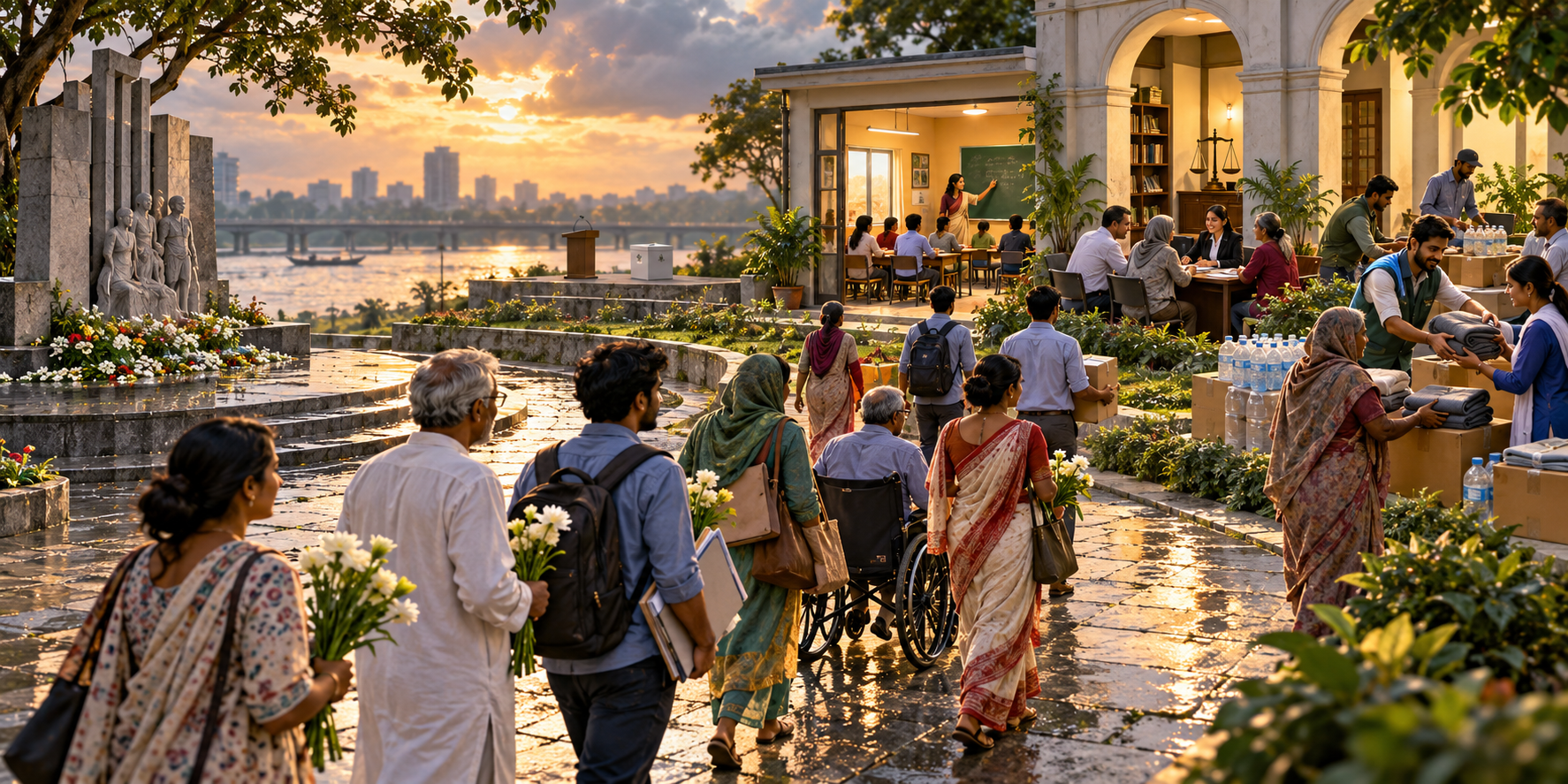
Calling the initiative political is reasonable in the broad sense. It organizes a public identity, advances a collective demand and seeks recognition for a shared symbol. That does not establish that it is a party campaign, an electoral alliance or a voting bloc.
Three labels help prevent overstatement:
- Cultural mobilization uses commemoration, symbols and public memory to strengthen belonging. The anniversary observance clearly fits here.
- Civic mobilization organizes people around a public demand or institution. The call for a Rani Rashmoni Dham fits here.
- Electoral mobilization involves candidates, parties, voting appeals, seat calculations, manifesto commitments or documented negotiations over political support. The known facts do not establish this third category.
You therefore do not need to choose between two exaggerated readings: that the conference was merely ceremonial, or that it was already an electoral machine. A more accurate description is a cultural-civic initiative with potential political consequences. Its electoral significance can be assessed only when electoral conduct appears.
Watch what leaders do next. Party affiliations among individual participants are less informative than formal commitments made in the coalition’s name. Candidate endorsements, voting instructions, demands tied to electoral support, official party negotiations or manifesto language would justify an electoral reading. In their absence, attaching a party label substitutes speculation for evidence.
The initiative may still influence politics without becoming party-aligned. A permanent institution could shape public memory; a recurring conference could create networks across districts; and a common charter could place neglected concerns before multiple parties. Such influence is real, but it should be measured through visible follow-through rather than inferred from rhetoric.
Key takeaways for supporters and observers
- The confirmed event combined Rani Rashmoni’s 233rd birth-anniversary commemoration with a call for a grand Dham and an appeal for OBC unity across Bengal.
- The Dham is presently a public demand, not a completed or fully specified institution.
- Statewide unity is an organizing objective. Participant lists, representative procedures, a common charter and district follow-up would show whether it is becoming durable.
- The effort is cultural and civic in its demonstrated form. Do not call it electoral without evidence of candidates, voting appeals, party bargains or manifesto commitments.
- If money is requested, verify the recipient entity, governance, accounts, site status and approvals before contributing.
- The strongest Dharmic outcome would join Hindu civilizational solidarity with equal dignity and meaningful participation for the communities being mobilized.
If you want this commemoration to endure, ask for the next document rather than the next slogan: a public plan defining the Dham, the coalition, its governance and its next dated commitment. Rani Rashmoni’s name will carry greater public force when remembrance is converted into accountable, continuing work.
References

Leave a Reply
You must be logged in to post a comment.