
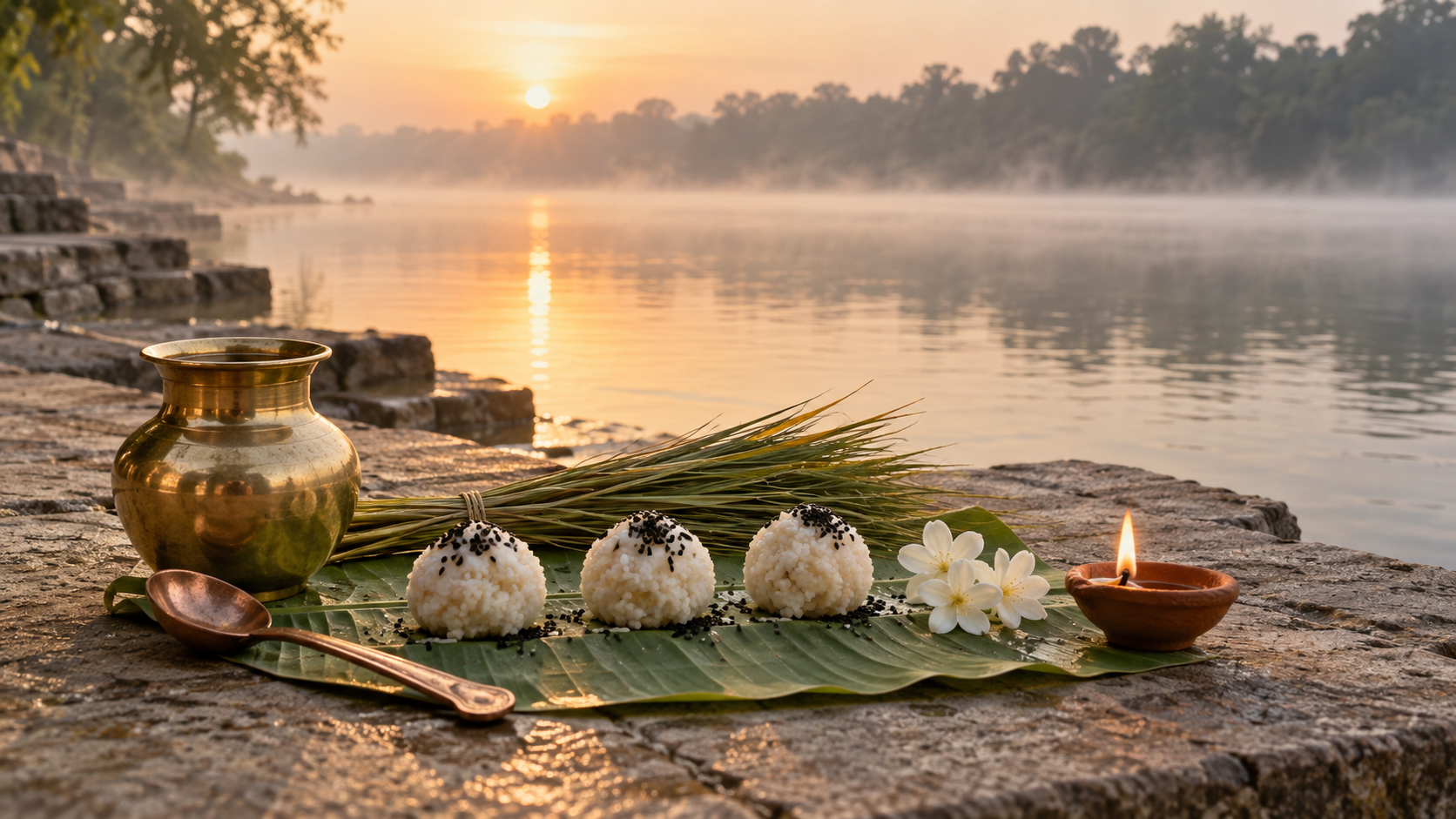
You need two things before arranging Pitru Paksha Shraddha: the correct lunar observance for your family and a ritual plan that follows your sampradaya. An English calendar date alone is not enough, because the relevant tithi can begin or end during the day.
For 2026, set aside the period from 27 September to 10 October. Then confirm the applicable tithi, local timing, ancestral details and ritual procedure with your family priest or a trusted local panchanga before making travel or meal arrangements.
Pitru Paksha 2026 dates you can put on your calendar
Pitru Paksha begins on Sunday, 27 September 2026, and concludes on Saturday, 10 October 2026, with Mahalaya Amavasya. This is the main planning window for Shraddha, tarpana and other family observances for the pitrs.
| Date | Observance | What you should check |
|---|---|---|
| 27 September 2026 | Pitru Paksha begins | Confirm the death tithi followed by your family and reserve a priest if required. |
| 29 September 2026 | Bharani Mahalaya Shraddha; Tritiya Shraddha in 2026 | Use this observance only as directed by your family tradition or priest. |
| 30 September 2026 | Chaturthi Shraddha, followed by Panchami | Check the tithi transition and the correct ritual period for your location. |
| 10 October 2026 | Mahalaya Amavasya; Pitru Paksha concludes | Ask whether your family uses this day when the death tithi is unknown, missed or observed collectively. |
Bharani Mahalaya Shraddha falls on 29 September in 2026. It is determined by the presence of Bharani nakshatra during Pitru Paksha and coincides with Tritiya Shraddha that year. Bharani is therefore a nakshatra-based observance, not merely another name for every family’s Tritiya rite.
On 30 September, Chaturthi continues until 2:57 p.m., after which Panchami begins. That change within the civil day is precisely why you should not schedule a Shraddha by date alone. Confirm whether the stated time applies directly to your location, especially if you live outside Bharat.
Choose the Shraddha day by tithi, not convenience alone
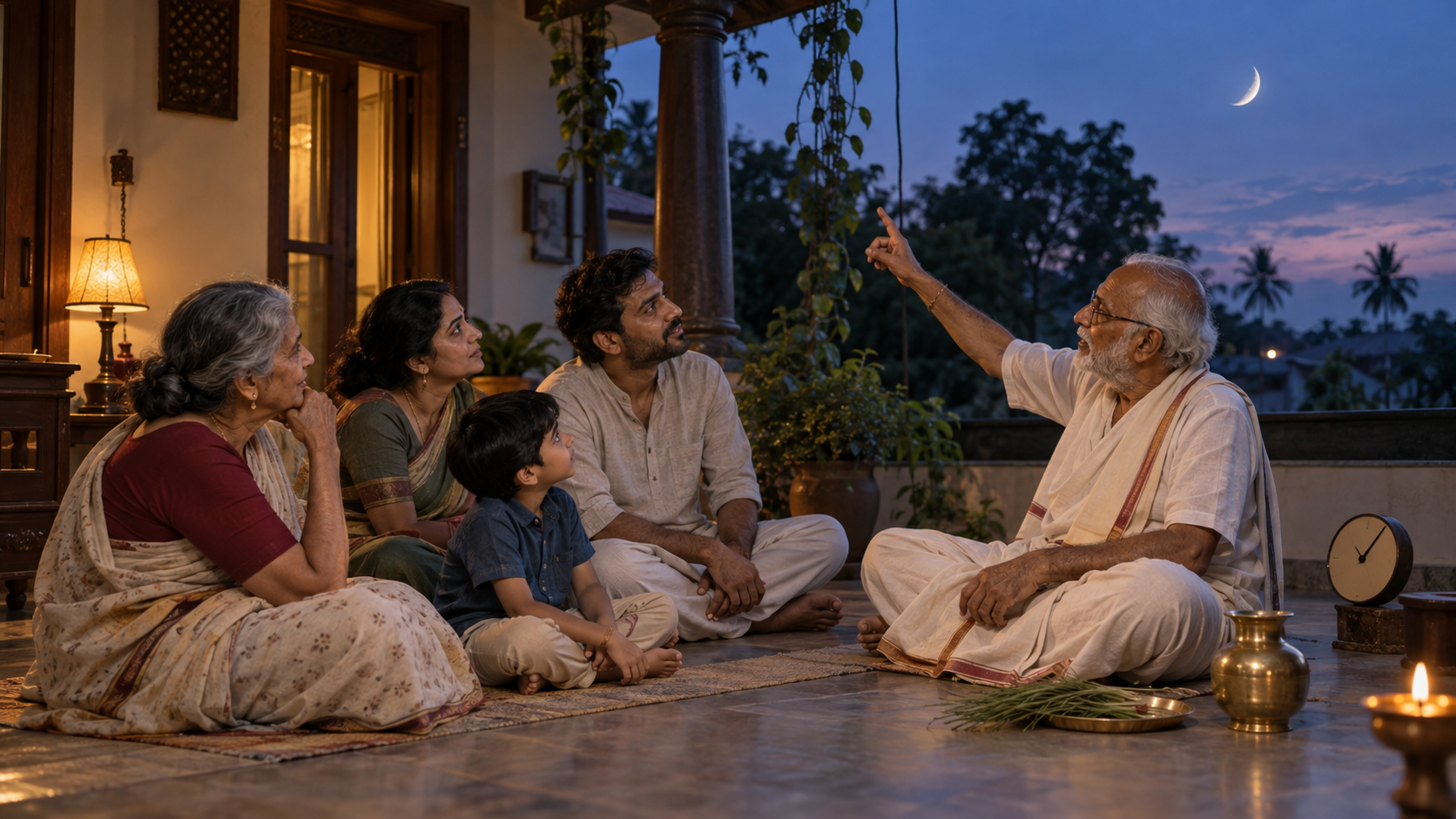
The usual starting point is the lunar tithi associated with the ancestor’s death, as preserved by the family. It may not fall on the same Gregorian date each year. Look first in family records, an earlier Shraddha note, a priest’s register or the calendar used by the person who previously conducted the rite.
If you know only the civil date of death, do not guess the tithi from memory. Give the priest the date, approximate time and place of death if your family has those details. A panchanga calculation can then be made according to the calendar convention your tradition follows.
When the death tithi is unknown, when the appropriate day has been missed, or when several ancestors are remembered together, many families turn to Mahalaya Amavasya. That does not make every family’s procedure identical. Ask whether your kula, regional custom or sampradaya treats the Amavasya observance as the principal rite, an additional collective remembrance, or a practical provision for an uncertain tithi.
Do the same before choosing Bharani Mahalaya Shraddha. Its importance does not automatically displace the ancestor’s own tithi. If Bharani Shraddha is part of your inherited practice, 29 September is the relevant 2026 date; otherwise, let your family’s established rule decide.
Prepare the ritual details before Pitru Paksha begins
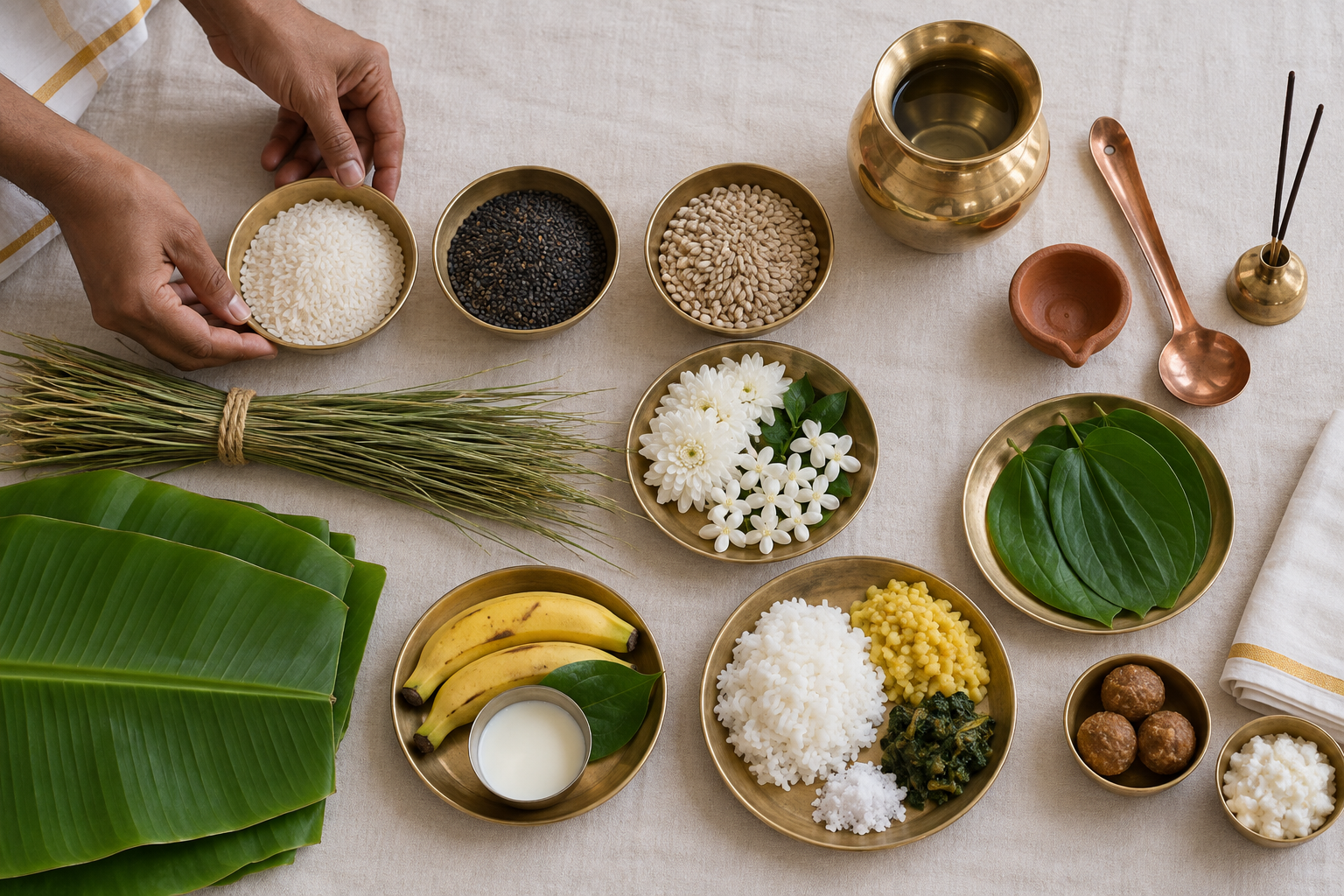
The most avoidable problems are not elaborate theological questions. They are missing names, an uncertain gotra, an unconfirmed tithi, or ritual materials discovered too late. Resolve those matters before 27 September.
- Identify whom you are remembering. Write down each ancestor’s name, relationship to the performer and gotra where known. Keep spellings and family forms of the names together.
- Confirm the governing calendar. Tell the priest where the rite will occur. Tithi boundaries depend on local time, so a schedule prepared for Bharat should not be transferred mechanically to another country.
- Ask for the exact sankalpa information. A sankalpa situates the rite by intention, performer, lineage, place and calendrical moment. Obtain the wording used in your tradition instead of copying an isolated formula that may assume another date or location.
- Request a materials list from the person guiding the rite. Water, sesame, darbha, rice or pinda ingredients, food offerings and ritual vessels are commonly encountered, but the required combination and handling vary. Buy what your actual procedure calls for.
- Decide who will perform and who will assist. Family rules about the principal karta can differ. Settle that question early rather than debating eligibility when the rite is due to begin.
- Plan the food and dana. Ask which dishes, recipients and forms of giving your family observes. If feeding people is part of the rite, confirm attendance and dietary needs in advance.
Keep these answers on one page. Include the date, tithi, start time, venue, names, gotra, priest’s contact information and materials. That simple sheet is more useful on the morning of Shraddha than a collection of unrelated online instructions.
Follow a coherent ritual sequence without mixing traditions
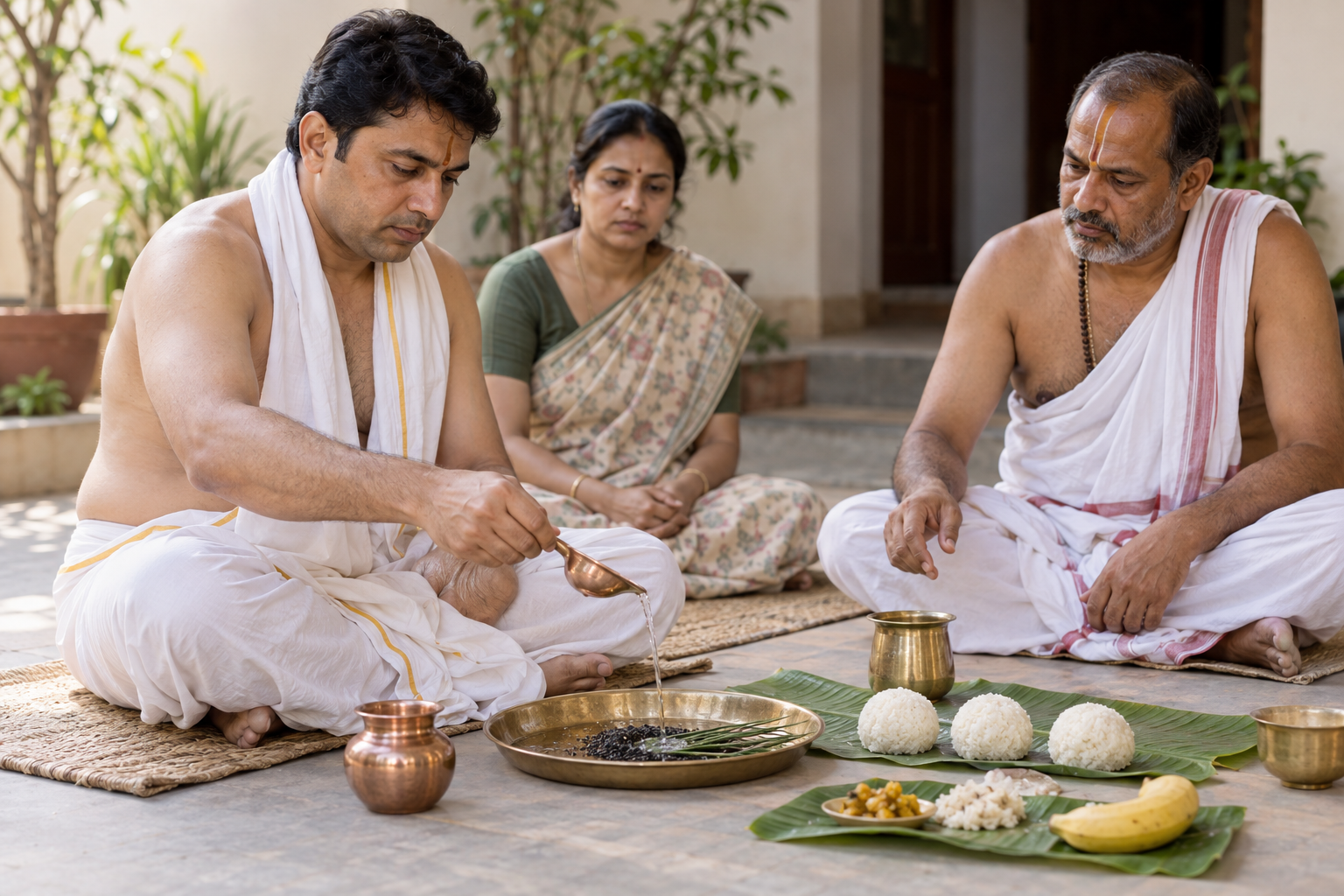
Shraddha expresses remembrance, gratitude and duty toward the pitrs. The outward procedure differs across regions, Vedic affiliations and family lineages, but a guided observance commonly moves through a recognisable sequence.
- Prepare yourself and the place. Bathe, wear clean clothing and arrange a quiet, clean area before the appointed period. Keep phones and unrelated activity away from the ritual space.
- Make the sankalpa. State the intention of the rite using the names, lineage details, place and calendrical information prescribed for your observance.
- Offer tarpana. Water oblations are made with the mantras, orientation, hand position and materials taught in the relevant tradition. Do not improvise these details from fragments belonging to different procedures.
- Perform pinda daan where prescribed. Pindas are offered to the ancestors in traditions that include them. Their preparation, number and placement should come from the same ritual authority guiding the rest of the Shraddha.
- Complete the food, feeding or dana observance. Carry out the form your family follows, whether that includes a prepared offering, feeding designated recipients, charitable giving or a combination of these.
- Conclude as instructed. Finish with the prescribed prayers, respectful disposal or distribution of ritual materials, and the closing actions given by the priest.
A longer ritual is not automatically a better one. Accuracy, steadiness and fidelity to your tradition matter more than collecting extra mantras from several lineages. If you do not understand a direction, ask before beginning; mistakes are harder to correct after offerings have been made.
Decide between a home observance and a temple visit
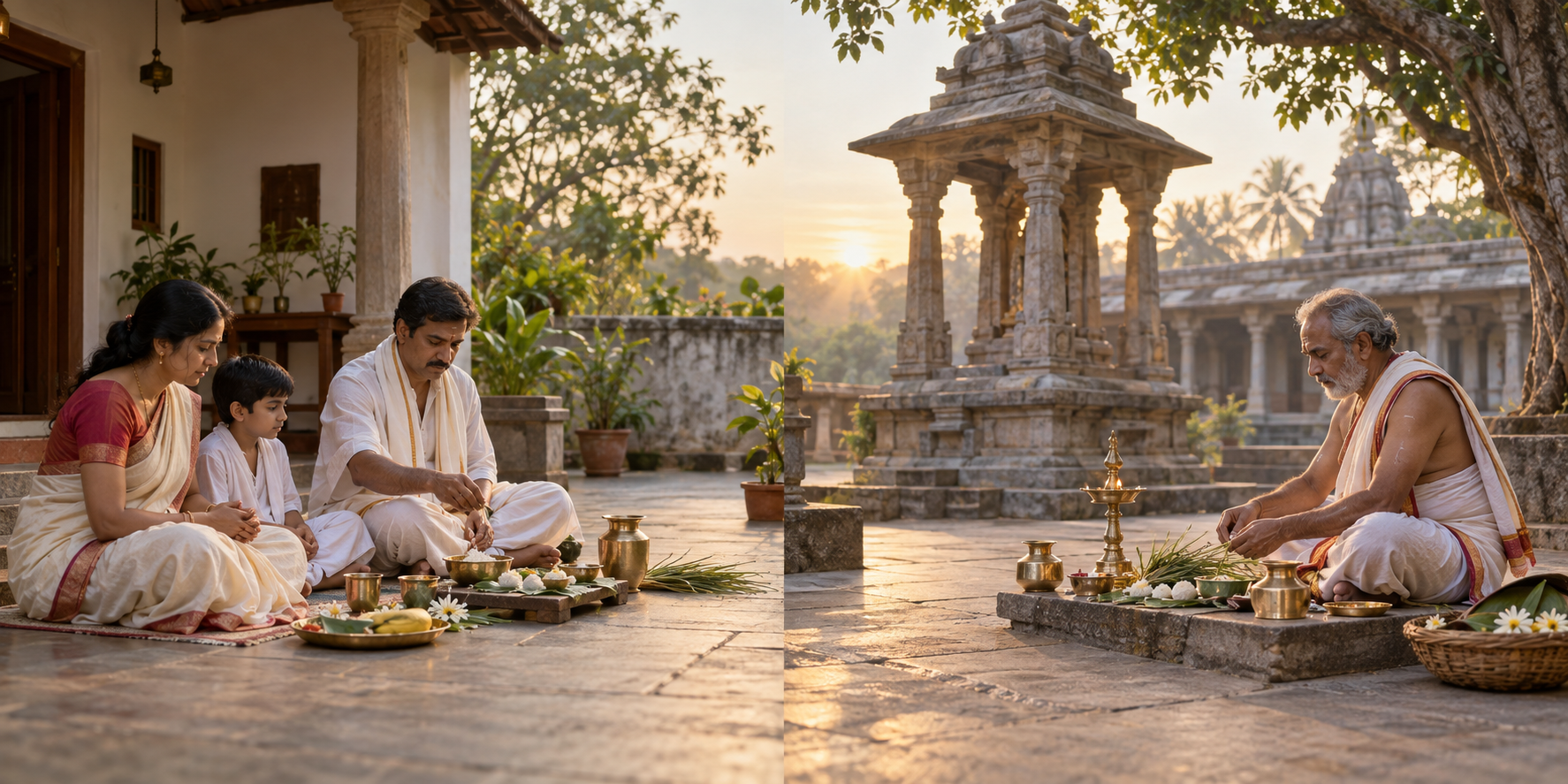
A home Shraddha works best when your family already has an established procedure or a priest can guide you clearly. Choose a temple or in-person priest when this is your first time, when the family record is incomplete, when a fuller rite is intended, or when you need help establishing the sankalpa and tithi.
Pitru Paksha rites are also associated with established pilgrimage and temple settings. Rafaleshwar Mahadev Temple near Morbi in Gujarat is one such place known for Pitru Paksha observances. If you plan to travel to a temple, contact it before departure and ask about registration, required family details, materials, language, timing and whether the temple performs individual or collective sankalpas.
If travel is impossible, ask whether your sampradaya permits a home tarpana and whether the priest can guide it remotely. When you cannot undertake the formal rite, you can still remember the ancestors respectfully and give food or charity in their memory. Treat that as a sincere act of remembrance, not as an assumed technical substitute for Shraddha unless your tradition recognises it as such.
Key takeaways for your 2026 observance
- Pitru Paksha runs from 27 September through 10 October 2026 and ends with Mahalaya Amavasya.
- Bharani Mahalaya Shraddha falls on 29 September and coincides with Tritiya Shraddha in 2026.
- Chaturthi Shraddha falls on 30 September; Chaturthi continues until 2:57 p.m. before Panchami begins.
- Select the rite by the applicable tithi and family tradition, not by the Gregorian date alone.
- Verify every time against a local panchanga, particularly outside Bharat or when a tithi changes during the day.
- Use one coherent procedure from your family priest or sampradaya rather than combining mantras and actions from unrelated traditions.
Your next step is simple: find the ancestor’s tithi record and call the priest who will guide the observance. Confirm the date, local ritual period and materials before 27 September; once those three points are settled, the rest of the preparation becomes manageable.
References
- Hindu Pad – Chaturthi Shraddh Tharpana Sankalpa Mantras | 30 September 2026
- Hindu Pad – Pitru Paksha rituals at Rafaleshwar Mahadev Temple
- Hindu Pad – Bharani Mahalaya Shraddh 2026 in Pitru Paksha

Leave a Reply
You must be logged in to post a comment.