
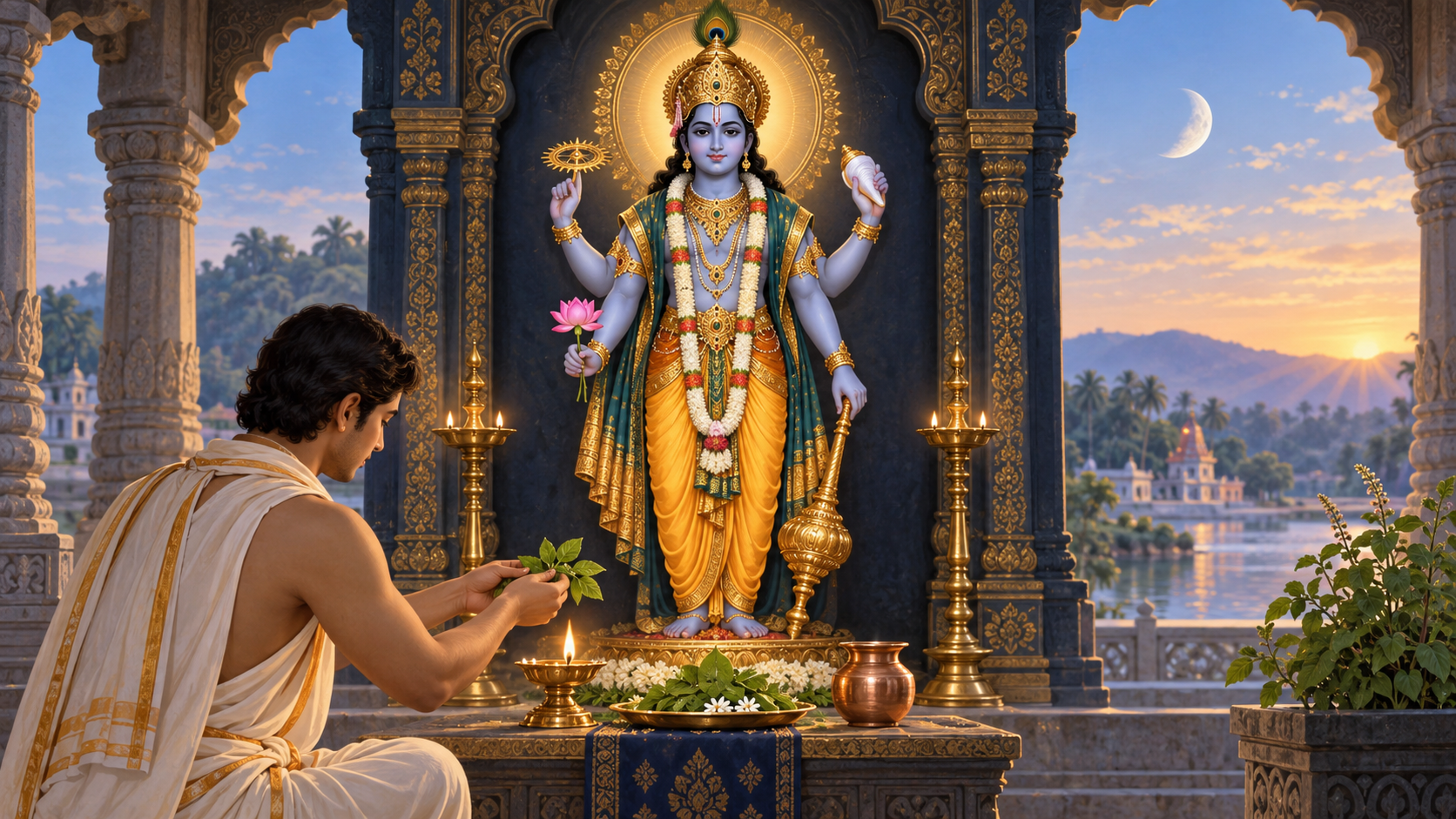
If you want to observe Ekadashi properly, writing a date on the calendar is only the first step. You also need to identify the Ekadashi, confirm the lunar timing for your location, choose a form of fasting that is appropriate for you, and keep Vishnu worship at the centre of the day.
For Papankusa Ekadashi in 2026, begin with 21 October. Treat that as the civil calendar date, then use a reliable local panchanga to settle the precise observance and parana timing.
The 2026 date to mark, and what still needs checking

Papankusa Ekadashi, also known as Padmanabha Ekadashi, falls in Shukla Paksha, the waxing lunar fortnight, during Ashwin or Ashwayuja. Its 2026 civil date is 21 October.
That date is enough for advance planning, but it is not a universal instruction to begin fasting at midnight. A tithi is a lunar day, and its beginning and ending do not have to coincide with the boundaries of a civil day. The applicable sunrise and the permitted time for parana, the formal completion of the fast, can therefore matter.
Before the observance, check a panchanga calculated for your city and answer two questions:
- On which local civil date should the Ekadashi vrata be observed?
- What is the local parana interval on the following day?
If two calendars appear to disagree, compare their location, time zone and religious convention before deciding that one must be wrong. A calendar prepared for another city may not be suitable merely because it displays the same festival name. If your family follows a particular sampradaya or temple calendar, use that tradition consistently rather than switching calendars to obtain a more convenient time.
Ekadashi is a vrata, not merely a restricted menu
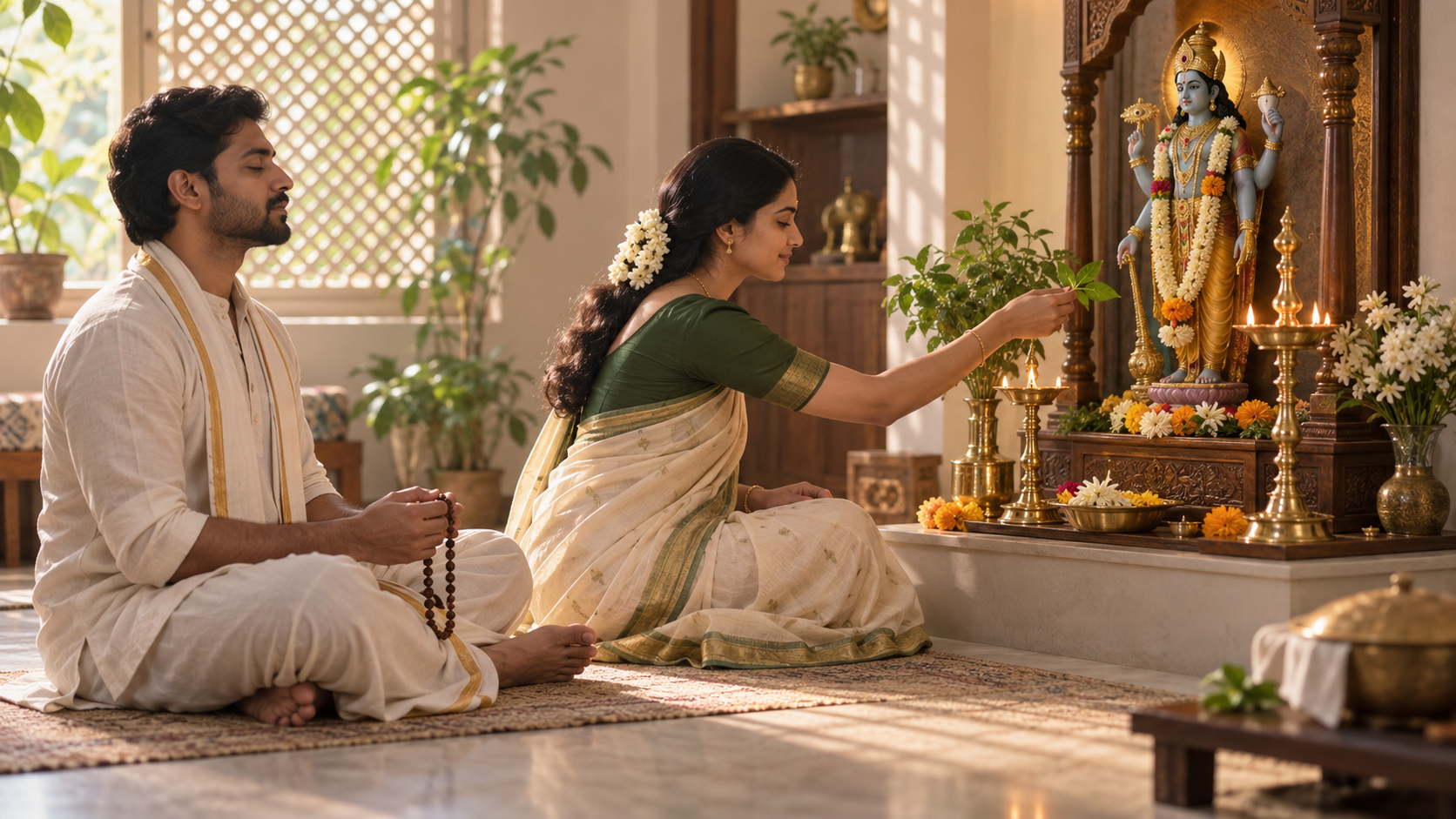
Ekadashi is the eleventh lunar day of a paksha. In Vaishnava practice it is a day set apart for Vishnu, with upavasa, puja and vrata forming the traditional frame.
These elements belong together. Upavasa supplies restraint. Puja gives that restraint a devotional direction. Vrata is the conscious commitment that prevents the day from becoming an accidental change of diet. A person can follow every food rule and still miss the point if the day contains no remembrance, worship or discipline of conduct.
Choose the form of observance in this order:
- Follow your established tradition. Use the practice taught in your family, sampradaya or temple rather than assembling rules from unrelated calendars.
- Settle the health question honestly. Do not undertake food or water restriction that is unsafe for you. Children, pregnant or nursing people, those managing a medical condition, and anyone whose medicine has food or hydration requirements should seek appropriate clinical guidance rather than improvise a severe fast.
- Decide what worship you will actually perform. Set aside a definite period for Vishnu puja, nama-japa, prayer, katha or quiet remembrance.
- Confirm how the vrata will be completed. Record the local parana interval in advance so that the final step is not left to guesswork.
If health prevents a food fast, do not treat avoidable harm as spiritual achievement. Ask a trusted religious teacher what form of observance is appropriate within your tradition, and preserve the devotional purpose of the day.
What the Rukmanga association adds to the observance
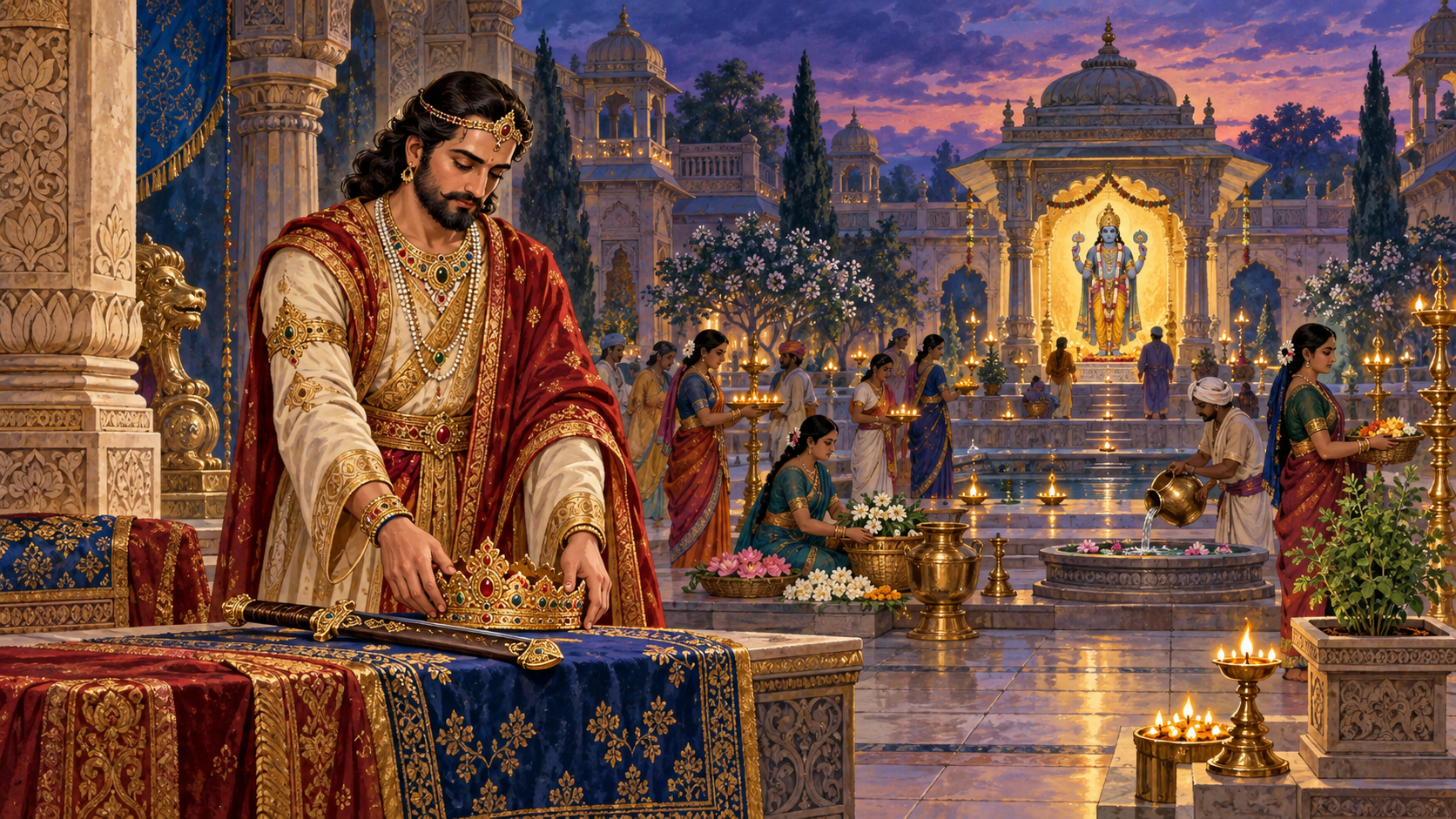
The Ekadashi tradition is also associated with King Rukmanga of the Surya Vamsha. This association places the vrata within the language of dharma, resolve and responsibility rather than presenting fasting as an isolated private preference.
Retellings of a katha can differ in wording and emphasis. If you are leading a family observance, use one recognised version from your own tradition instead of blending remembered details from several versions and presenting the result as universal. The katha should clarify the vrata, not become a contest over embellishments.
You can make the Rukmanga remembrance practical by asking three questions after the recitation:
- Is your resolve present only when observance is convenient?
- Does the vrata influence your speech and conduct, or only your food?
- Are you using religious discipline to govern yourself, or mainly to judge how others observe?
Those questions do not replace the traditional katha. They help you carry its dharmic function into the rest of the day.
A workable plan for 21 October
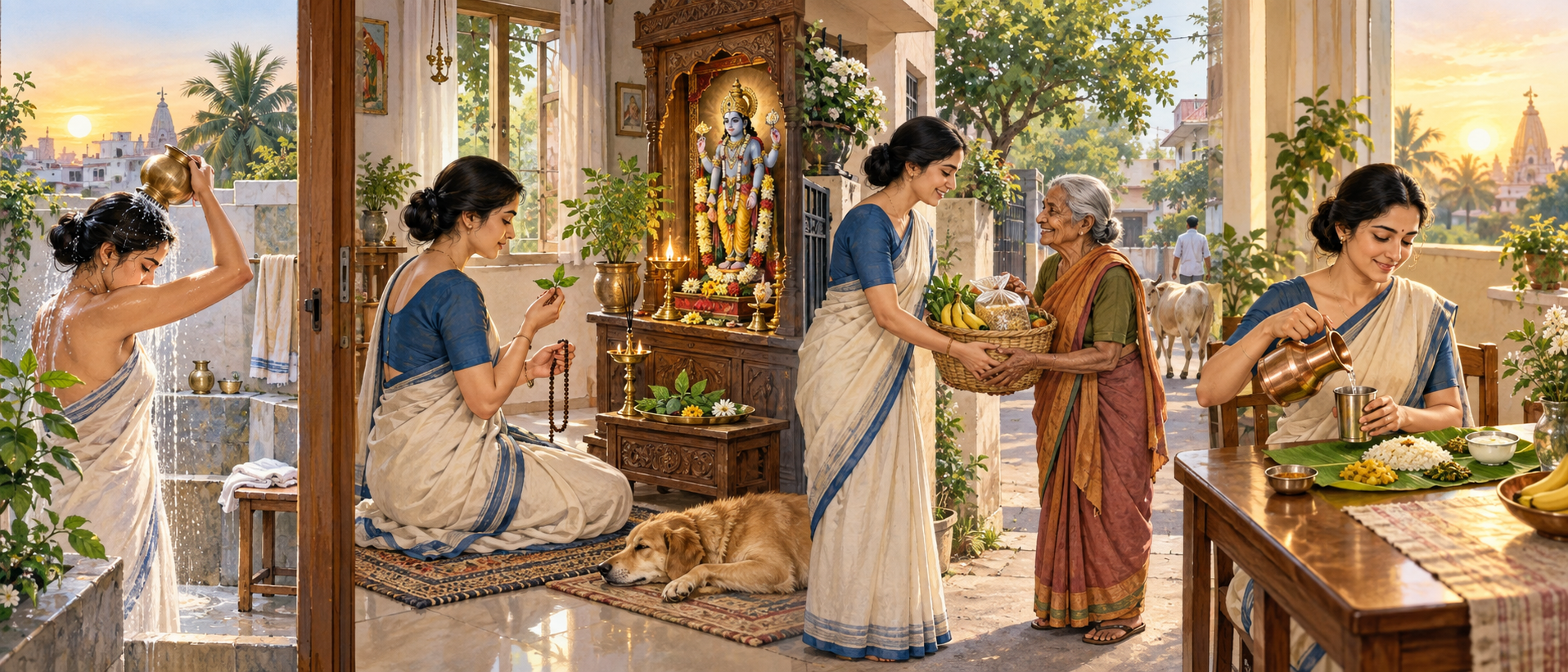
Use this sequence to prepare for Papankusa Ekadashi without turning the observance into last-minute calendar work:
- Mark 21 October 2026 now. Label it Papankusa or Padmanabha Ekadashi so it is not confused with another Ekadashi.
- Verify the date locally before the vrata. Consult a city-specific panchanga and record both the observance date and parana interval.
- Choose your form of upavasa. Base it on your religious tradition, physical condition and any professional health guidance you need.
- Prepare the devotional centre of the day. Decide when you will perform Vishnu puja, prayer, nama-japa or katha. Do not leave worship as something to fit in after every other obligation.
- Keep the vow you actually made. A sustainable observance followed with attention is more coherent than adopting an extreme rule and abandoning it midway.
- Complete the vrata deliberately. Follow the locally applicable parana timing rather than ending the fast simply when hunger or convenience dictates.
This structure also helps when work or caregiving responsibilities limit your day. Settle the non-negotiable religious elements beforehand, then arrange the rest of the schedule around them as far as your circumstances permit.
Key takeaways
- Papankusa Ekadashi, also called Padmanabha Ekadashi, is observed in Shukla Paksha of Ashwin or Ashwayuja.
- The stated 2026 civil date is 21 October.
- Verify the applicable tithi and parana interval with a panchanga calculated for your location.
- Ekadashi joins upavasa, Vishnu puja and vrata; food restriction by itself is not the complete observance.
- King Rukmanga of the Surya Vamsha is associated with the Ekadashi tradition.
- Choose a form of fasting consistent with your tradition and health rather than treating severity as the measure of devotion.
Put 21 October 2026 on your calendar now. Then, before the day arrives, add the local parana time and decide exactly how you will make Vishnu remembrance visible in your schedule. Those two decisions turn a remembered festival date into an intentional vrata.
References
- Hindu Pad – Rukmanga Katha, Story of King Rukmanga (Ekadashi Vrat Story)
- Hindu Pad – Papankusa Ekadashi 2026

Leave a Reply
You must be logged in to post a comment.