
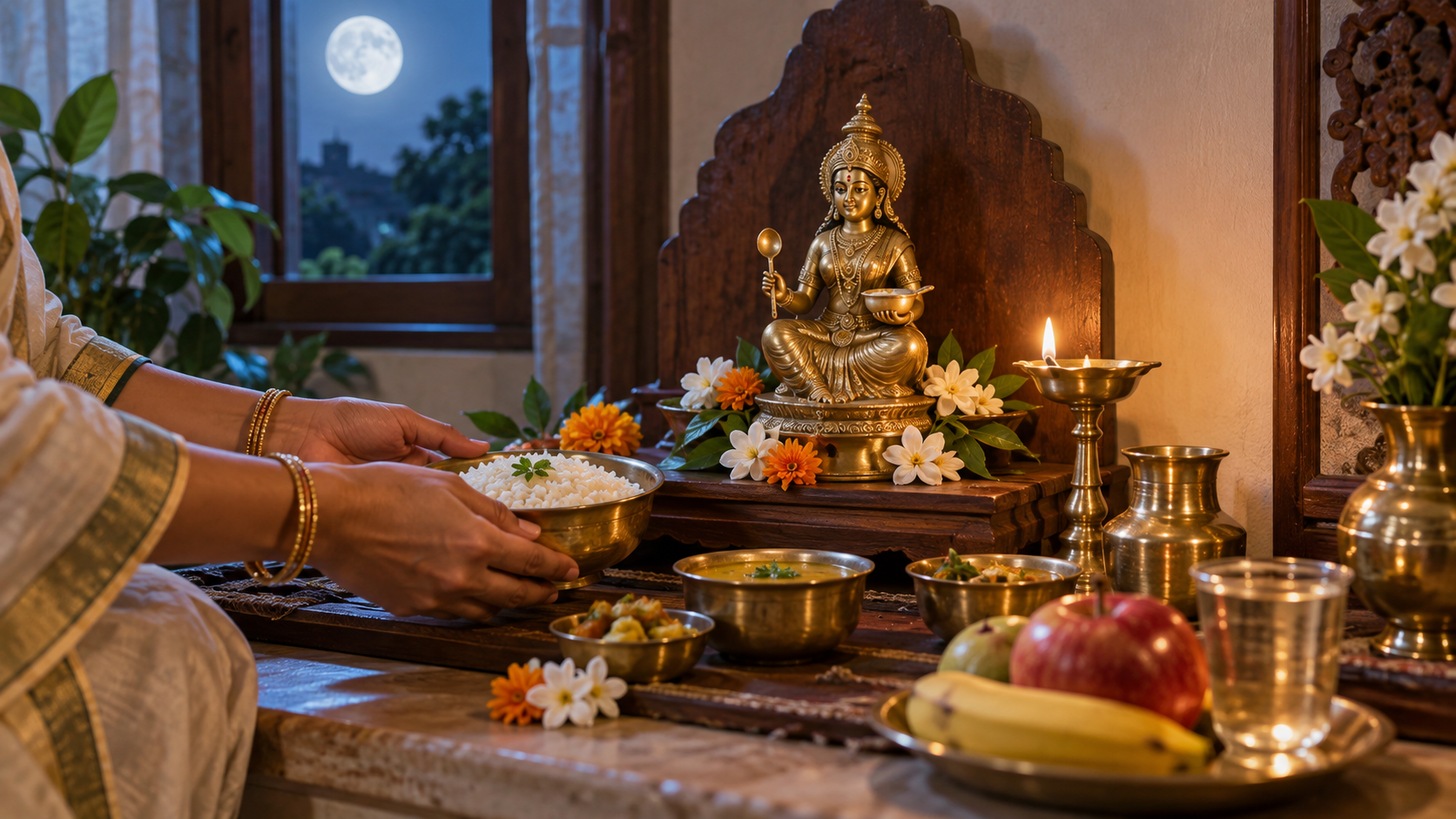
If you are trying to place Annapurna Jayanti on your 2026 calendar, mark December 23 now. Then make one practical decision: will you observe it privately at home, join a temple programme, or organise a meal for others?
You do not need an elaborate ceremony to approach the day sincerely. A clear calendar check, a respectful puja based on your own tradition, and deliberate care in preparing and sharing food can give the observance a coherent shape.
When is Annapurna Jayanti in 2026?

Annapurna Jayanti falls on December 23, 2026. It is observed on Margashirsha Purnima, the full-moon tithi of the Hindu month of Margashirsha.
The civil date is enough for basic planning, but it is not a substitute for a location-specific panchanga. Tithi boundaries do not necessarily begin and end at midnight. If your family procedure requires an exact puja period, sankalpa detail, or fasting rule, check the panchanga for your city or follow the timing announced by the temple you will attend.
Do not choose a different date merely because a general astronomy application displays the full moon differently. An astronomical phase and the Hindu tithi used for a vrata or festival are related, but they are not interchangeable planning tools. Use a Hindu calendar prepared for your location when precise timing matters.
The observance begins with how you regard food
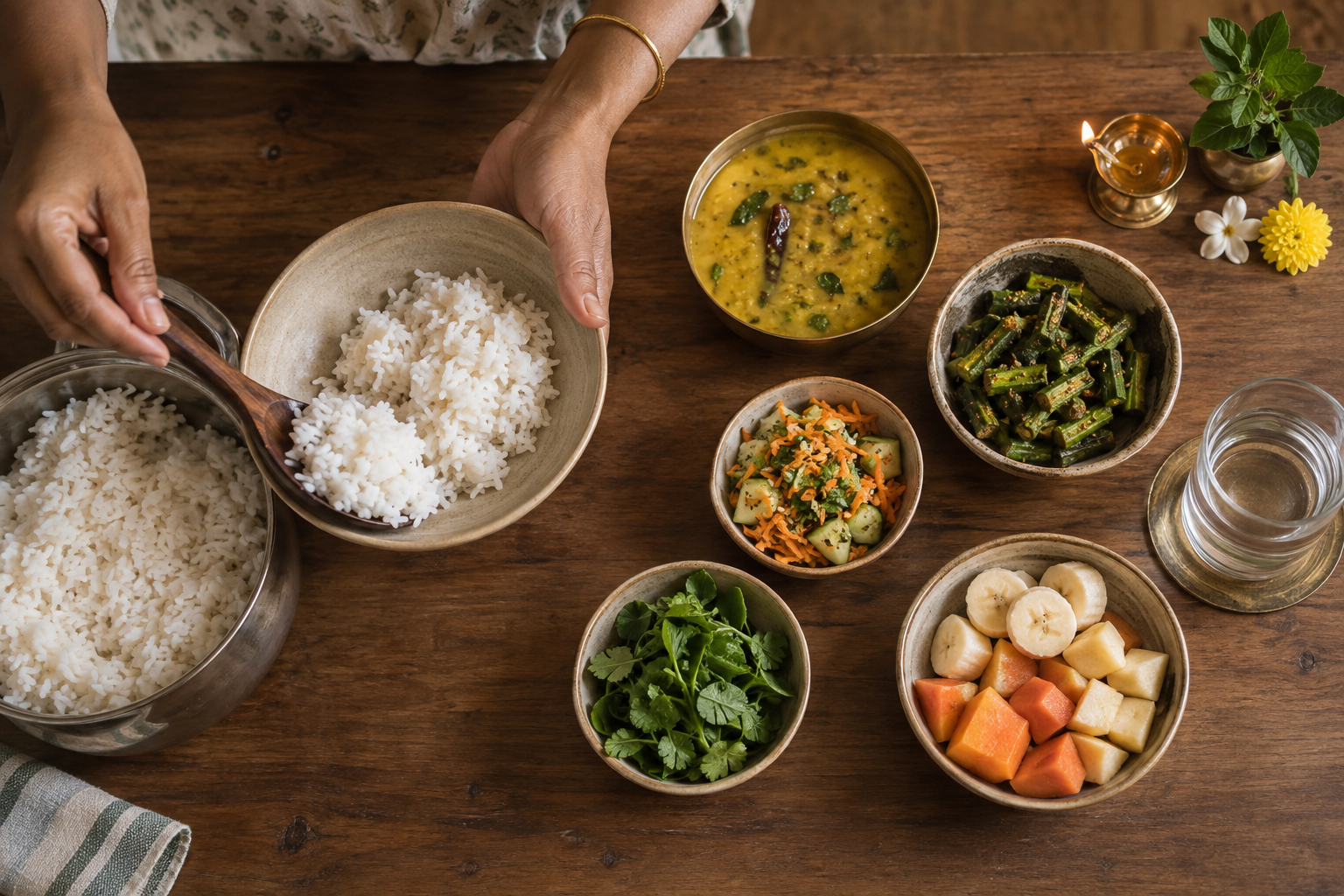
Annapurna Jayanti, also known as Mata Annapurneshwari Jayanti, commemorates the first appearance of Goddess Annapurna, a manifestation of Goddess Shakti. Her worship places food, nourishment, sufficiency, and gratitude at the centre of spiritual attention.
That emphasis gives you a useful test for the day. If the altar is carefully arranged but edible food is wasted, the observance has stopped short of its most immediate lesson. Plan the meal before you plan the decorations. Cook an amount your household can serve or store safely, treat every ingredient with care, and decide in advance how some nourishment will reach another person.
Sharing need not become a public performance. You might serve a family meal, take suitable food to a neighbour, contribute groceries to a community effort, support a trusted food programme, or participate in annadana arranged by a temple. Choose a form that meets a real need and that you can complete responsibly.
A simple Annapurna Jayanti observance at home
Puja procedures differ among families, regions, temples, and sampradayas. If you have an inherited paddhati, follow it. The sequence below is a modest framework for a household that wants to observe the day without pretending that one abbreviated method is universal.
- Confirm the date and your local timing. Keep December 23 free for the observance, and consult a city-specific panchanga if you require the precise Margashirsha Purnima window.
- Prepare the kitchen and puja place. Clean the surfaces you will use, arrange cooking vessels carefully, and avoid buying decorative items that will merely become waste.
- Create a respectful focal point. Place an image or murti of Mata Annapurna if your household has one. There is no need to make an impulsive purchase merely to complete a checklist; a clean and orderly prayer space is preferable to an object treated casually afterward.
- Prepare food suitable to your tradition. Use the dishes, ingredients, and purity rules followed in your home. If you are cooking for guests, confirm dietary restrictions and allergens rather than assuming that one menu suits everyone.
- Make your customary offering. Depending on your practice, this may include water, flowers, a safely lit lamp, incense, fruit, or part of the cooked meal. Preserve the procedure taught in your family instead of adding unfamiliar ritual details from an unverified checklist.
- Offer prayer without inventing authority. Recite an Annapurna prayer, familiar names of the Devi, or an aarti that you already know. If you do not know a prescribed recitation, speak plainly with gratitude for the food received and ask for the wisdom to use it without greed or waste.
- Distribute the meal respectfully. Share the offered food as prasada according to your custom. Serve people before allowing prepared food to sit unnecessarily, and store leftovers promptly when storage is appropriate.
- Complete the act of giving. Carry out the food-sharing or grocery contribution you planned. Do it on the day if possible; an intention left indefinitely on a list does not feed anyone.
If you are organising a shared observance
Community events often devote attention to the puja schedule while leaving food service and cleanup vague. Assign those responsibilities before the programme begins. Confirm who will purchase ingredients, cook, identify allergens, serve elders and children, manage leftovers, and clean the space. If donations are collected, state their purpose clearly and record how they are used.
Ask the presiding priest or temple committee for the announced schedule rather than circulating an assumed time. This matters especially when participants are travelling or preparing an offering at home before attending.
Key takeaways for your 2026 observance
- Annapurna Jayanti will be observed on December 23, 2026.
- Its Hindu calendar basis is Margashirsha Purnima.
- The day commemorates the first appearance of Goddess Annapurna, understood as a manifestation of Shakti.
- Use a local panchanga or temple announcement when you need exact tithi or puja timings.
- Follow your family or sampradaya procedure where one exists; do not treat a general household outline as a universal rule.
- Let the worship affect the meal itself: prepare carefully, prevent avoidable waste, share prasada, and arrange a concrete act of nourishment for someone else.
Carry one part of the observance beyond the festival
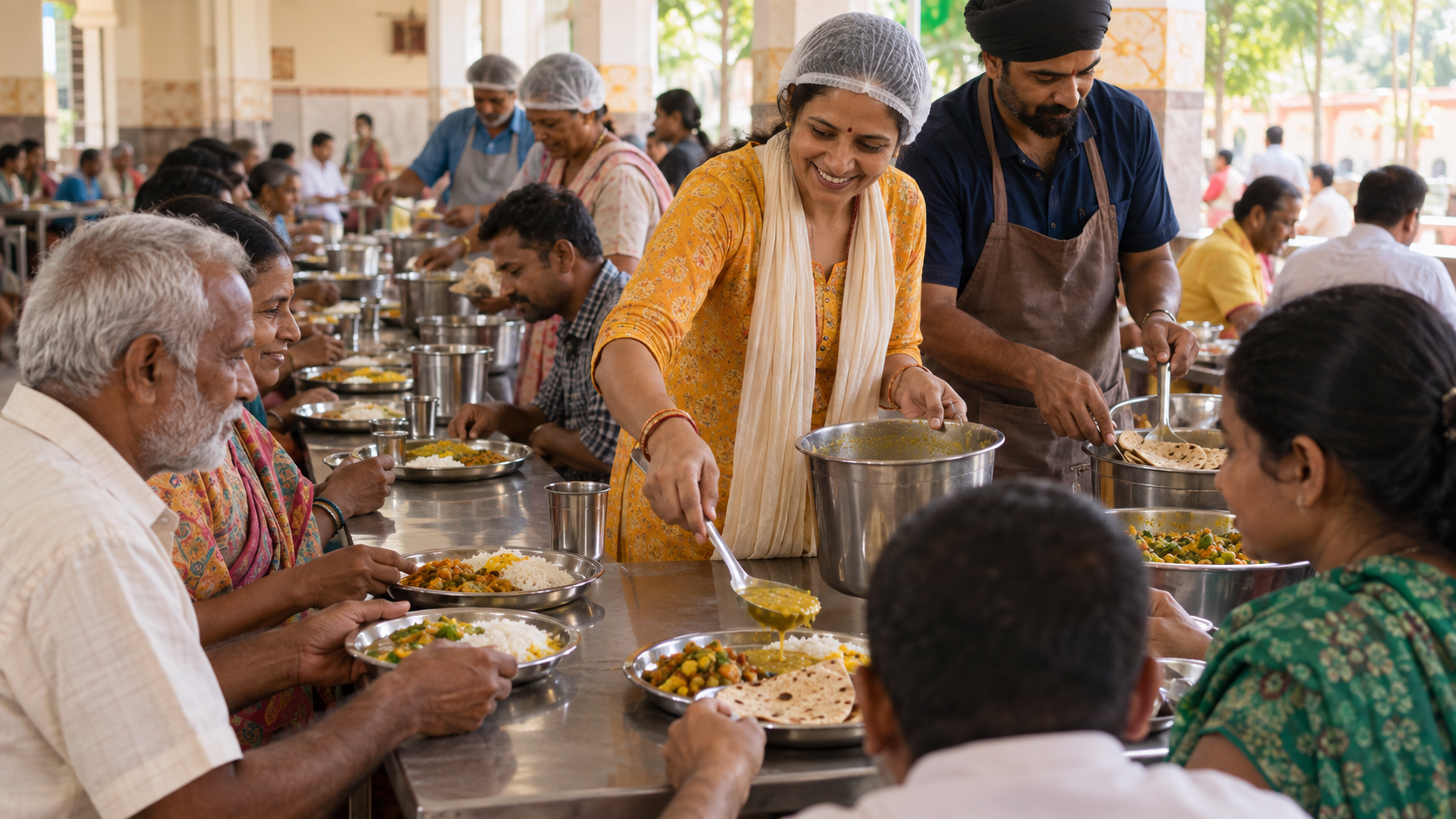
Before closing your calendar entry, attach one continuing commitment to it. You might plan meals more accurately, keep a regular grocery contribution, volunteer for a food-service effort, or begin serving only what can be eaten. Pick one practice you can sustain rather than several promises you will abandon.
For now, reserve December 23, check the local Margashirsha Purnima timing, and decide whom your observance will nourish. Those three actions will turn a date on the Hindu calendar into a day lived with purpose.
References

Leave a Reply
You must be logged in to post a comment.