
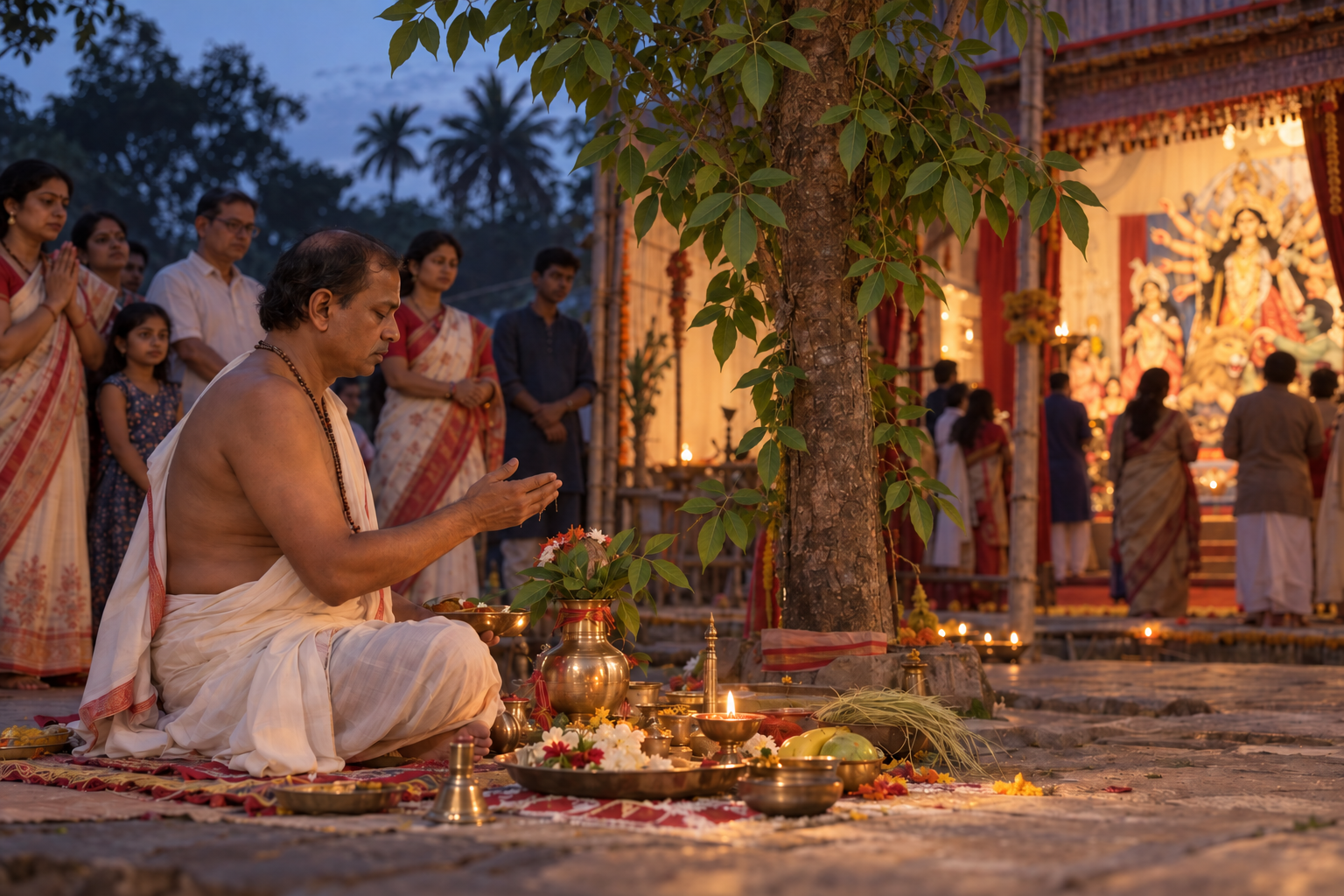
You may hear Bodhan announced at a Durga Puja and still wonder what has actually begun. Is it an invocation, a preliminary ceremony, or the first act of the main worship? The clearest answer is that Bodhan marks a threshold: the Puja moves from preparation and expectation into its formally inaugurated sacred observance.
Once you recognise that threshold, Bodhan stops looking like an isolated item in a crowded programme. It gives you a way to understand the days that follow as an ordered encounter with Devi rather than a collection of ceremonies, decorations and festivities.
Bodhan begins the central movement of Durga Puja
The word Bodhan means awakening. In the structure of Durga Puja, it is the sacred commencement leading into Saptami, Ashtami and Navami, the three principal days of worship. It should therefore be understood as an inauguration, not as another name for the entire festival.
This distinction matters when you read a programme or attend a community Puja. Preparations may have been underway for weeks, and devotional excitement may already fill the pandal, but Bodhan identifies a ritual beginning within that larger celebration. Social time and sacred time overlap, yet they are not identical.
A useful question is not simply, “When does Durga Puja start?” Ask instead, “Which beginning do we mean?” There is the beginning of public preparations, the arrival of worshippers, the opening of the pandal and the formal commencement of the central worship. Bodhan concerns that last and most ritually significant transition.
Why Kalparambha is the more precise ritual term
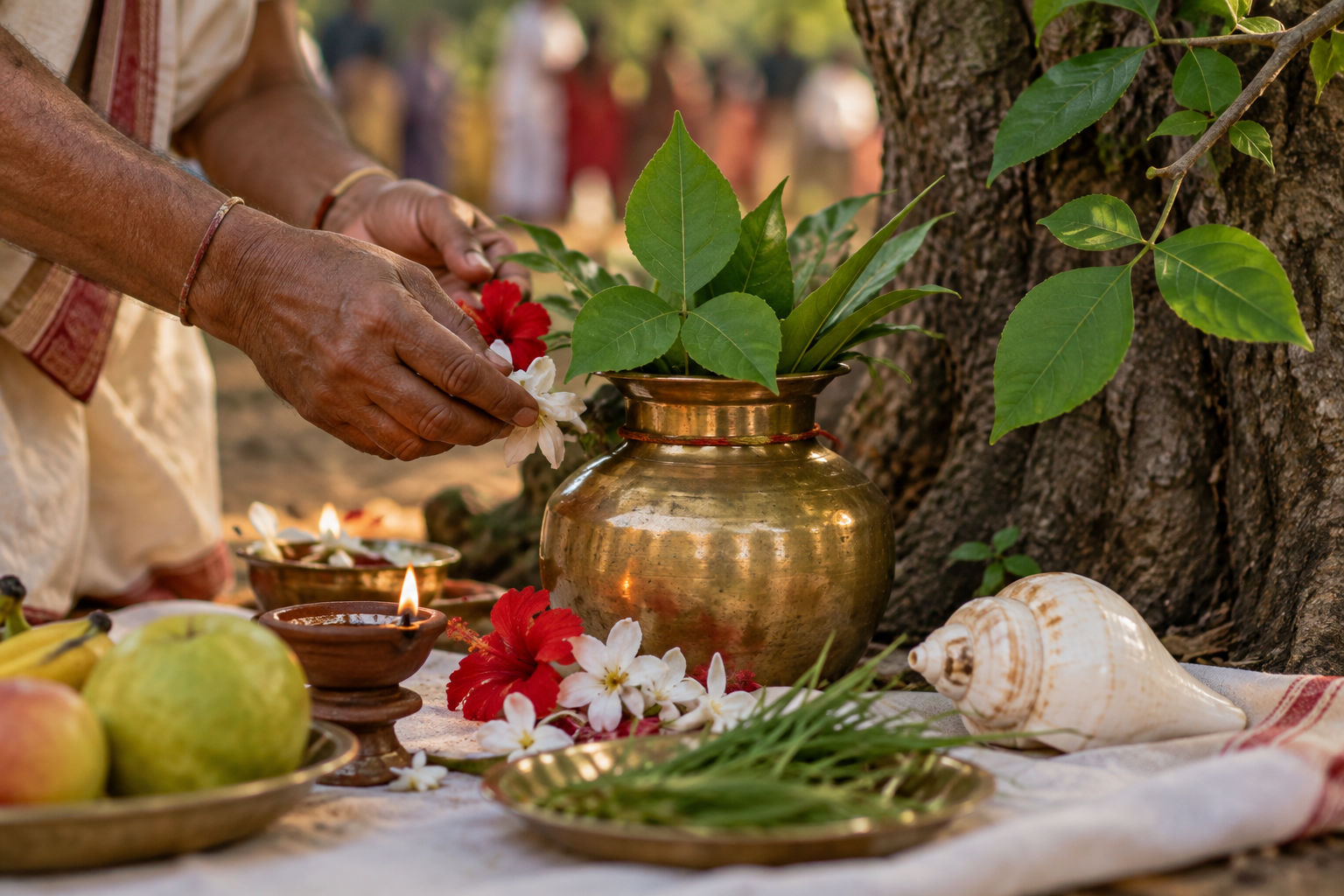
Bodhan is the familiar name because awakening expresses the devotional mood vividly. The more exact ritual term is Kalparambha. Arambha means beginning, while kalpa here points toward an ordered ritual observance or prescribed procedure. Kalparambha therefore directs your attention to what the ceremony does: it inaugurates the sequence of worship.
The two names illuminate different sides of the same threshold. Bodhan tells you how the moment is experienced—as an awakening into divine presence. Kalparambha tells you how it functions—as the commencement of an established sacred order. Keeping both meanings in view prevents two common misunderstandings.
- If you think only in terms of “awakening,” you may imagine that the ritual claims Devi was powerless or absent until human beings acted.
- If you think only in terms of procedure, you may miss the inward and devotional transformation that makes the procedure meaningful.
A Hindu ritual can be precise without becoming mechanical and symbolic without becoming merely imaginary. The prescribed beginning disciplines attention. The language of awakening reveals what that disciplined attention is meant to accomplish.
Who or what is being awakened?
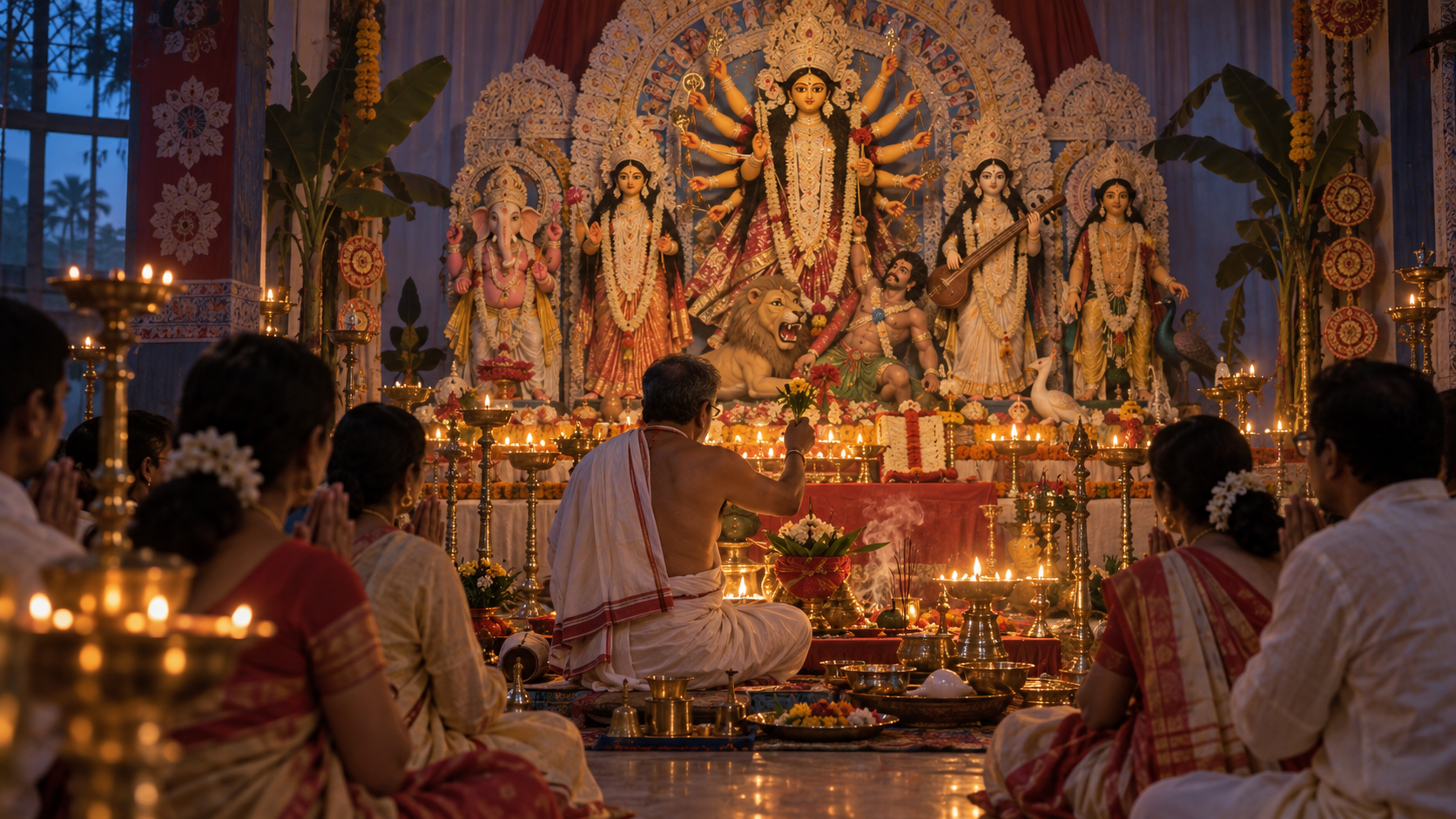
Bodhan need not be read as a crude claim that the Divine Mother literally depends on human beings to rouse her. A more useful reading recognises several movements occurring at once.
- Ritual awakening: worship is deliberately brought into its formal phase. A boundary is established between preparation and consecrated action.
- Devotional awakening: the worshipper is called out of distraction. Attention turns toward Devi as a living divine reality, not simply an image to be viewed.
- Communal awakening: individuals gathered for different reasons begin to act as a worshipping community. The Puja acquires a shared centre.
These levels do not compete. An observance can address Devi, shape the consciousness of the devotee and gather a community into sacred order at the same time. Reducing Bodhan to only an external performance misses its inward demand; reducing it to only a psychological metaphor strips the ritual of its devotional seriousness.
For you as a participant, the practical implication is simple: Bodhan is a cue to become present. The change required is not excitement for its own sake but a shift in attention—from watching an event to entering worship.
How to witness Bodhan with understanding
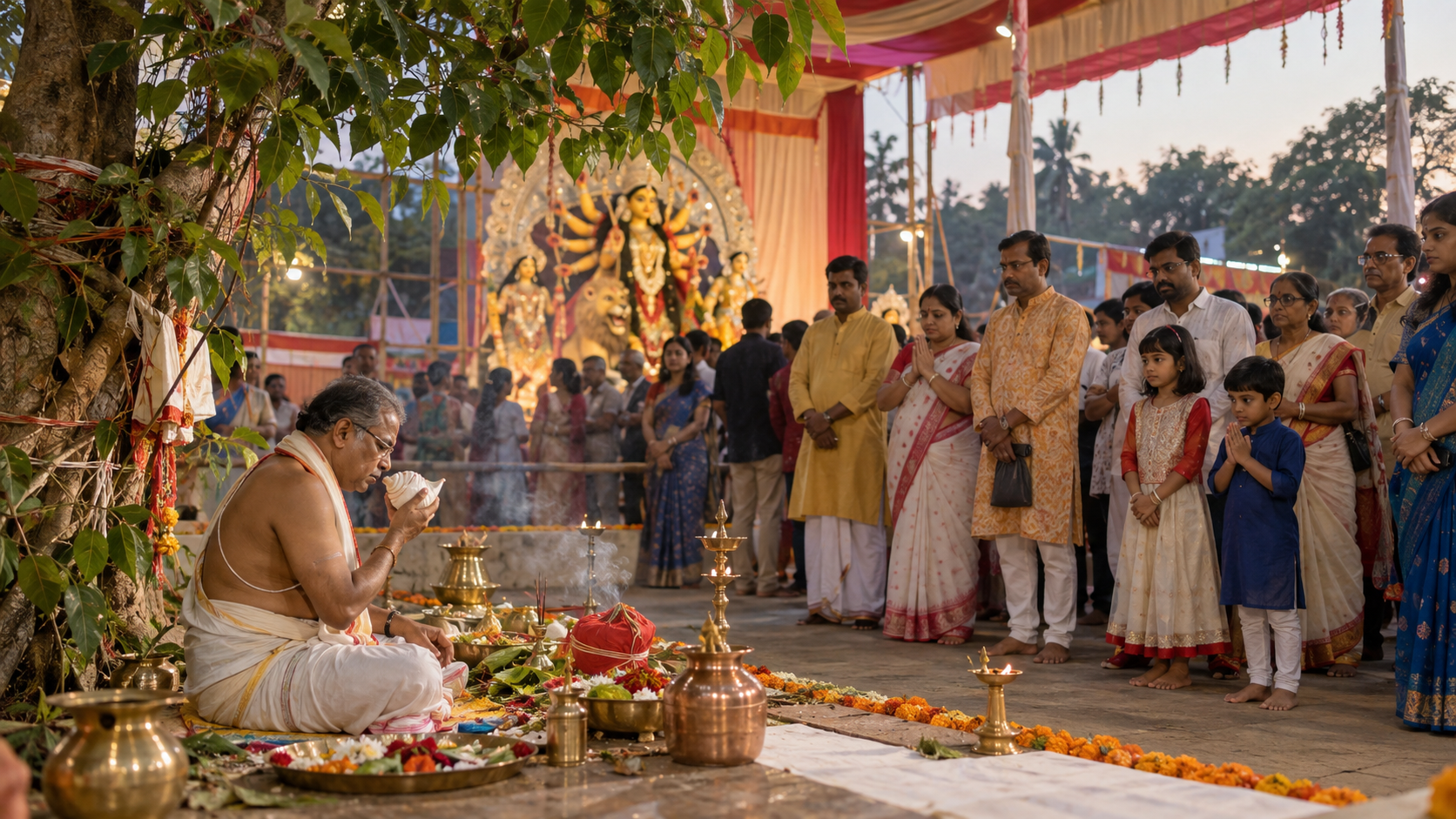
You do not need to know every mantra or ritual action before you can participate respectfully. You do need to recognise that you are present at an opening, not waiting for the “real” Puja to begin later.
- Confirm the local schedule. Do not assume that a general festival timetable gives you the exact time used by a particular temple, family or community. Follow the calendar and instructions adopted by the organisers.
- Arrive before the announced beginning. Entering early gives you time to settle, put away distractions and understand where worshippers are expected to stand or sit.
- Listen for the change in ritual mood. Notice when preparation gives way to directed worship. That transition is more important than trying to identify every object or gesture without guidance.
- Follow the officiating tradition. Regional, community and family practices should not be forced into a single improvised template. Let the priest or host guide participation in that setting.
- Treat the moment as worship, not content. If photography is permitted, it should not displace attention or obstruct another devotee. Bodhan asks for presence before documentation.
If you are arranging worship at home, a short explanation of Bodhan is not a substitute for the paddhati, family practice or qualified ritual guidance appropriate to your tradition. Learn the meaning here; obtain the actual mantras, sequence and requirements from the authority responsible for the observance you follow.
What Bodhan changes in the way you see the following days
Saptami, Ashtami and Navami are not three interchangeable days added to a festival schedule. Bodhan places them within a sequence that has been consciously opened. This is why the beginning deserves attention even if the later ceremonies appear more elaborate or attract larger crowds.
The ritual also corrects a modern tendency to judge a Puja primarily by scale: the height of the murti, the design of the pandal, the number of visitors or the spectacle of cultural programmes. Those may belong to the public celebration, but Bodhan points to a different centre. Durga Puja becomes sacred through disciplined worship and awakened relationship with Devi, not through display alone.
This does not require you to reject beauty, artistry or communal celebration. It asks you to put them in their proper relation to worship. The pandal can welcome the community; art can embody devotion; music can deepen the atmosphere. Bodhan reminds you what all of them are gathered around.
Key takeaways before you attend
- Bodhan means awakening and marks the formal sacred commencement of Durga Puja’s central sequence.
- Kalparambha is the more precise ritual term: it identifies the beginning of an ordered observance.
- The awakening can be understood at once as ritual, devotional and communal; it should not be reduced to a decorative custom or a purely psychological metaphor.
- Saptami, Ashtami and Navami follow as the principal days within the sequence Bodhan inaugurates.
- For exact timings, mantras and procedures, follow the temple, priest, family paddhati or community tradition responsible for the Puja you are attending.
The next time you attend Durga Puja, make one deliberate change: be present for its threshold. When Bodhan begins, let the movement from preparation to worship happen in you as well as around you. That attentive turn is the most direct way to understand why an awakening stands at the entrance to the days of Devi.
References

Leave a Reply
You must be logged in to post a comment.