
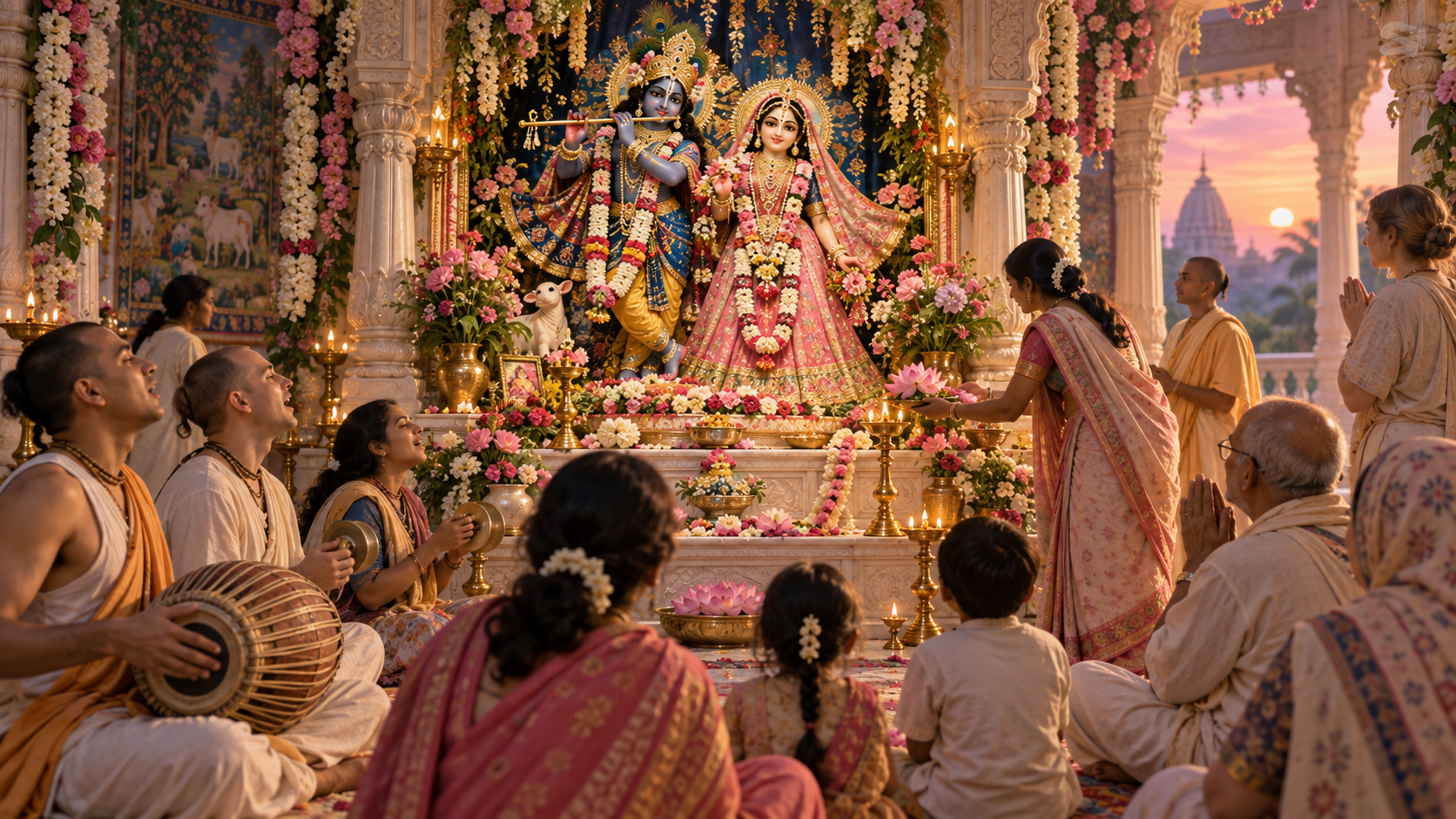
You may have marked 19 September for Radhastami but still be wondering what a meaningful observance should look like. Should you attend a temple celebration, hear a class online, spend the day in kirtana, or concentrate on private worship?
The answer becomes clearer when you begin with Srimati Radharani’s defining quality: devotion directed wholly toward the happiness of Krishna. Radhastami is therefore not just a birthday celebration or a day of heightened religious emotion. It asks whether your hearing, worship and service are becoming less self-centred.
Radhastami 2026 offers more than one way to participate
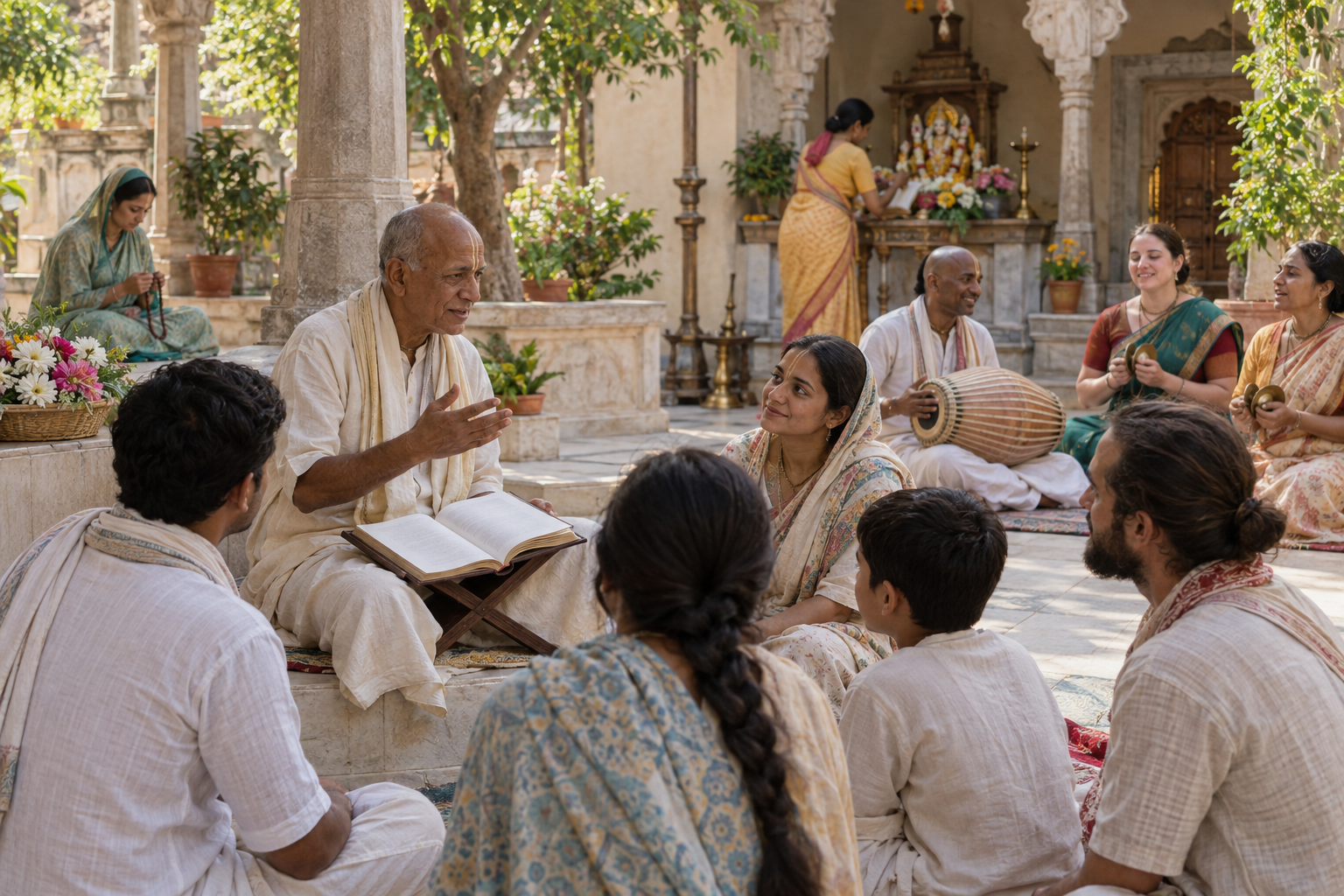
Radhastami is being celebrated on 19 September 2026 at Bhaktivedanta Manor. A morning class by Aniruddha Prabhu formed another part of the day’s observance, while ISKCON Chowpatty in Mumbai hosted a 19 September programme with Radhanath Swami.
The observance had already begun in a contemplative mood on 18 September through kirtana and teachings on the glories of Srimati Radharani at ISV. Further opportunities for hearing included a Radhastami lecture for 2026 and a live session with Jagattarini Mataji.
You do not need to consume every available programme. Choose one primary way to enter the festival and give it your full attention:
- If you need community: attend a local temple programme and volunteer for a practical service before or after the main celebration.
- If you need understanding: hear one complete class, take notes and identify one teaching that corrects your present attitude toward devotion.
- If you need recollection: set aside an uninterrupted period for kirtana, prayer and remembrance of Radha-Krishna.
- If you cannot attend in person: select one online programme in advance, silence notifications and participate as attentively as you would inside a temple.
The deciding question is not which format looks most impressive. Ask which form will help you hear carefully, serve concretely and remember Radha-Krishna without turning the day into background entertainment.
What devotion to Srimati Radharani is meant to change
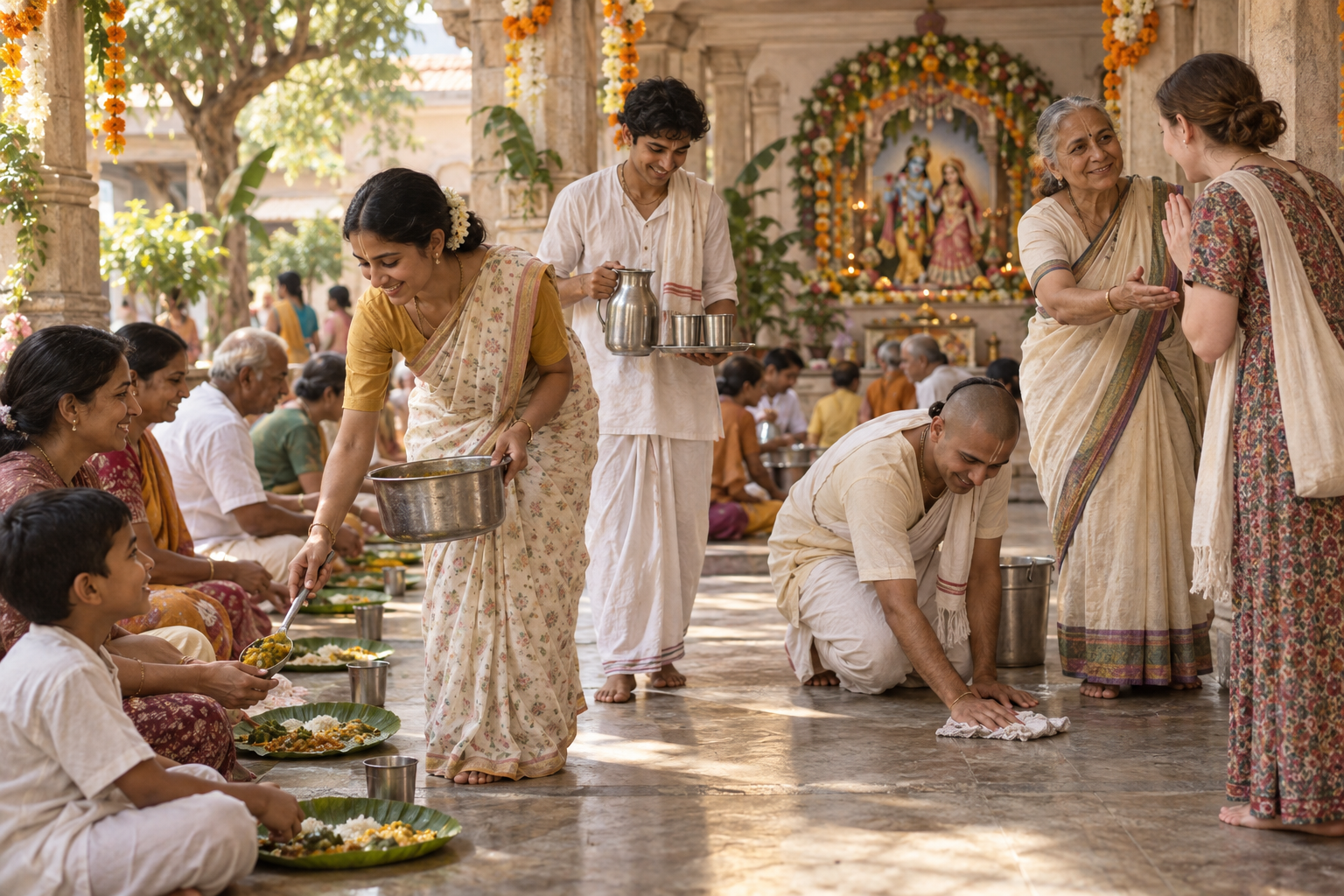
Within Gaudiya Vaishnava theology, Srimati Radharani is understood as the fullest embodiment of loving devotion to Krishna and as Krishna’s divine pleasure potency, often called hladini-shakti. These are not merely honorific ideas. They explain why devotees approach her as both the highest exemplar of bhakti and the compassionate guide into service to Krishna.
Her exalted position can be misunderstood if you translate sacred love into ordinary romance. Radha’s love is not a demand to possess Krishna. Its centre is Krishna’s happiness. That reverses the usual logic of desire, which asks what another person, a religious practice or even Bhagavan can do for us.
Three practical distinctions will keep your Radhastami observance grounded:
- Adoration is not imitation. The intimate moods associated with Radha-Krishna are objects of reverence, not roles for an untrained practitioner to perform. Begin with hearing, chanting, ethical conduct and service under trustworthy guidance.
- Service is not a transaction. A prayer made only to secure a desired result leaves the self at the centre. Ask instead for the ability to serve without resentment, recognition or calculation.
- Humility is not self-contempt. Vaishnava humility means giving up the claim to be the centre. It does not require denying your dignity, tolerating abuse or neglecting legitimate responsibilities.
This makes Radhastami surprisingly practical. Notice where you become irritated when your contribution is overlooked. Notice whether you serve only when the task suits your preferences. Notice whether your worship disappears when life does not give you the result you requested. Those moments reveal exactly where Radha’s example has work to do in you.
Build an observance around hearing, kirtana and seva
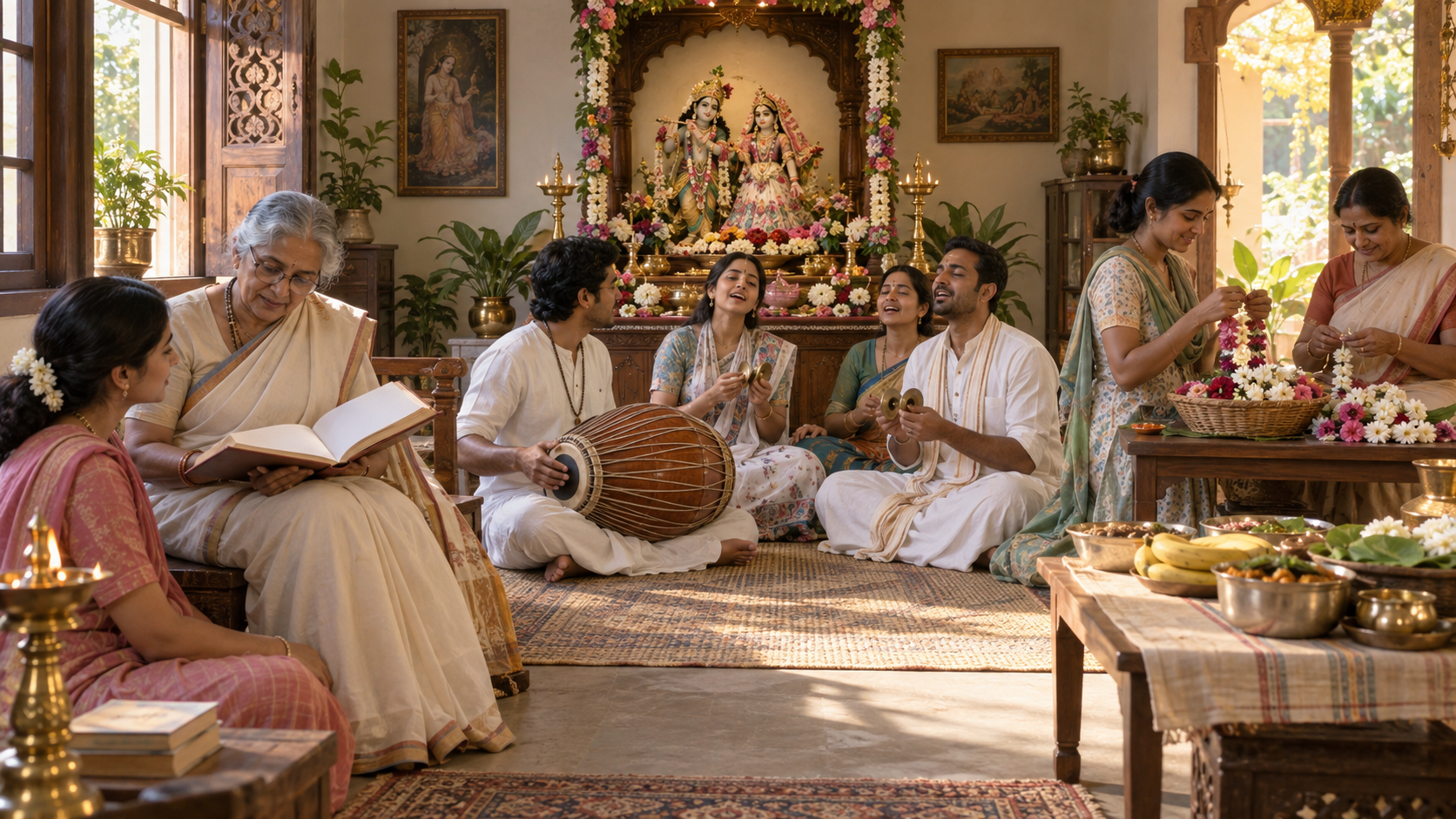
Temple and family customs differ, particularly around vrata, food, puja and the timing of ceremonial worship. Follow the practice given by your guru, sampradaya, temple or family rather than assembling an elaborate ritual from disconnected internet clips. The following framework can support your established practice without pretending to replace it.
If you are going to a temple
- Check the temple’s published schedule before leaving. Confirm the programme time, entry arrangements, parking or transit, and whether flowers, food or other offerings are being accepted.
- Arrive before the main kirtana or discourse. Entering early gives you time to settle your attention instead of carrying the urgency of the journey into worship.
- Ask for a specific service. Cleaning, arranging footwear, helping guests, preparing the hall or assisting with prasada distribution may teach more about selfless devotion than trying to secure the best place in the room.
- Keep photography subordinate to worship. If the temple permits photographs, take only what you need and then put the phone away.
- After the programme, write down one teaching and the behaviour it calls you to change. A teaching about humble service, for example, becomes actionable when you name the person or duty you have been avoiding.
If you are observing at home
- Clean the place where you will worship. Keep the arrangement simple enough that preparation does not consume the time meant for hearing and remembrance.
- Use the Radha-Krishna image or altar already honoured in your home. Offer flowers, a lamp, incense or food only in accordance with your normal devotional practice and with appropriate fire safety.
- Begin with the names of Radha and Krishna or the kirtana taught in your community. Avoid treating pronunciation as a performance; chant attentively and hear each name.
- Listen to one complete Radhastami discourse. Do not skip restlessly between speakers in search of the most emotionally striking passage.
- Make one offering of service that costs you something real: time, convenience, attention, money within your means, or the surrender of a grievance. The point is not hardship for its own sake but movement away from self-importance.
If online participation is your only option
Treat the chosen broadcast as a sacred appointment. Use a stable screen, silence unrelated applications and avoid running the programme while answering messages or doing routine work. Sit for the kirtana and teaching, respond where appropriate, and keep a notebook nearby. When the session ends, spend a few quiet minutes identifying what you will practise rather than immediately allowing another video to begin.
If your community observes a fast or another vrata, obtain its actual instructions rather than guessing from the festival name. A vrata is meant to support remembrance, not become a contest. Health, age and personal circumstances matter; when fasting is unsafe, follow suitable guidance and place the emphasis on hearing, prayer and seva.
Four common ways the day loses its centre

A sincere observance can still drift away from its purpose. Watch for these four patterns:
- Reducing Radha-Krishna to romantic imagery. Beauty belongs in the celebration, but sacred aesthetics should lead you toward purified service. If decoration, clothing or photography occupies your mind more than hearing, rebalance the day.
- Approaching Radharani only as a shortcut to personal wishes. It is natural to bring your needs to prayer. Do not stop there. Add the more demanding request: the intelligence and steadiness to serve well regardless of the outcome.
- Measuring devotion by visible intensity. A long fast, loud kirtana or public donation does not by itself reveal the quality of bhakti. Look for reduced envy, greater reliability and a willingness to accept unnoticed service.
- Collecting teachings without choosing a practice. Listening to several celebrated speakers can still leave your conduct unchanged. One carefully heard instruction, practised for the following week, is more useful than a queue of half-heard recordings.
There is also a subtler mistake: treating Radhastami as spiritually separate from your ordinary duties. If worship makes you less patient with family, careless at work or dismissive toward other devotees, the mood of service has not followed you out of the programme. The festival should refine how you perform necessary duties, not provide a religious excuse to neglect them.
Key takeaways for Radhastami 2026
- Radhastami falls on 19 September 2026, with kirtana and preparatory teaching also offered on 18 September.
- In Gaudiya Vaishnava understanding, Srimati Radharani embodies the highest selfless devotion to Krishna.
- A meaningful observance needs three elements: attentive hearing, wholehearted kirtana or prayer, and a concrete act of seva.
- You do not need to follow every available programme. Choose one and participate without distraction.
- Do not imitate intimate divine moods or invent complex rituals. Practise within the guidance of your guru, temple, sampradaya or family tradition.
- Judge the day by what changes afterward: less demand for recognition, more dependable service and deeper remembrance of Radha-Krishna.
Before your 2026 observance ends, choose one service you will continue for the next week. Make it specific enough to complete without applause: help one person, accept one neglected duty, repair one avoidable offence, or give one regular period to attentive nama and hearing. That is how Radhastami moves from the calendar into character.
References
- Dandavats — Bhaktivedanta Manor Presents: Radhastami – 19th Sept 2026
- Dandavats — Radhastami Morning Class – HG Aniruddha Prabhu – 19 September 2026
- Dandavats — Kirtana and Glories of Srimati Radharani | H.G. Vaiśeṣika Dasa | 2026-09-18 | ISV
- Dandavats — 19th Sep. ’26 | H.H. Radhanath Swami Maharaj | ISKCON Chowpatty Mumbai
- Dandavats — Radhashtami Lecture ’26
- Dandavats — Live Glories of Srimati Radharani by HG Jagattarini Mataji

Leave a Reply
You must be logged in to post a comment.