
If you have noticed that Vishnu’s avatars appear to decrease from one yuga to the next, the obvious question is hard to avoid: why would Bhagavan descend less often precisely when dharma is growing weaker?
The count looks backward only if you treat avatars as rewards given to a virtuous age. Read the sequence as a map of changing dharmic conditions, and a different lesson emerges. The forms become fewer, but the responsibility placed upon human beings becomes sharper.
The four-three-two-one pattern at a glance

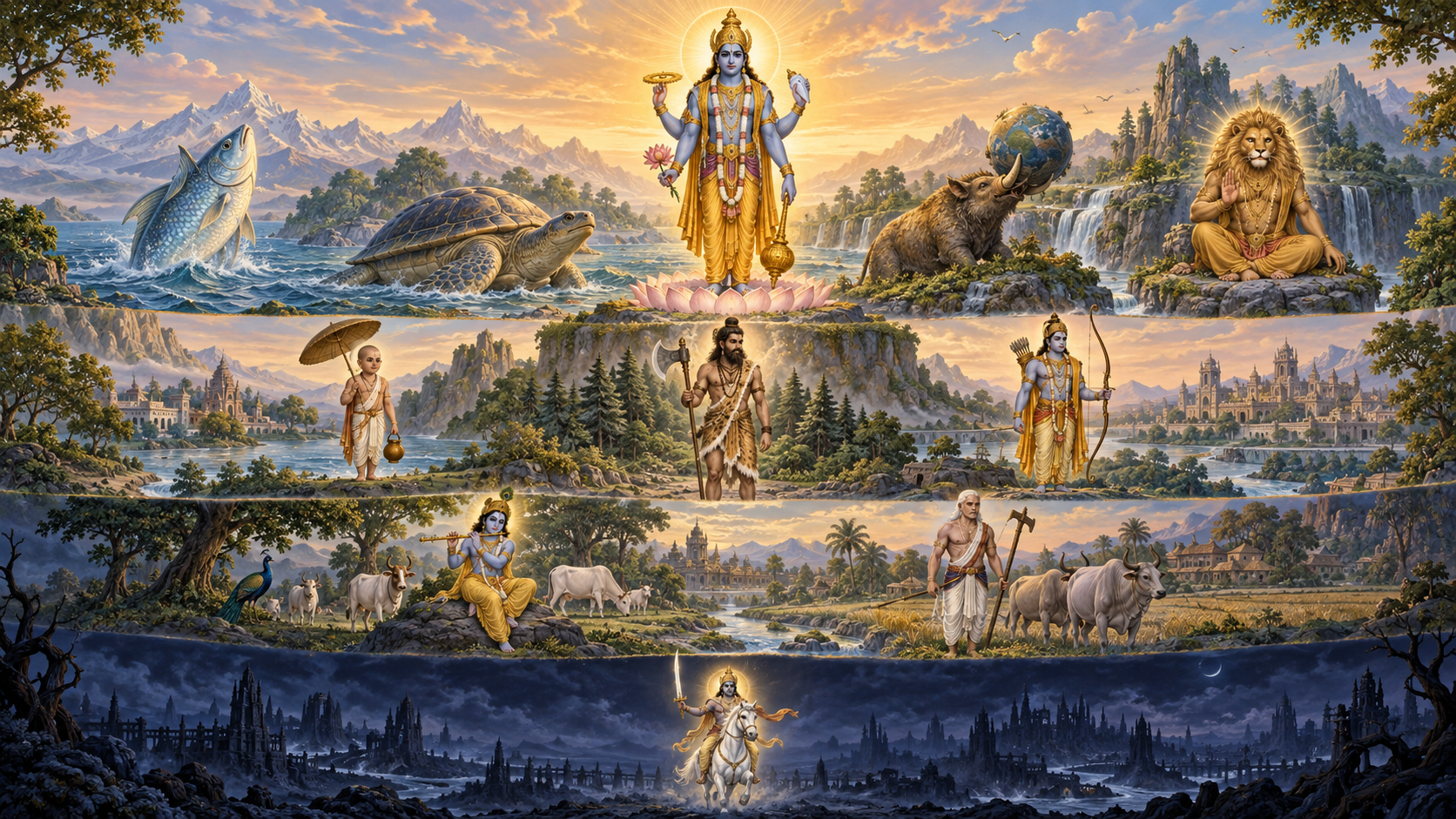
A yuga is one age within the traditional cycle of Satya, Treta, Dvapara and Kali. An avatar is a deliberate descent or manifestation of Bhagavan within the created world. In one familiar arrangement of the Dashavatara, Satya Yuga has four avatars and Treta Yuga has three; the sequence then continues with two in Dvapara and one in Kali.
| Yuga | Number in this pattern | Avatars or form of the tradition | What to notice |
|---|---|---|---|
| Satya | Four | Matsya, Kurma, Varaha and Narasimha | Existence, stability, cosmic order and protection are restored at a foundational level. |
| Treta | Three | Vamana, Parashurama and Rama | Dharma is worked out through power, restraint, social duty and righteous conduct. |
| Dvapara | Two | A Krishna-centred pair whose second member depends on the Dashavatara enumeration followed | Duty must be discerned within morally entangled human relationships. |
| Kali | One | Kalki, understood as the culminating descent in this arrangement | The promised restoration stands alongside an urgent demand for dharmic action now. |
This table needs one important guardrail. The Dashavatara is a teaching arrangement, not an arithmetic ceiling on the ways Vishnu may manifest. Hindu lineages also differ over the enumeration of the later avatars. The pattern remains useful, but it should not be turned into a claim that every sampradaya must use the same ten names or assign them identically.
Fewer descents do not mean less divine concern
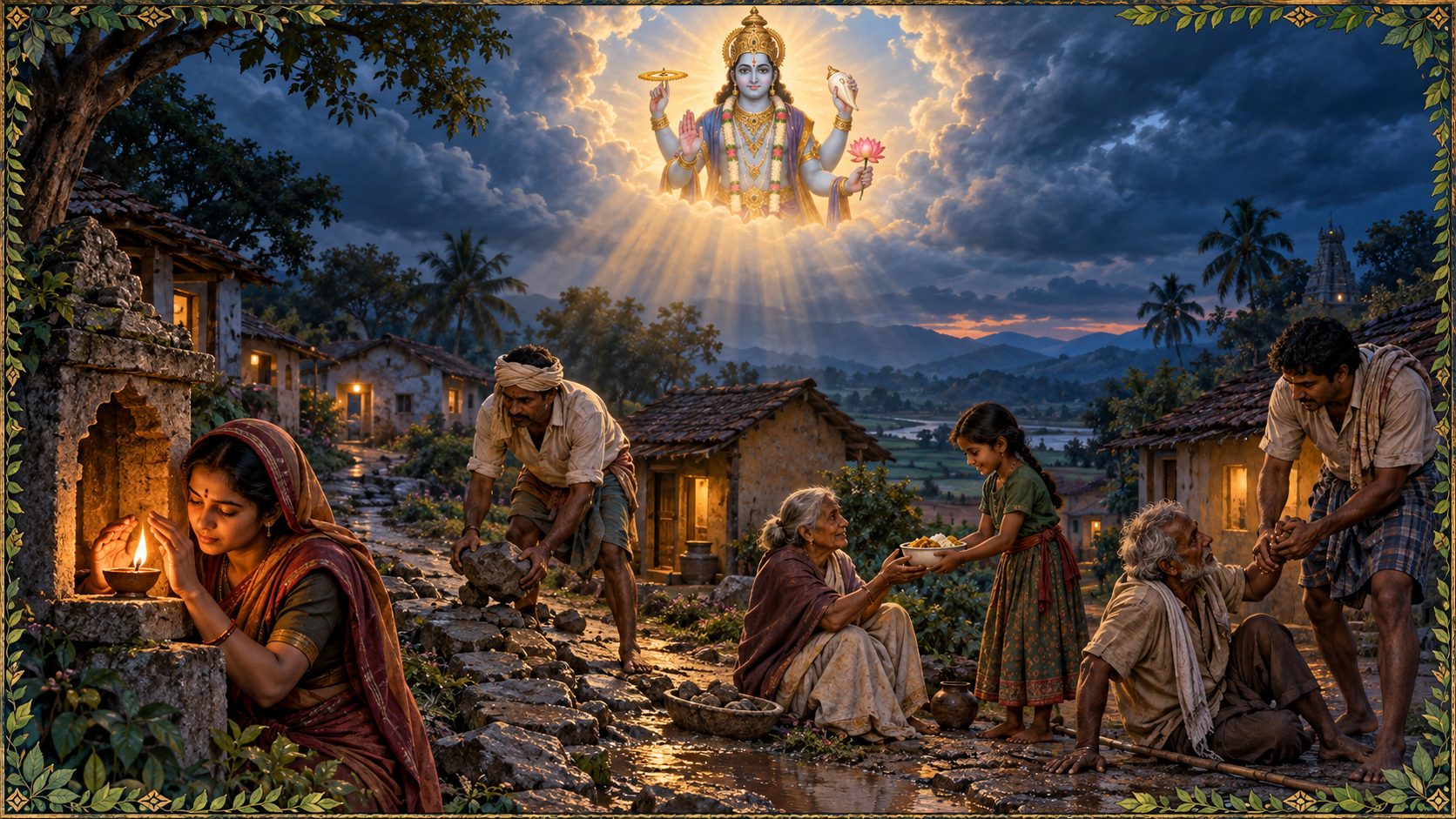
The decreasing count is sometimes misread as divine withdrawal: Satya Yuga was pure enough to receive four avatars, while Kali Yuga is supposedly too degraded to receive more than one. That interpretation treats an avatar as a prize. It also misses the internal movement of the sequence.
A more coherent reading is that each yuga presents a different kind of disorder. The earliest narratives operate at the level of creation, survival and cosmic balance. The Treta narratives move into kingship, authority, restraint and the obligations attached to social power. By Dvapara, dharma must be discerned amid kinship, politics, loyalty and conflict. Kali brings the pattern to its most compressed form: one culminating restoration, but no permission for ordinary people to abandon their duties while waiting for it.
The numbers therefore describe concentration, not scarcity. A later avatar can carry a denser moral demand because the world around that descent is less transparent. When right and wrong are obvious, restoration can appear as a direct confrontation with disorder. When motives, loyalties and institutions are tangled, the central challenge is discernment: seeing what dharma requires before acting.
You should also keep avatar theology separate from the question of everyday divine presence. The count of ten does not tell you how available Bhagavan is through nama-japa, puja, seva, pilgrimage, scripture, the guru tradition or disciplined conduct. Counting descents and measuring spiritual access are different exercises.
What the avatars of each yuga train you to notice
Satya Yuga: protect the foundations before rebuilding
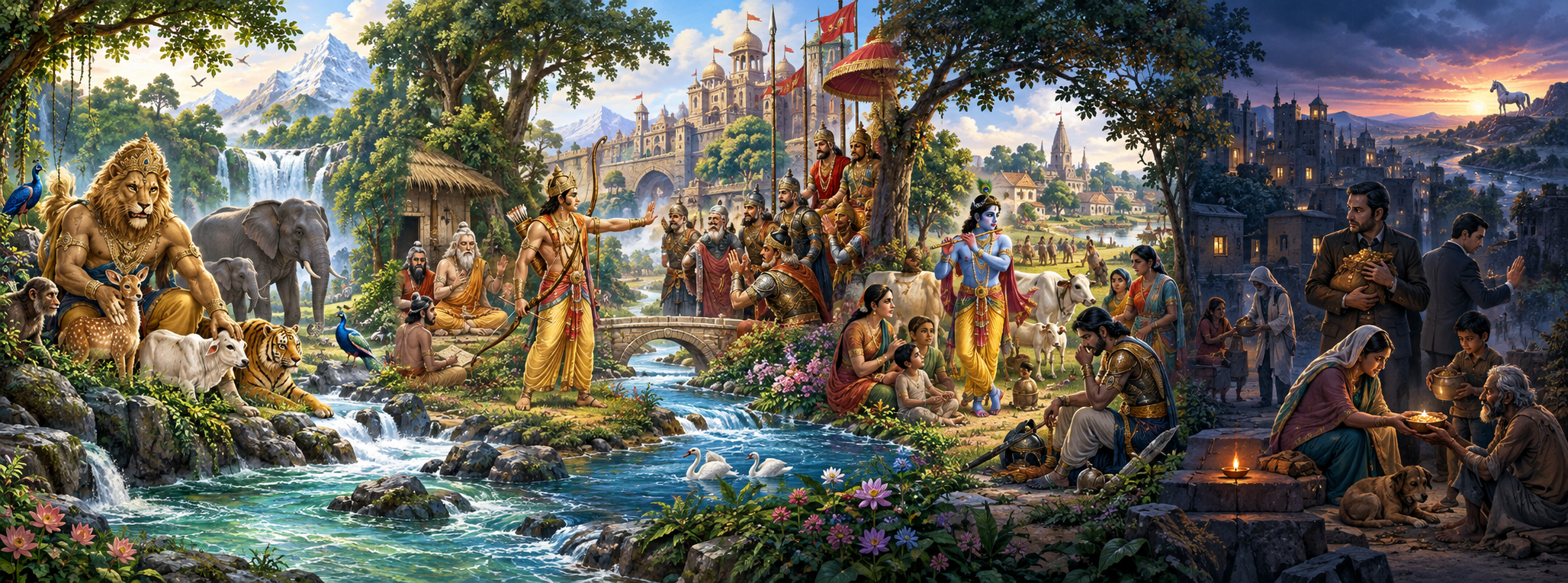
The four Satya Yuga forms address threats to the basis on which an ordered world can stand. Matsya is associated with preservation through overwhelming dissolution. Kurma supplies support when a great undertaking requires a stable base. Varaha raises what has been submerged and restores the earth to its place. Narasimha protects the devotee when oppressive power tries to use carefully framed conditions as a shield against justice.
The practical lesson is diagnostic. Before arguing about policy, personality or ritual detail, ask whether the foundation itself is failing. Is truth being preserved? Is there a stable base for cooperation? Has a legitimate order been displaced? Is power hiding behind technicalities? A foundational problem cannot be repaired by polishing its surface.
Treta Yuga: power must submit to measure and maryada
The centre of gravity changes in Treta. Vamana confronts expansive power through a request framed in modest proportions. Parashurama represents force directed against the corruption of martial authority. Rama embodies maryada: the boundaries, obligations and self-restraint through which dharma becomes visible in conduct.
When you read these three together, do not reduce dharma to either submission or force. Vamana, Parashurama and Rama present different responses because abuses of power take different forms. The useful question is not simply whether action should be gentle or severe. Ask what kind of authority is operating, which boundary has been violated, and what response can restore order without making personal appetite the new law.
Dvapara Yuga: dharma must be discerned inside complexity
Dvapara brings the problem close to recognisable human life. Krishna stands amid family bonds, political calculation, vows, friendship, war and competing claims of duty. Dharma is no longer presented only as the defeat of a visibly monstrous enemy. A person may have to act while every available path carries a cost.
This is also where you should be careful about lists. The identity of the second Dvapara figure is not uniform across every Dashavatara tradition. If a discussion becomes an argument over the ninth avatar, first establish which sampradaya, regional tradition or enumeration each person is using. Otherwise, two people can recite internally coherent lists while mistakenly accusing each other of ignorance.
Kali Yuga: expectation is not an excuse for passivity
Kalki represents the culminating restoration in the four-three-two-one scheme. That future orientation can be misused in two opposite ways. One is fatalism: nothing can improve until Kalki comes. The other is reckless identification: attaching the name of an avatar to a contemporary personality, movement or prediction without sound traditional grounds.
Neither response helps you practise dharma. Kali Yuga may describe deteriorating conditions, but it does not cancel responsibility. You still have to tell the truth, keep commitments, protect those placed in your care, resist adharma within your actual capacity and refuse to imitate the methods you condemn. Waiting for cosmic correction is not a substitute for correcting what is already within your reach.
Use the sequence as a dharmic diagnostic

The avatar sequence becomes useful when it changes how you examine a problem. Try this four-part method when studying a narrative, judging a public controversy or reflecting on a difficult obligation:
- Name the level of disorder. Is the threat to basic survival and order, to the legitimate use of power, to moral discernment, or to the long-term continuity of dharma?
- Identify the matching virtue. The situation may call for preservation, steadiness, restoration, courage, humility, disciplined force, restraint or discernment. Do not choose a virtue merely because it is comfortable.
- State your enumeration. If the count or identity of an avatar matters to your point, say which Dashavatara tradition you are following. This prevents a lineage difference from being mistaken for a factual error.
- Bring the lesson into present duty. Name one action that belongs to you now. It may be preserving a teaching accurately, setting a boundary, fulfilling an obligation, supporting a temple or community, or refusing a convenient falsehood.
Key takeaways
- The four-three-two-one arrangement is best used as a pedagogical map, not as a universal census of every divine manifestation.
- Fewer avatars do not imply that Bhagavan cares less for beings living in later yugas.
- The sequence moves from foundational cosmic restoration toward increasingly concentrated problems of power, duty and discernment.
- Dashavatara lists can differ, especially in their later members, so identify the lineage or enumeration before debating the names.
- Kalki’s future restoration does not release anyone from practising dharma in the present.
The next time you recite the Dashavatara, place one question beside each name: what disorder does this form confront, and what dharmic quality answers it? Then choose the question that most closely describes the duty in front of you. That is where the yuga framework stops being a chronology to memorise and becomes a discipline of attention.
References

Leave a Reply
You must be logged in to post a comment.