
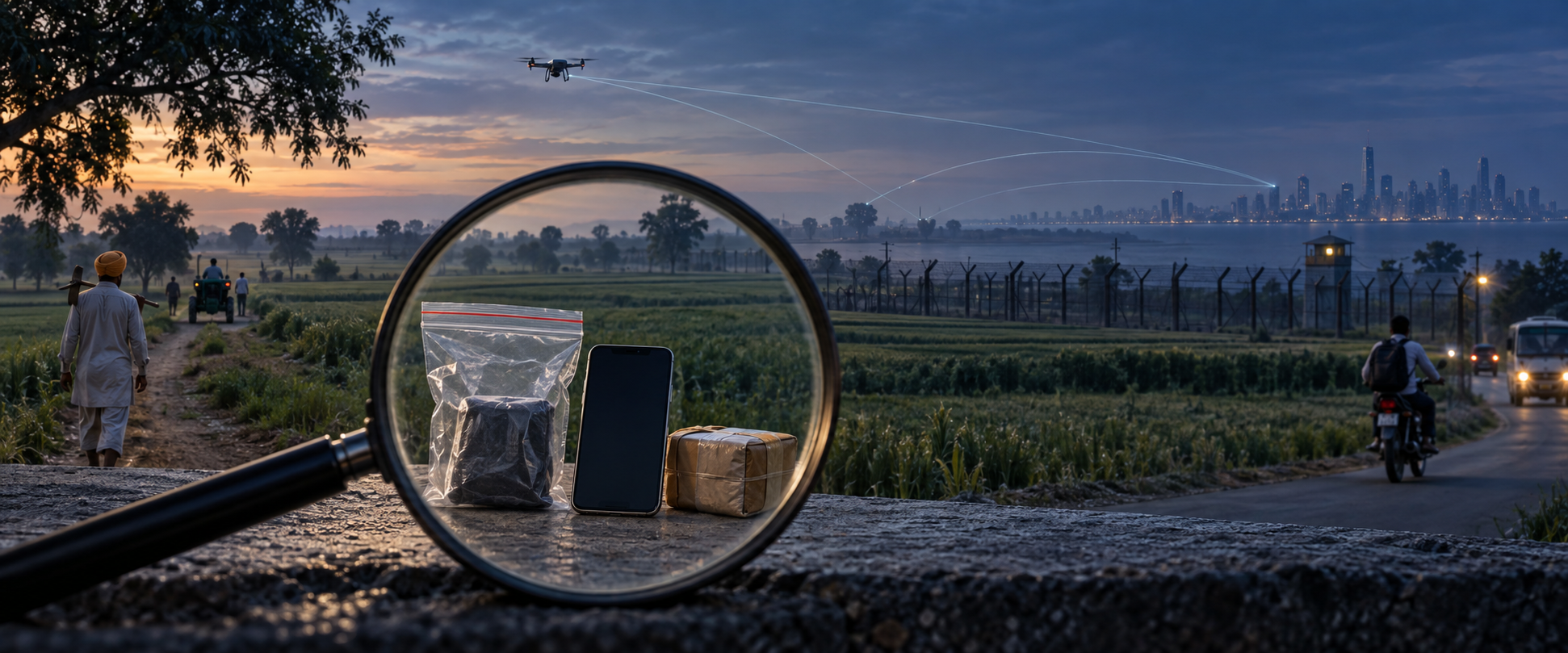
You may see a border drone, an overseas temple attack, a confrontation at an Indian diplomatic mission, or a police operation in Punjab and wonder whether Khalistan-linked militancy is returning. The harder question is how to take a real threat seriously without turning every Sikh, farmer, dissenter, or member of the diaspora into a suspect.
Two facts can be true at once. Separatism can lack broad support inside Punjab, while a small network can still cause serious harm through weapons, drugs, intimidation, organized crime, and spectacular acts overseas. You need to judge conduct, capability, and connections rather than volume, imagery, or communal identity.
Do not collapse identity, dissent, crime, and militancy
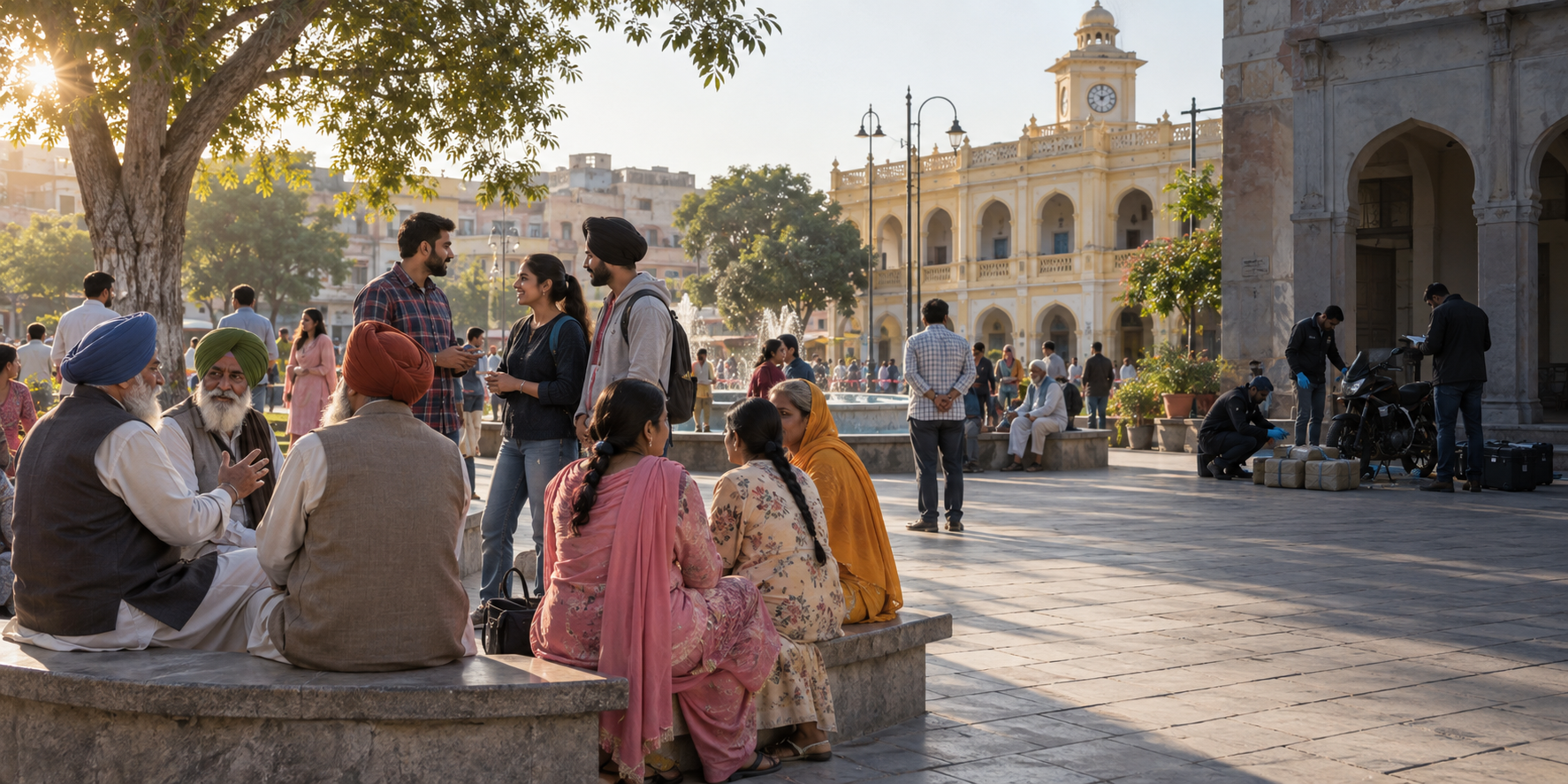
The word Khalistan is often used as though it explains everything. It does not. A useful assessment begins by separating five different categories that require five different responses.
- Sikh identity and religious observance: A turban, a gurdwara association, a Khalsa symbol, or pride in Sikh history is not a security indicator. Treating it as one is prejudice, not analysis.
- Democratic grievance: A farmer protesting agricultural policy, a Punjabi criticizing the Union government, or a voter rejecting established parties may be angry without being separatist. Evidence of disagreement is not evidence of militant coordination.
- Separatist advocacy: A provocative slogan, flag, speech, or referendum campaign can reveal an ideological position. By itself, it does not establish access to weapons, criminal financing, handlers, or a plan for violence.
- Coercive criminality: Extortion, threats, vandalism, drug trafficking, and attacks on places of worship require a law-enforcement response whether the offender invokes Khalistan, another cause, or no cause at all.
- Militant enablement: Moving weapons, receiving cross-border payloads, financing violent operations, sheltering operatives, recruiting for attacks, or helping select targets crosses into acute security territory.
This distinction is not leniency. It concentrates attention on the people who possess intent and capability. A radical speaker may have neither. A trafficker who treats ideology as a convenient brand may have both.
Punjab is also too plural to be squeezed into a Sikh-versus-Hindu story. Its approximate social composition has been described as 57 percent Sikh, 38 percent Hindu, 2 percent Muslim, and 2 percent Christian, while Scheduled Caste communities constitute roughly 32 percent and include several distinct traditions. Punjabiyat, Nanak Naam Lewa devotion, and Sufi influences have historically connected communities across rigid labels. Security policy that ignores this texture risks damaging the very social bonds that obstruct militancy.
For a pro-Dharma reader, the principle should be unambiguous: Sikh identity is not the adversary. Violent separatism, foreign interference, criminal coercion, and attacks on any community are. A serious Dharmic response protects gurdwaras and Hindu temples alike, rejects collective blame, and refuses to let extremists manufacture a civilizational rupture for political use.
Read the threat across Punjab, the border, and the diaspora

Khalistan-linked risk does not have a single center. It operates differently inside Punjab, along the Pakistan border, and in overseas communities. Confusing those theaters produces bad conclusions. A loud demonstration abroad does not prove a mass uprising in Punjab, while limited popular support in Punjab does not make a weapons route harmless.
Inside Punjab: low traction does not mean zero vulnerability
Punjab’s memory of the militancy and suffering of the 1980s and 1990s remains a major barrier to renewed mass mobilization. Amritpal Singh’s attempt to build momentum did not become a broad uprising. His flight during a pursuit lasting more than a month, the public description of him as an absconder, and his eventual apprehension all cut against claims that Punjab was rallying behind a new separatist leader.
That is reassuring only within limits. Mass popularity is not required for a small cell, criminal network, or lone violent actor to cause harm. The right question is therefore not, “Do most Punjabis support Khalistan?” The useful questions are: Who can recruit? Who can move money, drugs, or weapons? Who can turn a religious flashpoint into targeted violence? Who has a foreign or criminal connection?
Several local pressures can be exploited without causing militancy on their own. Young Punjabis are highly aspirational, migration carries social prestige, and some popular culture has glamorized gangsters, guns, and drugs. Gurdwara management disputes, competition among religious authorities, and deras with their own enforcement structures can create contested spaces. Alleged sacrilege, or be-adbi, is especially combustible because an unverified claim can acquire religious meaning before investigators establish what happened.
Watch the mechanism, not merely the grievance. Economic disappointment becomes a security concern when someone adds recruitment, money, weapons, intimidation, or instructions for violence. Until that bridge appears, address the grievance as a grievance.
Along the border: drones can connect drugs, weapons, and handlers
The border presents a more operational danger. Drones have reportedly been sighted or brought down while being used to move drugs and weapons from Pakistan. A drug payload and a weapons payload are not identical threats, but the same route, recipient, or handler may connect organized crime with militant capability. That is why a narcotics case near the border cannot automatically be treated as an isolated addiction issue.
The term K2 refers to an alleged Pakistan and ISI effort to link Kashmir and Khalistan militancy. It should be treated as an intelligence proposition to prove case by case, not as a slogan that substitutes for evidence. Paramjit Singh Panjwar, the wanted chief associated with the Khalistan Commando Force, was killed in Lahore. His presence there strengthens concern about sanctuary for extremist figures, but it does not prove that every overseas activist or domestic dissenter is directed by Pakistan.
A credible cross-border case requires a chain that investigators can test: the drone or route, its payload, the intended receiver, communications with a handler, the money trail, and any connection to a planned violent act. Each link matters. Announcing a grand conspiracy before establishing that chain may create headlines while weakening the eventual prosecution.
Overseas: distinguish protected advocacy from intimidation
The diaspora theater is often the most visible. Attacks on Hindu temples in Australia, violent protest and an attempt to ransack the Indian High Commission in London, and criminal activity involving drugs or extortion in Canada are serious warning signs. They show that conduct presented as political activism can cross into coercion or violence.
They do not tell you how much support separatism commands inside Punjab. Diaspora politics can preserve old grievances, family memories, and ideological narratives long after social conditions in the place of origin have changed. A small overseas group can also generate disproportionate attention by choosing a diplomatic building, religious site, or public confrontation as its stage.
Host governments should draw their boundary at conduct. Peaceful advocacy remains a political matter. Threats, extortion, assault, vandalism, and organized support for violence are public-safety matters. Colin Bloom, who served as an independent faith engagement adviser to the UK government, called for closer investigation of pro-Khalistan extremism. The practical standard should be evidence-based enforcement without criminalizing an entire diaspora or religious community.
Use an evidence ladder before you label a person or incident
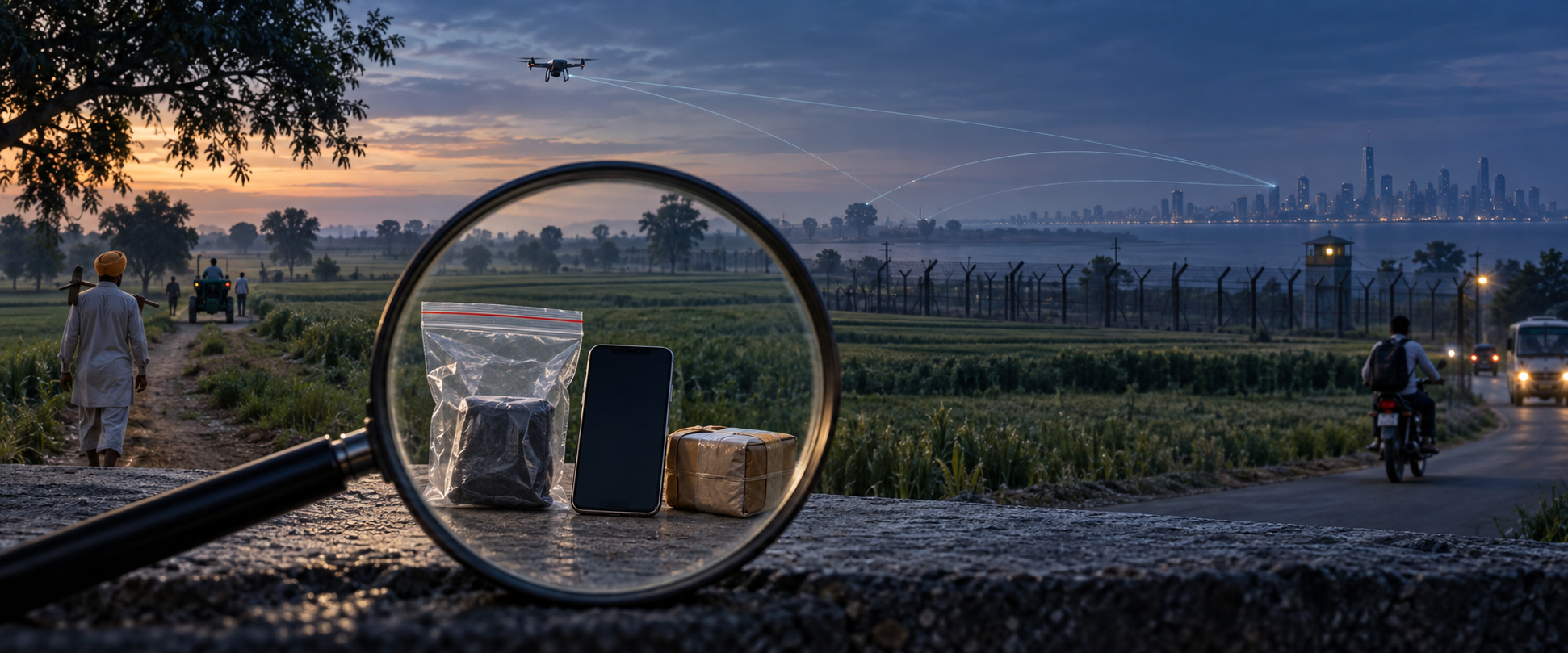
A label can travel farther than a correction. Before you forward a video, accuse an organization, or conclude that a protest is part of a militant resurgence, place the observable conduct on an evidence ladder.
| Observed conduct | What it establishes | Proportionate response |
|---|---|---|
| Religious symbol, separatist slogan, flag, or nonviolent speech | An identity or political position, not operational capability | Debate or monitor it in context; do not infer criminality from symbolism alone |
| Farmer protest, anti-government speech, or partisan mobilization | A democratic grievance or political conflict | Ask whether independent evidence connects organizers to coercion, weapons, or violent planning |
| Specific threat, extortion demand, assault, vandalism, or attack on a place of worship | Potential criminal conduct and a direct community-safety risk | Preserve the original message or recording and report it to the appropriate local authority |
| Drug or weapons movement, cross-border payload, violent recruitment, or handler communication | Possible organized or militant capability | Do not confront participants; give unedited evidence to law enforcement and protect witnesses |
| A credible threat naming a target, means, and time | Possible imminent danger | Contact local emergency services immediately and avoid public speculation that could disrupt the response |
You can improve the quality of a report with a few disciplined steps:
- Keep the original context. Save the full message, link, account identifier, date, and exact wording. A cropped screenshot may omit the details needed to authenticate or interpret it.
- Separate what you observed from what you inferred. “A window was broken and this slogan was painted” is an observation. “Every attendee belongs to a terror network” is an inference requiring separate proof.
- Look for convergence. Ideology becomes a sharper security signal when it appears with coercion, logistics, weapons, criminal financing, or concrete violent instructions.
- Do not dox or confront. Publicly naming an uncharged person can endanger an innocent individual, alert a genuine suspect, and contaminate witness accounts.
- Report urgency accurately. An offensive opinion and an imminent threat do not belong in the same queue. Give authorities the details that establish immediacy rather than adding dramatic language.
This method also protects legitimate protest. The farmers’ agitation has at times been unfairly branded Khalistan-linked. If an accusation rests only on Punjabi identity, a Sikh symbol, or opposition to government policy, it has not crossed the first evidentiary threshold. Careless labeling alienates potential witnesses and hands separatists a ready-made story of collective persecution.
Reduce the risk without manufacturing a wider conflict
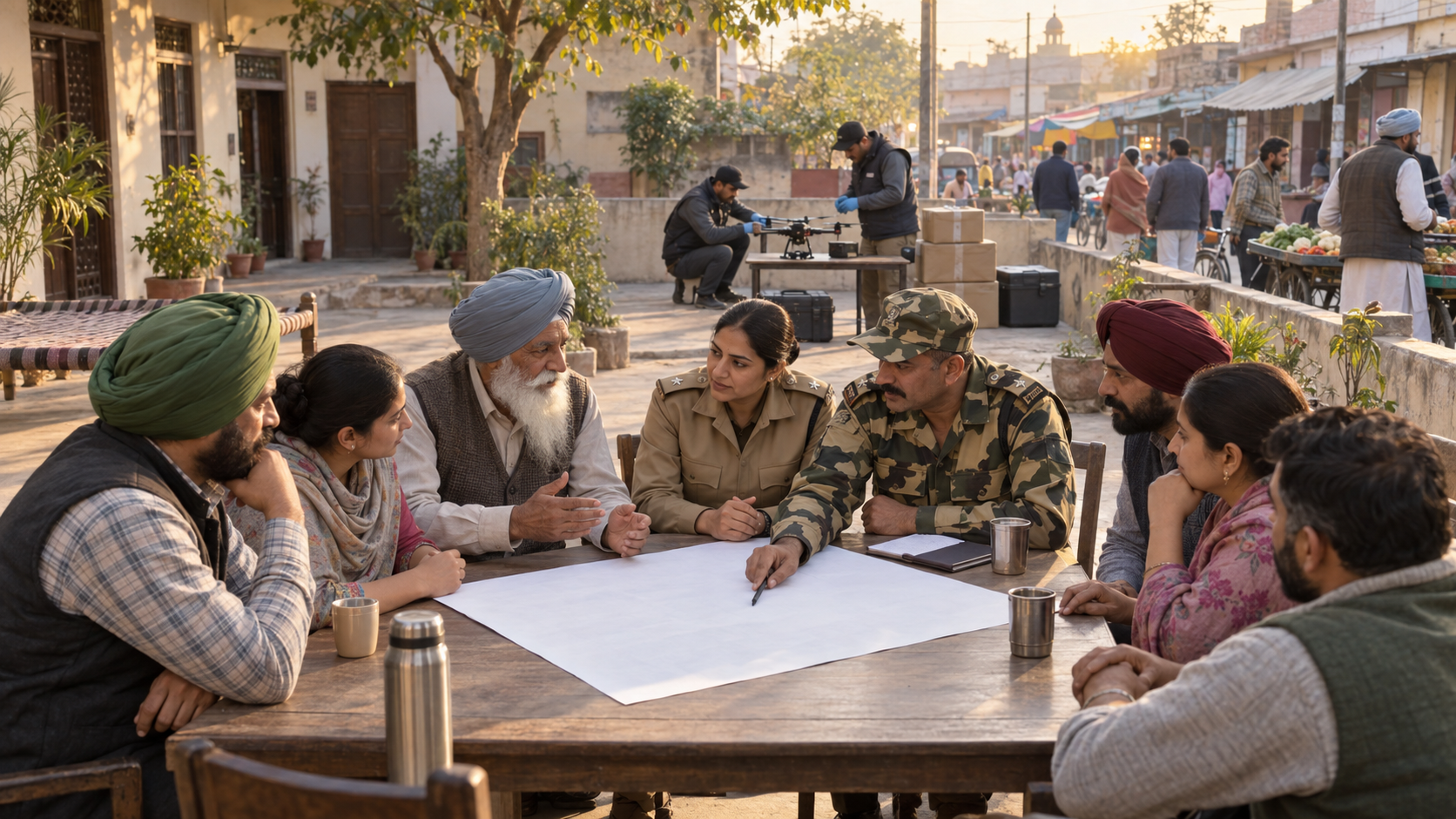
A durable strategy has to do two things together: disrupt the small number of actors who enable violence, and deny them the grievances, institutional failures, and communal polarization they use for recruitment. Police action is necessary against criminal conduct, but force without credibility can produce tactical arrests and strategic distrust.
Professionalize policing and protect the evidence chain
Punjab is a border state, so cooperation between the Punjab Police and central agencies is unavoidable. It must also be professional. Political affiliations, factional battles within administrative and police cadres, and selective enforcement weaken intelligence sharing and make every operation vulnerable to partisan interpretation.
- Build joint cases around provable conduct, especially the path from a border payload to its intended receiver and any later violent use.
- Separate public communication from political theatre. State what was recovered, what offence is alleged, and what remains unproved.
- Apply the Supreme Court-mandated police reforms associated with the Prakash Singh process so command stability, accountability, and operational decisions are less vulnerable to partisan pressure.
- Investigate alleged be-adbi incidents quickly, preserve the chain of custody, and provide regular factual updates. A vacuum invites rumor, retaliation, and deliberate provocation.
- Protect Sikh, Hindu, and other religious sites according to assessed threats rather than waiting for one community to become a political symbol.
Break the drug-crime-militancy bridge
Punjab’s drug problem is simultaneously a health crisis, a criminal market, and a possible security vulnerability. Not every dealer is a separatist, and not every person with addiction is a criminal. The dangerous overlap occurs when a trafficking route finances weapons, gives handlers access to local couriers, or allows an organized group to coerce indebted and vulnerable young people.
- Investigate the financial and communications network around major trafficking cases, not only the person found with the final package.
- Compare drug and weapons recoveries for shared routes, recipients, devices, and handlers while keeping the criminal charges distinct.
- Offer confidential addiction treatment and recovery pathways so users and families can seek help without being treated as militant suspects.
- Target the glamour attached to gangsters and guns with credible alternatives: apprenticeships, sport, military and public-service pathways, entrepreneurship, and lawful routes to mobility.
Treat agricultural distress as policy, not sedition
Punjab’s agricultural achievement helped move Bharat from food dependence to national grain security. The same system now carries structural costs. The rice-wheat cycle is irrigation-intensive, the water table is receding, chemical use has harmed soil and water, crop-residue burning contributes to pollution, and shrinking holdings put pressure on farm incomes. These are policy failures to solve, not evidence that farmers are separatists.
- Judge a farm organization by its conduct and funding, not by the faith or region of its members.
- Give farmers a credible economic path to diversify away from water-intensive cropping; asking them to change without reliable buyers and income protection merely transfers the risk to the household.
- Pair residue restrictions with workable collection, machinery, or market arrangements. A prohibition without an available alternative is unlikely to change behavior.
- Treat contaminated soil, water stress, and rural health burdens as security-relevant resilience issues without pretending they directly cause militancy.
Make community institutions harder to capture
Religious institutions are strongest when congregations can see how decisions are made. Gurdwara contests and rivalry among religious authorities create openings for factions that claim exclusive ownership of Sikh interests. The answer is not state control of theology. It is transparent governance and a clear boundary against coercion.
- Gurdwara and dera boards should publish audited accounts, event-booking rules, and procedures for complaints and leadership disputes.
- Religious bodies should prohibit private armed enforcement and report threats rather than settling disputes through loyal muscle.
- Sikh and Hindu institutions should maintain direct local contact before a crisis, including a shared process for verifying rumors about vandalism, sacrilege, or planned demonstrations.
- Diaspora organizations should preserve extortion demands and threats in their original form, support victims who report them, and refuse informal payments that strengthen the coercive network.
- Indian diplomacy should press host governments with case-specific evidence. A documented threat, financial trail, or act of vandalism is more actionable than a general complaint that another country tolerates anti-India speech.
The tone matters. Punjabi political culture responds poorly to humiliation and coercive posturing but can respond powerfully to fair play and trusted leadership. That is not an argument for indulgence. It is a reason to make enforcement firm, narrow, intelligible, and visibly lawful.
Key takeaways
- Broad public support and operational danger are different measures. Khalistan can have little mass traction in Punjab while a small network retains the ability to intimidate, traffic weapons, or commit violence.
- Assess three theaters separately: social and political conditions inside Punjab, cross-border logistics involving Pakistan, and diaspora activity overseas.
- Do not use Sikh identity, farm protest, or anti-government speech as a proxy for militancy. Look for coercion, criminal logistics, foreign handling, weapons, financing, or concrete violent planning.
- Give border drone cases special attention when drugs and weapons share routes or recipients, but prove each alleged connection rather than assuming a universal K2 conspiracy.
- Protect Punjabiyat and Sikh-Hindu trust as security assets. Collective blame creates the communal fracture that separatist propaganda needs.
- Combine focused enforcement with police reform, addiction recovery, agricultural transition, youth opportunity, and transparent religious governance.
If a specific incident reaches you, start with the behavior you can verify. Preserve the evidence, assess whether there is coercion or immediate danger, and report it through the proper local channel. Refuse both temptations: dismissing a credible threat because separatism is unpopular, and accusing a whole community because an extremist has learned how to command attention.
References
- DharmaRenaissance Blog – Punjab – Seeking Way Forward In Simmering Crisis
