

If you are trying to decide what to believe about Manipur, refuse any explanation that makes one label do all the work. The violence cannot be reduced to Hindu versus Christian, tribal versus non-tribal, an argument over Scheduled Tribe status, an insurgency, or a Myanmar-border problem. Each frame reveals one layer while concealing others.
You need a way to separate established events, institutional decisions, political demands, allegations, and unanswered questions. That discipline lets you defend Bharat’s territorial integrity without treating an entire Indian community as suspect, and defend tribal rights without dismissing Meitei concerns about land, opportunity, and demographic security.
Key takeaways
- Start with geography. Manipur is simultaneously an Indian state, a valley-and-hills political system, and a borderland connected to communities in Myanmar.
- The March 27, 2023 High Court direction did not grant Scheduled Tribe status to the Meitei. It directed the Manipur government to act on a pending recommendation process.
- The Tribal Solidarity March of May 3, 2023 was a trigger for confrontation, not a complete explanation for the crisis.
- Meitei and Kuki-Zomi settlements were both attacked. Allegations against insurgents, village volunteers, police commandos, or political leaders must be tested actor by actor rather than converted into collective guilt.
- A durable settlement has to combine impartial security, individual accountability, a credible ST-status process, border governance, and political negotiations. None can substitute for the others.
Read the map before accepting an ethnic narrative
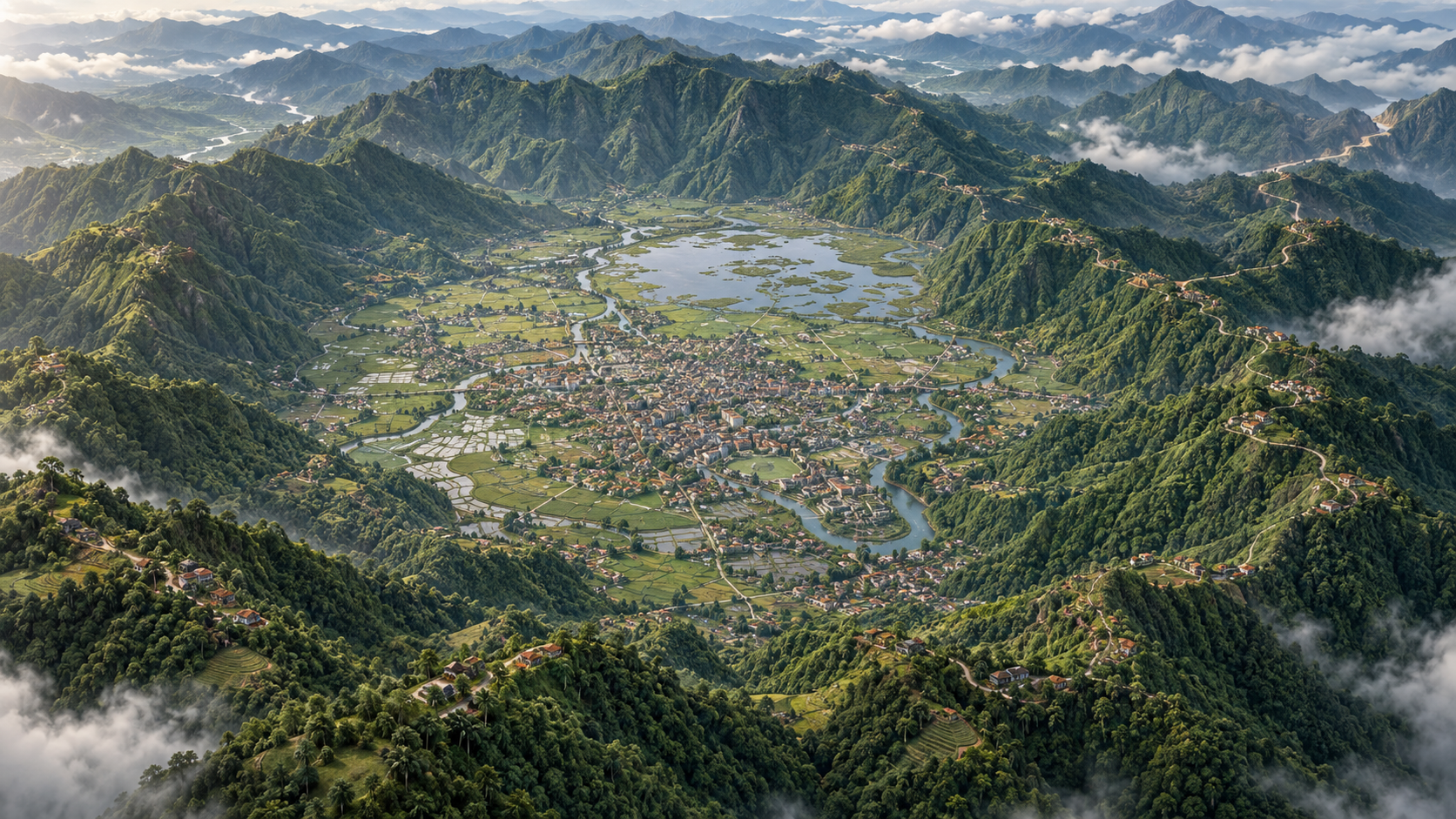
Manipur borders Nagaland to the north, Mizoram to the south, Assam to the west, and Myanmar’s Sagaing Region and Chin State to the east and southeast. These are not merely lines on a map. Manipur has served for more than 2,500 years as a passage for people, trade, cultures, and religions moving between the Indian subcontinent and regions farther east.
That history creates both strength and vulnerability. A border can define state jurisdiction without neatly dividing languages, kinship networks, and ethnic memories. Older Burmese usage applied the name Chin broadly to hill peoples along Myanmar’s western frontier, while identities on the Indian side developed through categories including Chin-Kuki and Naga. You should therefore reject two equally careless assumptions: that every cross-border ethnic connection proves illegal activity, or that an international border has no security consequences.
The internal demographic balance also matters. The Meitei constitute around 53 percent of Manipur’s population, Naga groups around 24 percent, and Kuki-Zomi groups around 16 percent. These approximate shares explain political weight, but they do not by themselves decide land rights, constitutional protection, or historical ownership. A population majority can still fear territorial or economic exclusion. A smaller hill community can still fear that the majority will dilute protections designed for tribes.
Language adds another institutional layer. Meitei is the official and most widely spoken language and functions as a lingua franca among communities that also maintain other Sino-Tibetan languages. Manipuri’s inclusion in the Eighth Schedule of the Constitution permits its use in civil-services and Central Armed Police Forces examinations. That is a real institutional advantage, but it neither proves nor disproves a claim to ST status.
Religion should be handled with the same care. The 2011 Census identified Hinduism and Christianity as Manipur’s two major religions. That demographic fact does not establish a religious command structure behind ethnic violence. Use a communal explanation only when evidence shows a religious motive, organisation, or target. Otherwise, ethnicity, land, political representation, armed organisations, and border geography usually provide the more precise categories.
Manipur’s constitutional history supplies a further fault line. Maharaja Budhachandra signed the Instrument of Accession on August 11, 1947 and the Merger Agreement on September 21, 1949. Some Manipuri groups have disputed the merger as lacking consensus and having been obtained under duress. Those competing memories helped sustain a decades-long insurgency and rival ideas about Manipur’s future. They are essential background, but they do not prove that any particular insurgent organisation directed the violence that began in May 2023.
When you encounter a new claim, locate it on three maps at once: the physical map of valley, foothill, hill district, and international border; the administrative map of state, Union, tribal, police, and military authority; and the social map of communities whose identities cross district or national boundaries. A claim that cannot be located this way is usually too vague to carry the conclusion attached to it.
The ST dispute concerns power, not just identity

Scheduled Tribe status is a legal classification with material consequences. It can affect protective land rules, access to reserved opportunities, economic assistance, employment, and political confidence. It should not be treated as an honorary certificate declaring which community is more indigenous.
On May 29, 2013, the Ministry of Tribal Affairs asked the Manipur government for a specific recommendation on the Meitei demand, supported by an updated socio-economic survey and an ethnographic report. The state government did not send the requested response, and a writ petition followed. On March 27, 2023, the High Court of Manipur directed the government to submit its recommendation to the Ministry.
The distinction is crucial: the High Court direction moved an administrative process; it did not itself place the Meitei in the ST list. Anyone saying that the court simply awarded tribal status is skipping the recommendation, evidence, and decision-making stages that remained in dispute.
Supporters of Meitei inclusion see ST status as a route to economic opportunity, stronger land protection, and safeguards against the transfer of land to immigrants or other outsiders. Tribal organisations see the demand through the security of rights they already possess. The disagreement is therefore not resolved by asking which community has suffered more. It requires examining how a legal change would redistribute protection and opportunity.
A serious assessment should demand clear answers to five questions:
- What current socio-economic and ethnographic evidence supports or weakens the Meitei claim?
- Which land protections would change if the claim succeeded, and in which areas?
- How would inclusion affect competition for reserved education, employment, and political opportunities?
- Can Meitei concerns about land and economic security be addressed through measures that do not alter ST status?
- Can existing tribal protections be guaranteed if any new classification is considered?
These questions prevent two common errors. Demographic majority is not proof that a community needs no protection. Historical indigeneity, asserted on its own, is not proof that a community meets the legal and evidentiary requirements for ST classification. The government must answer with a reasoned recommendation and current evidence, not with street pressure from either side.
Keep the May 3 sequence separate from disputed blame

The All-Tribal Students’ Union, Manipur organised a Tribal Solidarity March across the hill districts on May 3, 2023, opposing the movement toward Meitei ST recognition. Other tribal bodies endorsed it. Meitei supporters of ST status organised counter-protests near the adjoining areas of Churachandpur and Bishnupur.
An April 27 prohibition order under Section 144 of the Code of Criminal Procedure reportedly remained in force in Churachandpur. That raises a legitimate administrative question about how the march was permitted or managed. Claims that marchers displayed weapons, that officials deliberately enabled violence, or that an intelligence failure was intentional require separate proof. An unanswered question is not evidence of a conspiracy.
After May 3, Kuki-Zomi and Meitei villages were burned. Reports also described confrontations between Manipur Police commandos and alleged Kuki-Zomi insurgents around the foothills of the Imphal Valley, where the communities meet. The chief minister claimed that 40 insurgents were killed and others captured. The Army did not confirm those encounters, while the Chief of Defence Staff characterised the crisis as a law-and-order situation requiring a political solution rather than as an extension of the existing insurgency.
That disagreement should change how you repeat the claim. A statement by the chief minister establishes the government’s position; it does not independently establish the identity of every person killed. The Army’s lack of confirmation does not prove that no armed insurgent participated. Both facts belong in any honest description.
Armed groups covered by the Suspension of Operations pact denied attacking civilians or exchanging fire with police. They indicated, however, that village volunteers defending settlements and land might have become involved. This distinction complicates the usual binary. A village volunteer is not automatically a member of an insurgent organisation, but the language of village defence does not excuse attacks on civilians, arson, or other crimes. Conduct and evidence must decide responsibility.
The SoO framework itself cannot be described as though only one government controlled it. The state government announced a unilateral withdrawal in March 2023, but the Centre and the armed forces, which were also parties to the agreement, did not accept that move. The Kuki National Organisation continued to favour peace talks with the Centre. Any claim that the pact had simply ended, or that every covered organisation had resumed insurgency, therefore needs substantial qualification.
Allegations involving illegal poppy cultivation, immigration, foreign influence, police bias, and insurgent mobilisation may point to matters that require investigation. They cannot be used as interchangeable proof. Poppy cultivation does not identify the perpetrator of a village attack. An ethnic connection across Myanmar does not prove unlawful entry. A police encounter does not establish insurgent status merely because the dead belonged to a particular community.
Before forwarding a claim, test it in this order:
- Name the precise event, date, and location. Manipur-wide language often hides a local sequence.
- Identify the status of the claim: documented event, official allegation, eyewitness account, denial, inference, or unresolved question.
- Name the alleged actor as narrowly as the evidence permits. Do not replace a person, armed unit, or organisation with an entire ethnicity or religion.
- Look for corroboration that is institutionally independent of the claimant.
- Ask whether the proposed political conclusion would still follow if the allegation proved false.
A video may establish that violence occurred while proving nothing about who planned it. A photograph of an armed person may establish possession while proving neither organisational membership nor the circumstances outside the frame. Evidence becomes trustworthy when each conclusion remains proportionate to what the material actually shows.
Judge every proposed settlement by six practical tests

Manipur cannot be stabilised by choosing between security action and political dialogue. Security without a political settlement can freeze ethnic separation and deepen grievance. Dialogue without civilian protection leaves armed actors able to change facts on the ground. A credible plan has to pass all six tests below.
- Equal civilian protection: Can it protect Meitei, Kuki-Zomi, Naga, and smaller communities, especially at the foothill interfaces where settlements meet? A plan that treats one community’s fear as legitimate and another’s as propaganda will not restore confidence.
- Individual accountability: Does it investigate killings, arson, illegal weapons, incitement, and official misconduct case by case? Collective punishment produces new recruits for extremism while allowing actual perpetrators to disappear inside a communal narrative.
- An evidence-based ST decision: Will the government complete the socio-economic survey, ethnographic assessment, and specific recommendation requested in 2013? The land, reservation, and political consequences should be stated openly before a decision is defended.
- Clarity on armed groups: Do the state government, Centre, and security forces agree about which organisations remain under SoO, what conduct constitutes a breach, and how violations will be proved? Ambiguity invites selective enforcement and competing public claims.
- Border governance without ethnic profiling: Can authorities investigate unlawful movement, weapons, narcotics, and armed networks using evidence while recognising that cultural and family connections predate the modern border? Security screening should follow conduct and verified identity, not a community name.
- Statewide political representation: Are Meitei, Kuki-Zomi, Naga, and smaller communities present in the political process? A bargain between only the most visible antagonists could move the next dispute into another district rather than settle Manipur.
For a pro-Dharma readership, the ethical standard is demanding but clear. Satya requires us not to promote a claim beyond its evidence. Rajadharma requires public authority to protect the innocent without communal favour. Ahimsa requires civilian life, homes, and places of worship not to become bargaining instruments. These principles do not weaken national integrity. They make India’s integrity something citizens from every community can experience as protection rather than merely hear as a slogan.
Your next step is practical. When a new Manipur claim reaches you, rewrite it in one sentence: on a named date and at a named place, a named actor did or allegedly did a specific act, supported by a stated kind of evidence and disputed by a stated party. If you cannot fill those fields, do not repeat the claim as fact. Then test every proposed remedy against the six requirements above. That is how public judgment can help narrow the conflict instead of becoming another front within it.
References
- DharmaRenaissance Blog — The Crisis In Manipur : An Assessment
