
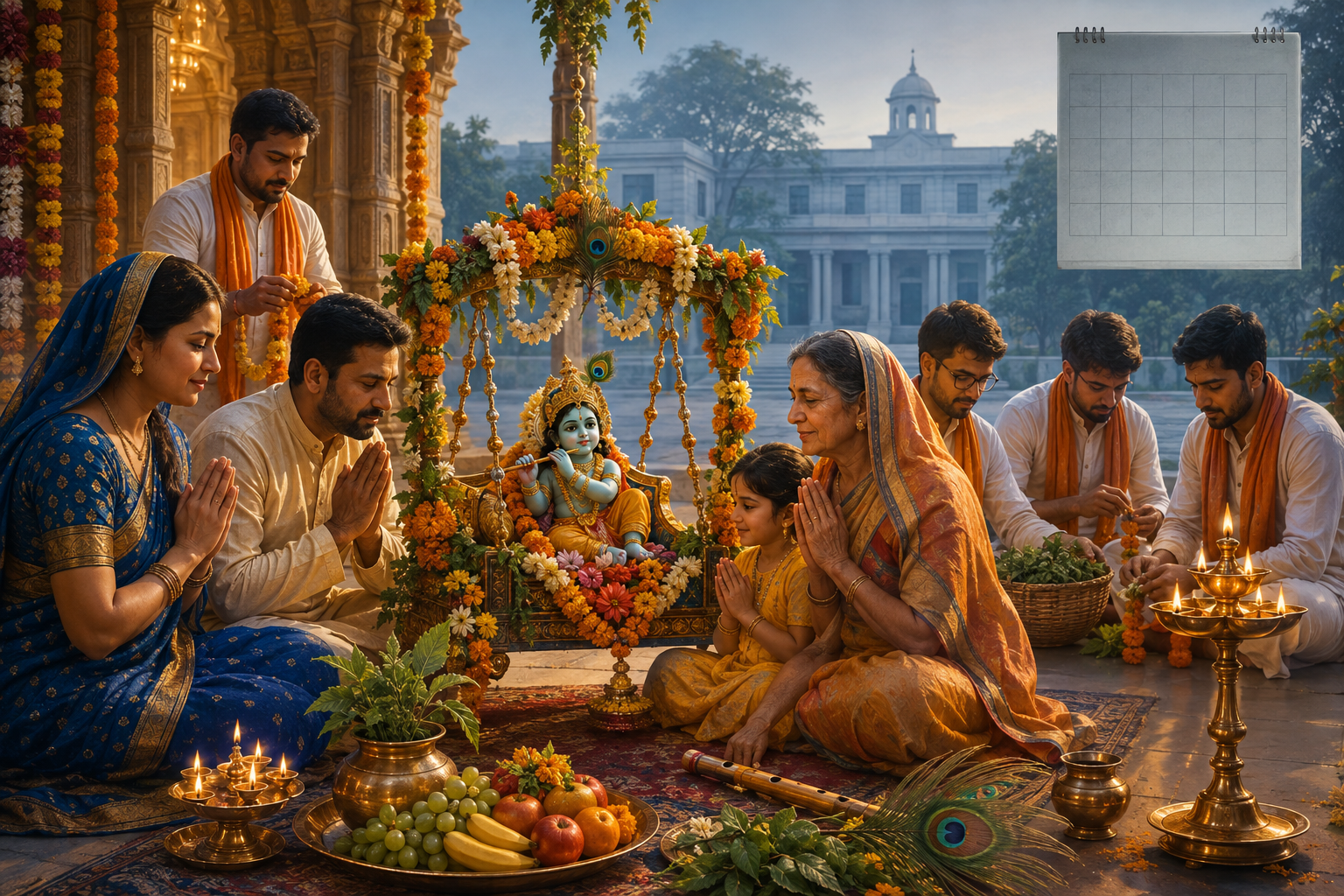
If Janmashtami has disappeared from your public calendar, you face a practical problem and a civic one. You need to protect the worship itself while deciding how your family, temple, school, workplace, or community should respond.
The reported cancellation of Bangladesh’s official public holiday for Shri Krishna Janmashtami has caused widespread anguish among Hindus. The constructive response is not a choice between devotion and advocacy. Secure the observance first, verify exactly what changed, and then ask the responsible institution for a remedy it can actually deliver.
Separate the sacred observance from the civic decision
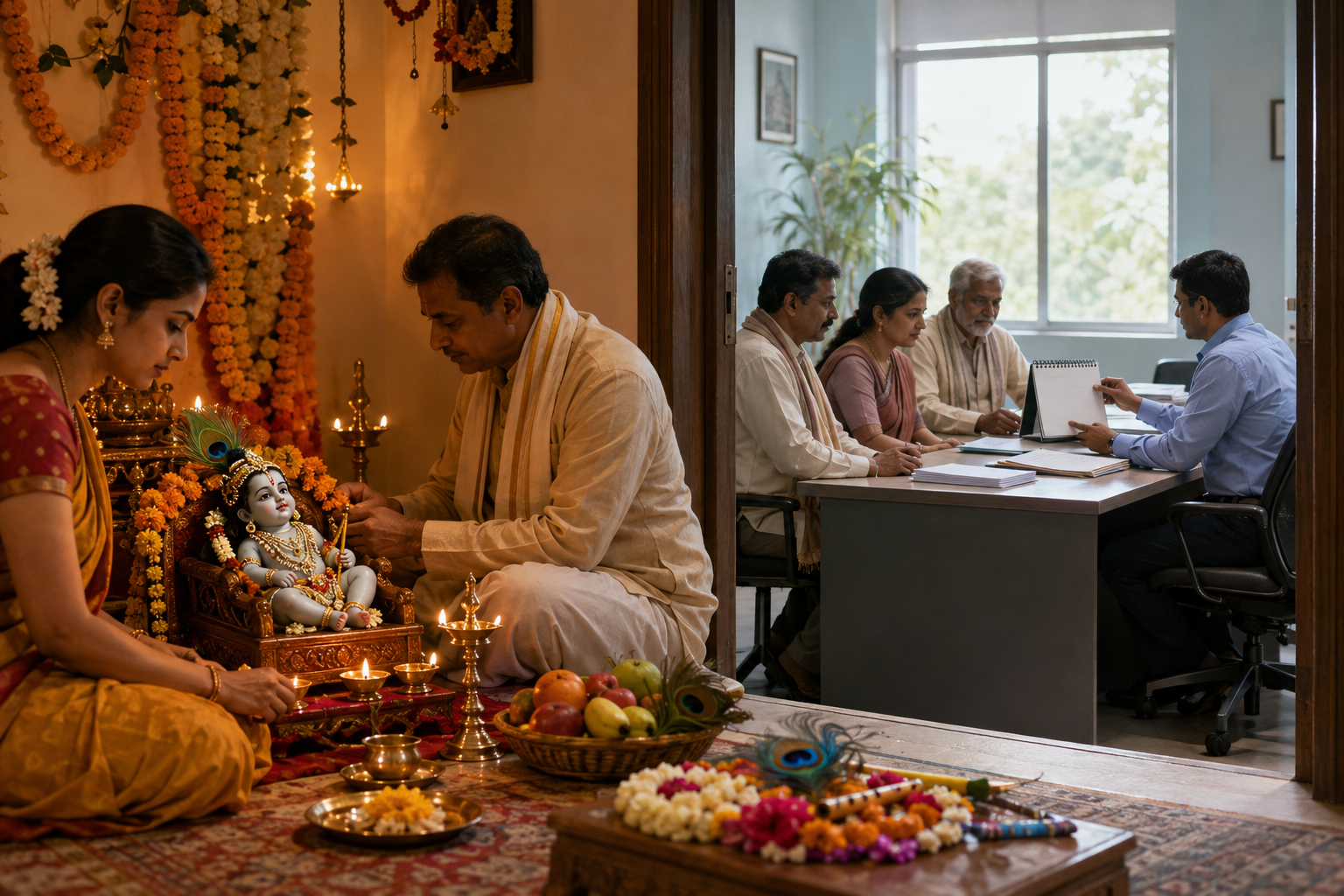
A government can remove a holiday from its calendar. It cannot remove Janmashtami from the Hindu calendar or extinguish its meaning. Shri Krishna’s appearance remains a sacred occasion whether the day is publicly recognized, treated as an ordinary working day, or observed under difficult circumstances.
That distinction should not be used to dismiss the loss of recognition. An official holiday can make it possible for devotees to attend temple programs, organize household worship, serve the community, and involve children without negotiating an absence from work or school. It also tells Hindus that their sacred time is visible in the civic life of the country.
Keep three layers distinct when you decide what to do:
- Observance is the devotional core: worship, prayer, kirtan, remembrance, teaching, seva, and the practices followed by your family, temple, or sampradaya.
- Accommodation is the practical ability to participate: leave from work, an excused school absence, flexible scheduling, access to a venue, or another workable arrangement.
- Recognition is the public signal: inclusion in an official calendar, a declared holiday, an institutional notice, or an acknowledgement by public authorities.
A withdrawn holiday affects recognition and may reduce accommodation. It does not automatically mean that worship has been prohibited. Say precisely which loss has occurred. If your immediate problem is attending a temple program, request an accommodation from the institution controlling your schedule. If the public holiday itself has been removed, direct the recognition request to the authority that controls the calendar.
Protect the observance before the calendar dispute is resolved
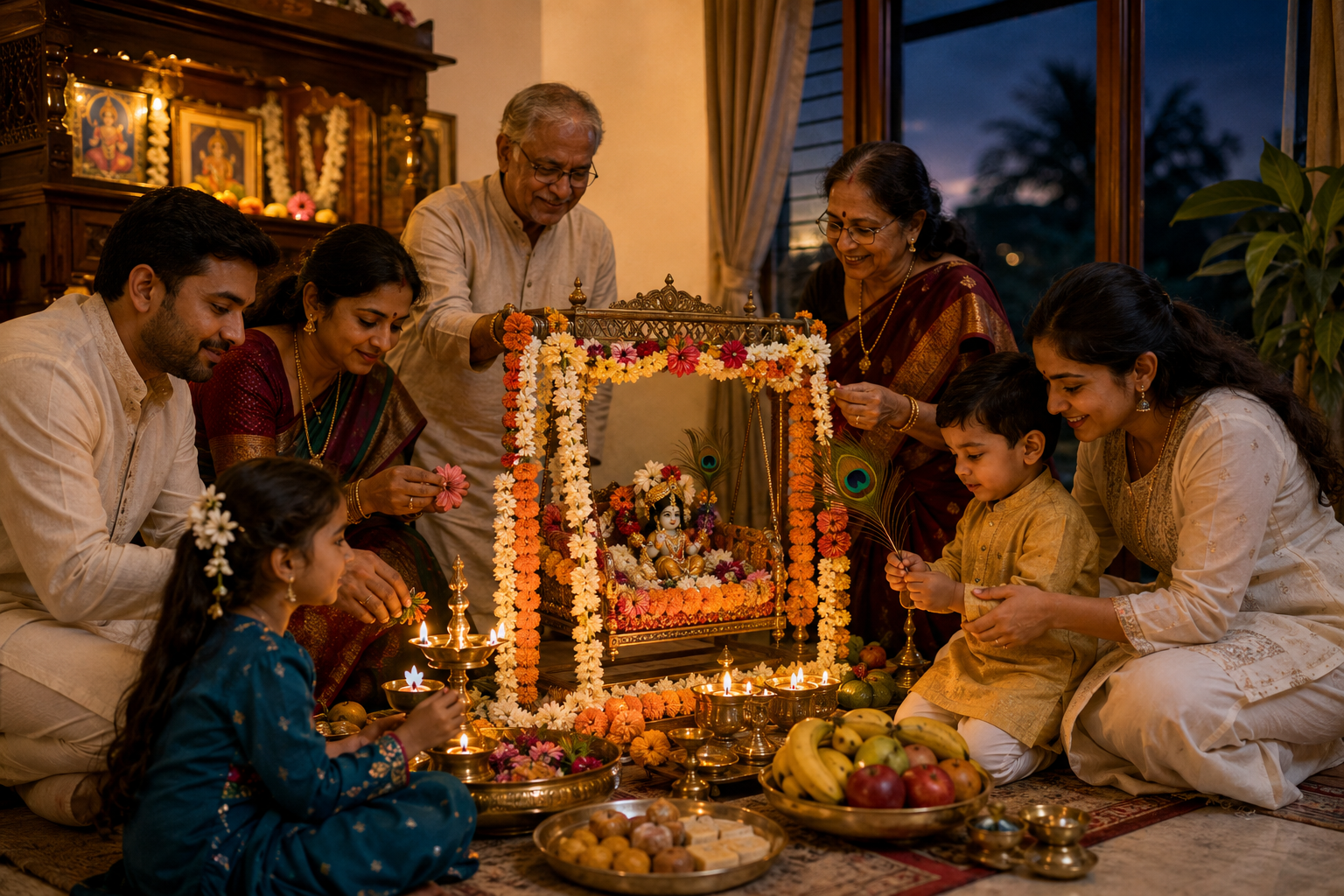
Do not make your family’s Janmashtami dependent on a campaign succeeding in time. Public decisions can move slowly; sacred time does not wait for an administrative reply. Make a devotional plan and a logistics plan as soon as the calendar change becomes known.
- Confirm the observance with your own tradition. Ask your temple or sampradaya for the applicable date, program, and ritual guidance. Do not assume that one generic schedule represents every Hindu tradition.
- Name the devotional essentials. Decide which customary practices must remain on the sacred occasion and which supporting activities can be moved. A community meal, cultural program, or public reception may be rescheduled more easily than the central worship prescribed by your tradition.
- Preserve teaching as well as ceremony. A dedicated Janmashtami class led by HG Pancharatna das is a useful reminder that serious teaching can be part of the observance. A temple can arrange an in-person class, a live online session, or a recording for devotees whose schedules prevent attendance.
- Coordinate households instead of leaving each person alone. Share confirmed temple timings, transport arrangements, child-care needs, and online access through one reliable community channel.
- Prepare a fallback that remains recognizably devotional. If a devotee cannot reach the main gathering, provide guidance for appropriate household worship, a trusted class, and a later opportunity to join the community. Adapt the details to the devotee’s tradition rather than presenting the fallback as a universal ritual formula.
When you approach a school or employer, make the request easy to understand. State that the absence or schedule change is for Shri Krishna Janmashtami, identify the time you need, and offer a reasonable way to handle missed work where possible. Ask early and keep the exchange in writing. If the request is denied, ask which policy governed the decision and whether another form of accommodation is available.
Do not claim a legal entitlement unless someone qualified in the relevant jurisdiction has verified it. Religious accommodation rules differ, and an inaccurate legal claim can weaken an otherwise reasonable request.
Make public recognition a precise civic request
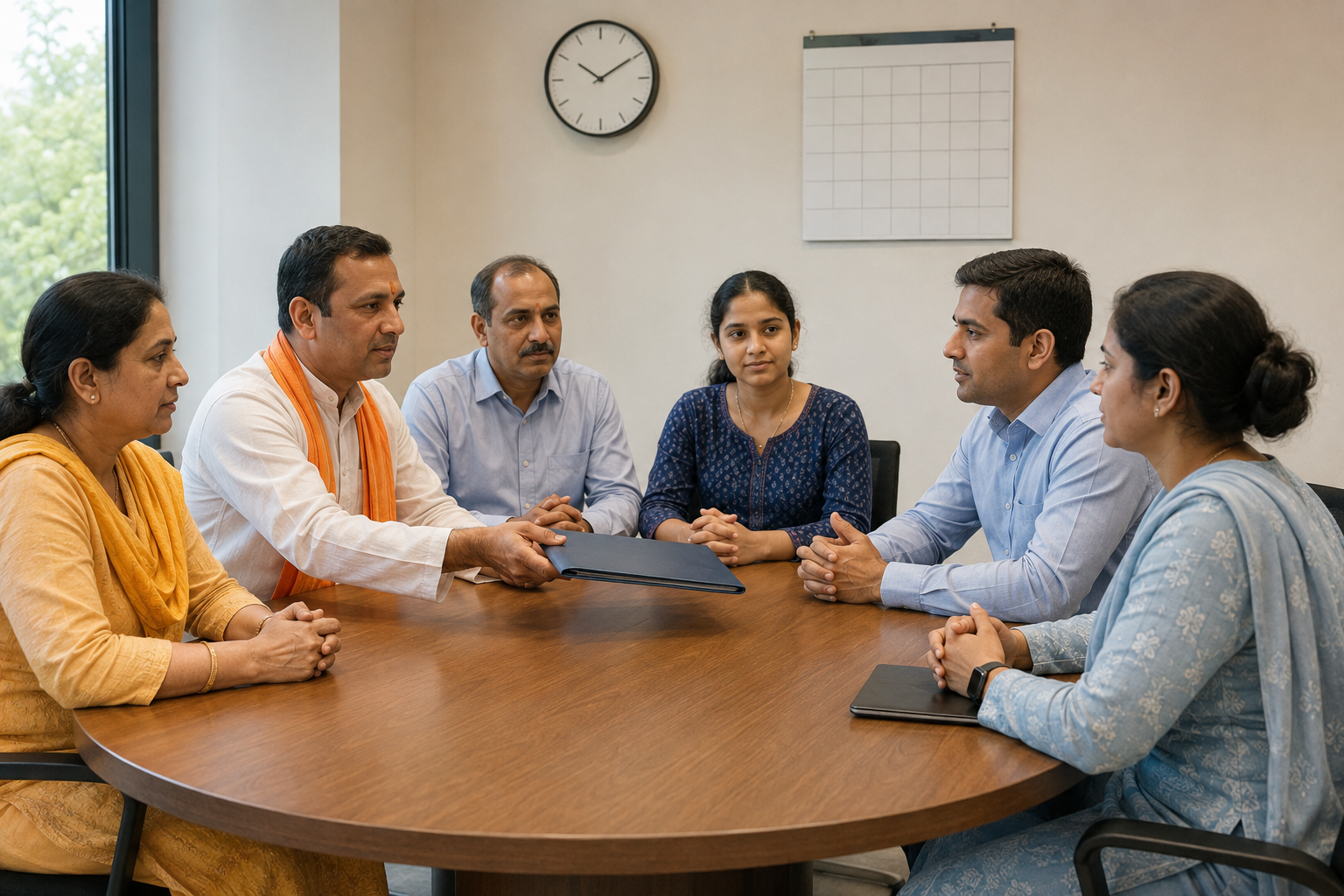
Anguish explains why a decision matters, but it does not tell an administrator what to change. Effective cultural advocacy converts hurt into a documented fact, a concrete consequence, and a specific remedy.
Begin by verifying the decision independently before circulating petitions or public statements:
- Obtain the current official calendar, order, circular, or notice from the authority responsible for it.
- Record the issuing authority, publication date, effective period, and exact wording.
- Compare it with the previous official calendar if that document is available.
- Check whether the change is national, sector-specific, local, limited to certain institutions, or the result of an implementation error.
- Identify the office that has the power to correct, reconsider, or explain the decision.
This verification matters because a screenshot, forwarded message, or headline rarely establishes the full administrative scope. If a claim is wrong, opponents can use that mistake to avoid the underlying question of fair recognition.
Next, document actual consequences. Ask temples, families, students, employees, and organizers what the change prevents or complicates. Record only effects they can substantiate: inability to attend a scheduled observance, loss of an approved day off, difficulty staffing a temple program, or disruption to an established community event. Do not add guessed attendance figures, exaggerated claims, or allegations unrelated to the calendar decision.
Choose a remedy that matches what you verified. Depending on the authority and the applicable rules, the request might seek restoration of the public holiday, correction of an official calendar, optional religious leave, flexible institutional scheduling, excused absence, or formal acknowledgement of Janmashtami. These remedies are not interchangeable. A workplace can often address an employee’s schedule but cannot restore a national holiday.
Request language: We ask [responsible authority] to [specific remedy] for Shri Krishna Janmashtami. The current decision creates [verified effects] for [identified community]. We propose [workable administrative measure]. Please confirm which office owns this decision and respond before [relevant planning date].
Send that request to the decision-maker, not simply to the largest possible mailing list. Invite temples, Hindu organizations, parents, employees, and community bodies to endorse the same remedy. Supporters should be able to say what they are supporting in one sentence. A long statement with several unrelated grievances gives an institution several ways to avoid answering the central request.
If you plan to allege discrimination or assert a constitutional or statutory right, have a qualified local lawyer review the language before publication. Keep ordinary devotional and civic advocacy peaceful, factual, and focused on the responsible authority.
Make public visibility teach people what they are recognizing
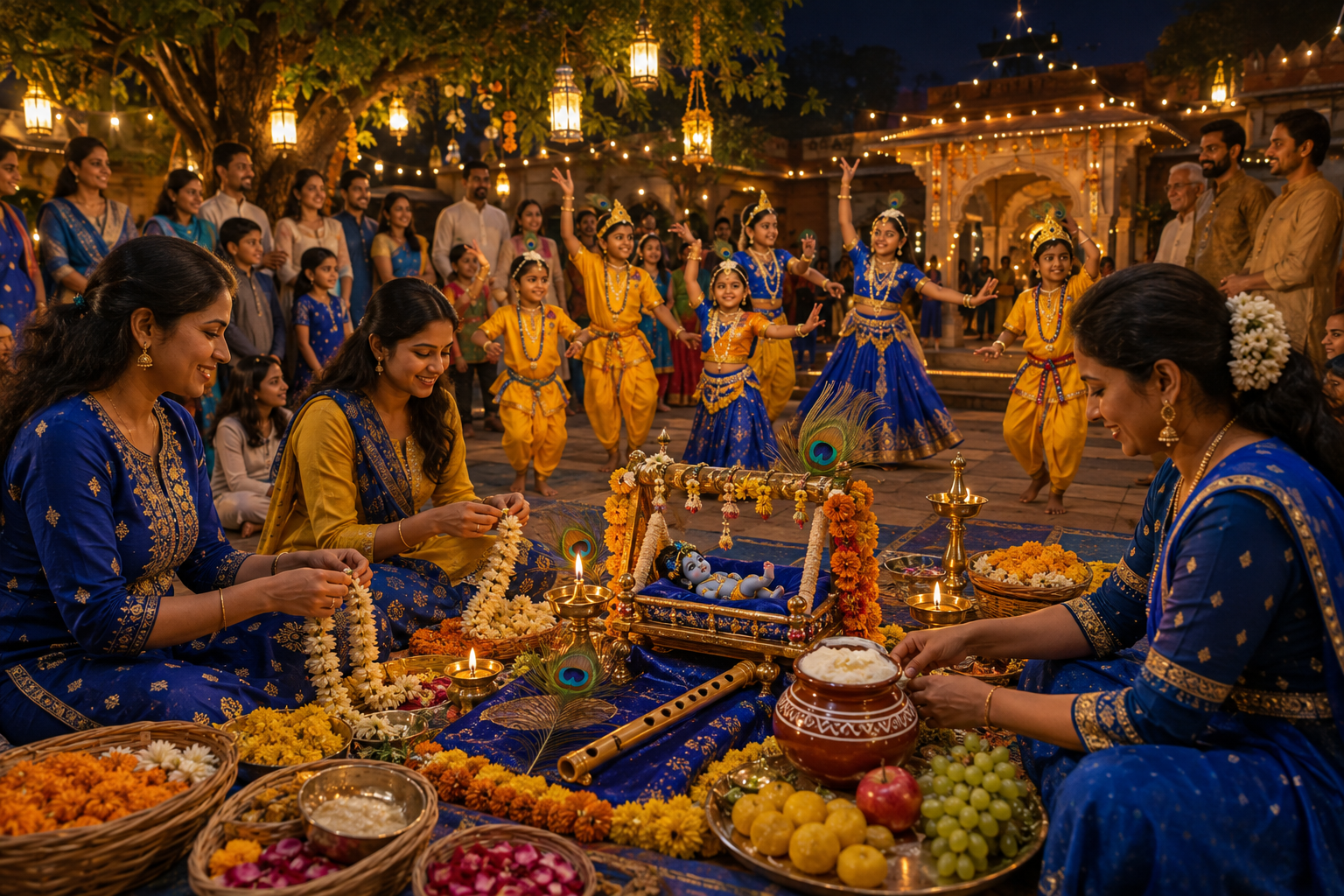
A holiday entry can disappear when Janmashtami is treated as a name on a calendar rather than a living sacred tradition. Public visibility becomes more durable when neighbors, educators, officials, and journalists can understand who observes the festival, what it commemorates, and how the community marks it.
That does not require turning worship into a cultural performance for outsiders. Keep Shri Krishna, the devotional purpose, and the language of the tradition at the center. Then make the public-facing details clear enough that a respectful visitor can participate appropriately.
- Name the occasion clearly. Use Shri Krishna Janmashtami on invitations, signs, notices, and event pages. Include the organizing temple or community, venue, applicable date, and a contact for practical questions.
- Explain before assuming. Offer a concise introduction to what Janmashtami commemorates and explain the program’s main elements. Define unfamiliar terms without discarding them.
- Include substantive teaching. A qualified speaker or special class gives devotees and visitors something deeper than a stage program. It also creates a format that can be shared with people unable to attend.
- State visitor etiquette. Explain expectations concerning footwear, seating, photography, prasada, and entry into worship areas. Clear guidance prevents avoidable discomfort while protecting the dignity of the sacred setting.
- Document the community’s work responsibly. Preserve the program, speaker information, attendance records where appropriate, and photographs or recordings obtained with consent. This creates an institutional memory and evidence of an active community when future recognition decisions arise.
Allies can support fair civic treatment without redefining Janmashtami or claiming that every Dharmic tradition observes it in the same way. Ask them to support a clear principle: Hindu citizens should be able to observe a major sacred occasion with dignity, reasonable accommodation, and honest public recognition.
Key takeaways
- A public authority can withdraw a holiday, but it does not determine Janmashtami’s sacred meaning.
- Protect the devotional observance immediately instead of waiting for a civic campaign to succeed.
- Verify the operative calendar or order before repeating a claim about what has changed.
- Separate requests for worship, practical accommodation, and public recognition; each belongs with a different decision-maker.
- Ask for one defined remedy and support it with consequences the affected community can document.
- Keep public Janmashtami programs unmistakably Krishna-centered while making their purpose and etiquette understandable to visitors.
Begin before the next institutional calendar is fixed. Confirm your temple’s observance, obtain the authoritative public notice, identify the official who owns the decision, and send a concise request. That gives your community something it can act on now: worship that continues, facts that can withstand scrutiny, and an achievable demand for recognition.
References
- Hindu Jagruti Samiti — Hindus express deep hurt as Bangladesh Government cancels Krishna Janmashtami holiday
- Dandavats — Janmastami Special Class | HG Pancharatna das
