
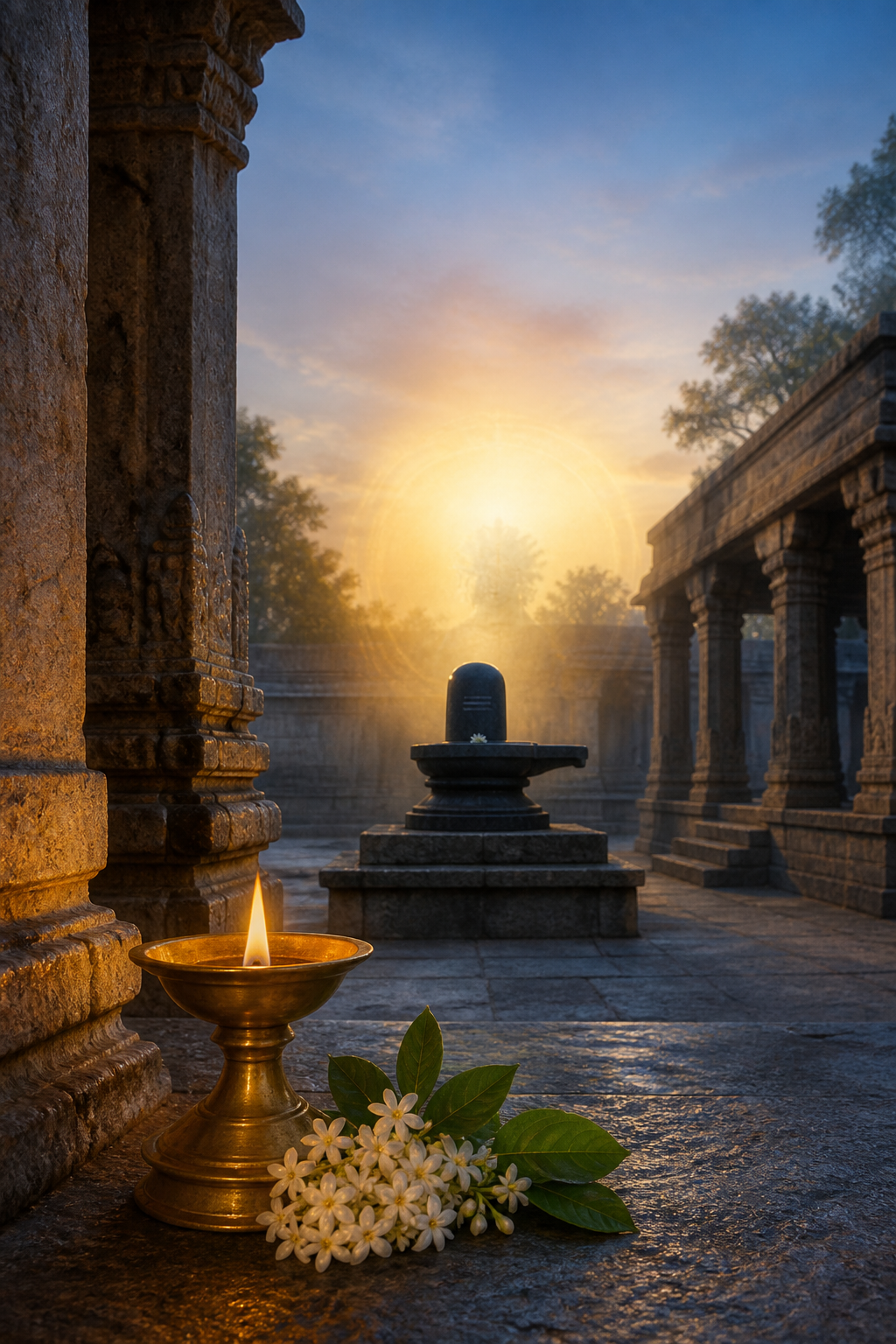
If you are trying to identify the goddess associated with the Tamil month of Masi, the direct answer is Goddess Panjika. She belongs to a Tamil Shaiva understanding of sacred time in which every month has a corresponding divine presence.
That answer needs one important boundary. Panjika’s association with Masi gives you a devotional way to approach the month, but her name alone does not establish a universal image, mantra, offering, or festival procedure. Begin with what the tradition clearly identifies, then let your family’s sampradaya, temple, or teacher supply any more specific practice.
The direct answer and its Tamil Shaiva setting
Goddess Panjika is the presiding Devi of Masi within the Dvadasa Masa Devis framework. The name Dvadasa Masa Devis refers to the twelve goddesses associated with the twelve Tamil months. Each monthly Devi embodies the spiritual and natural character of her period.
This framework changes how you read a calendar. Masi is not merely a box containing appointments and observances. It is a portion of time that can be received as sacred, contemplated through Devi, and answered through dharmic conduct. Panjika is the personal divine focus through whom that relationship with Masi becomes possible.
You do not need to turn this Tamil Shaiva teaching into a rule for every Hindu household. Hindu traditions preserve several ways of organizing sacred time. The practical question is whether the Dvadasa Masa Devis belong to the tradition you are studying or following. If they do, Panjika is the name to remember during Masi.
Understand Panjika’s form without inventing iconography
When people ask about a goddess’s “form,” they often expect a description of colors, weapons, hand gestures, ornaments, or a vehicle. Those details must come from a recognized image, temple tradition, textual description, or lineage. A name-and-role identification does not establish them.
Panjika’s reliably identifiable form here is theological: she is Devi as the sacred presence governing Masi. That may sound less concrete than an image, but it prevents a common mistake. A generic picture of Devi found online should not be assigned to Panjika merely because its appearance feels suitable.
If you encounter an image presented as Panjika, check it before treating its details as authoritative:
- Does the temple, lineage, or publication explicitly identify the figure as Goddess Panjika?
- Are her visible attributes explained within that same tradition?
- Is the image connected specifically with Masi and the Dvadasa Masa Devis?
- Could it instead be a general representation of Devi used only as a devotional illustration?
If those questions cannot be answered, use the image as a general reminder of Devi rather than making claims about Panjika’s fixed iconography. This preserves reverence without turning an assumption into tradition.
Her symbolism begins with the sanctification of time
The central symbolism is not that one month belongs to the sacred while the other eleven do not. The full cycle is divine: twelve months and twelve Devis. Panjika reveals the Masi portion of that continuous sacred order.
You can apply this symbolism through three movements:
- Recognition: Notice that Masi has begun instead of allowing the month to pass anonymously.
- Remembrance: Recall Panjika as the Devi associated with this period.
- Response: Give the month a dharmic shape through one discipline you will actually maintain.
The phrase “spiritual and natural qualities” also asks you to pay attention rather than merely repeat a label. Observe what is changing in your surroundings, duties, energy, and devotional life during Masi. If you live outside Tamil Nadu, do not pretend that your local climate reproduces its seasonal conditions. The principle travels more easily than the weather: recognize the natural setting in which you actually live, while keeping the Tamil sacred calendar as your devotional frame.
This makes Panjika’s symbolism practical. Sacred time is not honored only by knowing a goddess’s name. It is honored when awareness of that name changes how carefully you use the month.
A careful way to observe Panjika during Masi
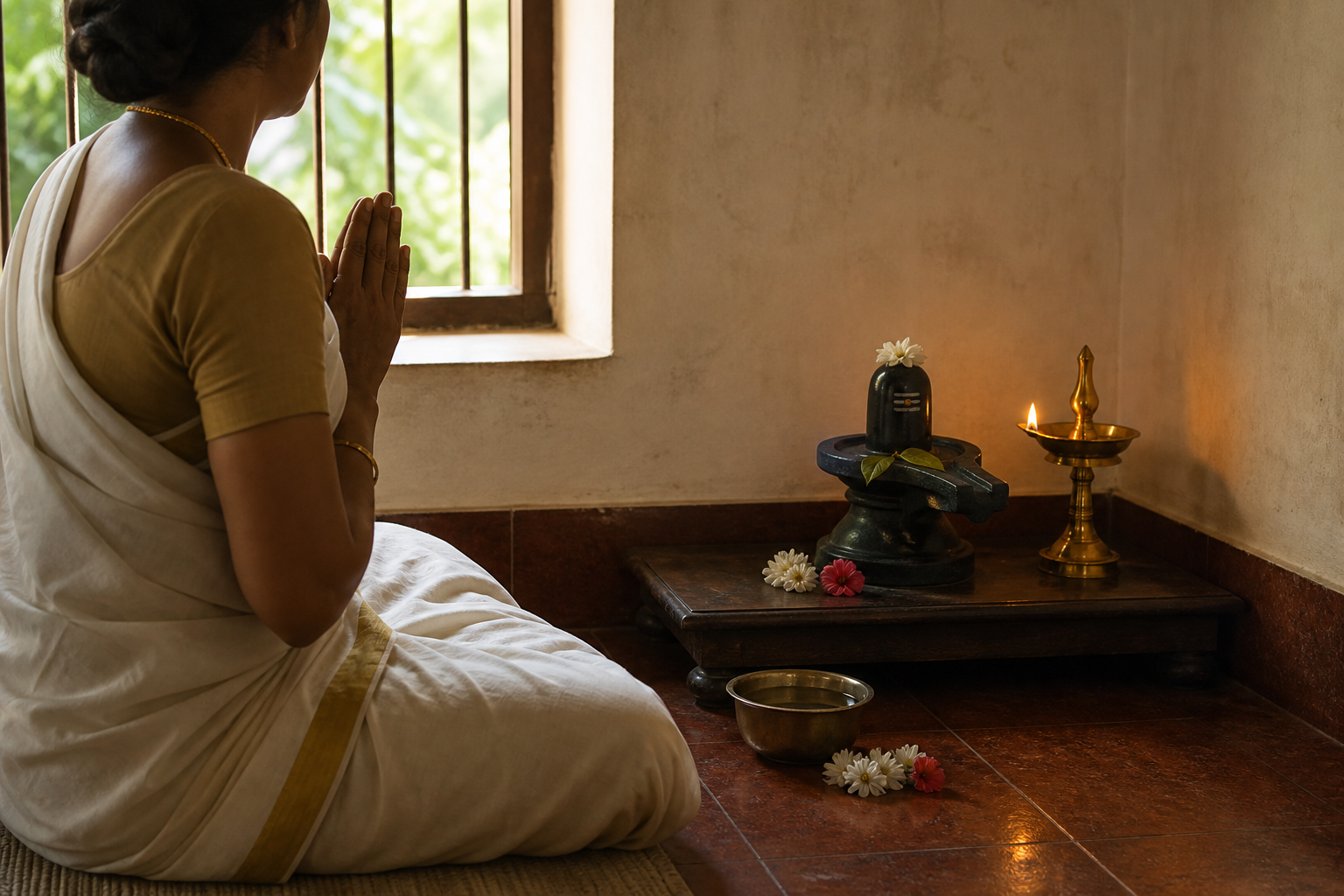
There is no need to manufacture an elaborate ceremony. If your household or temple preserves a specific Panjika observance, follow that inherited procedure. If it does not, you can adopt a restrained personal practice that honors the known association without presenting your choices as an ancient prescribed rite.
- Confirm the month locally. Use the Tamil calendar or panchangam followed by your household or temple. Do not assume that the same Gregorian dates define Masi every year.
- Keep your established worship intact. Continue the puja, prayer, japa, or temple attendance already proper to your tradition. Panjika’s remembrance need not displace your ishta devata, kula devata, or regular Shaiva practice.
- Name the monthly focus. At the beginning of prayer, remember Panjika as the Devi of Masi. If you have not received a traditional mantra, do not invent one or present an internet formula as initiated practice.
- Choose one Masi discipline. Make it observable and sustainable: a fixed daily prayer period, regular reading, a restrained habit, service to family, or a defined act of dana. The discipline is your response to sacred time, not a claim that this particular act is uniquely mandated for Panjika.
- Review the month before it closes. Ask whether remembering Panjika made you more attentive to time and duty. Keep the discipline that produced a real change; revise one that existed only as an intention.
If you want words for a private intention, use plain language rather than pretending to possess a traditional mantra: “Devi Panjika, as Masi unfolds, may I recognize sacred time and use it in accordance with dharma.” This is a personal prayer, not a scriptural formula.
If lighting a lamp, offering flowers, or performing another simple act is already part of your worship, you may continue it while remembering Panjika. The important distinction is honest attribution: a familiar expression of devotion does not automatically become a Panjika-specific requirement.
Key takeaways
- Goddess Panjika is the Devi associated with Tamil Masi Masam.
- She belongs to the Dvadasa Masa Devis, the twelve divine presences corresponding to the twelve Tamil months.
- Her clearest symbolism is the sanctification of Masi and its spiritual and natural character.
- Do not infer a fixed image, mantra, or offering from her name alone; verify such details through a temple, lineage, or recognized description.
- If no inherited rite is available, remember Panjika within your existing worship and give Masi one concrete dharmic discipline.
Start with the smallest complete observance: confirm Masi in the Tamil calendar you follow, remember Panjika by name, and keep one discipline for the month. If a temple or teacher later gives you a more specific form of worship, receive it in its proper context rather than filling the gaps in advance.
References
