
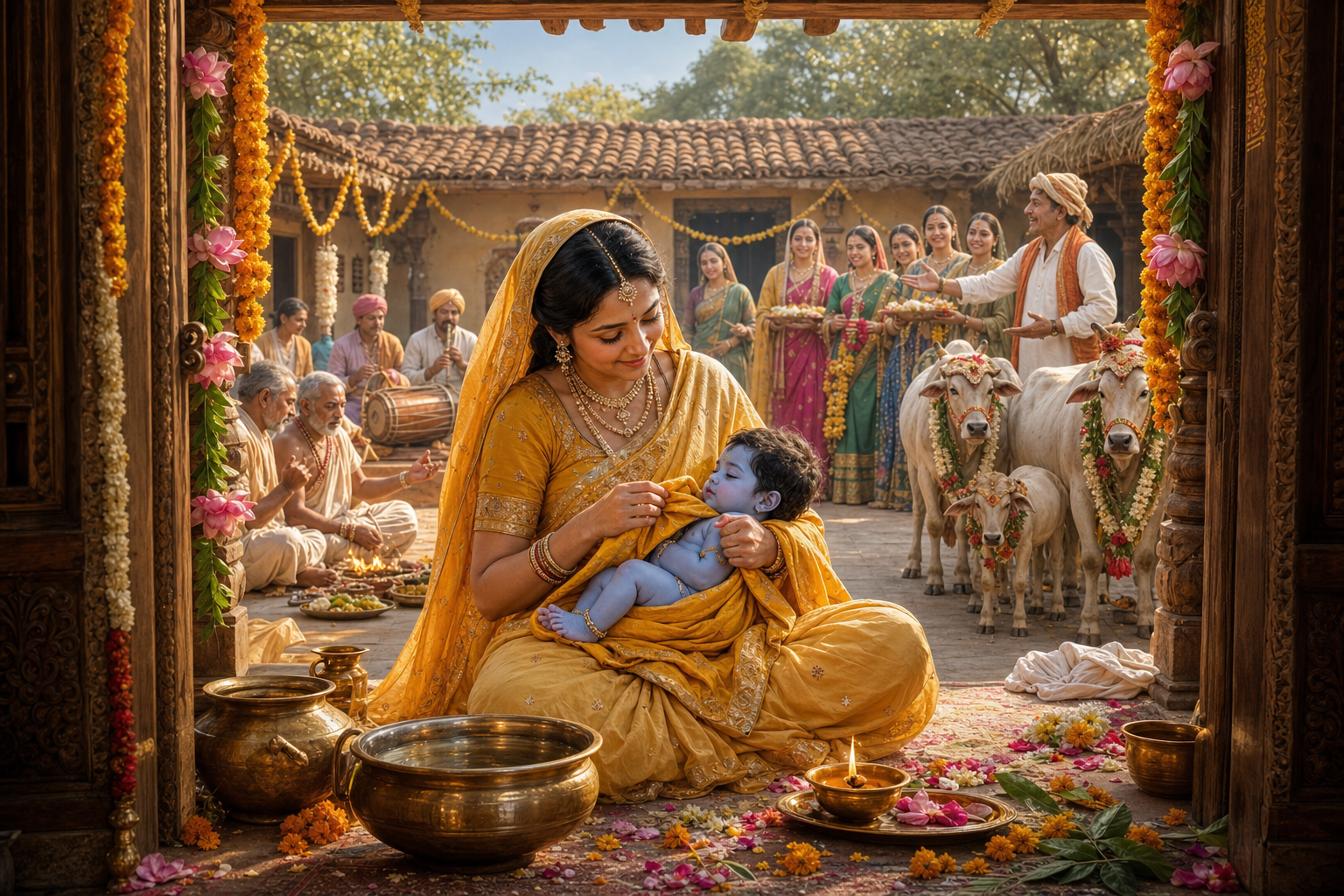
You may know Krishna’s birth celebration well yet still wonder what His Utthana ceremony was. The short answer is concrete: just after baby Krishna turned three months old and began trying to turn and raise His body, Mother Yashoda marked the milestone with a ceremonial bath, sacred recitation, music, hospitality and generous gifts.
But the scene is more than a charming detail from Krishna’s infancy. If you read the opening of Srimad-Bhagavatam 10.7 together with the ceremony that follows, you encounter a practical lesson in hearing Krishna-katha, sanctifying family life and keeping loving attention at the center of religious observance.
Begin with Pariksit’s reason for hearing Krishna-katha
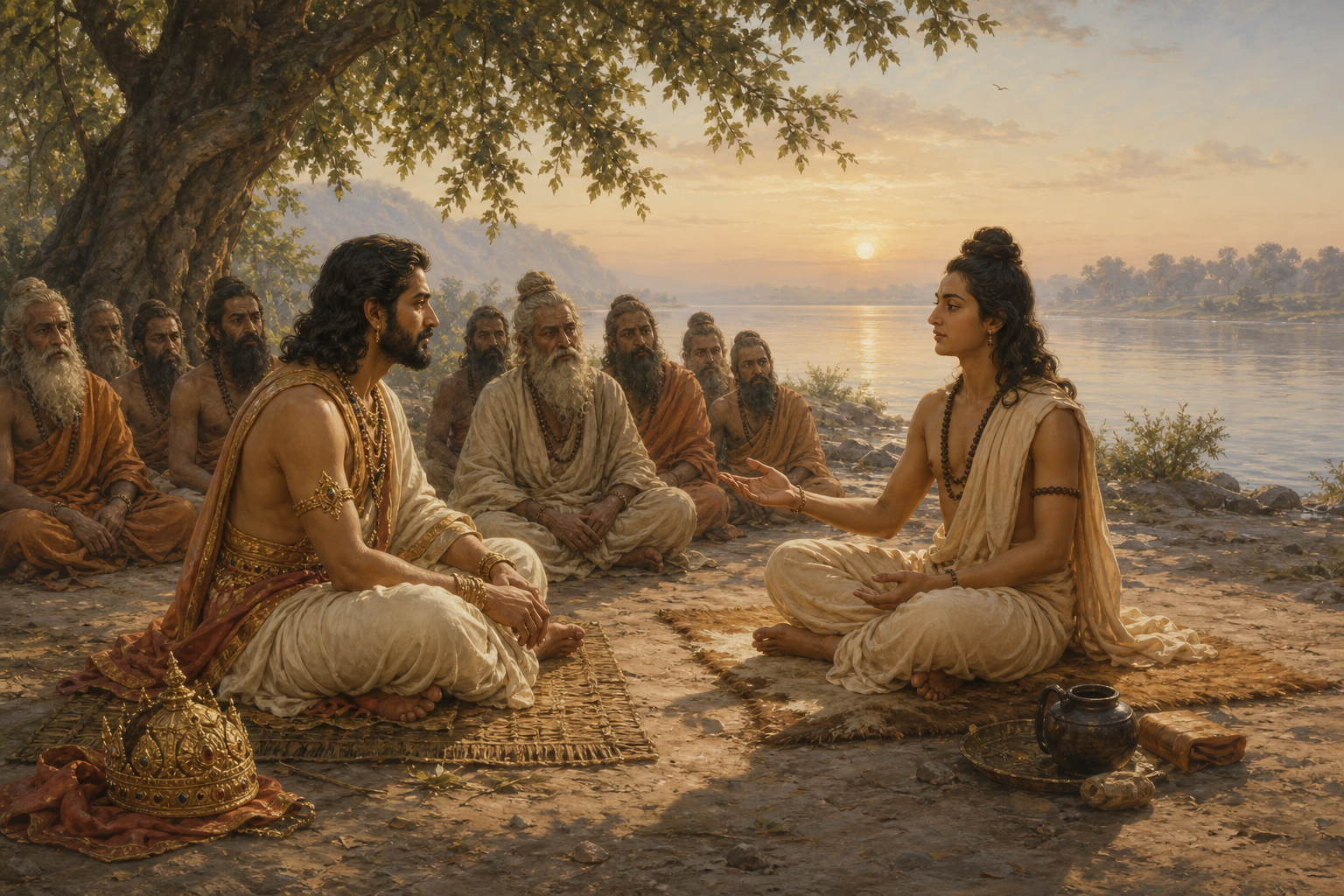
The Utthana scene does not begin immediately with bathing, musicians or assembled guests. In Srimad-Bhagavatam 10.7.1-2, King Pariksit first asks Sukadeva Gosvami to continue narrating Krishna’s activities. He describes those activities as pleasing to the ear and mind, and he connects attentive hearing with purification, devotion to Hari and friendship with His devotees.
That opening tells you how to approach what comes next. Within the Bhagavata’s devotional vision, Krishna’s childhood pastimes are not merely information about an ancient household. They are meant for sravana: receptive hearing that gradually redirects what the mind wants to dwell on. The test is not whether you can remember every ceremonial object. Notice whether hearing makes you more inclined to remember Krishna, serve Him and seek spiritually serious company.
Pariksit then asks to hear about Krishna acting like a human child while displaying extraordinary power. Verse 10.7.3 therefore supplies the interpretive key: the apparently ordinary infant behavior and the divine wonder belong to the same lila. If you skip this verse, you may reduce the Utthana celebration either to social history or to a miracle story. The Bhagavata asks you to hold intimacy and divinity together.
- Read verses 10.7.1-3 before reading about the ceremony. They establish why the narration is being heard.
- Pay attention to the progression from hearing about Krishna to attachment to Krishna and fellowship with devotees.
- Ask what attracts your mind before the reading and what remains with you afterward. That makes sravana a practice rather than passive consumption.
- Continue into verses 10.7.4-6 without breaking the sequence. Pariksit’s request and Yashoda’s celebration illuminate each other.
What actually happened during Krishna’s Utthana ceremony
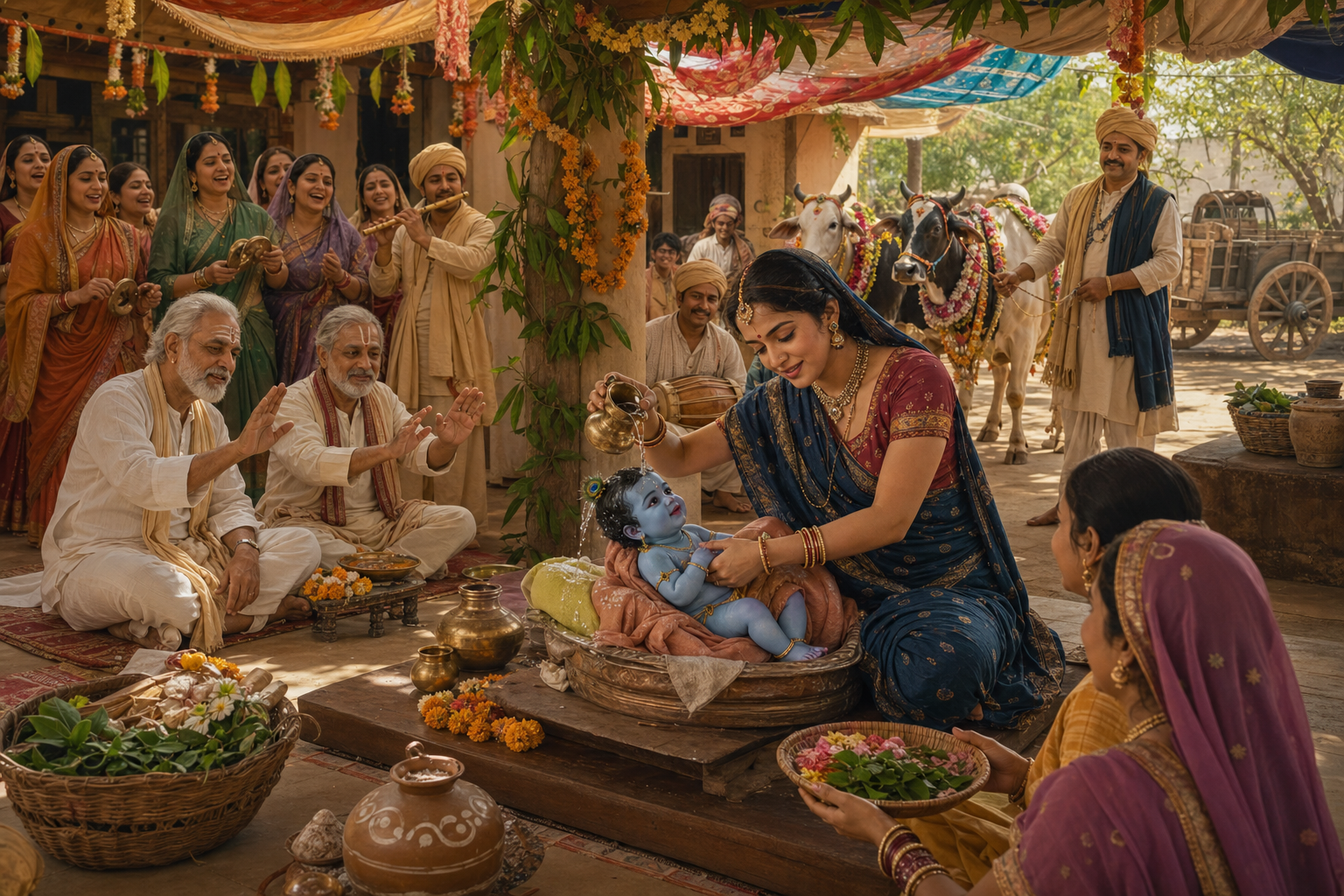
Utthana carries the sense of rising or getting up. In this episode it is associated with Krishna slanting and turning His infant body as He began to rise. A.C. Bhaktivedanta Swami Prabhupada’s English rendering of verse 10.7.4 also relates the rite to the stage when a child is due to leave the house for the first time. These descriptions belong to the passage’s traditional setting; they should not be converted into a universal modern developmental timetable.
The narrative gives a recognizable order to the celebration:
- A milestone was noticed. Krishna had just passed three months of age and was attempting a new bodily movement. His growth was treated as an occasion for gratitude rather than as an unnoticed domestic event.
- The timing carried sacred meaning. The moon was conjoined with Rohini when Yashoda held the celebration.
- The community assembled. Women of the neighborhood gathered. Music and singing accompanied the occasion, while brahmanas recited Vedic hymns.
- Yashoda bathed Krishna. The abhisheka placed the child, not the guests or display, at the ceremonial center.
- The brahmanas were honored materially. After the bathing, Yashoda offered ample food grains and other eatables, garments, garlands and desirable cows. The rite joined worship with hospitality and dana.
- Krishna’s immediate need was respected. When He became sleepy, Yashoda lay down with Him until He slept peacefully. Only then did she return to her other responsibilities.
Verse 10.7.5 is especially important if you are tempted to imagine the ceremony as grand public performance. Its most intimate moment is quiet: Yashoda notices her sleepy child, stays with Him and lets the program wait. Sacred hospitality matters, but it does not erase maternal attentiveness.
The pressure point arrives immediately afterward. While Yashoda is generously receiving the people of Vraja, she does not hear Krishna crying for her milk. The infant throws His legs upward, and that movement leads into the astonishing cart episode. Verse 10.7.6 and its commentary identify the household cart with Sakatasura and understand Krishna’s kick as the exposure and destruction of the demon.
This transition matters. The Utthana ceremony is not an isolated cultural tableau placed beside Krishna’s lila. Its central bodily sign, the infant lifting and moving His legs, becomes the means by which divine power appears. The child who cries for His mother is also the Lord whose delicate movement defeats a hidden threat.
The devotional meaning lies in intimacy, not spectacle
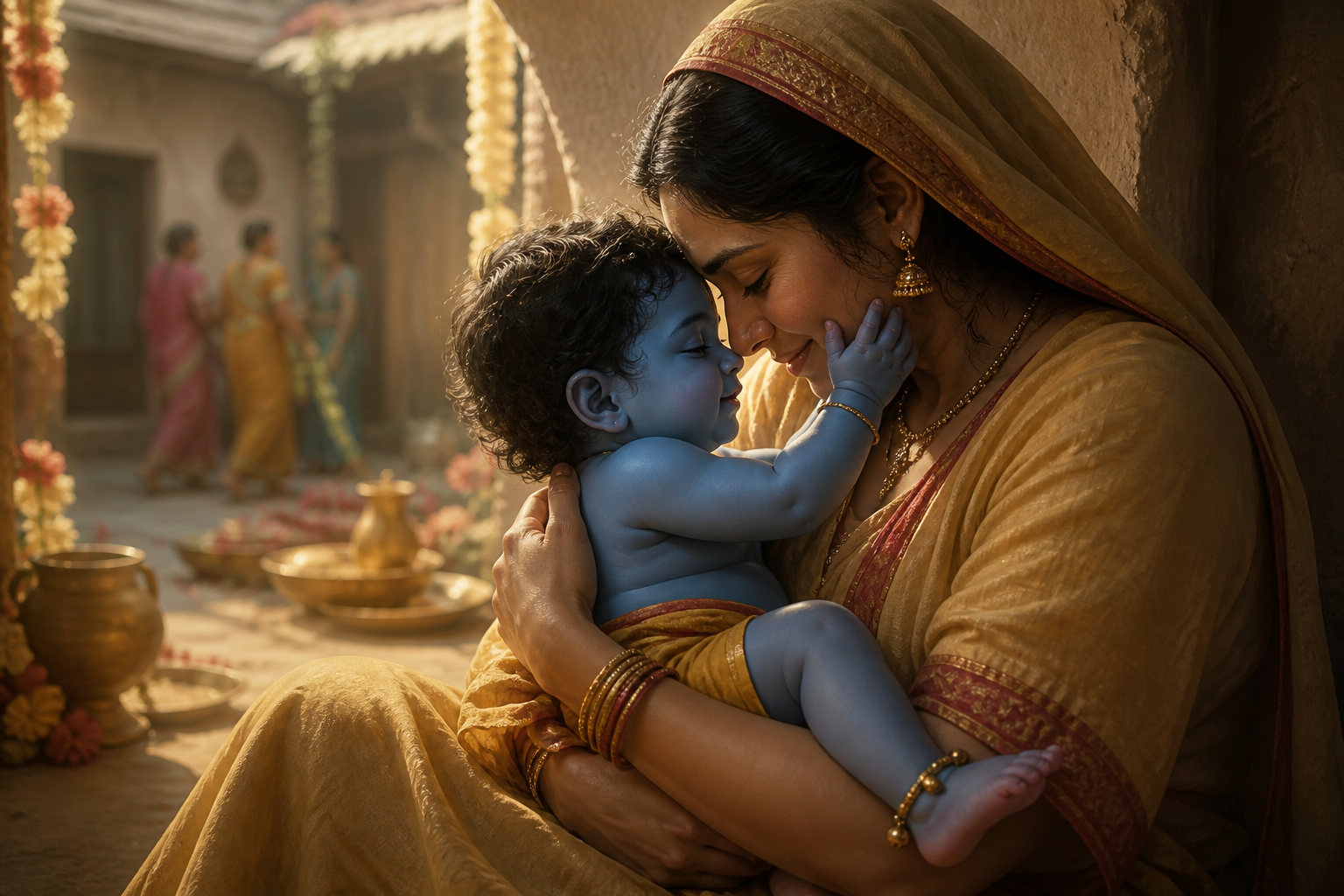
Krishna’s smallness is not an embarrassment that the theology must explain away. It is how parental devotion becomes possible. He sleeps, grows hungry, seeks Yashoda’s milk and draws her attention through His legs. Vraja does not relate to Him first through distant philosophical analysis. Its residents love Him within the rhythms of household and village life.
At the same time, the Bhagavata does not ask you to conclude that Krishna is only an unusually gifted child. Verse 10.7.3 has already identified Him as the Supreme Person appearing and acting in human society. The cart episode then prevents the domestic tenderness from being flattened into ordinary biography. Theologically, His dependence and His supremacy are revealed together.
Yashoda’s missed hearing of Krishna’s cry should also be read carefully. The preceding verse has just shown her attentive care, and verse 10.7.6 shows her occupied in honorable service to assembled guests. The point is not a crude accusation that hospitality made her a poor mother. It is a finely observed tension: even worthy religious and social duties can momentarily fill the field of attention.
You can apply that tension without turning the lila into a generic moral fable. Before expanding a puja, festival or family observance, ask a direct question: what living relationship is this activity meant to serve? If elaborate arrangements leave no room to hear Krishna-katha, care for those present or remember Krishna Himself, the outer program has begun to obscure its center.
- Notice the person before the program. Yashoda responds to Krishna’s sleep before returning to the gathering.
- Let celebration become service. Bathing, recitation, feeding, gifts and hospitality all have recipients; they are not decorations around an event.
- Do not separate tenderness from theology. Krishna’s desire for His mother’s milk and His divine power are both essential to the scene.
- Hear in relationship. Pariksit hears from Sukadeva, and the stated fruit includes friendship with devotees. Krishna-katha is situated within sadhu-sanga, not merely private curiosity.
How to study or commemorate the Utthana lila responsibly
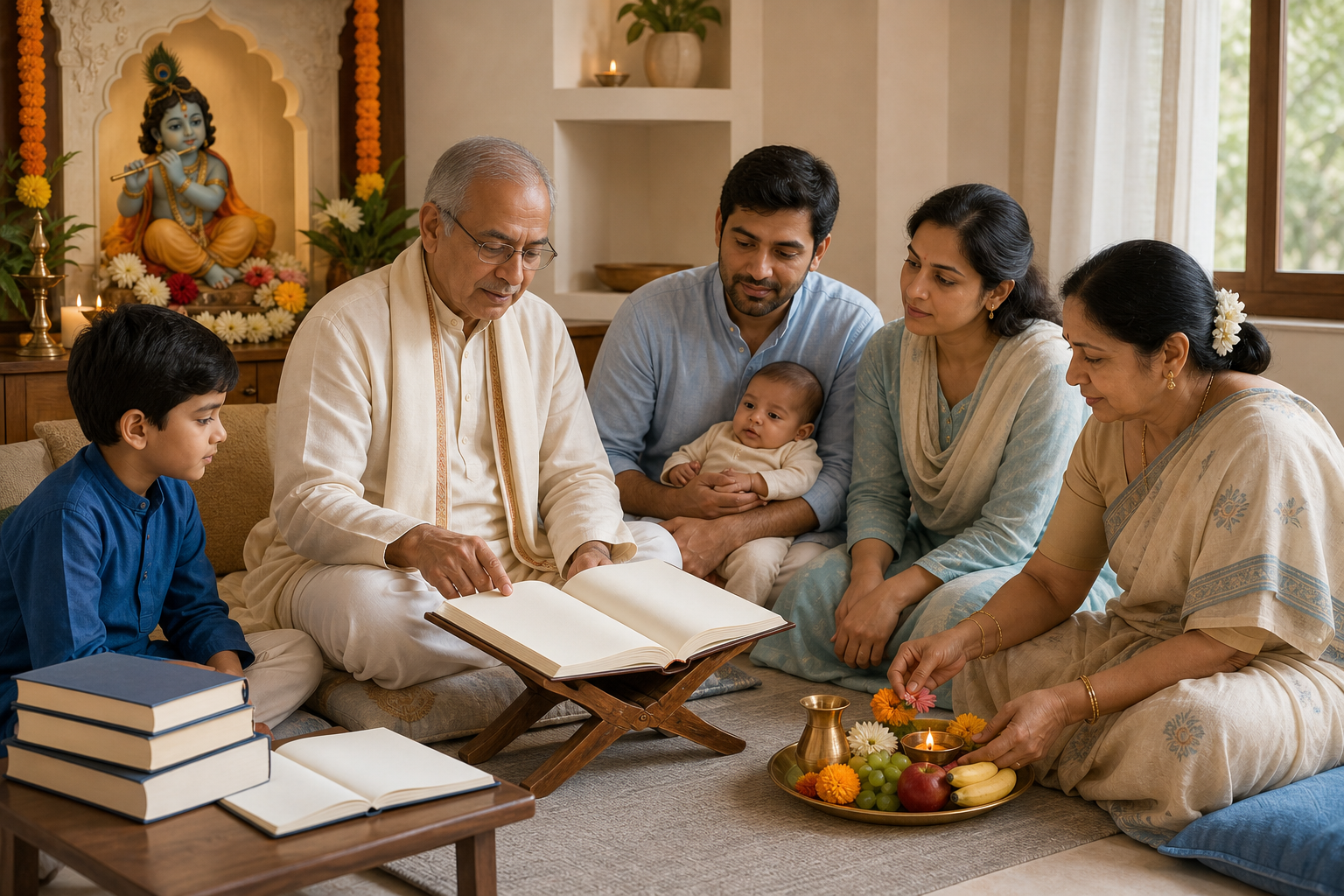
You may want to use this episode for scriptural study, a Krishna-centered home gathering or the celebration of a baby’s milestone. First decide which of those you are doing. Srimad-Bhagavatam records a sacred event in Nanda and Yashoda’s household, but these few verses do not provide a complete ritual manual for every sampradaya, region or family.
If you are studying the passage
Keep three interpretive layers distinct. This prevents both careless literalism and vague symbolism.
- Narrative observation: identify only what the verses describe: Krishna’s age and movement, Rohini, the assembled women, music, mantras, bathing, gifts, sleep, hunger and the upward movement of His legs.
- Devotional claim: identify what the Bhagavata asks its hearer to recognize: Krishna acts with the intimacy of a human child while remaining the Supreme Person.
- Personal application: state what you will do differently, but do not present your inference as though it were an additional scriptural command.
A useful reading practice is to mark the verbs attached to Yashoda and those attached to Krishna. Yashoda celebrates, bathes, honors, gives, notices, rests with the child and receives guests. Krishna turns, becomes sleepy, cries, seeks milk and lifts His legs. That simple observation reveals the lila as an exchange of action and affection, not a static portrait.
If you want a home commemoration
A modern devotional remembrance can take inspiration from the scene without pretending to reproduce its complete Vedic form. Keep the distinction explicit.
- Read Srimad-Bhagavatam 10.7.1-6 aloud so the gathering begins with the passage’s own purpose and sequence.
- If an actual baby is being celebrated, arrange everything around the child’s ordinary feeding, sleep, comfort and safety. Shorten the gathering when necessary instead of making the child serve the schedule.
- Use devotional practices already established in your family or lineage, such as Krishna-nama, kirtana, puja and an offering of food. Do not invent Vedic mantras or priestly roles for the sake of atmosphere.
- Let hospitality take a tangible form through prasada, respectful welcome and dana within your means. The gifts named in Krishna’s ceremony describe Yashoda’s generosity; they are not a compulsory shopping list for every household.
- Describe the gathering honestly as a remembrance inspired by Krishna’s Utthana lila unless a qualified teacher or purohita is directing a formal rite in your tradition.
If your family wants to perform an actual samskara, ask a trusted acharya or purohita rooted in your sampradaya and regional practice about timing, mantras, eligibility and procedure. Do not derive a complete contemporary ritual from one narrative passage. That preserves both scriptural honesty and the integrity of living tradition.
Key takeaways
- Krishna’s Utthana ceremony marked His attempt to turn and rise just after He had passed three months of age.
- The celebration included the moon’s conjunction with Rohini, assembled women, music, Vedic recitation, bathing, hospitality and gifts.
- Srimad-Bhagavatam 10.7.1-3 explains why the scene is heard: Krishna-katha is intended to purify attention, awaken devotion and deepen fellowship with devotees.
- Krishna’s sleep, hunger and desire for Yashoda’s milk reveal the intimacy of Vraja-bhakti; His defeat of Sakatasura reveals divine power within that intimacy.
- A present-day gathering may draw inspiration from the lila, but a formal samskara should follow qualified guidance from the family’s own lineage and regional tradition.
Before your next Krishna-katha gathering, read 10.7.1-6 as one continuous movement and then continue into the cart episode. If you commemorate a child’s milestone, let the Utthana scene set the order of importance: attentive care, Krishna remembrance, generous service and only then the scale of the celebration.
References
- Dandavats – 31Aug2026 | SB10.7.1-2 – Jai Nitai Das
- PrabhupadaBooks.com – Srimad-Bhagavatam 10.7.1-2
- PrabhupadaBooks.com – Srimad-Bhagavatam 10.7.3
- PrabhupadaBooks.com – Srimad-Bhagavatam 10.7.4
- PrabhupadaBooks.com – Srimad-Bhagavatam 10.7.5
- PrabhupadaBooks.com – Srimad-Bhagavatam 10.7.6
- SrimadBhagavatam.org – Canto 10, Chapter 7
