
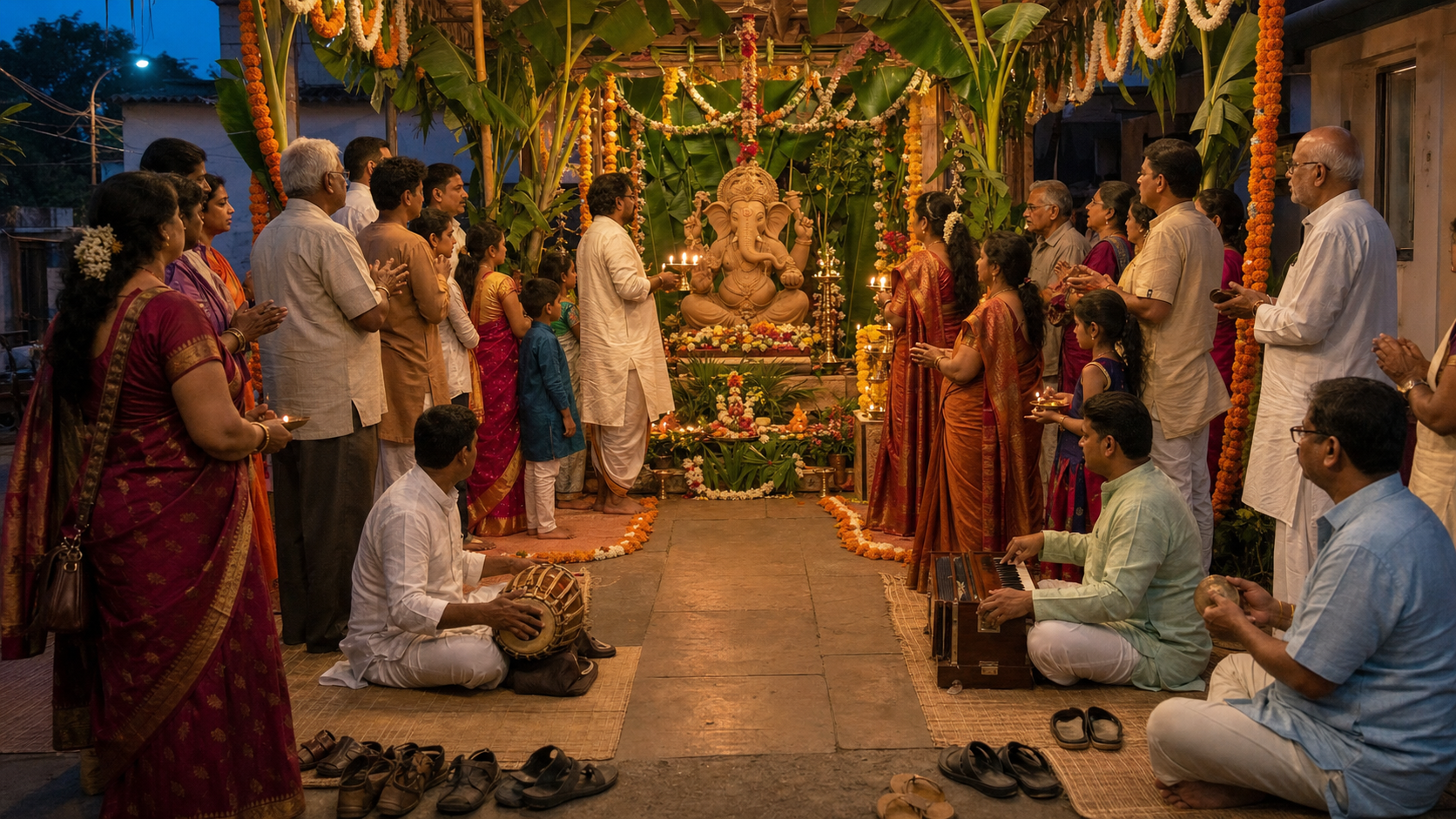
You are helping organise Ganeshotsav, and the committee has reached the familiar question: will people still come, participate and celebrate enthusiastically if there is no DJ? That question can quietly push the festival away from worship and toward spectacle.
You do not have to choose between a sacred celebration and a lively one. The practical answer is to give puja, aarti, devotional music, community participation and the procession a clear structure. When the committee designs those elements deliberately, a DJ is no longer the thing holding the celebration together.
Let worship determine the festival schedule
A traditional Ganeshotsav is not defined merely by removing modern equipment. It is defined by what occupies the centre. Shri Ganesha is not a decorative presence beside a programme of entertainment; worship is the reason the programme exists.
Begin the committee meeting by fixing the sacred parts of the celebration. Record the times for installation, puja, aarti, bhajan, distribution of prasad and visarjan according to your family tradition, sampradaya, mandal custom and local practice. If the correct procedure is uncertain, ask the priest or a knowledgeable elder before publishing the schedule.
Then place cultural and community activities around those commitments. Do not schedule a performance so close to aarti that organisers have to hurry the worship, compete with residual noise or persuade an audience to turn its attention back toward the murti. A simple operating rule helps: music and announcements stop before a sacred observance begins, the space settles, and the designated worship team takes charge.
This hierarchy should also guide the procession. Visarjan is part of the devotional observance, not an excuse to suspend the character maintained at the mandap. The mood may be energetic, but the energy should remain directed toward Ganapati through disciplined music, chanting and collective participation.
Write this purpose in one sentence and approve it before discussing decorations or entertainment: “Our Ganeshotsav will place worship first and express celebration through devotion, culture and seva.” That sentence gives the committee a standard for resolving later disagreements.
Replace the DJ with a complete musical plan
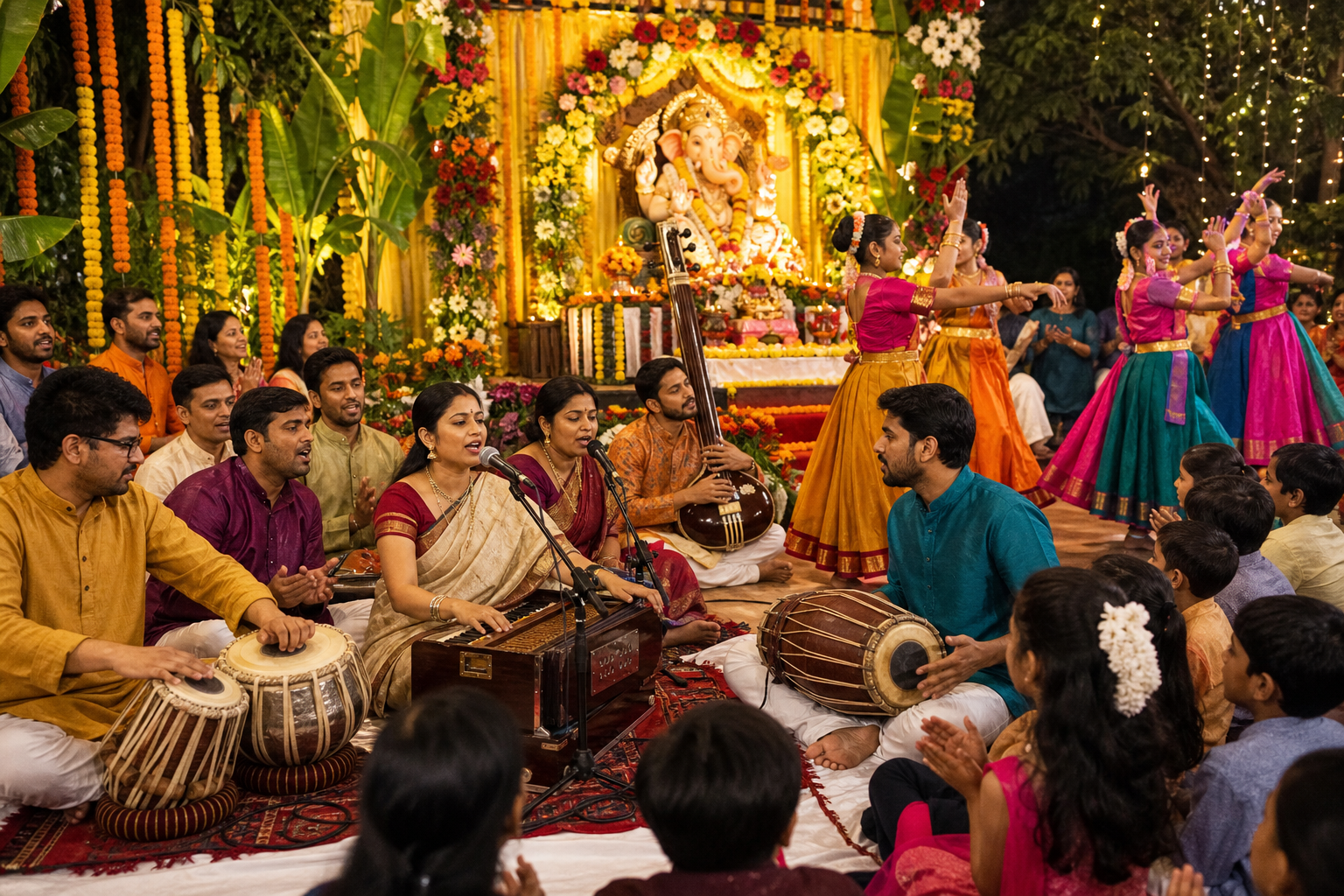
A committee that merely cancels the DJ leaves an empty space. Someone will eventually fill it with recorded tracks, an improvised sound system or a last-minute demand to restore the old arrangement. A successful DJ-free Ganeshotsav needs a positive musical plan, not just a prohibition.
Ganeshotsav committees and devotees have been urged to preserve the festival’s sanctity through a DJ-free celebration using traditional instruments and proper festive decorum. Turn that principle into assignments the committee can execute:
- Choose the devotional repertoire. Decide which aartis, bhajans, abhangas, chants or locally rooted compositions belong in the programme. Confirm the words and order in advance.
- Invite traditional musicians early. Ask local groups, temple musicians, students and experienced community members to lead. Give them the schedule and procession route rather than treating them as background performers.
- Rehearse collective participation. Circulate lyrics or arrange a short practice so that children, elders and visitors can join instead of standing around a performance they do not know.
- Separate amplification from entertainment. If a microphone is needed for aarti, instructions or public announcements, use it for those purposes. Do not let basic public-address equipment become a route back to bass-heavy DJ programming.
- Name a music coordinator. One person should know who begins each item, when sound stops and how the transition to puja or aarti will happen.
- Plan the procession rhythm. Arrange traditional musicians, chanters, volunteers and devotees in a deliberate order. A route coordinator should keep the group together and preserve the agreed devotional character.
The distinction is important: volume can attract attention, but participation creates belonging. A familiar aarti sung together gives every devotee a role. Traditional music also makes the celebration recognisably rooted in the community rather than interchangeable with a commercial street event.
Make decorum an operating system, not a slogan
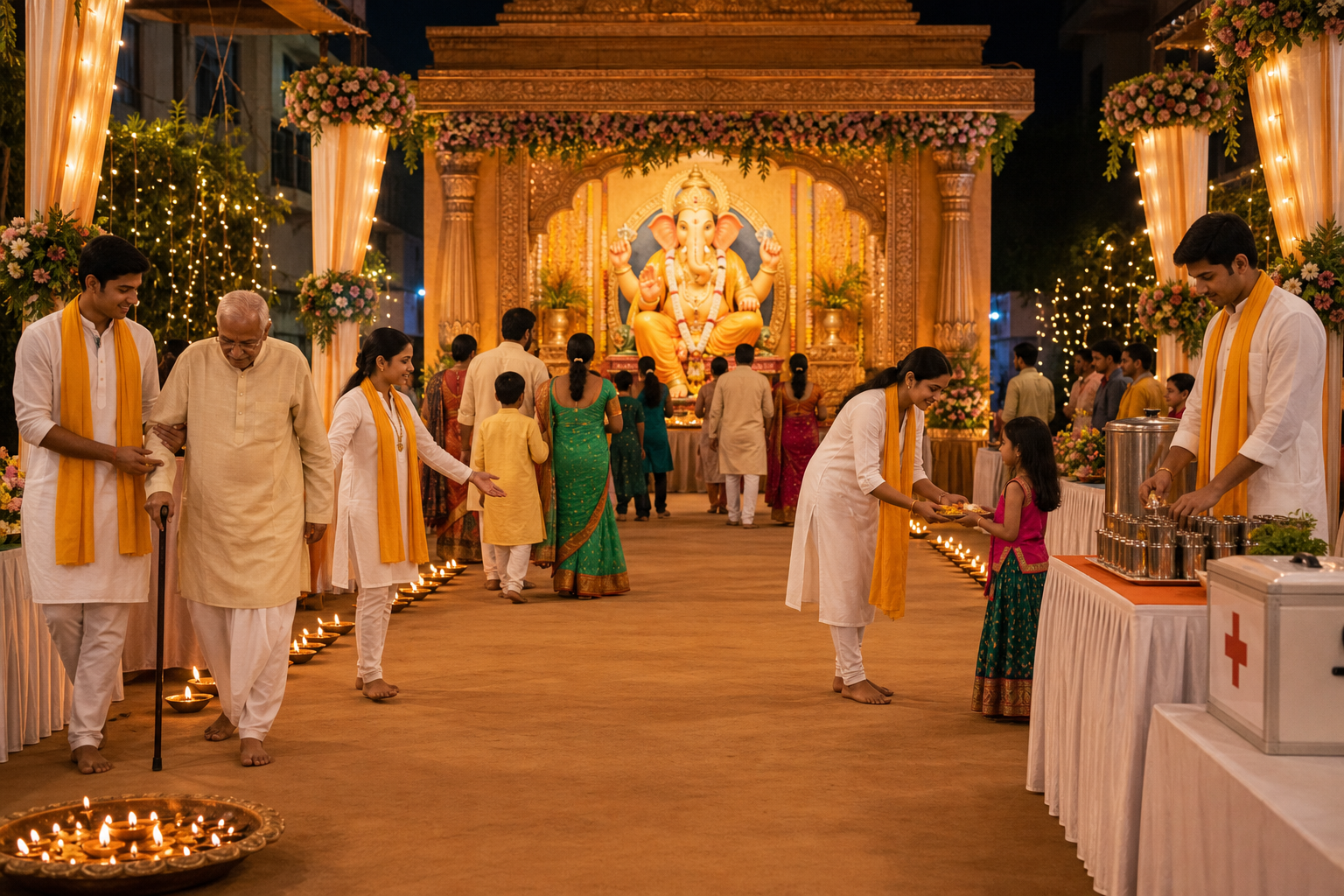
“Maintain sanctity” is too vague for volunteers working under pressure. Translate it into visible conduct. People follow a festival’s tone from the cues given by its organisers: what the announcer says, where footwear is kept, how the murti area is approached, what happens during aarti and how the procession behaves.
Prepare a short code that applies to committee members, performers and visitors. It can include the following:
- The murti, puja area and offerings are approached respectfully and kept clean.
- Conversation, performances and announcements pause during worship.
- Clothing, stage material, speech and music remain appropriate to a sacred public celebration.
- Intoxicants, vulgar lyrics and disorderly conduct have no place in the mandap or procession.
- Prasad is distributed in an orderly manner, and volunteers keep the surrounding area free of discarded plates, cups and packaging.
- Photography does not obstruct puja, aarti, darshan or the movement of elders.
- Procession participants follow the route coordinator and do not introduce unapproved music or equipment.
Communicate these expectations before the festival. Put the music policy in performer invitations. Brief volunteers before each programme. Ask the announcer to explain important transitions courteously. A rule disclosed in advance feels like the character of the celebration; a rule imposed in the middle of an argument feels personal.
Decorum also includes consideration for the wider neighbourhood. Keep access routes clear, assign volunteers to guide the crowd, and verify the local requirements that apply to sound, processions, traffic, fire safety and immersion. Sacred intent does not remove the organiser’s responsibility for orderly public conduct.
Give young people real responsibility and answer objections plainly
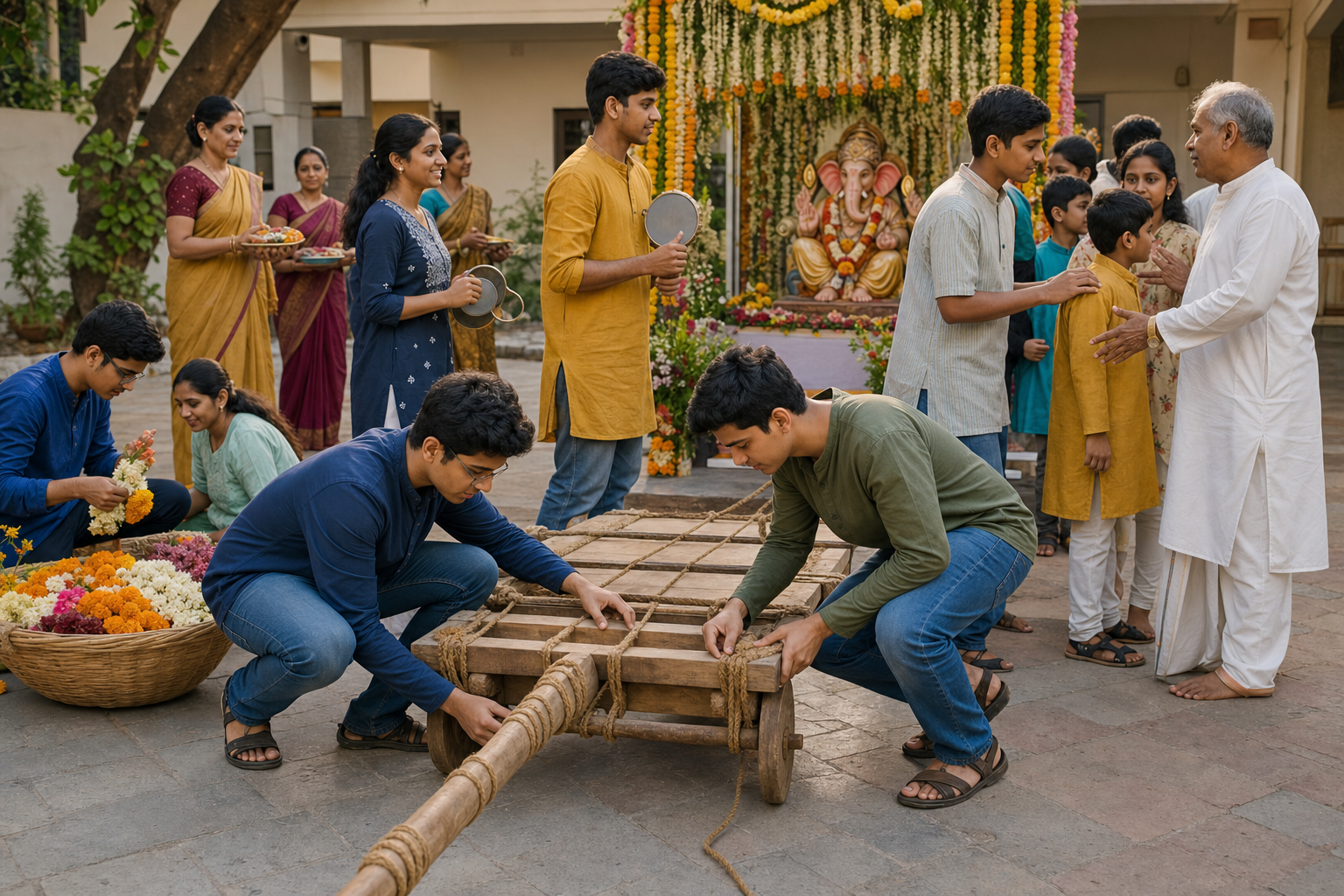
The quickest way to lose younger participants is to tell them only what they cannot do. Invite them to shape the traditional celebration within clear boundaries. They can learn and lead devotional singing, coordinate musicians, prepare festival explanations, organise rangoli or other cultural activities, manage prasad distribution, assist elders, keep the premises clean and document the celebration without interrupting worship.
These are not consolation jobs after the DJ has been removed. They are the work through which a festival is transmitted. A young volunteer who learns how to organise aarti or guide a procession gains knowledge that can be carried into the next celebration.
Expect objections, and decide the committee’s answers before they arise:
- “A DJ is necessary to create energy.” Energy can come from live traditional music, chanting and coordinated participation. The committee’s task is to organise those well enough that devotees can join.
- “Young people will not be interested.” Give them ownership of meaningful cultural and seva responsibilities. Do not reduce youth participation to consuming loud entertainment.
- “Everyone else is doing it.” Another mandal’s practice does not determine the purpose of yours. Return to the approved sentence about worship, culture and seva.
- “We have already promised a DJ.” Speak with the relevant people immediately, explain the devotional policy and revise the programme openly. Waiting until the procession invites conflict.
- “Traditional means dull.” A poorly prepared programme can be dull in any format. Rehearsal, good musicians, clear announcements and collective singing make tradition participatory.
Do not frame the decision as a contest between generations. The useful distinction is between entertainment that dominates the festival and celebration that serves its sacred purpose. People of every age can understand that distinction when the committee applies it consistently.
Key takeaways
- Fix puja, aarti, devotional singing, prasad and visarjan arrangements before scheduling entertainment.
- Replace the DJ with a prepared programme of traditional instruments, devotional music, chanting and congregational participation.
- Assign named coordinators for worship, music, volunteers, the procession and public announcements.
- Write expectations for sound and conduct into invitations and volunteer briefings before the celebration begins.
- Give younger devotees responsibility for cultural learning and seva, not merely a list of restrictions.
- Carry the same sacred character from the mandap into the visarjan procession.
At your next planning meeting, settle the purpose statement, sacred schedule and music policy first. Once those are written down, the rest of the festival can be designed around them. A traditional Ganeshotsav is preserved through such practical choices: worship remains central, celebration remains joyful, and the community leaves with more than the memory of noise.
References
