
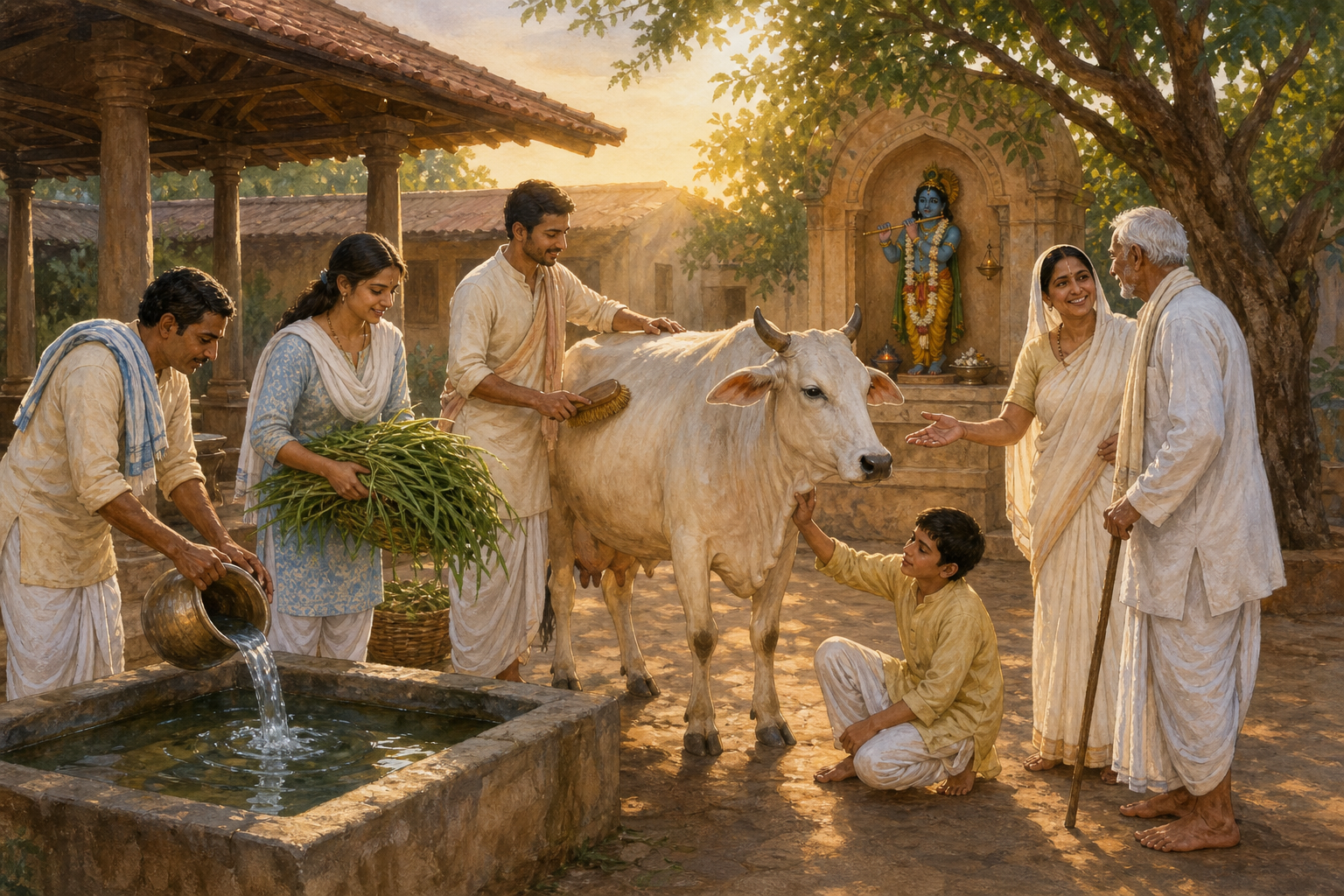
You want to honour Krishna, serve cows, and treat every person with equal dignity. The difficulty is not choosing among those commitments. It is making sure none of them becomes ceremonial language while the others are ignored.
A useful observance should survive three simple tests: does it deepen devotion, improve the actual care of cows, and widen rather than narrow human participation? If one answer is no, you have found the part of the practice that needs attention.
Three commitments that must be practised together
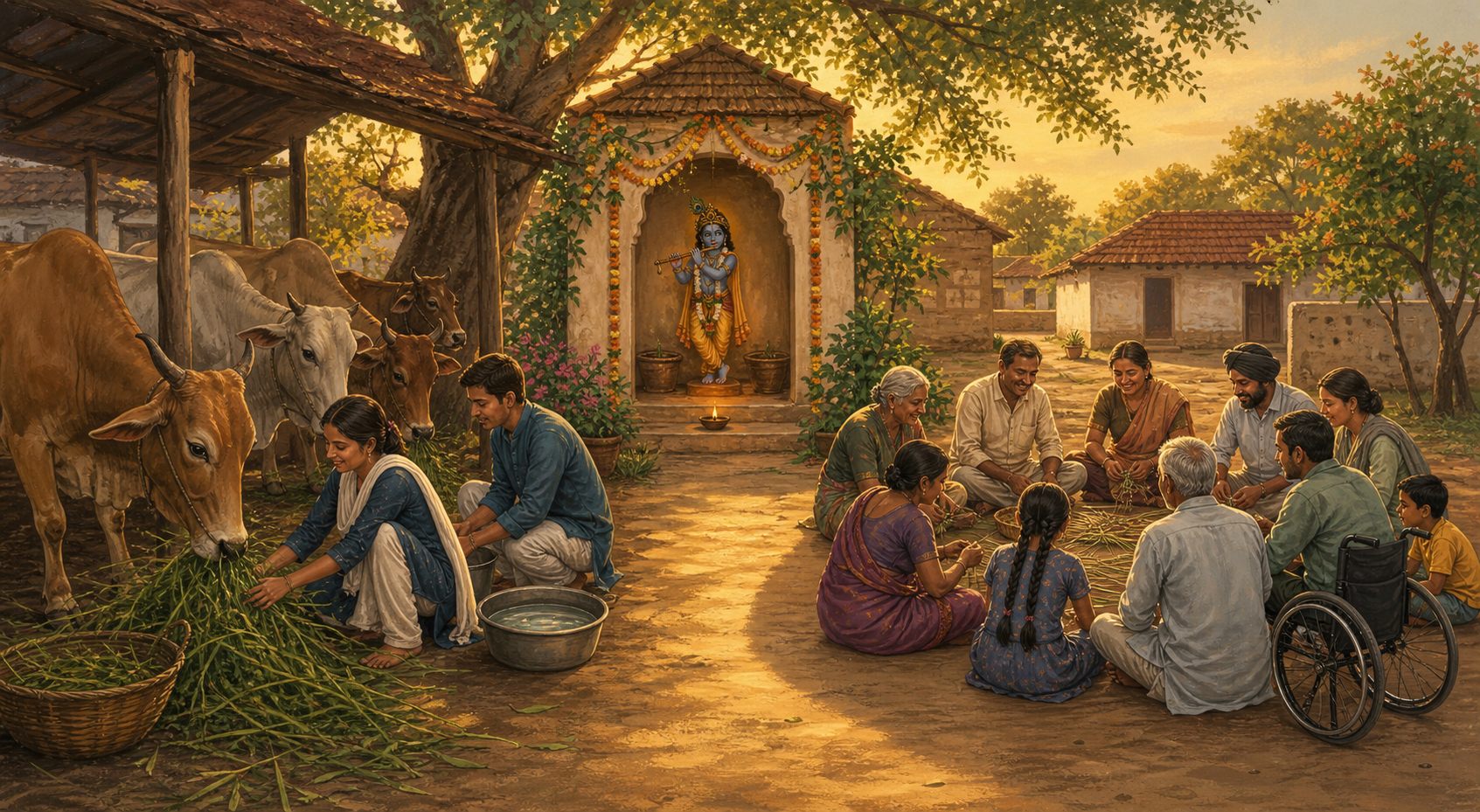
Krishna bhakti gives cow service its devotional centre. Cow service gives bhakti a material expression. Equality determines how that service is organized and how people are treated while it is done. Separating the three creates predictable distortions.
- Devotion without service can stop at emotion, decoration, or public display.
- Cow service without devotion can become an activity with no inner discipline or sacred relationship.
- Devotion and cow service without equality can honour a sacred symbol while humiliating the human beings doing the least visible work.
- Equality without responsibility can remain a slogan because nobody has to translate it into conduct.
A Krishna-centred understanding of Sanatana Dharma begins with a demanding principle: social labels do not limit the Lord, and people are to be regarded alike across caste, creed, community, gender, and religion. This is more than a claim about divine impartiality. If you invoke it in worship, it must affect who is welcomed, who may participate, whose work is respected, and who receives prasad without being diminished.
Equal dignity does not mean that every person performs the same task. A trained caretaker and a first-time visitor have different responsibilities around an animal. A priest, donor, cleaner, musician, child, and volunteer may also serve in different ways. The test is whether those differences are based on competence and responsibility or are being used to rank human worth.
You do not need to settle every doctrinal or social debate before acting. Begin with the sphere you can see: your household, temple committee, bhajan group, festival team, or goshala visit. Ask whether the manner of service reflects the equality you attribute to Krishna.
Cow seva begins with the cow’s actual needs
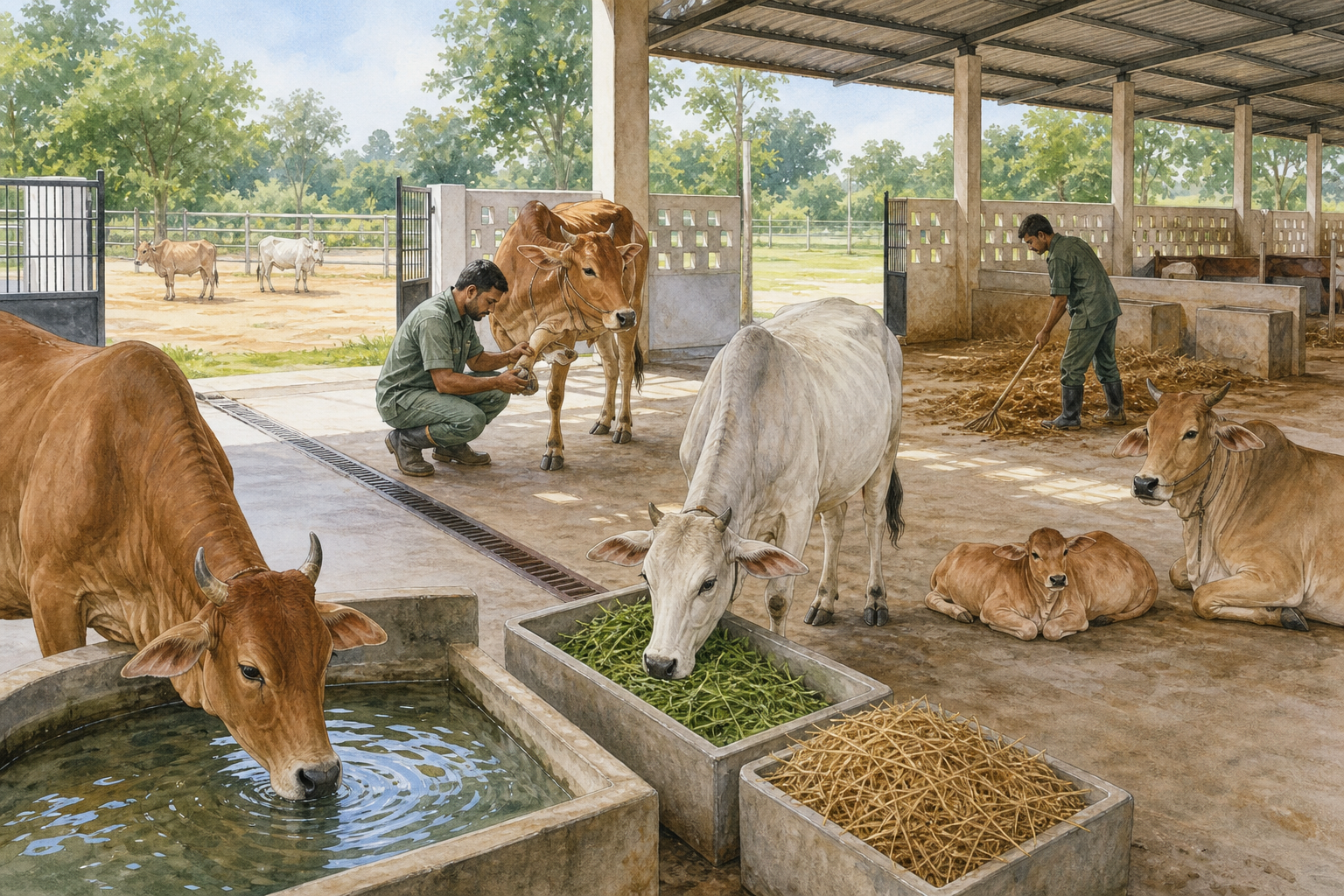
Gopooja can express gratitude and reverence, but worship and welfare are not interchangeable. Flowers, tilak, lamps, and photographs belong to a ceremonial moment. A cow’s needs continue after the visitors leave. Feed, water, clean surroundings, safe handling, shelter, and appropriate veterinary attention are the practical substance of seva.
Before taking offerings to a goshala, contact its caretakers. Ask what is needed instead of assuming that another basket of ceremonial items will help. Do not bring unfamiliar feed or approach an animal without permission. Uncoordinated feeding can interfere with the care routine, while inexperienced handling can distress the animal or injure a visitor. Let the people responsible for the herd direct contact.
Use five questions to distinguish effective seva from symbolic consumption:
<!– wp:list {