
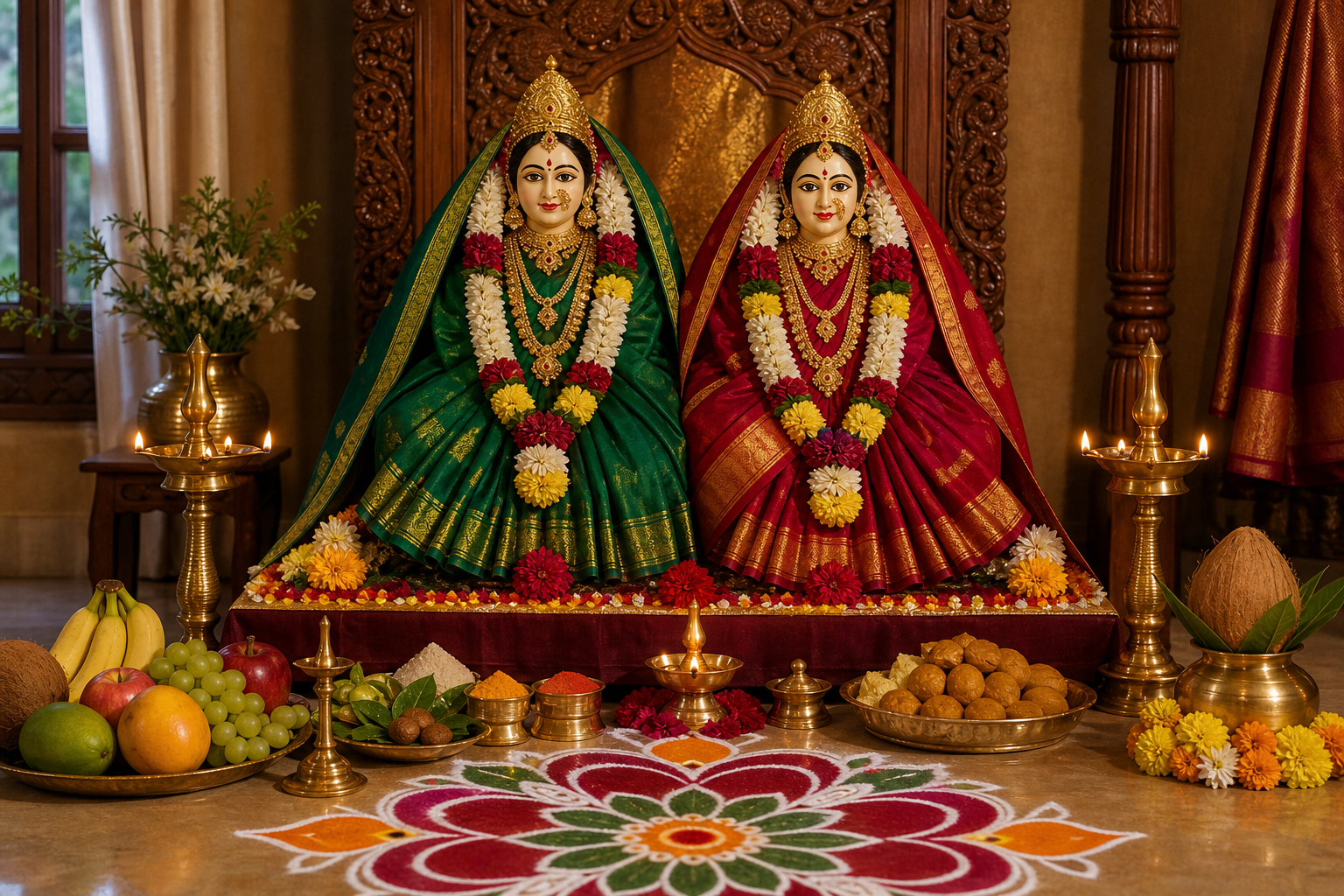
If your family message says "Mahalakshmi" while your calendar says "Jyeshta Gauri" or "Ele Ashtami," don’t choose whichever name sounds more familiar. These labels can point to related but distinct observances, and the difference affects the month, lunar fortnight, duration and ritual sequence you should follow.
You can resolve the confusion without becoming a calendar expert. First identify whether your household means the three-day Bhadrapada observance, the Ashtami-centred North Karnataka vrata, or the sixteen-day Mahalakshmi Vrata associated with Ashwin Krishna Paksha. Once that is clear, the right dates and procedure become much easier to verify.
Identify the vrata by its calendar grammar
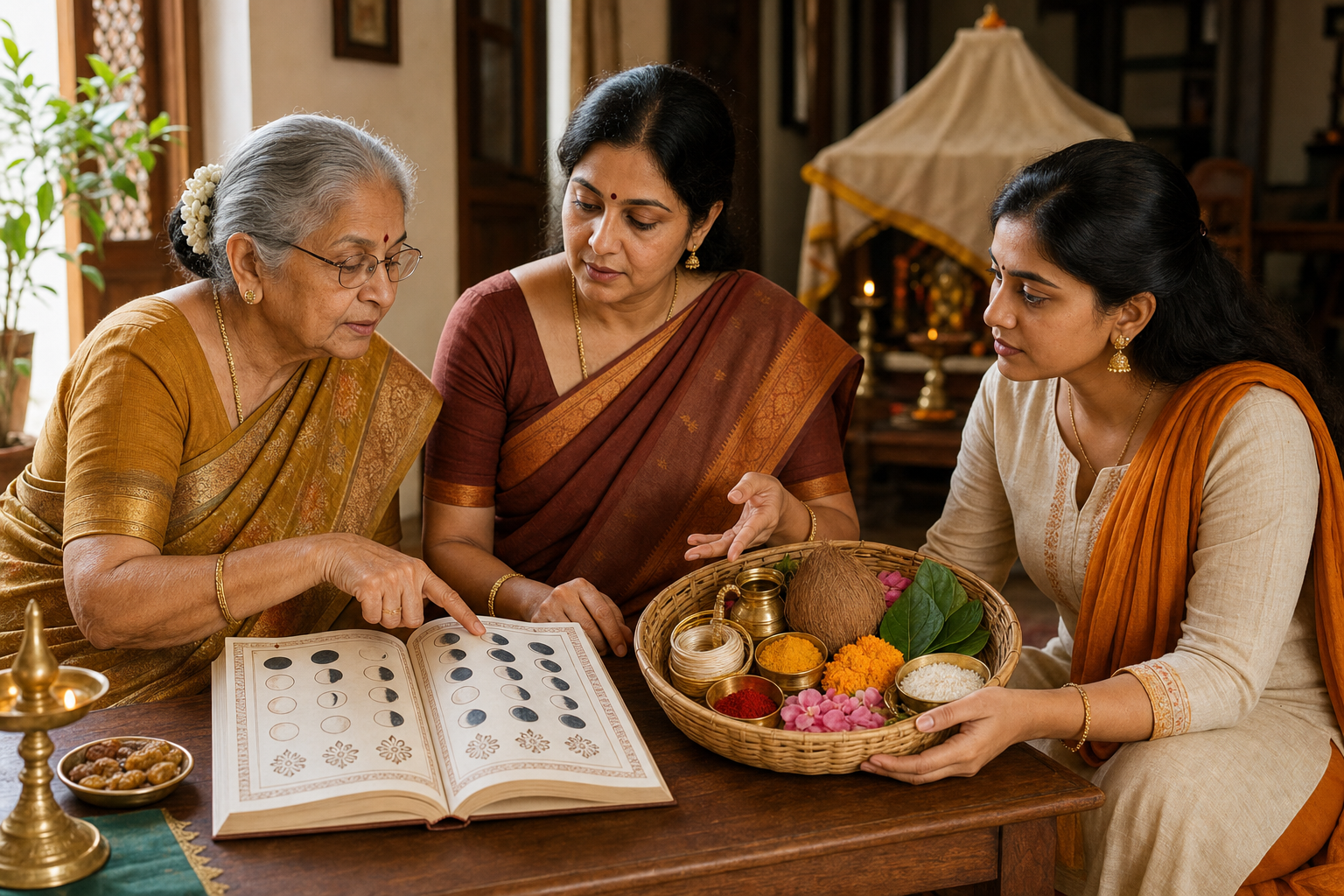
Festival names travel across regions more easily than complete ritual systems. That is why the word "Mahalakshmi" alone cannot identify your vrata. Ask for its calendar grammar: the lunar month, paksha, tithi and duration.
A tithi is a lunar day. Shukla Paksha is the waxing fortnight, while Krishna Paksha is the waning fortnight. Those distinctions are not decorative Sanskrit labels; they tell you which observance is actually being discussed.
| Clue you were given | Likely observance | Calendar marker | What must be preserved |
|---|---|---|---|
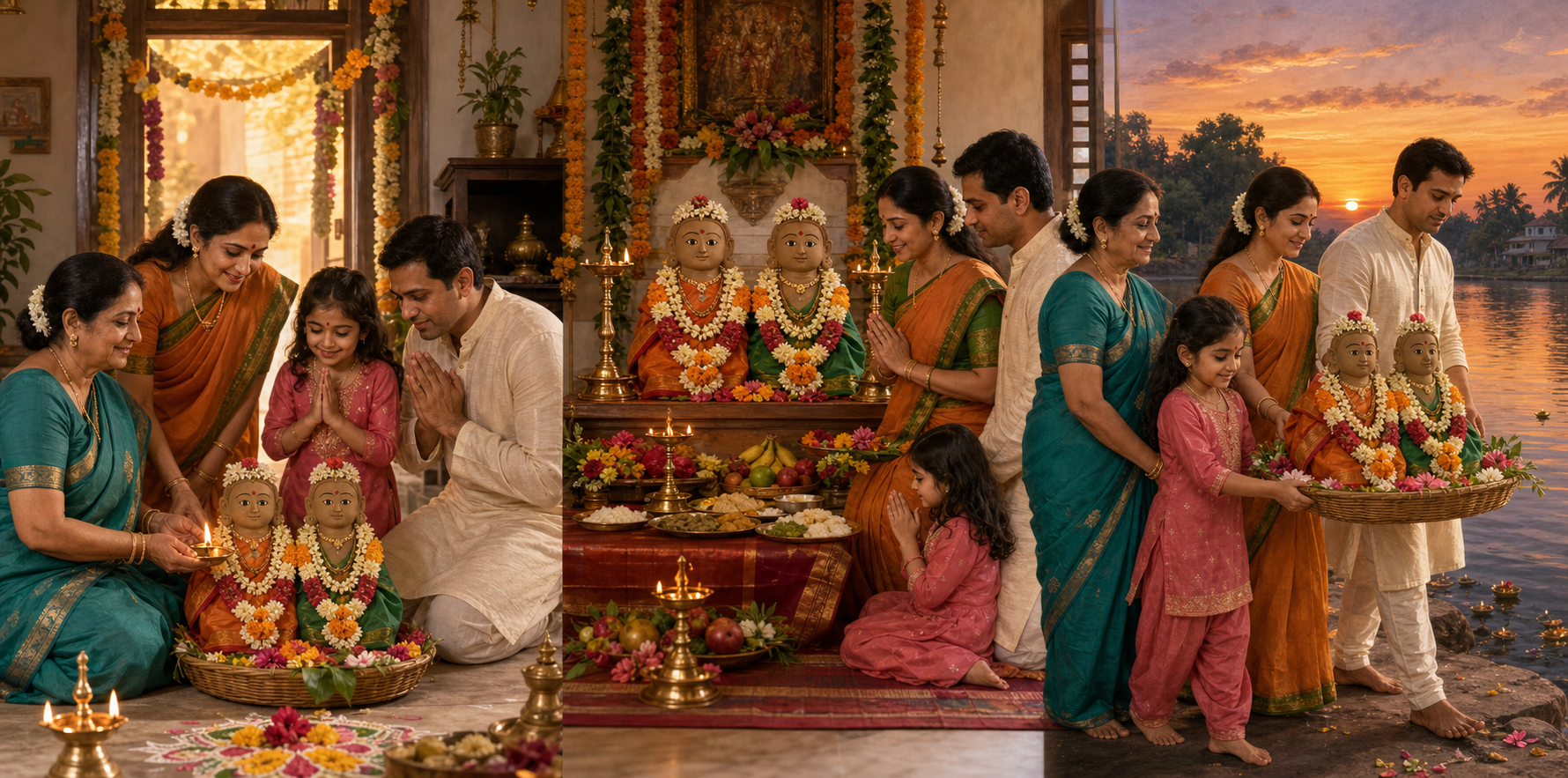
| Jyeshta Gauri, Bhadrapada Mahalakshmi, avahan and visarjan | Jyeshta Gauri Puja, also called Bhadrapada Mahalakshmi Vrata in this usage | Bhadrapada Shukla Shashti, Saptami and Ashtami | The complete three-day sequence |
| Ele Ashtami, Jyeshta Devi or a North Karnataka family custom | Ele Ashtami or Jyeshta Devi Puja | Bhadrapada Shukla Ashtami | The inherited North Karnataka procedure rather than a generic Lakshmi puja |
| Sixteen days, North Indian custom or Ashwin Krishna Paksha | Sixteen-day Mahalakshmi Vrata | Ashwin Krishna Paksha | The longer vrata and its own dedicated vidhi |
The first row is grounded in the three-day Jyeshta Gauri sequence across Shashti, Saptami and Ashtami. The North Karnataka observance is specifically associated with Ele Ashtami in Bhadrapada Shukla Paksha. The longer Mahalakshmi observance is a sixteen-day vrata associated with Ashwin Krishna Paksha in North Indian practice.
Use the table as a routing tool, not as permission to declare every household practice identical. If two relatives use different names, ask each of them for the month, paksha and number of days. Those answers are more decisive than the English festival label on a forwarded message.
How to place Jyeshta Gauri on the 2026 calendar
For 2026, the Jyeshta Gauri observance falls across September 17, 18 and 19. The published Ele Ashtami observance window also begins on September 17 and ends on September 19, 2026. That overlap does not prove that every mantra, image, offering or household rule is interchangeable. One description emphasises a three-tithi Jyeshta Gauri sequence; the other identifies an Ashtami-centred North Karnataka tradition.
A civil date is not the same thing as a muhurta. A tithi can begin or end between two midnights, and the usable time can vary by location. If you live outside Bharat, a timing copied from a relative’s Indian panchanga may not apply to your city.
Before buying puja materials, verify these five points:
- The exact name your household uses for the vrata.
- Whether its calendar marker is Bhadrapada Shukla Paksha or Ashwin Krishna Paksha.
- Whether the observance is a three-day sequence, an Ashtami-centred local practice or a sixteen-day vrata.
- The tithi and muhurta for the city where you will actually perform the worship.
- For the three-day vrata, the local timings for avahan, the central worship and visarjan.
Avahan is the formal welcoming or invocation of the deity; visarjan is the ritual conclusion and farewell. If your calendar lists only a single festival date but your family expects both actions on different days, the calendar entry is not detailed enough for your purpose. Consult a location-appropriate panchanga or the priest who guides your household practice.
Build one coherent puja instead of mixing three traditions
The common mistake is not usually forgetting an offering. It is combining instructions that belong to different vratas: a Jyeshta Gauri date from one calendar, a generic Lakshmi mantra from another page and fasting rules remembered from a sixteen-day observance. Each individual element may look devotional, yet the assembled procedure may correspond to no inherited paddhati at all.
Use this order of preparation:
- Write down the identity. Record the vrata name, lunar month, paksha, tithi or tithis, duration and your location on one line.
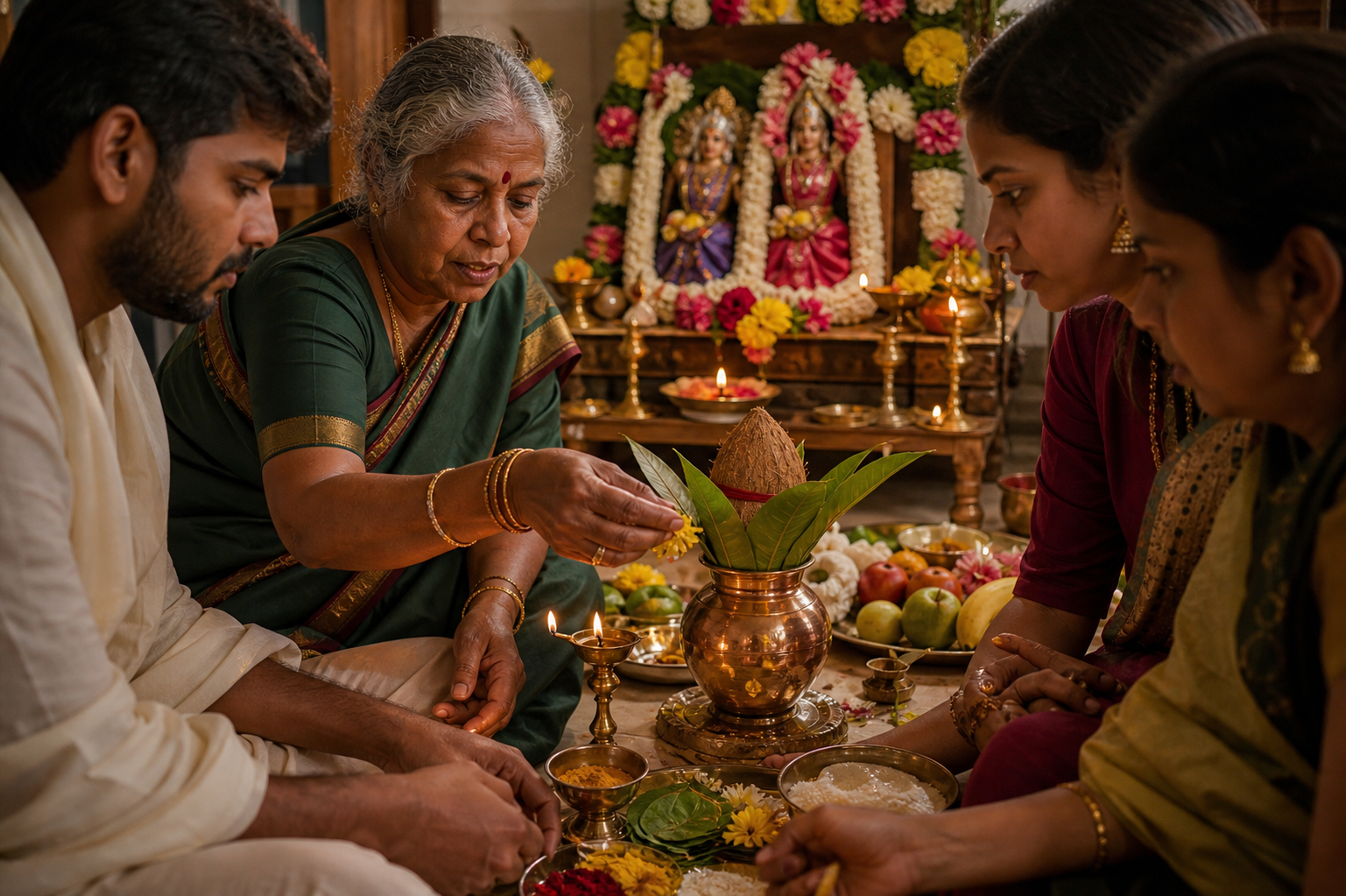
- Choose one ritual authority. For a home vrata, begin with your kulachara or established household practice. If that is unavailable, use guidance from the temple or priest whose calendar tradition your family follows.
- Keep the sequence intact. A three-day Jyeshta Gauri observance should not be reduced to the middle day’s worship merely because that date is easiest to find online. Confirm how your tradition handles arrival, worship and conclusion.
- Match the vidhi to the vrata. For the North Indian observance, select a procedure explicitly identified with the sixteen-day Mahalakshmi Vrata, including its corresponding mantras, stotras and prayers. Do not assume that every Lakshmi puja text belongs to it.
- Separate obligation from decoration. Mark what your household regards as essential, what is a regional custom and what is optional decoration. This prevents an elaborate shopping list from displacing the actual vrata.
- Plan the conclusion before beginning. Confirm the visarjan procedure and timing while arranging the avahan. A vowed observance includes its proper completion, not only its most visible puja.
Vrata means a vowed religious discipline; it does not automatically establish one universal food restriction. Do not add a fast simply because another Mahalakshmi observance includes one. If your inherited vrata does prescribe fasting and that conflicts with pregnancy, illness, medication or age-related needs, seek appropriate medical guidance and ask your religious guide how the observance may be adapted safely.
Why the names Jyeshta, Gauri, Mahalakshmi and Alakshmi need care
The naming is theologically richer than a search-engine synonym list. Jyeshta Gauri Puja is also known as Bhadrapada Mahalakshmi Vrata in one established usage. In the North Karnataka Ele Ashtami context, the deity is identified as Jyeshta Lakshmi Devi, Jyeshta Devi or Alakshmi.
That does not give you licence to flatten all four names into one universal ritual identity. Names function within a living regional and family tradition. The practical question is not, "Which word should replace the others?" It is, "Which name, form and procedure does this vrata invoke in our tradition?"
If the term Alakshmi causes confusion, do not respond with ridicule or fear. A cautious devotional reading recognises that Dharmic worship can face disorder, want and inauspiciousness without desiring them. Ritual attention can express the wish to place such forces in right relation while cultivating auspiciousness, restraint and household harmony. This interpretation should remain subordinate to the vrata katha and teachings actually preserved in your lineage.
Ask an elder or priest precise questions: What name is spoken during avahan? Which vrata katha or mantra set is used? Is the household observance three days or sixteen? What completes the visarjan? Four concrete answers will protect the tradition better than a long debate over whether two festival names "really mean the same thing."
Key takeaways
- Jyeshta Gauri Puja, also called Bhadrapada Mahalakshmi Vrata in this context, is a three-day Bhadrapada Shukla observance spanning Shashti, Saptami and Ashtami.
- Ele Ashtami is associated with Jyeshta Devi worship on Bhadrapada Shukla Ashtami and is widely observed in North Karnataka.
- The sixteen-day Mahalakshmi Vrata belongs to a different calendar frame associated with Ashwin Krishna Paksha in North Indian practice.
- In 2026, the cited Jyeshta Gauri and Ele Ashtami observance windows run from September 17 through September 19, but exact ritual timings must be checked for your location.
- Do not merge dates, mantras, fasting rules and offerings from different vratas merely because each uses a Lakshmi-related name.
- For home worship, identify the vrata through its month, paksha, tithi, duration and inherited household procedure before preparing the puja.
Your next step is simple. Write one line containing the vrata name your family uses, its month and paksha, its duration, and the city where you will worship. Send that line – not merely the word "Mahalakshmi" – to the elder, temple or priest whose practice you follow. Once all four details agree, you can prepare the puja with confidence and without erasing the regional tradition that gives it meaning.
References
- Hindu Pad – Ele Ashtami | Jyeshta Devi Pooja
- Hindu Pad – Mahalakshmi Vrata Vidhi | Procedure with Mantras
- Hindu Pad – Jyeshta Gauri Puja Muhurat 2026, Avahan, Visarjan Timings
