

You may have found Mercury, or Budha, in the sixth house of your horoscope and now want a definite remedy. The tempting answer is a quick list of objects to donate, rituals to perform, or stones to wear. That is also where careless astrological advice begins.
The useful approach is to separate three things: what the placement is traditionally believed to indicate, what is actually happening in your life, and what a proposed remedy would require you to do. That distinction helps you practise Lal Kitab with seriousness without turning every family or household difficulty into a planetary verdict.
Start with the placement, not with a frightening prediction

In the Lal Kitab interpretation presented for this placement, Mercury in the sixth house is associated with reduced comfort connected with the mother and the home. Read that as a traditional indication to examine, not as a guaranteed event.
Do not stretch the indication beyond what it says. It does not prove that your mother is the cause of your problems. It does not mean that separation, conflict, or loss must occur. It also does not establish that every difficulty in your household comes from Mercury.
Your first task is therefore observational. Ask what the phrase “less comfort” describes in your actual situation. It might mean emotional distance, repeated misunderstandings, a restless home environment, dissatisfaction with housing, or nothing recognisable at all. If the description does not fit, do not force your life to fit the prediction.
This matters because a remedy should answer a defined concern. “Mercury is in my sixth house” is a chart statement. “Conversations at home repeatedly become hostile” is a problem you can observe and address. The second statement gives both spiritual discipline and practical action somewhere to begin.
Why a single placement cannot justify every advertised remedy
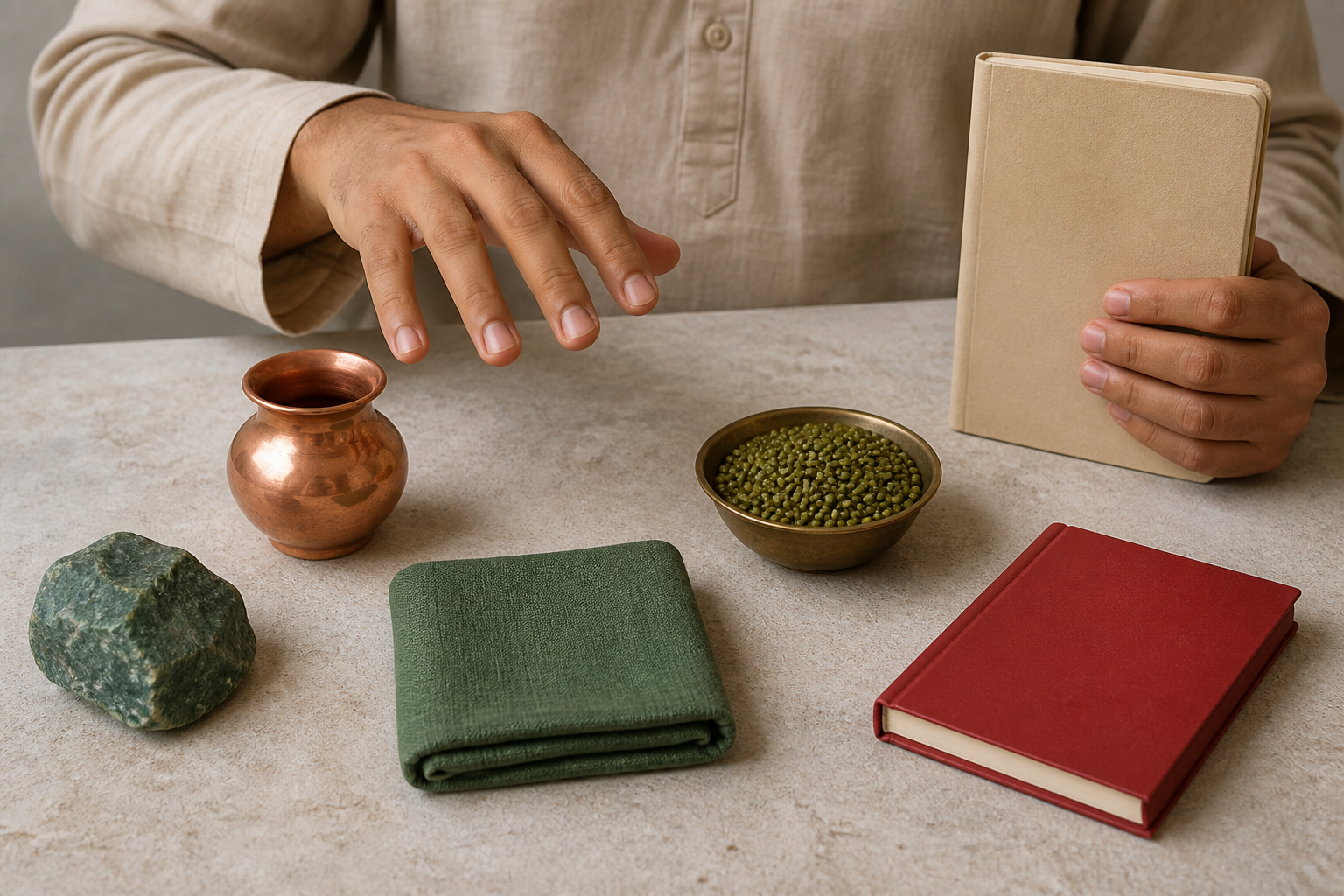
Puja, vrata, charity, behavioural discipline, and gemstones are not interchangeable. Each asks something different of you, and some involve money, health, family obligations, or a lasting commitment. A remedy becomes credible only when the person recommending it can explain why that particular act follows from your particular reading.
Before accepting a prescription, work through this sequence:
- Confirm the placement. Make sure the horoscope being interpreted actually places Mercury in the sixth house. If the birth information or chart being used is uncertain, resolve that before discussing remedies.
- Name the real concern. Write one plain sentence describing what you want to improve. Avoid a vague goal such as “strengthen Mercury.” Choose something observable, such as calmer communication at home or more responsible handling of family duties.
- Ask for the reasoning. A practitioner should be able to explain why the concern is being connected to Mercury, why the proposed action is considered suitable, and whether the advice depends on anything beyond this one placement.
- Identify the cost and consequence. Find out whether the act involves money, fasting, ingesting anything, giving away a needed possession, wearing a stone, changing a medicine, or making a promise you may not be able to keep.
- Keep practical action beside spiritual practice. If the concern is harsh speech, change how you speak. If it is disorder at home, take responsibility for the disorder. A ritual should not become permission to avoid the human work directly in front of you.
A useful question for any astrologer is: “What would make you reject this remedy for me?” A careful practitioner should have limits. Someone who recommends the same object or ritual to every person with Mercury in the sixth house is giving you a category label, not a considered reading.
Safe disciplines you can begin without pretending they are a formula

When an exact Lal Kitab prescription has not been properly established, you can still respond to the placement’s stated concern in a Dharmic way. These are supportive disciplines, not substitutes disguised as secret astrological cures.
- Make speech more exact. Before a difficult household conversation, decide what you actually need to say. Remove exaggeration, accusation, and claims about another person’s motives. Truthful speech is practical sadhana when communication itself creates unrest.
- Turn respect into an action. If your relationship with your mother is basically safe, choose a concrete act of care or responsibility rather than displaying ritual concern while neglecting ordinary duties. Respect does not require you to agree with everything she says.
- Repair the home where repair is possible. Complete a neglected duty, return something you borrowed, resolve a small recurring source of disorder, or keep a promise made to the household. Choose one action you can sustain instead of making an elaborate vow.
- Use prayer without bargaining. Follow the form of prayer already recognised in your family or sampradaya. Ask for clarity, restraint, and right conduct rather than demanding that a planet produce a specific result.
- Give only within your means. If you undertake dana as a general Dharmic practice, give something useful without borrowing money, depriving your dependants, or expecting a guaranteed return.
There is an important boundary around advice involving the mother. If the relationship includes abuse, coercion, or a genuine threat to your safety, “honour your mother” must not be turned into pressure to resume unsafe contact. You can reject cruelty and maintain necessary boundaries without converting a horoscope into a moral accusation against yourself.
Remedies to pause before accepting
The more expensive, irreversible, or physically demanding a proposed remedy is, the stronger its justification should be. Pause when you encounter any of the following:
- A gemstone prescribed from this placement alone. Do not buy or wear a stone merely because a generic list pairs it with Mercury. Ask why strengthening that planetary influence is considered desirable in your complete reading and what the practitioner believes the stone will change.
- A costly ritual sold through fear. Claims that immediate payment is needed to prevent disaster are not a sound basis for spiritual practice. Step away before spending money.
- A vrata that conflicts with your health. Fasting or restricting food can carry medical risks. Do not begin such a practice against medical advice or use astrology to override the needs of pregnancy, illness, medication, or recovery.
- Instructions to ingest an unfamiliar substance. Spiritual language does not establish that something is safe to consume. Decline the act unless its safety is independently clear.
- Giving away something your household needs. Charity that harms a dependant or creates debt fails the basic test of proportionate responsibility.
- Stopping ordinary treatment or professional help. A Lal Kitab remedy is not a substitute for medical, psychological, legal, or financial assistance. If the problem belongs to one of those fields, use the relevant qualified help.
- Blaming another person for your placement. No astrological interpretation licenses humiliation, hostility, or control. A remedy that makes the household less safe has already moved away from dharmic conduct.
Low cost does not automatically make a remedy authentic, and high cost does not make it powerful. The better tests are coherence, safety, proportionality, and whether the practice supports responsible conduct.
How to assess a remedy without chasing every coincidence
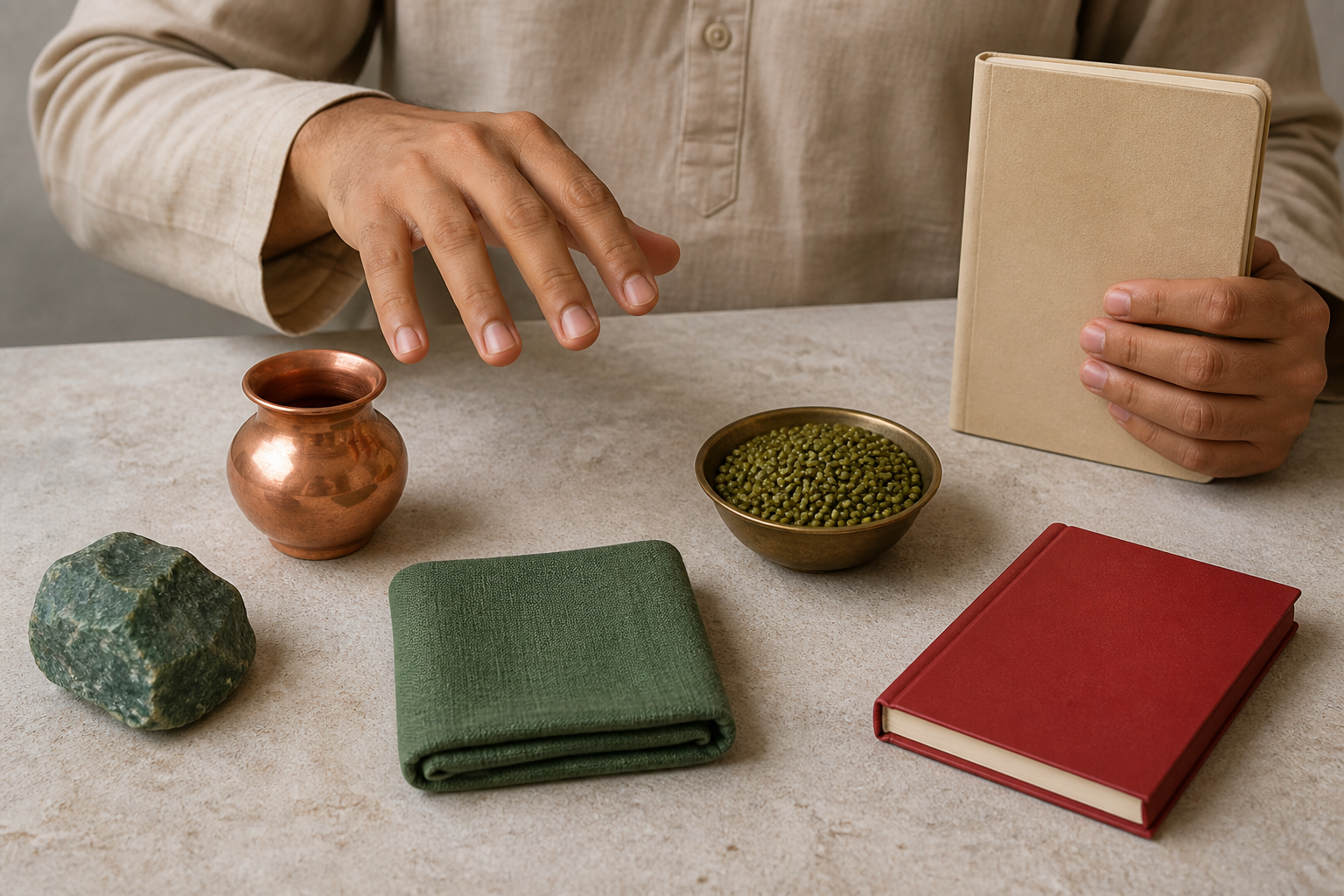
Before beginning any practice, record the concern in observable language. Do not write, “My Mercury is bad.” Write what occurs: who is involved, what tends to trigger it, how you normally respond, and what a better response would look like.
Then record the practice you have actually undertaken. Keep ritual claims separate from behavioural changes. If you begin a prayer discipline and also stop using accusatory language at home, note both. Otherwise you may credit the ritual for an improvement produced by a direct change in conduct, or dismiss a useful discipline because an unrelated event went badly.
Look for changes in the concern you named: clearer conversations, fewer avoidable quarrels, more consistent fulfilment of duties, or a greater ability to respond without agitation. Do not treat every pleasant event as proof that the remedy worked or every difficult day as proof that Mercury has become hostile. Spiritual discipline should make you more discerning, not more superstitious.
Key questions about Mercury in the sixth house
Is there one universal Lal Kitab remedy for this placement?
You should not assume that one puja, vrata, donation, or stone is right merely because Mercury appears in the sixth house. Ask for a chart-specific explanation and understand the practical consequences before accepting a prescription.
Does this placement guarantee problems with my mother or home?
No guarantee follows from the traditional indication. Treat it as a prompt for honest observation. If the suggested pattern is absent, do not manufacture anxiety or reinterpret a healthy relationship as hidden trouble.
Should I wear a Mercury gemstone immediately?
No gemstone purchase is justified by the sixth-house label alone. Ask what the stone is intended to strengthen, why that is desirable in the complete reading, what it will cost, and whether a reversible practice could address the concern first.
What can I do while seeking competent guidance?
Practise accurate speech, meet household responsibilities, repair safe relationships through concrete action, and continue any established prayer practice without making extravagant promises. These actions do not require you to claim an astrological result.
Your next step is simple: write down the exact household or relational concern that brought you to this placement, then ask any proposed remedy to answer that concern coherently and safely. If the explanation depends on fear, a generic list, or an expensive shortcut, wait. A modest practice joined to truthful conduct is a sounder beginning.
References
