
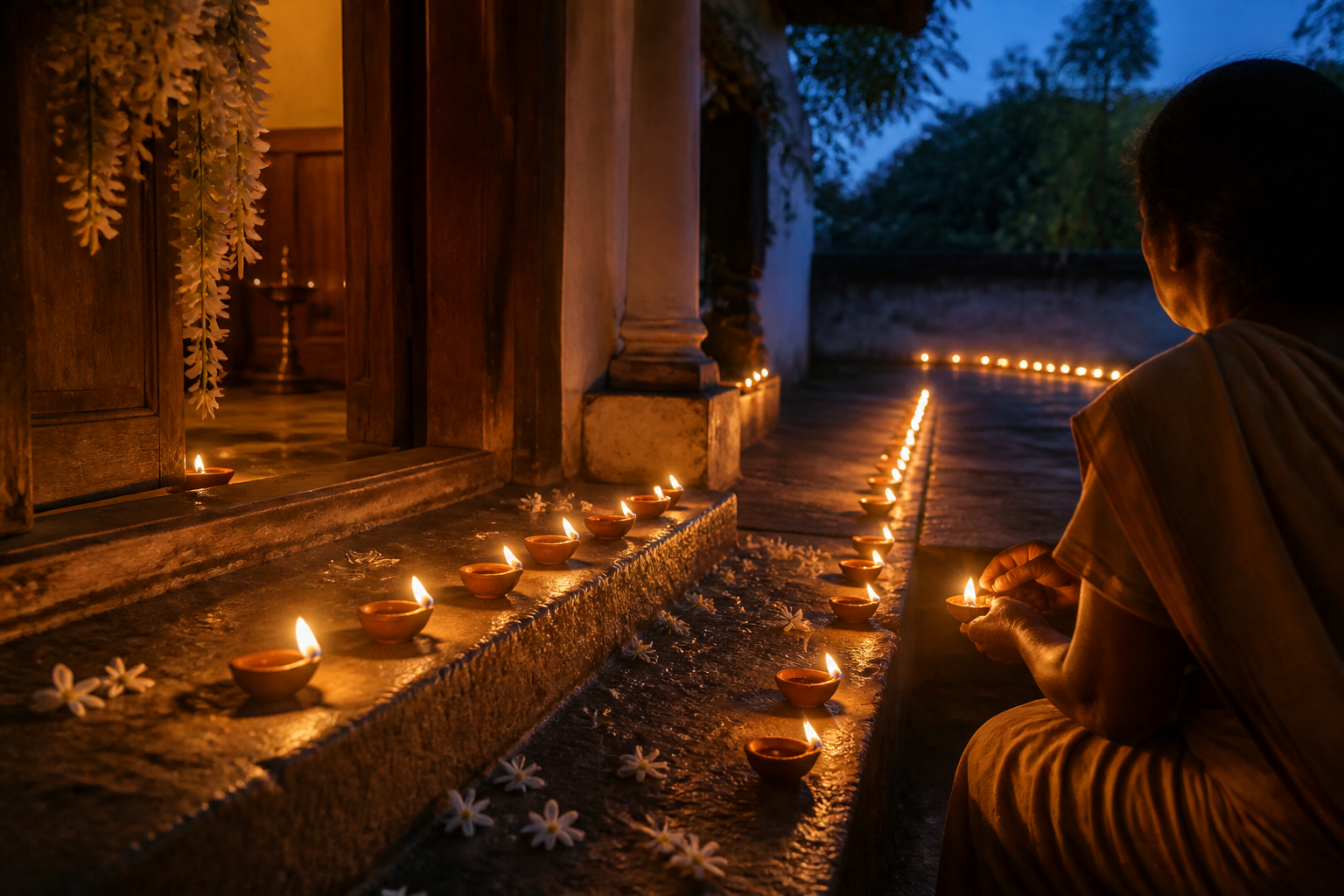
You may have encountered the name Kiratini while looking for the meaning behind Karthigai, only to find a divine name without a clear way to approach it. The safest beginning is not a guessed mantra or an elaborate new ritual. Begin with the calendar: Kiratini is the feminine presence through whom Karthigai can be received as sacred time.
That shift gives you something practical. Instead of treating the month as a container for isolated festival dates, you can let its fire imagery shape your attention, conduct and worship throughout the season.
The goddess and the month belong together
Within Shaiva Agamic and Tantric traditions of Tamil Nadu, the twelve Tamil months form a living sacred continuum, with a distinct goddess presiding over each period. Kiratini is the goddess associated with Karthigai.
This framework does more than add another divine name to a calendar. It treats time as an expression of Shakti. A month is not spiritually neutral space through which you happen to pass; it has a sacred character that asks for a particular quality of attention. Kiratini therefore makes the most sense when approached together with Karthigai rather than as an isolated deity detached from the season.
Two misunderstandings follow when that relationship is lost. One is to search immediately for a fixed image, mantra or independent mythology and then fill any gaps with speculation. The other is to reduce Karthigai’s fire tradition to attractive lamps without asking what illumination should change in you. The first risks inventing a tradition. The second preserves its appearance while losing its spiritual demand.
When you encounter Kiratini’s name, begin with three questions:
- What in your life needs to be seen clearly during this month?
- What habit, resentment or confusion has continued because it remains unexamined?
- What form of steadiness can you protect after the ceremonial flame is gone?
These questions are not substitutes for formal worship. They are a way to receive the theology of sacred time before looking for ritual detail.
Read Karthigai’s fire as a discipline, not a decoration
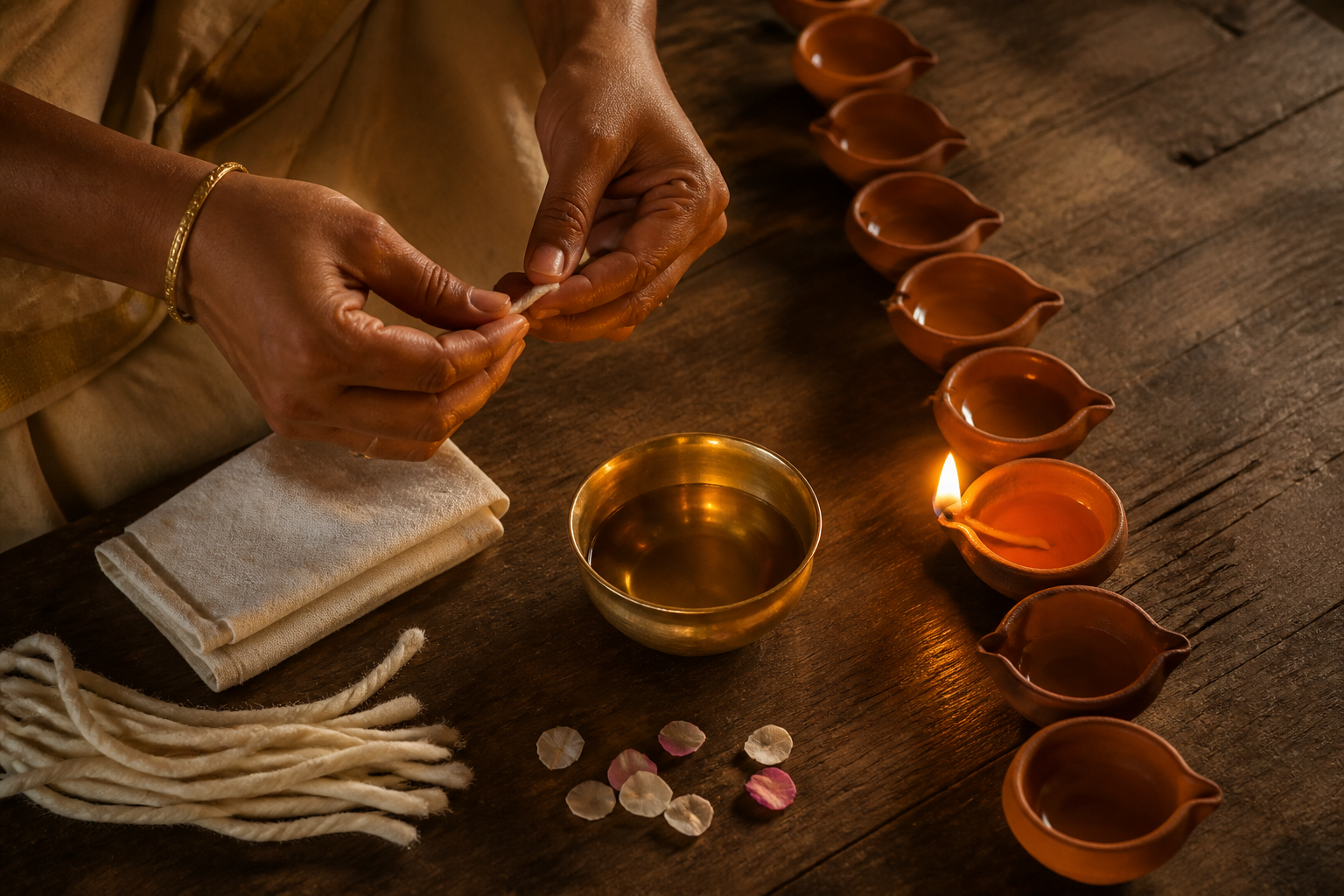
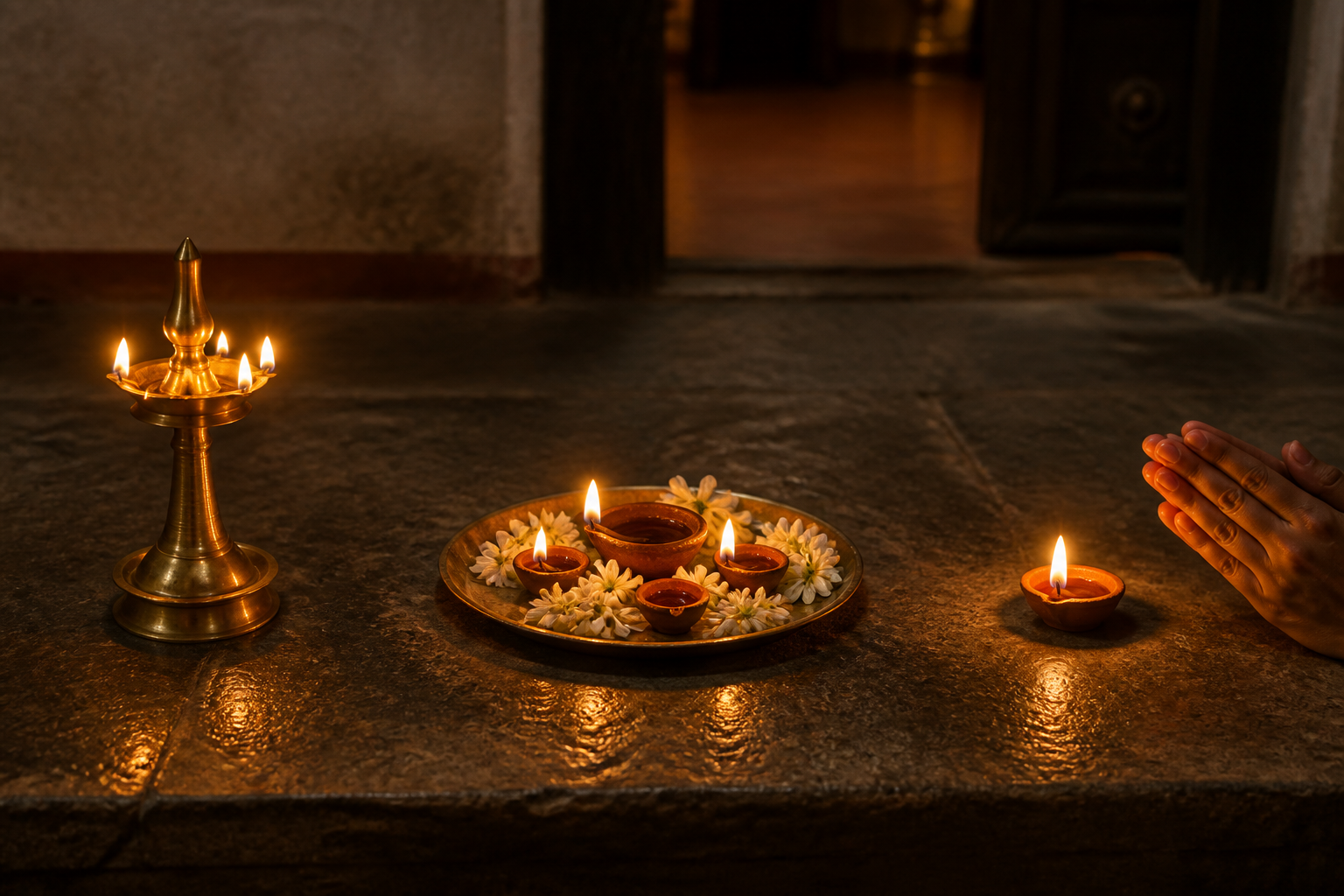
Kiratini’s Karthigai association joins sacred fire with seasonal grace. Fire gives that grace a demanding form. It reveals what surrounds it, consumes its fuel and must be tended if it is to remain steady. You can admire a flame from a distance, but tending one requires presence.
That is why lighting a lamp can become a discipline of attention. The useful question is not simply whether a lamp was lit. Ask what became clearer because you stopped, watched and prayed before it. If the act leaves your speech, obligations and relationships untouched, the outer observance has not yet become an inner one.
You can use the parts of a simple lamp as a contemplative lens:
- Fuel: Notice what you have been storing and feeding, whether devotion, resentment, distraction or resolve.
- Wick: Gather your attention around one commitment instead of making several vague promises.
- Flame: Look directly at what your usual habits keep in shadow.
- Light: Carry the result beyond the worship space through one visible act of truthfulness, restraint, service or repair.
This is a contemplative aid, not a claim that Agamic tradition assigns those exact meanings to the lamp’s components. That distinction matters. Symbolic reflection can deepen devotion, but it should not be presented as inherited doctrine unless a qualified teacher or ritual authority confirms it.
A modest home observance that respects what you do not know
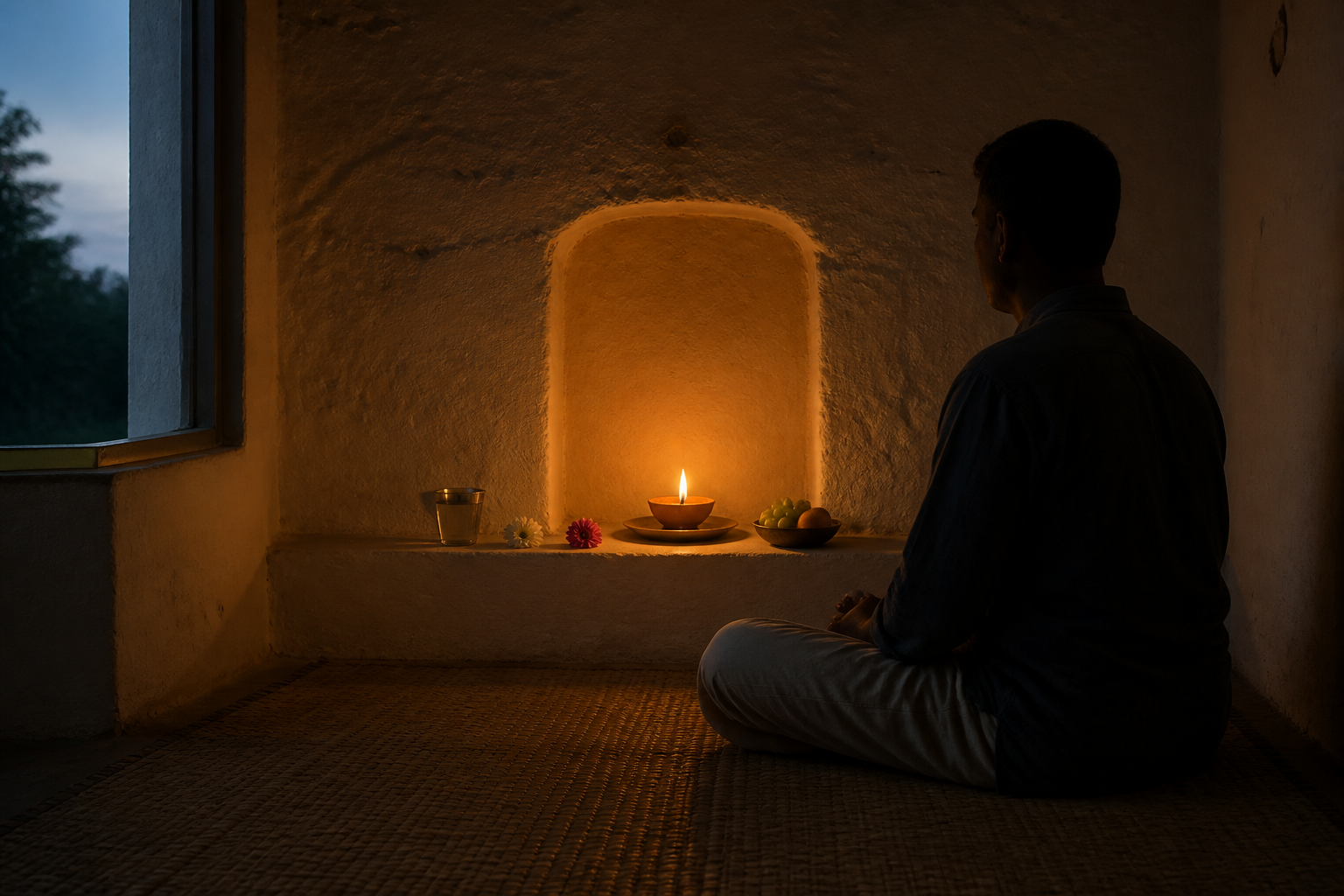
If your family already follows a Karthigai observance, preserve its sequence and seek explanations from the people who carry it. If Kiratini is new to you and you have no lineage-specific instructions, a restrained devotional practice is more honest than assembling a supposed Kiratini puja from unrelated fragments.
- Choose an unhurried period. Use a time when you can remain present from the lighting of the lamp until it is safely extinguished. Do not begin immediately before leaving home.
- Prepare a clean worship space. If it accords with your household practice, place the lamp at an existing Devi or Shiva shrine. You do not need to invent an image of Kiratini.
- Light a single lamp with attention. One carefully tended flame is enough for a personal reflection. More lamps do not automatically make the act more sacred.
- Offer a direct prayer in words you understand. You might ask to receive Karthigai with clarity, to recognize what must be purified and to protect what is worthy. Treat such wording as your own prayer, not as a traditional mantra.
- Sit quietly before the flame. Name one matter you have avoided seeing. Then decide on one action that can be completed during the month.
- Close with namaskara and follow through. Put the chosen action into a calendar or daily routine. Without follow-through, reflection easily becomes another passing mood.
Use a stable, heat-resistant surface and keep the flame away from curtains, loose clothing, children and animals. Never leave it unattended. If open fire is prohibited or unsafe where you live, do not take a risk for the sake of appearance. A permitted light may help your personal concentration, but it should not be described as ritually identical to a consecrated flame.
Keep theology, inherited ritual and personal devotion distinct
You can honour Kiratini without pretending that every level of the tradition is interchangeable. Keep three layers clear:
- The theological layer: Time can be encountered as a sacred continuum, and Karthigai has a feminine divine presence in Kiratini.
- The inherited ritual layer: A lineage or temple may preserve particular invocations, images, materials, timings and procedures. Those details require transmission or reliable local instruction.
- The personal devotional layer: You may offer prayer, attention and ethical resolve without claiming that your chosen sequence is an established Agamic rite.
This separation protects both sincerity and tradition. Until a competent teacher confirms a formal procedure, call your practice a personal Karthigai observance offered to Kiratini rather than “the Kiratini puja.” Precise language prevents a private adaptation from becoming false authority when it is shared online or passed to someone else.
If you have access to a Tamil Shaiva temple, priest or teacher familiar with month-deity observances, ask focused questions rather than requesting a general explanation:
- Is Kiratini invoked independently or within a larger Karthigai observance?
- What pronunciation and written form of the name does this lineage use?
- Is there an authorized mantra, dhyana, image or textual passage?
- Does the observance belong to the whole month or to a particular occasion within it?
- Which lamp materials and closing procedures are customary here?
- Which parts may householders perform without formal initiation or temple training?
A responsible answer may vary by temple, family or lineage. Variation does not automatically invalidate a tradition, but neither does every practice found under the same label carry equal authority. Record who taught you a procedure and where it belongs. That small habit preserves context for the next generation.
Key takeaways for your Karthigai observance
- Approach Kiratini through her relationship with Karthigai and the sacred ordering of time.
- Let the lamp produce one concrete change in attention or conduct; do not stop at visual beauty.
- Use simple prayer and reflection when you lack ritual instruction, and identify them honestly as personal devotion.
- Do not invent iconography, mantras or Agamic procedures to fill gaps in your knowledge.
- Ask a lineage-aware authority precise questions about timing, invocation and ritual eligibility.
- Tend every open flame continuously and choose a safe alternative when fire cannot be used.
For your next Karthigai observance, begin with one flame, one honest question and one commitment you will keep. Then seek the living custodians of the tradition before adding ritual complexity. Kiratini is best honoured when sacred time becomes disciplined attention rather than another name collected and forgotten.
References
