
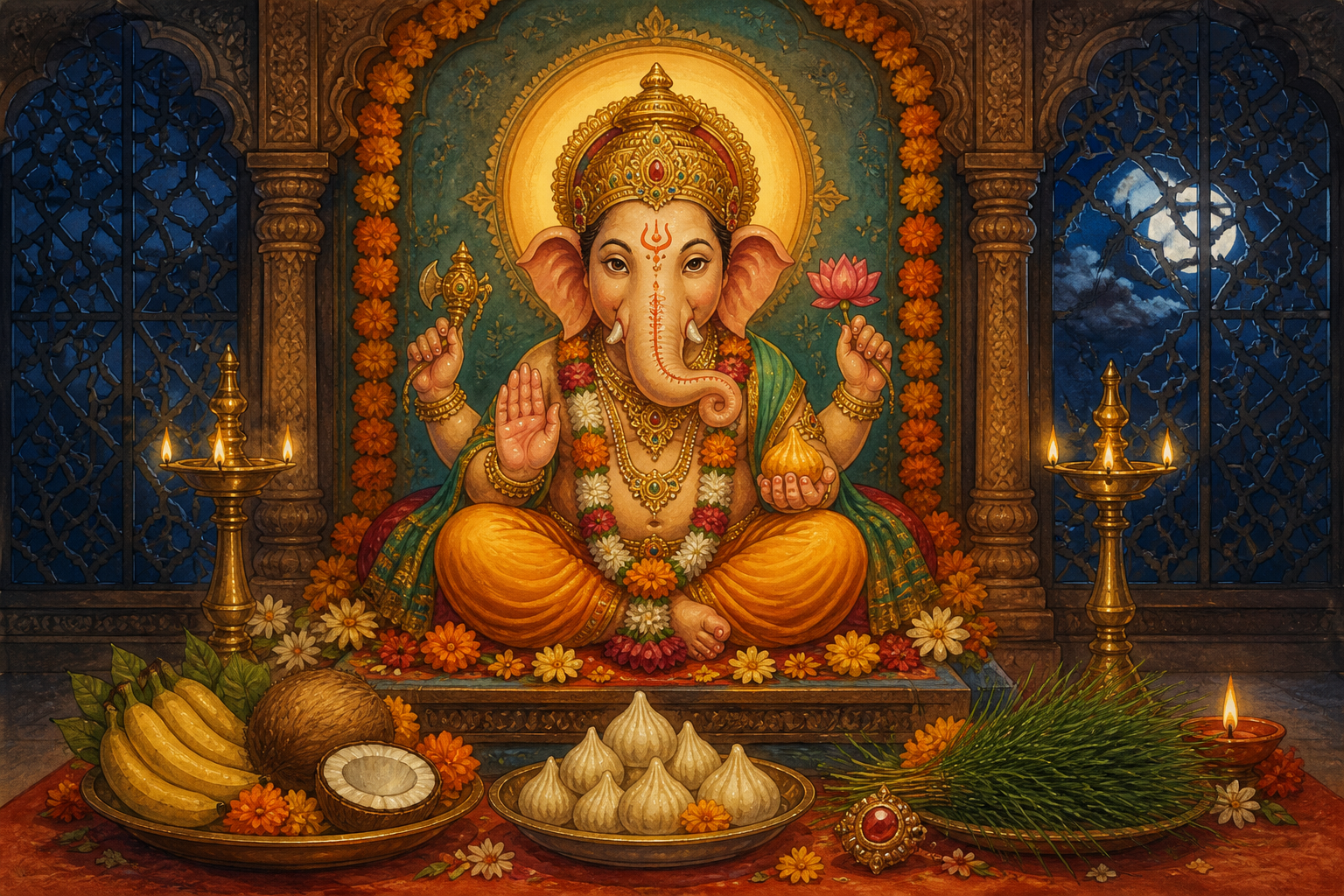
You meant to keep Ganesh Chaturthi properly, but you looked through a window and saw the moon. Or perhaps you are preparing your family’s puja and cannot explain why Chandra must be avoided. The first thing to know is simple: this vrata is not an invitation to panic, frighten children, or treat an accidental glance as a disaster.
The taboo becomes intelligible when you hear the whole katha. Ganesha’s birth, his appointment as Ganadhipati, Chandra’s disregard, and the Samantaka Mani episode form a connected moral sequence. Read only the prohibition and it can feel arbitrary. Follow the sequence and it becomes a discipline of humility, careful speech, and justice toward anyone whose reputation is under attack.
The four episodes belong together
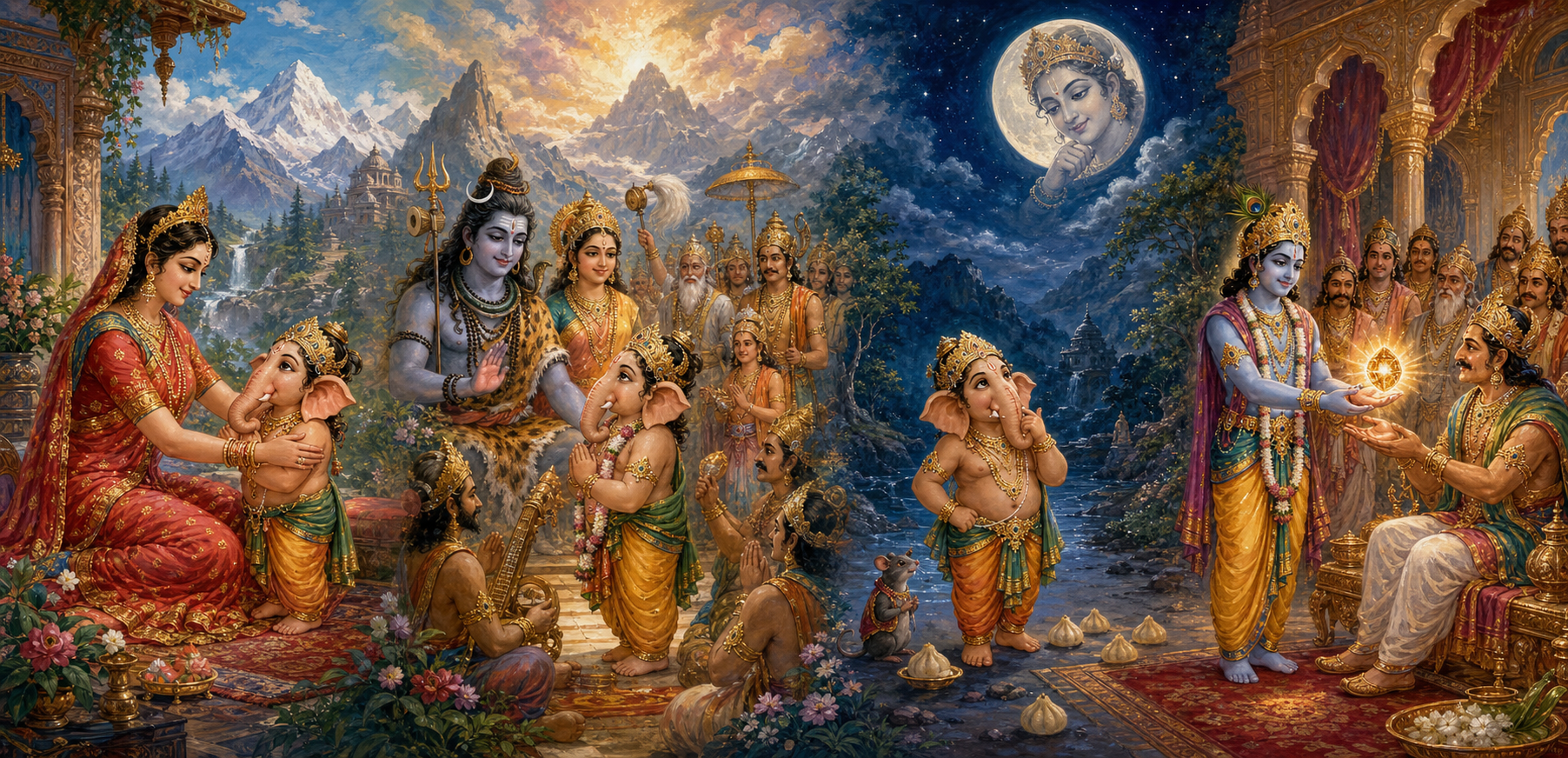
The Ganesh Chaturthi vrat katha is not merely a collection of entertaining stories. Each episode supplies something the next one needs. If your family abbreviates the recitation, retain the sequence even when the wording is brief.
- Vinayaka Utpatti, the birth of Ganesha: Begin with origin and relationship. Ganesha is not an isolated symbol placed beside a ritual. His birth situates him within family, duty, protection, and the divine order.
- Ganesha becomes Ganadhipati: This episode establishes why he is approached as Vighneshwara, the lord associated with obstacles. His authority is not an incidental detail; it explains why a devotee turns to him before beginning a worthy undertaking.
- Chandra shows disregard: Chandra’s insult introduces the danger of pride and contempt. The issue is not the physical moon as an evil object. It is the gaze that reduces another being to an appearance and then treats ridicule as harmless.
- The Samantaka Mani episode: The katha then moves from insult to the human cost of suspicion and accusation. Reputation can be damaged before truth has been examined. This is why the moon taboo is traditionally associated not only with what you see, but also with what people may wrongly say or believe.
Do not skip the final episode when your main question is about moon-viewing. Chandra’s conduct explains the offence; the jewel narrative gives the teaching social weight. Mockery becomes judgment, judgment becomes accusation, and an untested accusation can become a public wrong.
Why the moon is avoided on Ganesh Chaturthi
The observance belongs specifically to Chavithi, the fourth lunar day associated with Ganesh Chaturthi in Bhadrapada. In the traditional festival setting, Shiva grants Vinayaka leadership connected with obstacles, and devotees celebrate with foods such as kudumulu and undrallu. Chandra’s disrespect stands against that atmosphere of honour and gratitude.
Avoiding the moon is therefore a vrata boundary: a voluntary restraint that makes the katha bodily rather than merely verbal. You do not only hear that a contemptuous gaze has consequences; for one observance, you discipline your own gaze. The outward rule should turn your attention toward an inward question: where do you judge a person by form, status, awkwardness, or public reputation before seeking the truth?
This distinction matters when explaining the custom. Hindu practice is not declaring that the moon is permanently impure or that looking at the night sky is generally wrong. Chandra is a participant in a sacred narrative, and the restriction belongs to a particular vrata. Presenting it as a permanent fear of the moon removes the rule from its ritual and ethical setting.
Nor should the katha be flattened into an astronomical claim. A vrata works through sankalpa, remembrance, restraint, and conduct. The moon-viewing rule is meaningful because it keeps a moral event present in the devotee’s mind. Its deepest test comes afterward, when you decide whether to laugh at someone’s appearance, repeat a rumour, or join an accusation you have not verified.
What to do if you see the moon accidentally
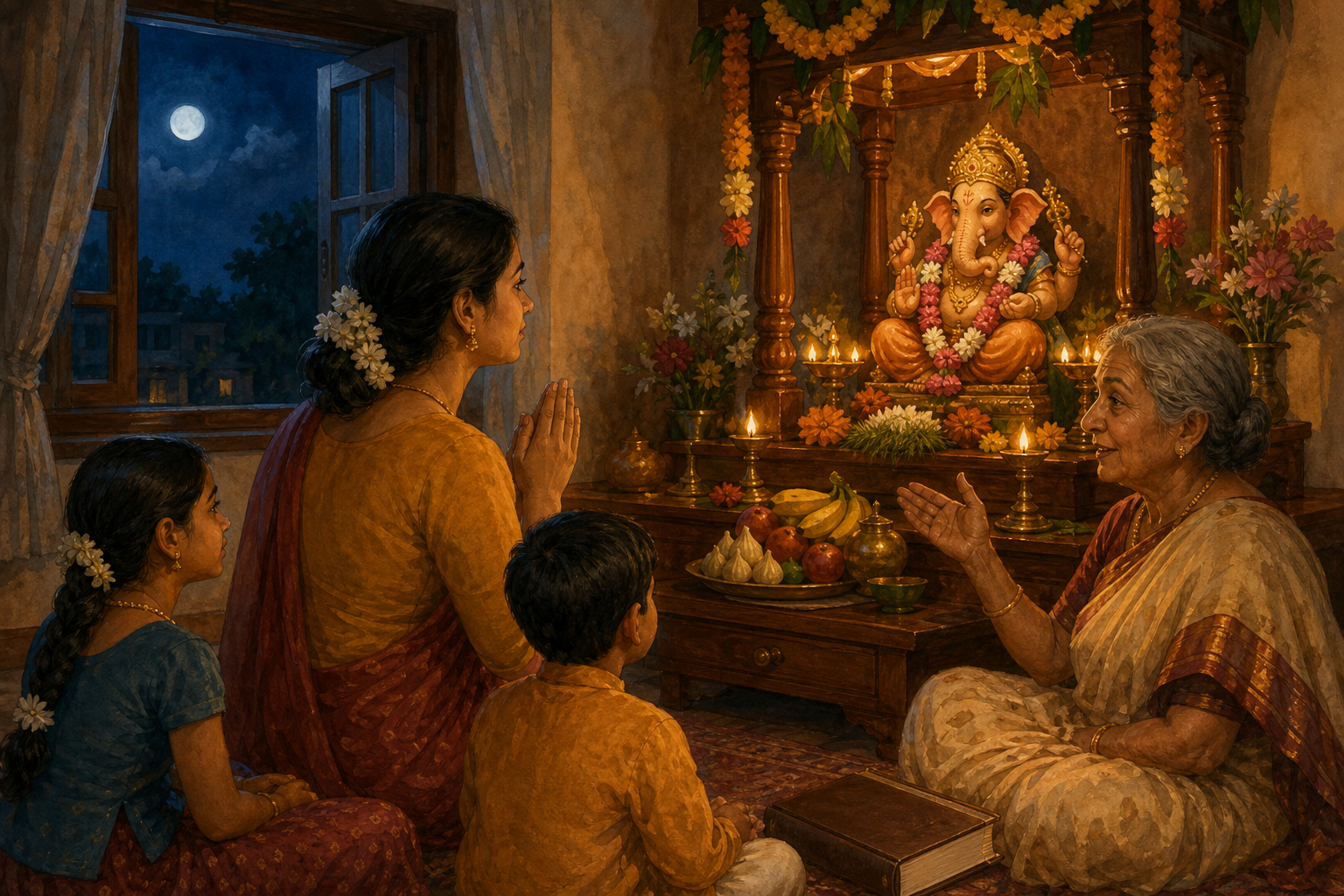
An accidental glance and a deliberate rejection of the vrata are not the same act. If you unexpectedly see Chandra, respond with steadiness. Do not let fear become a larger obstacle than the one your worship is meant to remove.
- Pause without catastrophising. Offer a simple namaskara to Ganesha and acknowledge that the glance was unintentional. There is no need to manufacture a frightening prediction about what must now happen.
- Complete the worship you began. Do not abandon the puja, refuse prasada, or declare the festival spoiled. Finishing the vrata attentively is more coherent than allowing anxiety to take command of it.
- Hear or read the relevant katha. Give particular attention to Chandra’s disregard and the Samantaka Mani episode. This returns your mind to the teaching carried by the taboo instead of leaving it fixed on the accident.
- Follow your own sampradaya’s remedy. Families, temples, and regional paddhatis may preserve different recitations or acts of prayaschitta. If yours gives a particular mantra or procedure, use that complete instruction. Do not assemble a harsher ritual from disconnected online fragments.
- Make the remedy visible in your conduct. Refuse to repeat an unverified allegation. If you have passed on something false or humiliating, correct it with the people who heard it. That is where the katha’s warning about reputation becomes an actual dharmic practice.
If a child sees the moon, treat the moment as an invitation to tell the story, not an occasion for threats. Explain that the family was practising a special restraint in memory of Chandra’s disrespect. Then include the child in the prayer and continue. A lesson about ridicule should not itself be taught through ridicule or fear.
Observe the taboo without spreading fear
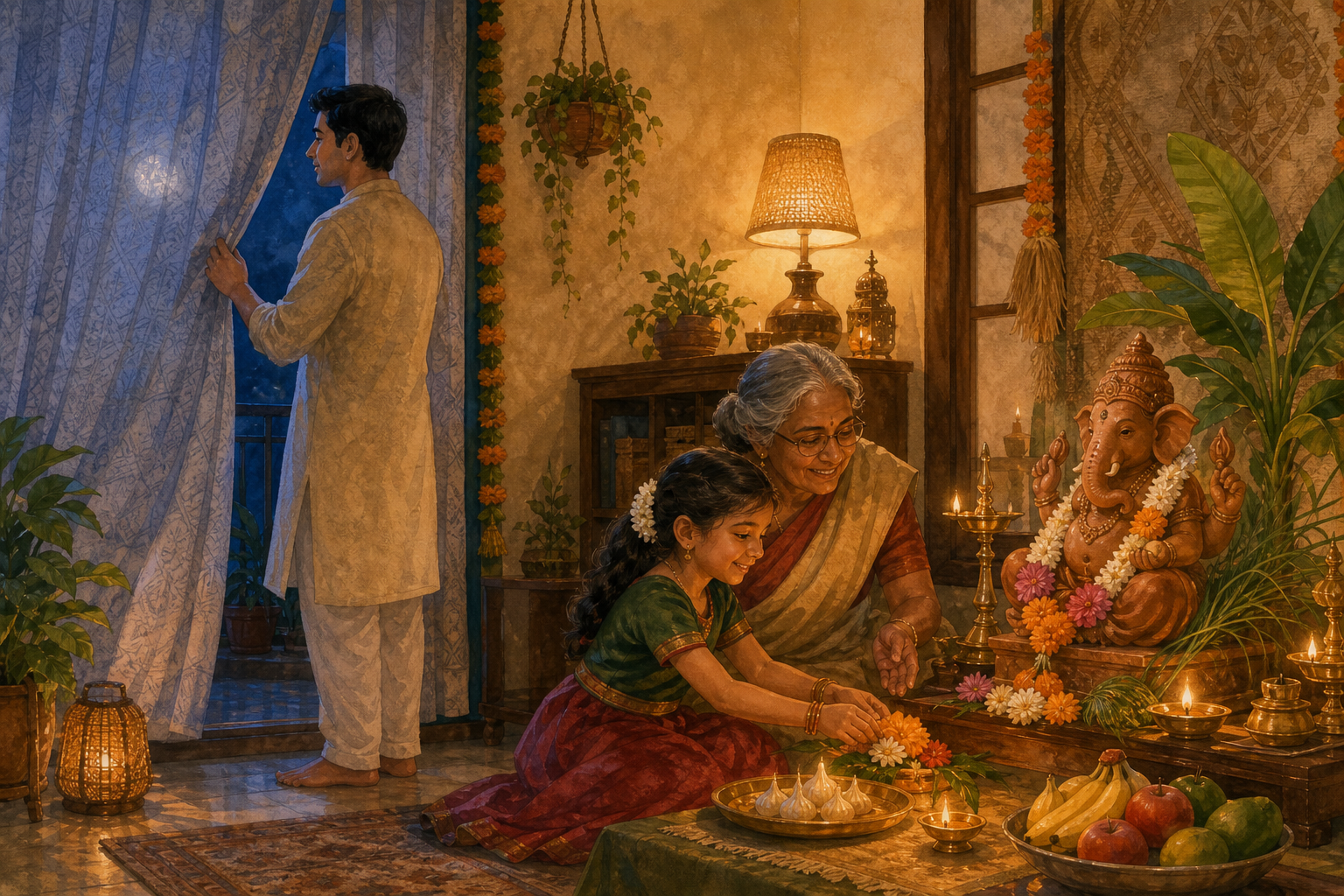
A little preparation keeps the custom peaceful, especially in a home where not everyone knows the rule.
- Decide which practice your household follows before the puja. Use the Chaturthi timing and instructions supplied by the panchang, temple, or family tradition already guiding your worship. Do not turn several regional customs into one improvised rule.
- Arrange the room practically. If your family avoids moon-viewing, place the altar away from a direct window and draw the curtains before the relevant evening period. This reduces accidental glances without making everyone anxious.
- Keep the complete katha ready. Check that it includes Vinayaka Utpatti, Ganesha becoming Ganadhipati, Chandra’s disregard, and the Samantaka Mani episode. A moon warning without its narrative context is easily reduced to superstition.
- Prepare the ritual materials your paddhati actually requires. Some forms of the vrata have worshippers hold akshatas during the katha. If your family uses that form, prepare them before recitation and complete their placement exactly as your trusted puja instructions prescribe.
- Explain the meaning before enforcing the boundary. Tell family members that the observance remembers the consequences of mockery and unjust blame. A person who understands the purpose is more likely to keep the vrata thoughtfully.
- Do not police neighbours or guests. You may observe the restriction carefully without shaming someone whose household follows a different convention or who did not know about it.
Ritual precision and compassion are not opponents. The rule loses its moral centre if keeping it produces anger, humiliation, gossip, or blame inside the home. Ganesha’s worship should help remove those obstacles from your speech and judgment.
Key takeaways
- The moon-viewing taboo remembers Chandra’s disrespect toward Ganesha; it is not a general declaration that the moon is evil.
- The full vrat katha connects four episodes: Ganesha’s birth, his appointment as Ganadhipati, Chandra’s disregard, and the Samantaka Mani narrative.
- Within the katha, the movement from ridicule to suspicion makes reputation and false blame central ethical concerns.
- If you see the moon accidentally, stay calm, complete your worship, hear the relevant katha, and follow the remedy preserved by your own family or temple tradition.
- The most durable observance is to stop judging by appearance and stop repeating claims whose truth you have not established.
When you prepare for Ganesh Chaturthi, make the practical arrangements your household needs, but also make one clear sankalpa: you will not turn appearance into contempt or suspicion into accusation. Keep the vrata faithfully, hear the whole story, and let its discipline continue the next time someone’s reputation is placed in your hands.
References
- Hindu Pad – Ganesh Chaturthi Vrat Katha (Stories of Vinayaka Chavithi)
- Hindu Pad – Why we should not see Moon on Ganesh Chaturthi?
