

If you are trying to reserve the correct day for Bhim Chandi Jayanti in 2026, mark Sunday, 30 August. Keep the lunar date beside it in your calendar: Bhadrapad Krishna Paksha Dwitiya under the North Indian Hindi calendar.
That second detail matters. Bhim Chandi Jayanti is a regional, place-connected remembrance associated with Bhima’s victories. Knowing this helps you plan an observance without inventing a universal ritual or reducing the occasion to another unexplained date on a festival list.
The exact date and lunar-calendar position

Bhim Chandi Jayanti falls on 30 August in 2026. Its traditional calendar identity is Dwitiya, the second lunar day, during Krishna Paksha of Bhadrapad in the North Indian Hindi calendar.
Krishna Paksha is the waning half of the lunar month. This Dwitiya follows only a few days after Shravan Purnima. That sequence is more useful than memorising the Gregorian date alone because a tithi-based observance does not remain on 30 August every year.
For 2026, write the entry as “Bhim Chandi Jayanti — 30 August — Bhadrapad Krishna Dwitiya.” Including both systems prevents two common errors: carrying the 2026 civil date into another year and confusing the festival day with an exact worship hour.
If you plan to attend a temple or community programme, ask the organiser for its start time. The tithi identifies the observance, but the date by itself does not establish when a local gathering, puja, or recitation will begin.
Why Bhim Chandi and Bhima belong in the same remembrance
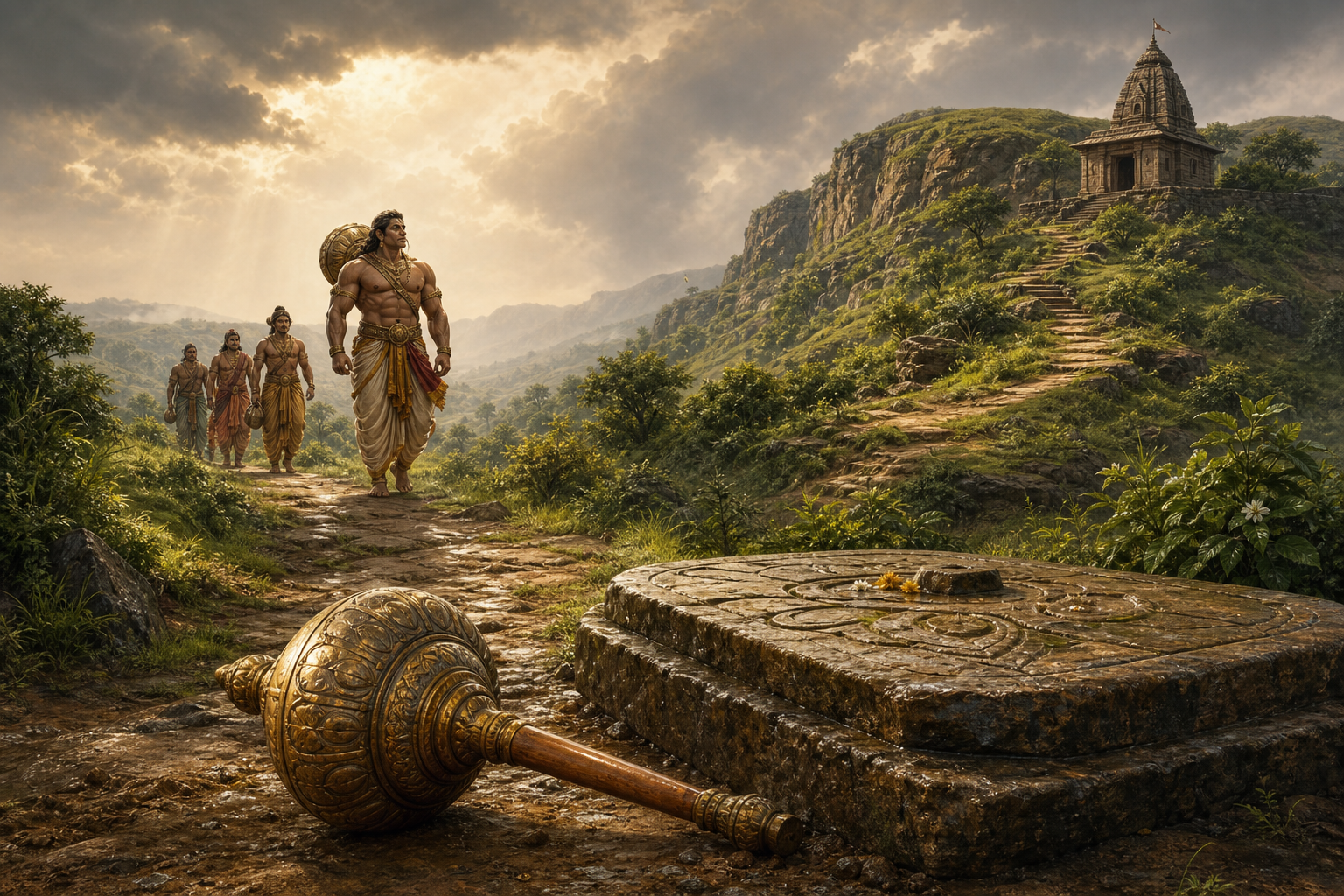
Bhim Chandi is a village in the Vindhyachal region of Uttar Pradesh, and the Jayanti is associated chiefly with victories of Bhima, the second of the Pandava brothers. The occasion therefore has two anchors: a real place in Bharat and the remembered achievements of a Mahabharata figure.
Do not automatically describe the day as Bhima’s birthday merely because its name includes “Jayanti.” For this observance, the useful emphasis is the commemoration of his victories. If you are preparing a notice, family lesson, or community announcement, say exactly that unless your own local tradition identifies a more specific episode.
This distinction also improves how you explain the day to children. Bhima is easily reduced to physical power, but victory in a Dharmic setting invites a more demanding question: what is strength for? Use the occasion to discuss strength governed by duty, loyalty, restraint, and protection rather than treating force as admirable by itself. That is a reflective way to engage the theme, not a claim about a mandatory village ritual.
Key takeaways for Bhim Chandi Jayanti 2026
- Date: Sunday, 30 August 2026.
- Tithi: Dwitiya in Krishna Paksha.
- Lunar month: Bhadrapad under the North Indian Hindi calendar.
- Calendar sequence: The observance comes only a few days after Shravan Purnima.
- Geographical connection: Bhim Chandi village is in the Vindhyachal region of Uttar Pradesh.
- Commemorative focus: The Jayanti is linked mainly with Bhima’s victories.
How to plan a respectful observance
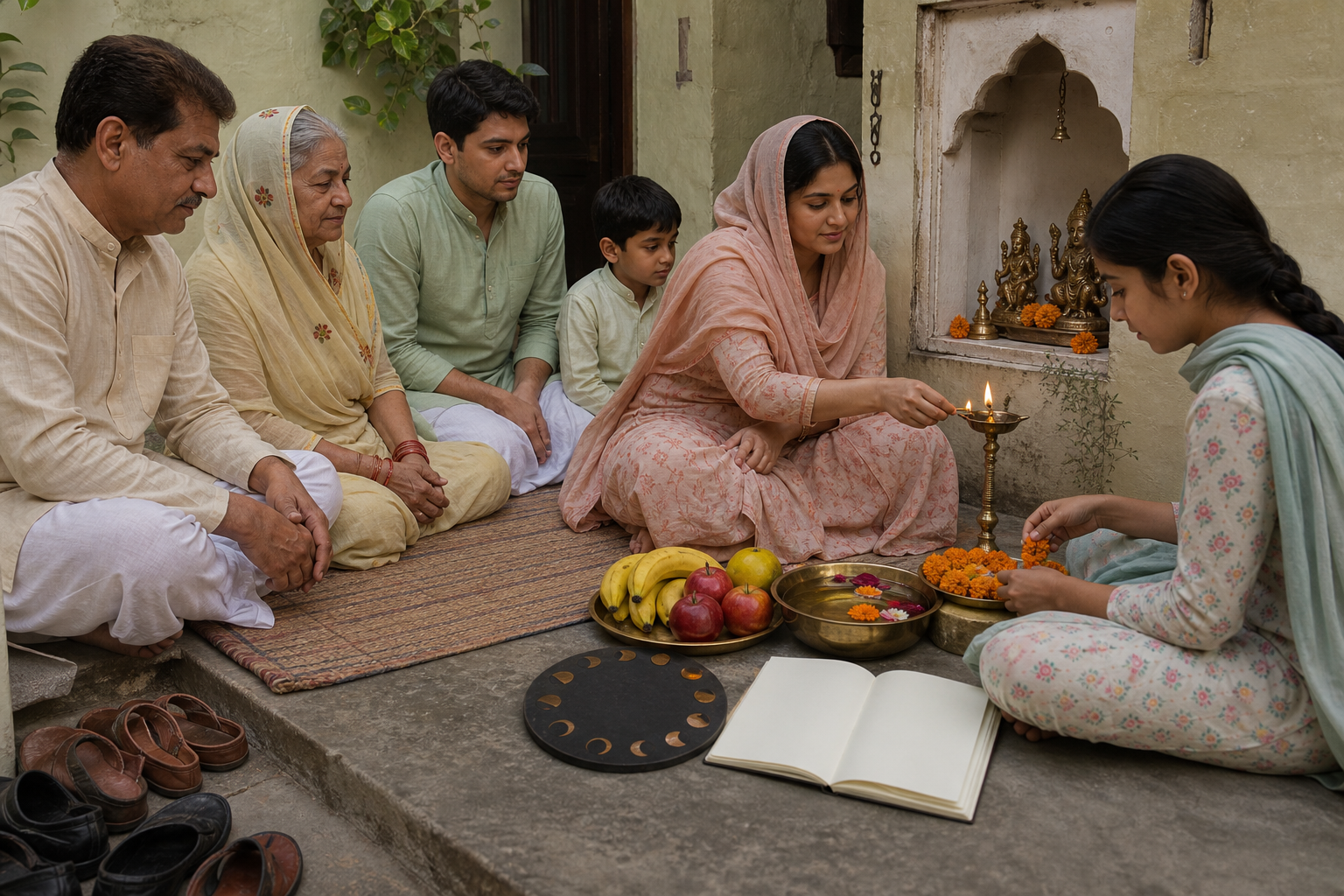
The available identity of the festival gives you a date, place, and commemorative theme, but it does not require every Hindu household to follow one standard programme. Let the tradition you actually belong to determine the ritual details.
If you are joining a community event
- Confirm the location. Ask whether the event is connected directly with Bhim Chandi village, held at another temple, or organised by a local cultural group.
- Confirm the time separately from the date. Save 30 August first, then obtain the programme time from the organiser or the panchang followed by that community.
- Ask what participation means. Find out whether the gathering includes puja, recitation, a discussion of Bhima, prasad, or another local practice. Do not infer these elements from the festival name.
- Bring only what is requested. If an offering or other item is customary, follow the instructions of the host temple, priest, or family tradition rather than a generic festival checklist.
- Describe the occasion precisely. In invitations, use “commemoration associated with Bhima’s victories” unless the organising tradition provides a more detailed account.
If you are observing at home
You can keep the day meaningfully without pretending that a newly assembled routine is an inherited liturgy. Use your household’s normal form of prayer, then centre the reflection on Bhima and the disciplined use of strength.
- Clean and prepare the prayer space as you ordinarily would.
- Light a lamp and make a simple offering only if these already belong to your household practice.
- State the purpose plainly: remembrance of Bhima’s victories and reflection on strength used in the service of dharma.
- Read or retell a trusted Mahabharata account involving Bhima. If you cannot verify that a particular episode belongs specifically to Bhim Chandi Jayanti, present it as a reflection on Bhima rather than as the prescribed story of the day.
- Close by choosing one concrete application: defend someone treated unfairly, complete a difficult duty without aggression, or use your abilities to support your family or community.
This home framework is intentionally modest. It gives the day a Dharmic purpose while leaving local ritual authority with the people who preserve the observance.
Avoid four common calendar and tradition errors
Do not turn 30 August into a permanent annual date
The 30 August date applies to 2026. In later years, look for Bhadrapad Krishna Dwitiya in the relevant North Indian Hindi calendar rather than copying the previous Gregorian date forward.
Do not treat a festival date as a complete muhurta
A date listing tells you when the observance falls; it does not automatically tell you the opening and closing times of the tithi or the schedule adopted by a particular temple. Obtain those details from the panchang or organiser you will actually follow.
Do not flatten a regional remembrance into a universal rule
The connection with Bhim Chandi village and the Vindhyachal region is part of the occasion’s identity. Respecting that geography is better than presenting an elaborate practice as compulsory for every Hindu tradition.
Do not fill an uncertain narrative with invented detail
“Bhima’s victories” is the supported description. If your family, temple, or regional tradition preserves a named account, follow it and identify that tradition. Otherwise, keep the wording broad instead of assigning the Jayanti to a particular battle without a reliable basis.
Your next move is simple: save 30 August 2026 with the full tithi name, then contact the community or temple you intend to follow. If no local programme is available, keep a modest home observance focused on strength directed by dharma and label it honestly as your household practice.
References
