
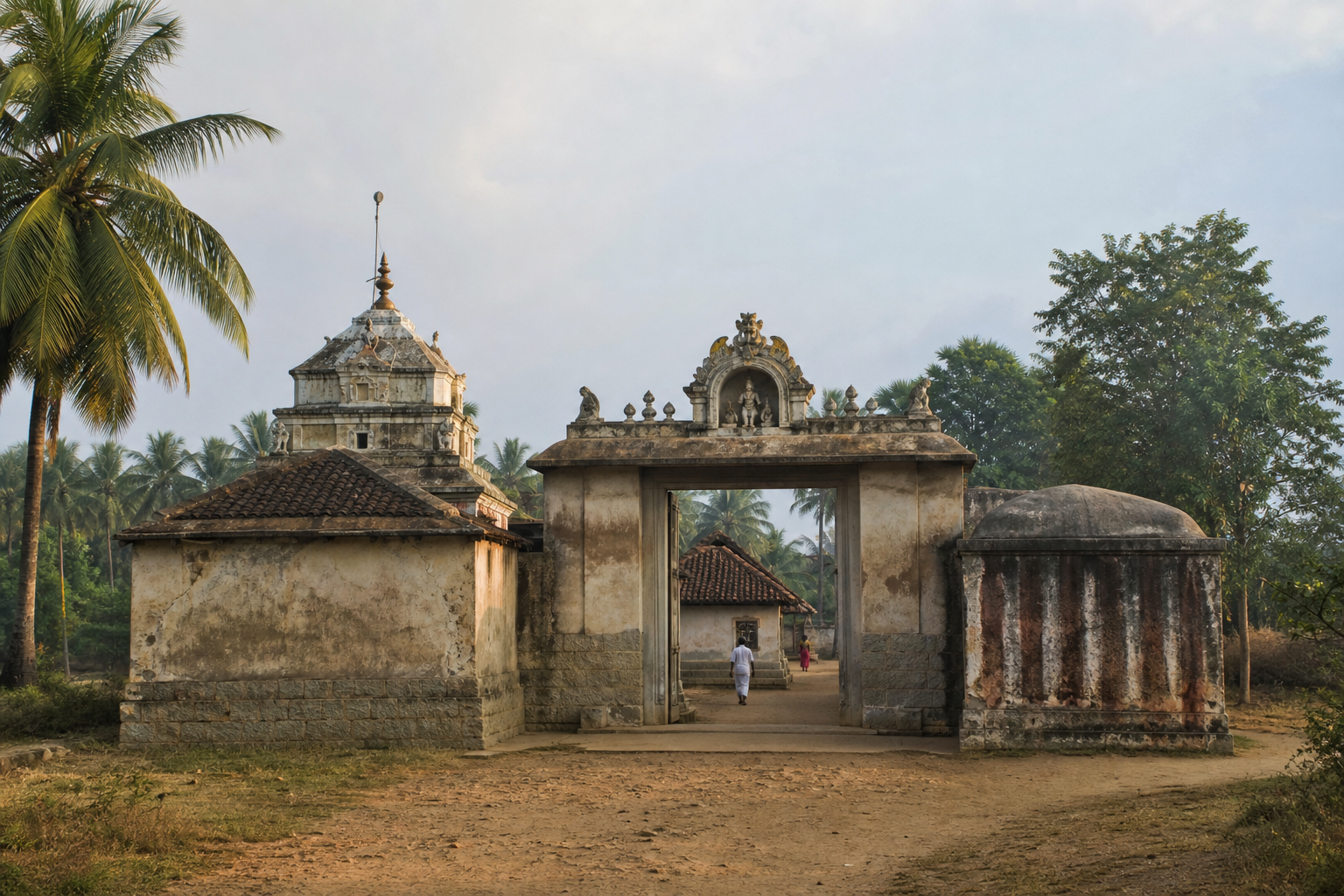
If you are deciding whether Vaneswarar Temple deserves a place in your Pattukkottai journey, the answer depends on what you want from the visit. Come here for a quieter Shaiva shrine connected with Sundarar, a distinctive Vinayaka tradition, and evidence of several periods of Tamil history.
Three details will orient you: the presiding Shiva is Puradhana Vaneswarar, Poovilungi Vinayaka is the temple’s best-known local form of Ganesha, and the complex preserves inscriptions from the Chola, Pandya, and Vijayanagara periods. Keep those three threads in mind and the visit becomes more than a brief darshan stop.
Find the shrine without being confused by its names
The first practical difficulty is naming. You may encounter both Sri Vaneswarar Temple and Sri Puradhana Vaneswarar Temple. The shrine is at Thiruchitrambalam, a few kilometres outside Pattukkottai rather than in the town centre. It stands on the Pattukkottai-Arantangi road, approximately 15 km from Pattukkottai and 34 km from Arantangi.
When searching for directions or asking locally, use the place name together with the deity’s name: “Vaneswarar Temple, Thiruchitrambalam” or “Puradhana Vaneswarar, Thiruchitrambalam.” That combination is more precise than asking only for a Shiva temple near Pattukkottai.
No dependable opening hours or current puja timetable are established by the available temple information. Verify them locally on the day of your journey, especially if you are travelling from a distance or hoping to attend a particular ritual. The published distances help you find the corridor; they do not guarantee that the sanctum will be open when you arrive.
Use the deities and the temple pond as your attention map
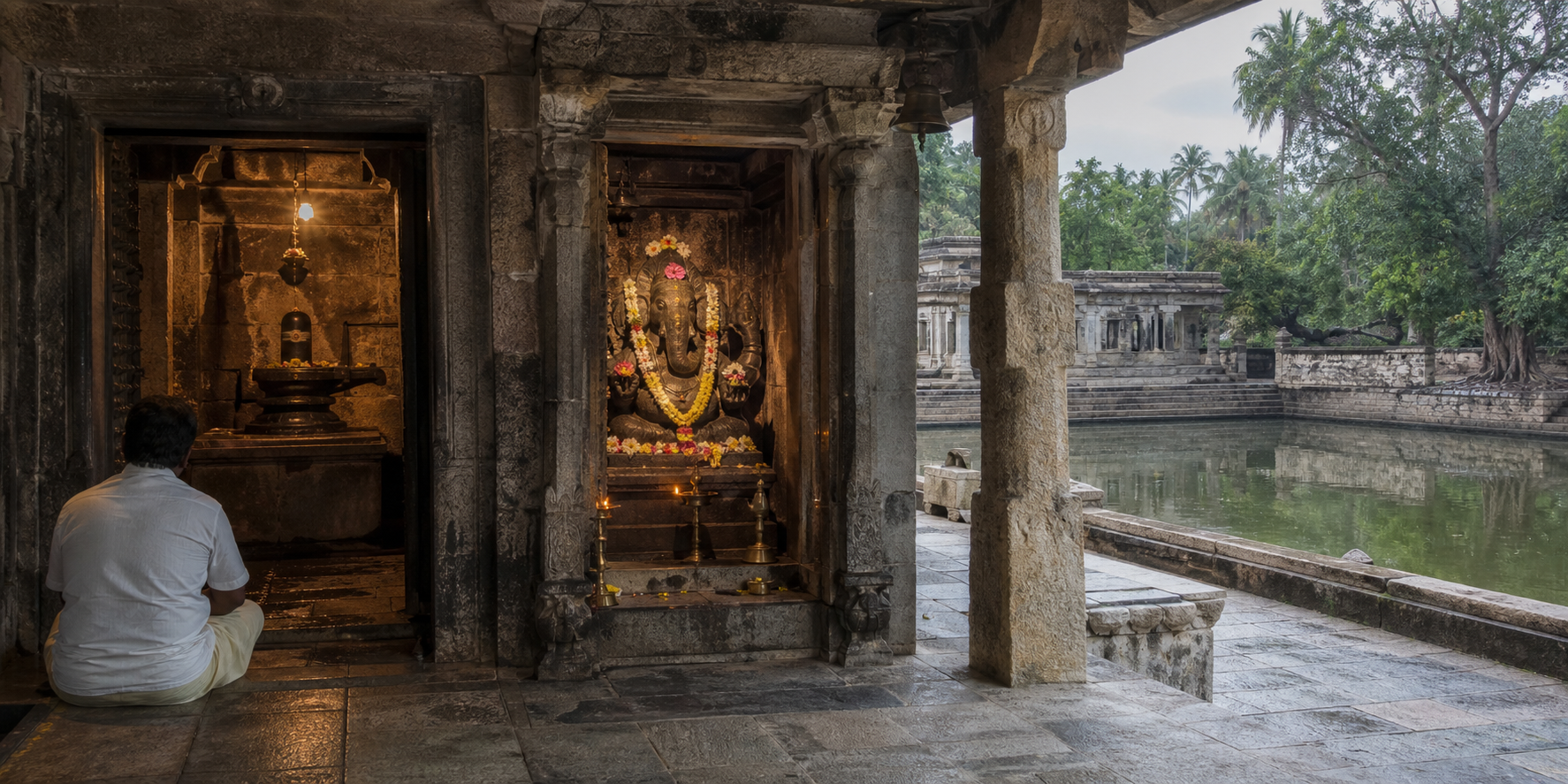
This is not a prescribed order of worship, but it is a useful map of what you should notice:
- The main gopura faces a large pond called Kaasaan Kulam. Pause long enough to notice how the water body and entrance relate to one another; the pond is part of the temple setting, not merely a landmark.
- In the garbhagriha, Bhagwan Shiva is worshipped as Puradhana Vaneswarar in the form of a lingam.
- Devi is known here as Periyanayaki. Her shrine also contains a murti of Bhagwan Ganesha.
- Poovilungi Vinayaka is the temple’s distinctive Ganesha form and is associated with the belief that he “swallows” flowers.
- Two ponds are associated with the temple, while inscriptions connect the complex with the Chola, Pandya, and Vijayanagara periods.
The name Poovilungi Vinayaka can easily become a curiosity detached from worship. It is better understood as a living local tradition. Devotees come from different parts of Tamil Nadu to pray before this Vinayaka for concerns such as employment, health, and marriage proposals.
If Poovilungi Vinayaka is the main reason for your visit, ask the priest or temple attendants how the flower custom is presently observed. Do not infer an offering procedure from the epithet and improvise inside the shrine. Local temple practice determines what may be offered, by whom, and in what manner. Approach the prayer as sankalpa and darshan, not as a promise of a guaranteed worldly result.
Read sacred memory and historical evidence as two layers
Vaneswarar Temple belongs to the sacred geography of Tamil Shaivism. It is identified as a Vaippu Sthalam remembered by the Nayanar saint Sundarar. That connection matters even if you arrive without knowing the relevant Tamil hymn: you are entering a landscape in which saints, deities, settlements, and remembered verses reinforce one another.
The sthala tradition says that Bhagwan Shiva selected this place for meditation. Manmatha attempted to disturb that meditation and was reduced to ashes; he was later restored at Thiruchitrambalam. The tradition is also associated with the Yama Dharmaraja Temple of the place. For a pilgrim, the episode turns the landscape into a meditation on desire, discipline, destruction, and restoration.
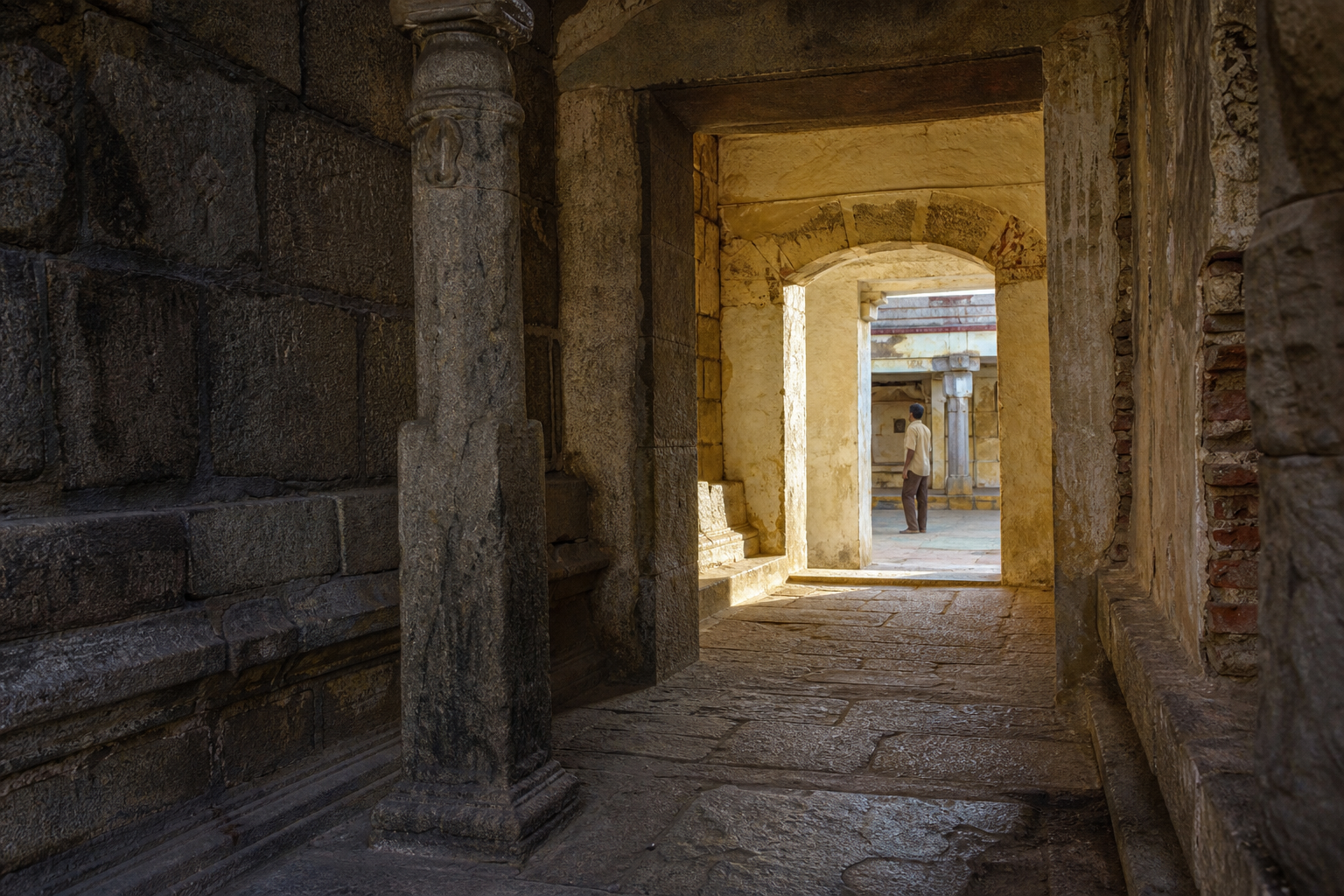
The inscriptions answer a different kind of question. Their presence shows that the temple bears material traces from the Chola, Pandya, and Vijayanagara periods. That is enough to recognise a historically layered complex, but not enough to invent dates, donors, reconstructions, or royal biographies. Unless you have a reliable reading of a particular inscription, look carefully without pretending that every line has already been explained.
You do not have to make the sacred account compete with the epigraphic record. The legend tells you how the place is remembered within worship. The inscriptions show that successive historical periods left physical evidence there. Keeping those roles distinct allows you to honour the temple’s tradition without turning devotion into an unsupported archaeological claim.
Plan the visit around what is actually known
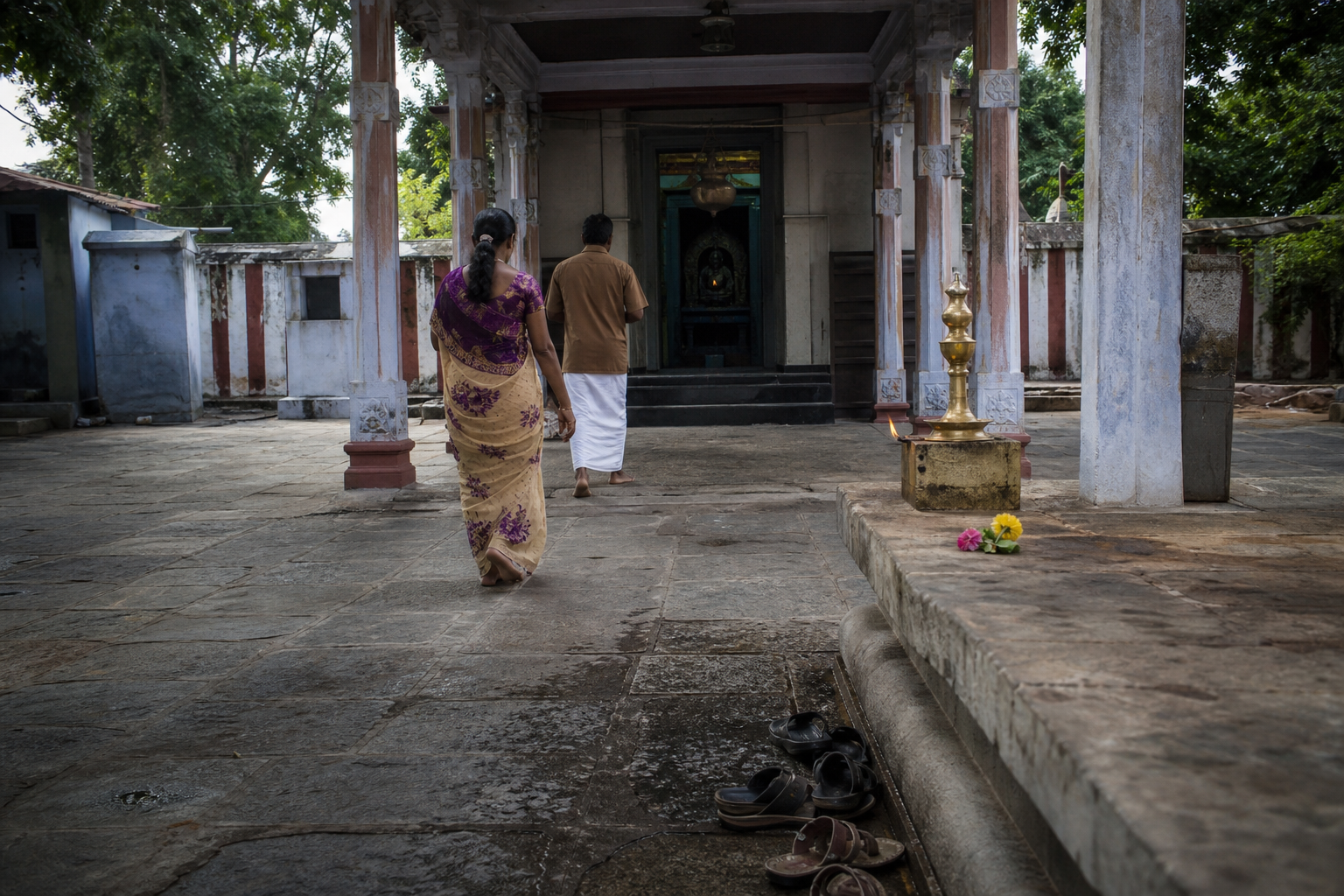
Mahasivaratri is observed at Vaneswarar Temple. An earlier annual tradition also placed Puradhana Vaneswarar on a float for a temple float festival. The distinction is important: Mahasivaratri is identified as a temple festival, while the float festival is described as an old practice. Do not assume the float procession continues on a current annual schedule without checking locally.
Key takeaways
- Navigate to Thiruchitrambalam on the Pattukkottai-Arantangi road, using both “Vaneswarar” and “Puradhana Vaneswarar” when confirming the shrine.
- From Pattukkottai, use the stated 15 km distance for route planning; from Arantangi, use 34 km. Confirm the final approach locally.
- Verify current opening hours, puja times, and festival arrangements before setting out; none should be inferred from historical descriptions.
- Give attention to Puradhana Vaneswarar, Periyanayaki, Poovilungi Vinayaka, Kaasaan Kulam, and the inscriptions rather than reducing the visit to a quick photograph.
- If you wish to make a flower offering to Poovilungi Vinayaka, ask how the custom is currently conducted and follow the temple’s instructions.
- Treat the Manmatha narrative as sacred memory and the dynastic inscriptions as historical evidence. Each reveals a different dimension of the kshetra.
Before you leave Pattukkottai or Arantangi, confirm the temple’s current access and worship schedule. Once you arrive, slow the visit down: begin with the relationship between gopura and pond, enter for darshan, ask respectfully about Poovilungi Vinayaka, and leave time to notice the stone record of the temple’s long life.
References
